Rare 1969 Quarter Errors (List & Pictures)
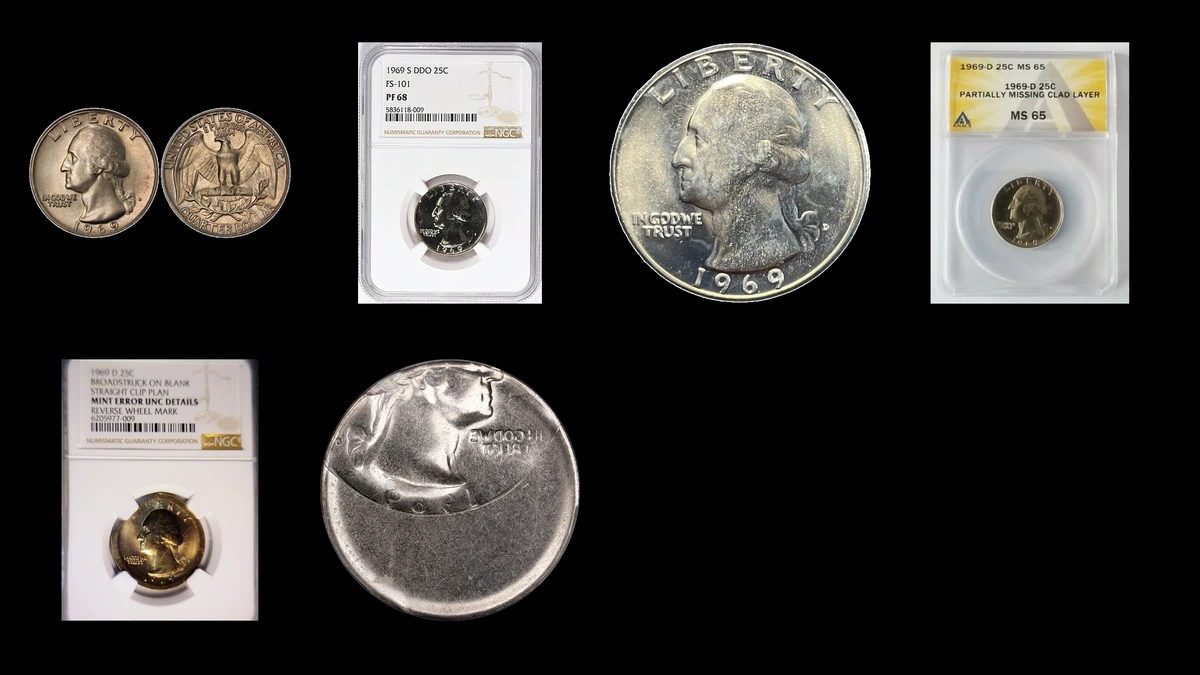
Two 1969-S quarters can preserve one accident together: a Proof pair with complementary blank contact faces sold for $2,760 in August 2020. Estimated 1969 quarter errors range from $10–$4,000, including modest layer irregularities, repunched mintmarks, and unusual strikes.
Separate Proof from ordinary circulation issues, then examine lettering, metal structure, and the relationship between the designs and outline.
| Visible clue | Possible identification | Estimated value |
|---|---|---|
| Extra D or S strokes | Repunched mintmark | $25–$3,000 |
| Repeated motto or other contours | Doubled die | $25–$700 |
| Outer metal varies locally | Uneven clad layer | $10–$100 |
| Unusual color with layers intact | Improper annealing | $30–$200 |
| Copper exposed beneath absent metal | Missing clad layer | $40–$600 |
| Quarter diameter but unusually thin metal | Dime-stock planchet | $60–$400 |
| A curved missing section | Clipped planchet | $20–$250 |
| Wide strike and straight shortage | Broadstrike with clip | $40–$350 |
| Step, front hollow, and thin raised rim | Combined Proof strike error | $300–$1,800 |
| Blank crescent and cropped design | Off-center strike | $50–$800 |
| Displaced repeated Proof details | Extra strike | $200–$1,200 |
| Sunken mirror image and displaced strike | Off-center brockage | $250–$1,500 |
| Wrong metal or irregular original blank | Wrong planchet or fragment | $150–$2,500 |
| Complementary single-sided coins | Mated Proof pair | $2,000–$4,000 per pair |
1. 1969 Quarter Earlier Letter Strokes Remain beside D or S: Repunched Mintmark Error
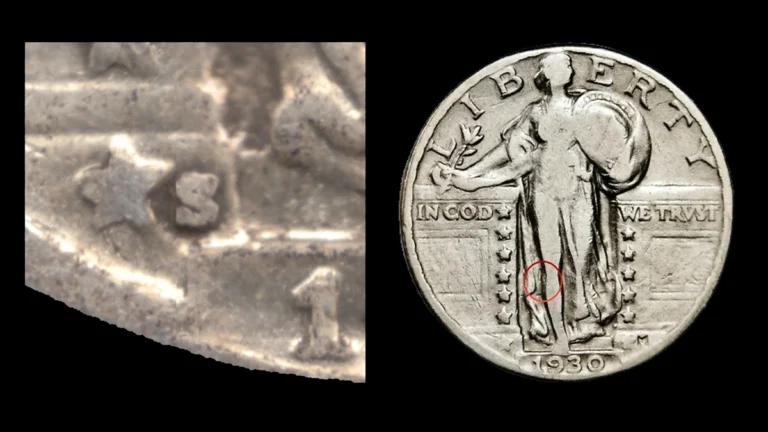
Denver RPM-001, also FS-501, has a tilted earlier D at the left; RPM-002 has a lower D. RPM-003, or FS-502, instead has an upright earlier D at the left.
San Francisco RPM-002 shows extra S impressions above and below, while RPM-003 has a westward impression. Repeated punching left these patterns in individual working dies.
How to Identify
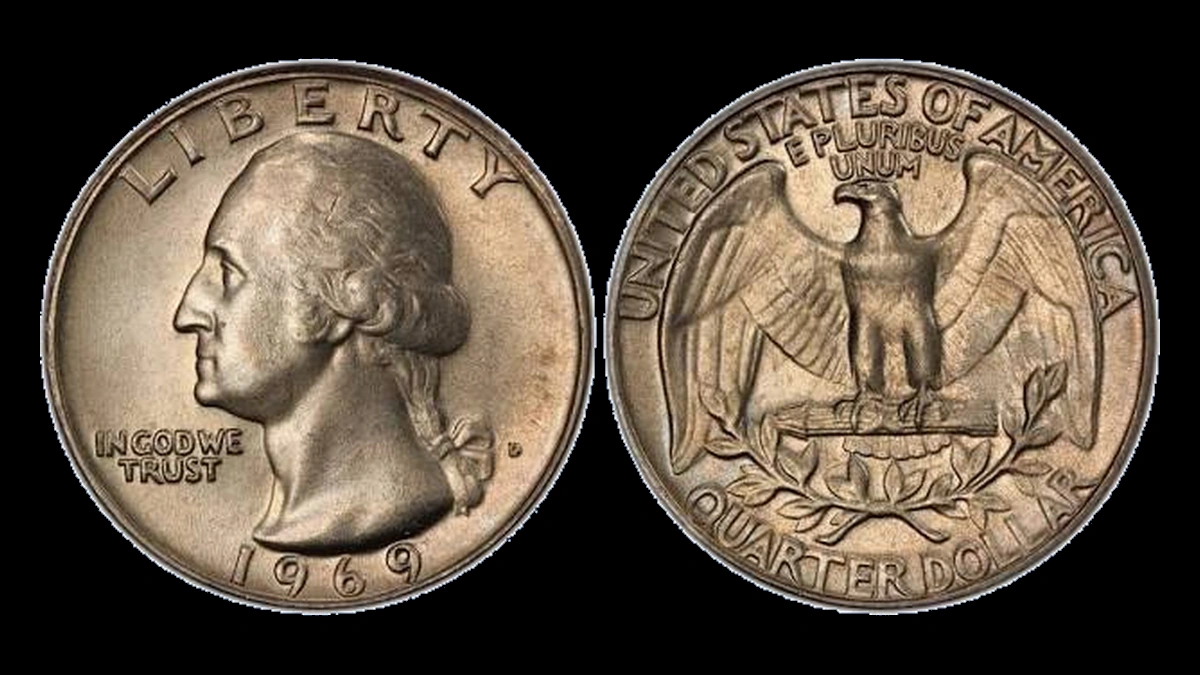
Choose the correct mint and pattern before comparing the extra curves. Tilted and upright leftward D impressions are different varieties despite sharing a general direction.
Trace enough of the remnant to recognize another letter rather than a shelf or scratch. Keep the San Francisco north, south, and west patterns tied to their own reference examples.
What It’s Worth
$25–$3,000 is the estimated range for confirmed repunched mintmarks, with most modest examples well below the top. A Denver FS-502 graded MS66 sold for $2,640 in August 2022.
That result belongs to a specific variety in exceptional condition. It does not price every doubled-looking D or the separate San Francisco Proof patterns.
2. 1969 Quarter Lettering Has Repeated Raised Contours: Doubled Die Error
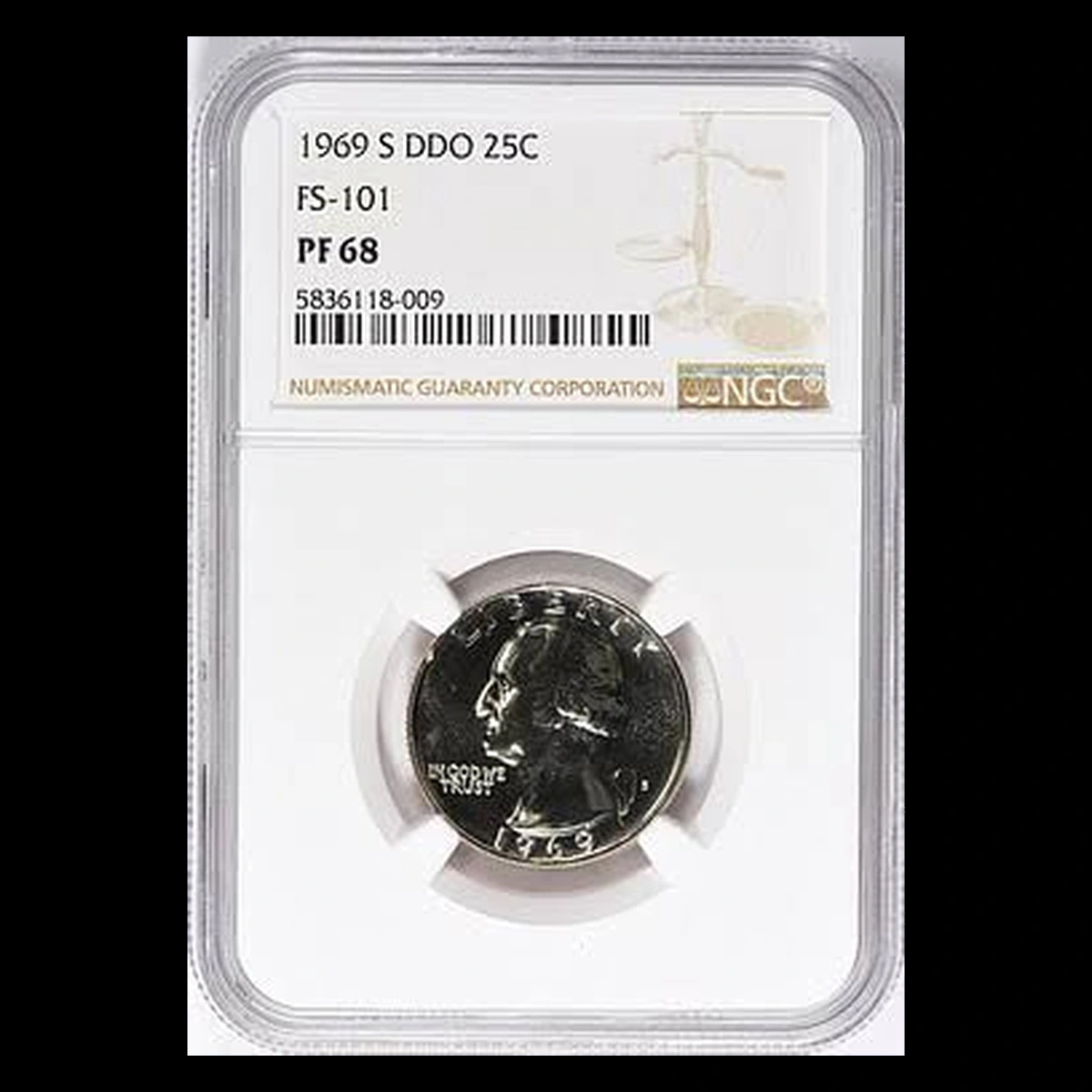
The 1969-S FS-101 Proof shows strong counterclockwise separation. A different Proof, DDO-002, has an irregular tripled motto paired with an S punched three times.
The repeated detail was present in the dies before the coins were struck. Ordinary-strike doubling reports require separate matches and do not inherit a Proof catalog number.
How to Identify
For FS-101, compare several details for the consistent counterclockwise pattern. Flat striking shelves and isolated thickness need different explanations.
For DDO-002, compare the three-part motto and two additional northward S impressions with the cataloged combination. Both features must agree on the same coin.
What It’s Worth
$25–$700 is the estimate for confirmed doubled dies, with stronger recognized Proof varieties generally above minor circulation reports. A PCGS PR67 FS-101 was reported sold for $312 in March 2018.
The figure concerns FS-101 rather than the different tripled-motto combination. Finish, exact pattern, and surface preservation should guide the comparison.
3. 1969 Quarter An Outer Layer Varies across the Surface: Uneven Cladding Error
A San Francisco Proof graded ANACS PR66 was cataloged with an uneven clad layer. The outer metal varies rather than being wholly absent from one face.
Normal quarter stock has pale outer layers bonded to a copper center. A patch of toning on a reflective Proof can change appearance without changing that structure.
How to Identify
Compare the face and edge under soft light and follow the actual metal boundary. Reflections move as the coin turns, while physical unevenness remains in the same place.
Inspect for residue, pitting, or scratches and compare with an attributed uneven-layer example. Do not rub a spot to test whether the color comes off.
What It’s Worth
$10–$100 is the estimate for a modest confirmed uneven-layer Proof. The PR66 was reported sold for $14 in April 2006.
That historical result illustrates the limited premium a subtle feature may receive. Haze and spots can reduce appeal despite a genuine layer irregularity.
4. 1969 Quarter The Color Changes while the Layers Remain: Improper Annealing Error
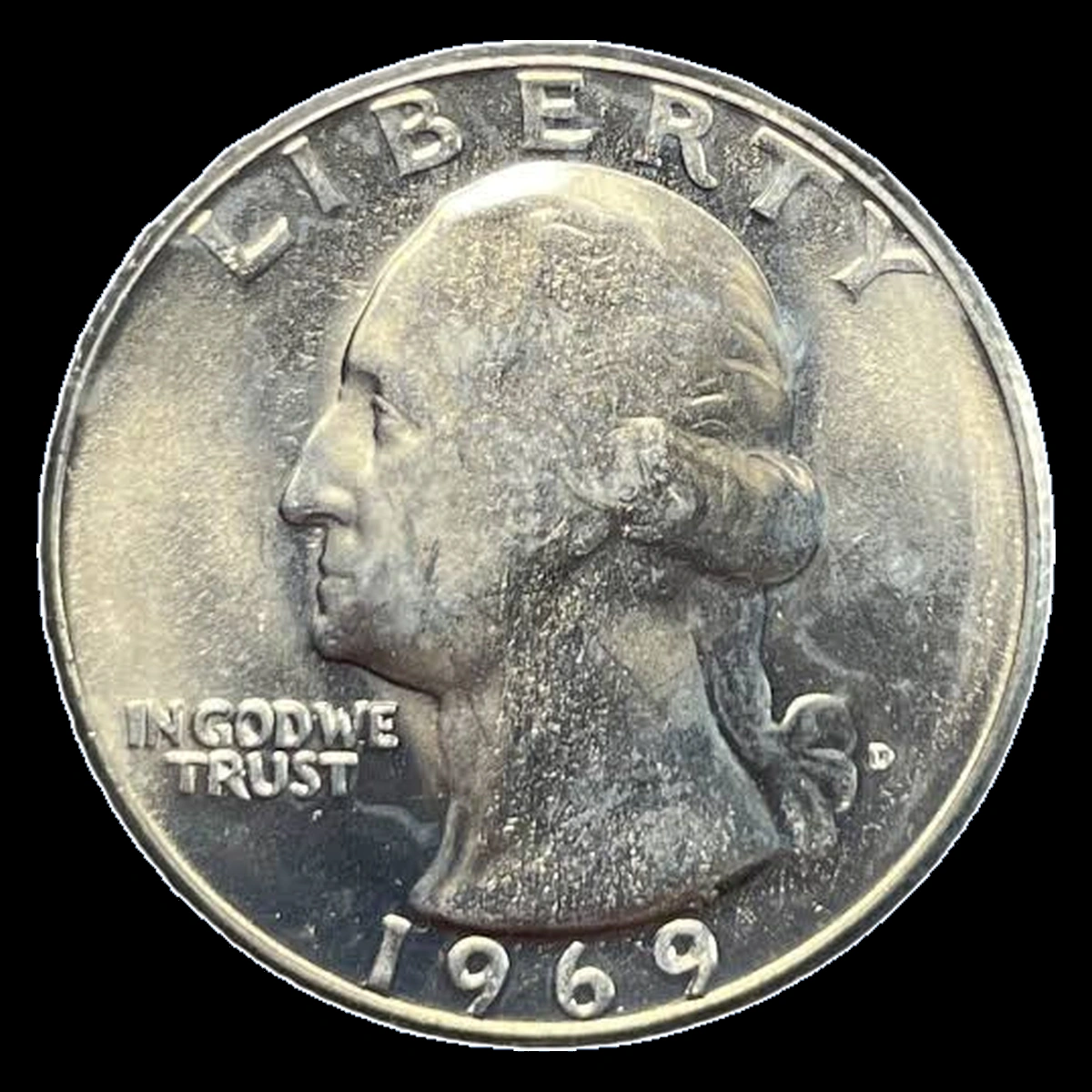
Annealing heats blanks to prepare them for striking. An abnormal result can leave copper-like or blotchy surfaces without removing a complete outer layer.
The type is reported for 1969, but color alone does not establish mint origin. Toning, chemicals, corrosion, and later fire can imitate unusual shades.
How to Identify
Inspect original shine between letters, surface texture, and the surviving layer structure on both faces. Corrosion pits or blisters may point toward later treatment.
Compare with a professionally identified annealing error under neutral lighting. A fully exposed copper face with missing outer metal needs a different explanation.
What It’s Worth
$30–$200 is the estimate for confirmed heating-related mint errors. A 1978-D NGC MS66 example sold for $99.88 in August 2015.
That different-year result is a category comparison. An unexplained dark 1969 quarter does not acquire the same value without a supported surface diagnosis.
5. 1969 Quarter Copper Shows beneath an Absent Outer Layer: Missing Clad Layer Error
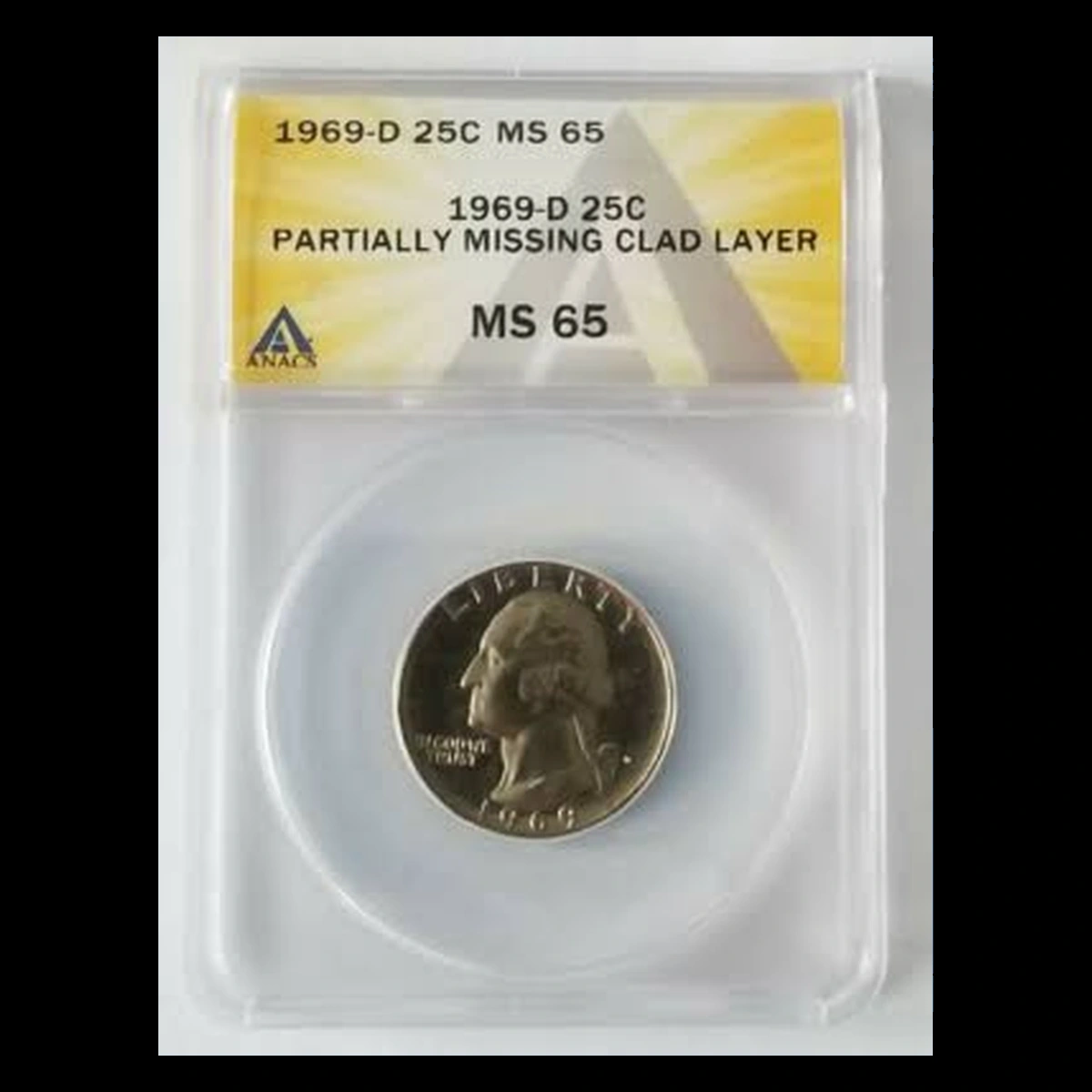
Denver reports include a reverse-layer-loss coin weighing 4.6 grams and a separate partial-loss specimen. Another cataloged example has later scratches.
A PCGS MS64 label reads “95% Obverse Clad Layer,” wording that alone does not settle how much layer is absent. Its actual front must resolve the extent.
How to Identify
Follow exposed copper from the edge into the design and distinguish natural loss from scraping, corrosion, or added color. Ordinary loose quarters are approximately 5.67 grams and 24.26 mm with reeded edges.
The 4.6-gram reading belongs to the reported reverse-loss coin. Partial losses and unclear holder wording must not be converted into invented measured percentages.
What It’s Worth
$40–$600 is the estimate for comparable Denver layer errors. The scratched example sold for $37 in April 2006.
A 1973 front-layer-loss NGC MS64 brought $384 in January 2022. Its different year and stronger condition should not be treated as the same comparison as a scratched 1969 coin.
6. 1969 Quarter Quarter-Sized Metal Is Unusually Thin: Dime-Stock Planchet Error
A blank cut to quarter diameter from dime-thickness strip can be thin and light without having a dime’s smaller diameter. Denver records include an NGC AU50 at 4.32 grams and a separate ANACS AU58 at 4.28 grams.
How to Identify
Check for near-quarter diameter before interpreting the lower mass. An actual dime blank begins at about 2.27 grams and is much smaller than this thin-stock category.
Compare thickness around the edge and look for original struck detail on both faces. Grinding can lower mass and thickness but may leave scratches, flattened design, or unnaturally smooth surfaces.
What It’s Worth
$60–$400 is the estimate for confirmed Denver thin-stock quarters. The ANACS AU58 was reported sold for $91 in December 2012.
Its 4.28-gram reading remains separate from the AU50’s 4.32 grams. Original metal and a supported stock attribution matter more than low weight alone.
7. 1969 Quarter A Curved Gap Interrupts the Rim: Clipped Planchet Error
A blanking punch can overlap an earlier hole in the metal strip and leave an incomplete blank. A genuine clipped quarter receives its design around that pre-existing shortage.
Curved clips are reported for 1969 without one fixed specimen description. A weak opposite rim can help, but is not required on every example.
How to Identify
Inspect where the curve joins the struck rim for natural metal flow and softened nearby detail. File strokes, saw marks, or fresh burrs can expose a later cut.
Reduced weight only confirms that less metal remains, not when it disappeared. Assess the missing boundary before relying on opposite-rim weakness.
What It’s Worth
$20–$250 is the estimate for genuine curved clips. A 1978 quarter with three curved clips sold for $180 in March 2025.
That different-year multiple-gap result is a comparison rather than a 1969 single-clip price. Small worn examples generally require a more modest assessment.
8. 1969 Quarter An Expanded Coin Also Has a Straight Gap: Broadstrike with Clip Error
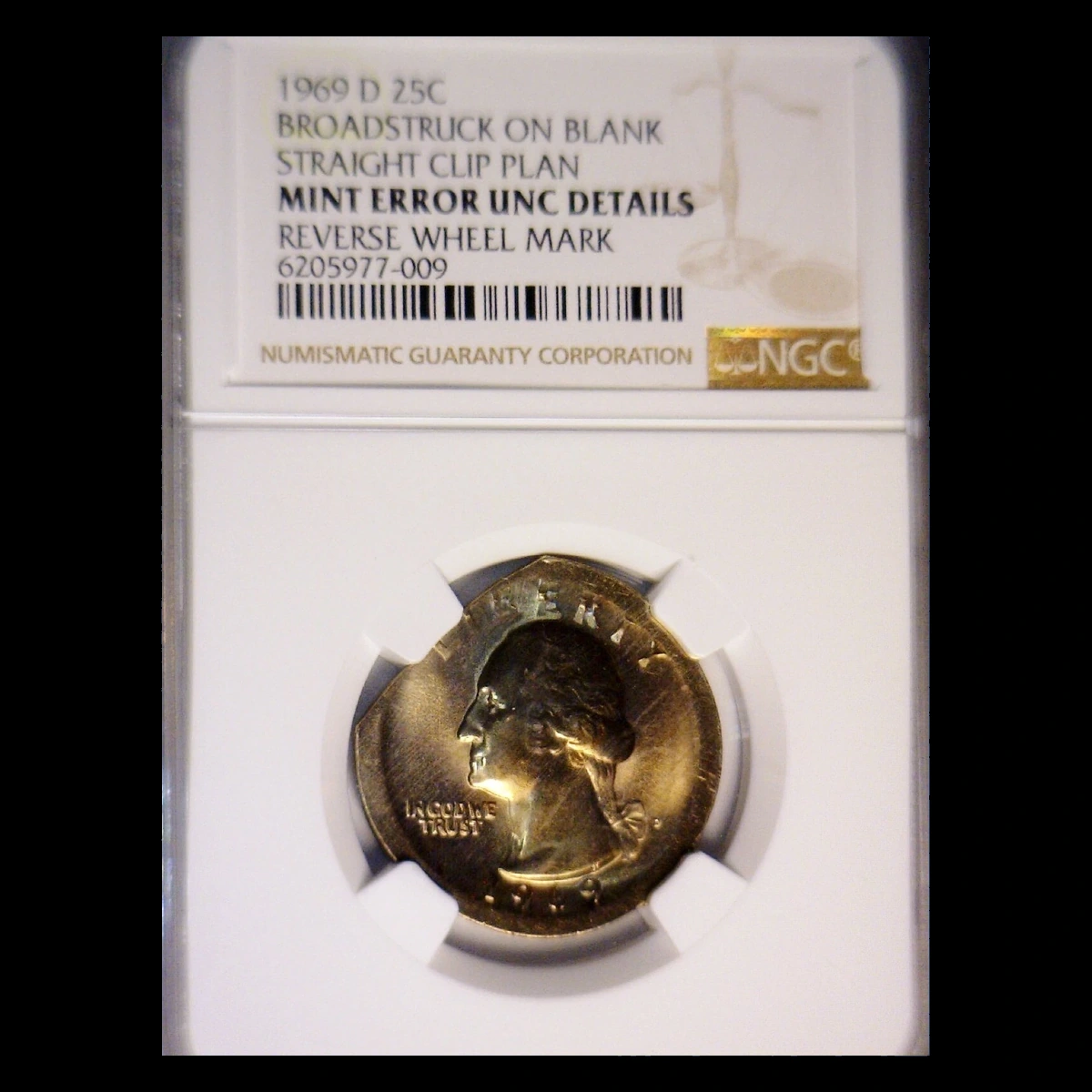
An early dealer catalog describes a Denver broadstrike with a straight clip on a Type I blank. The starting rim had not been raised before striking.
The shortage preceded the blow, while the remaining metal expanded without normal collar restraint. Those features belong to one particular coin.
How to Identify
Inspect the straight missing boundary separately from the outer border that spread. Both should retain formation evidence consistent with the original strike.
A Type I attribution requires more than an unusually flat edge. Do not assume that every broadstrike also has the recorded clip or unprepared rim.
What It’s Worth
$40–$350 is the estimate for comparable broadstrikes, allowing for a clear clip and established Type I blank. No completed result was supplied for the cataloged Denver combination.
Two ordinary 1990 Philadelphia broadstrikes sold together for $101 in July 2021. That is a whole-pair total for different coins, not the individual price of this clipped example.
9. 1969 Quarter A Proof Has an Edge Step, Front Hollow, and Thin Rim: Partial Collar with Indent and Fin Error
A San Francisco PCGS PR66 combines a full partial collar with an approximately 5% front indent and a fin. The fin is thin metal rising above the normal rim level.
Incomplete collar engagement created the edge step, while an obstruction left the front hollow. All three features must be assessed on the same Proof.
How to Identify
Start with a side view to distinguish the edge levels and delicate raised fin. Avoid pressure that could bend the thin rim.
Follow the indent into original design and check for later impact lips or cuts. A face photograph alone may fail to demonstrate the complete combination.
What It’s Worth
$300–$1,800 is the estimate for a comparable authenticated Proof combination. No completed sale was supplied for this PR66.
The separate rotated double-strike Proof below sold for $660 in August 2024. That is context for a substantial Proof error, not separate prices for the step, indent, and fin.
10. 1969 Quarter A Large Crescent Receives No Design: Off-Center Strike Error
A Denver ANACS MS63 is recorded about 45% off center toward ten o’clock. Its untouched metal and missing design arise from the same displaced blank.
This is an ordinary Denver issue. The record does not establish a corresponding San Francisco Proof specimen.
How to Identify
Read the date and D, then compare the design cutoff and blank metal on both faces. An unreadable mintmark area cannot establish Philadelphia.
Inspect the unstruck region for later flattening or grinding and keep the documented ten-o’clock orientation with this coin. One uneven face border is not the same as a displaced blank.
What It’s Worth
$50–$800 is the estimate for genuine dated examples. No completed price was supplied for the 45% Denver MS63.
A 1978 quarter struck 15% off center sold for $154 in September 2025. Its smaller shift offers only a general comparison with the larger 1969 error.
11. 1969 Quarter Proof Details Survive in a Second Position: Repeated Strike or “Split Eagle” Report Error
An NGC PR62 1969-S is cataloged with a rotated-front double strike. Another Proof has widespread front doubling attributed to an in-collar restrike.
The nickname Split Eagle also appears in reports without establishing one proven mechanism. A divided-looking bird needs physical examination rather than automatic extra-strike attribution.
How to Identify
Trace related letters and portrait elements into a coherent displaced impression. For a split-looking eagle, distinguish raised repeated design from a scratch cutting through it.
Normal Proof production can involve multiple correctly aligned blows. The error requires a surviving abnormal design position, and the reverse must be checked independently of the front.
What It’s Worth
$200–$1,200 is the estimate for comparable confirmed extra-strike Proof errors. The rotated-front NGC PR62 sold for $660 in August 2024.
A Split Eagle appearance qualifies only if its cause is established as a comparable original strike error. The nickname alone does not supply a value.
12. 1969 Quarter An Off-Center Coin Carries a Sunken Mirror Image: Brockage Error
A Denver PCGS AU58 combines a 55% off-center strike with mirror brockage. Another struck coin impressed its raised design into this piece as a reversed, recessed image.
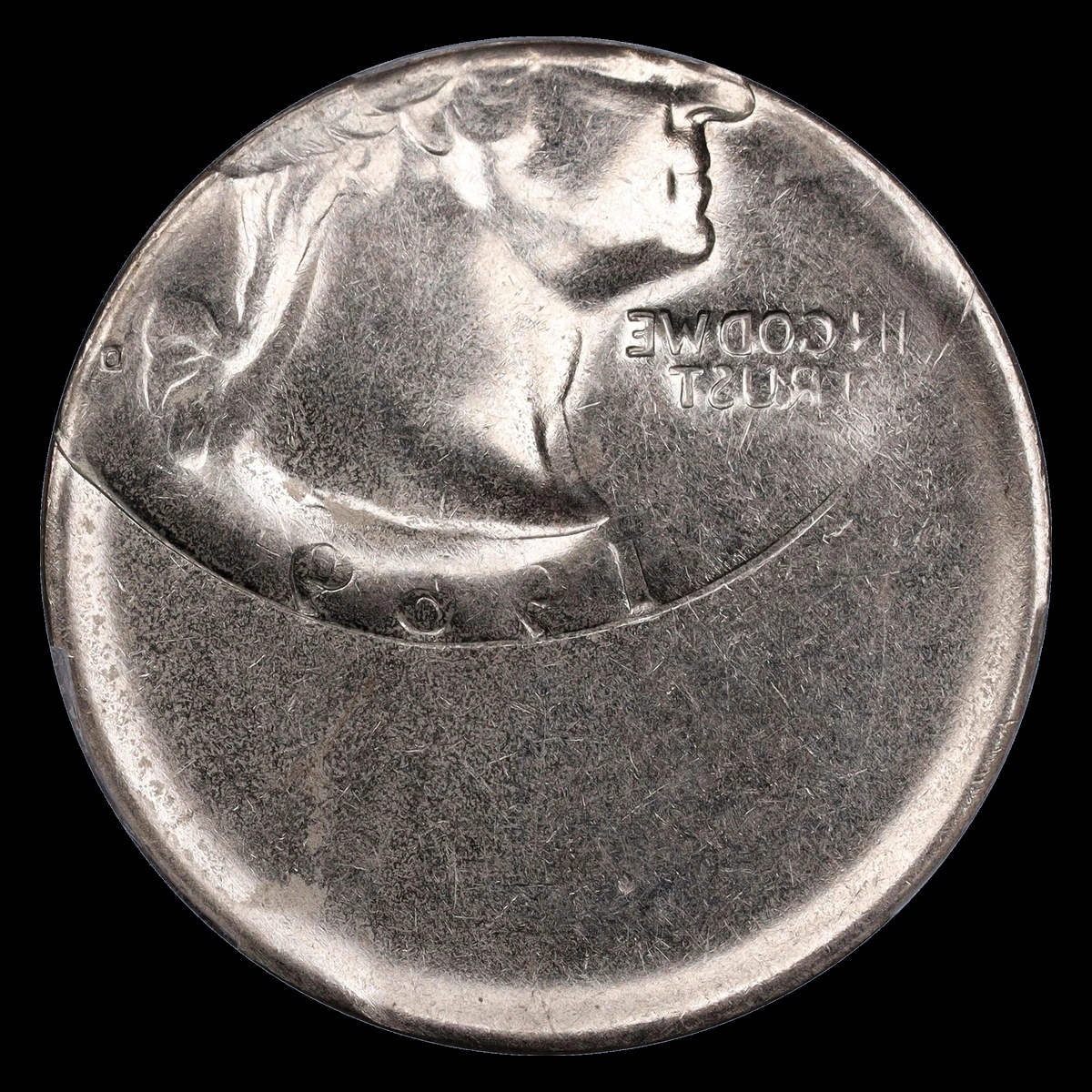
How to Identify
Reverse a photograph to test whether the unexpected letters become readable and use side lighting to confirm that the actual image is sunken. Then examine the blank crescent and design cutoff separately.
Both the mirror impression and displaced strike need original formation evidence. Later squeezing between finished coins can create reversed marks while crushing rims and existing detail.
What It’s Worth
$250–$1,500 is the estimate for comparable authenticated off-center brockages. No completed result was supplied for the Denver AU58.
A 1999-P New Jersey quarter with 80% brockage and broadstriking sold for $312 in December 2024. Its different combination does not turn the 1969 coin’s 55% offset into a fixed price.
13. 1969 Quarter Quarter Designs Occupy the Wrong Metal Shape: Wrong Planchet or Fragment Error
Records include Philadelphia and Denver cent blanks, a San Francisco Proof cent blank, and Denver nickel blanks. One Denver nickel-planchet coin also received two strikes.
A separate ANACS MS62 was struck on a 2.01-gram metal fragment. Its irregular shape must have preceded the strike rather than resulted from breaking a finished quarter.
How to Identify
Match metal, dimensions, and design fit before choosing a blank type. Recorded masses include 3.11 grams for a Philadelphia cent blank, 3.1 grams for the Proof cent, and 4.9 grams for the double-struck Denver nickel blank.
Normal starting standards are about 3.11 grams for a period cent blank and 5.0 grams for a nickel blank, with spreading possible during striking. Inspect each edge for filing, plating, or a fresh break, especially where fragment design reaches the boundary.
What It’s Worth
$150–$2,500 is the estimate across these wrong blanks and fragments. A Philadelphia cent-planchet NGC MS65 Brown sold for $805 in August 2011.
A Denver nickel-planchet PCGS MS65 brought $862.50 in March 2004, while a worn double-struck nickel-planchet coin sold for $264 in November 2020. An extra strike does not necessarily outweigh poorer preservation.
14. 1969 Quarter Two Coins Preserve Complementary Blank Faces: Mated Proof Pair Error
Two blanks entering together can shield their touching faces while the dies strike their outer faces. In the NGC PR67 pair, one coin received Washington and the other the eagle.
The contact faces are slightly dished with higher edges, and the front-struck member is somewhat oval with a broad rim below the date. A separate PCGS pair is graded PR64 and PR62.
How to Identify
Compare photographs of both outward designs and both contact faces. The complementary shapes should explain one shared event rather than two unrelated blank-looking surfaces.
Keep the NGC outlines and grades separate from the PCGS pair. Do not press the actual Proof surfaces together to test their match.
What It’s Worth
$2,000–$4,000 is the estimated range for a comparable authenticated complete pair. The NGC PR67 pair sold for $2,760 in August 2020.
The separate PCGS PR64 and PR62 pair brought $2,640 in July 2021. Both results are whole-pair prices and should not simply be halved to value a lone partner.
Conclusion
For a 1969 quarter, mint and finish determine which references apply before any extra letter or unusual surface is priced. Quarter-sized thin stock, a smaller wrong blank, and missing cladding can all lower weight for different reasons.
Compare those physical explanations alongside the design and edge. Keep compound errors together, and preserve the complete relationship between matching Proof partners rather than dividing their auction totals into assumed individual values.