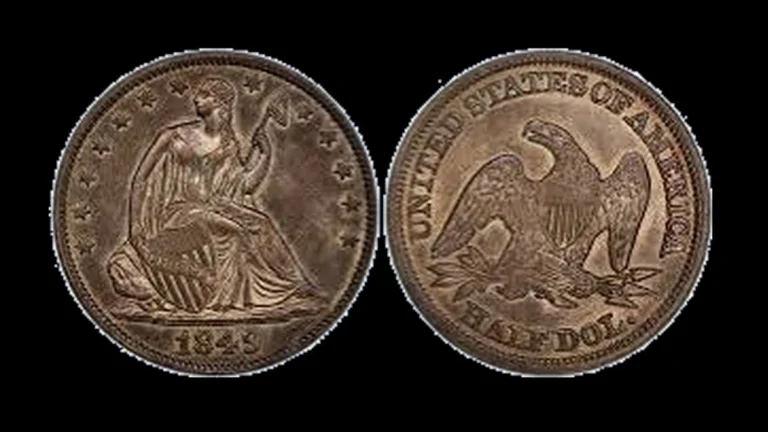
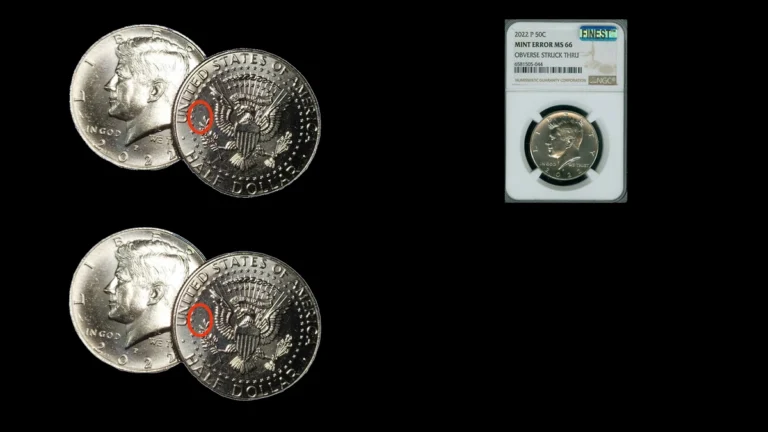
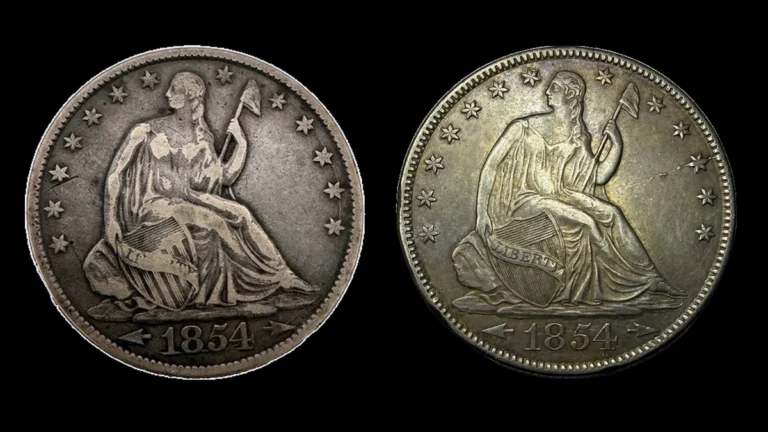
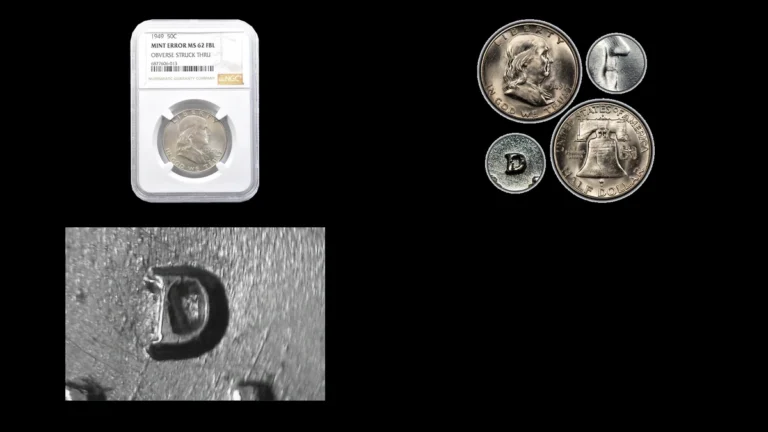
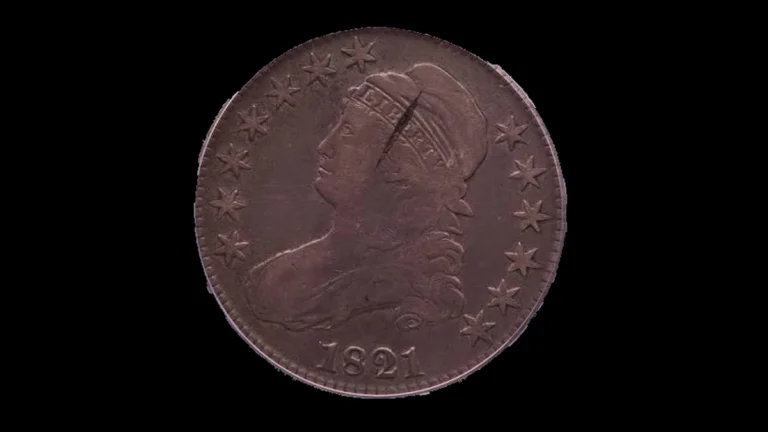
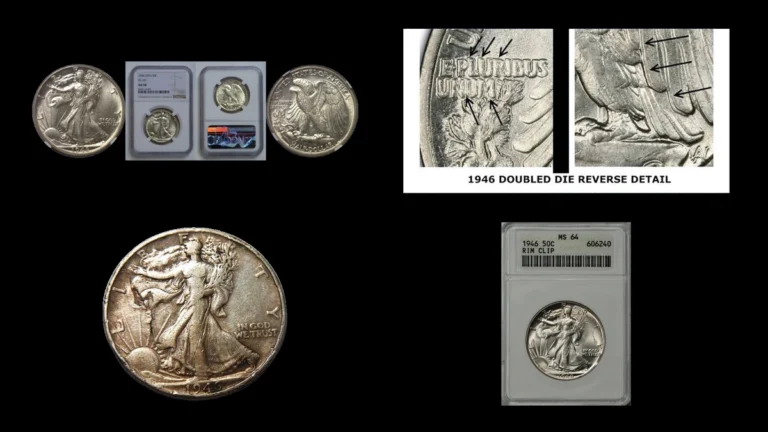
Rare 1937 Half Dollar Errors (List & Pictures)
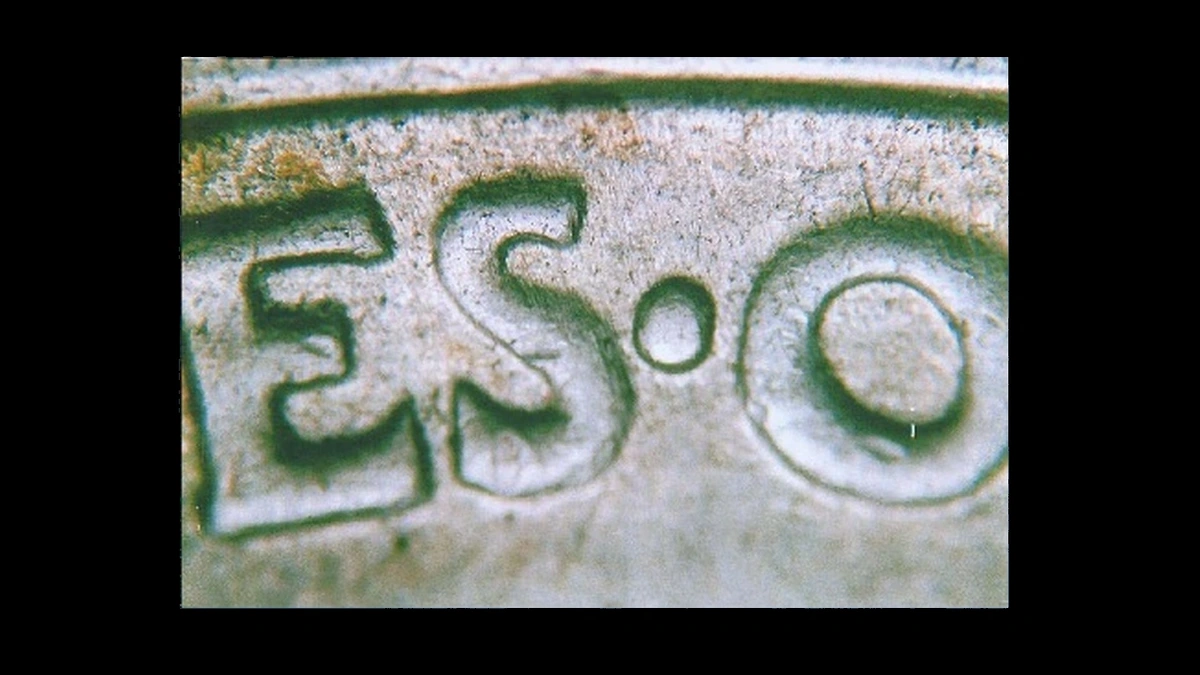
Two of the 1937 half dollar errors below can belong to one coin: a doubled front and a doubled back. Across all four categories, estimated values span $80–$750, with a year guide reporting $575 for a lightly worn double strike.
Judge the whole design before magnifying the lettering, then examine any surface layer that appears loose.
| Observation | Where it appears | Error type | Estimated value |
|---|---|---|---|
| Designs overlap at different angles | Broad areas of the coin | Rotated in-collar double strike | $400–$750 |
| Extra edges on letters and nearby details | Front, including BER | Doubled die obverse | $80–$200 |
| Unusually thick letters and dots | STATES OF AMERICA on the back | Doubled die reverse | $80–$250 |
| A thin flap or shallow broken patch | Surface of the reported 1937-S coin | Lamination | $100–$300 |
The two doubled-die entries can describe the front and back of one coin. Their value ranges are alternatives for comparing the whole coin, not amounts to add together.
1. 1937 Half Dollar Two Designs at Different Angles: Rotated In-Collar Double Strike Error
Look at the coin without magnification first: this error involves two sets of design features turned relative to each other. The first impression was partly flattened when the press struck the coin again.
The coin rotated between the blows while its edge remained within the collar, the metal ring around the blank. This is why the name includes both “rotated” and “in-collar.”
How to Identify
Choose one recognizable feature and locate its second position on the same face. Find another duplicated feature elsewhere, then check whether both pairs fit the same amount of turn.
That consistent relationship matters more than the number of odd lines you can find. Scattered scratches will not form a second coherent design.
Do not confuse this with rotated dies, where the back faces the wrong direction during a controlled flip. A rotated-die coin need not have any overlapping images on either face.
A doubled die is different too: the repetition is already in the stamping tool. Here, the evidence should support two blows to the actual coin.
What It’s Worth
Estimated range: $400–$750 for a genuine, comparable example with light wear. The supplied year guide reports $575 for an AU58 coin, but that remains a guide-reported auction result rather than a directly supplied auction listing.
The clearness of both impressions and a readable date make the error easier to assess. An off-center second strike has a different appearance and is not the same comparison as this in-collar example.
2. 1937 Half Dollar Fine Extra Edges in BER: Doubled Die Obverse Error
With the front upright, narrow your view to BER in LIBERTY. The Philadelphia WDDO-001 variety also has doubling at the upper star and the leaves to the right of Liberty’s head.
These small details show a clockwise shift introduced while the die was made. “Obverse” is the front of the coin; the die is the steel tool that transferred its design to the silver.
How to Identify
Use a magnifier to compare BER, the star, and the leaves with Wexler’s 1937 doubled-die listing. Checking all three areas helps separate a matching pattern from a single damaged letter.
There is also a supporting mark just left of the top of the date’s 1. It comes from a gouge in the die and helps identify the tool, but it is not itself doubled design detail.
Flat shelves along the lettering can result from movement during striking. They should not be treated as proof of this variety simply because the letters appear to have two edges.
Wexler pairs this front with WDDR-001 on the back. The next section describes the features to check there.
What It’s Worth
Estimated range: $80–$200 from worn examples to lower-grade unworn coins with the variety confirmed. Better surfaces and visible doubling support the stronger part of that range.
For a separate market comparison, a 1939-D FS-101 graded PCGS MS64 brought $144 in September 2026. That unworn coin was a different date, mint, and doubled die, so it is not a recorded sale of 1937 WDDO-001.
3. 1937 Half Dollar Thick Lettering and Dots on the Back: Doubled Die Reverse Error
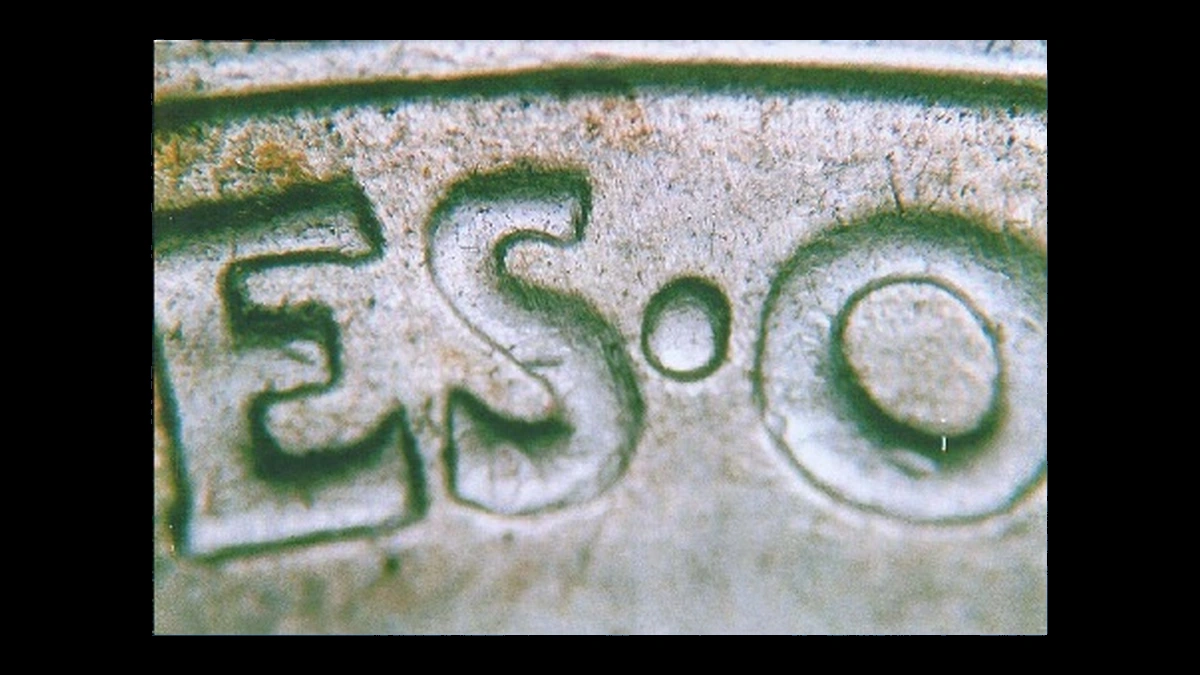
The back offers a second way to check the Philadelphia doubled-die pairing. Its catalog name is WDDR-001, with “reverse” meaning the back of the coin.
Study the combined appearance of STATES OF AMERICA and its separating dots. Both carry the extra thickness transferred from this die; the full pattern is more useful than one broad letter.
How to Identify
Compare the inscription with a normal 1937 half photographed at a similar size and under similar light. Include the dots, which are easy to overlook when concentrating on letters.
Then inspect the lower right of R in DOLLAR for the recorded small die-gouge mark. This marker and the matching WDDO-001 front help confirm the variety together.
Heavy wear can broaden and blur the apparent lettering. If the fine markers have disappeared, a thick inscription alone will not securely identify WDDR-001.
What It’s Worth
Estimated range: $80–$250 for the entire coin in worn through lower unworn grades. The same coin may already be covered by the front-doubling estimate above.
A 1946 FS-801 half graded PCGS AU58 sold for $240 in September 2022. That better-known doubled-reverse variety provides context for a lightly worn coin, rather than a direct price for this 1937 pairing.
4. 1937 Half Dollar A Thin Layer Lifts from the Silver: Lamination Error
The reported 1937-S example has a small separation in its surface metal. Walking Liberty halves are not plated; a weak area within the silver and copper mixture can split into layers.
A flap may stay attached or leave an uneven shallow patch after coming away. Neither a color change nor ordinary tarnish establishes that a layer has separated.
How to Identify
Examine the patch from a low angle to see whether it has a distinct thin edge. Leave any attached flap untouched so its connection to the coin remains visible.
A deep cut with displaced metal along its sides is more consistent with later damage. Look for the structure of a separating layer, not simply a rough-looking spot.
If you have a loose coin, normal unworn dimensions are about 12.50 grams and 30.6 mm with a grooved edge. A tiny missing flake may not noticeably change its weight, while wear can also make it lighter.
What It’s Worth
Estimated range: $100–$300 for similar unworn examples with a minor lamination. A year guide reports a $120 Heritage result in 2019 for a 1937-S graded MS64.
That price is presented through the guide, not a direct auction record in the supplied evidence. MS64 means the coin was unworn but had some surface imperfections.
A lamination may appeal to an error collector while reducing appeal to someone seeking a clean example of the date. A small mint flaw therefore does not guarantee a premium.
Conclusion
Keep the scale of the feature in mind: an overlapping design, fine doubled detail, and a lifting metal layer tell different stories. The paired Philadelphia doubled dies require checks on both faces of the same coin.
Use the estimated $80–$750 range only after identifying the feature and judging wear. Reported guide prices and sales of other dates provide context, with different levels of supporting evidence.