Rare 1918 Quarter Errors (List & Pictures)
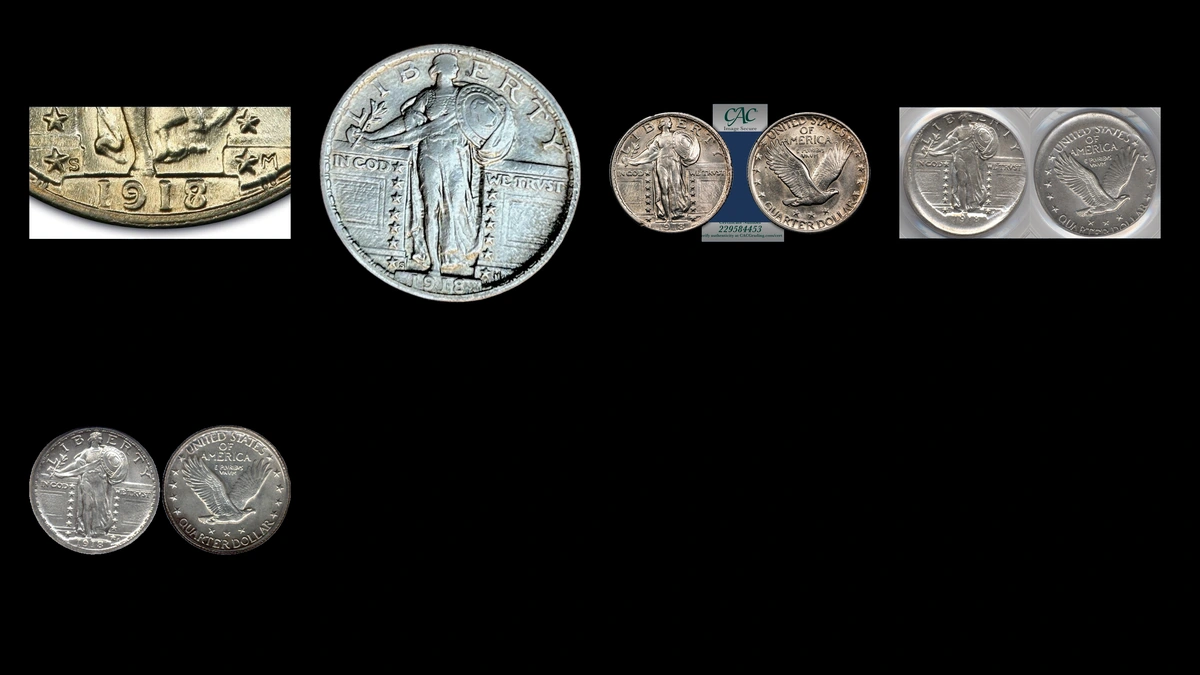
On a 1918 Standing Liberty quarter, the final digit deserves an early look. The famous overdate dominates the upper end of supplied estimates for 1918 quarter errors, which span $30–$336,000.
A PCGS MS64+ Full Head 1918/7-S sold for $336,000 at Heritage in September 2020. Check the date and mint first, then separate copied die features from peeling metal and displaced strikes.
| Inspection clue | Identification | Estimated value |
|---|---|---|
| Remains of 7 inside the final 8 | 1918/7-S overdate | $2,000–$336,000 |
| Opposite-design traces by the knee | Die clash on the overdate | $2,000–$35,000 for ordinary overdate examples |
| Thin attached or peeling metal | Lamination | $30–$1,000 |
| Bounded interruption of detail | Struck through | $50–$1,500 |
| Front alone shifts right | Misaligned die | $50–$1,000 |
| Design shifts on a misplaced blank | Off-center strike, sometimes with indent | $1,500–$12,000 |
| Two overlapping design positions | Double strike within the collar | $1,000–$8,000 |
1. 1918 Quarter A 7 Remains inside the Final 8: 1918/7-S Overdate Error
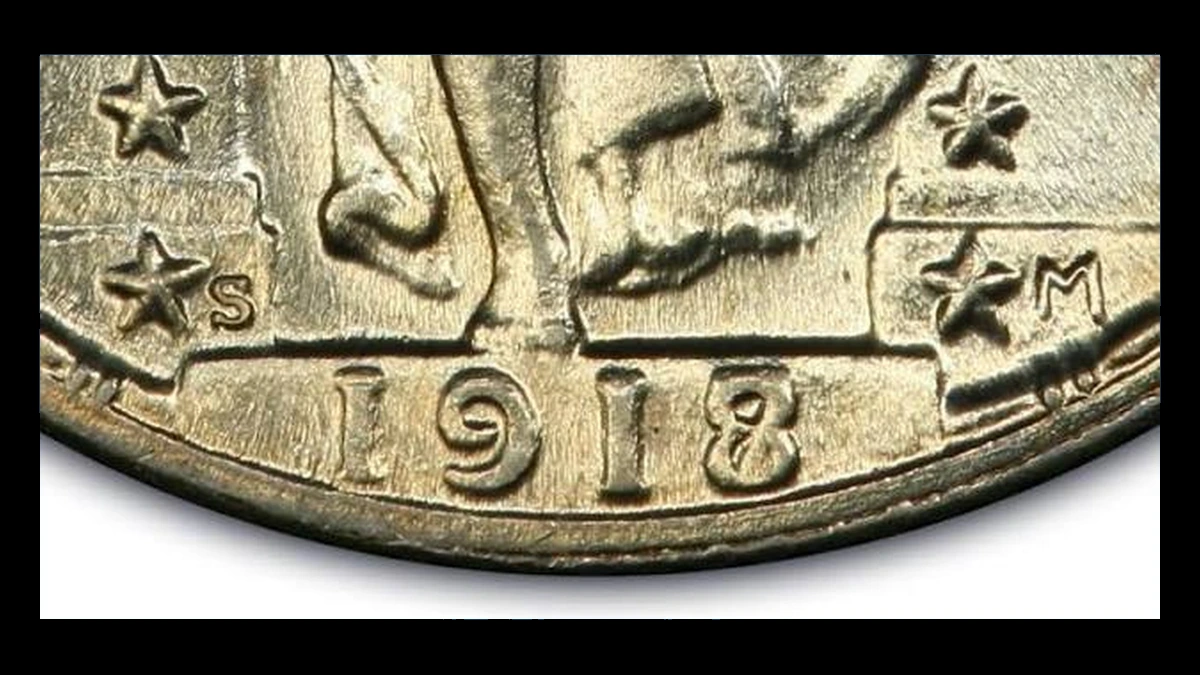
A horizontal trace across the upper part of the final 8 is a starting clue to the 1918/7-S. Images bearing 1917 and 1918 helped form the same die, leaving overlapping date details before the quarter itself was struck.
This overdate is also a doubled-die variety. Those terms describe the same date feature here, not two separate errors to price.
How to Identify
Examine the whole final digit under magnification for the raised upper bar and further remains of the older 7 below. Compare the complete date with an authenticated example instead of relying on one suggestive line.
Confirm the S beside the lower-left portion of the standing figure. This San Francisco quarter is unrelated to the 1918/7-D Buffalo nickel.
Look for original raised detail rather than fresh cuts or engraved additions. Leave deposits in the digit untouched so they can be examined without altering the evidence.
What It’s Worth
$2,000–$336,000 is the supplied range from heavily worn authentic examples to exceptional survivors. PCGS records the $336,000 Heritage result for a PCGS MS64+ Full Head coin in September 2020.
Full Head describes unusually complete head detail and is not another error. Most worn overdates fall far below that exceptional result, especially when surfaces have problems.
2. 1918 Quarter An Unexpected Stroke Beside the Knee: Die Clash Error
Clash traces are described beside Liberty’s right knee and below it on the 1918/7-S. One relates to part of the E in AMERICA from the reverse design.
The dies acquired these marks when they met without a blank between them. Later quarters received the transferred traces along with their normal design.
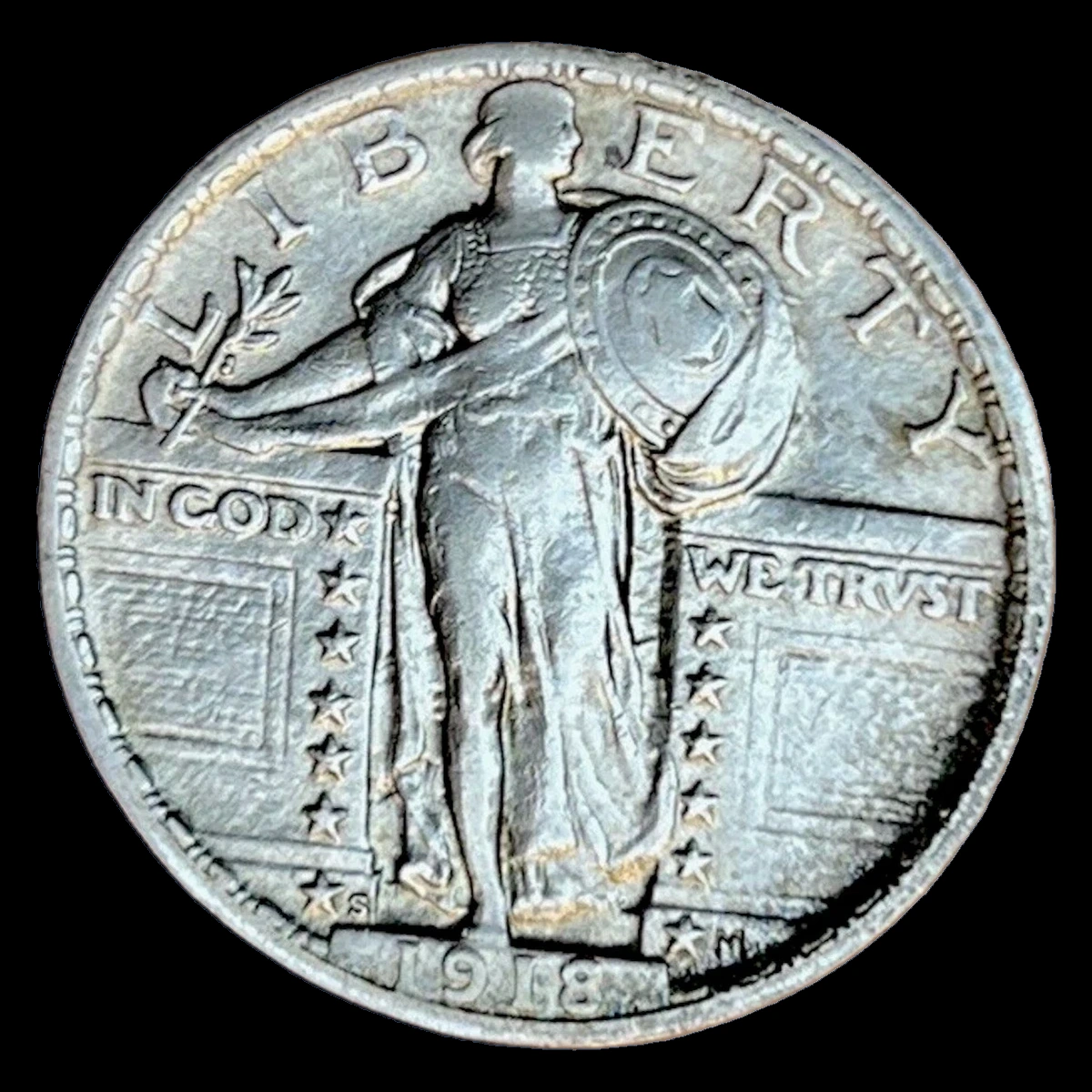
How to Identify
With Liberty upright, her right knee appears on the viewer’s left. Compare the suspected trace with the opposite-face lettering and distinguish it from ordinary clothing folds or scratches.
A faint clash can disappear with wear, and its visibility does not replace the date test. Confirm the 7-under-8 feature independently before calling the coin an overdate.
What It’s Worth
$2,000–$35,000 is the supplied estimate for worn through ordinary unworn 1918/7-S examples showing the clash. Most of that value comes from the scarce overdate, not the extra stroke beside the knee.
Do not add this range to the overdate price for the same coin. A clash on an ordinary-date quarter would require its own value comparison.
3. 1918 Quarter Thin Silver Flaps Lift from the Surface: Lamination Error
A weakness within the silver alloy can allow a thin layer to separate, sometimes leaving an attached flap carrying part of the design. This planchet flaw is called lamination.
A Denver NGC MS63 specimen has attached metal near five o’clock on the front and one o’clock on the back. A separate Philadelphia coin has reverse peeling and a CACG AU Details description.
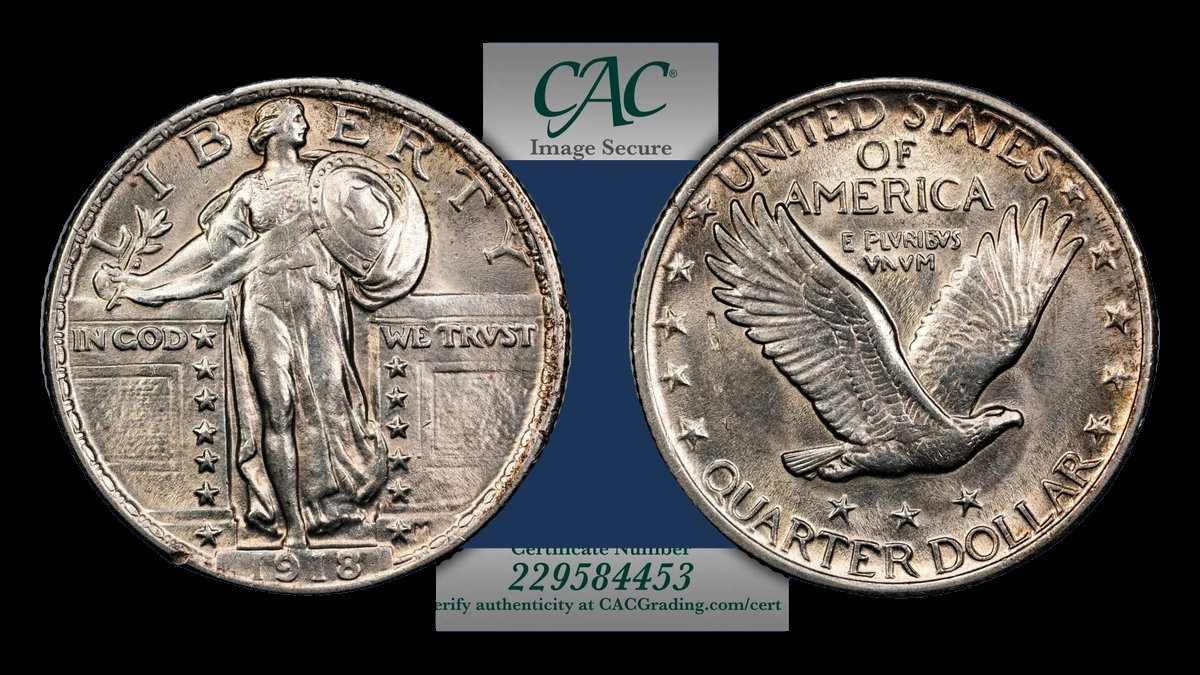
How to Identify
Use side lighting to follow a thin flap into the surrounding metal without pushing or lifting it. Design continuing onto the flap can help distinguish separation within the original material from a ridge pushed up by a scrape.
Inspect both faces of the Denver example because its two attached areas are part of the same record. Keep the Philadelphia reverse location and condition designation separate.
What It’s Worth
$30–$1,000 is the estimated range for comparable genuine 1918 laminations. Mint, condition, and the extent of peeling influence the whole-coin comparison.
A 1932-S quarter with obverse lamination graded NGC AU58 sold for $228 in September 2023. That different-year silver coin does not establish a fixed price for either 1918 specimen.
4. 1918 Quarter A Defined Patch Interrupts the Portrait or Shield: Struck Through Material Error
Material caught between the die and blank can stop a local area of the design from forming. Reports for 1918 mention portrait or shield areas without identifying a specific obstruction.
How to Identify
Compare the coin with an ordinary Standing Liberty quarter of similar wear. Head and shield weakness are common enough that soft detail alone cannot prove a struck-through error.
Look for a boundary where clear neighboring detail is interrupted and inspect any depression for texture. A scratch or impact may instead cut through existing design and push metal along its edge.
Do not name wire, cloth, or another material without a recognizable impression. A smooth hollow does not identify its cause by itself.
What It’s Worth
$50–$1,500 is the estimate for comparable genuine 1918 struck-through quarters. A distinct unusual impression on well-preserved surfaces can attract more interest than a small interruption on a worn coin.
The range assumes that an obstruction during striking is established. Ordinary weak head detail does not create a separate error premium.
5. 1918 Quarter The Front Moves Right while the Back Stays Centered: Misaligned Die Error
A reported 1918-D quarter has its front design shifted toward three o’clock, with an extra rim outline around seven to eleven o’clock. This can result from an obverse die positioned away from its proper center.
The same report describes attached lamination near four o’clock on the front. That is a different coin from the Denver MS63 two-face lamination described above.
How to Identify
Inspect the reverse before classifying the uneven front rim. A centered back supports a front-die alignment problem, while compatible displacement on both faces suggests an off-center blank.
Photograph the whole front border and compare the left rim outline with the right. Look for edge rolling or crushed metal that could imitate the effect, and leave the attached flap untouched.
What It’s Worth
$50–$1,000 is the estimated whole-coin range for comparable moderate 1918-D obverse misalignment. The described specimen has circulation wear as well as the attached flake.
Those features belong in one assessment. The lamination should not receive a second full value added to the misalignment estimate.
6. 1918 Quarter Bare Metal Opposes Missing Letters: Off-Center Strike with Possible Indent Error
One cataloged 1918-S quarter graded MS63 Full Head is about 13% off center toward one o’clock. Parts of ERT in LIBERTY fall beyond the metal, with an unstruck area toward the opposite lower-left border.
A separate PCGS MS63 1918-S combines a 10% off-center strike with an indent from another overlapping blank. These are distinct specimens, and Full Head belongs to the first description.
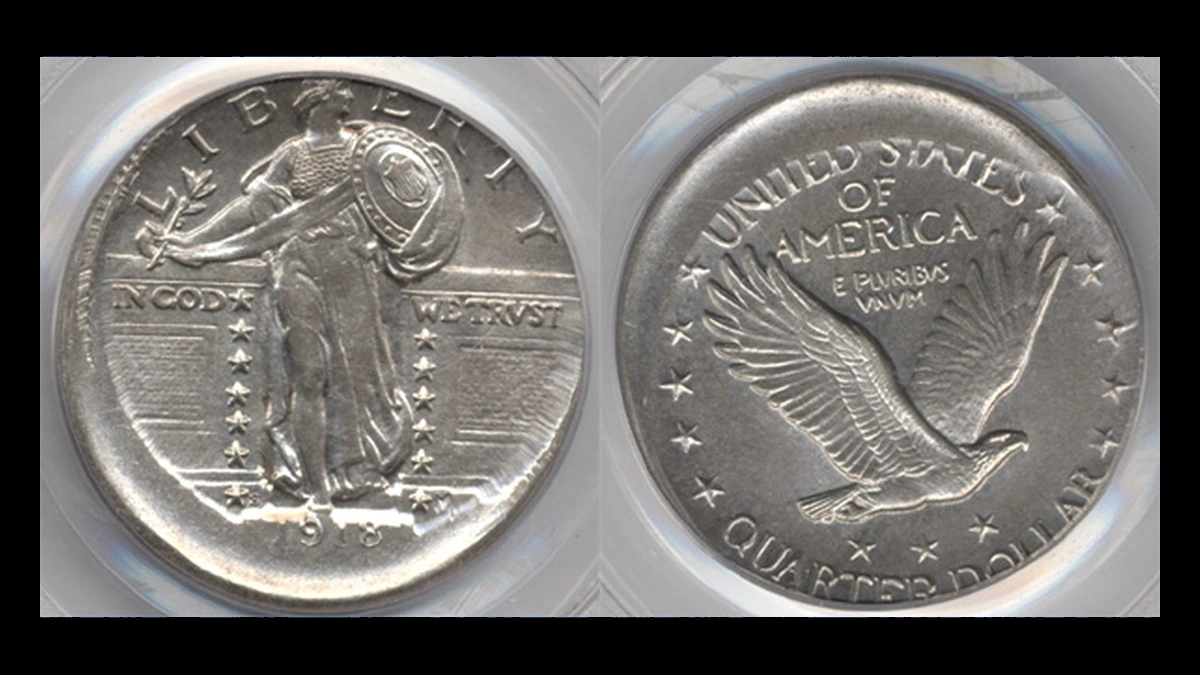
How to Identify
Compare both faces to see whether the missing design and untouched metal fit one displaced blank. On the 13% example, the upper-right shift should explain both the lost ERT detail and opposite bare border.
For the 10% example, locate the indent on the actual coin and examine how the overlapping blank blocked the design. A smooth depression need not contain a brockage’s backward transferred image.
What It’s Worth
$1,500–$12,000 is the estimated range for comparable 1918-S off-center quarters. The degree of shift, readable identity, and original surfaces guide the comparison.
An indent can add interest to the combined-error coin, but its value remains a whole-coin assessment. Do not give that piece the other example’s 13% displacement or Full Head designation.
7. 1918 Quarter Two Design Positions Fit inside the Edge: Double Strike in the Collar Error
A quarter can receive another blow while remaining within the collar, the ring that normally restrains its edge. Overlapping figures or letters may survive without a large unstruck crescent.
Mint Error News reports this kind of repeated strike for 1918. The supplied description establishes neither a particular mint nor a rotation angle.
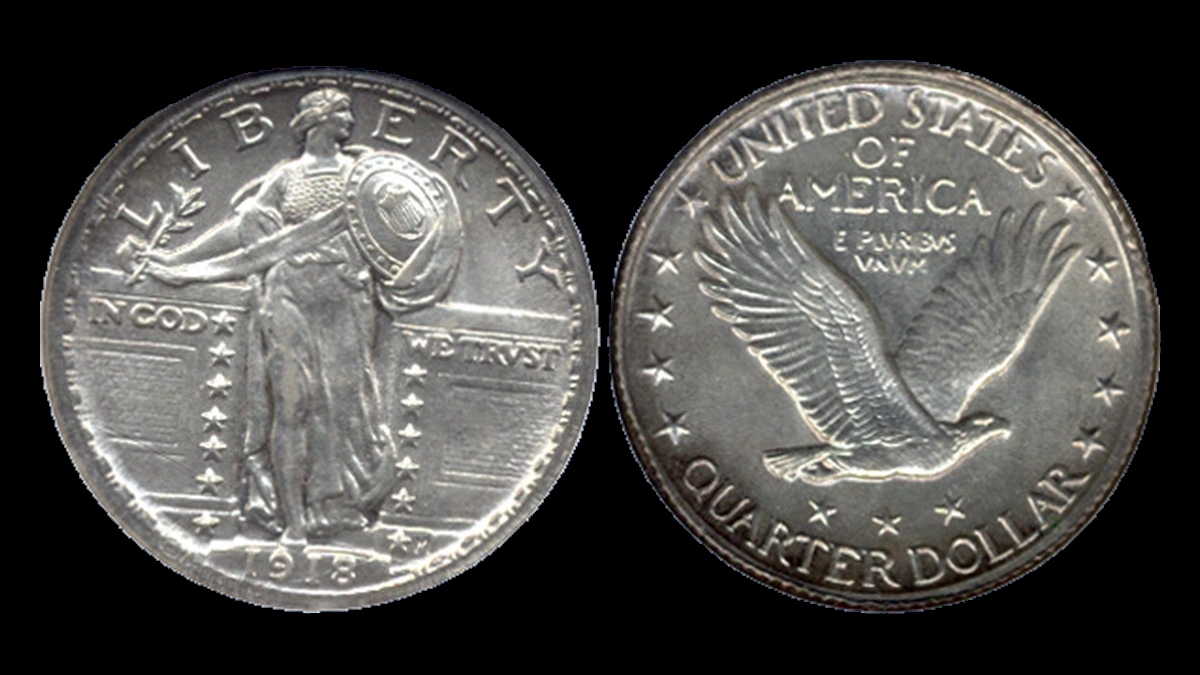
How to Identify
Trace one recognizable figure or word, then separate lines belonging to another position of the design. Check the reverse for overlap that supports a consistent striking sequence.
Additional edge impressions can support another blow, but damaged reeding can be misleading. Examine visible grooves without opening a graded holder.
The 7 beneath the final 8 is a die-made overdate and does not prove that an individual quarter received two blows. A double strike requires broader evidence of repeated impressions.
What It’s Worth
$1,000–$8,000 is the estimate for a confirmed 1918 quarter with a clear repeated strike within the collar. Separate readable design positions are more useful than an indistinct crowded patch.
Wear can obscure the weaker impression, while cleaning and cuts can reduce appeal. The actual date, mint, and surviving sequence should be established before selecting a comparison.
Conclusion
The 1918/7-S overdate deserves its own careful date examination before other features affect the price discussion. Its clash traces can support a comparison, but they neither replace the underlying 7 nor create a second full valuation.
For the remaining errors, preserve fragile flakes and compare both faces. A shifted front die, a displaced blank, and a repeated strike can all disturb the design while leaving different physical evidence.