Rare 1961 Quarter Errors (List & Pictures)
The back of a 1961 quarter can reveal more than its mint mark. Among 1961 quarter errors and collectible die varieties, supplied estimates extend from about $15 to $10,000, with the upper end reserved for exceptional coins.
A Philadelphia Type B reverse graded MS67 brought $8,519 in December 2021. Read the reverse lettering first, then examine doubled details, surface defects, and changes to the coin’s outline.
| What you notice | Possible identification | Estimated value |
|---|---|---|
| Clear space between E and S in STATES | Type B reverse | $25–$300; exceptional grades higher |
| Another outline beside D | Repunched mint mark | $25–$400 |
| Repeated front details on a Proof | Doubled die obverse | $50–$1,500 |
| Raised line or rim-connected lump | Die crack or cud | $15–$150 |
| Interrupted design or an impression | Struck-through error | $40–$700 |
| Abnormal blank or low weight | Defective planchet | $50–$500 |
| Part of the metal is missing | Clipped planchet | $25–$300 |
| Design displaced onto part of the blank | Off-center strike | $100–$1,000 |
| Quarter design on another denomination’s blank | Wrong planchet | $200–$8,000 |
A regular 1961 quarter is 90% silver, with a standard weight of 6.25 grams and diameter of 24.3 millimeters. These reference measurements help separate an unusual blank from a coin whose surface merely looks different.
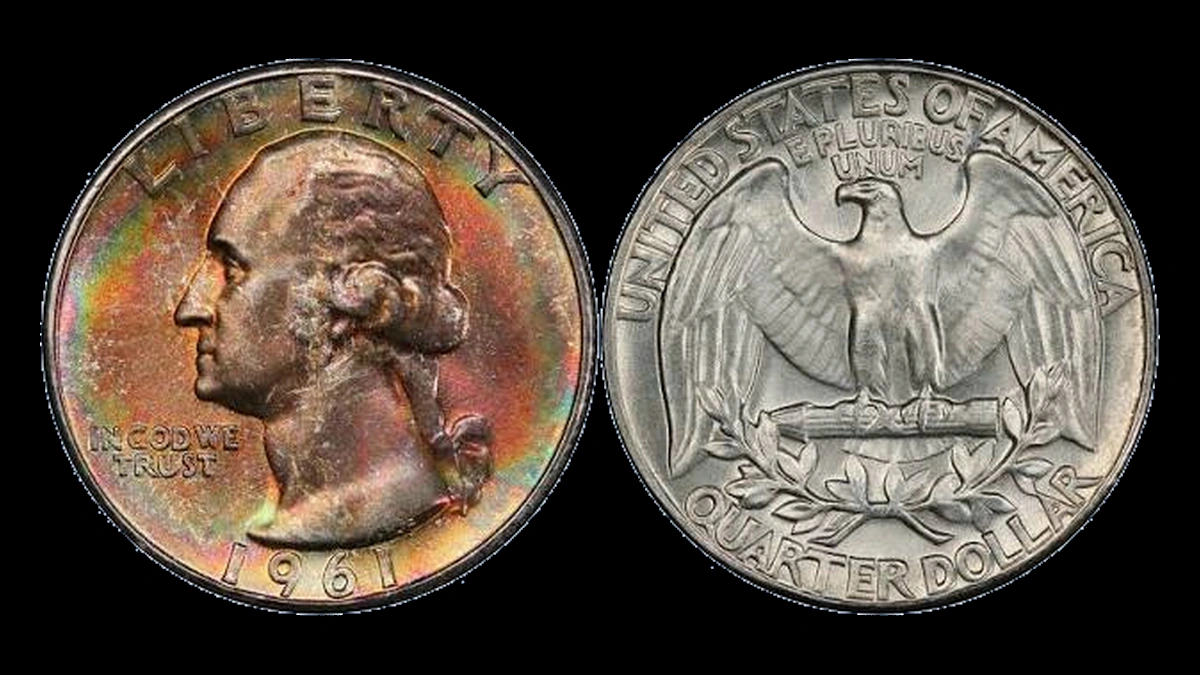
1. 1961 Quarter A Wider Gap in STATES: Type B Reverse Error
Look between the final E and S in STATES on the eagle side. A clear separation is the useful starting point for the Type B reverse, which carries a design normally associated with Proof production.
The collectible combination is this reverse on an ordinary Philadelphia circulation coin. A normal Proof with the expected reverse is a different case.
How to Identify
Compare the lettering with an attributed FS-901 example rather than judging the gap from memory. The usual circulation reverse places these two letters much closer together.
Check that the reverse mint-mark area is intact and has no D, and establish whether the coin is a circulation strike. A shiny surface alone cannot answer that question because cleaning can make a worn coin reflective.
What It’s Worth
$25–$300 covers the ordinary supplied range, while exceptional examples are estimated at $1,000–$10,000. The large jump depends heavily on preservation.
The PCGS record for the 1961 Type B reverse includes an MS67 sale of $8,519 in December 2021. That high-grade result does not make every worn Type B quarter an expensive coin.
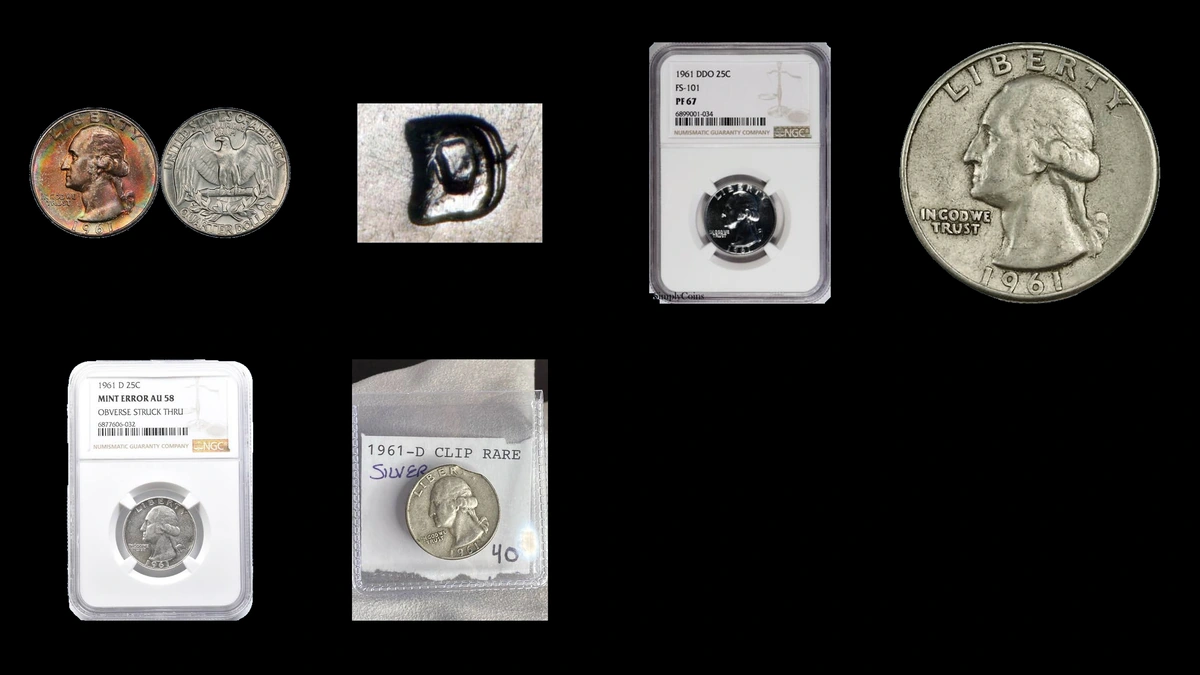
2. 1961 Quarter A Second Shape Beside the D: Repunched Mint Mark Error
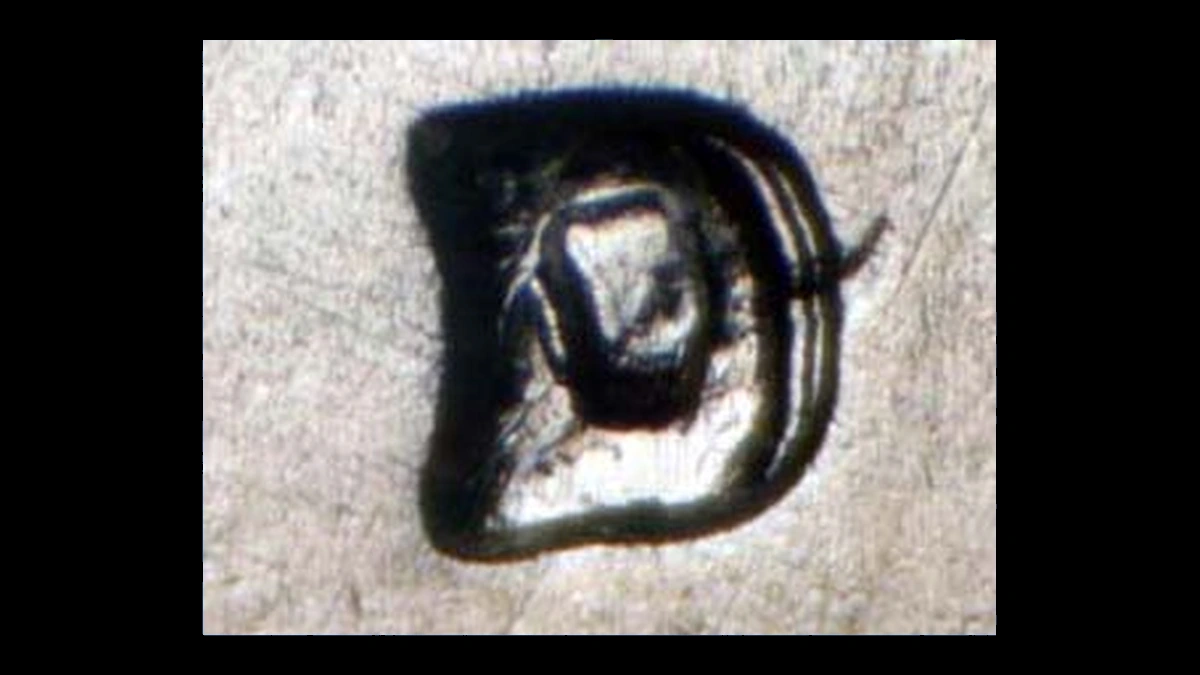
The D on a 1961 Denver quarter sits on the reverse below the eagle. Some dies received the mint-mark punch more than once in slightly different positions, leaving a remnant of the earlier impression.
How to Identify
Inspect the outline and interior of the D under magnification, then match the extra shape to a recognized variety. FS-501 and FS-502 are listed for this date, but their identities should not be treated as interchangeable.
A flat shelf alongside the mark can come from movement during the strike. A dent beside the letter may also resemble another stroke without reproducing the earlier punched D.
What It’s Worth
$25–$400 is the supplied estimate for attributed examples. A reported March 2018 sale placed an MS65 FS-501 at $216.
That record concerns FS-501 specifically. Strong detail and an identifiable variety are more useful price guides than an indistinct extra edge.
3. 1961 Quarter Repeated Details on a Proof’s Front: Doubled Die Obverse Error
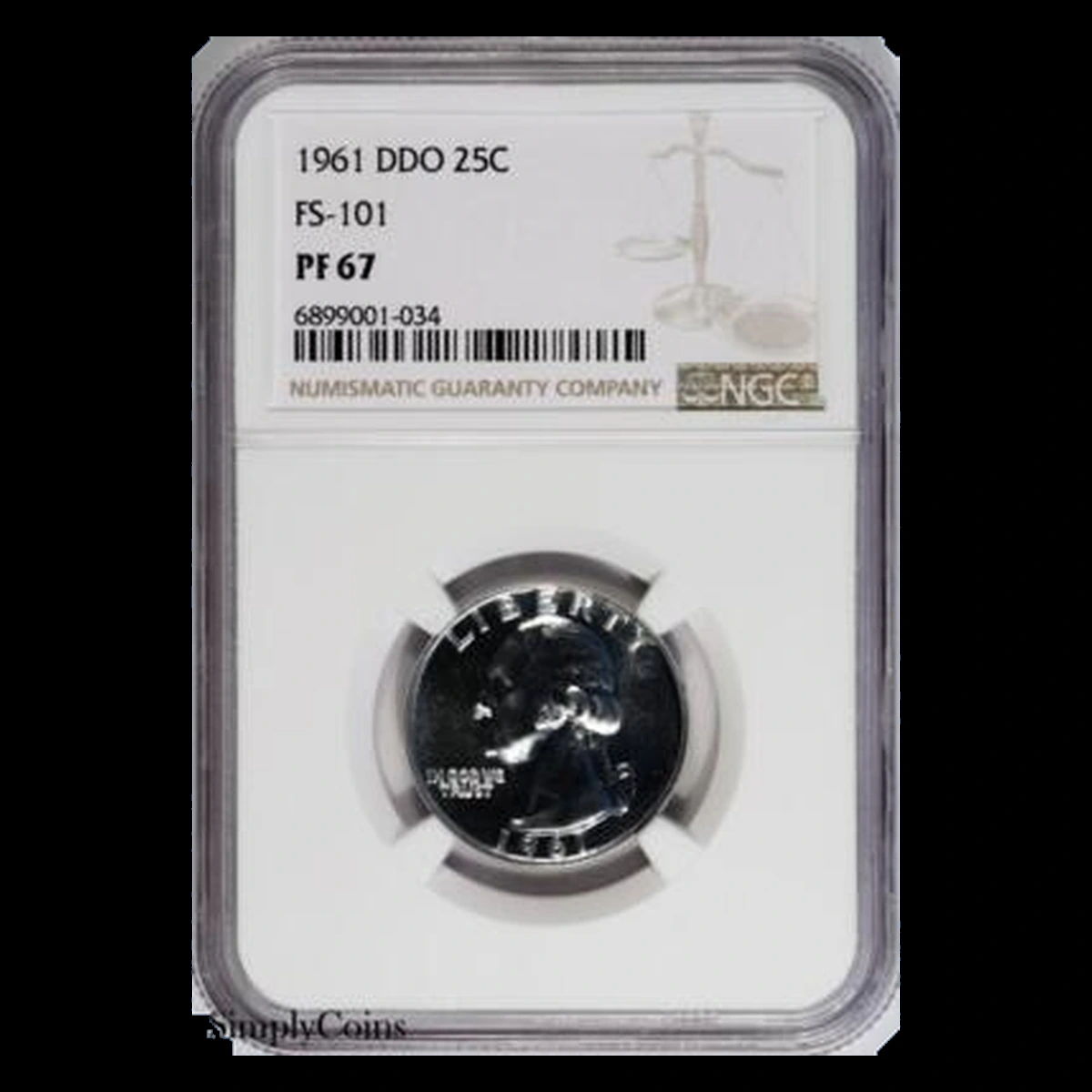
Reported 1961 Proof doubled dies place the search on Washington’s side, including the motto, date, and portrait details. A doubled die carries a repeated design in the die itself, so its coins can share the same arrangement of doubling.
How to Identify
Look for separated, rounded detail that agrees across more than one feature. The supplied material does not establish an exact variety number or a single diagnostic location for every reported example.
Thin, flat steps next to letters often indicate strike-related doubling instead. An additional strike can repeat much larger portions of the design and should not automatically be called a doubled die.
What It’s Worth
$50–$1,500 is the estimated range for a confirmed 1961 Proof doubled die. Attribution, visibility, and the condition of the mirrored surfaces all affect the result.
A different-date comparison is a 1990-S FS-101 quarter graded PR68 Deep Cameo that sold for $360 in March 2020. Its date, variety, and contrast designation make it a comparison rather than a direct price for a 1961 Proof.
4. 1961 Quarter A Raised Line Above the Head: Die Crack or Cud Error
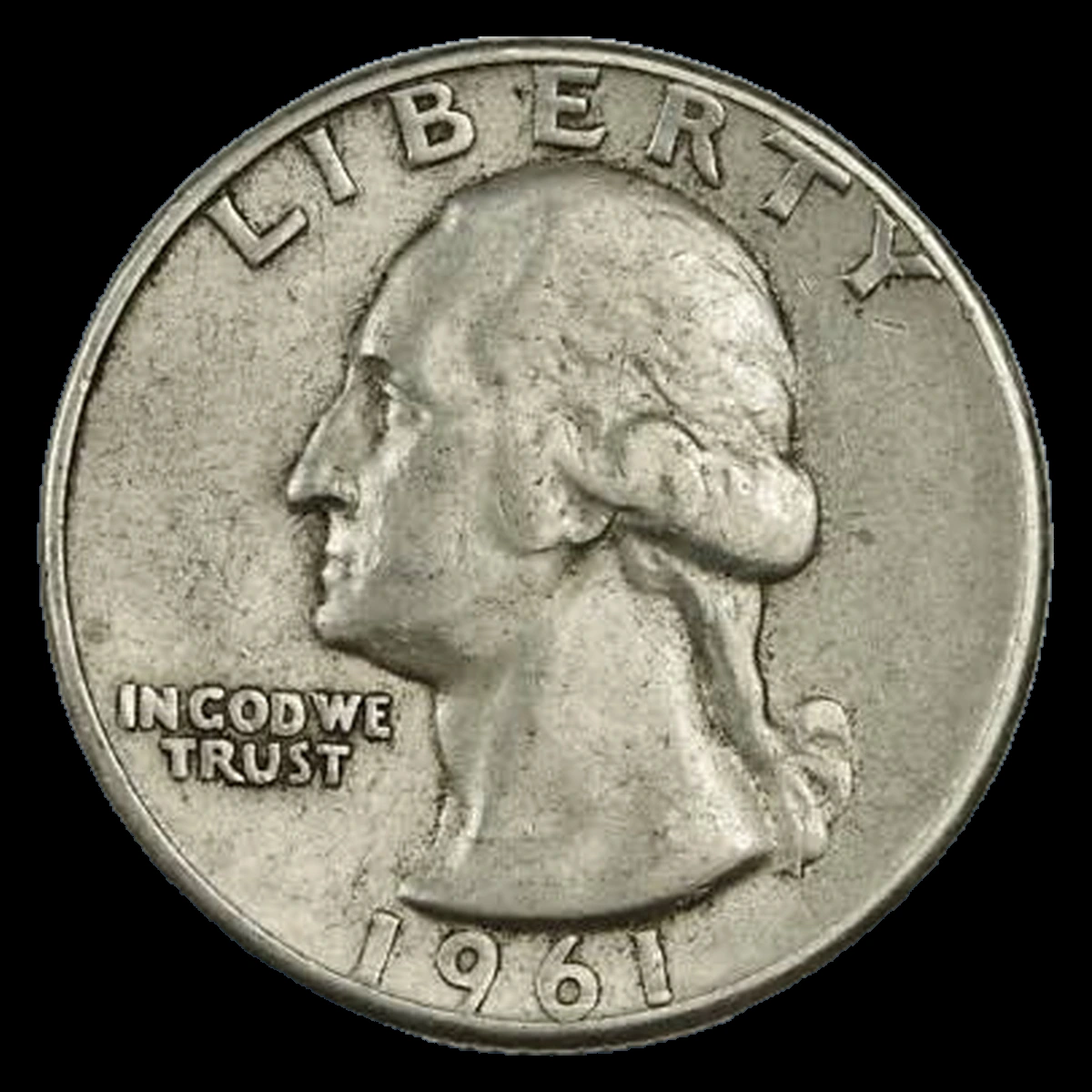
A raised line over Washington’s head appears in the supplied die-crack material. Metal entered a fracture in the striking die, producing a ridge on the coin instead of a cut into its surface.
A cud is a larger raised area connected to the rim where a piece of the die has broken away. Its position should be established from the individual coin, not inferred from the location of the illustrated crack.
How to Identify
Move the light across the line to see whether it stands above the surrounding surface. Scratches usually cut downward and may leave displaced metal along their edges.
For a possible cud, check the connection to the rim and the loss of normal detail within the raised area. Damage that simply pushes the edge inward has a different structure.
What It’s Worth
$15–$150 is the supplied whole-coin estimate, including the quarter’s silver value. A tiny crack generally attracts less attention than a prominent die break.
A 1970-D nickel with two cuds sold for $63 in October 2022. It illustrates interest in visible die failure, but it is a different denomination and does not share the quarter’s silver content.
5. 1961 Quarter A Patch Where the Design Did Not Form: Struck-Through Error
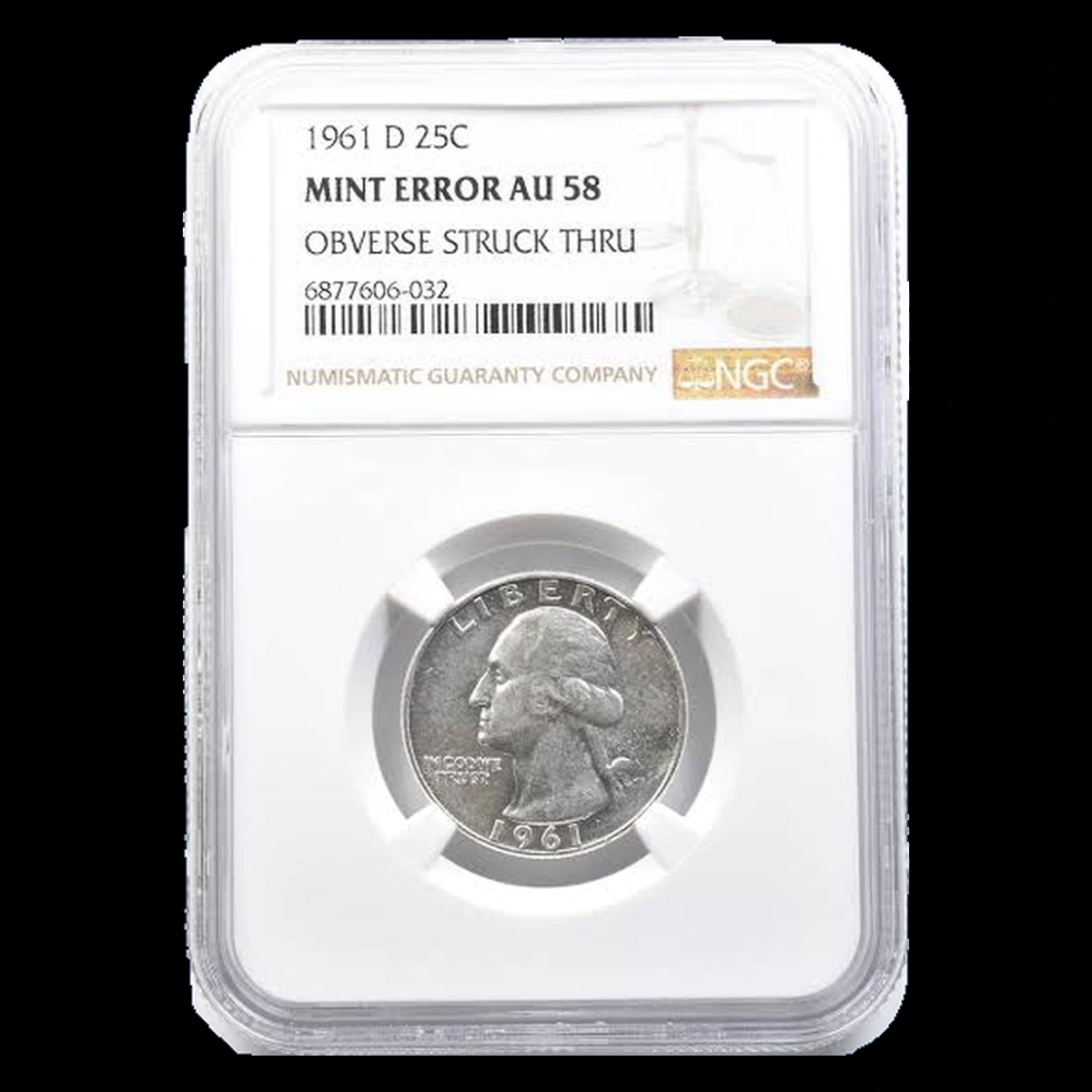
An obstruction between a die and the blank can prevent part of the design from forming or leave an impression of the material. One supplied 1961 example is a PCGS MS62 quarter with a reverse struck-through error.
A separate ANACS PR64 Cameo Proof is also reported. The available description does not establish the affected face or identify the object for that Proof.
How to Identify
Follow the normal design into the affected area and examine how it fades or is interrupted. An impact after minting more often crushes existing detail and pushes metal around the damaged spot.
Do not assign cloth, wire, or another specific material without a recognizable impression. Cameo describes the Proof’s contrast between devices and fields; it does not explain the obstruction.
What It’s Worth
$40–$700 is the supplied estimate, with larger and more distinctive impressions usually easier to evaluate. Proof and circulation examples should be compared separately.
A struck-through 1986-P nickel sold for $204 in June 2023. That sale concerns a different denomination and offers context only, not a documented sale of either 1961 quarter described above.
6. 1961 Quarter An Abnormal Blank Before Striking: Defective Planchet Error
A planchet is the prepared metal blank that receives the coin design. The supplied 1961 defective-planchet example weighs 5.7 grams and is graded NGC MS64, placing its recorded weight below the normal 6.25-gram standard.
How to Identify
Study the surfaces, edge, and outline together to determine whether the abnormality existed before the design was struck. Corrosion or grinding after minting can also remove weight.
The reported mass alone does not identify the exact defect. It should not be used to invent a lamination, clip, or wrong-alloy diagnosis that the record does not supply.
What It’s Worth
$50–$500 is the estimated range for a confirmed defective-planchet quarter of this date. The described NGC MS64 specimen reportedly brought $132 in July 2021.
That result belongs to the documented 5.7-gram coin. A low reading from an otherwise unexplained quarter is only the beginning of identification.
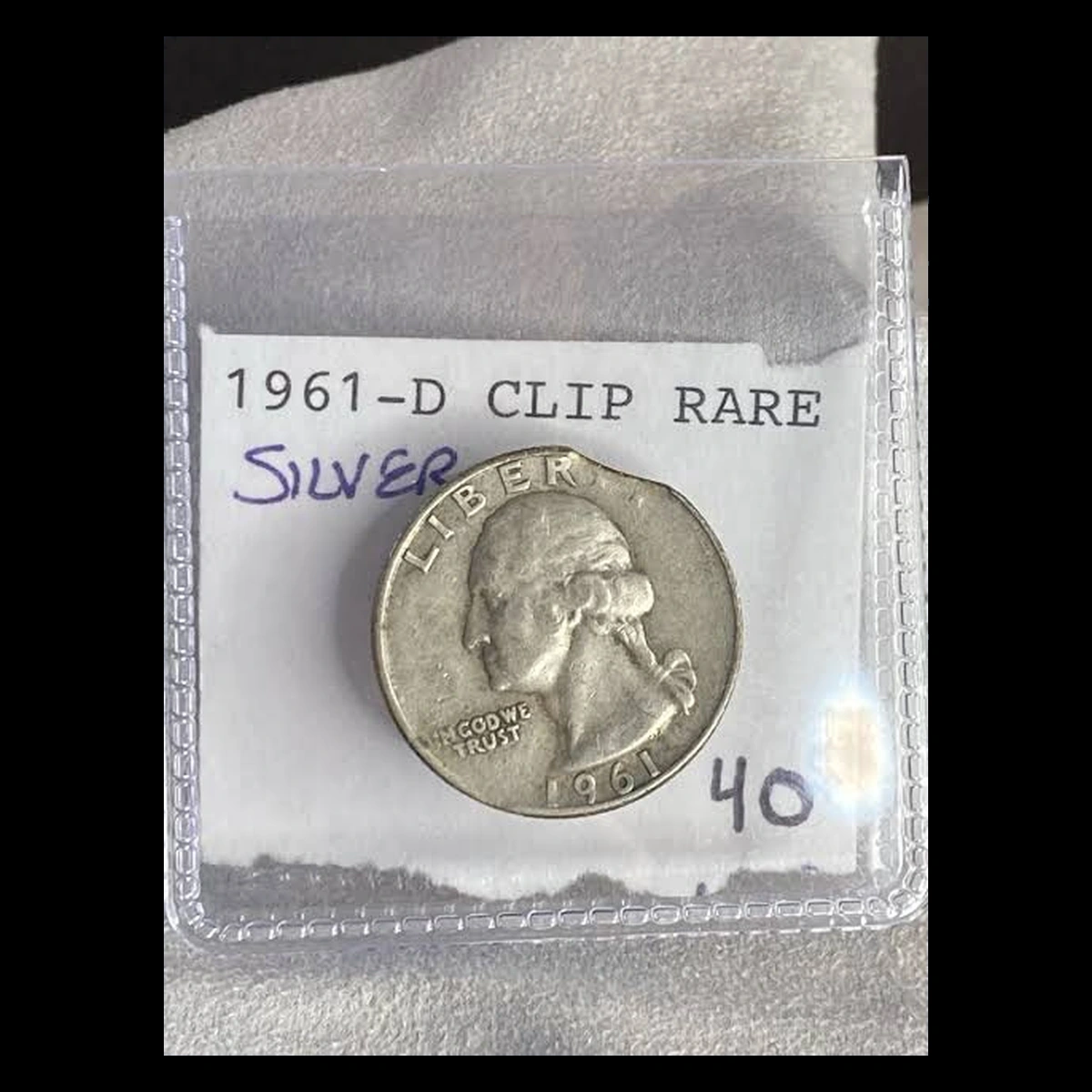
7. 1961 Quarter A Missing Arc or Straight Segment: Clipped Planchet Error
Clipped blanks can have a curved bite or a straighter missing section. The metal was absent before striking, so the surviving design and rim formed around an incomplete blank.
How to Identify
Examine the ends of the missing section for natural changes in metal flow and rim formation. Saw marks, sharp recent cuts, or squeezed metal can indicate later alteration.
The rim opposite a genuine clip may be weak, although this supporting feature is not equally visible on every coin. The supplied 1961 reports do not establish a particular mint or clip percentage.
What It’s Worth
$25–$300 is the supplied estimate, depending on the amount missing and the coin’s condition. Multiple clips can add interest when their mint origin is clear.
A 1978 quarter with three curved clips sold for $180 in March 2025. It is a later clad example, so its composition and unusual triple clip differ from an ordinary single clip on a 1961 silver quarter.
8. 1961 Quarter The Design Misses Part of the Blank: Off-Center Strike Error
An off-center quarter has an unstruck area beside a design that runs beyond the opposite edge. The blank was not properly positioned between the dies when the press struck it.
How to Identify
Check both faces for the displaced strike and missing design. A face that appears shifted while the other is normally centered may instead involve a misaligned die.
Philadelphia and Denver examples are reported, but the supplied reports do not assign a fixed direction or percentage. If the strike omits the mint-mark area, an invisible D cannot establish Philadelphia origin.
What It’s Worth
$100–$1,000 is the supplied range for 1961 off-center quarters. A readable date and a substantial displacement make the error easier to identify and display.
A 1965 clad quarter struck 25% off center sold for $180 in December 2025. That percentage and sale belong to the 1965 coin, not to the reported 1961 pieces.
9. 1961 Quarter A Quarter Design on a Smaller Blank: Wrong Planchet Error
Some reported 1961 quarters were struck on blanks intended for cents, nickels, or silver dimes. The smaller blank cannot accommodate the entire quarter design, and its metal may differ from the normal silver alloy.
How to Identify
Use the missing outer design, original metal, and weight together. A copper coating changes color without proving a cent blank, while cutting down a quarter removes metal after its original strike.
Standard blank weights are about 3.11 grams for a bronze cent, 5 grams for a nickel, and 2.5 grams for a silver dime. Their respective diameters are approximately 19.05, 21.2, and 17.9 millimeters before any spreading during the error strike.
A supplied Philadelphia cent-planchet example is recorded at 3.07 grams; a separate Philadelphia nickel-planchet example is recorded at 5 grams. Keep those measurements attached to their own coins.
What It’s Worth
$200–$8,000 is the supplied estimate across these wrong-planchet combinations. A 1961-D quarter struck on a cent planchet, graded PCGS MS64 with original red color, sold for $6,900 in August 2006.
A Philadelphia quarter on a nickel planchet graded AU50 reportedly sold for $282 in September 2016. The different blank, mint, and condition help explain why one wrong-planchet result cannot price every other combination.
Conclusion
For a 1961 quarter, begin with the reverse lettering and the D before moving to surface defects and missing metal. Type B, repunched mint marks, and doubled dies require matching design details, while clips and wrong blanks require evidence in the physical coin.
Keep each measurement and auction result with its own example. The exceptional MS67 Type B price reflects remarkable preservation as well as the attributed reverse.