Rare 1920 Penny Errors (List & Pictures)
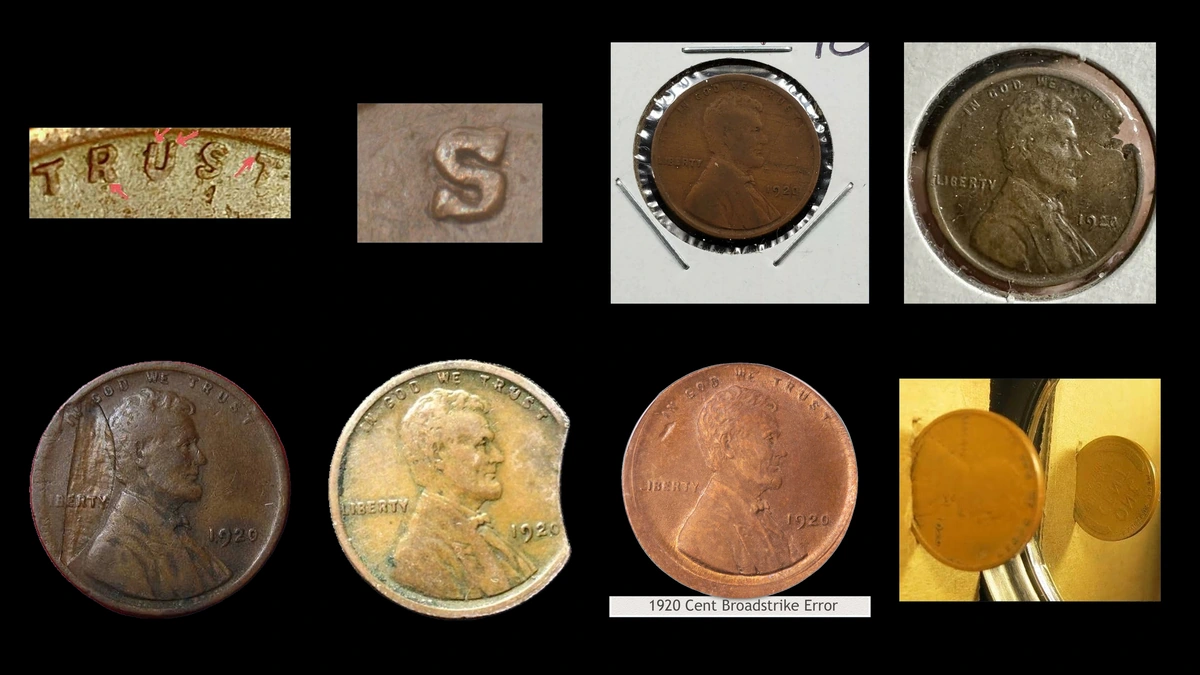
A cent struck on a Cuban blank realized $2,875 in September 2009. It is one of several unusual metal and striking mistakes among 1920 penny errors, with estimated whole-coin values ranging from $5 to $6,000.
Read the date and mintmark, inspect the surface and outline, then compare the two designs. Extra strikes, lost metal, and a turned die leave different evidence even when they occur together.
| First clue | Likely category | Estimated value |
|---|---|---|
| Extra eye or mint letter | Doubled die or repunched mintmark | $10–$600 |
| Raised bar or rim lump | BIE or cud | $5–$1,000 |
| Loose layer, open crack, or depression | Blank defect or struck-through | $5–$600 |
| Missing or expanded edge | Clip or broadstrike | $15–$800 |
| Turned or displaced design | Rotation or off-center strike | $25–$1,200 |
| Multiple or mirror impressions | Repeat strike or brockage | $300–$3,500 |
| Unexpected metal or size | Foreign planchet | $150–$6,000 |
An ordinary 1920 cent has a plain edge, weighs about 3.11 grams, and measures 19.05 millimeters across. Its copper-rich alloy is solid throughout, unlike the copper-coated zinc used for modern cents.
1. 1920 Penny Extra Detail at the Eye or Date: Doubled Die Obverse Error
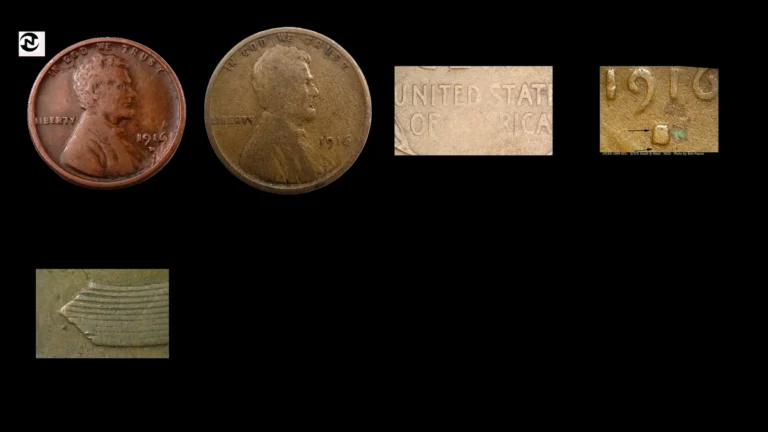
The reported 1920-S variety has an extra eyelid line below and to the right of the usual outline. This repeated feature was present in the die before it struck the coin.
How to Identify
Use a close-up that retains enough surrounding portrait to locate the extra line. Compare it with the same San Francisco variety and distinguish raised repeated detail from flat shelving or reflected light.
A Denver extra-eye report needs its own direction match. The Philadelphia report instead concerns 920 in the date and LIBERTY, so the S eyelid does not identify it.
What It’s Worth
Correctly matched minor doubled-front varieties are estimated at $20–$600. Stronger preserved detail supports a higher assessment than a vague thickened feature.
A 1936 doubled-front cent graded ANACS MS63 Brown brought $70 in June 2024. It is a later-date comparison rather than a transaction for any of these 1920 varieties.
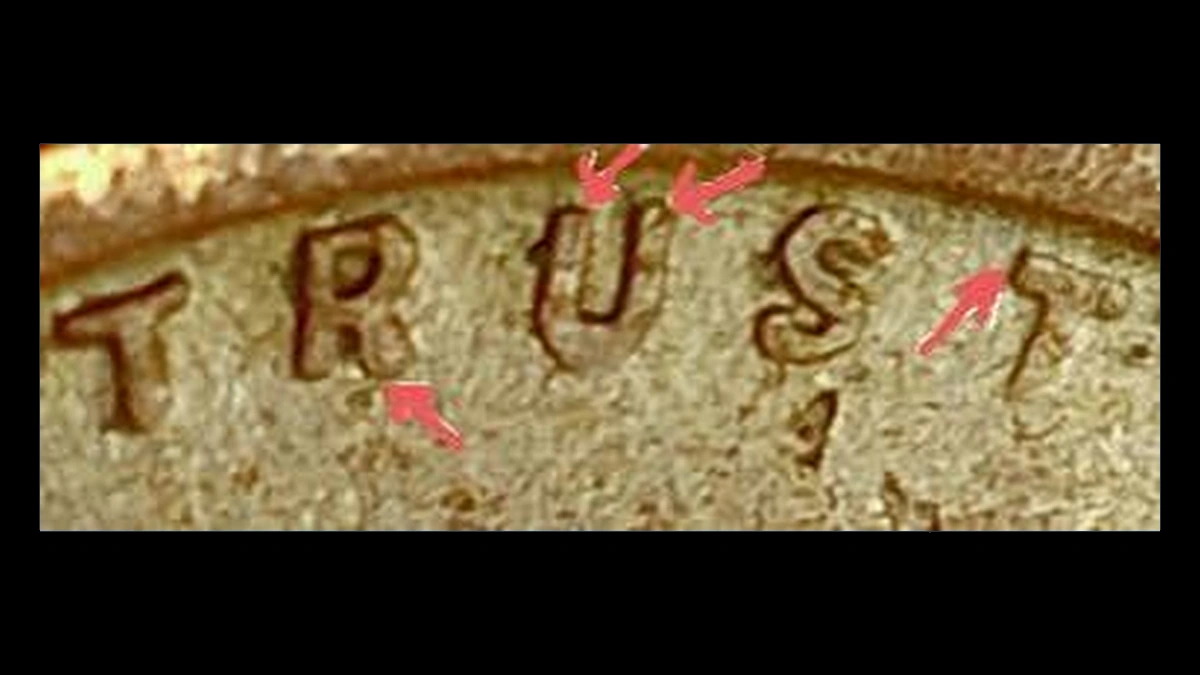
2. 1920 Penny A Second Mint Letter Peeks Out: Repunched Mintmark Error
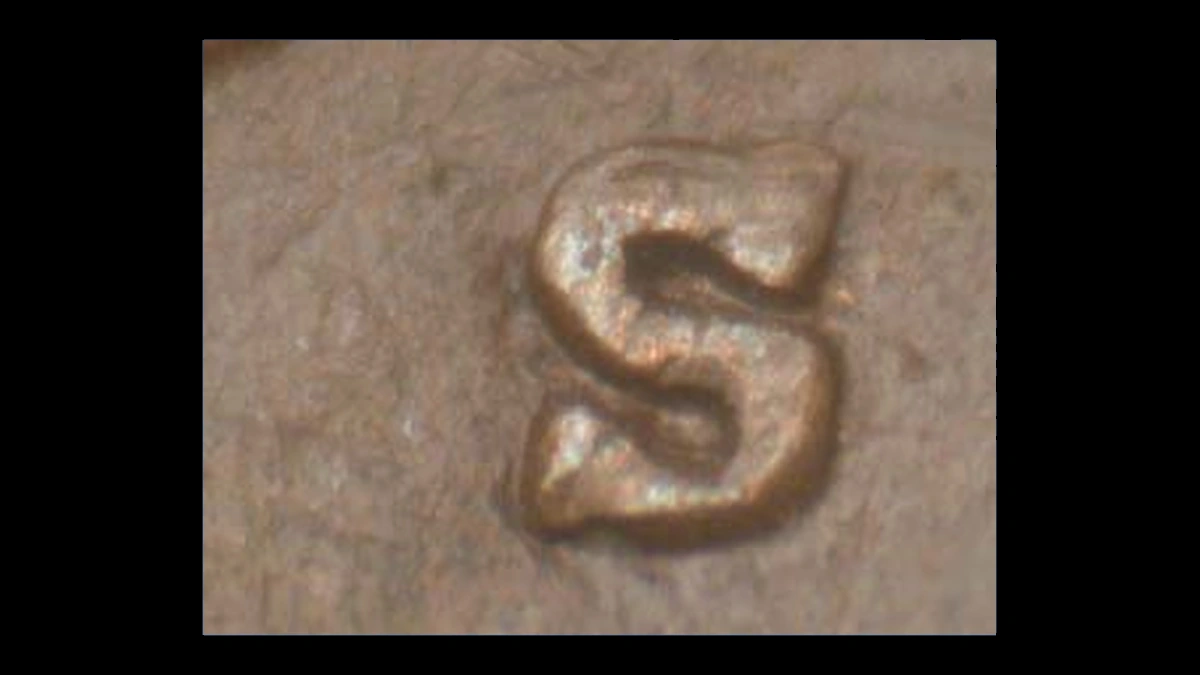
A hand punch placed D or S on the die separately from the main design. Slightly different repeated placements could leave part of an earlier letter visible.
How to Identify
For the recognized 1920-S pattern, look above the main S for its earlier outline. The reported Denver example has a tilted repeated D and needs a separate comparison.
Trace enough of the extra stroke to recognize a letter fragment. A shapeless bump or flat ledge does not establish another punch position.
What It’s Worth
Identified repunches have an estimated whole-coin range of $10–$250. Clear extra curves and original surfaces generally make more convincing examples.
No auction amount is supplied for either cataloged pattern. The range is based on modest Wheat cent mintmark varieties.
3. 1920 Penny A Bar in LIBERTY or a Lump at the Rim: BIE Chips and Cuds Error
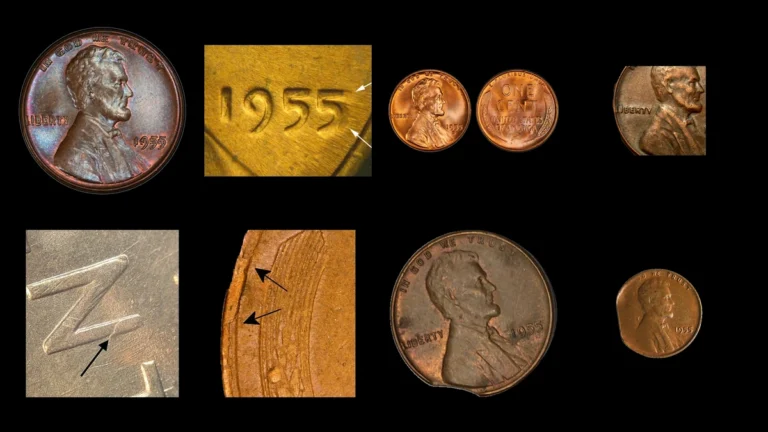
A BIE is a raised bar between B and E made when a small piece breaks from the die. A larger die-edge break can replace normal design with a raised rim-connected patch called a cud.
How to Identify
Locate the chip precisely before calling it BIE, and establish the rim connection before calling a larger patch a cud. Surviving shifted detail inside a break may indicate a die section that stayed in place.
Cataloged 1920 examples cover Philadelphia, Denver, and San Francisco, including reverse breaks and multiple breaks on some S coins. Photograph all related patches together rather than assuming one universal position.
What It’s Worth
Estimated values span $5–$1,000: small BIEs about $5–$50 and genuine rim cuds about $30–$1,000. Size, clarity, and preservation determine the useful part of the range.
A 1946-S major break sold for $288 in March 2021. That later comparison does not assign a separate full value to each patch on one 1920 coin.
4. 1920 Penny A Surface Layer Pulls Away: Lamination Error
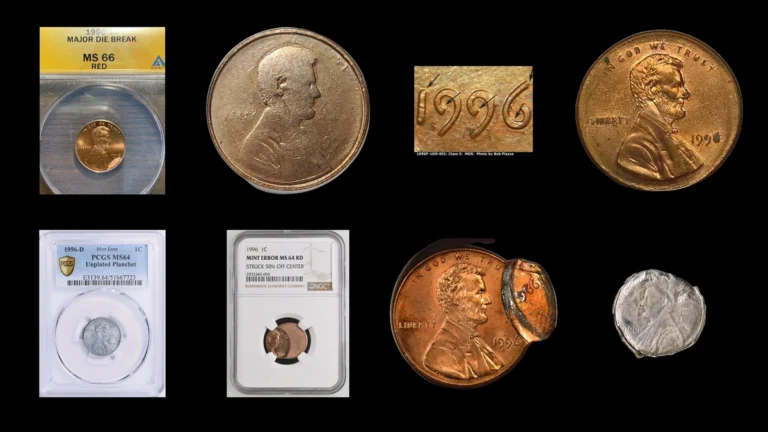
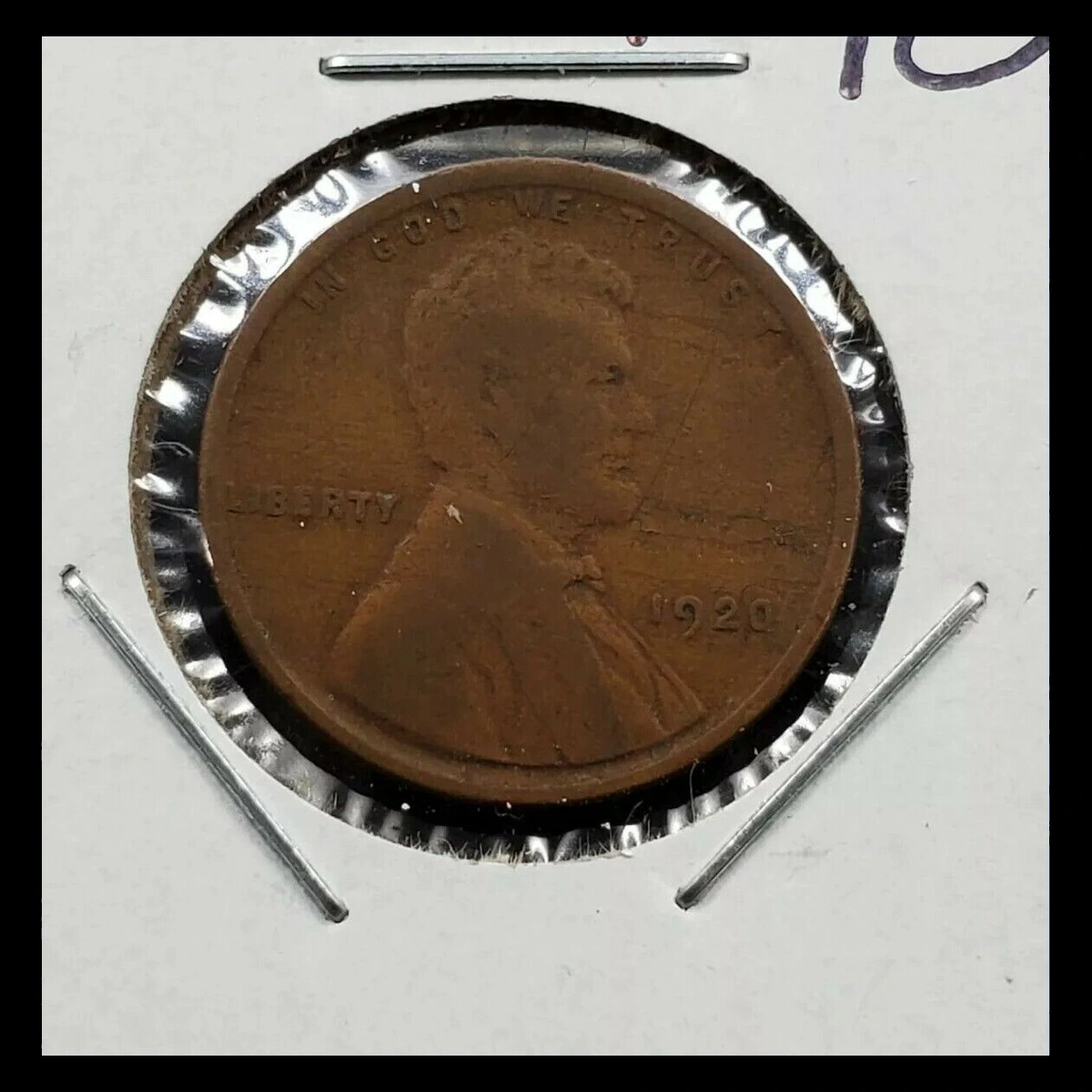
Internal weakness can let a thin layer separate from the cent’s alloy. Some examples keep an attached flap, while others expose a rough area where a layer has fallen away.
How to Identify
Follow the layer’s boundary with side lighting without lifting it. Large surface loss is not automatically proof that the complete coin split into two pieces.
Separate Philadelphia reports describe two peeling paths and a coin losing about 40% of its front surface. A San Francisco example has a path from twelve-thirty to seven o’clock, which must not be combined with the Philadelphia descriptions.
What It’s Worth
The estimated range is $5–$300 for genuine 1920 peeling forms. Corrosion or disturbed boundaries can reduce appeal even when the affected area is large.
A 1952-D front lamination brought $35 in July 2013. Older dealer minimum bids documenting 1920 examples are not final realized prices.
5. 1920 Penny An Opening Enters the Disc: Cracked Planchet Error
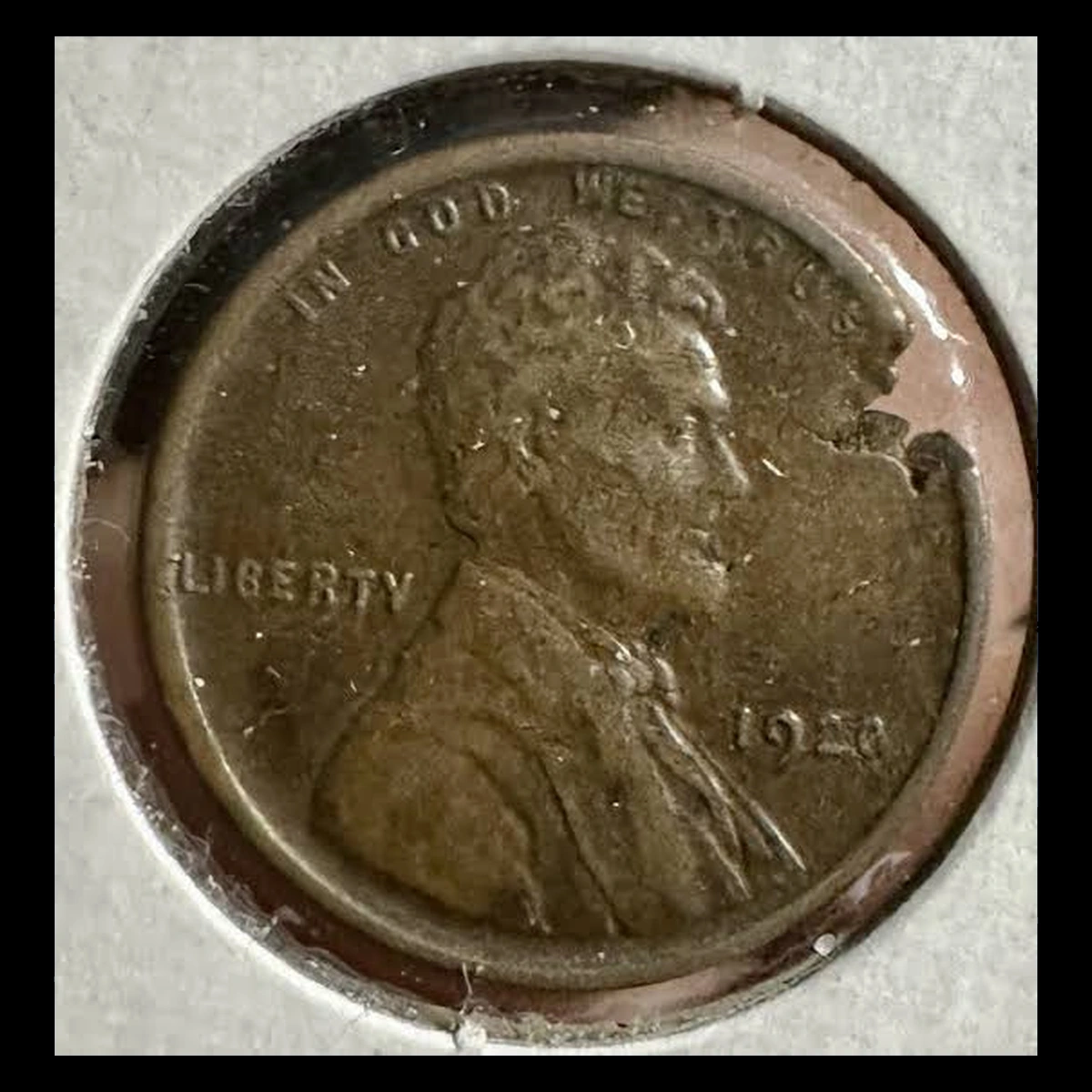
The reported Philadelphia cracked blank has an opening near eight o’clock. Unlike a die crack’s raised line, this feature is a gap in the coin’s own metal.
How to Identify
Inspect the edge and any continuation on the other face without flexing the coin. A sharp cut across finished lettering or a corrosion channel may explain a similar-looking line.
Check whether the feature opens into the body or merely lifts a thin sheet from the surface. The latter points toward lamination instead.
What It’s Worth
Genuine cracked planchets are estimated at $25–$600. An undisturbed opening that can be separated from later damage is the essential evidence.
The older 1920 dealer listing supplies a minimum bid, not a realized sale. The estimate uses comparable copper-alloy blank failures.
6. 1920 Penny An Impression Made by a Loose Flake: Struck Through a Lamination Fragment Error
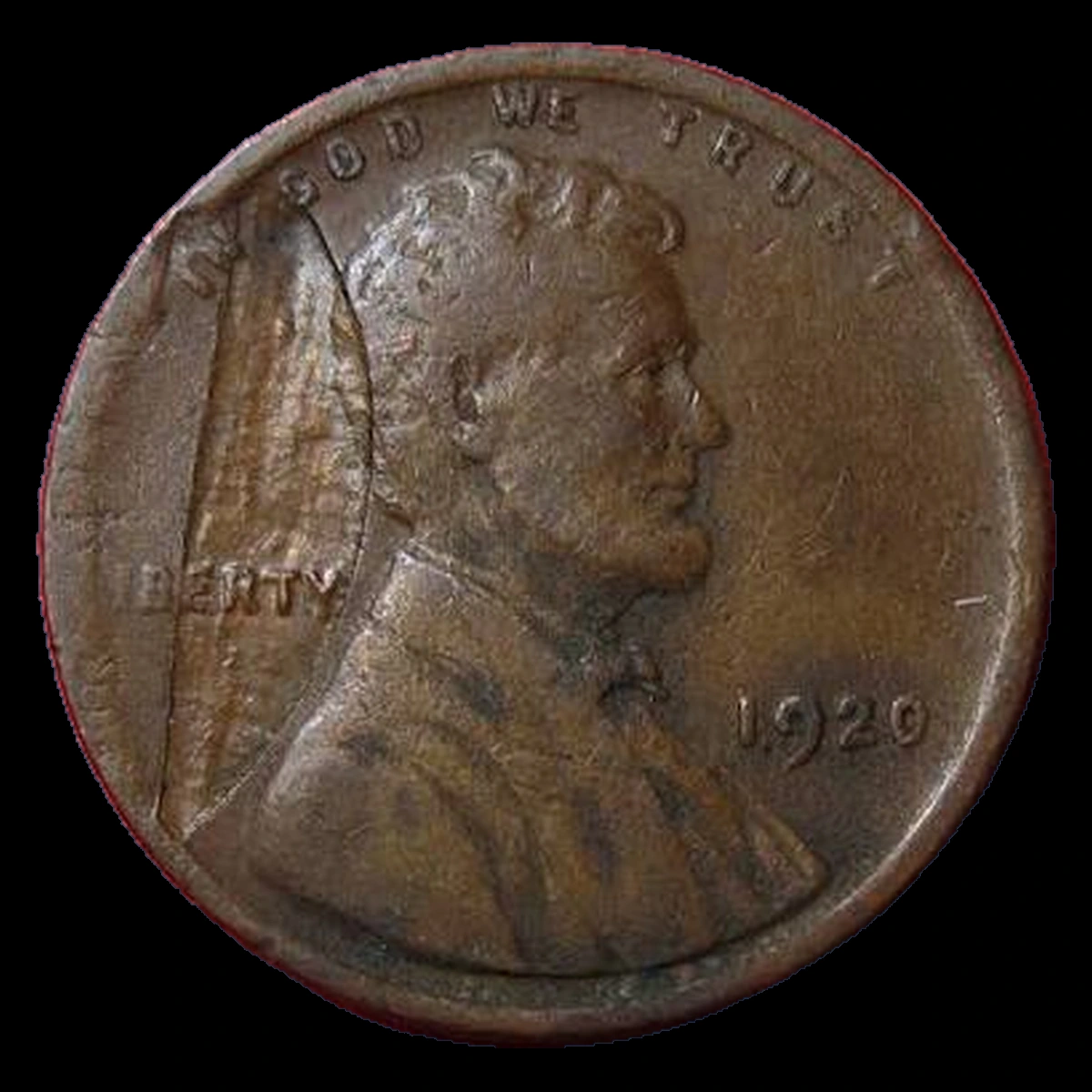
A loose metal layer can become an obstruction during another strike. The Philadelphia example is identified by the impression of that fragment, rather than a layer peeling from the finished penny itself.
How to Identify
Study how the blocked area meets nearby struck details. An obstruction changes how the design forms, while a later gouge cuts through a completed surface.
The supplied record does not establish that the fragment remains attached or specify its exact outline here. Leave any material present undisturbed.
What It’s Worth
Comparable genuine fragment impressions are estimated at $30–$500. The clarity and size of the original interruption matter alongside wear.
A PCGS VG10 example sold for $134 in March 2025. Its heavily worn grade shows that a readable error can retain interest even when much ordinary detail is worn down.
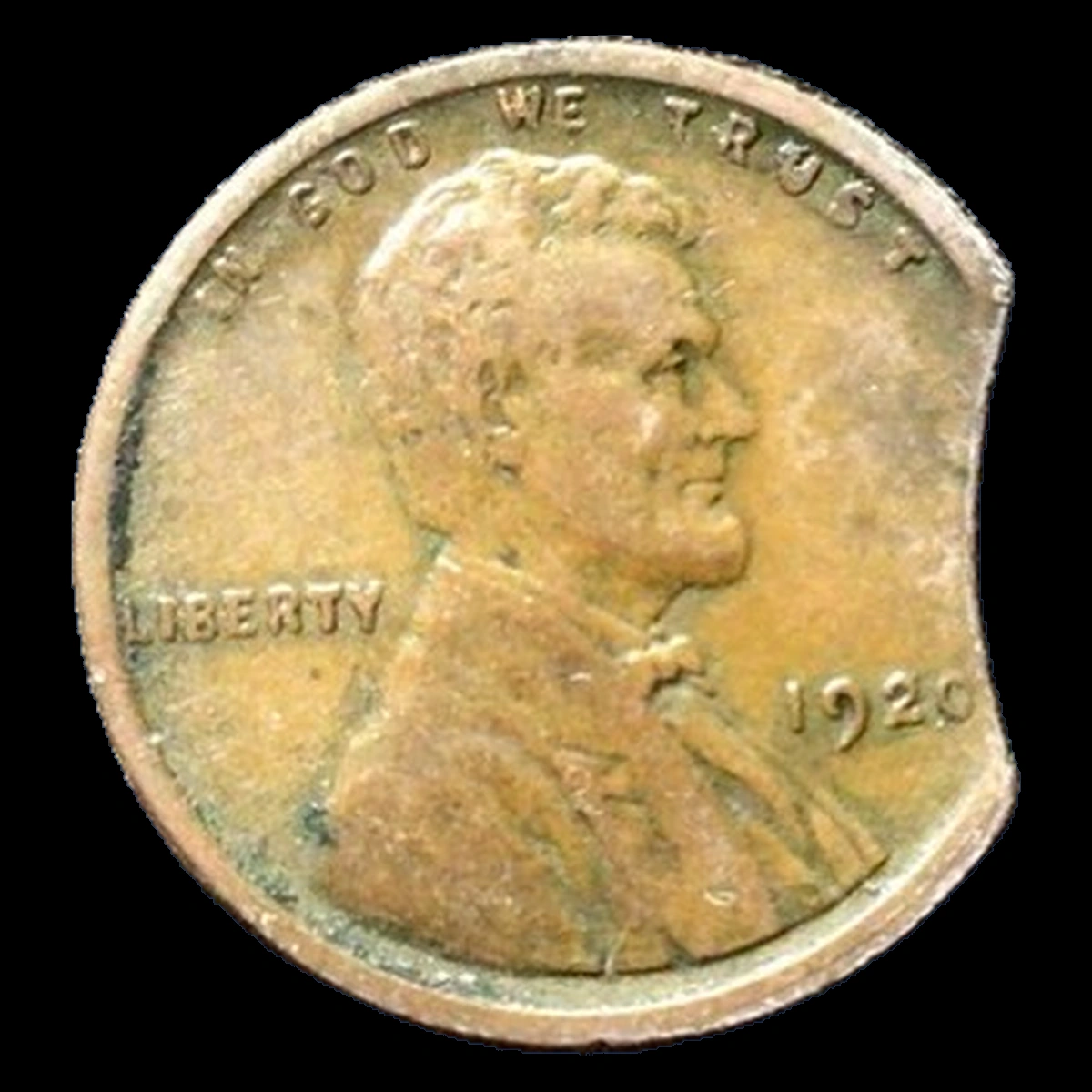
7. 1920 Penny A Gap or Ragged Boundary: Clipped and Defective Blanks Error
Missing blank metal can leave a curved gap or an irregular edge. Those shapes describe the starting disc, rather than how far the later design moved off center.
How to Identify
Inspect the rim transitions and adjacent letters for evidence that the gap existed before striking. Saw marks and cuts across finished detail suggest later removal.
Separate Philadelphia records include 7% and 15% clips, plus a clip entering the final zero. Another coin combines a ragged edge, a 15% off-center strike, and a 3.0-gram weight; its measurements belong to that combination.
What It’s Worth
Estimate $15–$800 across these forms: ordinary clips about $15–$500 and the ragged-edge/off-center combination about $100–$800. These are whole-coin figures.
The 7% curved clip graded PCGS AU55 sold for $49 in March 2025. That sale does not price the separate unworn 15% clip.
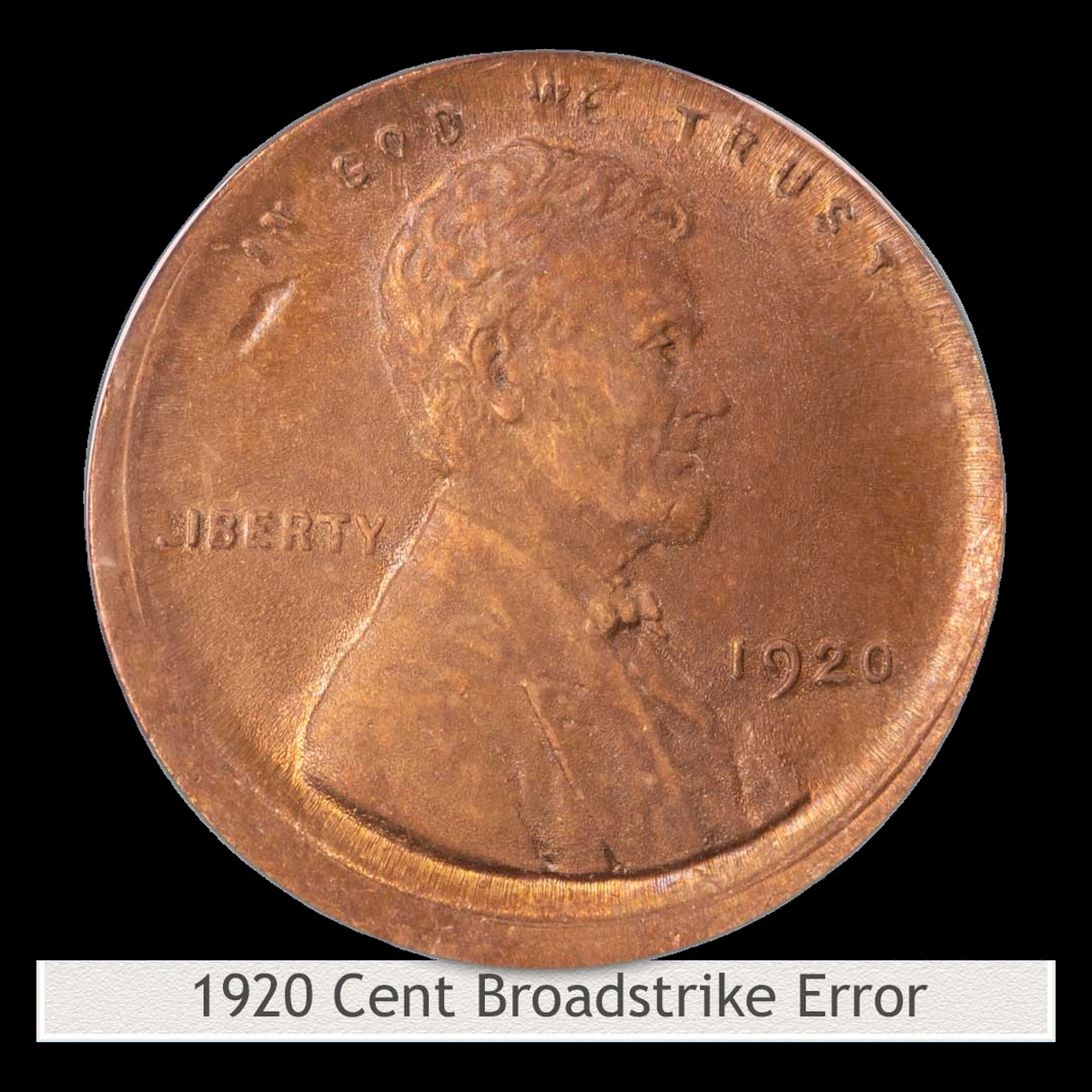
8. 1920 Penny The Disc Spreads beyond Normal Width: Broadstrike Error
A broadstrike forms when the collar fails to restrain the metal’s outward flow. The intended design remains complete inside the expanded outline.
How to Identify
Measure across more than one direction, then read the outer lettering on both faces. An uneven border can still be a broadstrike if no intended design falls off the metal.
Inspect for crushed detail and later hammering before accepting the widened shape. Broadstriking alone does not establish an additional press blow.
What It’s Worth
Genuine 1920 broadstrikes are estimated at $25–$400. The visual spread and the cent’s preservation guide the comparison.
A Philadelphia NGC MS62 Brown example sold for $119 in March 2026. It was unworn with noticeable marks and brown copper color.
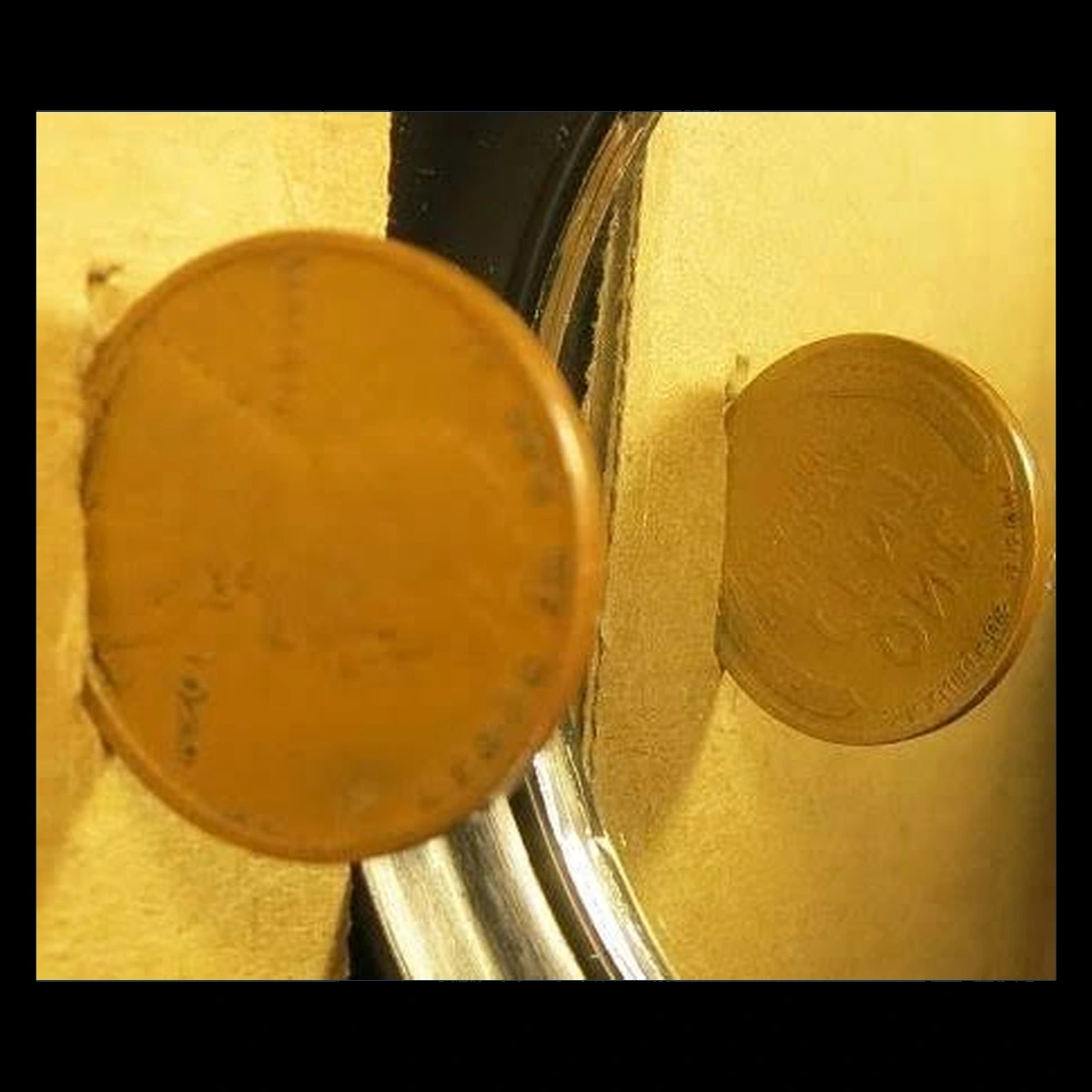
9. 1920 Penny The Back Tilts after Turning the Coin: Rotated Dies Error
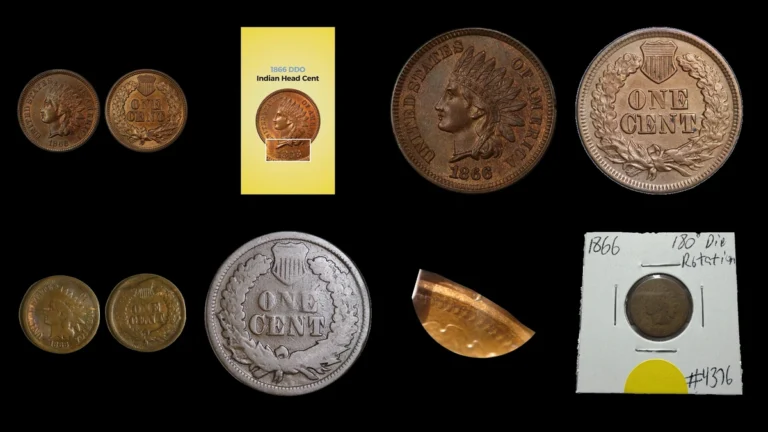
The reported 1920-D reverse leans by 15 degrees when the coin is flipped correctly. The dies were turned out of their intended relationship, rather than striking front and back in separate steps.
How to Identify
Hold Lincoln upright and flip the coin top to bottom around a fixed axis. Repeat the motion; a genuine rotation should remain consistent instead of changing with your grip.
Use a normal cent to check the method and photograph the starting and ending orientations. The supplied report does not establish clockwise or counterclockwise direction.
What It’s Worth
A genuine modest rotation is estimated at $25–$200. A small angle needs a careful, repeatable measurement before it supports a premium.
A year-specific guide reports a PCGS AU58 Brown 1920-D sold for $59 in 2018. That is a guide-reported sale, not an independently matched auction lot in the supplied evidence.
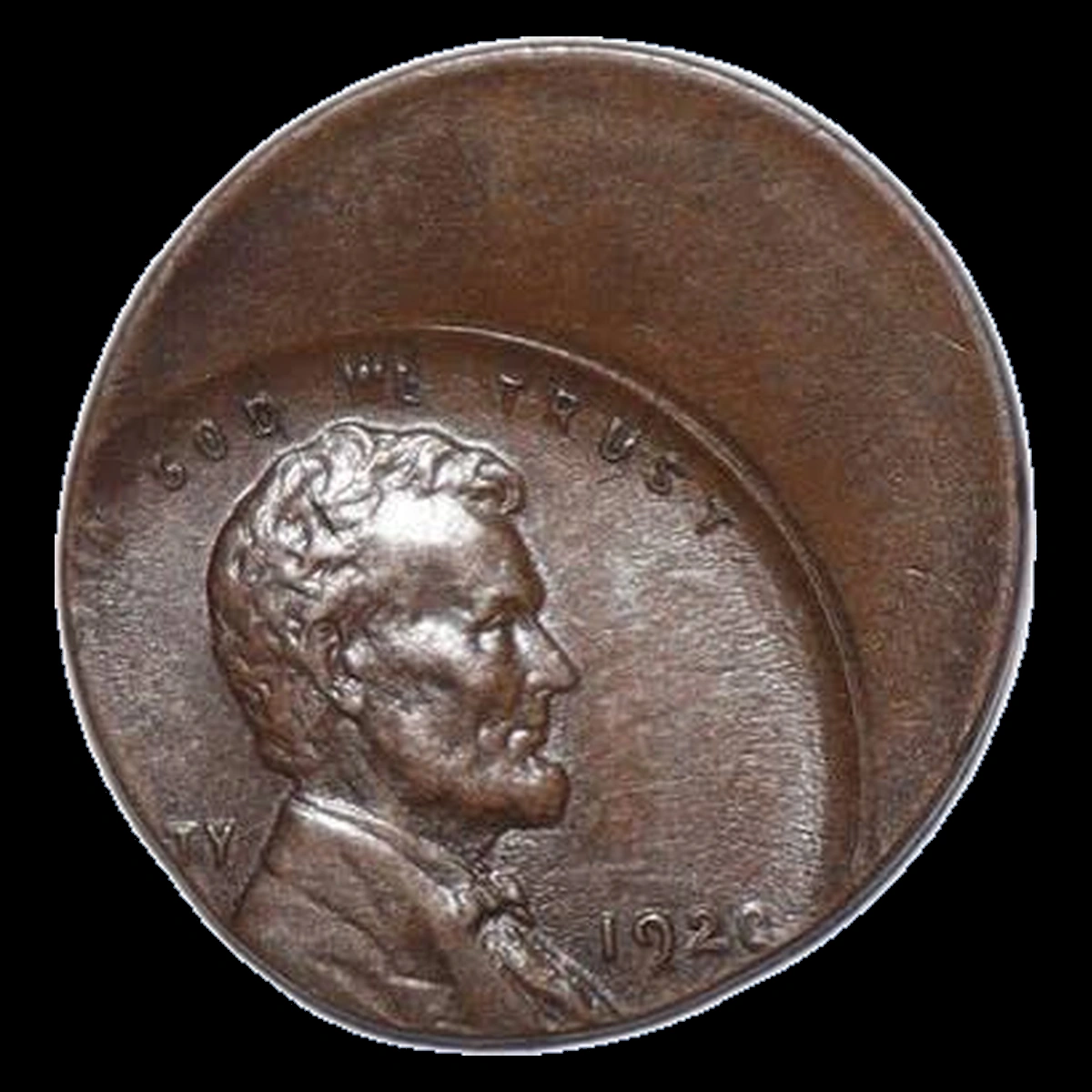
10. 1920 Penny Unused Metal beside a Shifted Image: Off-Center Strike Error
A misplaced blank can receive an incomplete design with a plain crescent beside it. The recorded Philadelphia example is 20% off center and graded PCGS XF40.
How to Identify
Check that the surviving date identifies 1920 and that both faces fit the same displaced blank. One shifted face opposite a centered one suggests die misalignment.
Inspect the unused area for grinding or erased detail. A simple off-center strike need not remove metal, even though it leaves part of the image missing.
What It’s Worth
The estimated range is $40–$1,200 for genuine dated 1920 off-center cents. Larger shifts can attract attention, but legibility and preservation remain important.
The PCGS XF40 20% example sold for $159 in March 2025. Its result should not be transferred to the ragged-edge or brockage combinations.
11. 1920 Penny A Backward Portrait Sinks into the Reverse: Brockage Error
A previously struck coin trapped against a die can press its raised design into the next blank. The new coin receives a recessed mirror image called a brockage.
How to Identify
Check that Lincoln’s reverse-side portrait is sunken and mirror-reversed. Examine the surrounding strike and edge for signs of two finished coins pressed together later.
The documented Philadelphia PCGS VG10 coin also sits 40% off center toward two o’clock. The earlier coin that made the impression is not included as another specimen here.
What It’s Worth
A genuine dated brockage with a comparable off-center strike is estimated at $400–$2,500. Wear and the readability of the reversed design affect the whole-coin assessment.
The recorded VG10 example appeared at auction in August 2006 but did not sell. Its listing supplies no realized price.
12. 1920 Penny Design Fragments Mark Several Blows: Double and Triple Strikes Error
A coin moving between additional blows can preserve several design positions. Extreme later strikes may leave only small fragments beside the earlier image.
How to Identify
The Philadelphia triple strike has later blows 70% and 90% off center in an almost vertical arrangement. The first date retains 20, while the second blow covers the 1 and part of the 9.
A separate San Francisco double strike has its second blow 90% off center. Trace related letters and portrait features together rather than counting unrelated ridges as extra strikes.
What It’s Worth
Estimated whole-coin values run $300–$3,500 for these multiple-strike forms. Clear visible overlap matters more than multiplying a price by the number of blows.
The Philadelphia PCGS MS63 Brown triple strike sold for $1,800 in August 2020. The San Francisco double strike is PCGS AU58 and needs its own condition comparison.
13. 1920 Penny A Different Blank beneath Lincoln: Foreign Planchets Error
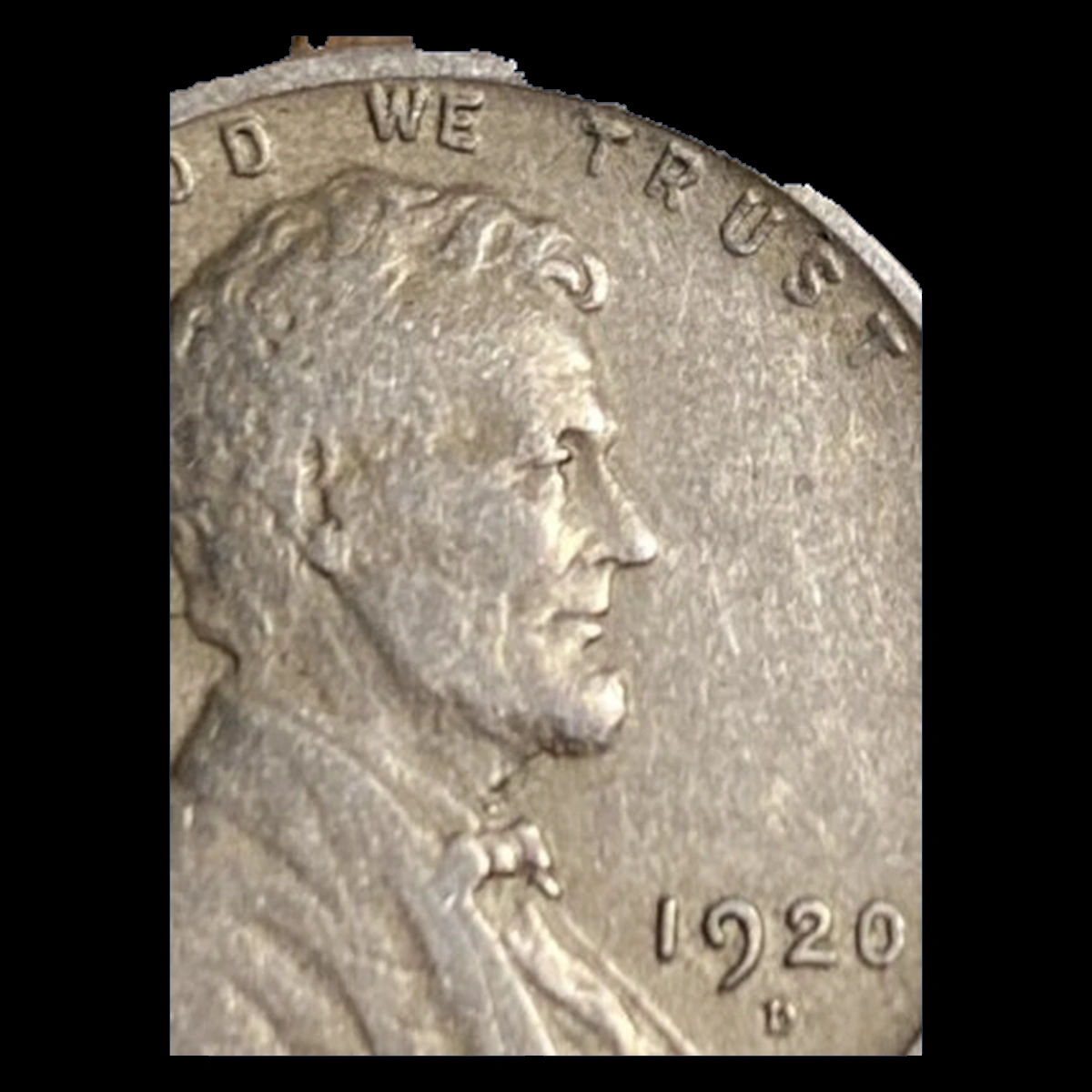
The Cuban-planchet example is copper-nickel and weighs 2.5 grams, with much of the upper motto missing on its smaller disc. A separate Argentina ten-centavos-planchet cent weighs 3.15 grams and is graded NGC VG10.
How to Identify
Keep the measured weight, dimensions, and tested alloy attached to the specific identification. Color alone cannot distinguish a foreign blank from an ordinary cent with plating.
A third report concerns a thin copper-based foreign blank without a named country. Its ANACS VF30 Details description notes cleaning and a filed edge, which are later damage rather than part of the mint error.
What It’s Worth
The broad estimated range is $150–$6,000: comparable Cuban blanks $1,500–$6,000, authenticated Argentine blanks $1,000–$5,000, and the damaged unassigned thin type about $150–$1,500. These are separate categories of comparison.
The NGC MS64 Cuban-planchet cent sold for $2,875 in September 2009. Its sale does not establish the value of the heavily worn Argentine piece or the cleaned, filed example.
Conclusion
A missing piece of blank, an unused area, and an overlapping impression answer different questions about the coin’s manufacture. Keep those observations separate even when one 1920 cent shows more than one.
Within the $5–$6,000 estimates, use the actual mint, metal, condition, and visible combination to select comparisons. A guide-reported sale, an unsold listing, and a documented auction result are different kinds of price evidence.