Rare 1950 Penny Errors (List & Pictures)
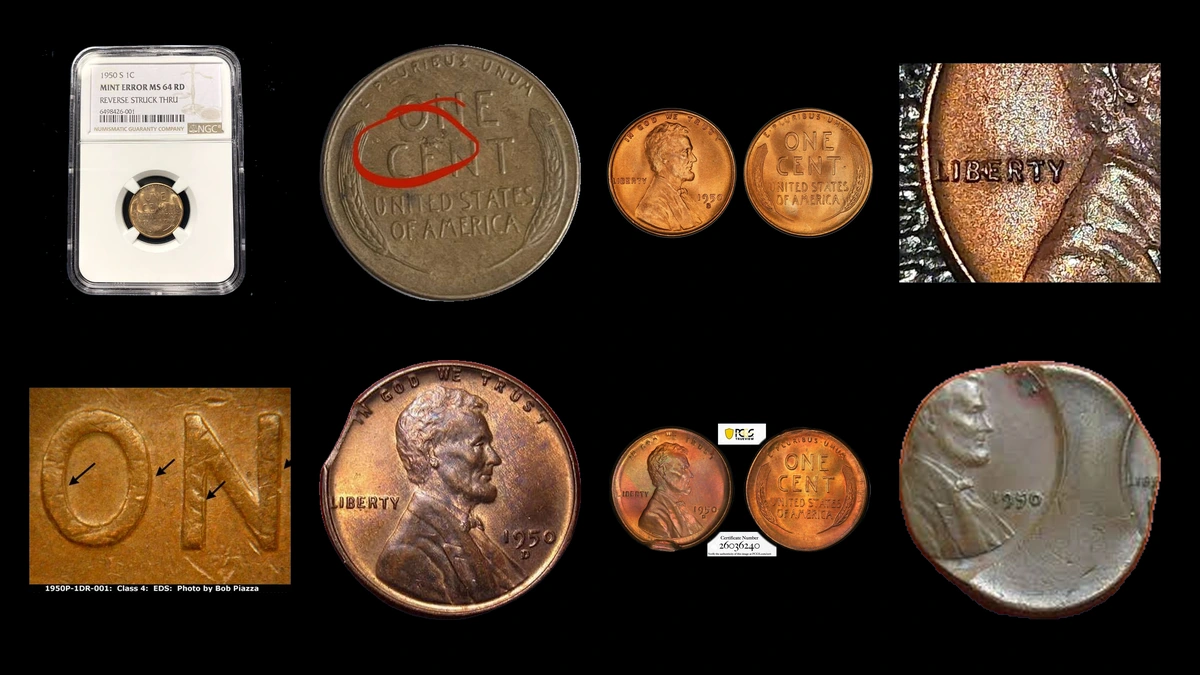
A silver dime blank gave one 1950 cent a smaller canvas: the final zero nearly touches its edge. That coin sold for $3,840 in May 2022.
Most 1950 penny errors involve smaller changes, such as a second mintmark stroke or a peeling layer. The estimated values here run from $2–$6,500; compare the surface first, then the outline, and finally any overlapping designs or unusual metal.
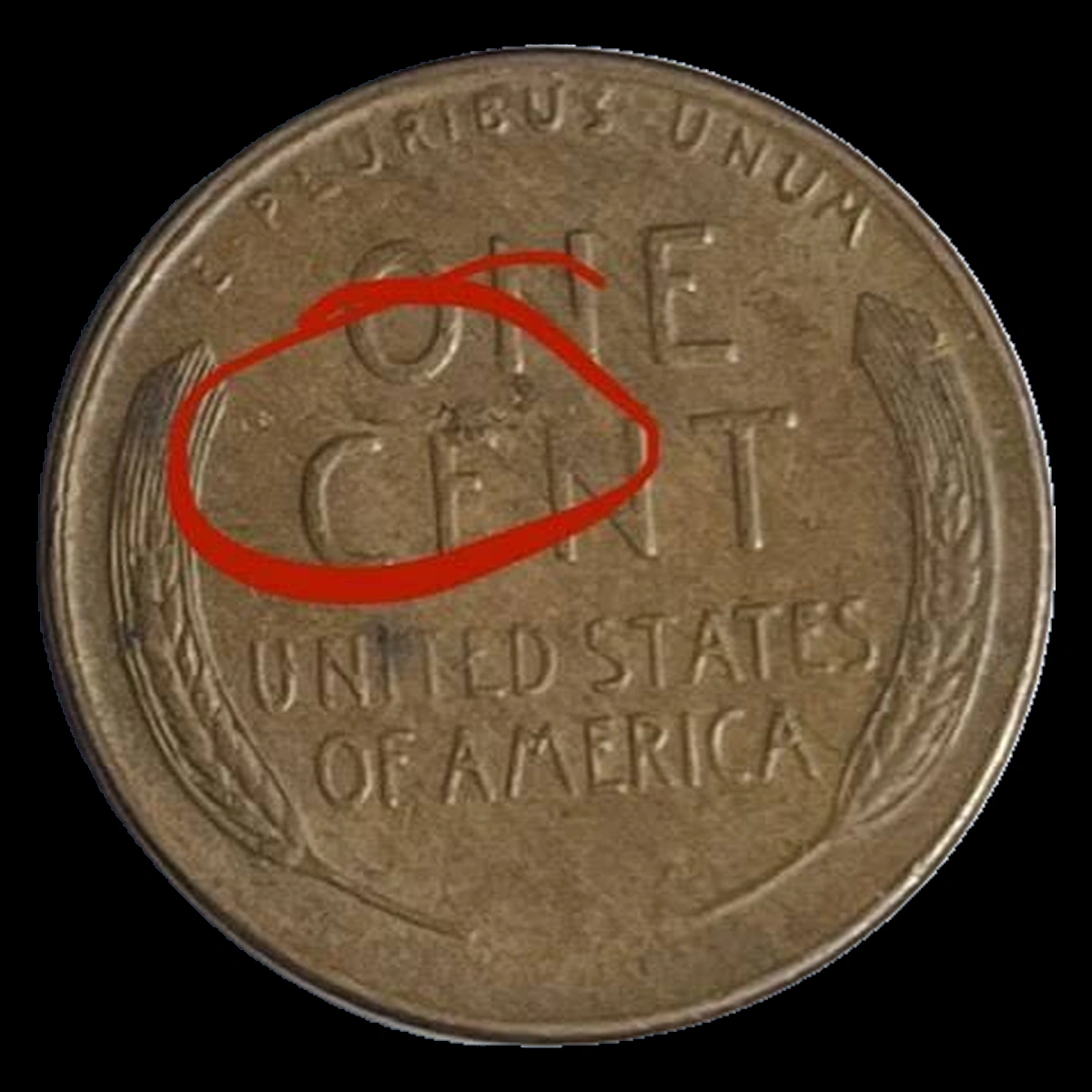
1. 1950 Penny Part of Lincoln Looks Faint: Grease-Filled Design Error
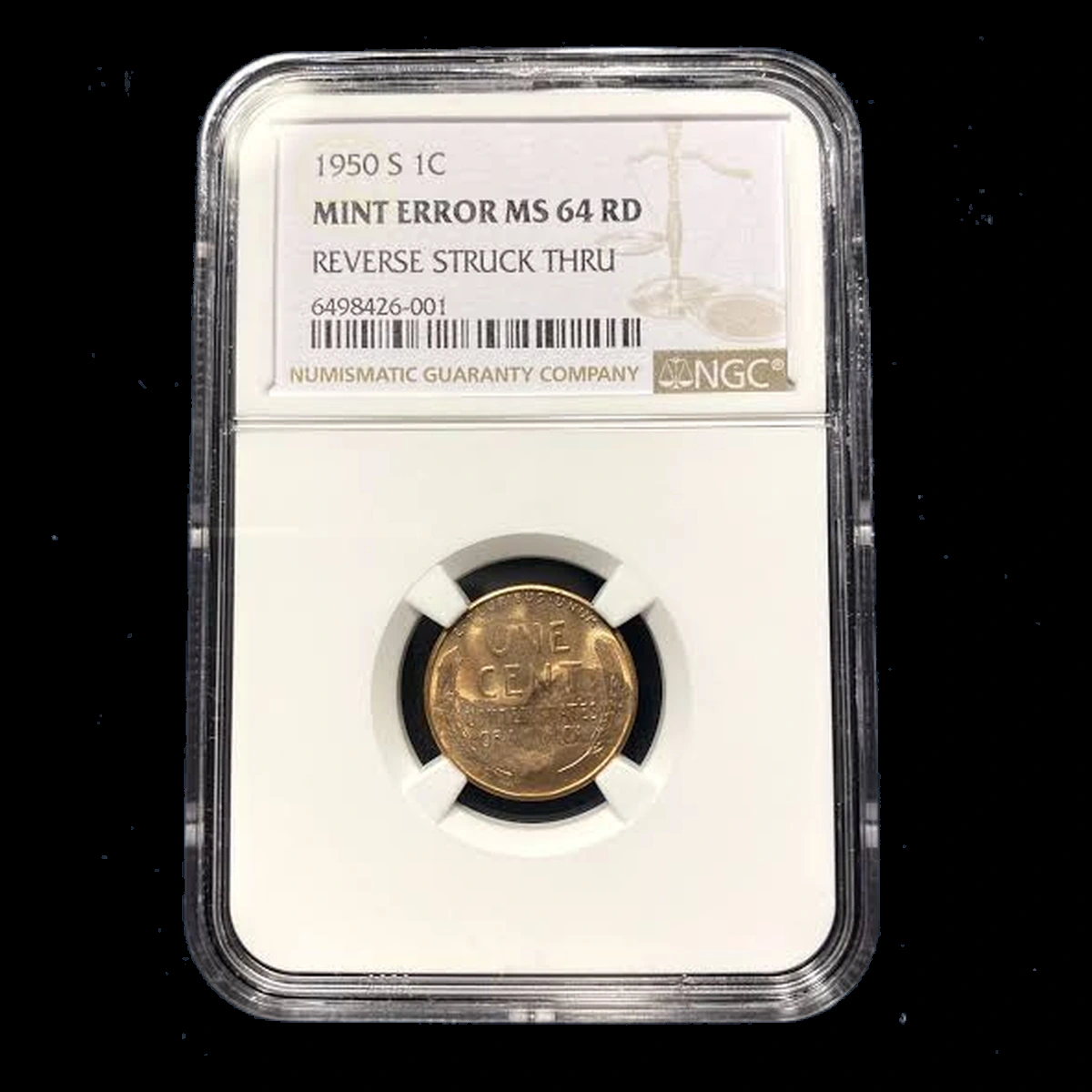
Grease or packed debris can block a recessed part of the die and prevent the blank from taking its shape. A Denver report describes this effect on the front portrait.
How to Identify
Compare the soft area with nearby detail and with Lincoln’s normally exposed high points. General rubbing suggests wear, while a local interruption beside sharper design may fit a blockage.
The report does not specify one missing letter. Look for polishing lines or a scraped patch before assuming that any absent detail came from grease.
What It’s Worth
$2–$100 is a comparison-based estimate for genuine localized blockage errors. A small faint area may add very little, while a large clear interruption is easier to recognize.
No completed sale is supplied for the reported Denver piece. Its original surrounding surface matters more than how many letters a seller says are missing.
2. 1950 Penny A Thin Layer Peels or Falls Away: Lamination Error
A weak layer within the copper alloy can leave a flap, seam, or shallow loss. A Philadelphia AU53 Brown example has missing back lamination, while a Denver AU50 Brown coin has front lamination.
How to Identify
Study the boundary where intact design meets the separated layer. Scattered corrosion pits and gouges that push metal aside have a different appearance.
San Francisco peeling is also reported, without a fixed location. Keep any flap attached and remember that these cents are copper alloy throughout, not copper-plated zinc.
What It’s Worth
$5–$200 is a working range for genuine laminations of different sizes and conditions. A natural broad peel may explain the error more clearly than a small rough patch.
A 1958-D front lamination graded XF45 Brown sold for $24 in September 2012. That later-date sale is a historical comparison, not a price for one of these 1950 specimens.
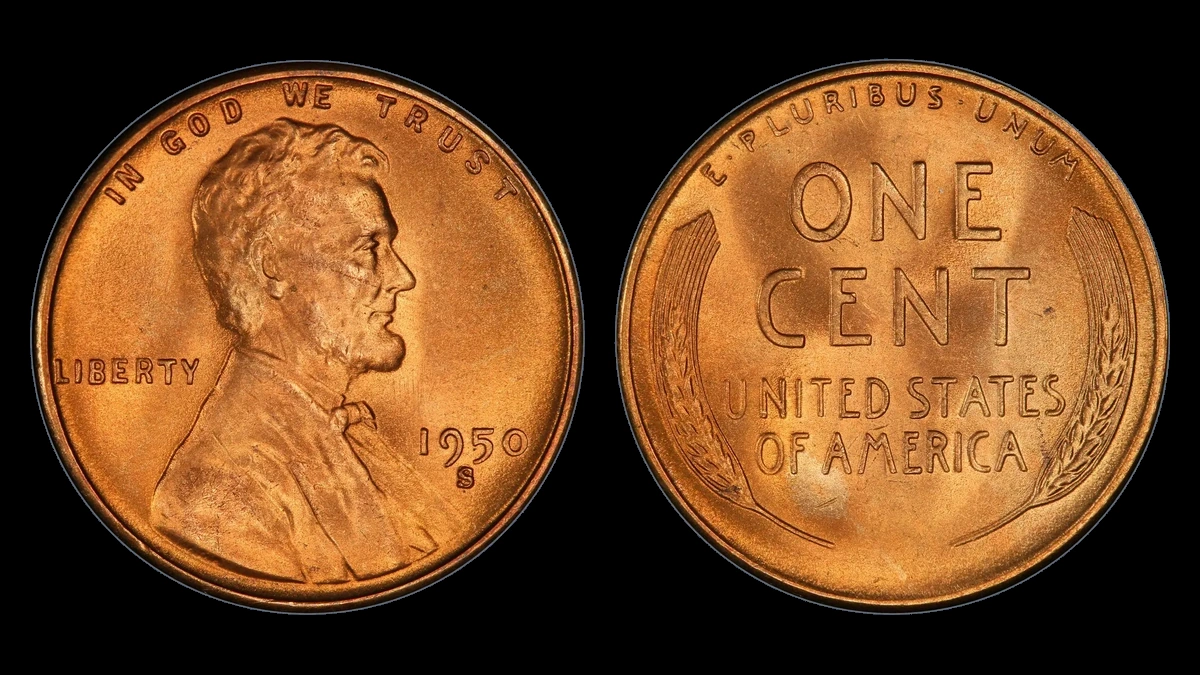
3. 1950 Penny An Extra Curve Follows D or S: Repunched Mintmark Error
A mintmark punched into the die more than once can retain part of its earlier position. Coins made from that die then show overlapping pieces of the same letter.
How to Identify
Trace the extra curve as a second position of the D or S. An irregular lump may be a die chip rather than another letter.
The supplied San Francisco variety and reported Denver example require separate comparisons. Keep the date upright in both photographs so rotating an image does not make unrelated marks appear to match.
What It’s Worth
$5–$150 is an estimated range for identifiable modest repunched mintmarks. Clear earlier-letter strokes and unworn surfaces generally help.
This range uses comparable mid-century Wheat cent varieties. It does not claim a recorded sale for either supplied 1950 example.
4. 1950 Penny A Raised Line or Lump Changes the Design: Cracks, Chips, and Cuds Error
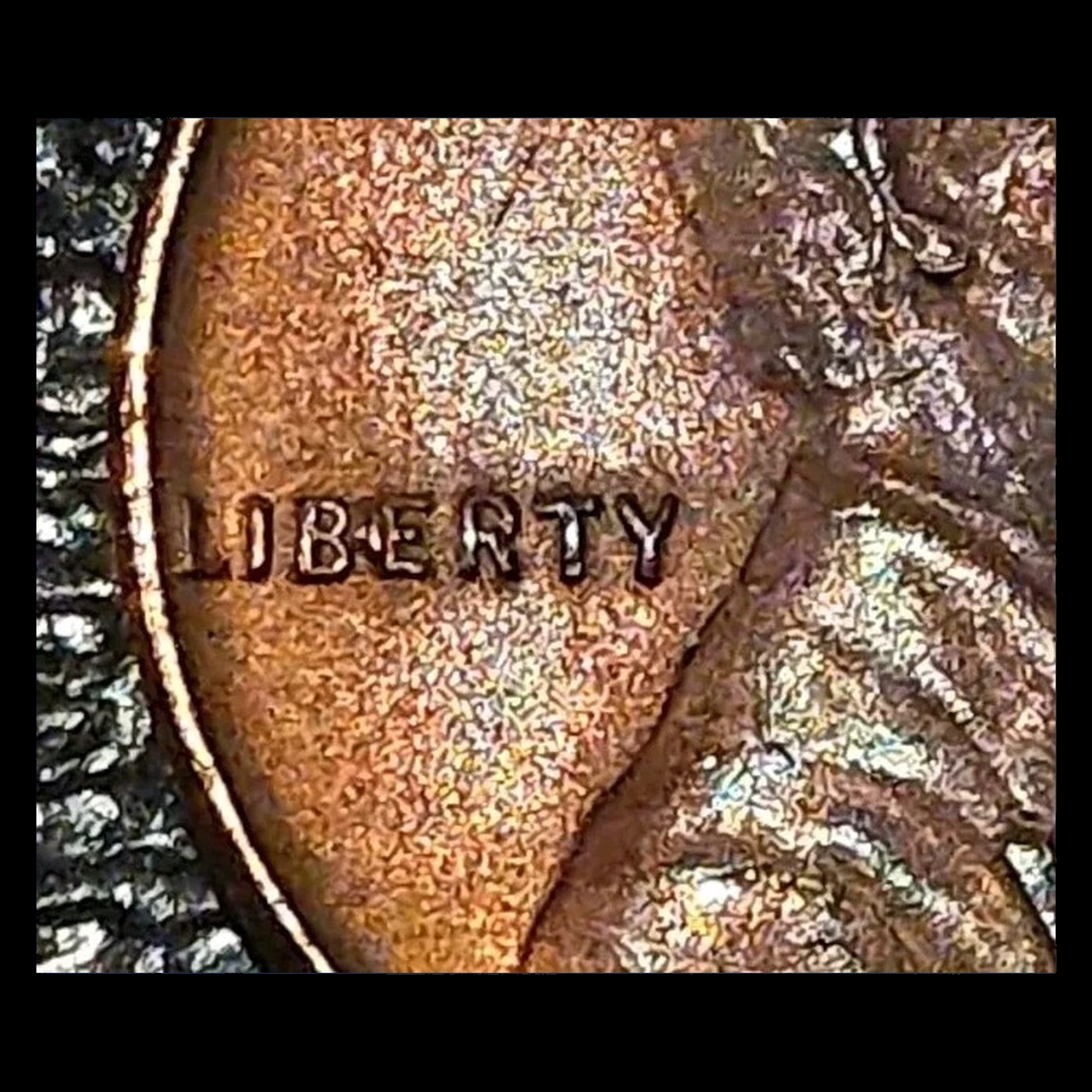
Small cracks in a die leave raised lines, while missing pieces can leave lumps. A chip between B and E in LIBERTY may look like an extra I, giving it the nickname BIE.
How to Identify
A larger break connected to the rim is called a cud. The recorded Denver VF30 Brown specimen has a front cud near six-thirty.
Check whether that raised patch actually reaches the rim and replaces normal design. Interior chips and scratches need different descriptions; a scratch cuts down instead of forming an original raised line.
What It’s Worth
$2–$50 suits small cracks and BIE chips, while clear rim cuds can fall around $50–$600. Size and preservation matter more than simply using the word error.
A 1958-D front cud graded MS64 Brown sold for $312 in March 2021. That unworn coin is a different comparison from the circulated 1950-D VF30 example.
5. 1950 Penny Back Letters Seem to Repeat: Reported Doubled Die Error
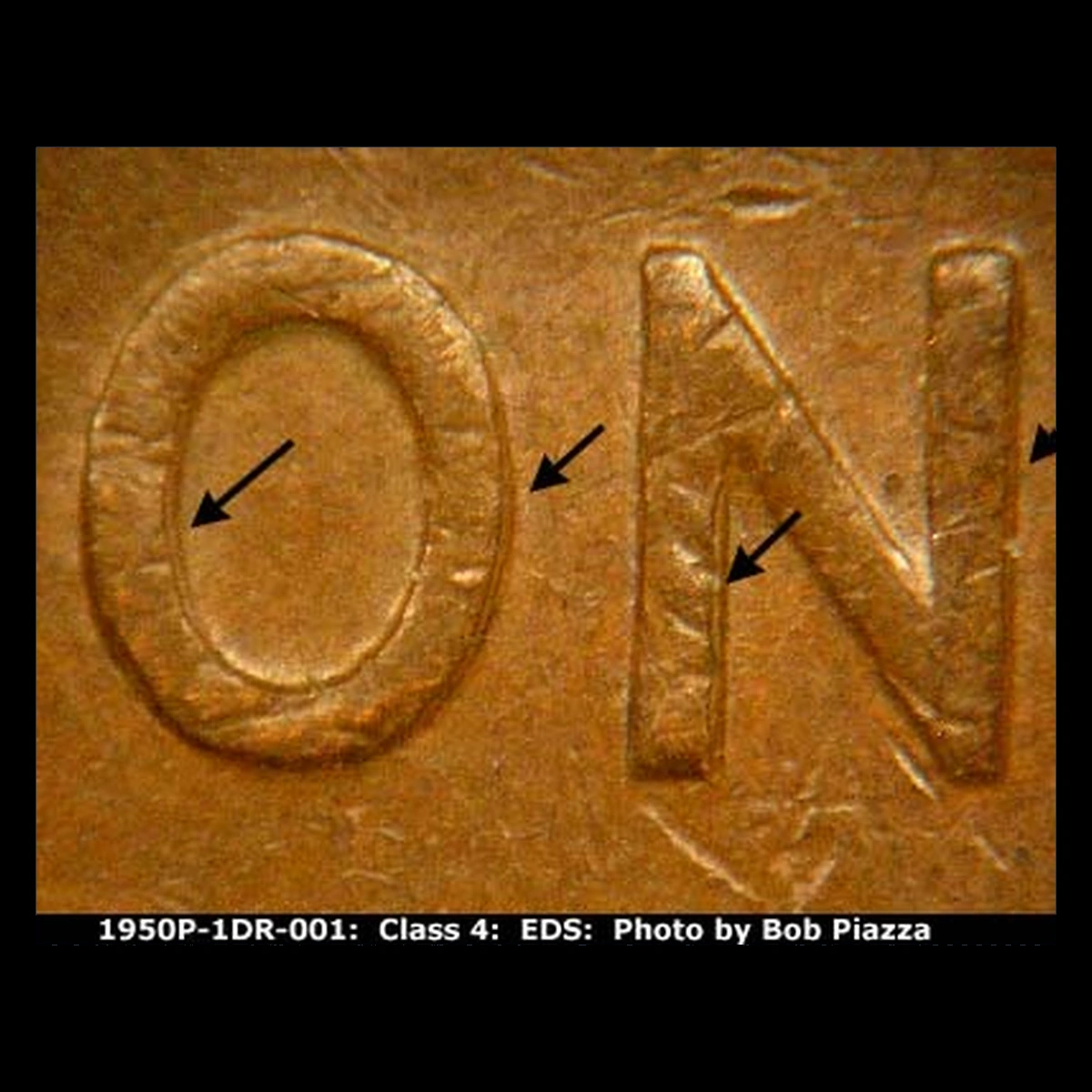
A doubled die reverse means the tool carried repeated parts of the back design before striking the coin. The supplied year-by-year list reports this category for 1950 without naming an exact mint or diagnostic feature.
How to Identify
Locate a definite extra outline in the lettering or wheat design before choosing a variety reference. Those areas are places to inspect, not a claim that all of them are doubled.
Compare the actual outline and direction with a matching specimen, retaining a front photograph for the date and mintmark. Worn thick letters and flat shelves from movement during striking do not establish a doubled die.
What It’s Worth
$10–$250 is an estimate for a genuinely matched minor doubled-back variety. Its position within that range depends on the identified pattern, visibility, and condition.
No specific 1950 auction result accompanies this category. A general listing label cannot give a thick-looking letter the price of a famous major doubled-front penny.
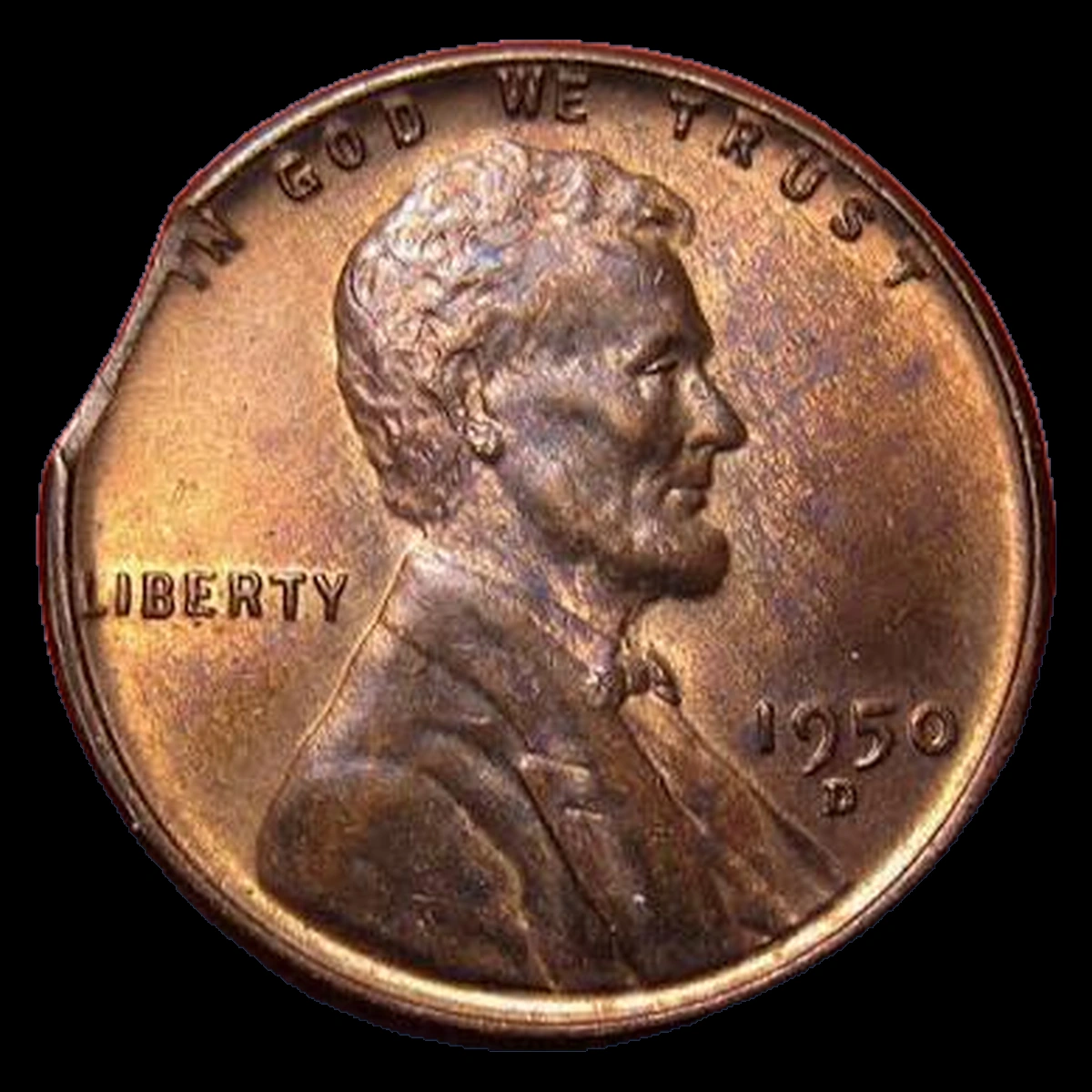
6. 1950 Penny A Gap or Lens Shape Replaces the Round Outline: Clipped Blank Error
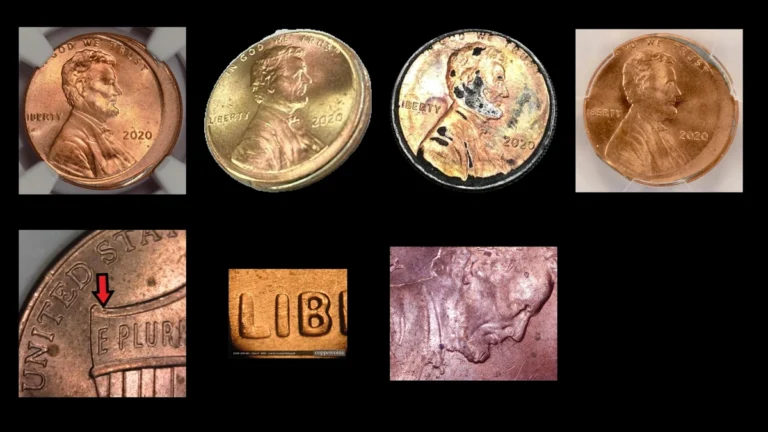
Blank cutting can leave several different shapes. The supplied examples include a Philadelphia 4% straight clip near ten o’clock, Denver curved and ragged clips, and a separate Philadelphia elliptical blank.
How to Identify
The PCGS clipping guide illustrates the small straight-gap example. The Denver records instead describe a 13% curved clip and a separate 10% ragged-end clip.
An elliptical blank has a narrow, lens-like outline rather than one notch in an otherwise round coin. For each shape, follow the original struck boundary and look for later saw marks or filing.
A normal cent is about 3.11 grams and 19.05 millimeters across. Record actual dimensions for an unusual shape instead of forcing a lens-shaped piece into a circular measurement.
What It’s Worth
$15–$350 is a working range for ordinary clips, with comparable elliptical pieces around $150–$900. The Philadelphia elliptical cent graded MS64 Brown by PCGS brought $576 in July 2022.
A readable date and natural edge help establish the error. A later cut does not receive the same premium merely because its shape resembles a listed example.
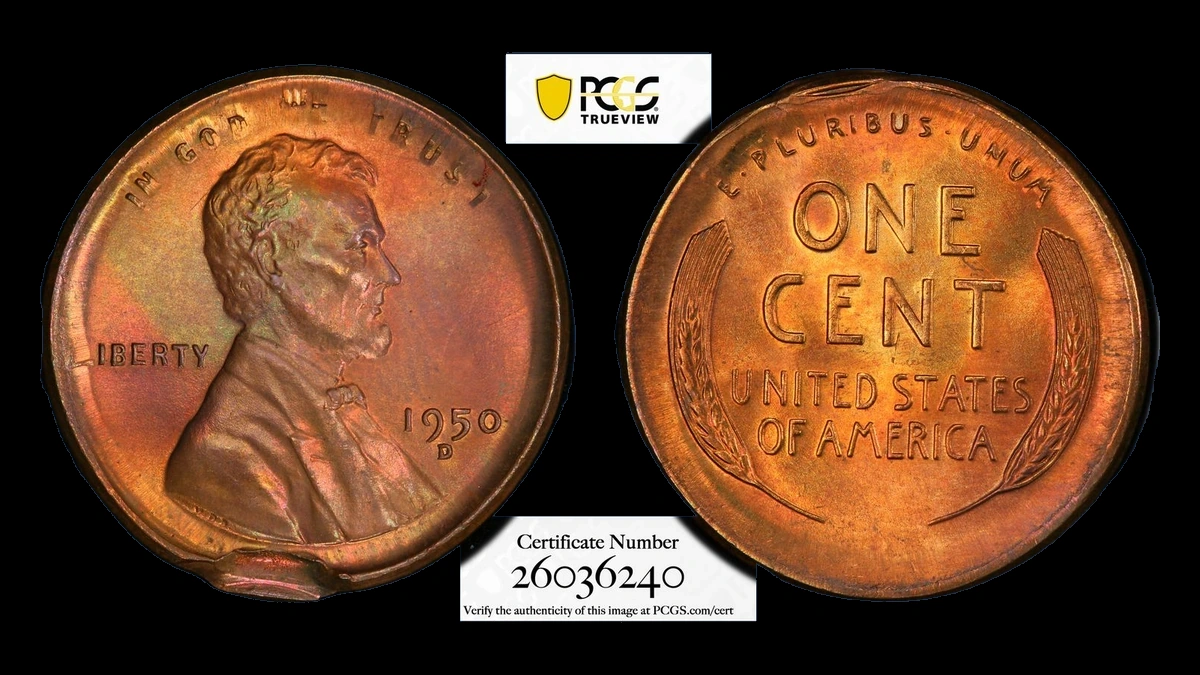
7. 1950 Penny The Border Expands around a Complete Design: Broadstrike Error
A broadstrike forms when the collar, the ring surrounding the blank, fails to hold the metal within its normal width. The design remains on the expanded coin.
How to Identify
Trace the outer words on both faces before judging the extra width. Missing design beyond the edge points toward an off-center strike instead.
The recorded Denver example is graded MS64 Red and Brown by ANACS. Check its expanded border for original metal flow rather than crushed details from later hammering or a seam from an added ring.
What It’s Worth
$30–$400 allows for different amounts of spread and preservation. The ANACS MS64 Red and Brown broadstrike sold for $53 in January 2023.
It is separate from the Denver broadstrike with a tiny second strike discussed below. A second impression should not be added to the description of every wide 1950-D penny.
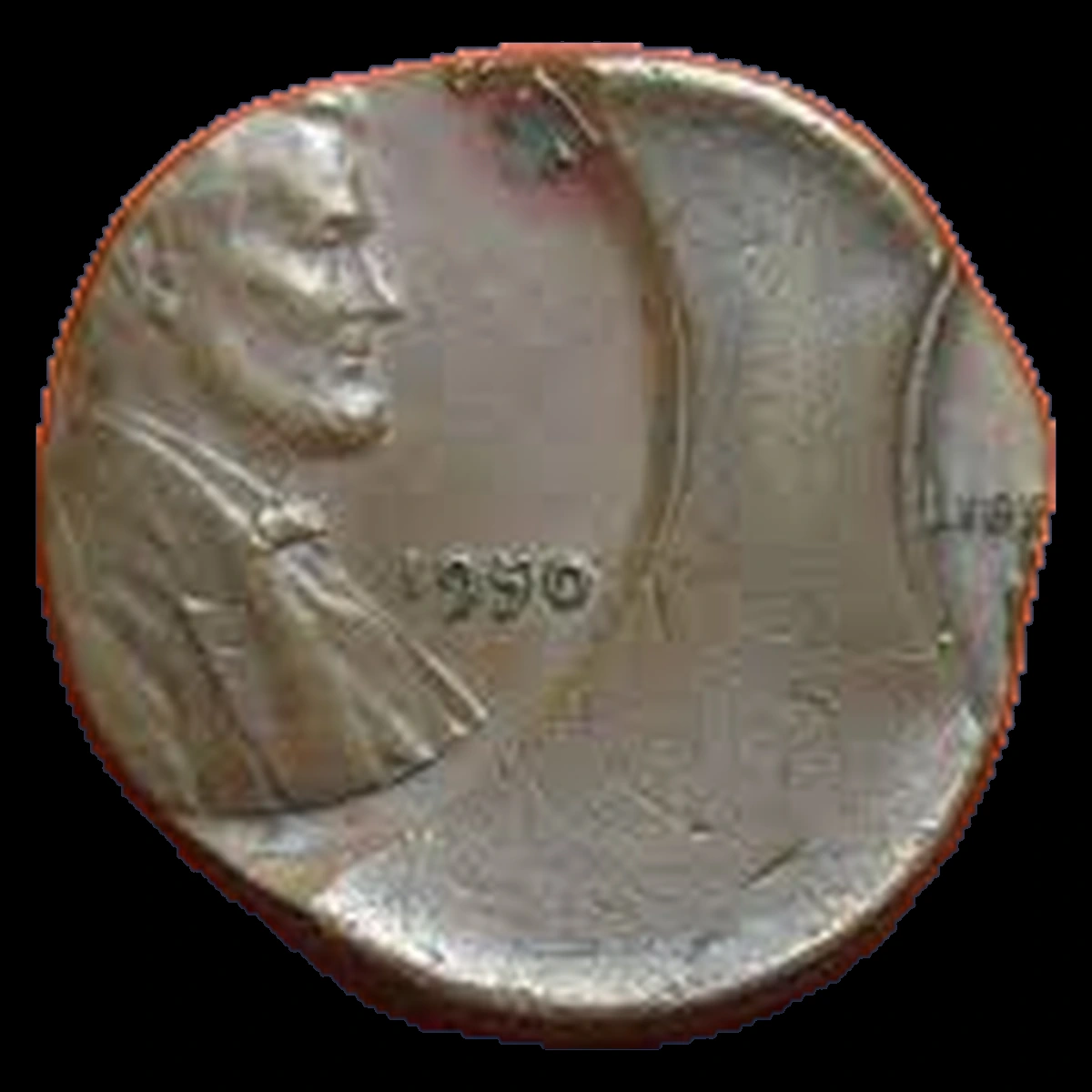
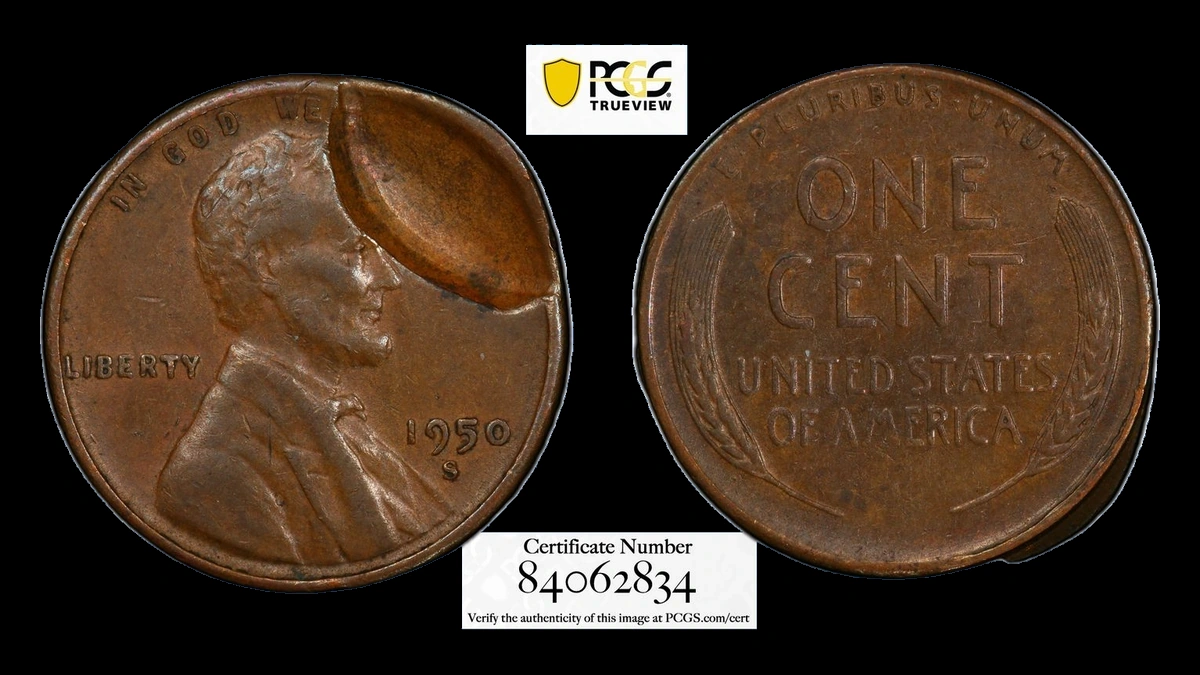
8. 1950 Penny A Crescent Stays Blank beside the Picture: Off-Center Strike Error
When the blank sits partly outside the striking area, some of the design misses the metal. The remaining unstruck part forms a plain crescent.
How to Identify
Denver records include separate 35%, 65%, and 80% examples. The supplied San Francisco AU55 piece has a smaller 5% shift and some wear.
Read the date and mintmark before borrowing any of those percentages. Both incomplete designs should fit the same misplaced blank, and the plain area should not show grinding that erased an earlier design.
What It’s Worth
$20–$1,000 covers a broad selection of genuine examples. A 35% Denver cent graded MS63 Brown by NGC sold for $192 in October 2021.
A separate 65% Denver coin graded MS63 Brown by PCGS brought $264 in July 2022. More displacement does not guarantee a higher value when the date disappears or the surfaces are damaged.
9. 1950 Penny One Face Looks Blurred through a Covering: Late-Stage Die-Cap Strike Error
A struck coin can stick to a die and cover it like a cap. Repeated blows thin that trapped coin until some of the underlying design shows through onto later blanks.
How to Identify
The reported Philadelphia MS63 Brown specimen is a coin struck through that covering, not necessarily the cap itself. Compare the affected face with the more directly struck opposite face.
Look across the whole weak design instead of focusing on one faded letter. Uniform circulation wear or scratches that remove finished detail do not demonstrate pressure through a thin cap.
What It’s Worth
$100–$1,200 is a working estimate for a genuine 1950 late-stage cap strike. The contrast between the faces and the surviving design help explain its appeal.
A 1952 front cap-struck cent graded MS63 Brown sold for $89 in November 2020. That historical comparison belongs to another year, not the reported 1950 coin.
10. 1950 Penny A Depression Accompanies a Tiny Struck Area: Indent Combination Error
A recorded 1950-D cent is 95% off center and also has an indent on the back. An overlapping blank can block the die and press this kind of depression into the coin beneath it.
How to Identify
With so little design struck, check the surviving date and mint attribution carefully. Follow how the back design meets the depression rather than treating any deep mark as an indent.
The MS63 Brown record describes one coin. It does not establish an attached second blank or a recovered matching partner.
What It’s Worth
$150–$1,500 is an estimate for an authenticated example of this combination. Both features belong in one whole-coin assessment.
A 1964 broadstrike with a 7% indent sold for $54 in March 2025. That less extreme, later combination is a comparison for the mechanism, not a sale of the 1950-D specimen.
11. 1950 Penny Another Blow Leaves Extra Design: Double Strike Error
A second strike may cover much of a coin or touch only a tiny part. How the penny moved after the first blow determines the surviving overlap.
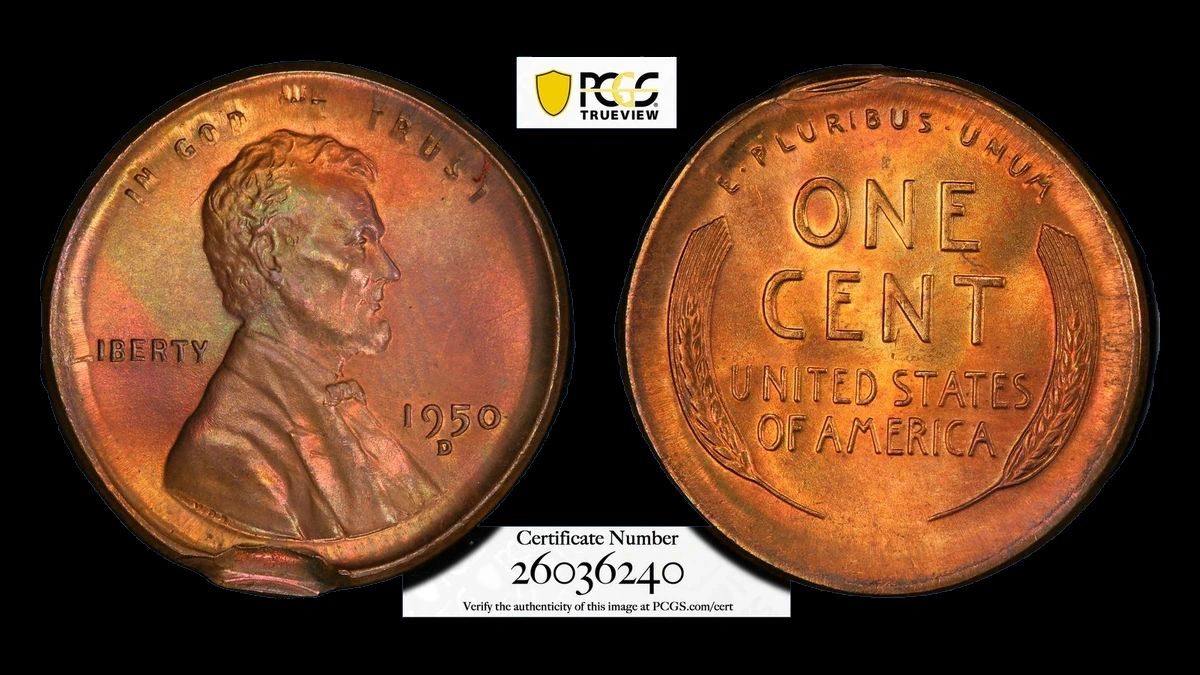
How to Identify
The Philadelphia example has a second strike 75% off center. A Denver broadstrike has only a narrow second contact, described as 98% off center.
A third Denver record describes two strikes inside the collar with a 75-degree turn between them. Its abbreviation D/S means double strike here, not a D mintmark over an S.
Trace the earlier and later positions of more than one letter. On the rotated example, checking the front-to-back alignment alone cannot prove two strikes on the same face.
What It’s Worth
$75–$3,500 spans these different forms. The Philadelphia PCGS MS64 Red and Brown example sold for $2,280 in May 2022.
The Denver broadstrike with the tiny 98% second contact, graded MS65 Red and Brown, brought $95 in November 2020. That large price difference shows why a strike percentage cannot replace a view of the actual surviving design.
12. 1950 Penny A Small Silver Blank Carries the Cent Design: Wrong Blank Error
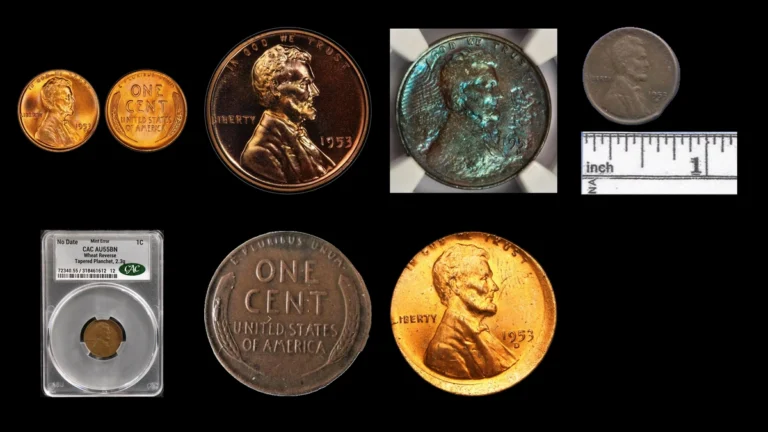
The documented Philadelphia coin was struck on a silver dime blank. Its full date survives, but the final zero sits close to the edge of the smaller piece.
How to Identify
A silver dime blank normally weighs 2.50 grams and starts about 17.91 millimeters across. Compare those measurements and metal testing with the normal cent standard, allowing for spreading during the strike.
The Philadelphia example also has a distorted L and a cropped top to E PLURIBUS UNUM. Denver dime-blank records describe different coins, including an AU53 and a cleaned piece with XF45 detail.
Another Denver listing says quarter blank but records 2.5 grams, which matches the dime standard rather than a silver quarter’s 6.25 grams. Its original coin, label, and measurements need to resolve that conflict; the title alone does not establish a quarter-blank rarity.
What It’s Worth
$700–$6,500 is a working range for comparable authenticated wrong-blank cents. The Philadelphia MS64 dime-blank coin brought $3,840 in May 2022, and the Denver AU53 example sold for $1,440 that month.
The conflicting quarter-title listing realized $1,800 in January 2022. Its completed sale does not, by itself, settle which blank was used.
Conclusion
Choose the closest physical match before choosing a price: a small clip differs from an elliptical blank, and a tiny second contact differs from a bold overlapping strike. Several records here describe separate coins that should stay separate in photographs and captions.
For unusual metal, measurements and the correct attribution are essential. For ordinary surface errors, preserve the original copper and any attached layer so the visible evidence remains intact.