Rare 1920 Quarter Errors (List & Pictures)
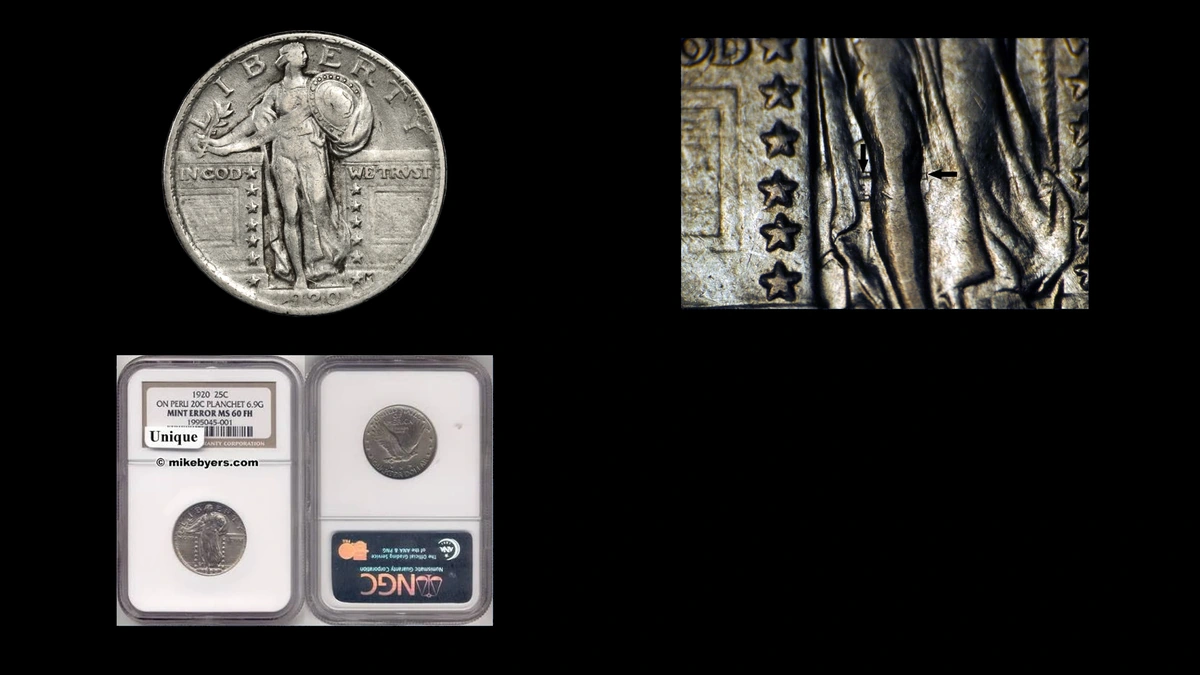
A quarter struck on a foreign blank can look surprisingly close to normal size. The best-documented major example among these 1920 quarter errors used copper-nickel intended for Peru and realized $16,100 in March 2011.
Whole-coin estimates span $30–$30,000. Begin with the date and Liberty’s knee, then examine the silver surface and outline before using measurements to distinguish an incomplete quarter blank from a completely different kind of disk.
1. 1920 Quarter Extra Metal Touching the Date or Leg: Die Chips and Cuds Error
A cataloged PCGS MS64 quarter has a rim-connected break at 6 o’clock that includes the bottom of the date’s 0. A separate Philadelphia report concerns a smaller raised chip near Liberty’s leg.
Metal filled spaces left by broken pieces of the die. An interior chip and a larger rim-connected break, called a cud, belong to the same general tool-damage family but have different outlines.
How to Identify
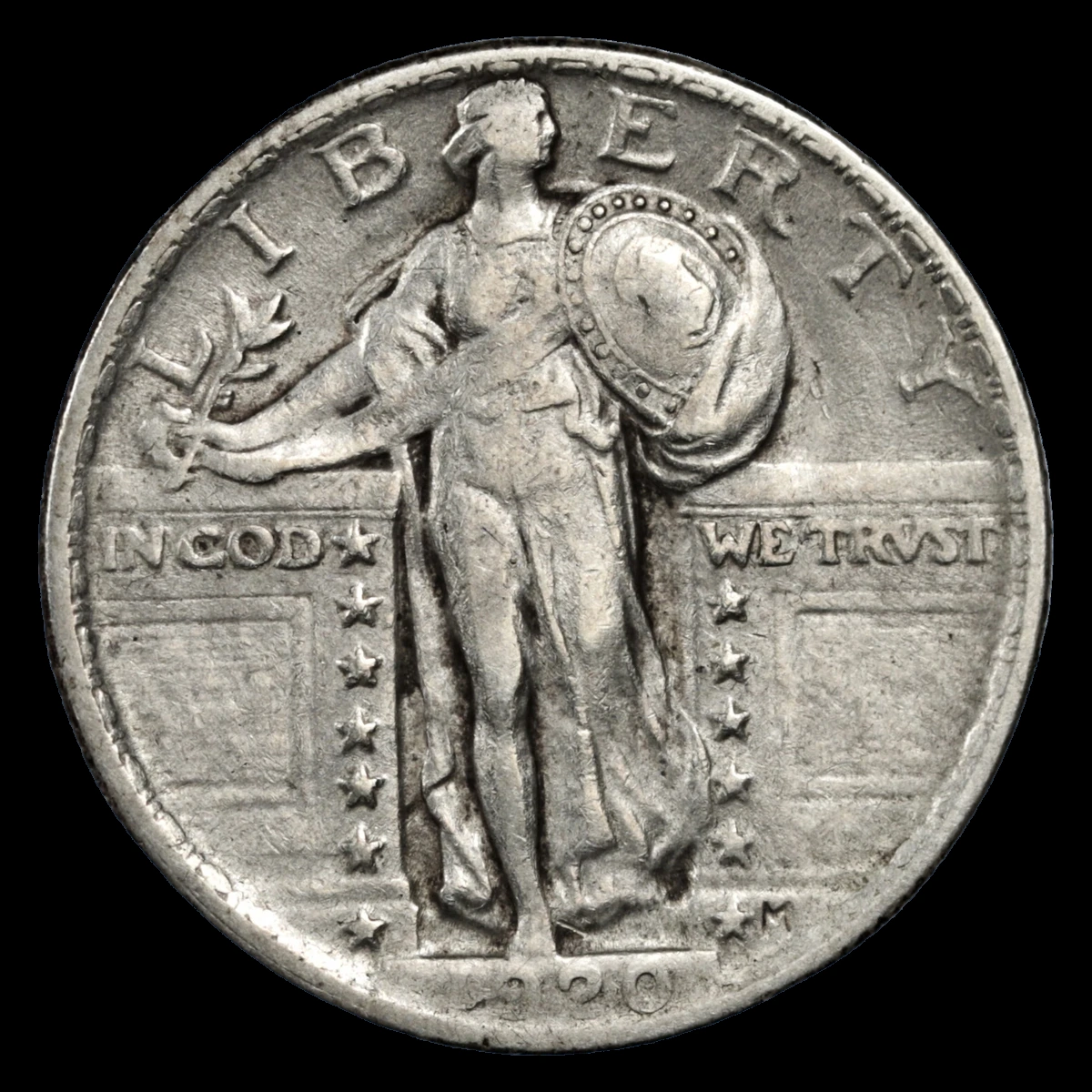
On the documented cud, trace the added metal from the bottom of 0 into the rim. The raised date often wears down on this design, so an unreadable numeral by itself does not establish a break.
For the leg-area chip, use side lighting to examine the lump’s height and boundary. Dirt or metal pushed up around a dent can imitate an added mass without having formed in a damaged die.
What It’s Worth
$30–$1,200 is the combined estimate, with small chips or cracks at $30–$150 and clear larger cuds at $200–$1,200. The cataloged MS64 cud supplies a documented unworn example but no quoted realized price here.
Its visible connection to the date and border distinguishes it from a tiny interior bump. Surface quality and remaining detail still affect the complete coin’s value.
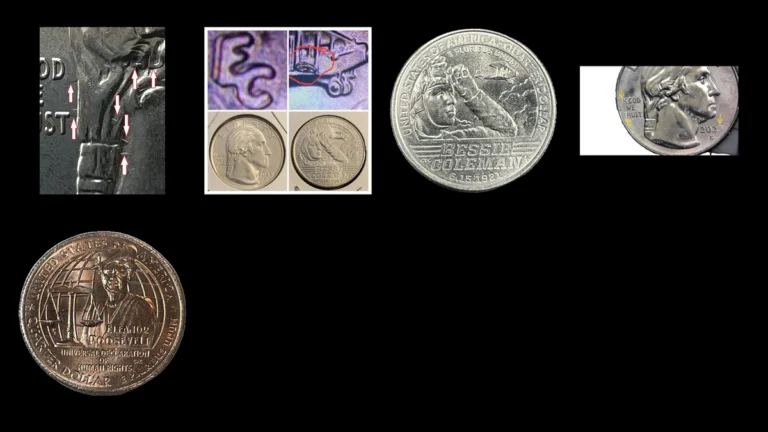
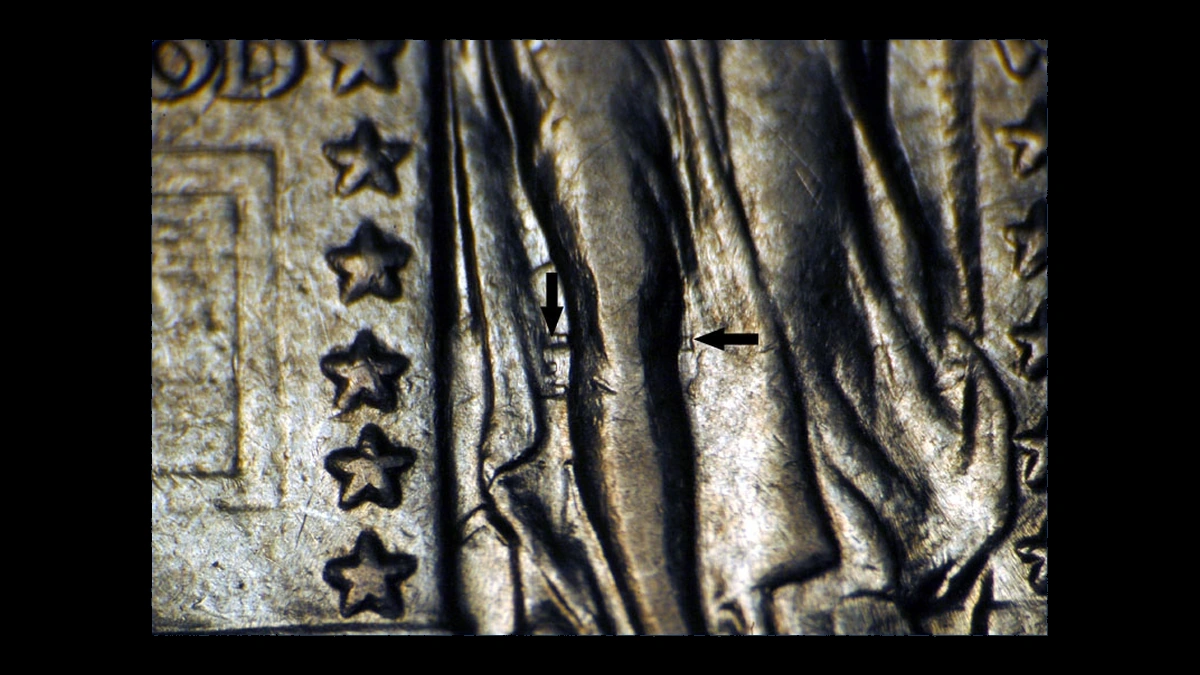
2. 1920 Quarter An E beside Liberty’s Knee: Die Clash Error
Philadelphia and San Francisco reports describe an E-shaped trace near Liberty’s knee. It corresponds to reverse detail that does not normally belong in that front-side location.
When the dies met without a blank between them, contact marked a tool with part of the opposite design. Subsequent coins could reproduce the unintended trace.
How to Identify
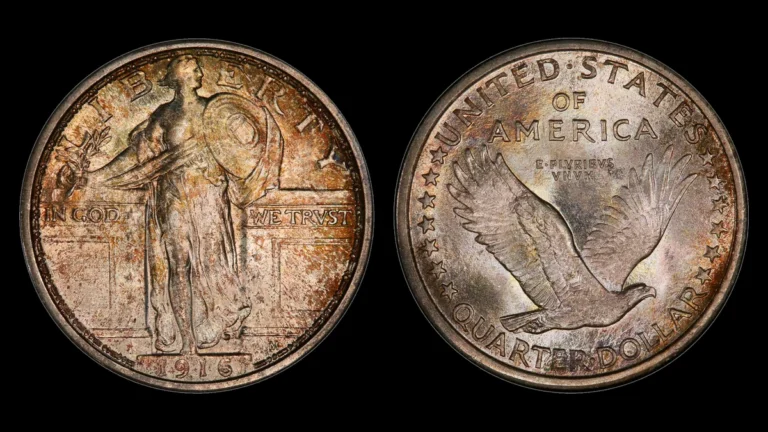
Identify the mint on the front before selecting a comparison: S is San Francisco, while Philadelphia normally has no letter. Keep Liberty’s knee and the suspected E together in the close-up.
Compare the stray strokes with the reverse letter and with normal robe folds. The added shape needs a coherent design match rather than a collection of unrelated scratches or attached debris.
What It’s Worth
$40–$1,500 is estimated for clear 1920 clashes. A different-year 1929-S FS-401 in PCGS MS66+ sold for $2,520 in January 2022.
That exceptionally preserved unworn coin is a separate comparison. Its result should not be assigned to a faint E on a worn 1920 merely because both involve clashing.
3. 1920 Quarter Peeling on the Eagle Side: Lamination Error
A Philadelphia 1920 reverse lamination is reported without an established exact position. The normal quarter is 90% silver and 10% copper alloy, so this separation occurs within the metal rather than removing a modern clad outer sheet.
A weak area can lift as a thin flap or lose a flake, leaving an irregular shallow patch. Its physical boundary matters more than a dark or rough appearance alone.
How to Identify
Scan the whole reverse and use light from two directions to reveal any free edge. Leave lifted metal attached while examining the opening underneath it.
Check how surrounding feathers and lettering meet the separation. A groove with displaced metal may indicate scraping, while widespread pits elsewhere can suggest corrosion instead of a localized layer flaw.
What It’s Worth
$40–$400 is the whole-coin estimate for genuine reverse laminations. An original boundary beside strong surviving design makes a more useful comparison than a rough patch obscured by damage.
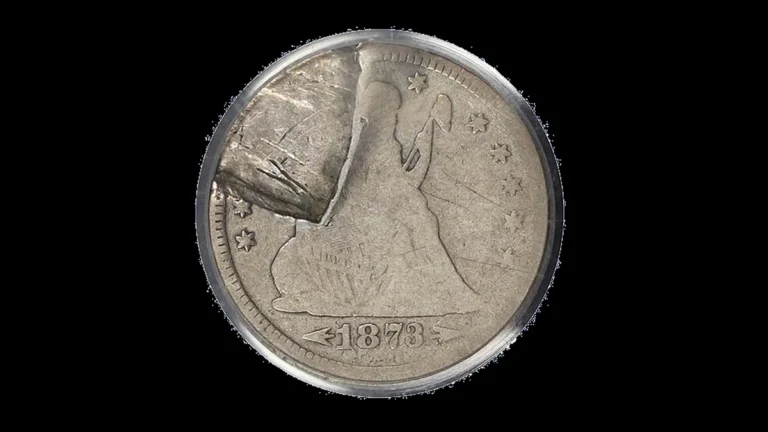
4. 1920 Quarter A Flat Segment in a Round Coin: Straight Clip Error
A punch that extends across the edge of the metal strip can produce a straight-sided incomplete blank. This differs from the curved opening produced by overlapping a previous punched hole.
A listed ANACS VF25 Details example weighs 6.17 grams. It has moderate wear and a condition problem noted by the Details designation, whose specific cause is not supplied here.
How to Identify
Examine both ends of the flat section for original rim formation and naturally affected nearby detail. Complete border or lettering sliced afterward is different from a blank that lacked the metal before striking.
Look for saw marks, filing strokes, or fresh burrs along the straight edge. Weakness beside or opposite a genuine clip can help, but need not be equally clear on every specimen.
Normal quarter references are 6.25 grams and about 24.3 millimeters across. Record loose-coin measurements together with the edge observations, since later cutting can also reduce weight.
What It’s Worth
$50–$600 is estimated for authentic 1920 clips. No completed-sale amount is supplied for the 6.17-gram example, and its Details condition belongs in any comparison.
5. 1920 Quarter Blank Metal beside an Incomplete Image: Possible Off-Center Strike Error
The supplied material does not establish a clearly identified 1920 off-center specimen. A candidate would need original unstruck metal beside design that failed to fit on a displaced blank.
The date is especially important because the raised numerals on Standing Liberty quarters can wear away. The general design cannot supply missing 1920 digits.
How to Identify
Look for an untouched crescent and inspect it for grinding marks or remnants of removed lettering. Then follow the opposite edge to see where the intended design runs beyond the metal.
Compare both faces to determine whether they fit the same misplaced blank. A shifted die can affect only one side, while a broadstrike retains the entire intended design within expanded metal.
Keep a readable date in the same full-coin record as the displacement. A blank-looking patch and a separately photographed date cannot establish an unknown specimen’s identity.
What It’s Worth
$300–$8,000 is a conditional estimate for an authenticated, dated 1920 example. No supplied 1920 auction result supports it, and the amount would depend on displacement, preservation, and surviving identification.
6. 1920 Quarter A Heavy Full-Size Disk or a Much Smaller One: Wrong Planchet Error
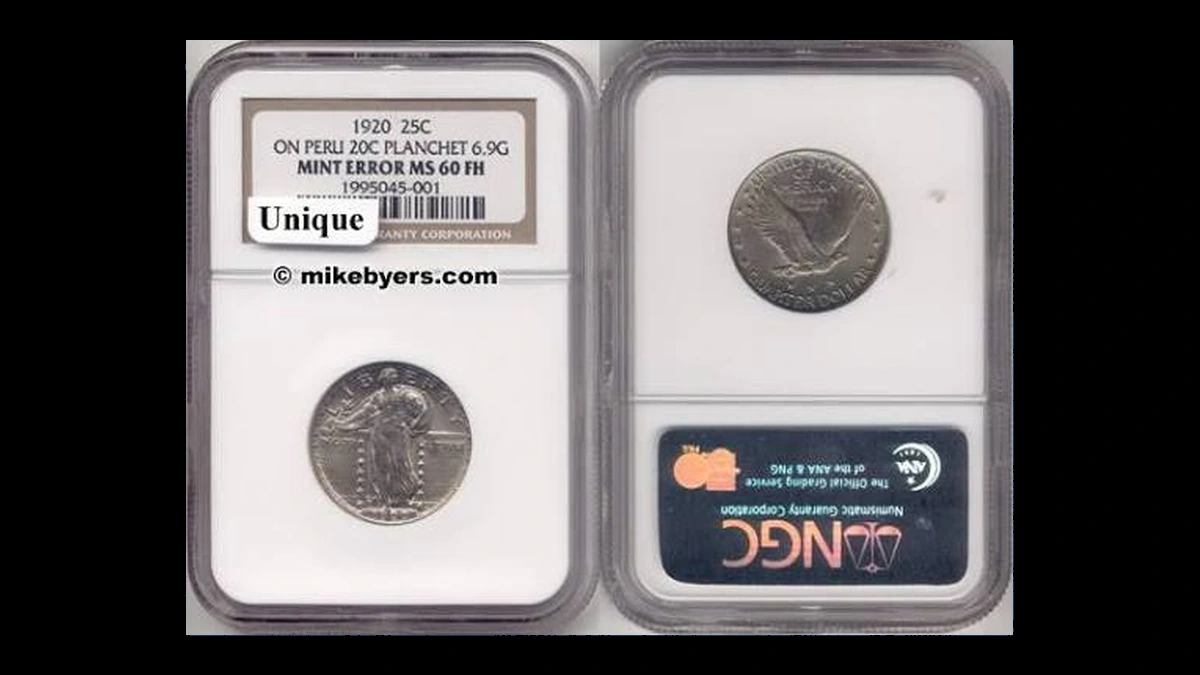
The documented Peruvian-blank quarter is nearly normal in diameter but thicker and heavier. NGC graded it MS60 Full Head, meaning unworn with sharply formed head detail, and its recorded alloy is 75% copper and 25% nickel.
Philadelphia was producing Peru’s twenty-centavo coins, and one of their blanks entered quarter production. A specialist list separately reports two 1920 quarters on silver dime blanks, a distinctly smaller type.
How to Identify
The recorded Peruvian-blank specimen measures 24 millimeters and weighs 6.9 grams. Its thick edge and copper-nickel composition help explain why size alone could miss the mistake.
A silver dime blank has reference specifications of 2.50 grams and about 17.9 millimeters before striking. Those standards are not reported measurements of either listed dime-blank error.
Inspect candidates for trimming, plating, or attached metal that could alter size, color, or weight. Professional metal assessment can distinguish the Peruvian copper-nickel blank from ordinary quarter silver.
Use recorded measurements for encapsulated coins without opening their holders. A dark or pale color alone cannot decide between the two wrong-blank types.
What It’s Worth
$5,000–$30,000 spans the combined estimates for these different blanks. The Peruvian-blank quarter realized $16,100 in March 2011, with comparable authenticated examples estimated at $12,000–$30,000.
The two reported silver-dime-blank coins have an estimated $5,000–$20,000 range without quoted individual sales. Their small disks should not inherit the heavier specimen’s measurements or transaction.
Conclusion
Start with visible relationships: a cud joins the rim, a clash adds a recognizable opposite-face shape, and a lamination separates within the silver. The outline then distinguishes an incomplete blank from a misplaced strike.
Wrong-planchet candidates need another level of comparison because the Peruvian example is nearly normal in diameter. Preserve each coin’s actual weight, metal identification, readable date, and condition before applying a price from a different specimen.