Rare 1901 Quarter Errors (List & Pictures)
The mintmark makes an enormous difference when comparing 1901 quarter errors. Philadelphia’s small date varieties and striking mistakes belong in a different market from the scarce San Francisco issue, whose cracks can help identify its dies.
Whole-coin estimates span $40–$150,000, including an S-mint quarter that realized $84,000 on January 15, 2025. Read the mint and date first, then compare extra numeral strokes, repeated design, raised cracks, or the position of the blank.
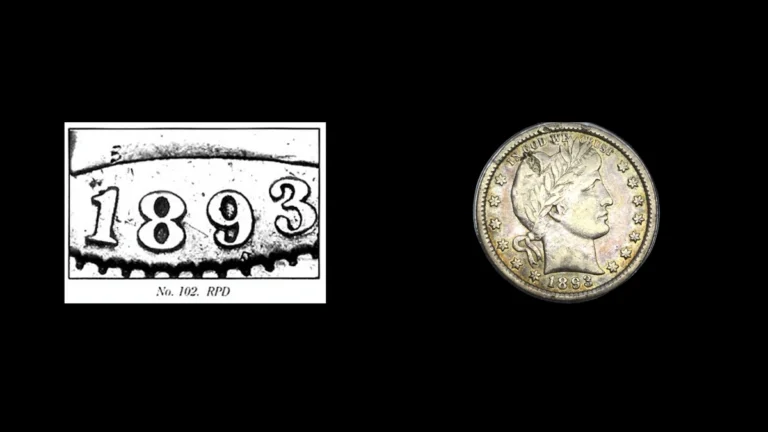
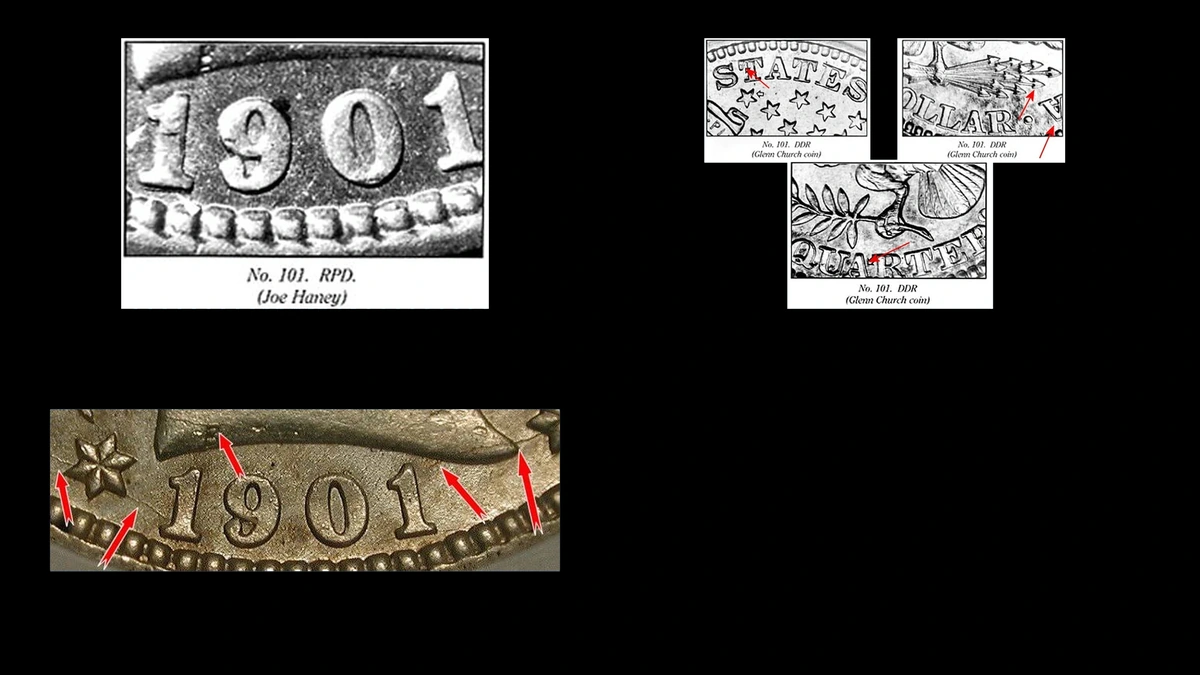
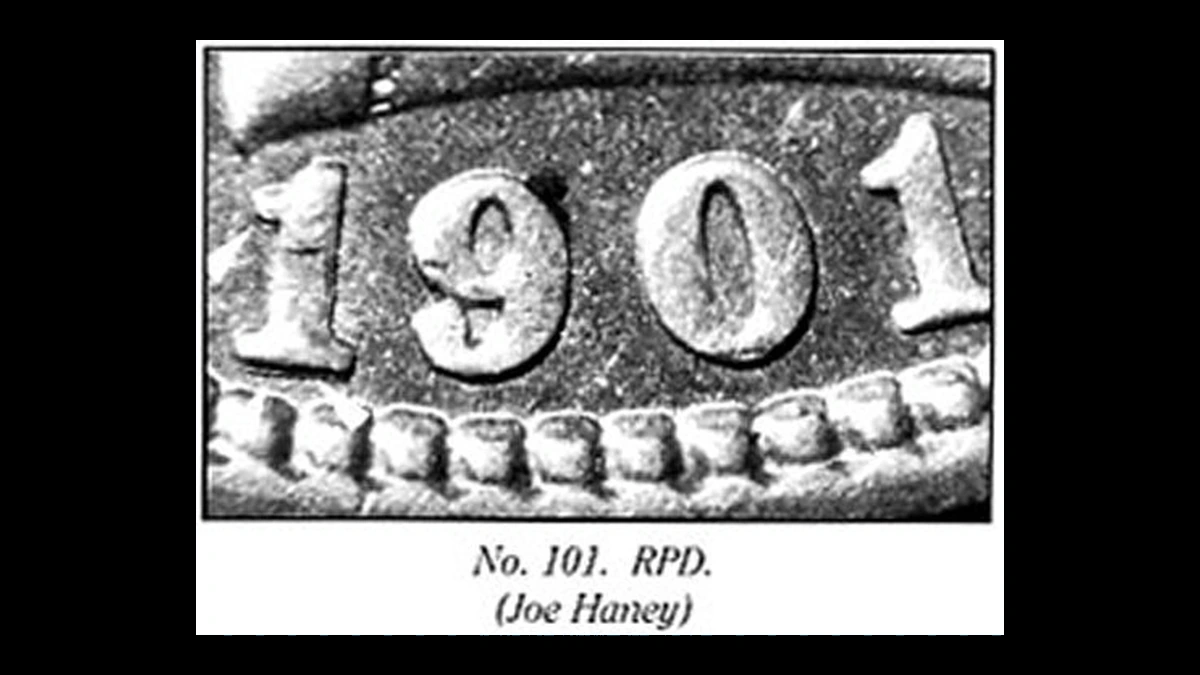
1. 1901 Quarter An Extra Stroke below the First 1: Repunched Date Error
The Barber Coin Collectors’ Society records a Philadelphia date variety with a remnant south of the first 1. South means below the numeral when the portrait is upright.
The earlier stroke remained after the date was entered into the die more than once. The tool carried it before striking, rather than the Mint separately adding a digit to each finished quarter.
How to Identify
Confirm that the reverse has no mintmark, then center the close-up on the first 1. Look beneath its main outline for an additional raised portion that follows the numeral’s shape.
Keep the nearby border teeth in the photograph as fixed reference points. A date sitting unusually high or low is not the same as an extra punch remnant.
Use side lighting to inspect the suspected stroke’s center. An incised scratch may have pushed-up edges, but it does not reproduce a second part of the original numeral.
What It’s Worth
$40–$1,500 is the supplied estimate for authenticated first-1 repunching, from worn through attractive unworn examples. No series of completed auction results is supplied for the variety.
Clear remnants help the attribution, while cleaning or deep marks can outweigh the appeal of the small feature. Many ordinary worn pieces belong well below the top of the range.
2. 1901 Quarter Repeated Letter or Arrow Edges: Doubled-Die Reports Error
Philadelphia reports describe front doubling involving LIBERTY, the motto, or parts of the portrait. They do not establish one exact arrangement shared by every candidate.
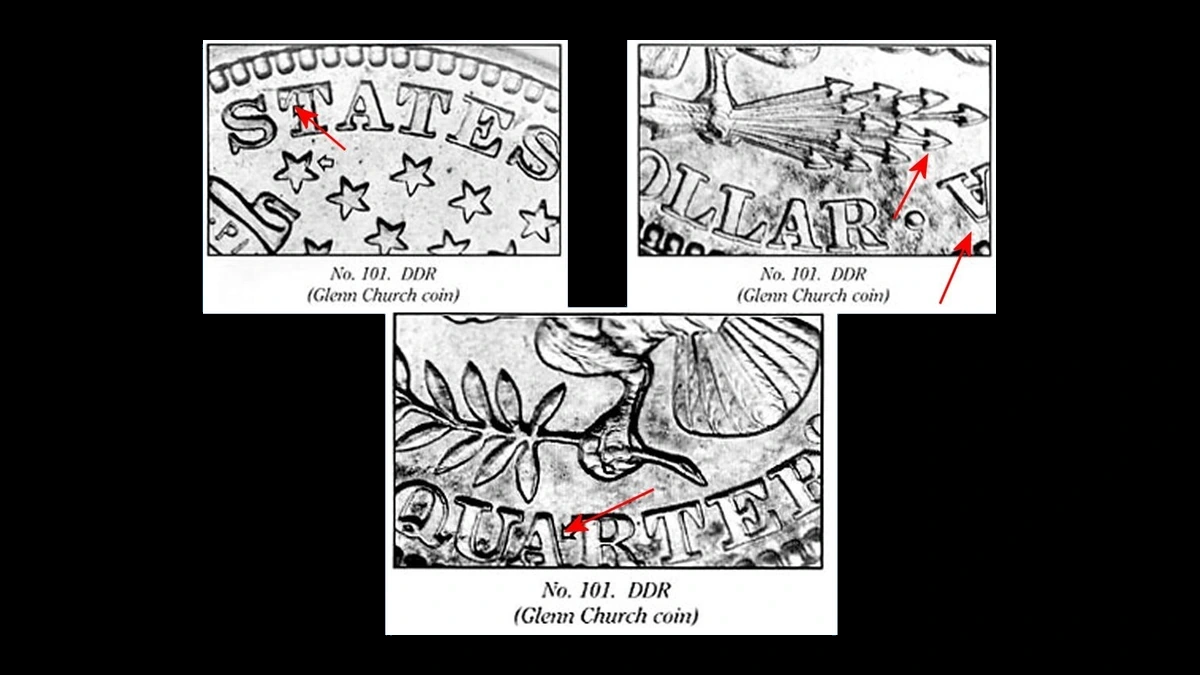
For New Orleans, the society lists reverse doubling on QUARTER DOLLAR and the arrows, but another guide calls it mechanical doubling. The mechanism of that report therefore remains disputed.
How to Identify
An O beneath the eagle directs the comparison to the reported New Orleans reverse, while no mintmark fits the Philadelphia front report. Do not transfer front diagnostics to an O-mint reverse simply because both are described as doubled.
On Philadelphia candidates, compare several letters in LIBERTY and IN GOD WE TRUST along with the relevant portrait detail. A single shadow or thick date digit cannot resolve the identification.
On New Orleans coins, inspect the denomination and arrow contours at different light angles. Mechanical doubling forms flattened ledges during striking, while a doubled die carries a repeated image already present in the tool.
Photograph the actual heights and shapes of the extra edges for a specialist comparison. Calling a coin “doubled” does not settle which mechanism produced them.
What It’s Worth
$40–$2,500 is the combined estimate for authenticated doubled dies in these reports. Philadelphia examples are estimated at $40–$2,000, with a conditional $100–$2,500 range for a confirmed New Orleans doubled die.
No supplied sale resolves the disputed reverse attribution. If its feature is mechanical doubling, the coin retains its underlying date-and-condition value without a doubled-die premium.
3. 1901 Quarter Raised Lines from the Bust or Date: San Francisco Die Cracks Error
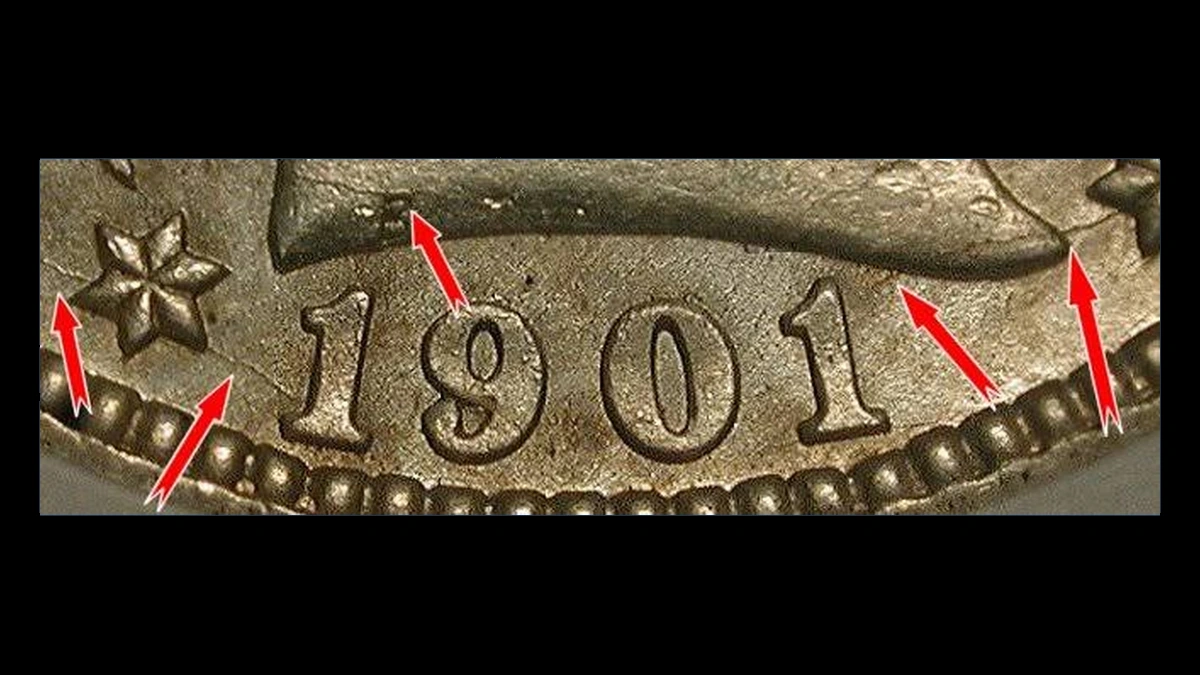
The society’s 1901-S authentication guide illustrates two die patterns, A and B. Pattern A develops a line from the bust tip through the first nearby star toward the second.
Pattern B begins near the date’s right side and can develop cracks through the stars on both sides. Earlier stages need not show the longest routes.
These are raised traces of metal entering splits in a stamping tool. They are neither cuts through the quarter nor proof of authenticity by themselves.
How to Identify
Read the complete date and S together, then select the appropriate pattern. For A, follow the bust-to-star path; for B, begin at the date’s right side before tracing any longer lines.
Check the ridge under side lighting and compare the positions of both 1s and the S with certified coins from the same pattern. The wear on the mintmark should agree with the rest of the quarter.
Inspect the edge for evidence of joined halves and examine the complete coin for alteration. A convincing-looking crack cannot independently authenticate this valuable date.
What It’s Worth
$3,000–$150,000 is estimated for genuine 1901-S quarters with these cracks, from heavily worn to exceptional unworn coins. Their scarcity and preservation account for most of that value.
A PCGS MS66 with a fine bust-to-stars crack realized $84,000 on January 15, 2025. Its high unworn grade and rare issue make that a whole-coin comparison, not a separate crack premium.
4. 1901 Quarter Extra Blank Metal along the Upper Left: Off-Center Strike Error
The documented Philadelphia example is 5% off center, with additional blank metal along the front edge from about 8 to 12 o’clock. The corresponding reverse area reflects the same displaced disk.
PCGS graded it AU55, indicating light circulation wear, and the auction described slate-gray color with traces of mint shine. The blank entered the press slightly away from the intended position.
How to Identify
Keep the portrait upright and compare the upper-left blank area with the corresponding reverse edge. Both sides should fit one displaced blank rather than one die shifted relative to an otherwise centered strike.
Follow the design around the opposite edge to see where it no longer fits the metal. Expansion that retains the entire intended design suggests a broadstrike and needs a different assessment.
Examine supposedly unstruck areas for grinding marks or flattened remains of removed detail. Straight-on full-face photographs prevent a camera angle from exaggerating a narrow border difference.
What It’s Worth
$300–$5,000 is estimated for comparable dated off-center 1901 quarters. The documented 5% AU55 example brought $862.50 at Heritage on January 4, 2001.
More displacement can make the error easier to see, but lost date digits and damaged surfaces can weaken its appeal. The broad range is not a price fixed solely by the percentage.
Conclusion
Read the first 1 for repunching, distinguish raised duplicate contours from flat mechanical ledges, and trace the blank’s position on both faces for an off-center strike. Each test addresses a different manufacturing event.
For a suspected 1901-S, matching cracks are only part of a complete authentication. Its rare date and condition explain the exceptional price scale, which should not be transferred to ordinary Philadelphia varieties or treated as payment for one thin line.