Rare 1819 Quarter Errors (List & Pictures)
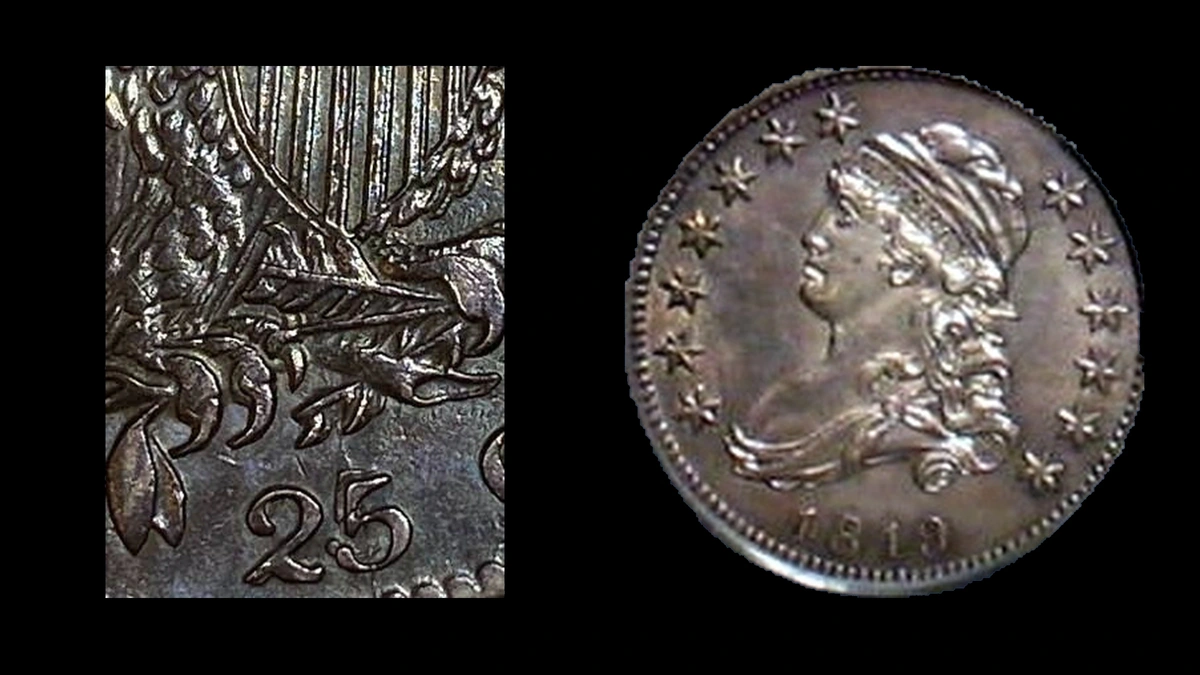
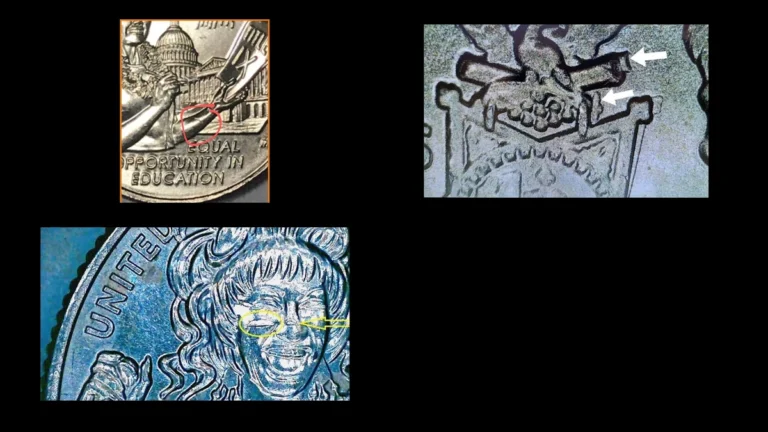
Look below the eagle for the first clues to 1819 quarter errors. The denomination can carry extra numeral outlines and a narrow crack at the same time, but those raised features came from different work or damage to the die.
Estimated whole-coin values span $150–$35,000. An exceptional NGC MS66 Browning-3 with both features realized $32,900 in October 2014; compare the 25 first, then follow the appropriate star, date, and border crack routes.
1819 Quarter Extra Contours on the Denomination: Repunched 25 Error
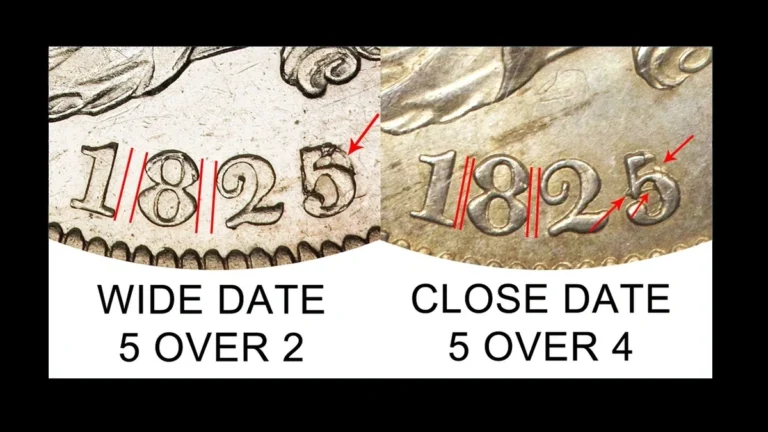
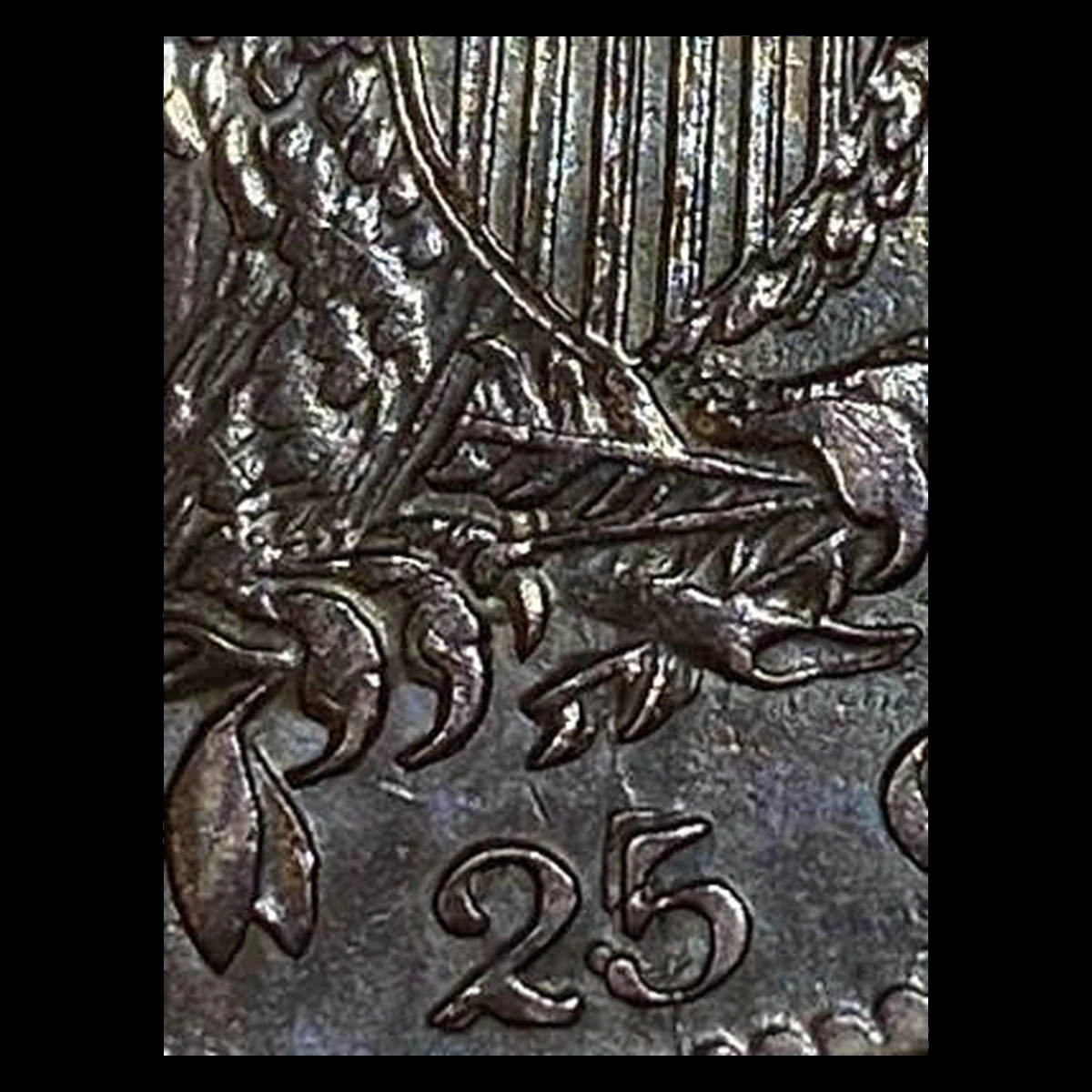
On the Small 9 variety called Browning-3, the 5 beneath the eagle has a stronger repeated outline than the neighboring 2. Both retain parts of earlier positions punched into the die.
The denomination was entered more than once during tool preparation. It is a repeated 25, not a correction from a 50-cent design.
A later die crack can also cross the denomination and continue toward the arrow feathers. That traveling line records a split in the die rather than another position of the numeral punch.
How to Identify
Keep both digits in the same magnified image, beginning with the more obvious outline on 5. Then compare the smaller remnant on 2 with the described PCGS collection example.
Follow each added contour to see whether it remains tied to the numeral’s shape. A thin ridge leaving the number and crossing open space belongs to the separate crack examination.
Use light from different directions to separate actual raised metal from glare and from a groove cut into the coin. A broad-looking 5 alone does not provide the paired-digit match.
What It’s Worth
$150–$35,000 is estimated across worn through exceptional unworn examples. The NGC MS66 Browning-3 sold for $32,900 at Heritage in October 2014.
MS66 indicates a coin without circulation wear and with very few marks. Its preservation accounts for much of the distance between that result and an ordinary worn specimen.
The sale coin also had die cracks. The transaction values one complete quarter, not separate prices for a repeated denomination and each ridge.
1819 Quarter Lines Connecting Stars, Date, or UNITED: Die Cracks Error
Small 9 Browning-3 can show a ridge through star eleven toward the bust and another diagonally crossing the date’s first 1. Large 9 Browning-2 has a different pattern linking outer points of stars two through seven, with a faint line between 18.
These routes form as metal fills cracks in the dies during striking. The coin carries raised traces rather than openings through its own metal.
Large 9 Browning-1 and Browning-2 also have similar reverse cracks beside U in UNITED. Their starting points at the toothed border help distinguish the tools.
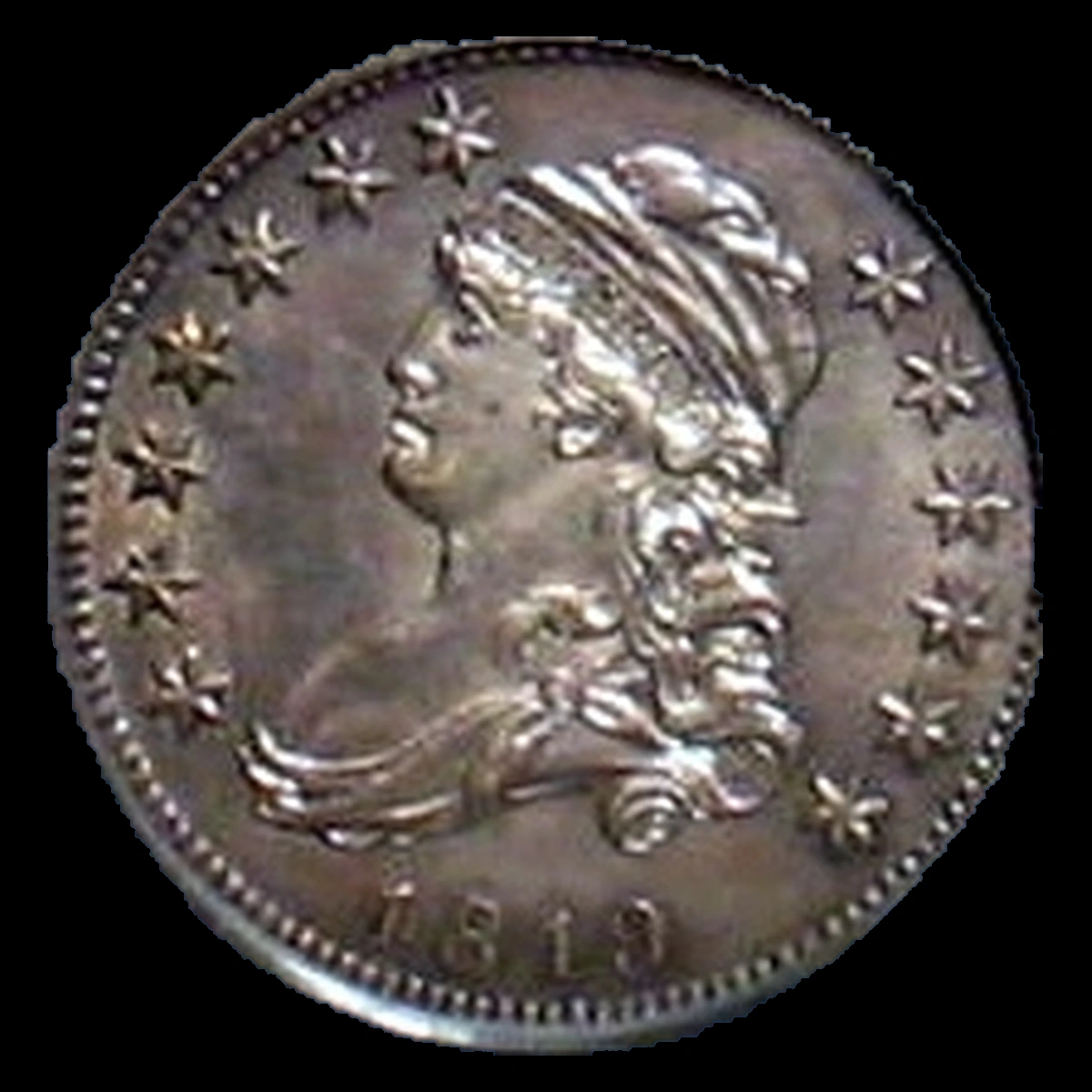
How to Identify
On a Large 9 candidate, examine the small border teeth, called dentils, beside U. The Logan collection description distinguishes Browning-1’s start between teeth from Browning-2’s start at a tooth’s center.
The Browning-2 line passes through U toward the wing but stops short of it. Confirm the associated star-two-to-seven route and faint 18 connection on the front rather than identifying it from one reverse segment alone.
For Small 9 Browning-3, use the right-side star eleven and first date digit as separate landmarks. Compare their complete routes toward the bust and across 1 with the correct variety.
A scratch may leave displaced lips around an incised channel, so inspect the line’s center under side light. The matching route and raised relief should support each other.
What It’s Worth
$150–$35,000 is the estimate across the stated varieties and preservation levels. The $32,900 MS66 transaction above supplies the high-grade comparison for a coin that also carries the repunched denomination.
It is not a separate sale for cracks or a price for a typical worn example. The exact die pairing, original surfaces, and cleaning or damage matter alongside the visibility of the lines.
Conclusion
A numeral remnant follows the shape of 2 or 5, while a crack can continue beyond those digits across other details. The two may coexist without requiring the same explanation.
For Large 9 varieties, the tiny starting point beside U helps separate similar reverse routes. Match the complete die combination and condition, then value the whole quarter once rather than adding the top estimate for every raised feature.