Rare 1933 Half Dollar Errors (List & Pictures)
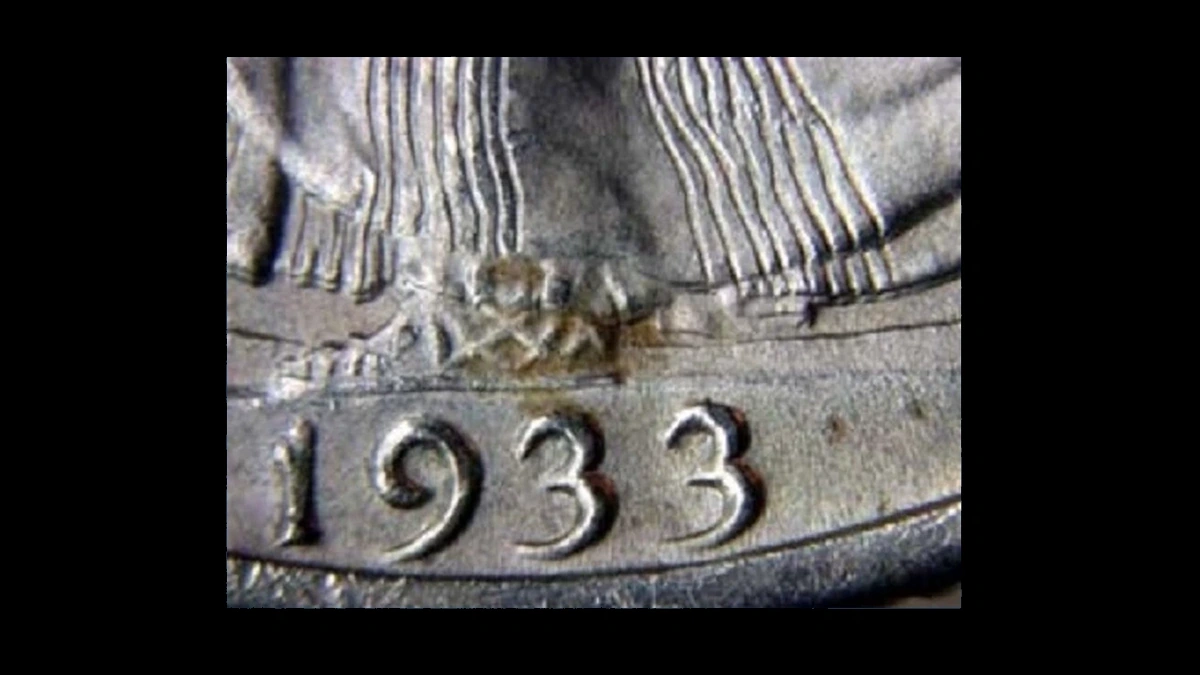
A misplaced design is easy to notice; a second skirt edge takes a closer look. Both appear in reports of 1933 half dollar errors, along with raised lines on the back.
The examples and estimates here span $50–$9,775. That $9,775 Heritage result from January 2011 belongs to an unusually well-preserved coin, so it is not the value of a small crack alone.
Use the inspection points below to separate the three features and find the right price comparison.
| Where to look | Clue | Error type | Estimated value |
|---|---|---|---|
| Bottom of Liberty’s skirt | A faint second hem | Doubled die obverse | $100–$2,500 |
| Eagle and nearby lettering | Raised, irregular lines | Reverse die crack | $50–$300 when worn with minor cracks |
| Both faces and outer margin | Design missing beside blank metal | Off-center strike | $300–$3,500 |
The 1933 issue covered here has an S mintmark on the back, at the lower left. A normal unworn coin weighs 12.50 grams, measures 30.6 millimeters across, and has grooves around its edge.
1. 1933 Half Dollar A Second Skirt Hem: Doubled Die Obverse Error
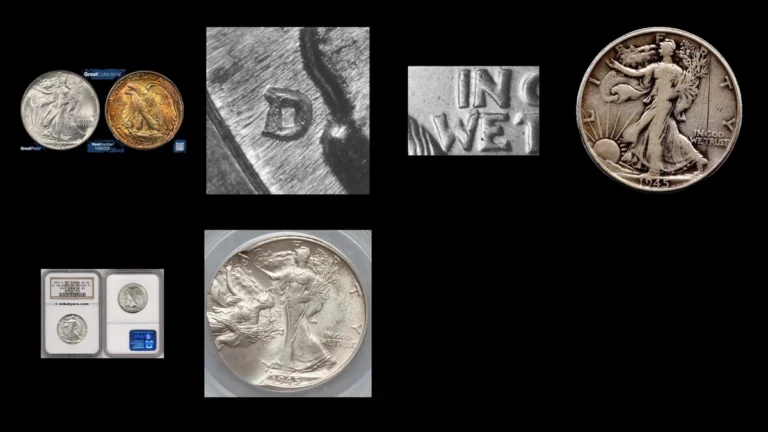
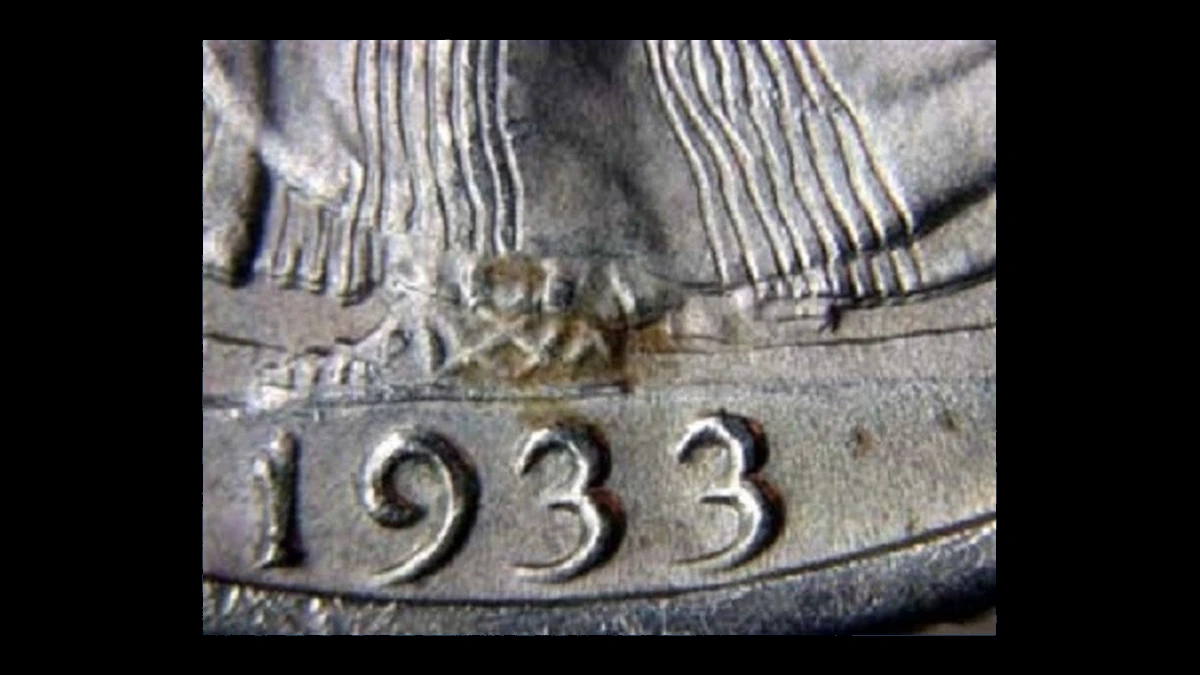
Liberty’s clothing gives you a better starting point than the large date for this variety. Examine the lowest edge of her skirt for a thin, repeated outline.
DDO-001 and VP-001 are two catalog labels used for this same feature. “Obverse” simply means the front of the coin.
The steel stamping tool, called a die, already carried the extra outline before it touched the coin. A small shift while the design was being put into that tool created the doubling.
How to Identify
Place a clear photograph of the variety beside your coin and line up Liberty’s feet. That gives you a fixed point from which to compare the lower hem.
Follow the hem with a 10× magnifier rather than searching for any doubled-looking mark on the front. You need the faint outline in the same place and with the same shape as the reference.
A scratch may run close to the skirt, but it cuts into the metal. The repeated design is raised; a flat ledge caused by movement during striking is another lookalike.
Wear can blur this small feature. A weak mark elsewhere on the coin does not replace a match at the hem.
What It’s Worth
Estimated range: $100–$2,500 for worn examples through unworn coins around MS64. Much of the upper price also reflects the scarce date and the coin’s condition.
A published price guide reports a $1,560 Stack’s Bowers sale in June 2021 for an NGC MS64 CAC VP-001. MS64 describes an unworn coin that still has visible marks or other small flaws.
Use that sale for a coin with a similar identified variety and condition. It does not show how much the doubled hem adds to every 1933-S half dollar.
2. 1933 Half Dollar Lines Across the Eagle: Reverse Die Crack Error
The familiar question here is whether a line is above or below the surface. Cracks in a die leave raised lines because metal flows into the broken tool’s narrow openings.
One documented 1933-S has three such paths on its back. They belong to a single coin, not three separate errors to add together.
How to Identify
Find STATES above the eagle and follow the line from its second S toward the upper wing. Next, look from the O in DOLLAR through the rear leg and tail.
The third line lies near the eight o’clock position on the reverse. Keep the whole back visible in your reference photo so each close-up stays in the right place.
Light the coin from the side and trace each line with a magnifier. Raised lines can continue across both the open background and parts of the design; scratches usually form grooves.
A coin does not need these exact three paths to have a die crack. It does need the matching paths if you are comparing it with this particular documented example.
What It’s Worth
Estimated range: $50–$300 for worn 1933-S halves with minor visible die cracks. Stronger condition can raise the whole coin’s value far beyond that bracket.
The three-line example was graded NGC MS67, a very high grade for an unworn coin. CoinWeek records its $9,775 Heritage sale in January 2011.
That result describes an exceptional coin with cracks, not a $9,775 charge for the cracks. Compare the preservation of Liberty, the eagle, and the surrounding surfaces before using it as a guide.
3. 1933 Half Dollar A Blank Crescent at the Edge: Off-Center Strike Error
A coin blank can miss part of the design when it sits too far to one side during striking. The result pairs an unstruck margin with a design that runs off the opposite edge.
Off-center strikes are reported for the 1933-S. How much of the design is missing, and whether the year remains readable, depends on the individual coin.
How to Identify
Set the front and back beside each other in photographs. A true off-center strike should show the misplaced strike on both faces.
If only one design is shifted, consider a die-alignment error instead. An uneven rim by itself does not prove that the blank was off center.
Read the date and locate the S before assigning the coin to 1933-S. Missing digits should not be guessed from the general design.
Inspect the blank area for cuts, filing, or grinding. Removing metal from a finished coin cannot create the untouched margin left by a missed strike.
The normal measurements above provide a useful starting point, though the strike may distort the outline and leave some edge grooves incomplete. A specialist can help separate that distortion from later damage.
What It’s Worth
Estimated range: $300–$3,500 for genuine examples with a clear identity. The 1933 half dollar guide gives this estimate; it is not a recorded auction range for certified 1933-S examples.
A useful different-year comparison is an 1827 Capped Bust half struck ten percent off center, which sold for $2,640 in September 2025. It was graded VG8, meaning it had substantial wear.
The 1827 coin belongs to another series and collector market. Its sale helps put an older silver-half error in context, while the visible date, size of the shift, and condition still need to match your comparison.
Conclusion
Work from the small skirt detail to the back, then check the overall placement of the design. This separates a doubled die, a cracked die, and a misplaced blank without treating every unusual line as the same problem.
Prices here span $50–$9,775, with the highest result tied to exceptional preservation. Match the feature first, then compare wear and surfaces.