Rare 1935 Nickel Errors (List & Pictures)
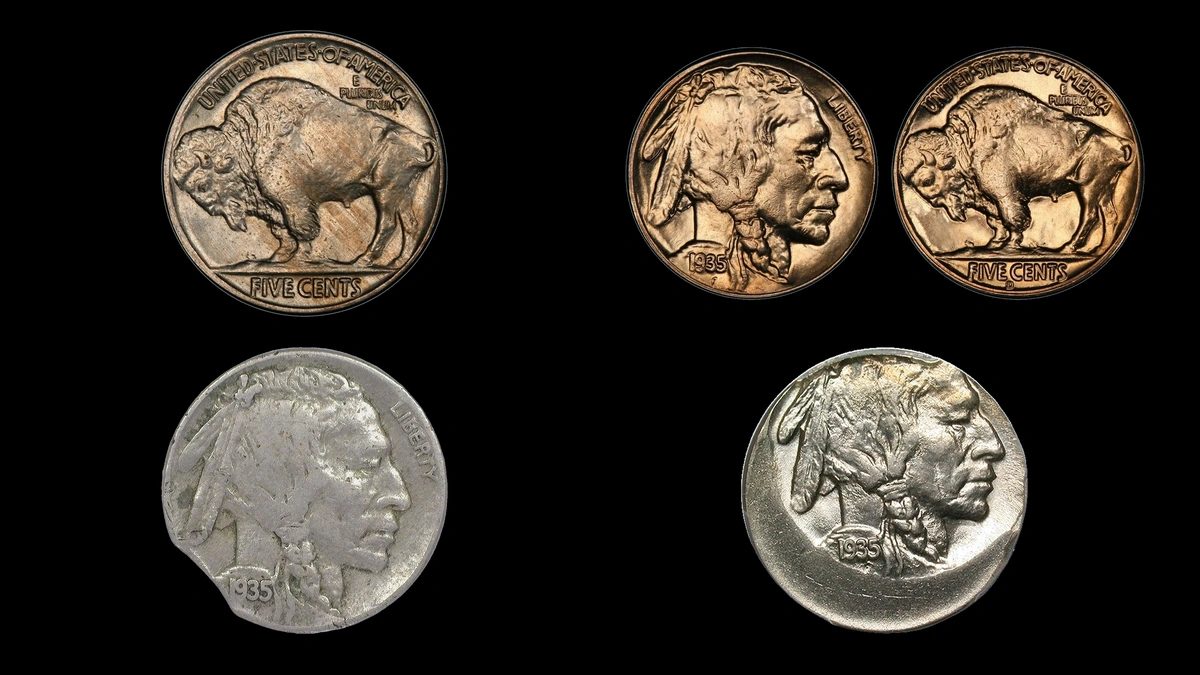
Start below the buffalo when checking a 1935 nickel. Bold doubled FIVE CENTS lettering identifies a major Philadelphia variety, and one MS65 example brought $104,650 in August 2007.
These 1935 nickel errors span estimated whole-coin values of $20–$110,000. That exceptional top result is far removed from the smaller mintmark and striking errors also covered here.
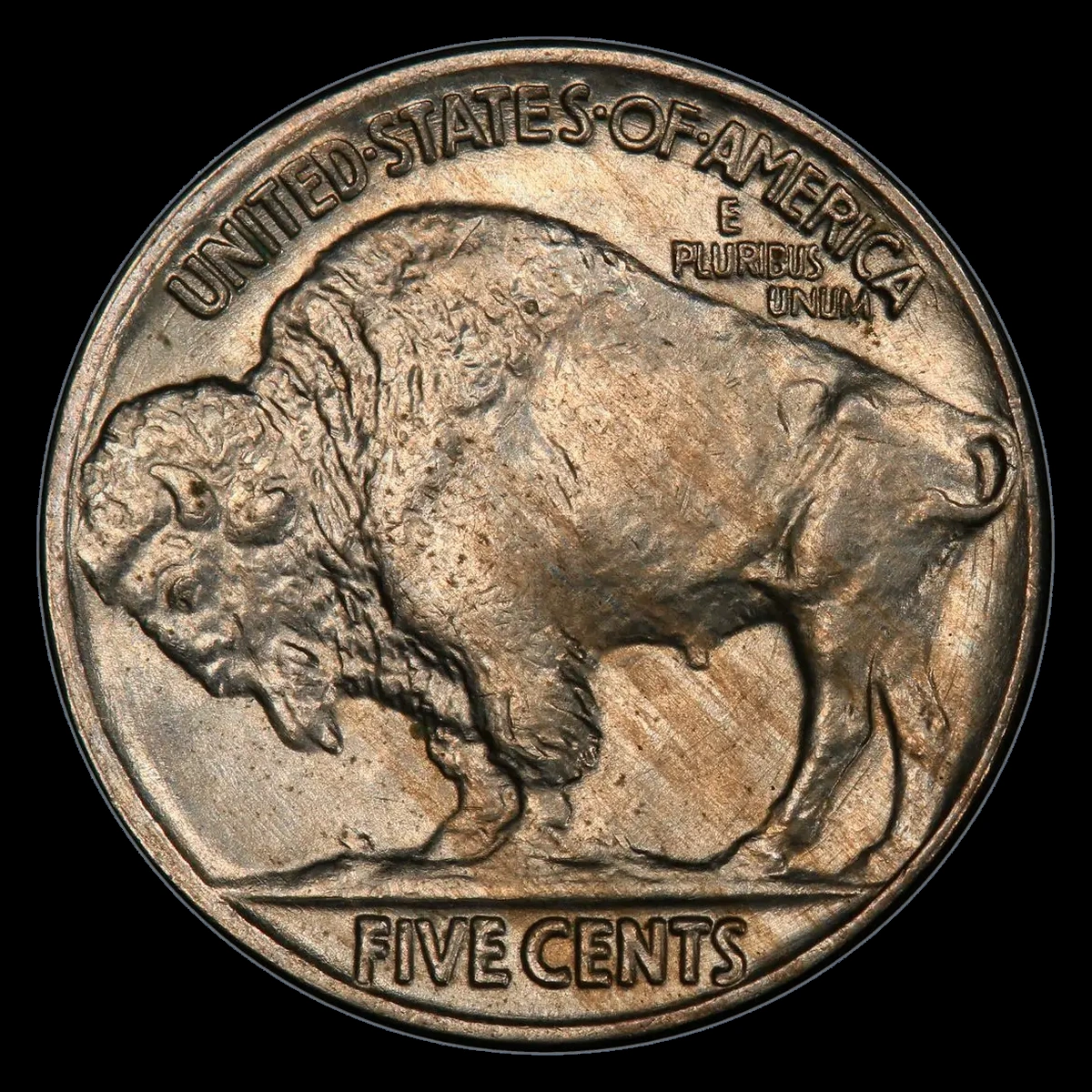
1. 1935 Nickel Strong Repeated Lettering on the Back: Doubled Die Error
On the strongest Philadelphia variety, FIVE CENTS can look almost printed twice. Smaller repeated detail also appears in E PLURIBUS UNUM and parts of the buffalo.
The design was doubled in the die, the steel stamping tool. A normal single strike could therefore place the extra outlines on a coin.
How to Identify
Check below FIVE CENTS for a mintmark before choosing a reference. Philadelphia has no letter, while the separate San Francisco variety carries an S.
The San Francisco pattern involves PLUR, the U in UNUM, the E in FIVE, and CENTS. It differs from the Philadelphia variety even though both have FS-801 catalog labels within their own mint listings.
Compare several letter shapes and related design outlines under a magnifier. Thick worn strokes and flat shelves from movement during striking do not establish the same pattern.
What It’s Worth
$100–$110,000 is a broad estimated range across collectible doubled-back examples. Modest pieces have a more practical starting comparison around $100–$1,500, while exceptional major varieties can be far higher.
PCGS records $104,650 in August 2007 for an MS65 Philadelphia coin. MS65 describes an unworn example with relatively few marks.
That historical high cannot price the San Francisco variety or every doubled-looking denomination. Mint, pattern, and preservation must all match the comparison.
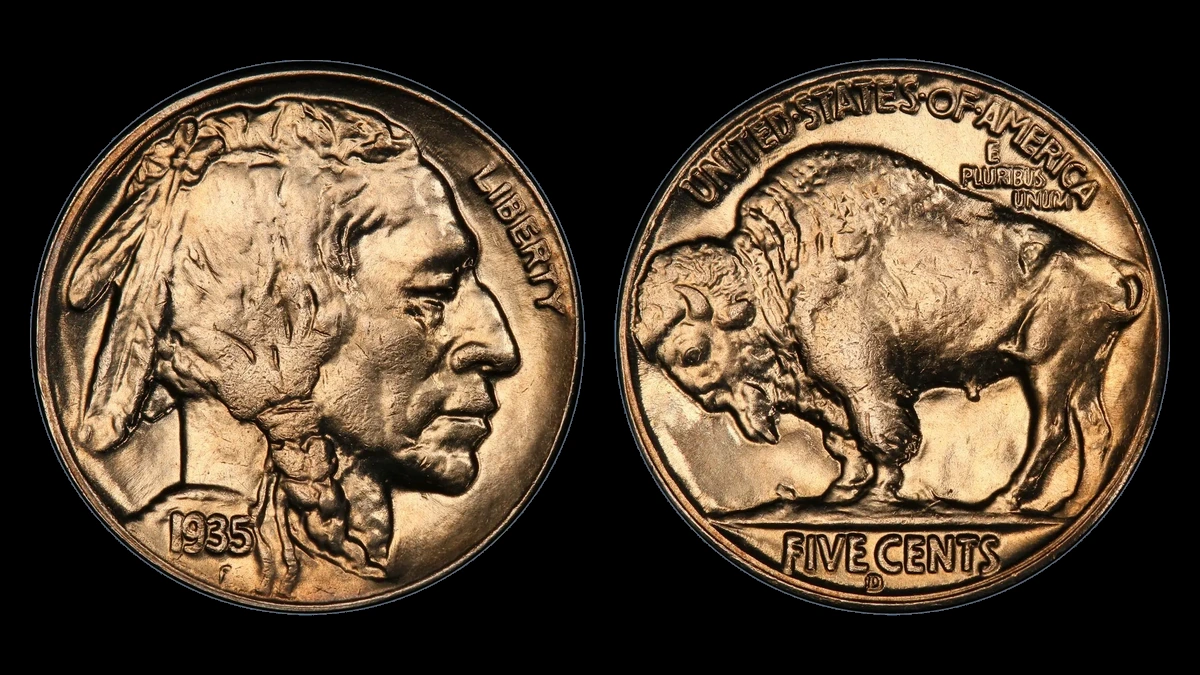
2. 1935 Nickel Earlier Letter Strokes Below FIVE CENTS: Repunched Mintmark Error
An extra D or S curve can remain beside the finished mintmark. Workers punched the letter into the die more than once, leaving traces of an earlier position.
The illustrated collector set includes a Denver MS66 example and a separate San Francisco AU58 coin. Their different letters and grades belong to different specimens.
How to Identify
Read the main letter first, then compare its entire extra outline with the correct variety photograph. Both mints placed the letter below FIVE CENTS.
Look for rounded remnants that fit an earlier D or S. An isolated lump, scratch, or flat ledge does not demonstrate another mintmark punch.
The MS66 Denver coin is unworn with few marks; the AU58 San Francisco example has slight wear. Do not transfer either coin’s extra-stroke position or preservation to the other.
What It’s Worth
$20–$1,000 is an estimated range from minor recognizable repunches to attractive examples with strong detail. Many small patterns belong near the lower end.
The high-grade Denver coin also has value from its condition. A worn S variety needs its own comparison rather than the Denver coin’s grade-based price.
3. 1935 Nickel A Local Interruption on the Buffalo Side: Struck Through Material Error
Material between the blank and die can block part of the back design. A collector’s set shows a 1935 example described with a major struck-through area.
The displayed VG10 grade indicates substantial wear, and its mint is left unidentified. The description does not identify the obstruction as grease, cloth, or wire.
How to Identify
Compare the affected area with the buffalo’s other high points. Similar flattening across the animal can come from circulation rather than a local obstruction.
Inspect the boundary for scraping, corrosion, or cut metal. Original texture or a clear object-shaped impression would support an interruption during striking.
Do not treat a missing mintmark on this worn or affected area as proof of Philadelphia manufacture. Preserve all surviving lettering in the photographs.
What It’s Worth
$40–$500 is an estimated range for genuine struck-through examples. The size and readability of the interruption matter alongside condition.
The displayed VG10 coin is heavily worn. An unworn example would require a different condition comparison even if its blocked area looked similar.
4. 1935 Nickel A Wide Outline With Missing Metal: Broadstrike, Clip, and Surface Change Error
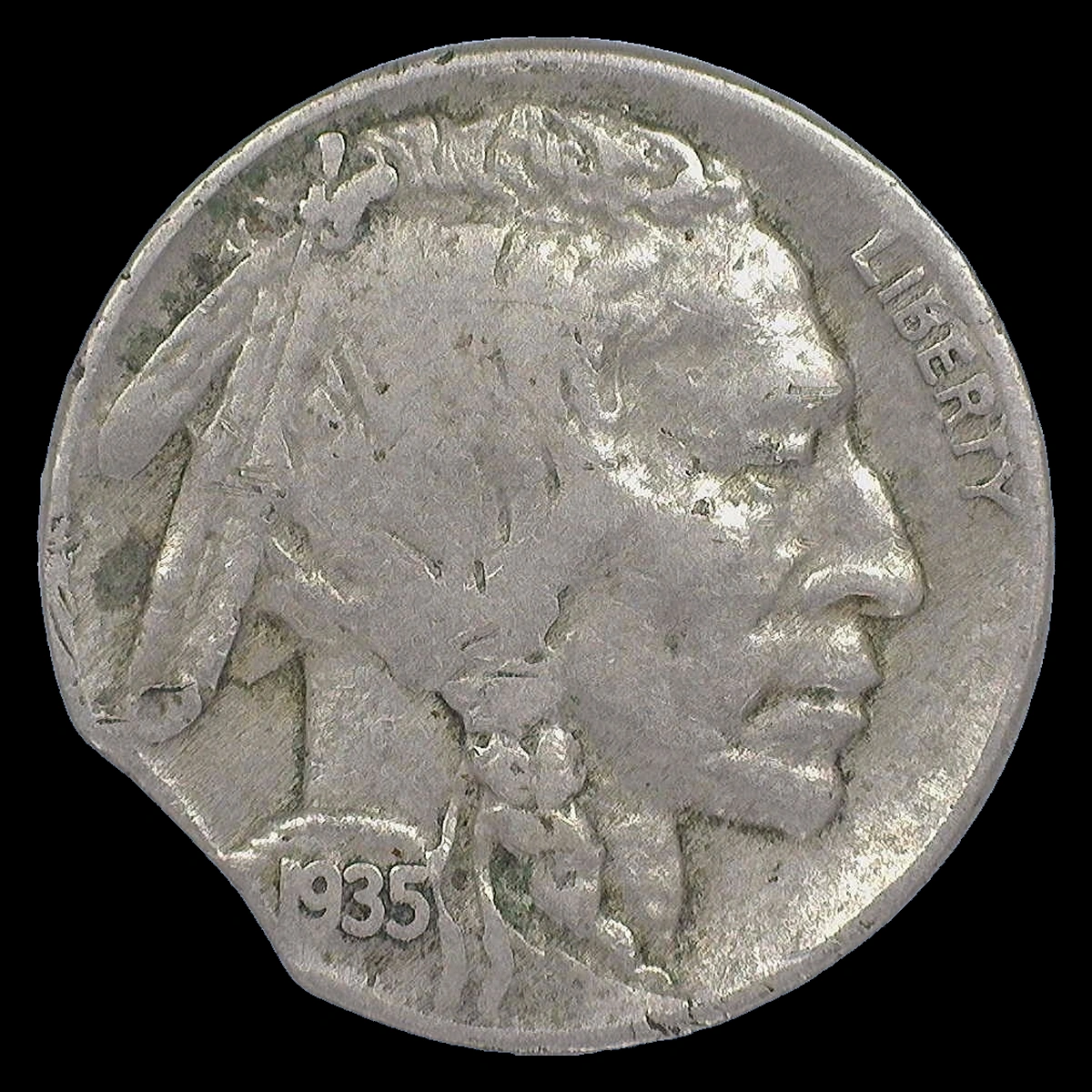
One Philadelphia nickel combines an expanded outline, a clip, and a surface described as improperly annealed. Its displayed grade is MS64, meaning unworn with noticeable marks.
Broadstriking lets metal spread beyond normal restraint, while a clip starts with an incomplete blank. Annealing is the heating used to soften blanks before further work.
How to Identify
Start at the gap and look for rim ends formed around an existing shortage. Then follow how the remaining metal spread outward during striking.
A broadstrike preserves the intended design where the blank remains. This differs from intact blank metal that received no design during an off-center strike.
Inspect the unusual surface separately from the outline. Color alone cannot prove a heating problem rather than later staining or treatment.
A normal Buffalo nickel weighs 5 grams and measures about 21.21 millimeters across. Missing metal and outward spreading affect those measurements in different ways.
What It’s Worth
$150–$1,800 is an estimated range for a genuine combination like the displayed coin. Original expansion, a convincing clip, and preservation support the whole-coin comparison.
The three descriptions refer to one specimen. Adding the top standalone price for each feature would not establish what that one coin is worth.
5. 1935 Nickel Untouched Metal Beside a Shifted Image: Off-Center Strike Error
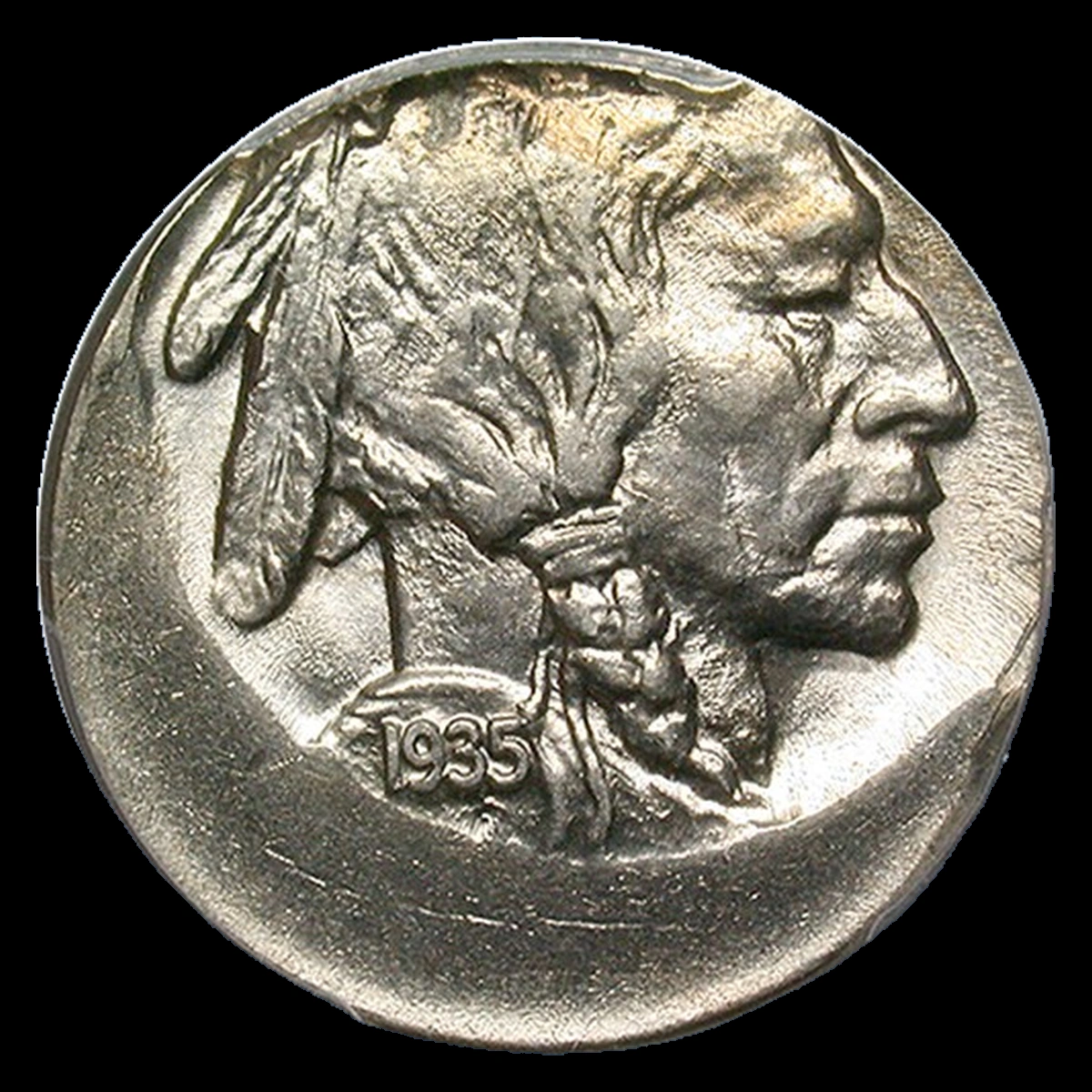
The collector’s Philadelphia example is described as 12% off center toward the upper right. Part of the intact blank missed the design because it sat out of position.
It is displayed with an MS63 grade, an unworn grade allowing noticeable marks. This coin is separate from the broadstruck, clipped example above.
How to Identify
Hold the dated face upright and compare the displacement on both sides. The struck-to-blank boundary should fit one misplaced disk.
The empty-looking area still contains metal. A clip is different because the metal itself is absent.
A separate dealer example is 15% off center toward 9 o’clock. Keep its leftward direction separate from the collector coin’s upper-right shift.
What It’s Worth
$200–$2,500 is an estimated range for genuine dated 1935 off-center nickels. Preserved surfaces and a readable year help narrow the comparison.
The dealer’s 15% example had a $1,400 asking price. That offer is not a sale result for either it or the 12% MS63 coin.
6. 1935 Nickel The Buffalo Design on Unexpected Metal: Wrong Blank Error
A nickel press can stamp its design onto a blank prepared for another coin. Such an error may have an unusual weight, diameter, or alloy.
The supplied 1935 guide lists this category without identifying the original denomination or mint. It does not establish a cent blank or a dime blank.
How to Identify
Compare the actual weight and size with the normal Buffalo nickel figures above. Then inspect how the design fits the available metal.
Keep the 1935 date connected to the complete outline in photographs. The metal must carry the Buffalo design, rather than another coin design struck on a nickel blank.
Look for trimming or a coating before naming another denomination. Metal testing and specialist identification can establish the original blank where appearance alone cannot.
What It’s Worth
$500–$6,000 is an estimated range for a genuine 1935 nickel on an identified incorrect blank. The actual blank and remaining condition would narrow that span considerably.
A 1942 Jefferson nickel on a cent blank sold for $2,280 in July 2021 and weighed 3.04 grams. That different-design example does not supply a cent attribution or measured weight for the 1935 report.
Conclusion
Mint identity is essential on a 1935 Buffalo nickel. The Philadelphia and San Francisco doubled-back patterns are different, and the shared FS-801 label does not make their prices interchangeable.
The estimated $20–$110,000 spread includes an exceptional historical variety result as well as modest finds. For larger shape errors, separate a missing piece of metal from an intact area that the dies never struck.