Rare 1936 Penny Errors (List & Pictures)
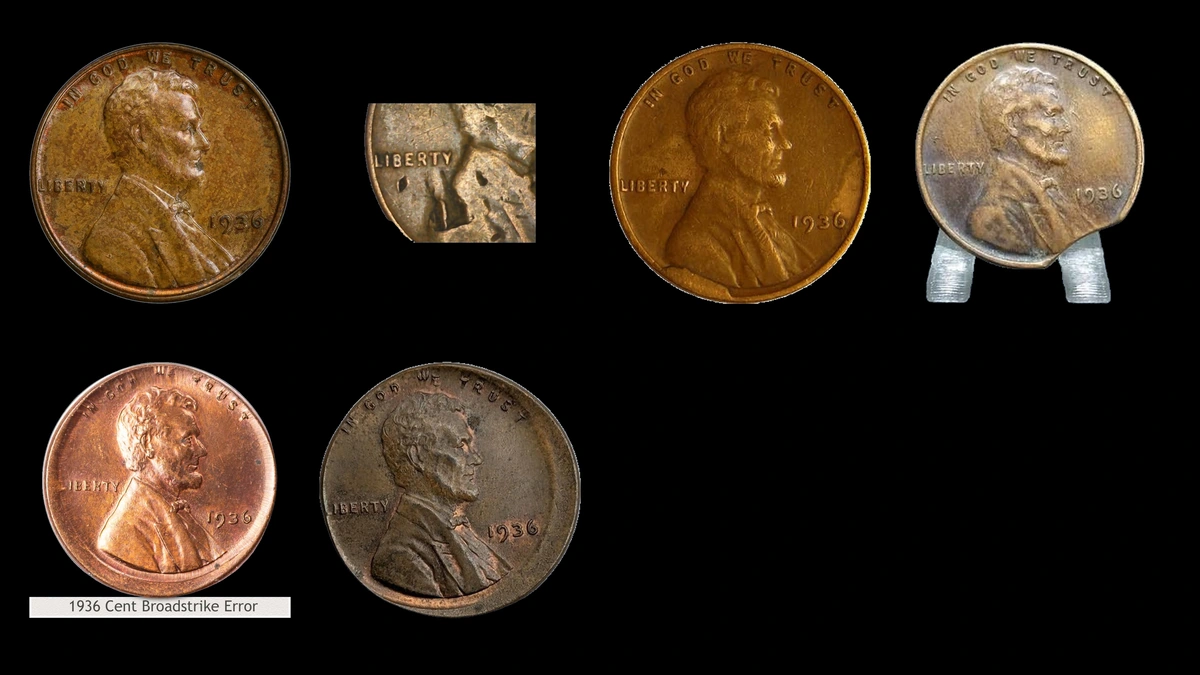
On a 1936 penny, doubled letters can matter much more than an obviously bent edge. An exceptional Type 1 doubled die graded MS67 Red sold for $48,000 in January 2025.
Other 1936 penny errors are easier to spot without a close-up, including peeling metal and a sideways back. Estimated values across this list run from $5–$50,000; begin with the feature you can see, then match its variety and condition.
1. 1936 Penny The Front Letters Have Extra Outlines: Doubled Die Error
Look closely at the date, LIBERTY, and the motto above Lincoln. Recognized Philadelphia doubled dies repeat parts of these designs because the steel tool carried an extra outline before striking the coin.
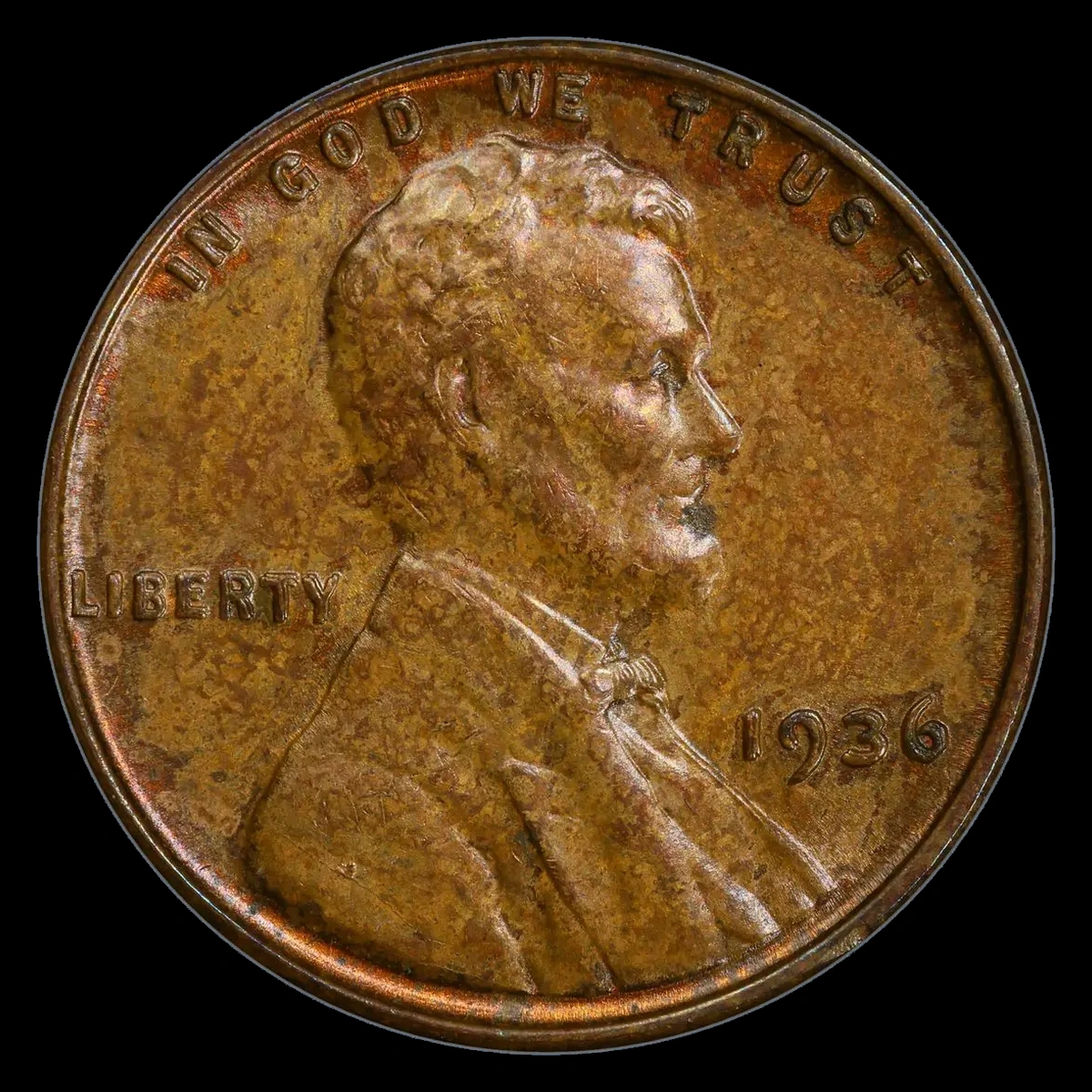
How to Identify
Use a reference for the particular variety, not just any 1936 doubled penny. Some patterns emphasize the date, while another is stronger in the motto.
The listed Philadelphia coins have no mintmark. Flat shelf-like edges caused by movement during striking should not be confused with the matching raised outlines of a doubled die.
These examples are ordinary strikes. Specially prepared Proof cents require separate comparisons for their finish and condition.
What It’s Worth
$50–$5,000 covers many recognized varieties and grades, while exceptional red Type 1 coins may reach $20,000–$50,000. The $48,000 Type 1 result was for an unusually well-preserved PCGS MS67 Red coin.
A different FS-103 variety graded MS63 Brown by ANACS sold for $70 in June 2024. Brown color, grade, and a different doubling pattern make it a very different comparison.
2. 1936 Penny A Patch Interrupts the Motto Area: Struck Through Material Error
The reported Philadelphia specimen has an affected patch above N GOD. Something between the blank and the die prevented that part of the surface from forming normally.
How to Identify
Examine where the patch meets the surrounding letters. Its original outline and the way the design formed around it matter more than a guess about the missing object.
The report does not identify wire, cloth, or grease as the material. A sharp scrape through a finished surface may look similar at first, so inspect under side lighting and leave the area uncleaned.
What It’s Worth
$25–$400 is a working range for a confirmed example with a visible original impression. A 1940 cent struck through wire sold for $219.60 in June 2026.
That later sale is a comparison for an obstruction error. It does not prove that wire caused the patch on the 1936 coin.
3. 1936 Penny A Broad Layer Separates from the Surface: Lamination Error
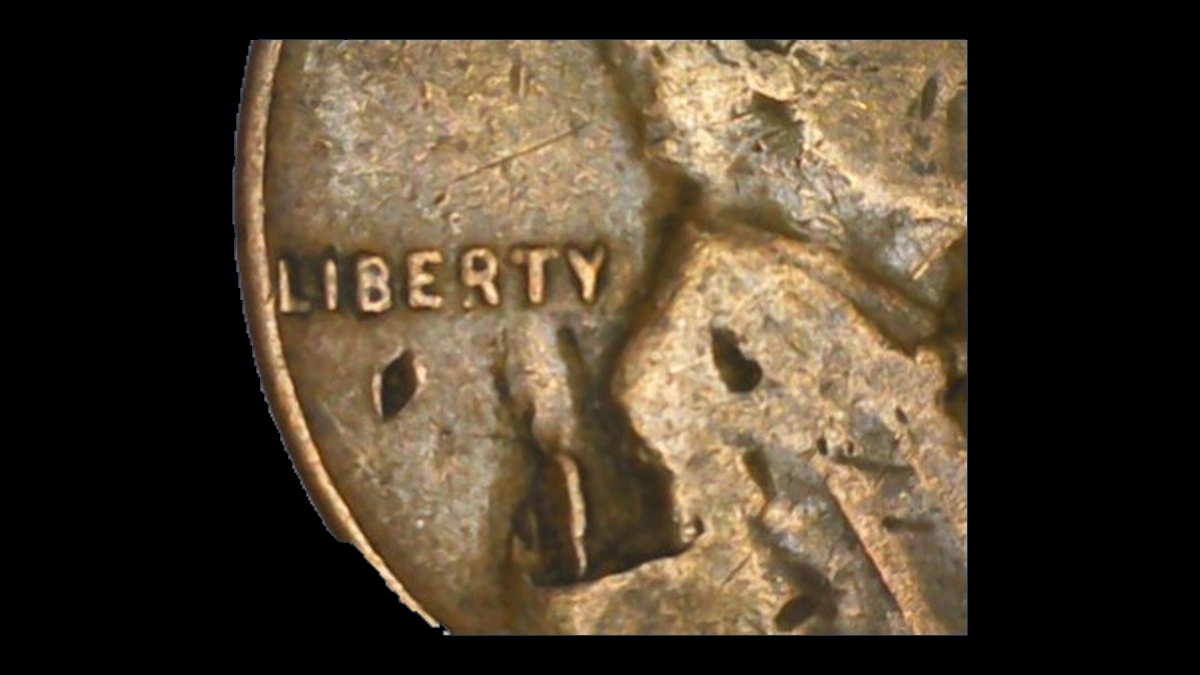
A reported Denver penny has peeling metal across much of the lower front, roughly between three and eight o’clock. Weakness within the copper alloy allowed a surface layer to separate.
How to Identify
Follow the seam beneath a lifted piece without touching it. These cents are copper alloy throughout, so the separation is not peeling copper plating over a zinc center.
Philadelphia reports include different front and back laminations, including a large front peel. They do not all follow the Denver coin’s path, and none of these descriptions establishes a complete coin split into two halves.
What It’s Worth
$5–$75 suits small original laminations, with larger clear separations around $50–$250. Area, visibility, and surrounding condition all affect the comparison.
A 1952-D front lamination sold for $35 in July 2013. It supplies a later-date example of the same metal weakness, not a sale of the broad Denver peel described here.
4. 1936 Penny A Raised Lump Joins the Rim: Cud Error
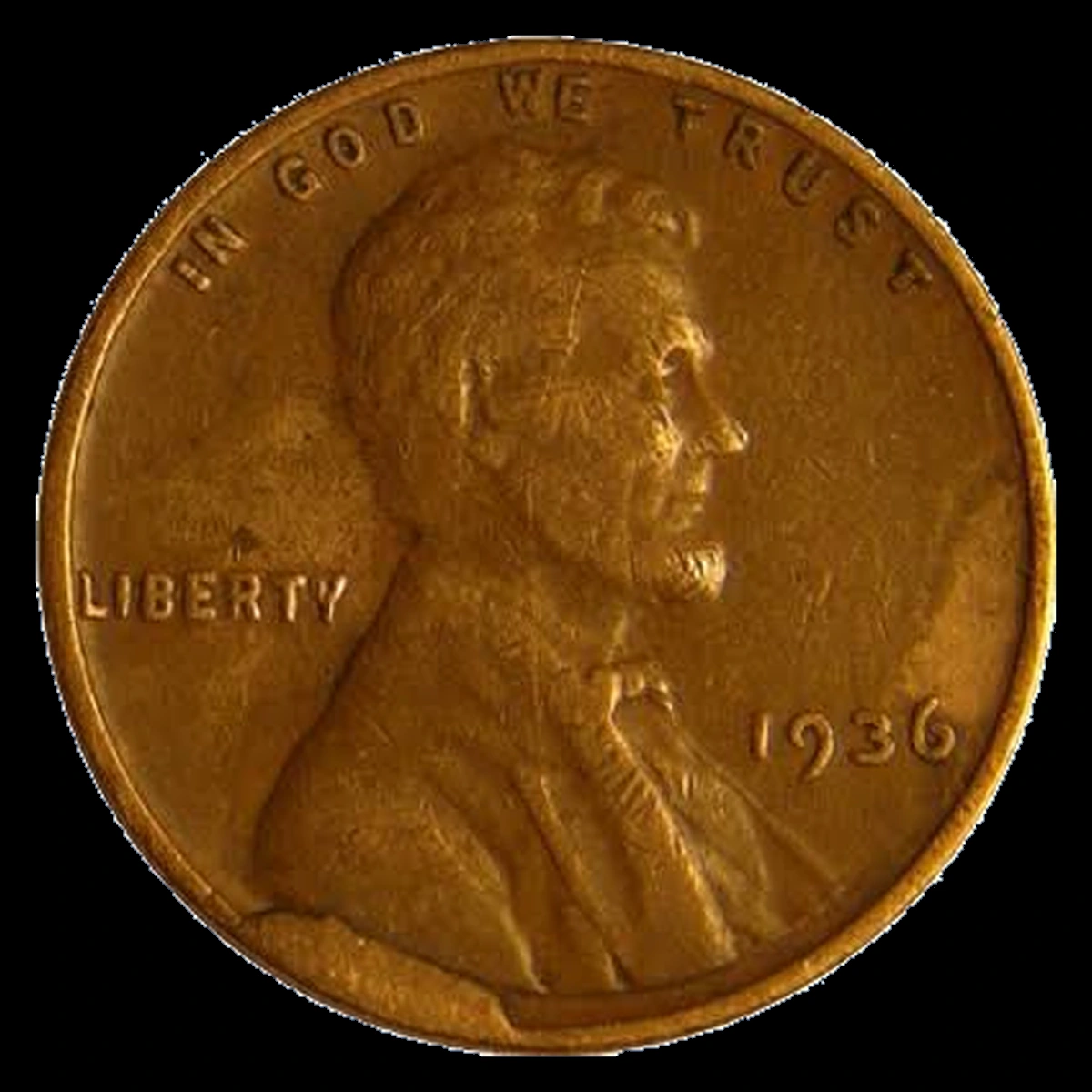
A missing piece at the edge of a die can leave a raised, mostly featureless patch on the coin. This kind of die break is called a cud.
How to Identify
Trace the raised patch all the way to the rim and inspect what happened to the design inside it. A full cud replaces detail where the missing die piece could no longer stamp it.
If recognizable design survives in a shifted area, a broken die section may have remained in place. That is a retained break, which should not be given the appearance of a fully missing section.
The supplied 1936 illustration does not establish a universal mintmark or clock position. Use the selected specimen’s actual boundary and look for added solder or metal pushed up by a later impact.
What It’s Worth
$50–$800 is an estimated range for genuine 1936 rim cuds. Large, clear breaks on undamaged surfaces tend to be more desirable than small breaks on worn coins.
A 1946-S major die break brought $288 in March 2021. It is a different-year size-and-condition comparison, not the recorded value of the illustrated 1936 penny.
5. 1936 Penny A Curved Bite Is Missing: Clipped Blank Error
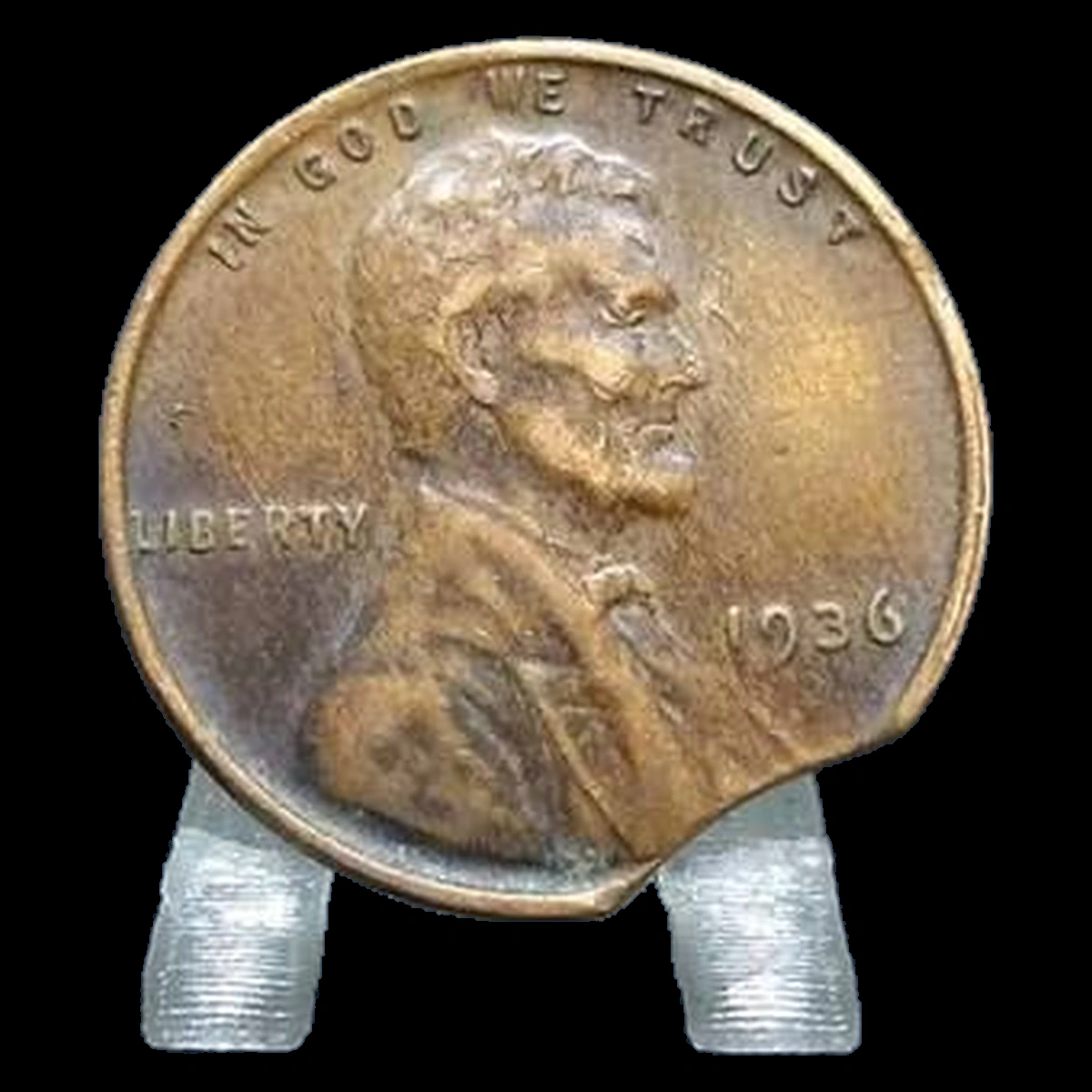
A blank can be punched beside an existing hole in the metal strip, leaving a curved gap. The incomplete piece then receives the coin design.
A listing headed as a 1936 cent describes a 5% curved clip graded MS62 Brown by NGC. Another year field in that listing conflicts with its heading, making the coin’s visible date especially important.
How to Identify
Read the date on the coin and compare it with the holder before using that listing as a 1936 example. Then study the meeting point between the gap, rim, and nearby lettering.
An original clip existed before the design was struck. Fresh burrs, saw marks, or a cut through completed detail suggest metal removed afterward.
A normal cent weighs about 3.11 grams and measures 19.05 millimeters across. Missing blank metal should reduce the weight, although a low reading alone does not establish a genuine clip.
What It’s Worth
$20–$300 is an estimate for an authenticated 1936 clip of this modest size. The conflicting listing does not establish a completed sale or settle the year.
A 1967 cent with a straight 13% clip sold for $39 in July 2021. Its different date, larger missing area, and straight boundary make it a related comparison rather than an exact match.
6. 1936 Penny The Border Spreads but the Picture Stays Complete: Broadstrike Error
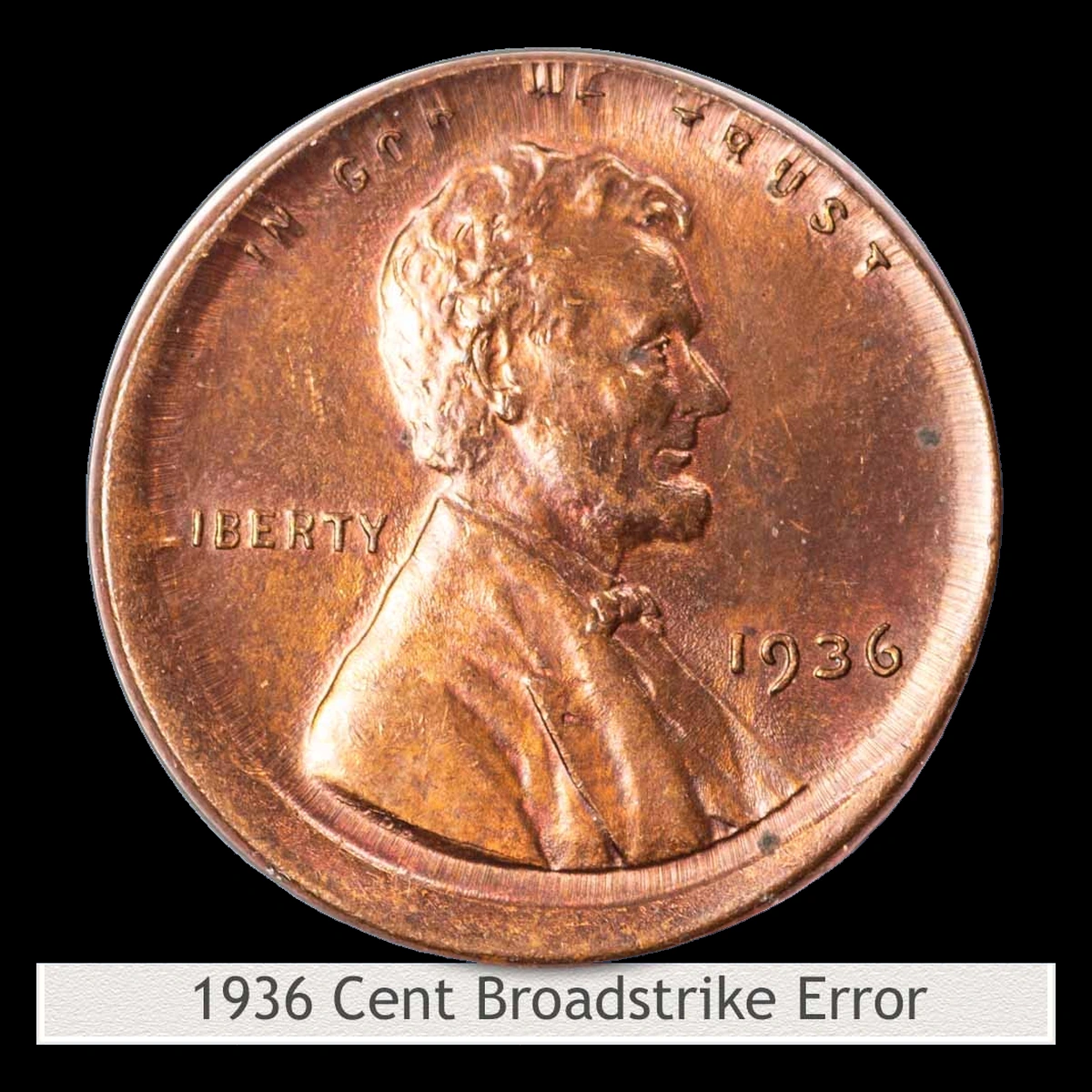
The illustrated broadstrike has extra metal around the design, with more space on one side than the other. The collar, a ring that normally controls the edge, failed to contain the blank properly.
How to Identify
Travel around all the lettering on both faces and confirm that the intended design remains on the coin. Its uneven position within a wider blank does not automatically make it an off-center strike.
Compare the smooth expansion with a penny flattened after minting. Later pressure may crush existing details, while an added ring can leave a seam around the original edge.
What It’s Worth
$50–$500 is a working range for a confirmed 1936 uncentered broadstrike. A small uneven margin alone does not justify pricing it as a dramatic expanded coin.
A 1946-S broadstrike sold for $89 in December 2024. That later Wheat cent gives a real comparison for the mechanism without assigning a sale to the illustrated 1936 piece.
7. 1936 Penny Part of the Picture Runs off the Edge: Off-Center Strike Error
Unlike the complete broadstrike design, an off-center strike loses part of its picture beyond the blank. Unstruck metal remains as a plain crescent elsewhere.
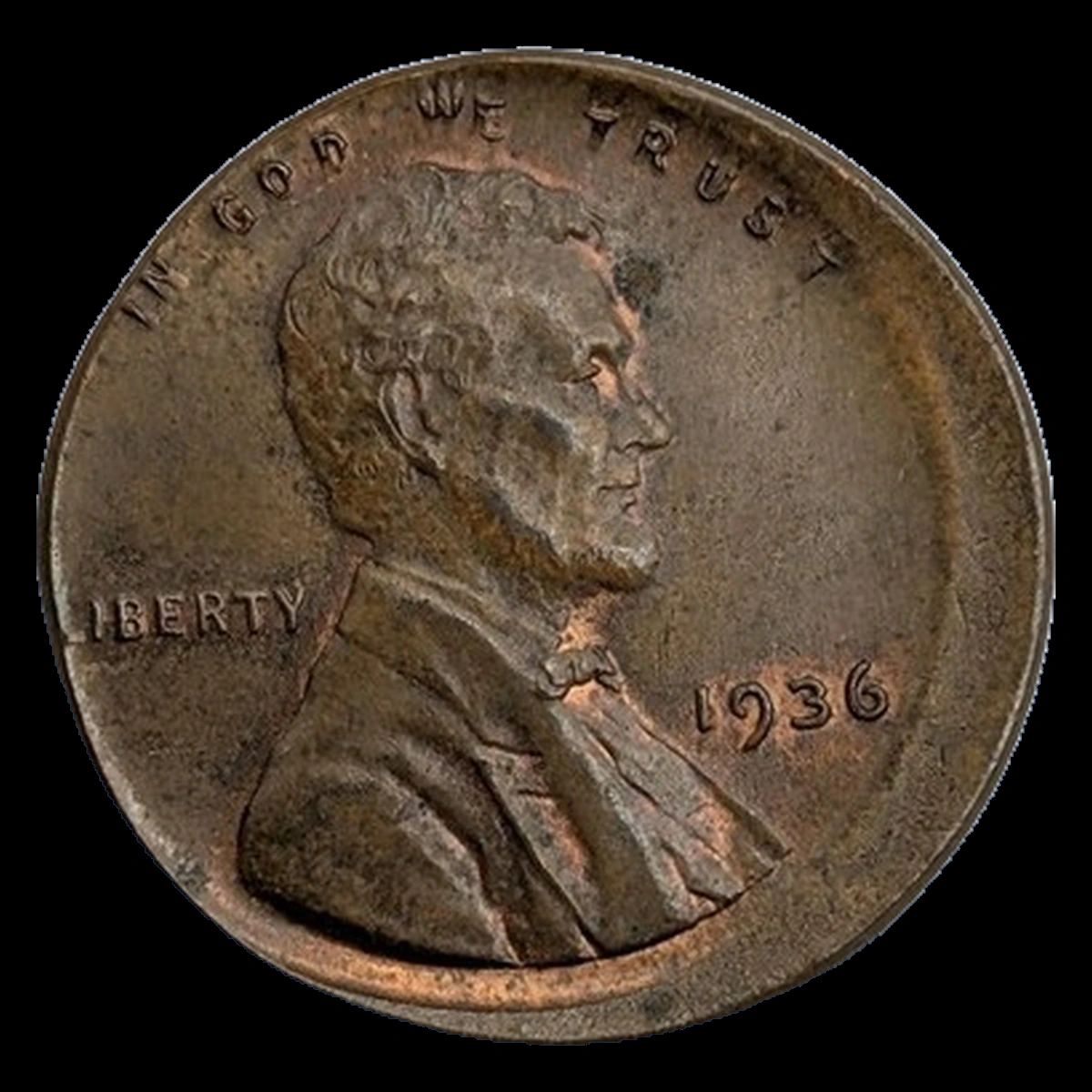
How to Identify
The reported 20% example is displaced toward eleven o’clock and is graded F12 by ANACS, indicating substantial wear. A separate auction coin is 15% off center toward eight o’clock and graded MS60 Brown.
Keep those directions and grades with their own photographs. Both faces should fit the same misplaced blank, and the date should be readable before the coin is offered as a 1936 error.
A clip removes metal; an off-center strike can leave a full blank partly unused. Inspect the plain area for grinding or cutting that could imitate missing struck detail.
What It’s Worth
$50–$1,000 spans genuine 1936 examples with different amounts of displacement and wear. The separate 15% MS60 Brown coin sold for $63 in January 2022.
That price does not belong to the worn 20% specimen. A larger shift helps only when the date, surfaces, and surviving design still appeal to buyers.
8. 1936 Penny The Back Turns Sideways after a Flip: Rotated Dies Error
A reported 1936-D penny has the back about 95 degrees away from normal alignment. One die had turned relative to the other when the coin was made.
How to Identify
Hold Lincoln upright, then flip the coin top to bottom without twisting it sideways. A normally aligned U.S. cent will show an upright back after that movement.
The reported rotation is slightly more than a quarter turn. Its direction is not supplied, so measure the actual coin rather than assigning clockwise or counterclockwise from the number alone.
Repeat the flip from the same starting point and inspect the edge for a join. Arbitrarily rotated photographs or a coin assembled from separate pieces cannot establish this mint error.
What It’s Worth
$50–$600 is the estimated range for an authenticated 1936-D rotation near 95 degrees. The estimate comes from comparable substantial Lincoln cent rotations, not a sale of this reported specimen.
Clear detail and an easily demonstrated angle help a buyer understand the feature. A slight alignment difference is a weaker comparison.
9. 1936 Penny Lincoln and Wheat Details Share a Face: Flipover Double Strike Error
This penny turned over and was struck again. The second blow placed the opposite design over the first, leaving clues from both sides mixed together.
How to Identify
On the recorded XF40 example, the earlier top of Lincoln’s head survives above ONE. Earlier date digits appear near the middle of the right wheat ear.
The later front also retains older UNUM and wheat details near its border. These exchanged design pieces explain the flip; a flat shadow beside a single letter does not.
Check both faces and the edge before deciding that overlapping marks came from the press. The grading record describes one repeatedly struck coin, not two coins joined together.
What It’s Worth
$300–$3,000 is a working estimate for a genuine 1936 flipover double strike with readable overlapping detail. The NGC XF40 example offered in May 2004 did not sell, so it provides no realized auction price.
A cleaned 1956-D flipover double strike sold for $456 in June 2024. That is a completed sale for a related error with a different date and a surface problem.
Conclusion
A 1936 penny can need a letter-by-letter comparison, an edge check, or a controlled flip, depending on the suspected error. Choose the test that addresses the visible feature instead of starting with the highest price.
Keep separate specimen details separate, especially the two off-center coins and the reported clip with conflicting listing dates. Clear photographs and untouched surfaces make the next identification step much easier.