Rare 1941 Quarter Errors (List & Pictures)
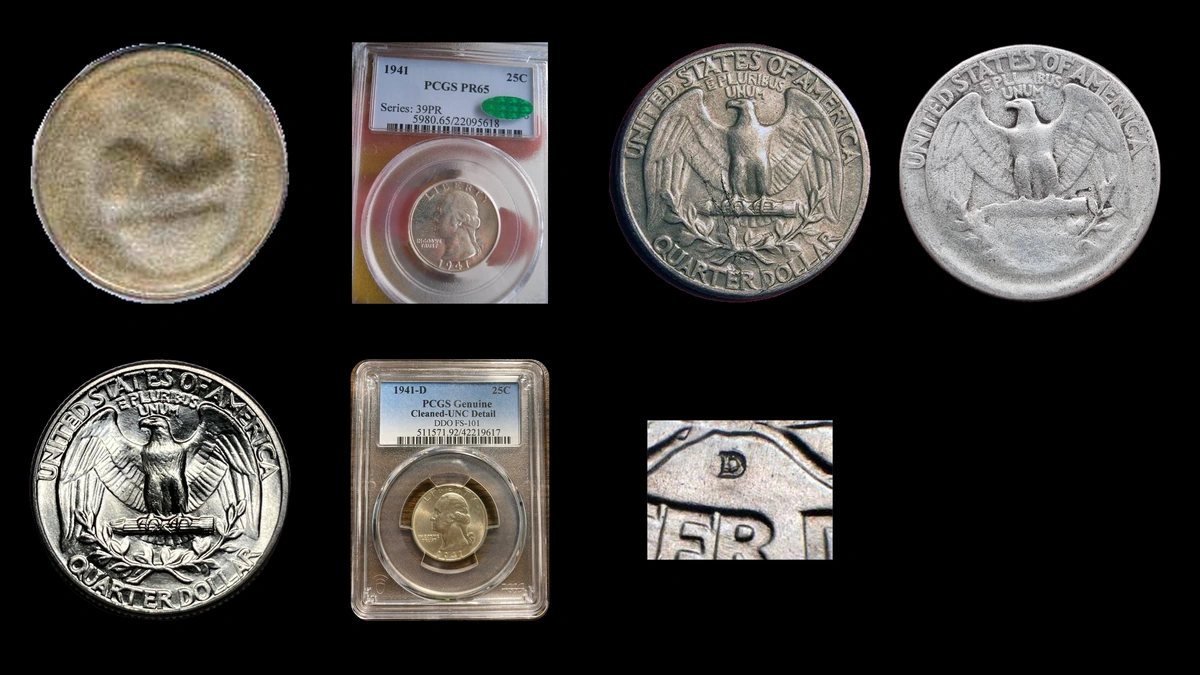
A missing eagle and an extra outline in the motto demand very different checks. This guide to 1941 quarter errors follows the coin from its large features to small raised details, with estimated whole-coin values of $20–$3,500.
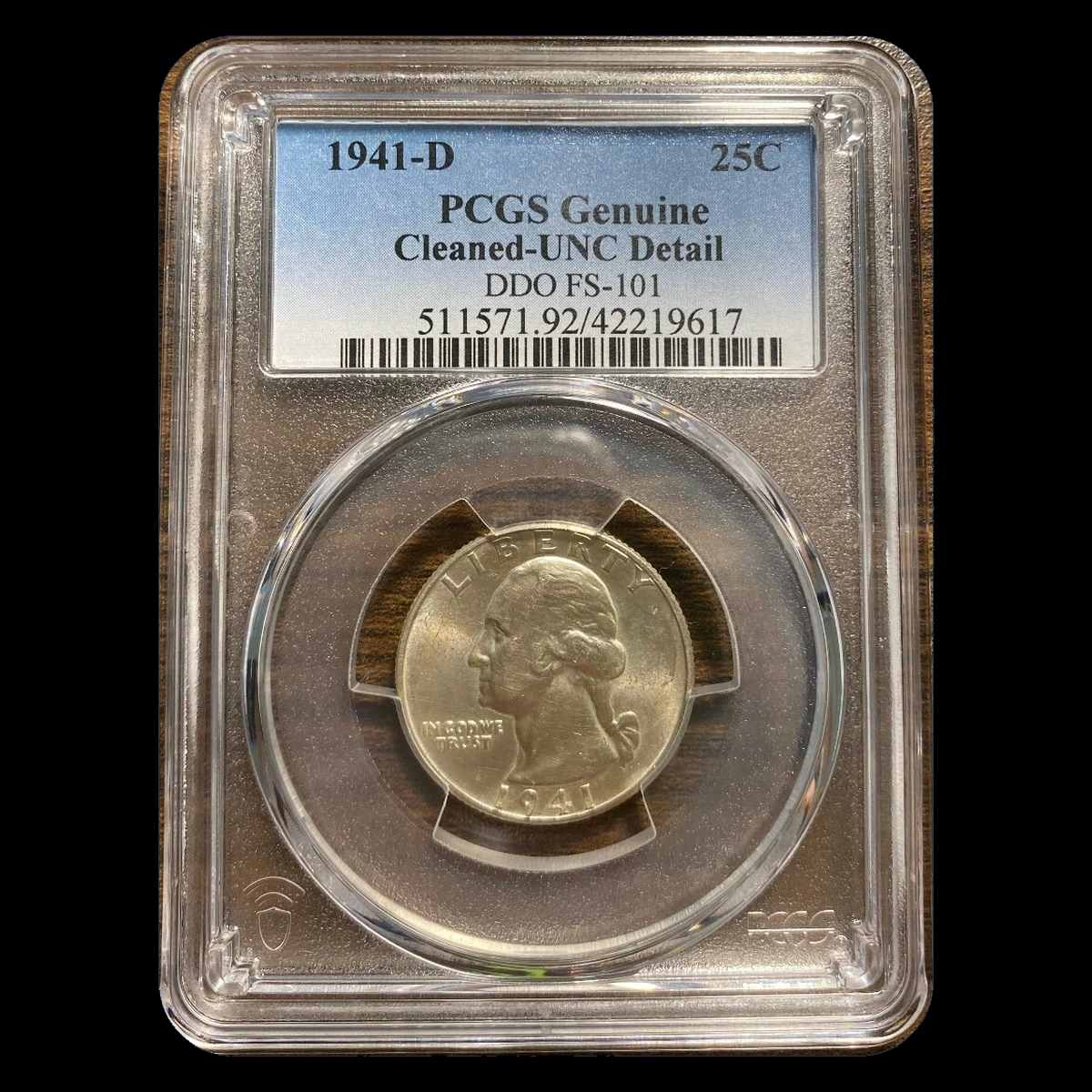
The strongest supplied auction result is $2,640 for a 1941-D FS-101 doubled die graded MS67 in February 2018. That price belongs to a specific variety in exceptional condition, not every quarter with doubled-looking lettering.
1. 1941 Quarter The Entire Eagle Side Is Blank: Uniface Strike Error
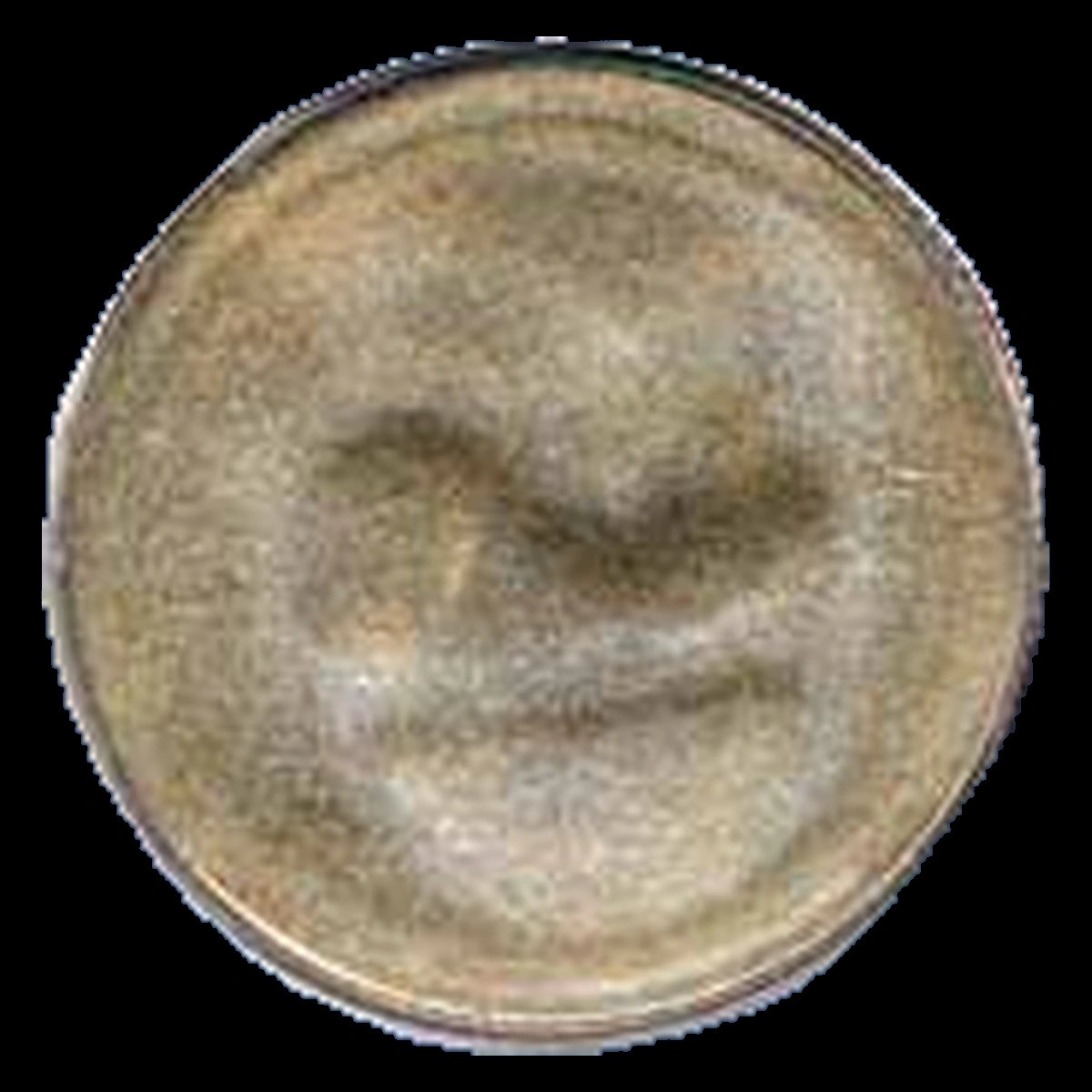
Start by checking that both normal designs are present. A documented 1941 quarter has Washington on the front but a completely blocked reverse because another blank prevented the reverse die from contacting it.
This is a uniface strike, meaning one face lacks its intended design. Fred Weinberg listed a PCGS AU55 example, a coin with some wear, showing this dramatic result.
How to Identify
Examine the blank face under angled light for grinding marks or surviving traces of an erased eagle. The edge also needs inspection for thinning or a seam suggesting joined pieces.
The mintmark normally appears on the reverse, so a blank reverse cannot establish Philadelphia merely by lacking a D or S. As common reference measurements, a normal 1941 silver quarter weighs 6.25 grams and measures about 24.3 millimeters across.
What It’s Worth
$1,000–$3,500 is the estimated range for an authenticated, fully blocked reverse. The AU55 coin appeared at $2,900 in a historical Fred Weinberg price list; that was an asking price, not an auction result.
2. 1941 Quarter The Eagle Is Tilted After Flipping: Rotated Die Error
A quarter with two complete designs may still have them facing the wrong relative directions. Rotation refers to this angular relationship rather than the distance of either design from the rim.
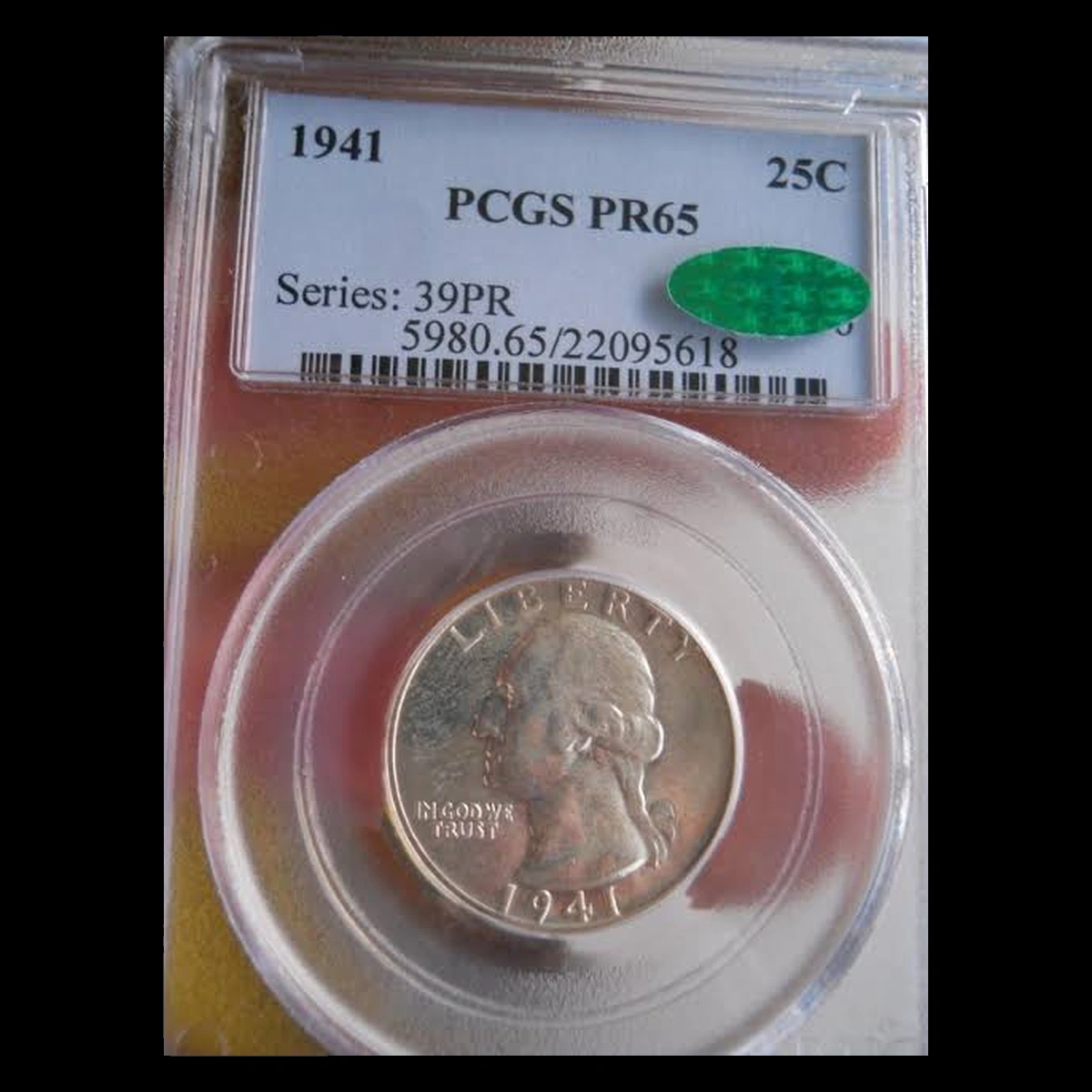
How to Identify
Begin with Washington upright, then flip the quarter from top to bottom without turning it sideways. The eagle should finish upright.
Repeat the movement with the coin held in a fixed position before measuring any tilt. The 1941 report gives no established angle, and separately straightened photographs cannot demonstrate a rotation.
What It’s Worth
$50–$700 is an estimate for a genuine, visible rotation, depending on its size and the quarter’s condition. A 90-degree 2015-D nickel sold for $79 in October 2021, but neither its angle nor its price describes a known 1941 quarter.
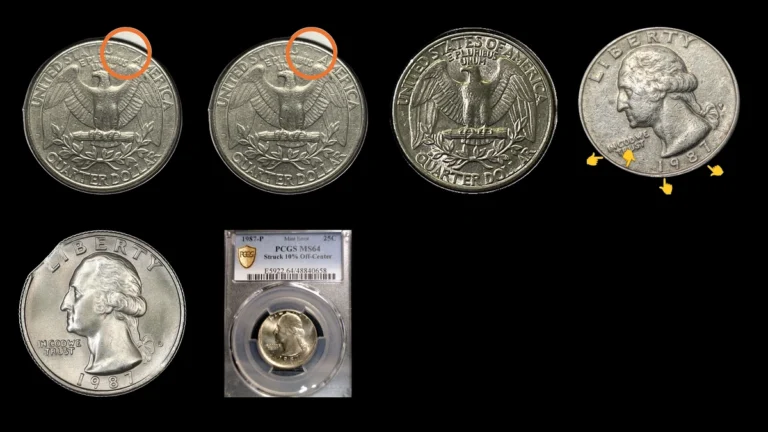
3. 1941 Quarter Design Runs Off One Side: Off-Center Strike Error
A misplaced blank can receive only part of Washington and the eagle, leaving untouched metal beside the struck area. The design that missed the blank never formed on the coin.
How to Identify
Find the missing portions of the design on both sides and check the surviving date. A complete design inside a wide border may instead be a broadstrike.
Do not infer Philadelphia if the reverse mintmark position lies beyond the struck metal. The supplied 1941 reports establish no common displacement percentage or mint for this category.
What It’s Worth
$100–$2,000 is an estimated range for genuine examples with a readable 1941 date. A 1965 quarter struck 25% off center sold for $180 in December 2025, offering a later clad-coin comparison rather than an exact silver-quarter match.
4. 1941 Quarter A Large Gap in the Outline: Clipped Planchet Error
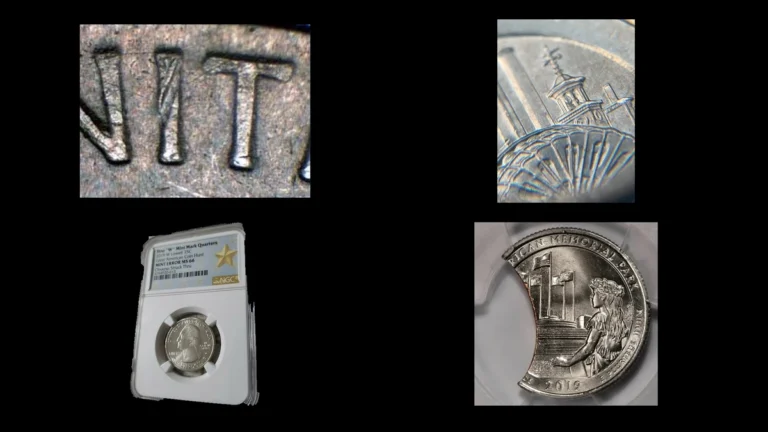
Missing metal and an unstruck patch are different clues. A clipped planchet was incomplete before striking; a notable 1941 example combines a 38% clip with outward spreading from a broadstrike.
How to Identify
Follow the rim into both ends of the opening and inspect how the design formed beside it. Sawing through a finished quarter can leave an abrupt cut through already struck detail.
On the large documented example, assess the absent metal separately from the expansion of what remains. Smaller reported 1941 clips have no supplied common percentage and need not also be broadstruck.
What It’s Worth
$25–$1,500 spans modest clips through substantial compound errors. The PCGS MS64 coin with a 38% clip and broadstrike sold for $1,057.50 on November 3, 2013, as one coin carrying both features.
5. 1941 Quarter Full Designs Inside a Spread Border: Broadstrike Error
A broadstrike occurs when the collar fails to restrain the blank during striking. Metal spreads beyond its usual boundary, while the intended designs can remain complete.
A reported major 1941 broadstrike is labeled ANACS MS60 Details. It is a separate example from the MS64 coin with the large clip.
How to Identify
Trace all outer lettering on both sides to confirm that the design fits on the expanded metal. Compare the outline in several directions rather than relying on a single face-on photograph.
Later hammering can flatten and widen a coin but also crush its existing detail. Keep the MS60 Details description attached to the reported coin because its surface problems still affect value.
What It’s Worth
$75–$750 is an estimated range for 1941 broadstrikes. A scratched 1945 Philadelphia broadstrike sold for $134 in June 2026, a useful different-year example of how damage can limit the price.
6. 1941 Quarter Two Levels Along the Edge: Partial Collar Strike Error
Turn the quarter sideways to look for a step beside the grooved edge. With a partial collar strike, one part of the blank was restrained while the exposed part spread beyond the collar.
Mint Error News offered an unworn 1941 example. Its distinguishing feature is the edge transition, which can be difficult to see in photographs of Washington or the eagle.
How to Identify
Rotate the edge under light and follow the boundary between the confined band and expanded metal. Photograph both levels together from the side.
Filing, repeated impacts, or squeezing may distort an edge after minting. The proposed collar boundary should explain the original shape without relying on those later alterations.
What It’s Worth
$75–$500 is a working estimate for an authenticated 1941 partial collar strike. The supplied $99 sale in June 2025 concerns a 1990-P nickel, so it is only a comparison for the error type.
7. 1941 Quarter A Thin Layer Lifts from the Surface: Lamination Error
The silver-copper alloy of a 1941 quarter can develop an internal weakness that allows a thin piece to separate. A lamination may remain attached as a flap or leave a shallow exposed patch.
This coin does not have the manufactured outer sheets used on modern clad quarters. Peeling therefore should not be described as a modern missing-clad-layer error.
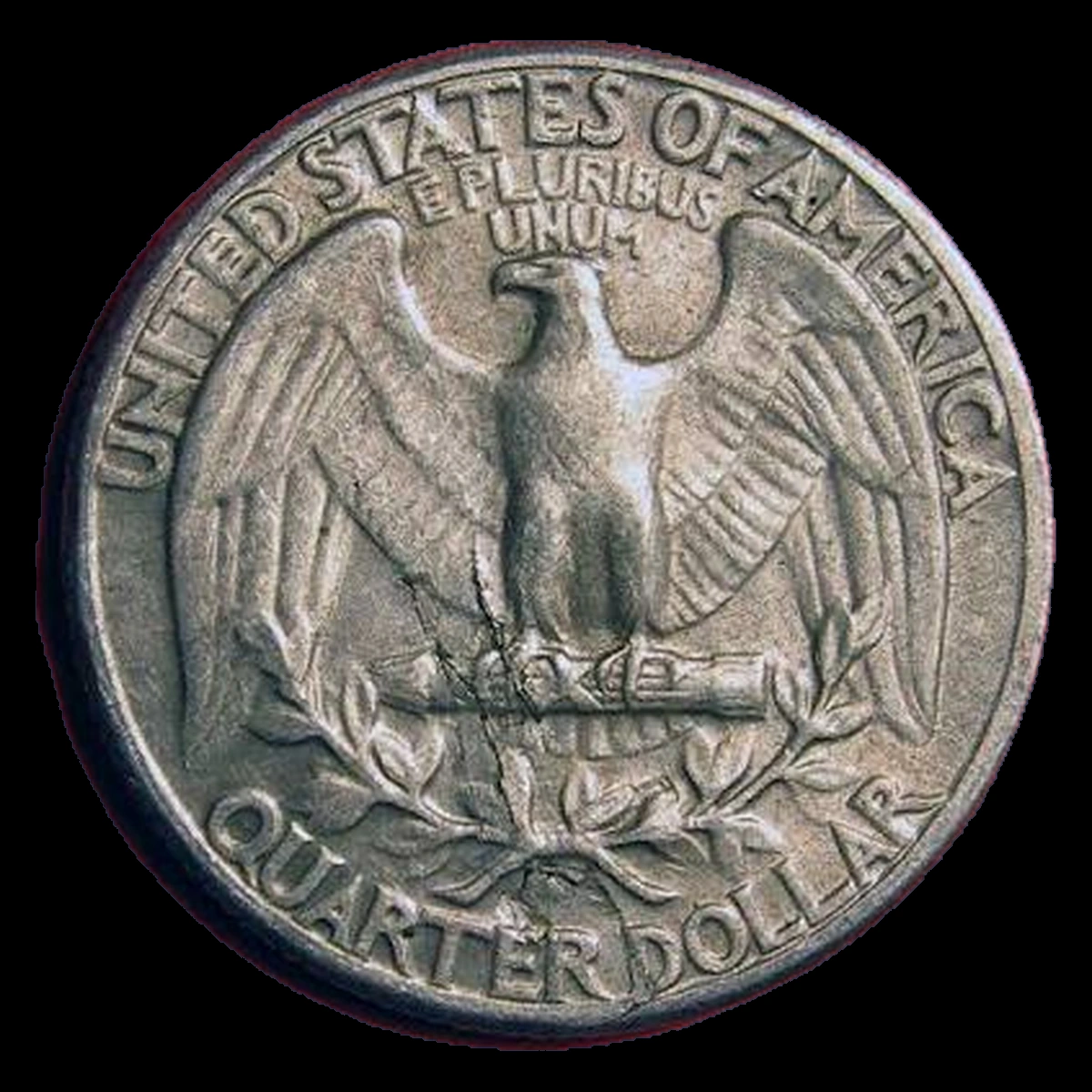
How to Identify
Observe the split from the side and follow any lettering or portrait detail across its boundary. Leave an attached fragment undisturbed.
Scraped areas may have parallel marks, while corrosion can produce broader pitting. A natural separation within the metal needs to be distinguishable from either appearance.
What It’s Worth
$20–$250 is an estimate based on the flaw’s extent and the whole coin’s condition. A 1911 Liberty Head nickel with peeling metal sold for $51 in January 2023, but that different alloy and denomination cannot set this quarter’s price.
8. 1941 Quarter A Local Hollow or Weak Patch: Struck-Through Error
When something blocks part of a die, the underlying area cannot receive its normal detail. Soft grease and a firm object can leave very different effects, from weak letters to a shaped depression.
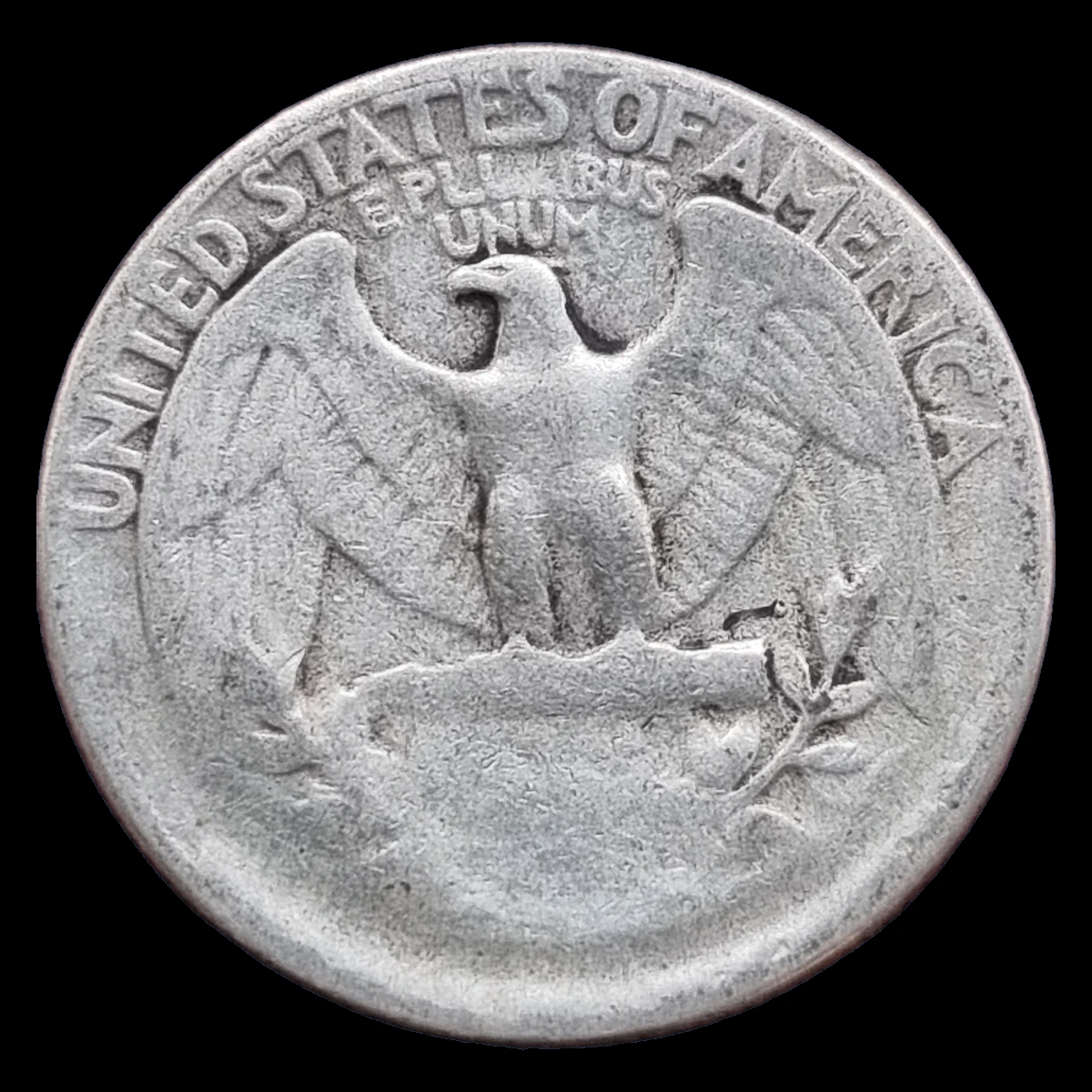
How to Identify
Compare the affected area with adjacent detail and with the general wear on both faces. A local interruption should not be confused with high points worn smooth across the coin.
A raised lip around a hollow may indicate a later impact. The supplied 1941 reports do not identify wire or cloth, so those materials should remain unnamed unless a specific impression supports them.
What It’s Worth
$25–$400 is an estimated range for confirmed 1941 strike-throughs. A 1986-P nickel with this general error type brought $204 in June 2023; the result is a different-denomination comparison, not a sale of the quarter described here.
9. 1941 Quarter Fine Ridges Cross the Design: Die Cracks Error
A narrow raised line can record a crack in a die, the steel tool that forms the design. Metal entering that opening during striking creates a ridge on the quarter.
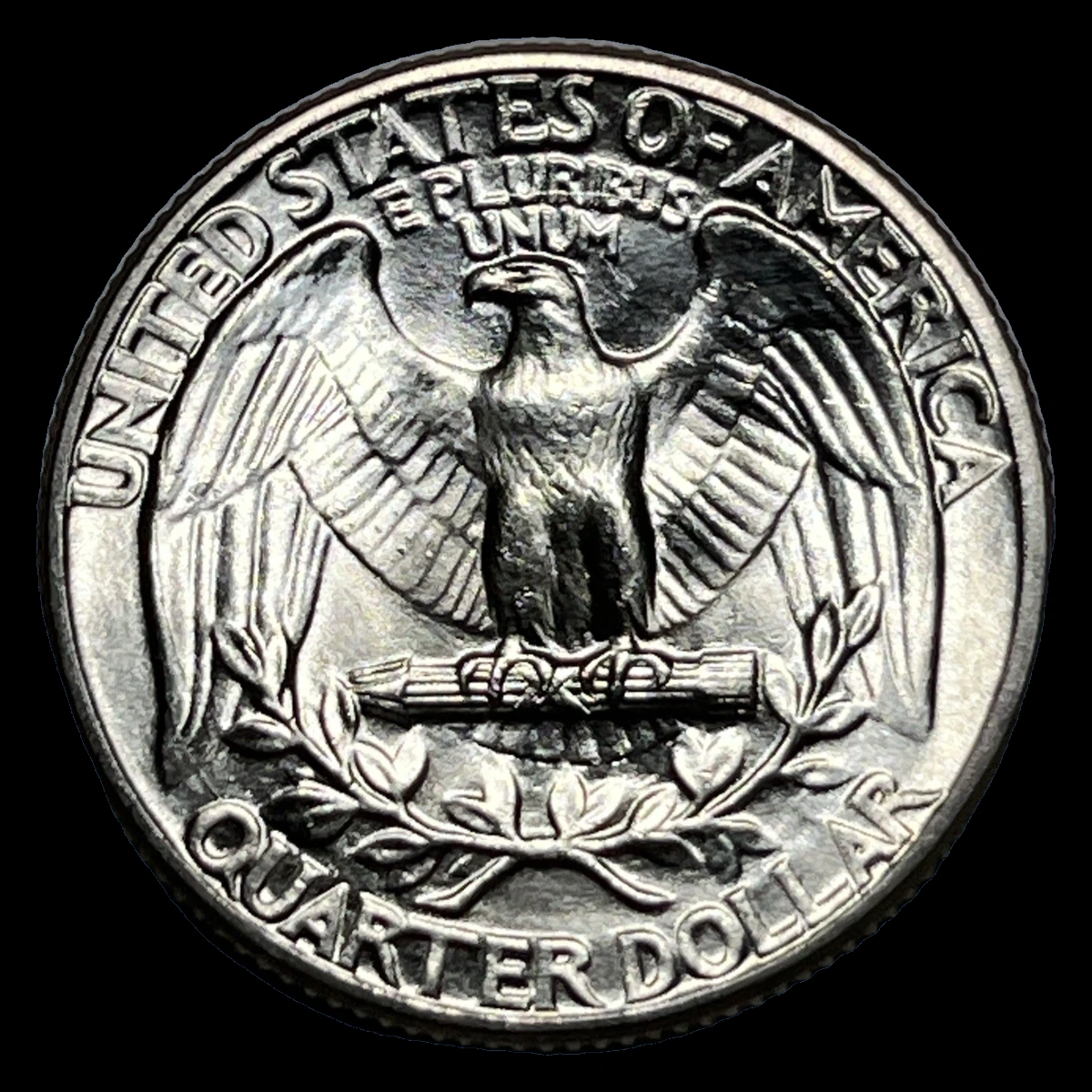
How to Identify
Use side lighting to distinguish a ridge from a scratch cut into the surface. Check nearby areas for a dent that could instead have pushed metal upward.
Some 1941 variety descriptions use cracks as identifying marks, but each path belongs to a particular die and stage of wear. Match the full route across the surrounding design rather than one short line.
What It’s Worth
$20–$150 is a whole-coin estimate for ordinary examples with visible cracks. A faint crack may add little beyond condition and silver content, and a crack on a valuable doubled die should not be priced as a separate coin.
10. 1941 Quarter Extra Outlines in the Motto or Eagle Lettering: Doubled Die Error
Duplication can be built into a die before it strikes any coins. Denver’s FS-101 front variety and FS-801 reverse variety provide two distinct places to look on 1941 quarters.
Philadelphia and San Francisco also have their own patterns. Some Philadelphia reverse features were inherited from a parent tool used to make several working dies, so a shared doubled feature does not identify just one variety.
How to Identify
For the Denver FS-101, examine GOD WE, UST, the nose, eyelid, and hair ribbon for secondary outlines generally above and slightly left of the main detail. The separate FS-801 reverse is especially noticeable in STATES OF AMERICA.
Use the correct mint and face when matching a catalog image, including additional marks needed to separate Philadelphia working dies. Flat shelf-like doubling from movement during a strike is different from the rounded repeated detail of a doubled die.
What It’s Worth
$25–$3,000 covers estimated whole-coin values across minor patterns and major varieties. The 1941-D FS-101 record supplied by PCGS is $2,640 for MS67 on February 22, 2018; the variety and unusually high grade both matter.
11. 1941 Quarter A Second D or S Outline: Repunched Mintmark Error
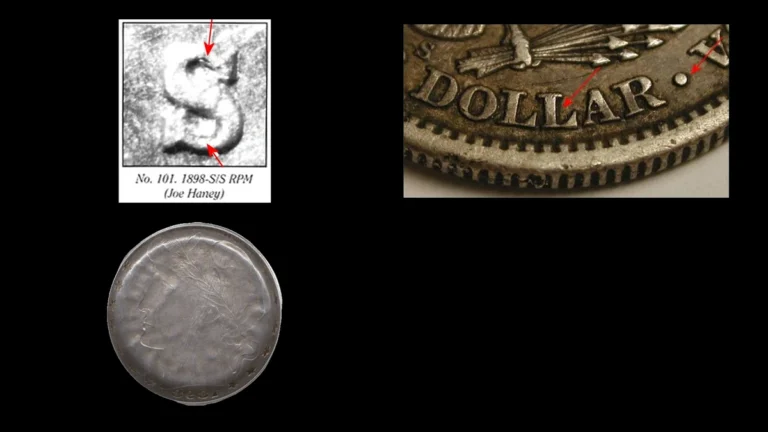
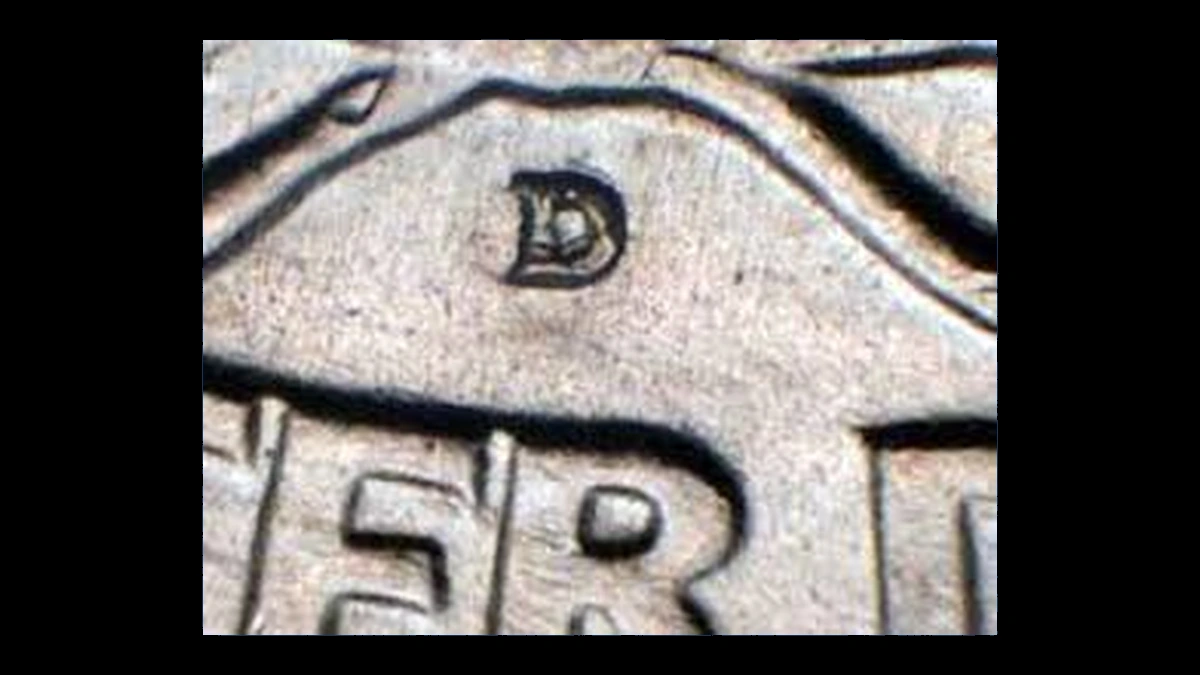
The small letter below the reverse branches deserves its own examination. A mintmark punched into a die more than once can leave remnants of the earlier impression beside the final D or S.
Denver reports include northward, southward, and eastward D/D patterns as well as a D over an inverted D. San Francisco examples include different-sized S punches, and the small-S FS-501 is distinct from a large-S repunched variety.
How to Identify
Keep the coin upright and compare the entire letter, not just a mark inside it. The small-S FS-501 has an upper extra impression; letter size alone is not evidence of repunching.
An inverted D needs its own matching outline rather than the diagnostics for an ordinary displaced D. Nearby branches in a closeup help preserve the correct orientation.
What It’s Worth
$20–$600 is an estimated range for attributed 1941 repunched mintmarks. A 1949-D D/D FS-501 in MS65 sold for $384 in March 2018, but that result belongs to a different date and variety.
Conclusion
Keep a record of both faces, the edge, and the mintmark before assigning a name to an unusual 1941 quarter. A missing reverse can erase the mint identity, while a small raised outline may require a precise catalog match.
Judge each coin as a whole: the large clip also has a broadstrike, and the blank-backed example carries an asking price. Neither should be turned into a misleading separate auction record.