Rare 1937 Quarter Errors (List & Pictures)
The Philadelphia FS-101 doubled-die quarter reached $8,700 in July 2022 in MS66 condition. Other 1937 quarter errors require very different comparisons, with estimated whole-coin values of $25–$9,000 across this guide.
Learn to check a peeling surface, repeated mintmark, unusual blank, and doubled front without transferring one coin’s price to another.
| Category | Key evidence | Estimated value |
|---|---|---|
| Front lamination | Natural separation within the silver alloy | $25–$250 |
| Repunched D | Extra lower-right letter outline | $30–$500 |
| Nickel blank | Wrong metal and original quarter strike | $1,500–$6,000 |
| Philadelphia FS-101 | Repeated nose tip, motto, and date | $300–$9,000 |
| Separate San Francisco doubling report | Its own confirmed pattern | $30–$300 |
1. 1937 Quarter Peeling Front Surface Error
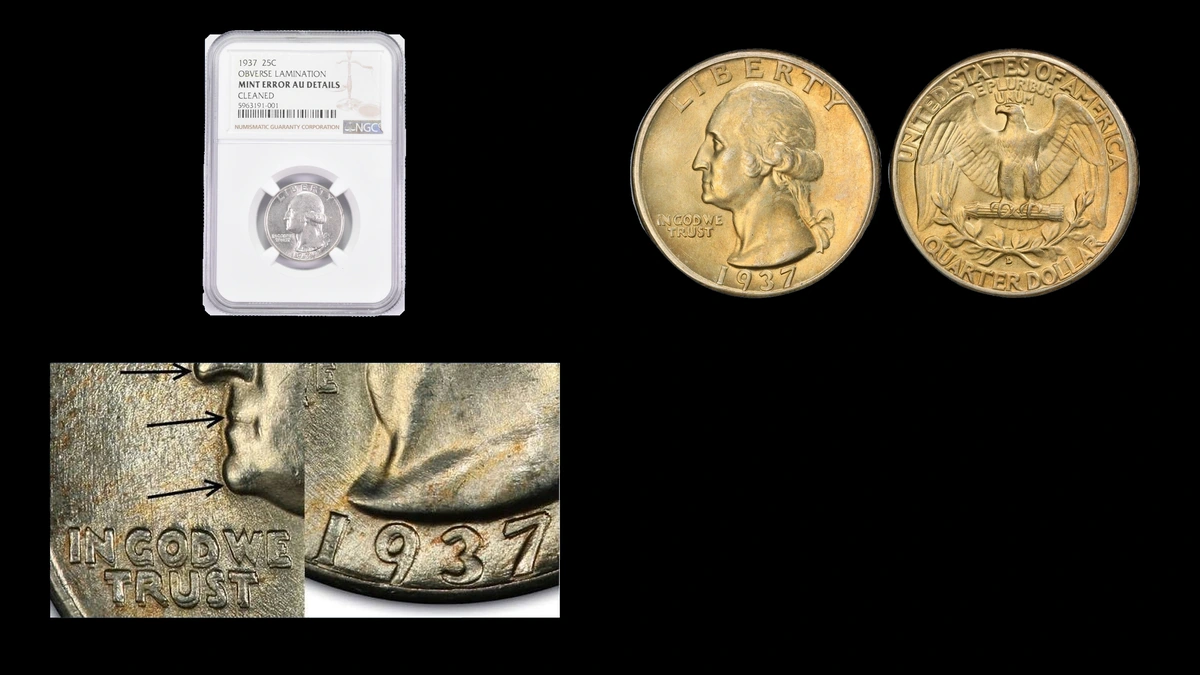
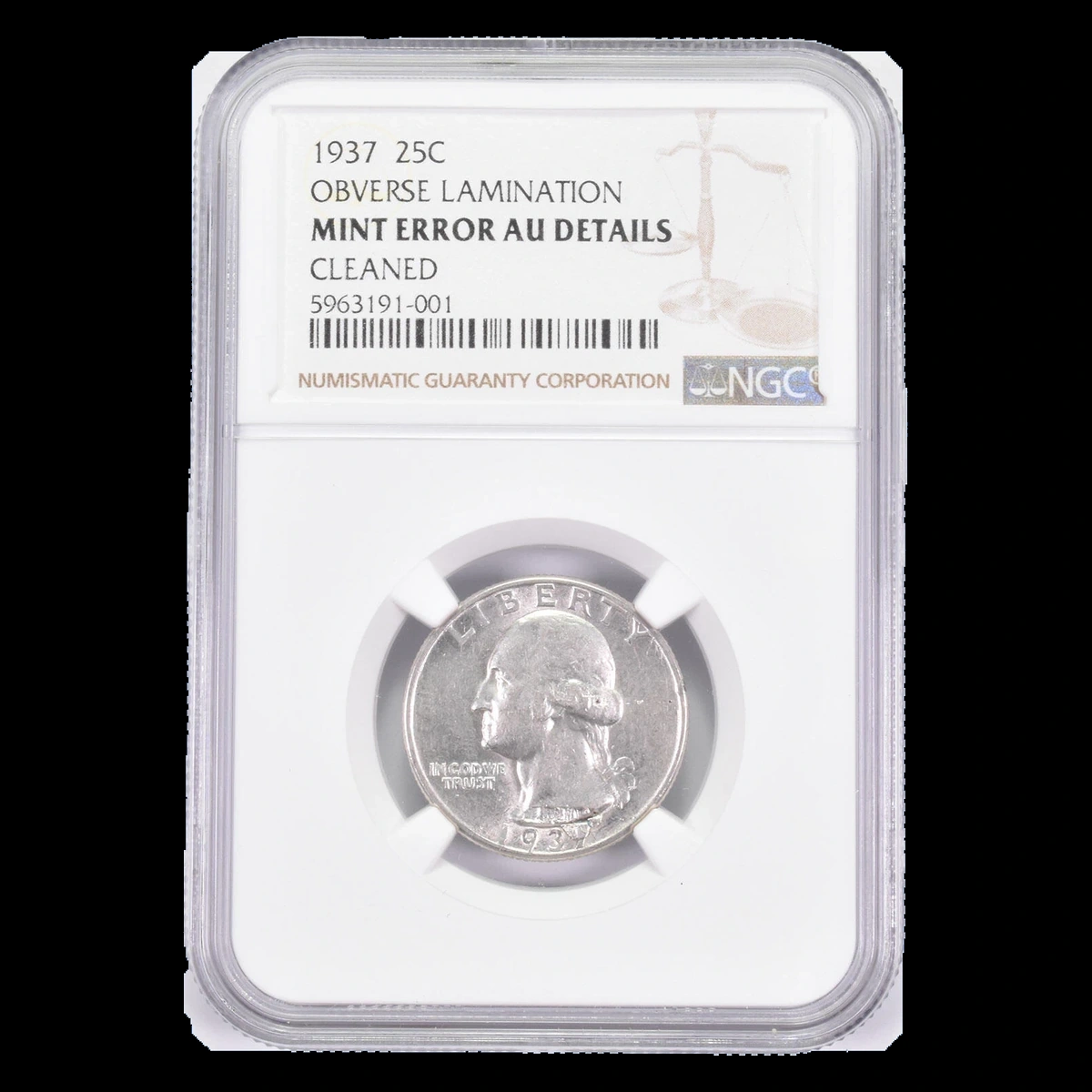
A dealer offered an NGC AU Details quarter with a front lamination. The supplied description does not establish the precise location of the flaw or the coin’s mint.
A 1937 quarter contains silver and copper mixed throughout its alloy. Peeling therefore reflects separation within that metal, rather than the loss of a bonded outer sheet found on modern clad quarters.
How to Identify
Follow an original design line toward the separation and inspect the shallow layer boundary. Deep scraping across finished detail or rough corrosion pits may have a different origin.
Leave any attached flap in place. The holder’s AU Details description also signals condition issues, so do not assume every mark on the coin belongs to the lamination.
What It’s Worth
Genuine front laminations have estimated whole-coin values of $25–$250. Clear separation and the condition of the surrounding surface matter more than a rough appearance alone.
The NGC AU Details dealer example was offered at $149 or Best Offer. That is an asking price, not a confirmed sale, and its condition problems still affect comparisons.
2. 1937 Quarter Repunched D Mintmark Error
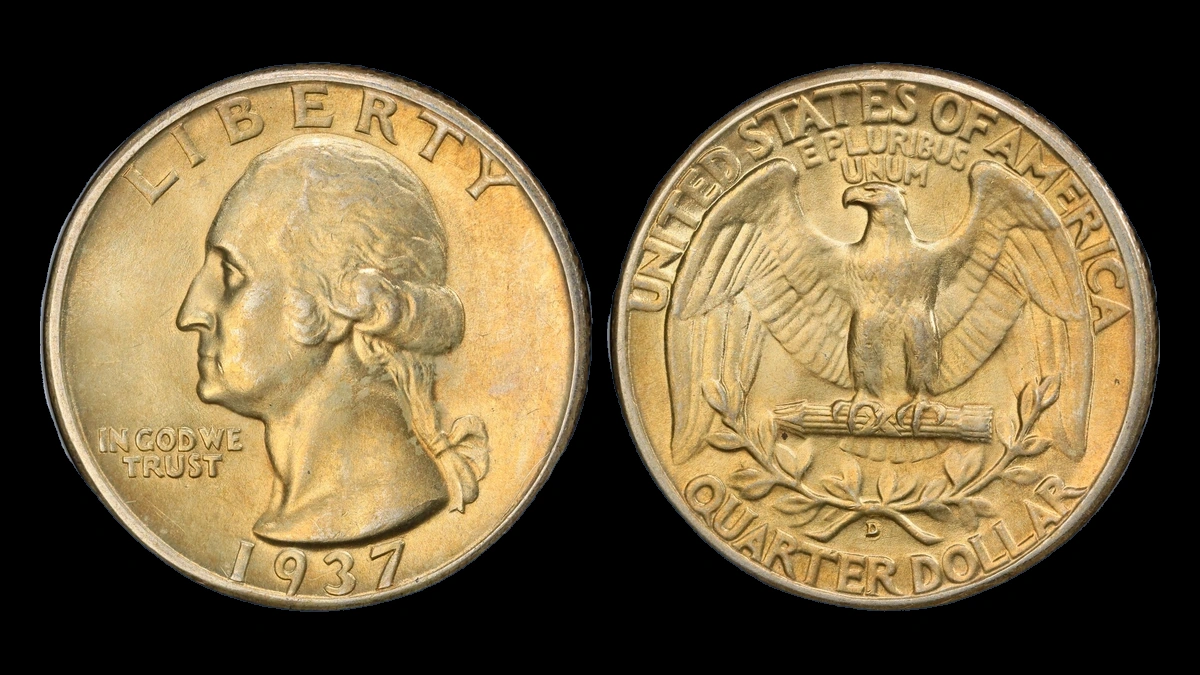
The reported Denver feature is a remnant of another D toward the main letter’s lower-right side. The mintmark is below the eagle’s tail on the reverse.
Workers then punched mintmarks into the dies individually. Repeating the punch in a shifted position could leave part of an earlier letter visible on coins struck from that die.
How to Identify
Keep the tail and branches in a photograph while enlarging the D. Follow the extra contour under changing light to see whether it fits another letter impression.
Check for an impact dent beside the mintmark and compare an ordinary same-year D. A battered edge, broad letter, or moving reflection cannot establish a repunched mintmark.
What It’s Worth
An identified 1937-D repunched mintmark has an estimated whole-coin range of $30–$500. Clear remnants and good preservation allow more meaningful comparisons than traces hidden by wear.
A different 1949-D D/D FS-501 graded MS65 sold for $384 in March 2018. Its variety number and price belong to that later-year coin and must not be assigned to the 1937 report.
3. 1937 Quarter Quarter Struck on a Nickel Blank Error
The documented PCGS MS63 example retains its outer lettering and visible edge grooves despite having been struck on a nickel blank. Its metal spread toward the rim under pressure.
This is an important exception to the assumption that a smaller starting blank must cut off the design. Complete lettering does not rule out a wrong-blank error.
How to Identify
A nickel blank normally starts near 5.0 grams and 21.2 millimeters, while a silver quarter normally weighs 6.25 grams and measures about 24.3 millimeters. Those are comparison standards, not supplied measurements of the MS63 coin.
Assess composition and actual weight alongside the final outline, since striking can enlarge the blank. Inspect for filing or plating before treating unusual size or color as evidence.
The original quarter strike and copper-nickel metal should support the same identification. Do not add an off-center or missing-collar label merely because nickel metal was involved.
What It’s Worth
Authenticated examples have an estimated range of $1,500–$6,000. The PCGS MS63 nickel-blank quarter sold for $4,600 on January 7, 2006.
That result values the complete coin with its condition and visible construction. It is not a collection of separate premiums for features presumed from the blank’s starting size.
4. 1937 Quarter Doubled Front Details Error
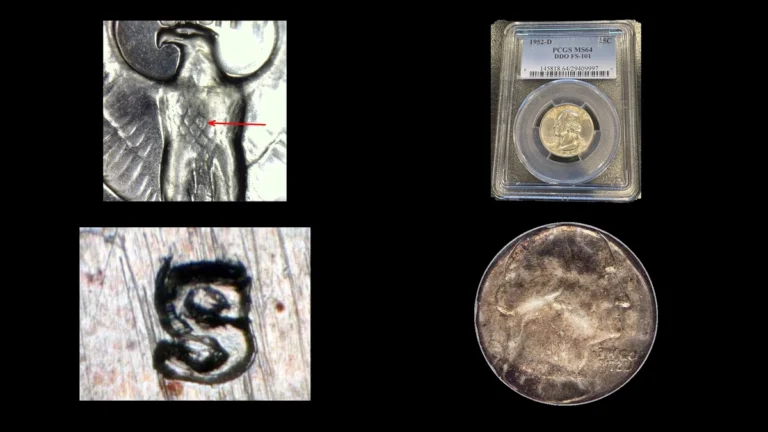
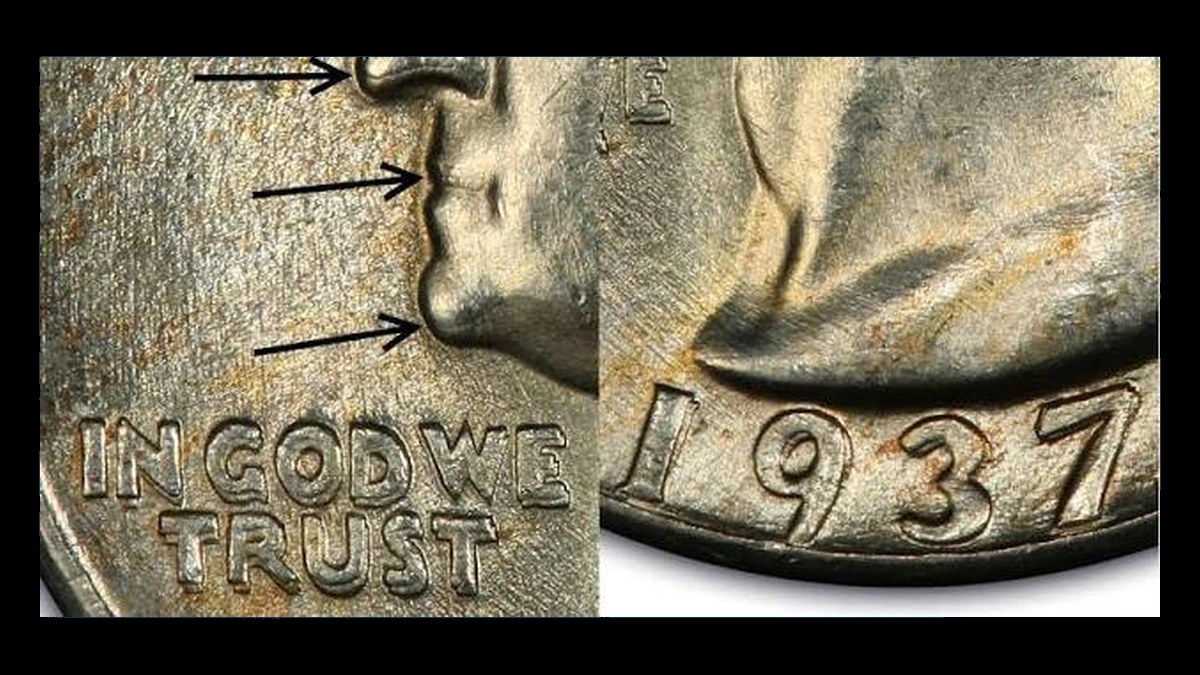
Philadelphia FS-101 repeats detail at Washington’s nose tip, the motto, and the date. These related features identify a particular doubled die rather than a coin that received two shifted strikes.
A San Francisco doubled-front example is also reported. Its pattern needs independent confirmation and cannot inherit the Philadelphia diagnostics or auction prices.
How to Identify
Check the reverse mintmark area first: the ordinary Philadelphia issue has no D or S. FS-101 is an ordinary strike, so a Philadelphia Proof should not be assumed to share the attribution.
Compare the nose tip, IN GOD WE TRUST, and date with the FS-101 reference. Repeated rounded outlines across the appropriate features are more persuasive than one wide letter or a flat lowered shelf.
For a coin bearing S, use evidence for that proposed San Francisco pattern. The seller’s phrase “doubled front” alone does not connect it to the Philadelphia die.
What It’s Worth
Philadelphia FS-101 has an estimated whole-coin range of $300–$9,000 across worn through exceptional examples. The recorded MS66 result was $8,700 on July 17, 2022, and an MS65 example sold for $5,040 in February 2018.
A separately confirmed minor San Francisco doubled-front variety has an estimated range of $30–$300. This lower comparison remains conditional on matching a genuine pattern on that mint’s coin.
Conclusion
The best comparison begins with the actual feature and mint, not just the date on the quarter. A repeated D, a thin alloy separation, and the Philadelphia FS-101 each require different evidence.
The nickel-blank example also shows why shortcuts can mislead: complete lettering and edge grooves survived its unusual manufacture. Preserve the surfaces, document both faces, and compare condition alongside the error before applying a recorded price.