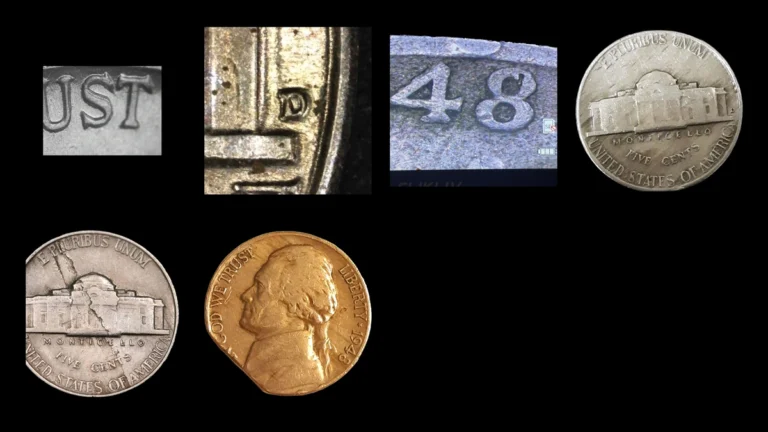
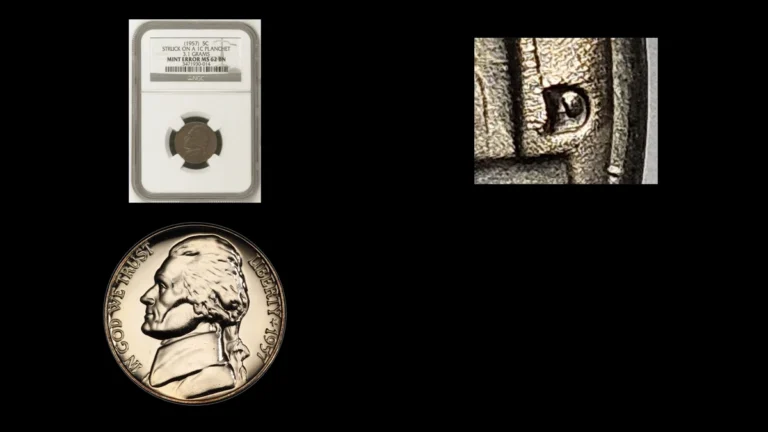
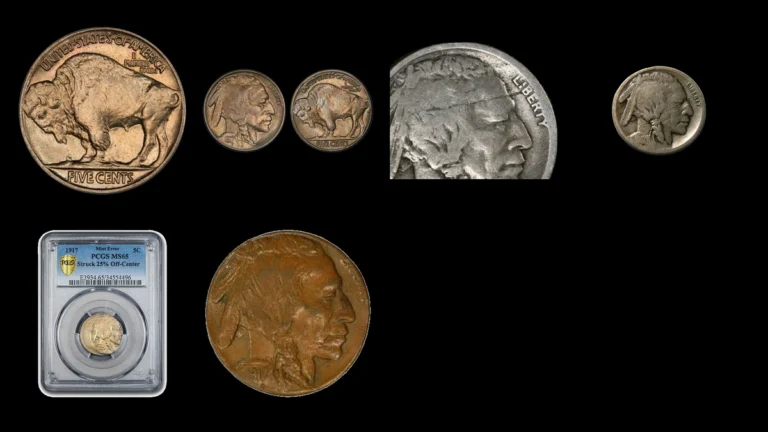
Rare 1943 Nickel Errors (List & Pictures)
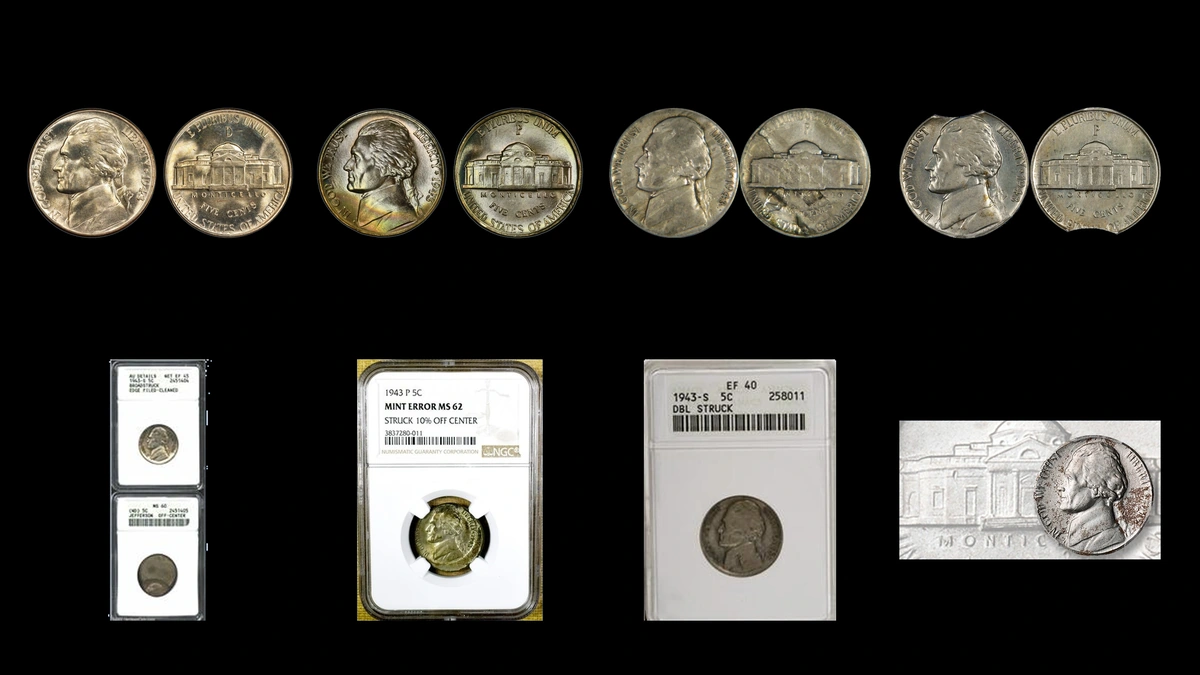
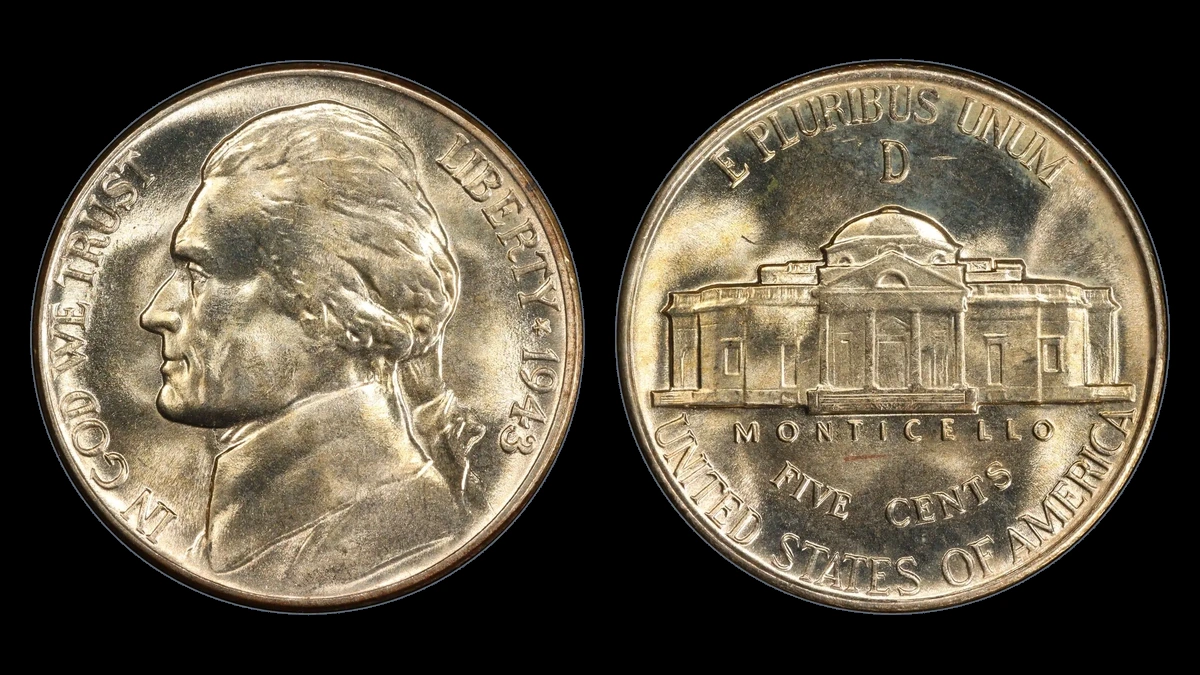
A large mintmark above Monticello and a silver-containing alloy are normal for 1943. The 1943 Jefferson nickel errors below concern additional design, defective metal or departures from that wartime standard.
Estimated values range from $5 to $17,000. An exceptional 1943/2-P overdate sold for $16,675 in June 2008, but later brought much less.
Begin with the mintmark and date, then inspect separated metal, strike placement and any evidence that the blank’s composition is wrong.
| Clue | Error category | Estimated range |
|---|---|---|
| Additional P, D or S outlines | Repunched mintmark | $10–$250 |
| Earlier 2, extra eye or repeated lettering | Overdate and doubled die | $20–$17,000 |
| A local sheet peels | Lamination | $5–$300 |
| Only the thin dated face survives | Split planchet | $75–$500 |
| Incomplete or oval outline | Clipped or elliptical blank | $25–$750 |
| A localized depression or flaw | Struck through or unresolved mint flaw | $10–$400 |
| Complete detail within spread metal | Broadstrike | $40–$500 |
| Design misses part of the blank | Off-center strike | $50–$800 |
| Two designs occupy rotated positions | Rotated double strike | $150–$1,000 |
| Prewar alloy in a wartime issue | Wrong copper-nickel alloy | $1,000–$5,000 |
| Smaller blank of steel or another silver alloy | Wrong denomination planchet | $1,500–$6,000 |
1. 1943 Nickel Extra Outlines around the Large Mintmark: Repunched Mintmark Error
The large P, D or S above Monticello was added to the die with a hand punch. Repeated placements could leave remnants of two or even three impressions around the final letter.
P WRPM-005 has extra impressions above and below, while D WRPM-001 has an additional D below. Many other patterns share broad directions but differ in their precise shapes.
How to Identify
Use the large mintmark above the dome, not the small side position used on earlier or later nickel issues. Compare the individual extra curves with Wexler’s 1943 mintmark photographs.
A second recognizable letter portion carries more weight than general swelling or a random bump. Direction alone cannot distinguish every P/P, D/D or S/S variety.
What It’s Worth
$10–$75 is estimated for clear modest examples, with $75–$250 for stronger attractive unworn coins. The exact variety, clarity and preservation affect the whole-coin comparison.
These are not individual auction records for every numbered pattern. Several visible punch remnants do not each earn another full price.
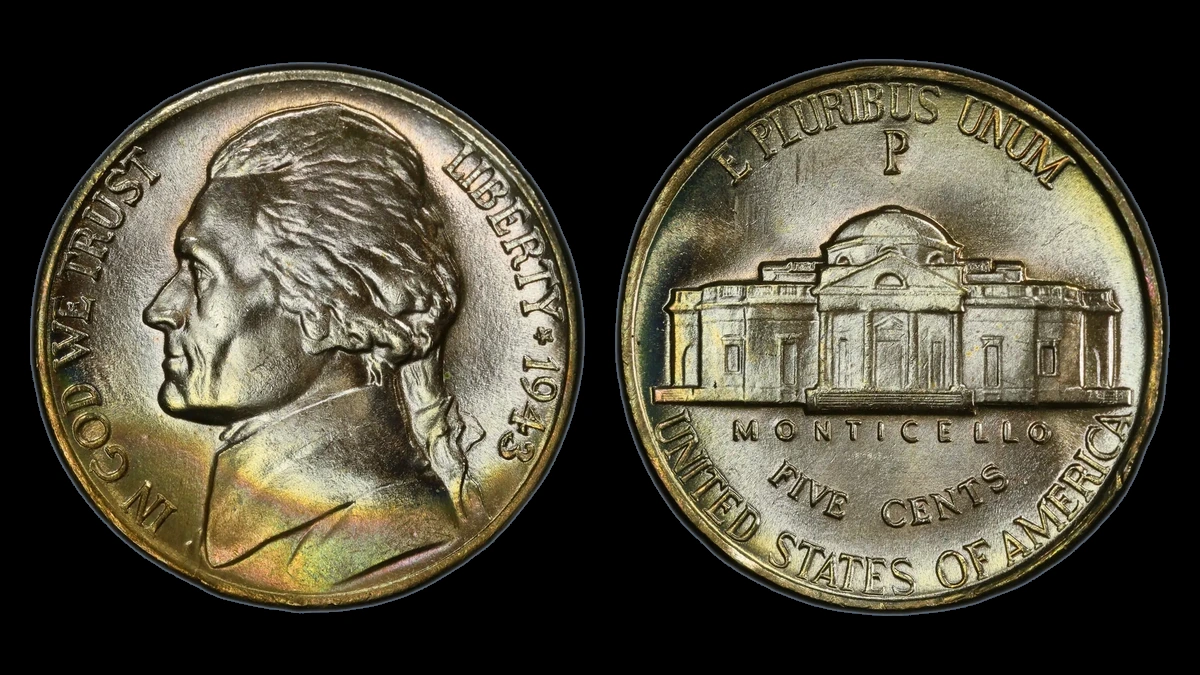
2. 1943 Nickel A Hidden 2, an Extra Eye or Repeated Letters: Overdate and Doubled Die Error
The 1943/2-P has remnants of an earlier 2 beneath the final 3, while another Philadelphia variety has an extra eye below and left of the main eye. Other P, D and S varieties repeat different portions of the front or reverse lettering.
The repeated design entered the dies during their manufacture. Some varieties also have repunched mintmarks, and faint reverse doubling on the overdate can become less visible as the die wears.
How to Identify
Select the actual feature before using the 1943 variety listings. An overdate needs the underlying 2, while the doubled-eye pattern needs the correctly placed second eye; neither is identified by arbitrary thick lettering.
Match several fixed raised details and the correct mint, separating them from flat mechanical shelves or scratches. There were no 1943 proof collector issues, so a shiny surface does not create a proof attribution.
What It’s Worth
$20–$200 is estimated for modest identified doubled designs, with $200–$6,000 for stronger varieties and overdates. Exceptional overdates with outstanding preservation and sharply defined steps may fit $6,000–$17,000.
PCGS records the MS67 Full Steps overdate at $16,675 in June 2008 and $3,840 in August 2021. Full Steps describes preserved building detail, and the changing results show that an old high does not guarantee a later price.
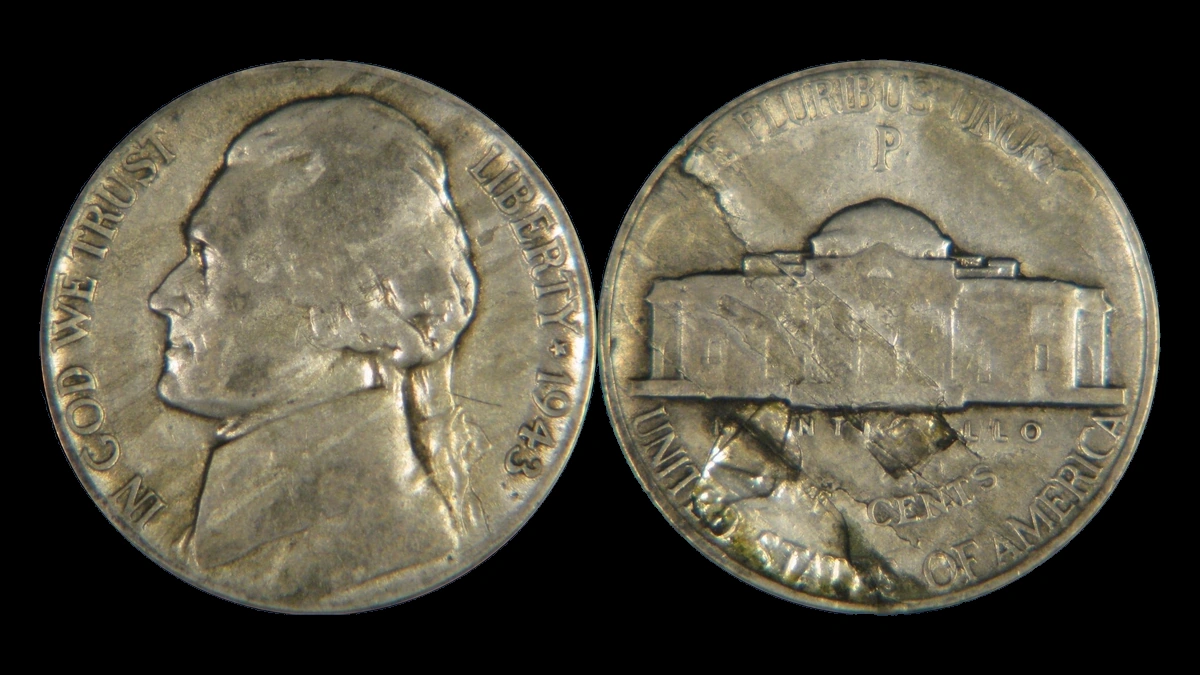
3. 1943 Nickel A Patch Separates in a Thin Layer: Lamination Error
One Philadelphia example has a large peeling area across the lower portrait and field below it. Other specimens retain reverse flakes, including one near AMERICA on an overdate and another near NT on a San Francisco broadstrike.
The wartime mixture contains copper, silver and manganese throughout. A weak layer can separate internally without representing the loss of a normal plated outer skin.
How to Identify
Inspect the layered boundary and any rough exposed floor under side lighting, leaving retained metal untouched. A fresh gouge often pushes finished metal aside instead of following an internal weak layer.
A normal loose 1943 nickel starts near 5 grams and 21.2 millimeters, with a plain edge. Lost flakes can lower weight, while an attached flap may leave it close to normal.
What It’s Worth
$5–$60 is estimated for small laminations, with $60–$300 for larger clear flaws on attractive coins. Retained metal can make the separation easier to demonstrate.
An overdate with a small flake may owe most of its price to the variety rather than the flake. Cleaning, scratches and other later problems remain part of the complete valuation.
4. 1943 Nickel Only a Thin Dated Front Remains: Split Planchet Error
The recorded separated front piece retains Jefferson and 1943 and is graded Fine 12. Its reverse half is absent, taking the identifying P, D or S with it.
This is a whole-face separation rather than a small local peel. The surviving piece needs examination to establish when the split occurred.
How to Identify
Compare the thin layer’s original design with its exposed underside and remaining edge. Repeated sawing or grinding marks differ from natural internal separation.
Record its actual thickness and weight without assigning an unspecified value from another split coin. The missing reverse does not make the dated front a Philadelphia issue.
What It’s Worth
$75–$200 is estimated for a recognizable worn separated face, with $200–$500 for an especially clear attractive piece. These ranges concern the one surviving layer.
A 1947-S split-after-strike nickel sold as a matching pair for $149.50 in August 2010. Its two pieces and different alloy make it a general comparison rather than a price for this 1943 front.
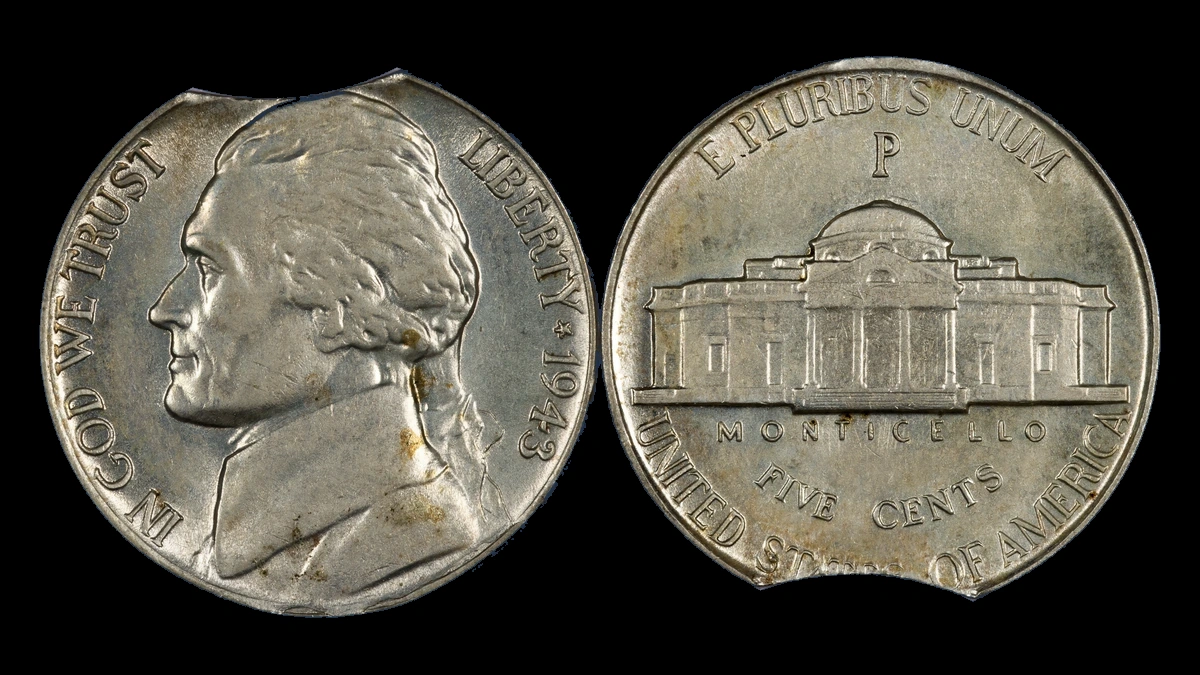
5. 1943 Nickel A Curved Gap or Oval Outline: Incomplete and Elliptical Blank Error
The recorded Philadelphia oval-blank example is graded AU55, indicating light wear. Another Philadelphia coin has a curved clip and must be compared as a separate shape.
The oval specimen’s precise formation is not established here. Its appearance should not be used to identify every stretched or squeezed nickel as an original blank error.
How to Identify
Record the longest and shortest dimensions and compare the full outline and lettering placement with the attributed example. Edge crushing, cutting or filing can create misleading shapes after minting.
For the curved clip, trace the missing boundary into the struck design on both faces. Low weight is useful supporting evidence only when the edge and strike agree.
What It’s Worth
$25–$150 is estimated for a straightforward curved clip, with $150–$750 for a clearly identified oval-blank error. The latter range reflects its different shape and confidence in the diagnosis.
A 1997-P nickel with a 20% clip sold for $124 in March 2025. It establishes neither a missing-metal percentage nor an individual value for either 1943 specimen.
6. 1943 Nickel Debris Interrupts the Design: Struck Through and a Separate Reverse Flaw Error
A recorded ANACS MS64 1943-S is described as struck through debris without naming the material. Another coin, from Denver, has a small flaw left of Monticello whose cause needs to be separated from faulty blank metal.
How to Identify
Compare the San Francisco coin with its own GreatCollections photographs. Its description does not establish cloth, wire or grease, nor does it locate the separate Denver flaw.
At the Denver mark, examine whether the surface is depressed, scraped or lifting in a layer. Displaced metal or an attached flap can point toward a different explanation from a clean strike-time impression.
What It’s Worth
$20–$100 is estimated for a small confirmed debris strike, with $100–$400 for a larger distinct impression. The Denver flaw has a narrower $10–$75 estimate if examination confirms a small mint-made defect.
No realized price is supplied for the MS64 specimen. Visibility and surface quality matter more than an unsupported guess about the obstruction.
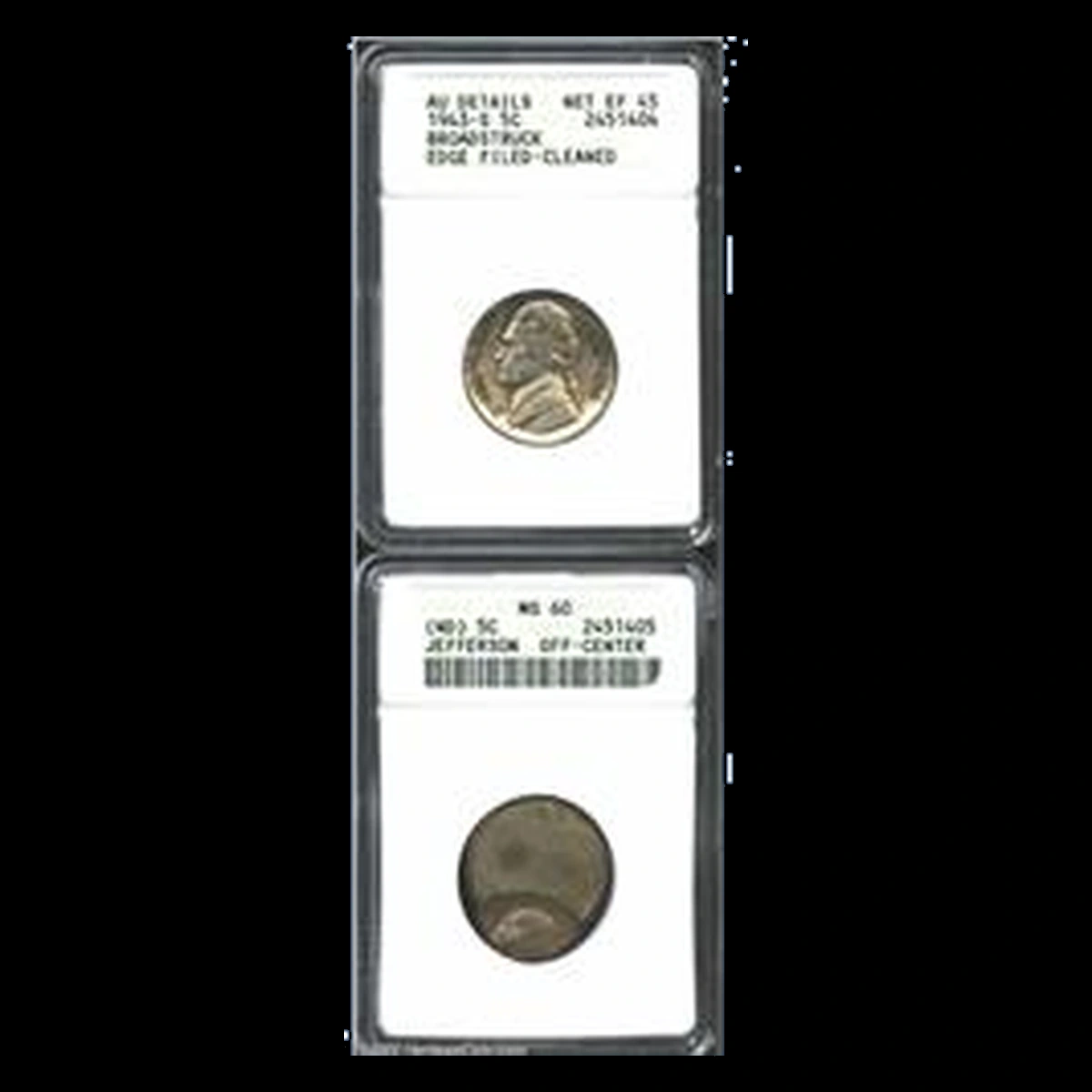
7. 1943 Nickel Complete Design Survives on Spread Metal: Broadstrike Error
The recorded 1943-S broadstrike also has later edge filing, cleaned surfaces and peeling near NT. Its initial expansion occurred when the collar failed to restrain the blank normally.
The minting error and subsequent damage need separate descriptions. An altered present-day edge is not a reliable record of the original struck diameter.
How to Identify
Begin with complete lettering and natural outward flow on both faces, then inspect the surviving perimeter. File marks and cleaning scratches document later treatment rather than the original broadstrike mechanism.
A low current weight may reflect metal lost through filing, not a different blank. Record present measurements without treating them as the coin’s original dimensions.
What It’s Worth
$40–$150 is estimated for worn or impaired broadstrikes, with $150–$500 for attractive clearly expanded examples. The recorded San Francisco coin belongs with impaired comparisons because of its filing and cleaning.
A 1999-P broadstrike sold for $89 in March 2025. Its later copper-nickel alloy differs from the wartime mixture, limiting the precision of that comparison.
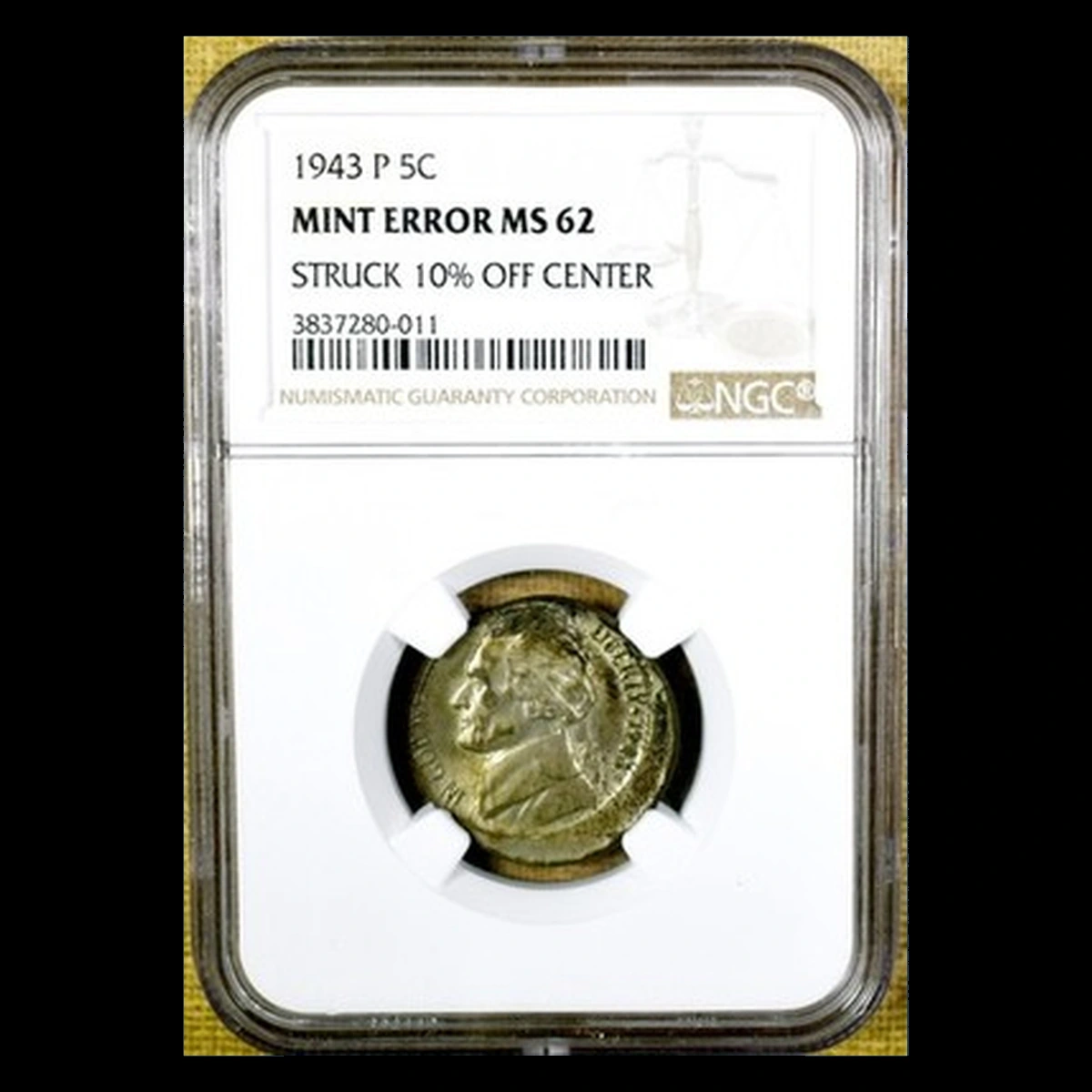
8. 1943 Nickel Part of the Design Falls beyond the Edge: Off-Center Strike Error
An ANACS MS64 Philadelphia example records a blank struck away from its intended position. The dies impressed only the available portion, leaving bare metal and losing design beyond the opposite edge.
How to Identify
Check the date and large P and compare both faces using the same blank edge for orientation. A narrow border on only one side does not establish whole-blank displacement.
Inspect the transition into the bare area for original surface rather than grinding or a later cut. No exact percentage or direction is established for this specimen by the supplied description.
What It’s Worth
$50–$150 is estimated for small clear shifts, with $150–$800 for stronger dated examples. These are not recovered sale amounts for the recorded MS64 coin.
A 1955-D nickel struck 15% off center brought $402.50 in October 2010. It uses the later alloy and provides only a general comparison for displacement and preservation.
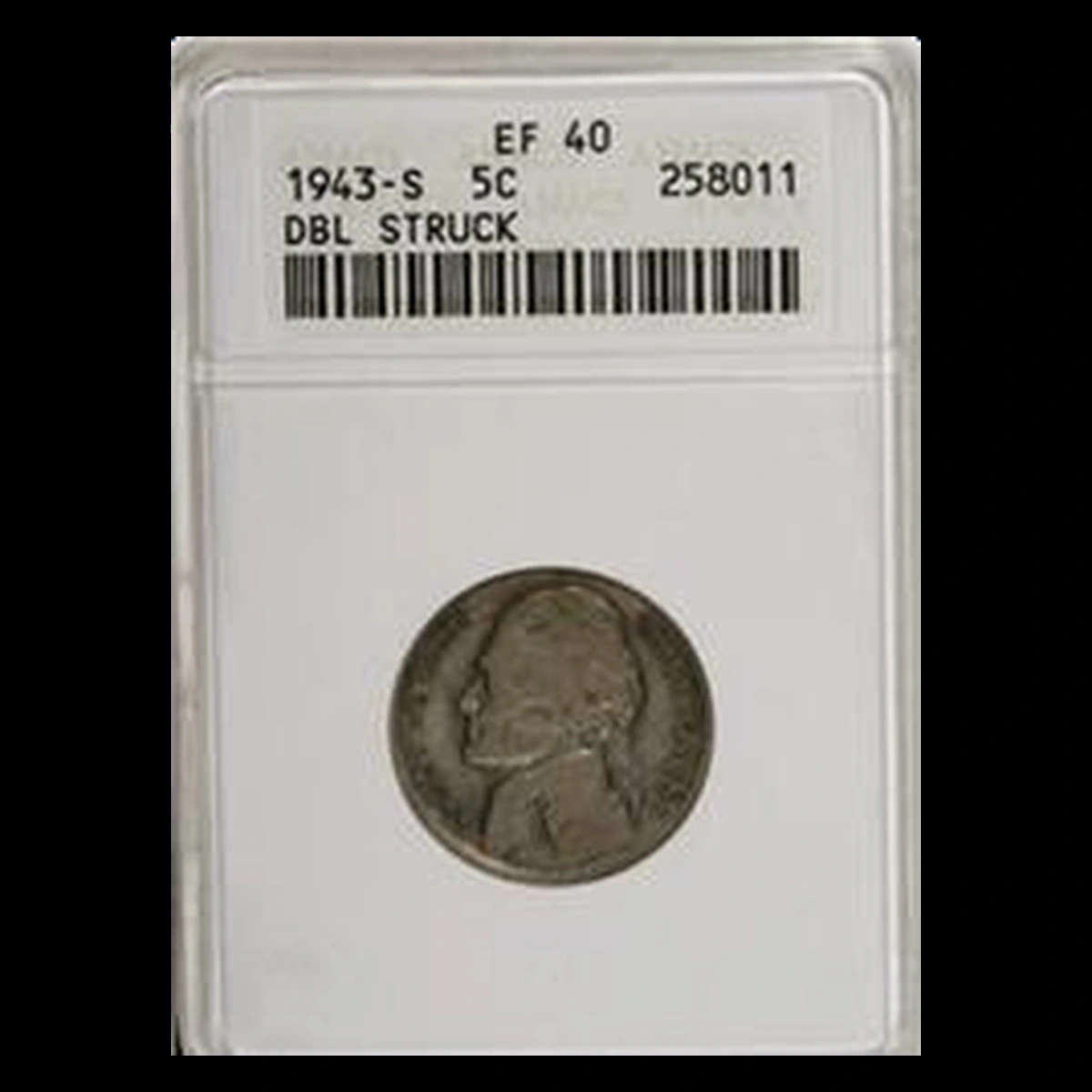
9. 1943 Nickel Two Designs Sit about 30 Degrees Apart: Rotated Double Strike Error
The recorded 1943-S XF40 received two strikes inside the collar, with the second impression rotated about 30 degrees. The coin turned between blows without necessarily flipping to its opposite face.
How to Identify
Locate a prominent feature in both positions, then check that other surviving detail follows the same rotation. Closely repeated letter edges from a doubled die do not explain two full design arrangements.
The collar can preserve a nearly normal diameter despite overlapping impressions. No clockwise or counterclockwise direction is supplied here, so that detail should not be invented.
What It’s Worth
$150–$400 is estimated for worn examples with recognizable overlap, with $400–$1,000 for especially clear pieces. No completed price is supplied for the XF40 1943-S.
A 1947 flipover nickel graded AU55 sold for $216 in March 2023. Turning over between blows is a different sequence from the rotation described for this wartime coin.
10. 1943 Nickel The Coin Contains Prewar Metal: Wrong Copper-Nickel Alloy Error
The normal 1943 composition is 56% copper, 35% silver and 9% manganese. Reported Philadelphia and Denver exceptions instead use copper-nickel alloy, attributed to older-alloy blanks entering wartime production.
The Denver example is graded MS64, while a separate Philadelphia report concerns a worn piece. Similar outward appearance does not establish the same metal.
How to Identify
Confirm the correct wartime design and large mintmark before evaluating composition. Weight and size can remain near normal for either alloy and therefore cannot settle the question.
A qualified nondestructive composition test should distinguish the metal without scratching or applying acid to the coin. Color, weak steps and lack of magnetic response are not enough evidence.
What It’s Worth
$1,000–$2,500 is estimated for worn or less attractive authenticated examples, with $2,500–$5,000 for stronger pieces. The Denver MS64 copper-nickel coin sold for $1,840 on December 5, 2008.
Its result cannot be assigned to the separate Philadelphia report. A normal wartime nickel with changed surface color remains outside this range unless its wrong alloy is established.
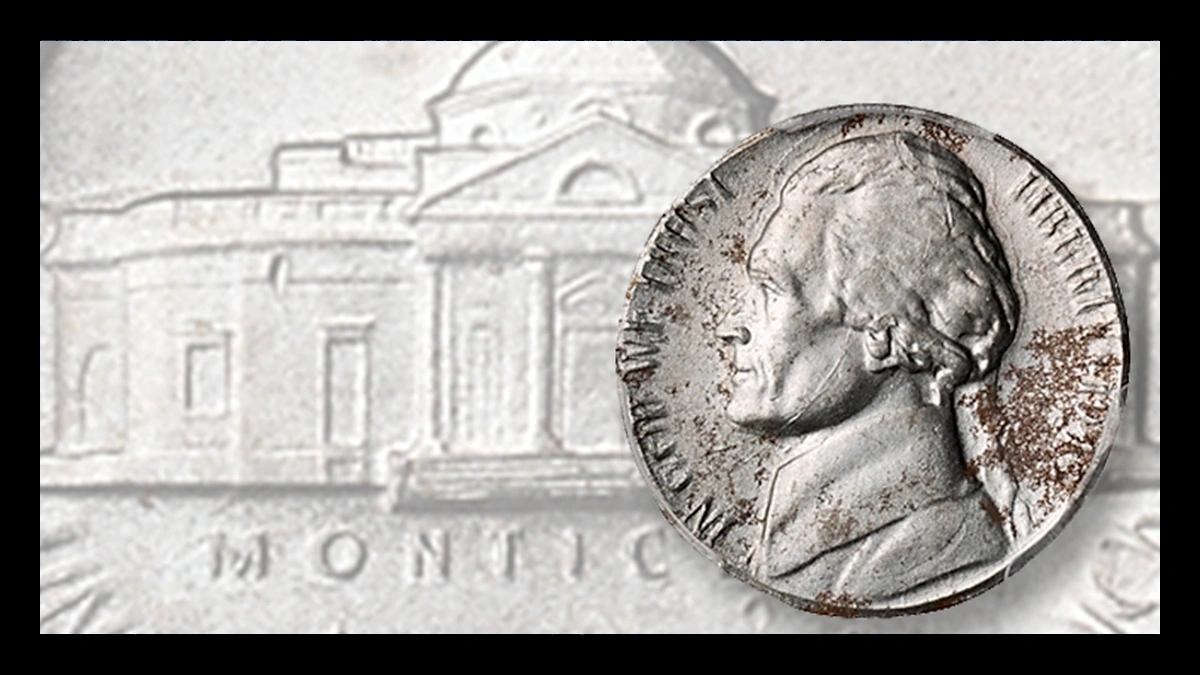
11. 1943 Nickel Nickel Design Crowds a Smaller Disc: Steel Cent or Australian Sixpence Blank Error
Recorded wrong-denomination blanks include steel cent blanks and a silver Australian sixpence blank. The 1943-S sixpence-blank nickel weighs 2.8 grams and has its design shifted slightly upward.
Philadelphia steel reports include a 2.8-gram specimen and an approximately 2.9-gram piece on an unfinished blank. A separate San Francisco steel-cent example is graded PCGS AU55.
How to Identify
Compare actual weight, reduced dimensions and naturally crowded lettering, then establish the metal. The Australian and one Philadelphia steel example share a reported 2.8 grams, showing why weight alone cannot identify the blank.
A nearby magnet can help detect steel without touching or dragging across the coin; it cannot identify a silver sixpence blank. The sixpence blank carried no Australian design before receiving Jefferson and Monticello.
Inspect the edge for filing and preserve readable date and mintmark evidence. A wrong-blank attribution needs the composition and striking details to support the same explanation.
What It’s Worth
$1,500–$3,500 is estimated for worn but clear wrong-blank examples, with $3,500–$6,000 for stronger pieces. The 1943-S PCGS AU55 steel-cent-planchet nickel sold for $3,120 in December 2023.
The Australian sixpence-blank specimen brought $2,185 in February 2010. These are different blanks and specimens, and neither sale directly prices all reported Philadelphia steel examples.
Conclusion
Start by recognizing the normal wartime large mintmark and silver alloy, then ask what additional feature needs explanation. An earlier date remnant, a thin separated face and a smaller steel blank require very different evidence.
Keep missing-mint information unresolved when the reverse is absent, and use composition evidence for an ordinary-looking wrong-alloy claim. Prices remain tied to each specimen’s condition, attribution and complete combination of features.