Rare 1945 Half Dollar Errors (List & Pictures)
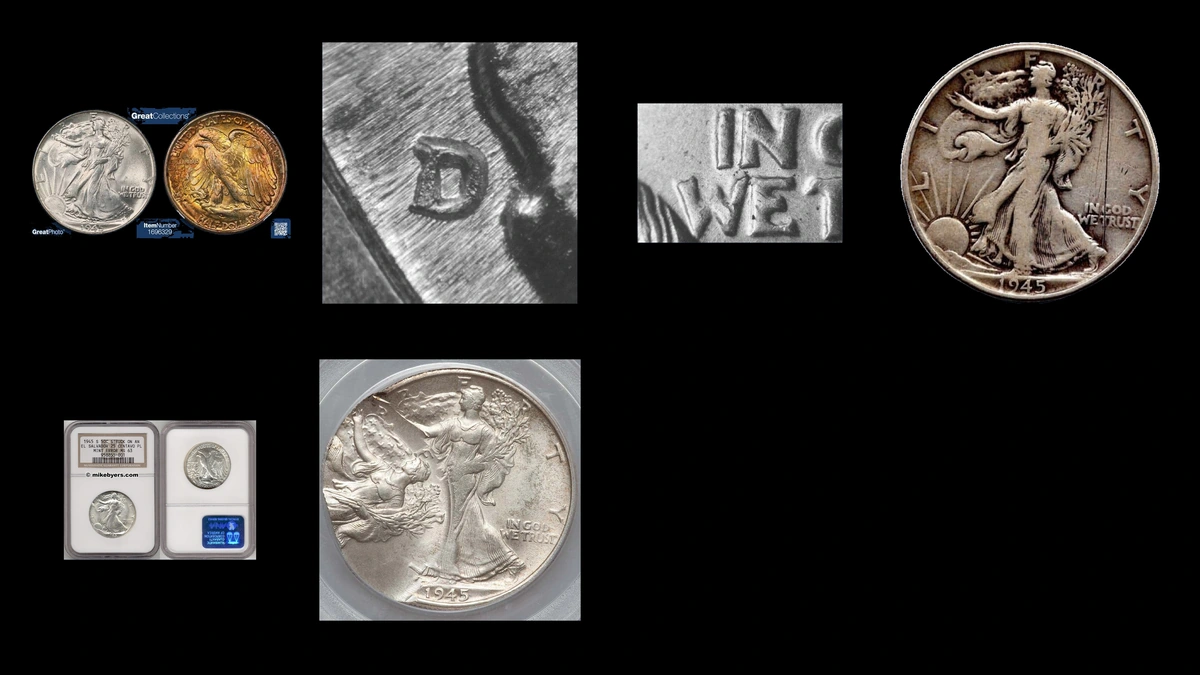
Two 1945 half dollars reached $41,125 each in November 2013 through very different minting accidents: one used a dime blank, and the other received a dramatic second strike.
Estimated values for 1945 Walking Liberty half dollar errors span $50–$50,000. Smaller varieties depend on precise locations, including the shoulder for Sunburst cracks and the area below the eagle’s wingtip for missing AW.
Check those design clues first, then examine original-metal defects and the larger striking errors.
| Inspection area | Error or variety | Estimated value |
|---|---|---|
| Shoulder and flag | Sunburst die cracks | $50–$1,400 |
| Below right-hand wingtip | Missing AW initials | $100–$6,500 |
| Lower-left reverse mintmark | Repunched mintmarks | $75–$1,500 |
| Gown, motto, or eagle detail | Doubled dies | $50–$2,500 |
| Above IN GOD WE TRUST | Denver planchet streak | $75–$650 |
| Opening in the metal | Reported cracked planchet | $100–$800 |
| Local reverse interruption | Reported strike-through | $75–$600 |
| Missing rim section | Rim clip | $60–$450 |
| Smaller or foreign blank | Wrong planchet | $12,000–$45,000 |
| Separate design positions | Double strike | $8,000–$50,000 |
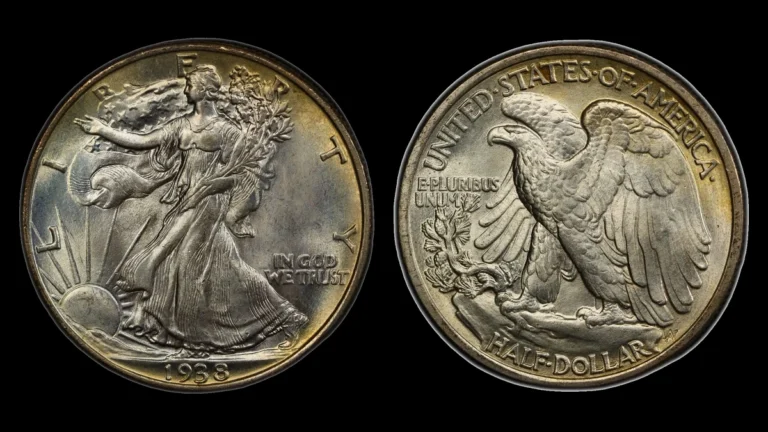
A normal Walking Liberty half starts at 12.50 grams and about 30.6 millimeters across with edge grooves. Record the actual mintmark and surviving date before using a variety photograph or a price comparison.
1. 1945 Half Dollar Fine raised lines spread from the shoulder: Sunburst Die Cracks Error
The Sunburst name directs attention upward to the junction of Liberty’s shoulder and flag. It does not refer to the intended sun rays near the bottom of the design.
On Philadelphia FS-401, repeated pressure fractured the die and silver entered the narrow openings during striking. The resulting raised lines can become difficult to see under poor light or after wear.
How to Identify
Use low-angle light and compare the shoulder-and-flag pattern with a clear FS-401 image. A normal coin at the same scale helps separate added ridges from intended design.
Confirm Philadelphia’s absence of a mintmark and compare ordinary circulation strikes. Scratches cut into the surface and do not establish the variety merely because several lines radiate from one area.
What It’s Worth
The estimate is $50–$1,400 across ordinary examples through exceptionally preserved pieces. Greysheet’s retail guide lists MS67 at $875 and CAC-approved MS67 at $1,300.
Those are guide values rather than realized auction results. High unworn preservation and the additional CAC quality judgment concern the complete coin, not a fixed price for faint lines.
2. 1945 Half Dollar The small AW monogram is absent: Missing Initials Error
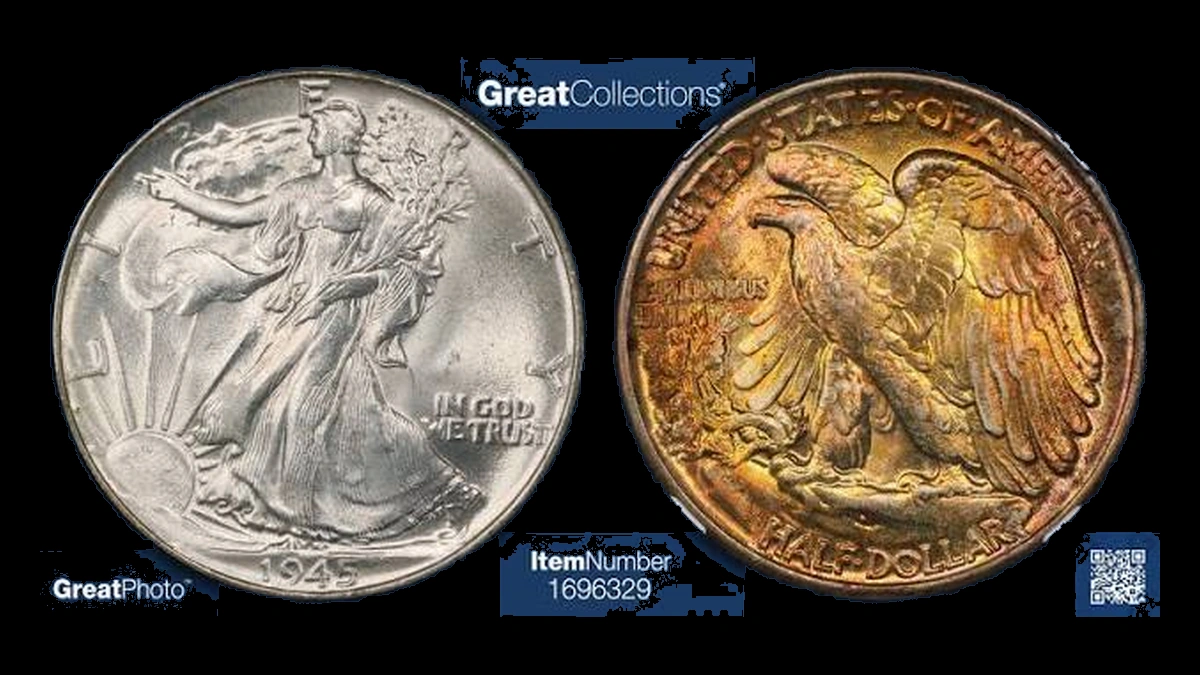
Adolph Weinman’s joined AW normally sits below the eagle’s wingtip on the viewer’s right. Polishing removed that shallow detail from the die used for the recognized Philadelphia Missing Initials variety.
A worn or blurred example can hide the same tiny mark without sharing the variety. Locate the normal initials before deciding that a candidate lacks them.
How to Identify
Use a normal reverse beside the coin and change the light while searching for surviving strokes. Inspect nearby feathers and fields for rubbing, scratches, or residue.
Confirm the Philadelphia circulation issue and compare the recognized variety’s surrounding detail. Do not clean the area, and do not treat an isolated smoothed patch as proof that the die lacked AW.
What It’s Worth
Recognized examples have an estimated $100–$6,500 range from worn coins to exceptional unworn pieces. Most ordinary examples belong well below the upper end.
PCGS records $6,000 for an MS66 in October 2019. Its preservation and clear attribution matter alongside the absent initials.
3. 1945 Half Dollar Another mint-letter stroke appears beside D or S: Repunched Mintmarks Error
Denver varieties show earlier D fragments in several directions, including below, above-right, above, or both above and below. A tilted-D listing is paired with obverse doubling and must be matched as its own combination.
The San Francisco example has a rounded-end S with an extra impression to its right. Additional small marks near LIBERTY’s E and within the B of PLURIBUS can help compare that specific die.
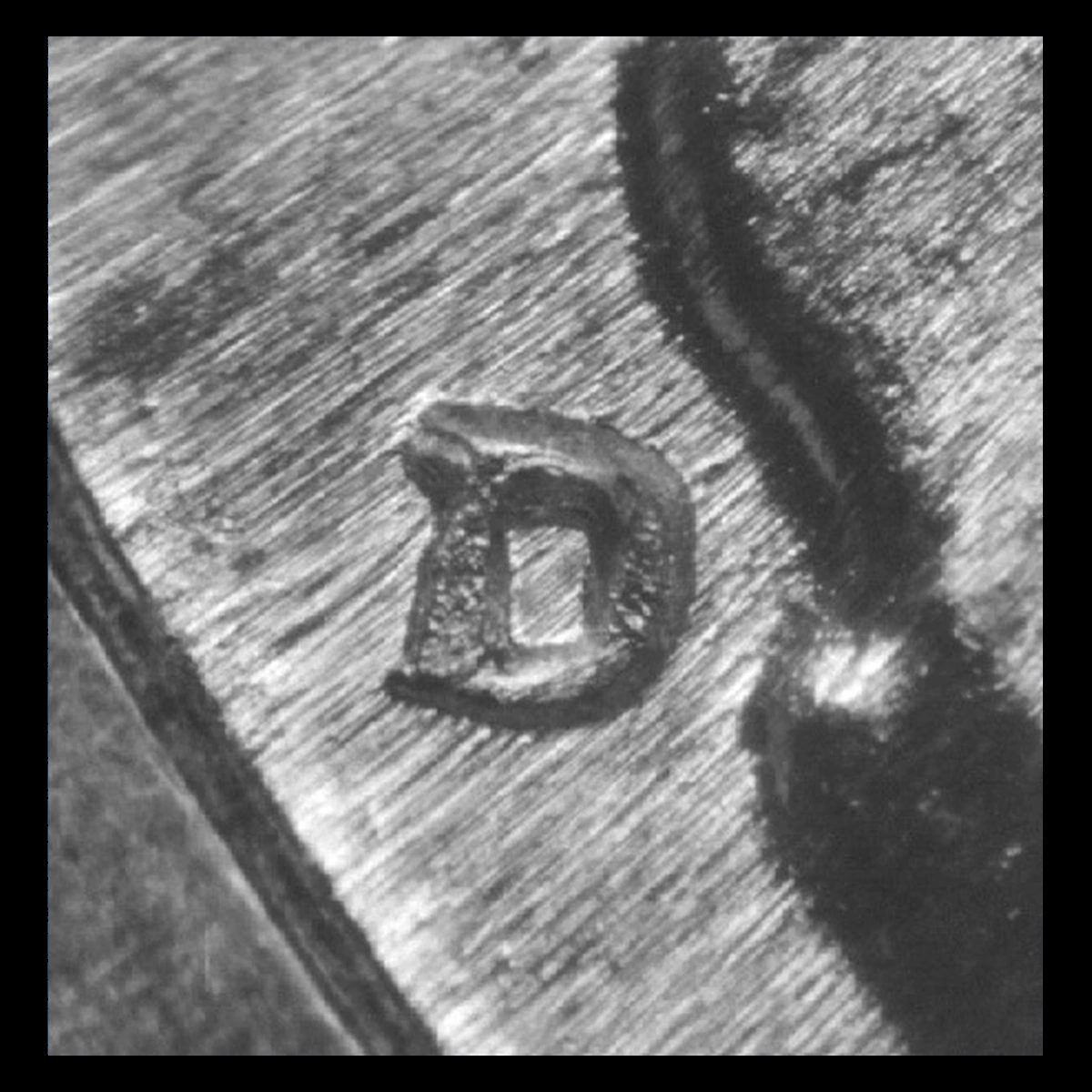
How to Identify
Find the mintmark at the reverse’s lower left and inspect both its inner and outer contours. A repeated hand punch should leave a recognizable earlier part of the same letter.
For the tilted D, compare the angled remnant and accompanying obverse doubling together. Two different catalogs using 001 does not make a downward-shifted D the same attribution.
The S needs its own rightward impression and rounded-end comparison. Nearby markers support a match but do not replace the extra letter shape itself.
What It’s Worth
Recognizable repunching has an estimated $75–$1,500 range across worn through attractive unworn coins. Strong additional strokes and the desirability of the underlying coin support higher comparisons.
A 1939-D/D in PCGS MS64+ sold for $1,292.50 at Kagin’s in September 2017. That different variety offers series context, and a 1945 with both repunching and doubling still needs one whole-coin value.
4. 1945 Half Dollar Added contours repeat in the gown or reverse design: Doubled Dies Error
Philadelphia reverse varieties can affect PLURIBUS UNUM, branches, and eagle detail, while separate dies affect the outer inscription. The Denver reverse needs its own match rather than a borrowed Philadelphia pattern.
Denver obverse varieties show inward extra contours in the lower gown and nearby rays; one also involves the right shoe. Another has tripled contours paired with the tilted repunched D.
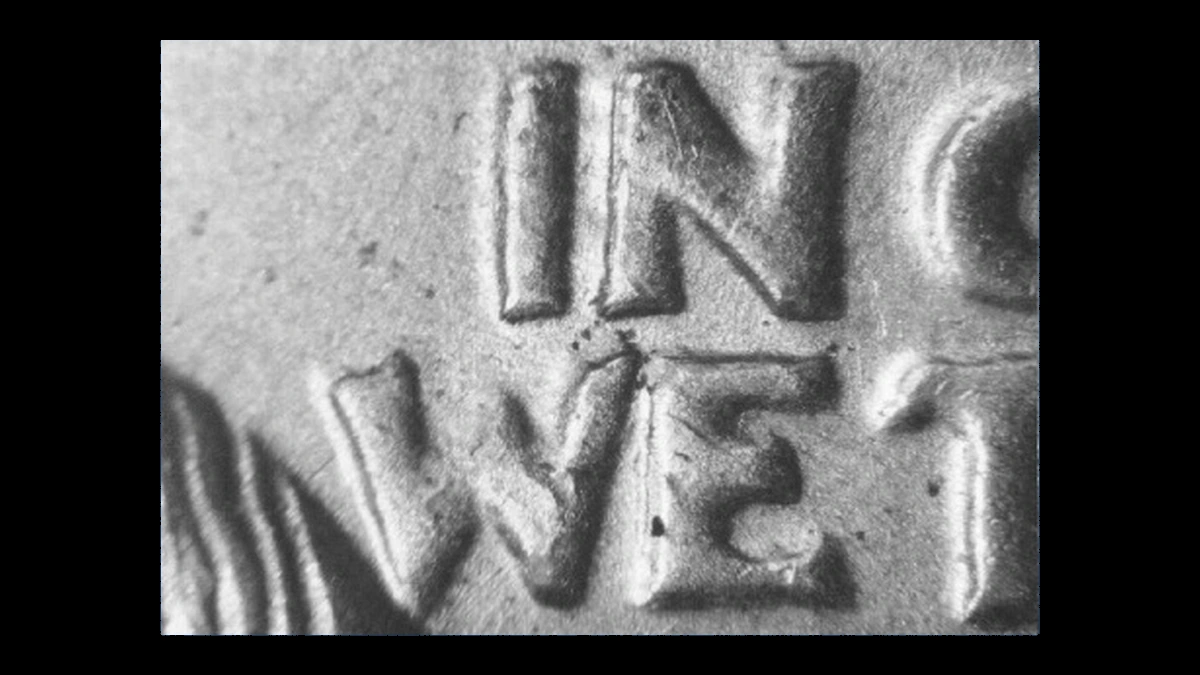
How to Identify
For Denver obverses, compare the lower gown, rays, and appropriate shoe detail with the Wexler reference photographs. Do not merge every listed marker into one imagined die.
For reverses, establish the mint and then inspect the particular words, branches, or feathers named for that variety. Gouges and later cracks can help identify a die but are not themselves its doubled design.
Changing light distinguishes fixed raised contours from reflections. Flat shelves and normal feather edges do not provide the same repeated design evidence.
What It’s Worth
Estimates are $75–$2,500 for recognized obverse varieties and $50–$1,200 for the reported reverse varieties. Preservation and the strength of the additional contours influence placement.
A 1939-D doubled obverse in NGC MS67+ brought $2,160 in April 2025, while a 1946 reverse variety in NGC MS65 realized $2,040 in November 2024. These stronger other-year examples do not assign their prices to every 1945 doubled-looking letter.
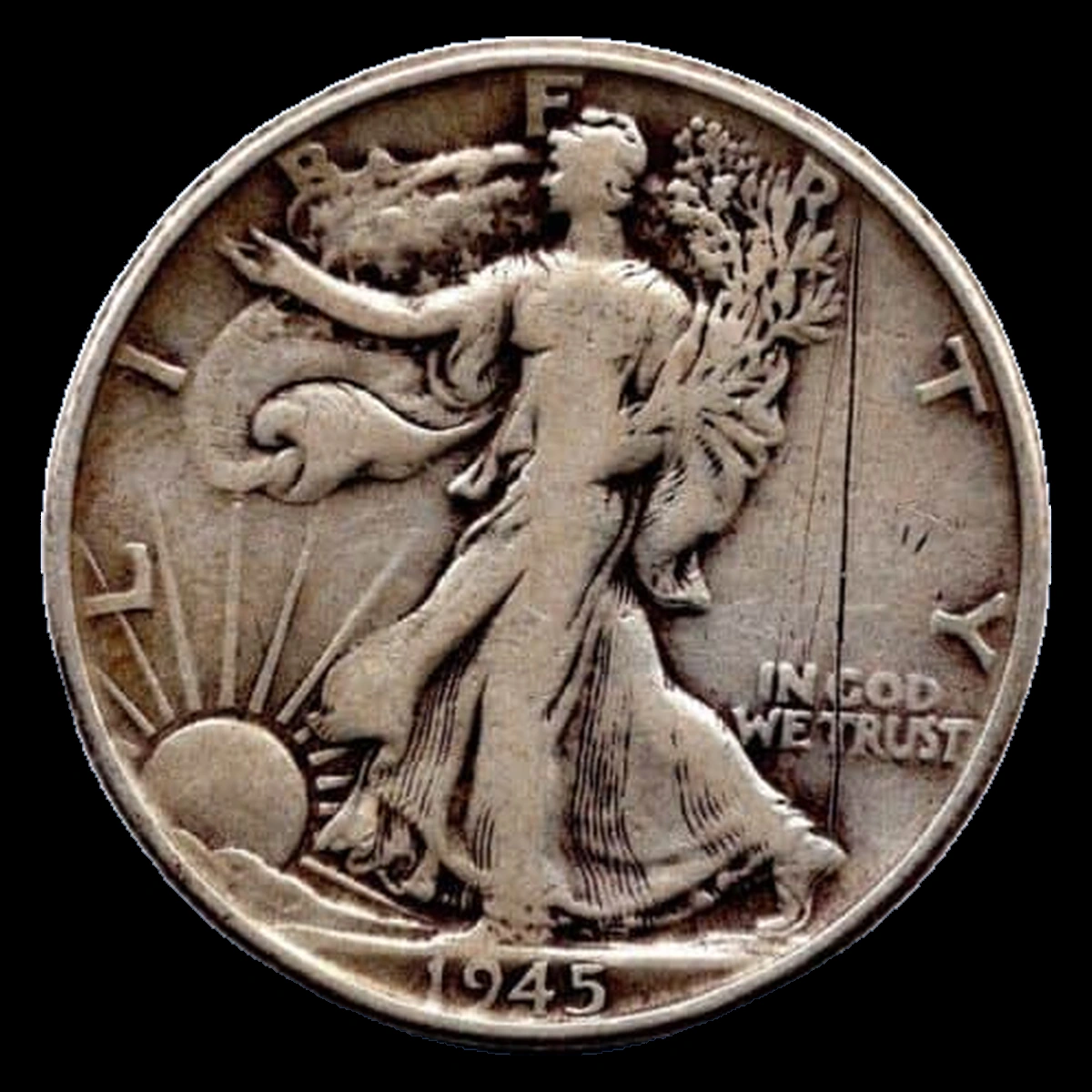
5. 1945 Half Dollar A fine line lies above the motto: Planchet Streak Error
Heritage described a streak above IN GOD WE TRUST on a 1945-D in PCGS MS66. The wording attributes the feature to the original blank metal without establishing a deep crack or peeling sheet.
A narrow flaw can remain visible on an otherwise well-preserved unworn coin. Ordinary clothing folds or thin lines elsewhere should not inherit this specific description.
How to Identify
Examine the open area above the motto and compare the line’s texture with neighboring original surfaces. A sharp channel with raised metal at its margins may instead be a later scratch.
A small streak may leave weight and size normal and need not lift as a flake. Its location and surface relationship are more informative than an expectation of missing silver.
What It’s Worth
A collectible Denver example with a genuine minor streak has an estimated $75–$650 range. Much of the upper value can come from the underlying coin’s condition.
A 1947 NGC MS65 with obverse peeling has a $275 Northeast Numismatics asking price. That different metal defect is related context rather than a sale of the 1945-D MS66 streak.
6. 1945 Half Dollar An opening extends into the coin: Reported Cracked Planchet Error
The guide reports a cracked blank without establishing its mint, location, grade, or timing. A genuine opening in the coin’s metal is distinct from the raised line left by a crack in a die.
If the split existed during striking, nearby metal may show how the design formed around it. Later bending or impact can also create an opening and must be considered.
How to Identify
Inspect both faces and the edge under low light to establish that the feature is a real gap. Never force a suspected crack open.
Look for bending, stretched metal, or dents that could explain a later fracture. Normal weight does not exclude a split when little or no silver has detached.
What It’s Worth
A confirmed mint-made crack on a collectible Walker has an estimated $100–$800 range. Its depth, effect on the struck design, and preservation matter.
The $275 asking price for a 1947 MS65 with peeling provides only limited context. A separating thin layer need not be an opening through the coin and is not a direct cracked-planchet sale.
7. 1945 Half Dollar The reverse design is locally interrupted: Reported Strike-Through Error
Material between the eagle’s die and the blank can block design or press its shape into the silver. The year report names the reverse without a specific mint or diagnostic location.
A depression alone cannot establish cloth, grease, or a hard object. The mark must preserve evidence for any material claim.
How to Identify
Follow the boundary between the impression and ordinary eagle detail. Scraping trails, torn silver, or a raised lip can indicate damage after the picture was complete.
Compare wear on nearby high points and inspect the opposite face and edge for related pressure marks. The useful evidence is a local interruption formed with the surrounding original surface.
What It’s Worth
Estimated values range from $75–$600 for genuine local interruptions through larger clear impressions. Visible texture and intact surrounding silver help explain the mechanism.
A 1951-S Franklin in NGC MS64 with a strike-through is indexed at $134 in April 2026. That other-design silver half supplies a mechanism comparison, not a 1945 sale or an identified obstruction material.
8. 1945 Half Dollar A small rim section is absent: Rim Clip Error
The recorded Philadelphia NGC MS63 has a gap near 5:30 with the obverse upright. The catalog does not establish whether the boundary is curved or straight.
A real clip starts with missing metal before striking. Its nearby design forms around the existing gap rather than being cut through afterward.
How to Identify
Inspect where the remaining rim meets the gap at the documented position. Fresh cutting marks or filing across surviving grooves may identify a later notch.
Record the opposite rim for possible weakness, but do not require that clue to be obvious on every genuine clip. Missing weight and intact diameter spans support an examination without establishing the boundary’s origin by themselves.
What It’s Worth
Collectible genuine rim clips have an estimated $60–$450 range. A small gap on an ordinary example generally makes a lower comparison than a particularly clear, well-preserved error.
A 1942-S ANACS MS62 sold for $81.90 including fees in May 2025. That recent same-series result is not the price of the 1945 NGC MS63.
9. 1945 Half Dollar The large design lands on a different blank: Wrong Planchets Error
The NGC MS64 dime-blank example weighs 2.5 grams, with the mintmark area beyond the available metal. That missing area cannot establish Philadelphia, Denver, or San Francisco origin.
A separate 1945-S NGC MS63 was struck on a blank intended for an El Salvador 25-centavo coin. Much of its date and large S survive, but the dime coin’s measurements do not apply to its foreign blank.
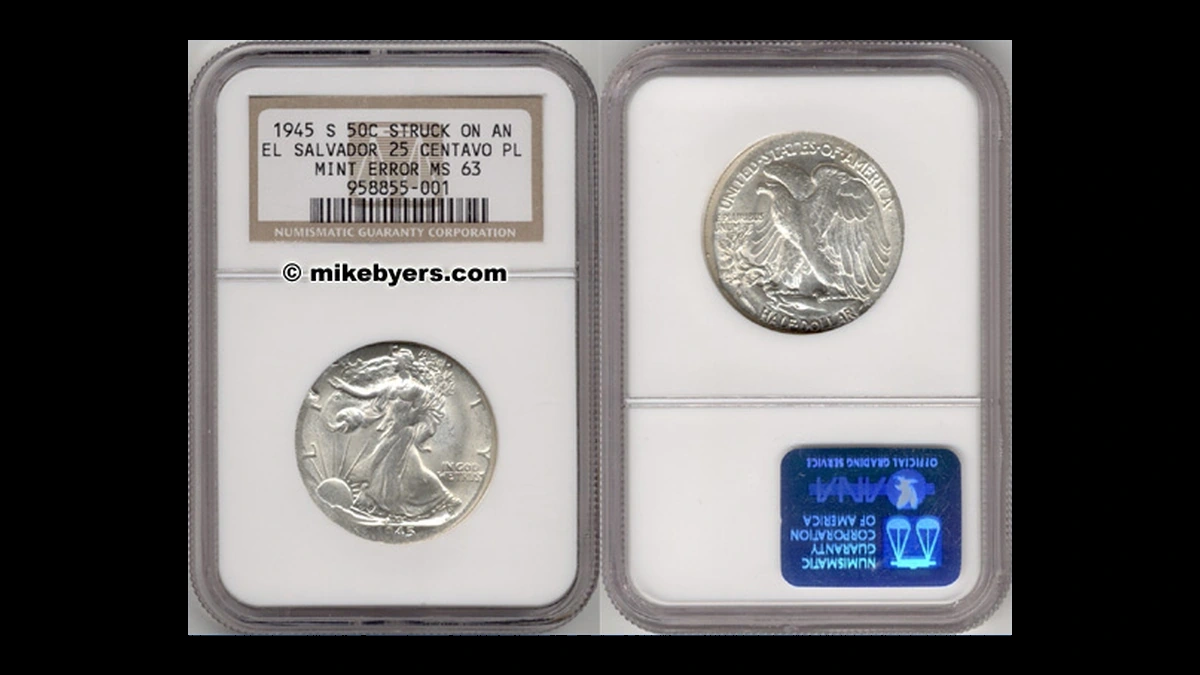
How to Identify
Read the surviving identity and check that the oversized design ends naturally at the smaller edge. Inspect for trimming or other removal from a finished half.
The foreign-blank attribution needs its own composition, dimensions, and certification evidence. A pit above LIBERTY’s I cannot identify the intended denomination or country.
What It’s Worth
The dime-blank type has an estimated $25,000–$45,000 range, with the MS64 realizing $41,125 in November 2013. The El Salvador-blank MS63 sold for $15,275 that month, supporting a separate $12,000–$25,000 estimate.
An undated Walker on a silver quarter blank brought $15,000 in May 2022. Its missing date and different blank make it another comparison, not a price for either documented 1945 specimen.
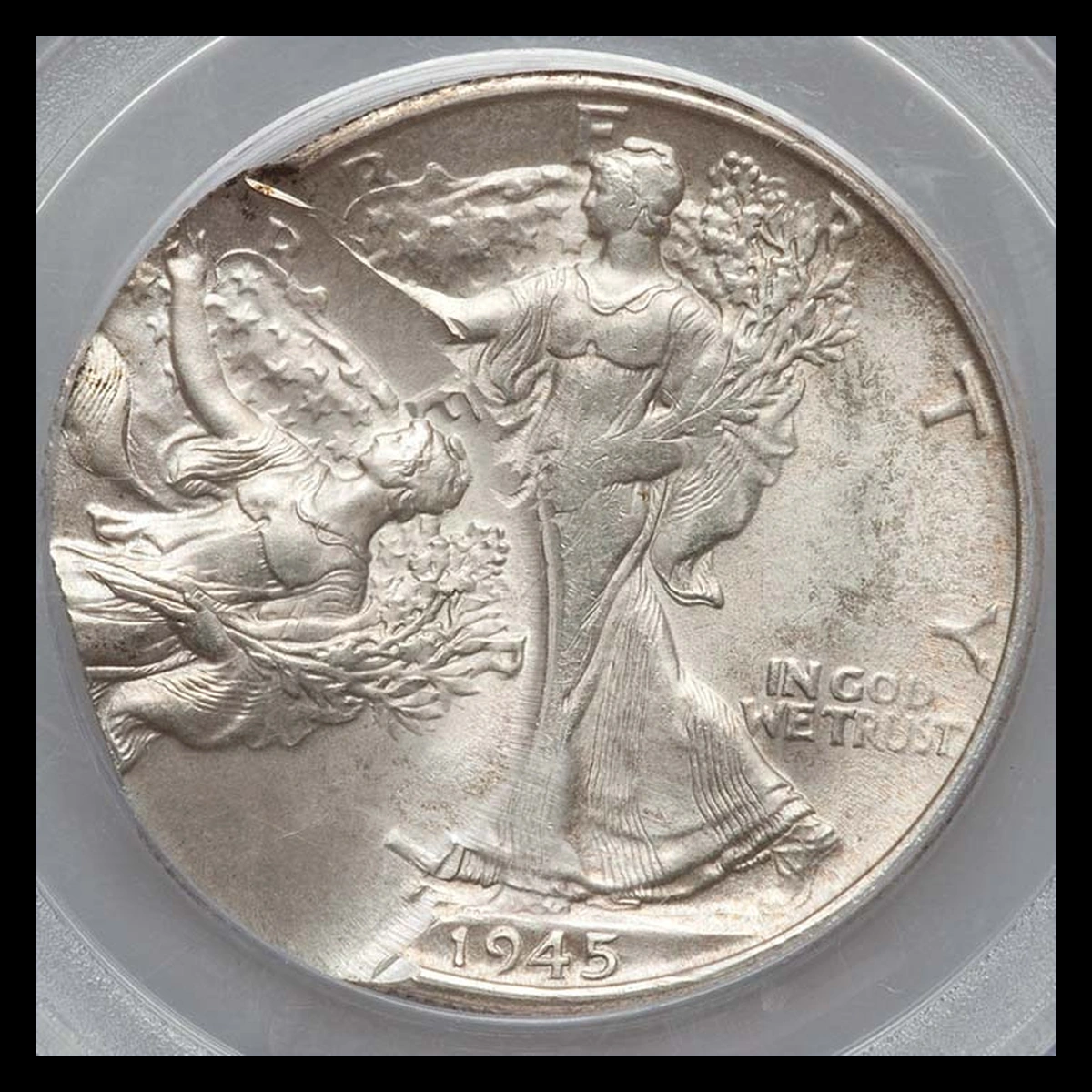
10. 1945 Half Dollar A second strike moves the design far from the first: Double Strikes Error
The dated 1945-S PCGS MS63 retains its first design beneath a second strike 55% off center. Its flared-tail S survives in the overlap.
A different San Francisco PCGS AU53 has a second strike 90% off center covering the date. Its rounded-end S limits the date to 1945 or 1946 but cannot choose between them.
How to Identify
Trace distinct design positions across the dated coin and locate the surviving first S. Fine scratches on its eagle wing are later contact marks, not additional strikes.
For the AU53, record how the later strike covers the date and keep the rounded-end S attribution at its supported two-year range. Inspect the edge and surfaces for later squeezing that could imitate overlapping impressions.
What It’s Worth
Comparably dramatic dated examples have an estimated $25,000–$50,000 range. The 1945-S MS63 sold for $41,125 in November 2013.
The undated AU53 brought $11,400 in August 2025, supporting a separate $8,000–$15,000 comparison. It remains a 1945-or-1946 coin, and its newer sale cannot be assigned specifically to 1945.
Conclusion
Small varieties reward precise location: shoulder-and-flag cracks are Sunburst, while the AW test belongs below the right-hand wingtip. A fine metal streak, a raised die-crack line, and an actual opening each require different surface evidence.
For dramatic errors, preserve what the surviving design can establish. Missing mintmark metal cannot prove Philadelphia, and the rounded-end S cannot restore an unreadable final date digit.