Rare 1859 Half Dollar Errors (List & Pictures)
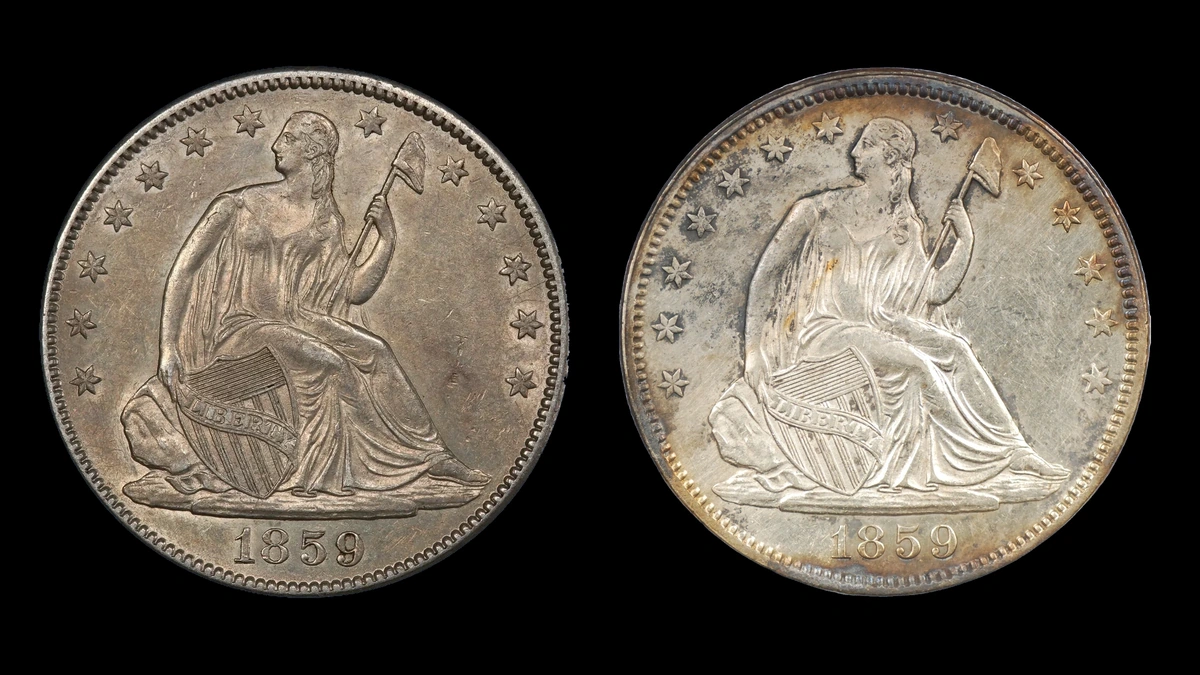
An extra number belongs to a different error depending on whether it sits beside the date or outside it. That distinction helps sort these 1859 half dollar errors, estimated at $80–$500 in the conditions covered.
The documented repunched-date comparison is an 1859-S sold for $360 in June 2021. Inspect the date and nearby rock, compare any faint front-side shapes, then turn to the mintmark.
| What you notice | Location | Error type | Estimated value |
|---|---|---|---|
| A stray part of 9 | Rock or rim teeth outside the date | Misplaced date | $200–$350 |
| Earlier strokes beside the normal digits | Date on O or S coins | Repunched date | $250–$500 |
| Faint shapes from the eagle side | Front of a Philadelphia coin | Die clash | $275–$450 |
| A second curve beside S | Mintmark below the eagle | Repunched mintmark | $80–$160 |
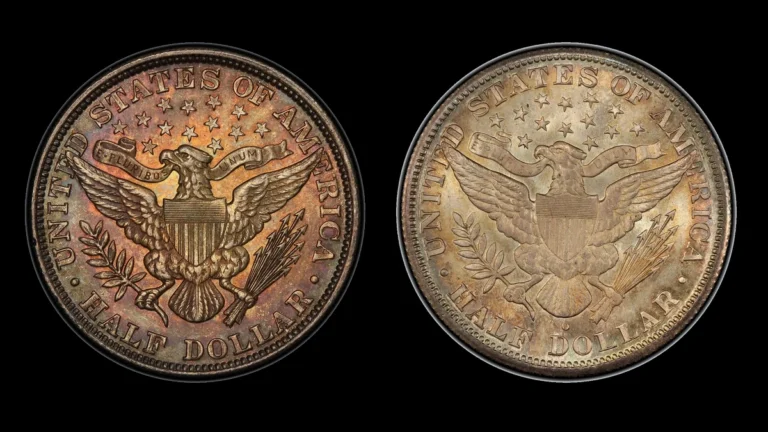
O identifies New Orleans, S identifies San Francisco, and Philadelphia has no mintmark. Use a magnifier and movable lamp; normal unworn measurements are about 12.44 grams and 30.6 mm with a grooved edge.
1. 1859 Half Dollar A Stray 9 Lies Outside the Date: Misplaced Date Error
Two different positions are reported on 1859-O halves. One has a number fragment among the small border teeth below the date; another has a 9 in the rock above the main 9.
Both descriptions concern a date punch applied outside its intended position on the die, the steel stamping tool. They do not describe two marks that must occur together on one coin.
How to Identify
Confirm O beneath the eagle, then return to a view of the whole date and surrounding border. Scan both the rock above 9 and the rim teeth below the date without combining their separate reference patterns.
A candidate fragment should preserve the curved form of part of a 9. A dented rim tooth or a line in the rock can look odd without being a misplaced numeral.
Angle the light across the mark to distinguish raised design detail from a cut. Compare its precise location with an identified coin showing that same placement.
What It’s Worth
Estimated range: $200–$350 for examples around XF, a circulated grade with much detail remaining. A dealer asks $260 for the coin with the 9 in the rock.
That is an offer to sell, not a completed transaction. Applying the range to the separate rim-tooth placement remains an estimate rather than proof that both varieties sell for identical amounts.
2. 1859 Half Dollar Date Digits Have Earlier Outlines: Repunched Date Error
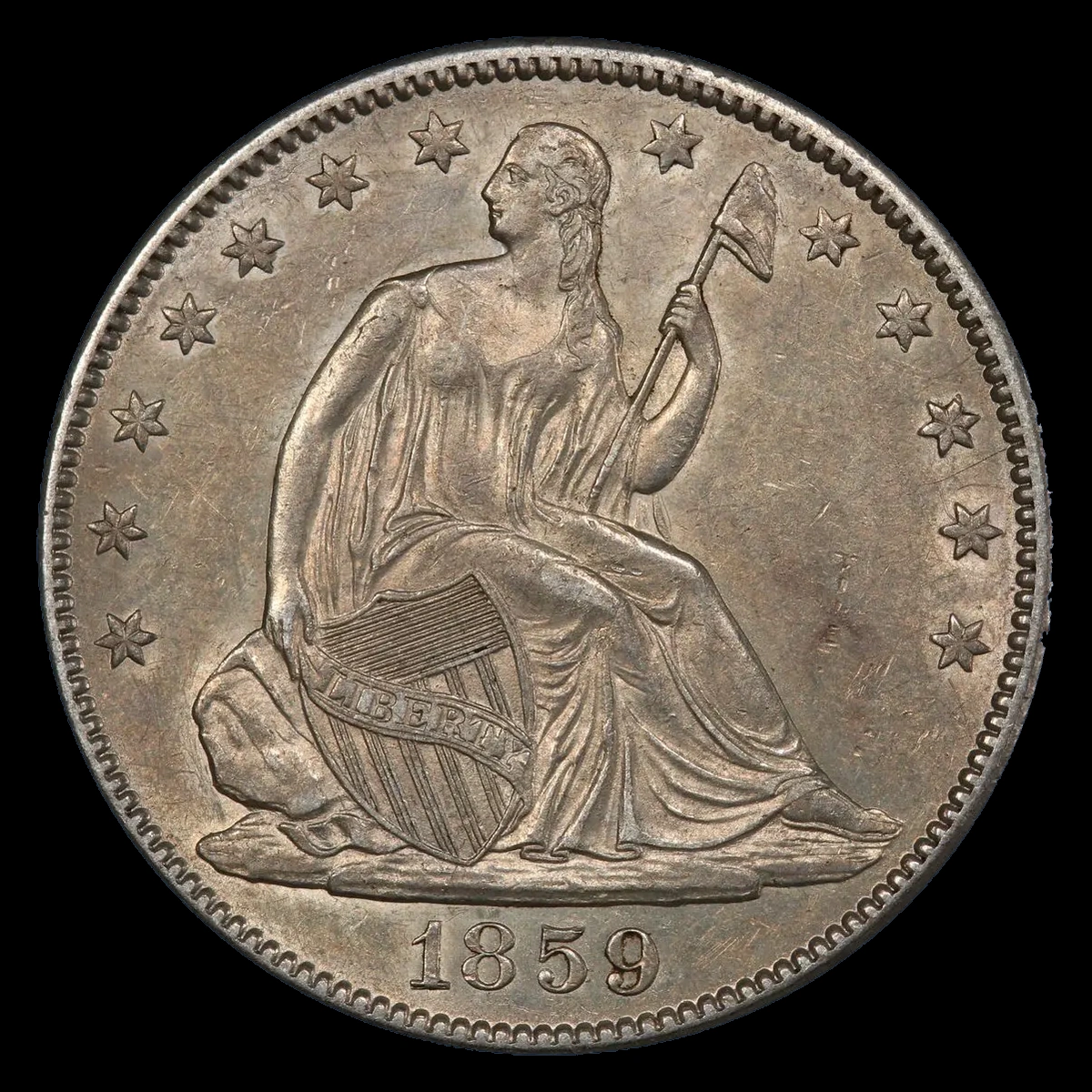
Fragments alongside the normal digits suggest the date punch was applied again after a slight shift. Some of the first impression survived beside the final one.
The recorded varieties include New Orleans WB-9, also called FS-301, and San Francisco WB-1. Those names identify different dies and therefore different patterns to compare.
How to Identify
Select the reference after reading the mintmark. An S-mint date photograph cannot establish the O-mint variety simply because both show extra strokes.
Examine the full date under magnification and follow the remnants around the digits. The lines should fit earlier numeral shapes rather than appear as isolated scratches or flat smeared edges.
The San Francisco listing also uses the term Large S. That describes the size of its mintmark and is not itself evidence of a repeated date or repeated mintmark.
Match the complete extra-stroke pattern to WB-9 FS-301 or WB-1 as appropriate. Wear may make one part difficult to see, but uncertainty should not be filled in with details from the other mint.
What It’s Worth
Estimated range: $250–$500 for comparable circulated coins around XF40. An 1859-S WB-1 graded PCGS XF40 brought $360 at Stack’s Bowers in June 2021.
This is a San Francisco sale. The same range for a New Orleans variety is an estimate, with its condition and exact identification still needing assessment.
Cleaning and heavier wear can reduce appeal even when the date remnants are genuine. The extra strokes form part of the coin’s value rather than overriding the state of its surfaces.
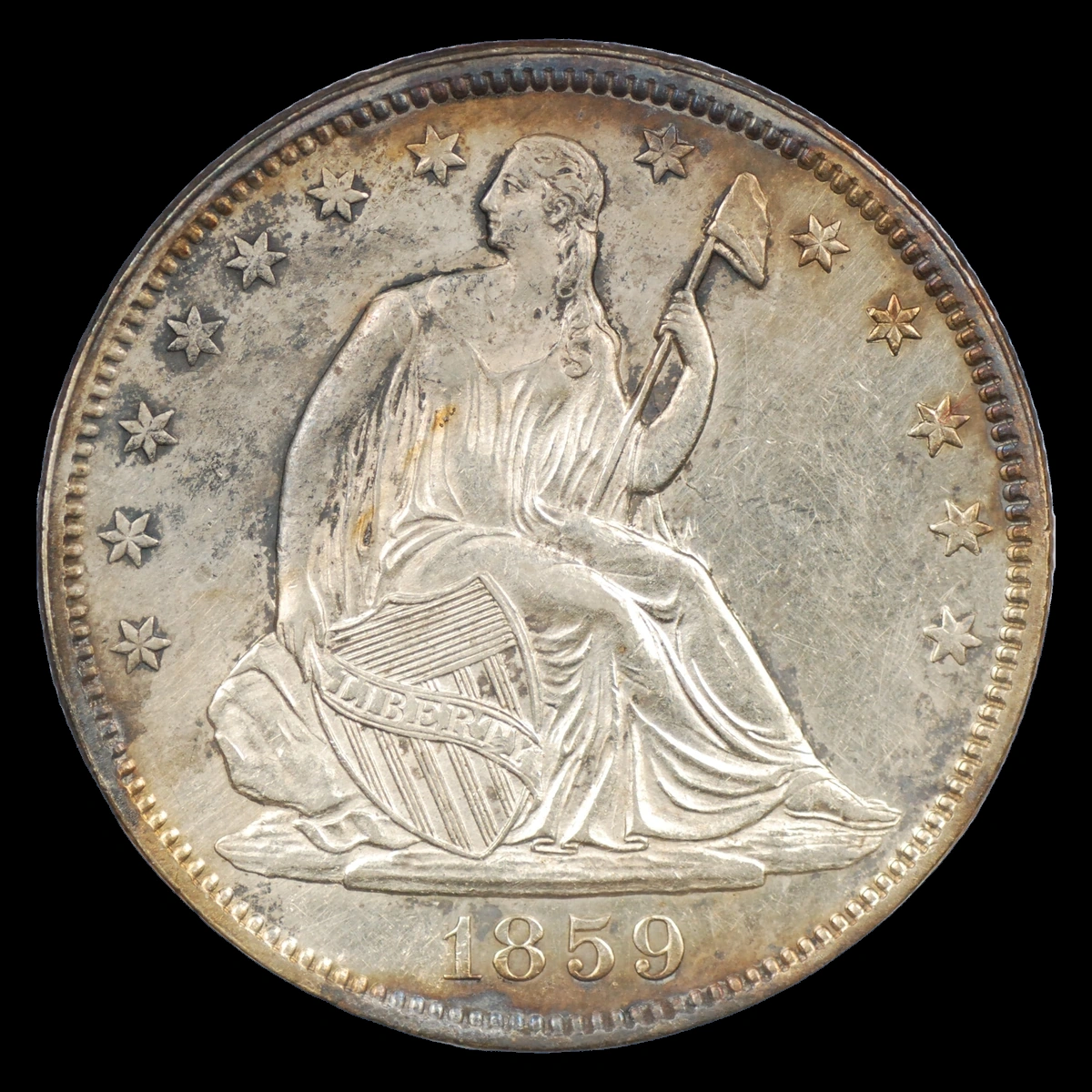
3. 1859 Half Dollar The Front Carries an Unfamiliar Shape: Obverse Die Clash Error
A lightly worn Philadelphia 1859 half is offered with a reported clash on the front, also called the obverse. The description does not give a fixed position for its transferred marks.
Clashes begin when the two stamping tools meet without a blank between them. Marks from one design can transfer to the other tool and then appear on later coins.
How to Identify
Compare the faint shape with the eagle-side design before trying to name it. A useful match includes both the shape and a position consistent with contact between the dies.
Keep photographs of both faces available. Magnifying a single short line until it resembles something is less persuasive than following a connected design fragment.
A scratch or a normal line in Liberty’s design may catch the light without matching the other side. Use several lighting angles, and do not invent a diagnostic location that the listing does not supply.
The reported example is Philadelphia, with no letter below the eagle. A similar-looking mark on another mint requires its own evidence.
What It’s Worth
Estimated range: $275–$450 for a similar AU example, meaning only slight wear. The dealer’s asking price is $340.
This is a whole-coin estimate informed by an offer rather than an auction result. Clear clash traces may interest a collector, but cleaning, dullness, and wear remain relevant to the price.
4. 1859 Half Dollar An Earlier Curve Remains Beside S: Repunched Mintmark Error
The San Francisco mintmark was punched by hand into the die. A shift between blows could leave a piece of an earlier S visible beside the main letter.
The offered 1859-S example is described as a repunched mintmark without specifying which direction the earlier curve lies. Its general letter size is a separate characteristic.
How to Identify
Study the full S below the eagle, including both its outer curves and opening. Look for a raised segment that follows another S rather than a rough bump beside the letter.
Change the light direction to check that the apparent outline is part of the metal. A shadow, flat shelf from striking movement, or nearby scratch does not establish a second punch position.
Because the supplied description gives no direction, compare against a confirmed 1859-S example instead of expecting an extra curve in an assumed location. A large main S alone is not the error.
What It’s Worth
Estimated range: $80–$160 for a worn example around Fine. The dealer’s March 21, 2026 inventory lists one at $108.
The same inventory supplies the $260 misplaced-date and $340 clash offers discussed above. None of those three asking figures establishes a completed sale.
Conclusion
Start by deciding where the extra mark lies: outside the date, beside a digit, within the front design, or near S. Then use the correct mint and the exact variety to choose a comparison.
Estimated values of $80–$500 cover different circulated grades. The $360 San Francisco repunched-date result is an auction sale, while the other three stated prices are offers that buyers may or may not accept.