Rare 1945 Nickel Errors (List & Pictures)
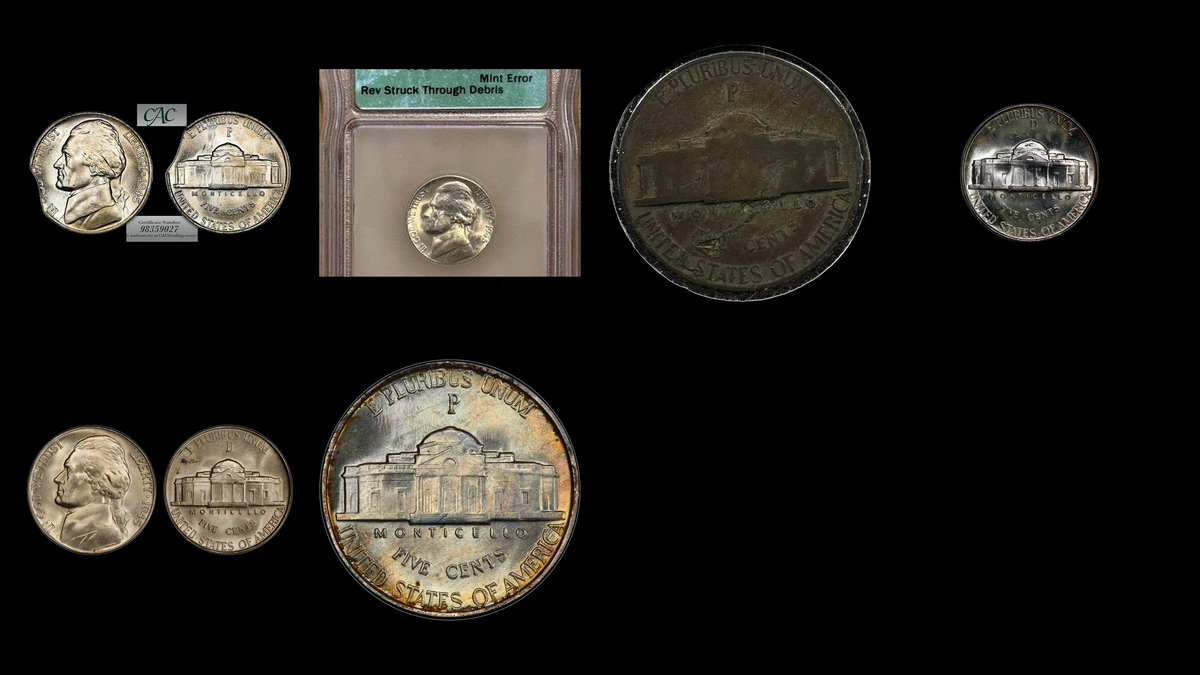
An exceptional 1945-P doubled reverse sold for $14,100 in March 2014. Estimated values for 1945 Jefferson nickel errors range from $5–$15,000, with grade and clear stair detail contributing to the largest result.
Use the wartime coin’s normal silver alloy and large mintmark as your starting point, then inspect the outline, surface and repeated details.
| Clue | Possible error | Estimated range |
|---|---|---|
| Missing edge section | Clipped blank | $25–$400 |
| Edge ledge | Partial collar | $100–$500 |
| Unused crescent | Off-center strike on normal metal | $100–$800 |
| Smaller disk with different metal | Wrong blank | $300–$5,000 |
| Material still embedded | Retained strike-through | $150–$1,000 |
| Original metal peeling | Lamination | $10–$150 |
| Raised portrait line | Die crack | $5–$100 |
| Additional mint-letter outline | Repunched mintmark | $10–$300 |
| Repeated design lettering | Doubled or tripled die | $10–$15,000 |
A normal 1945 nickel contains 56% copper, 35% silver and 9% manganese, weighs 5 grams and measures 21.21 millimeters with a plain edge. The large P, D or S is above Monticello’s dome, and silver content alone is normal for this year.
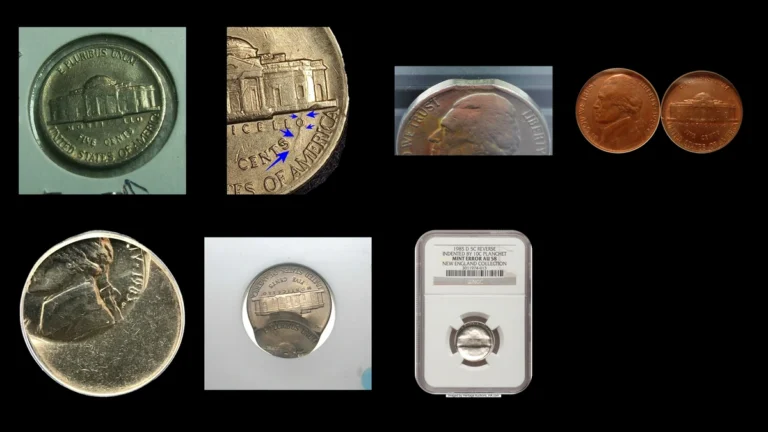
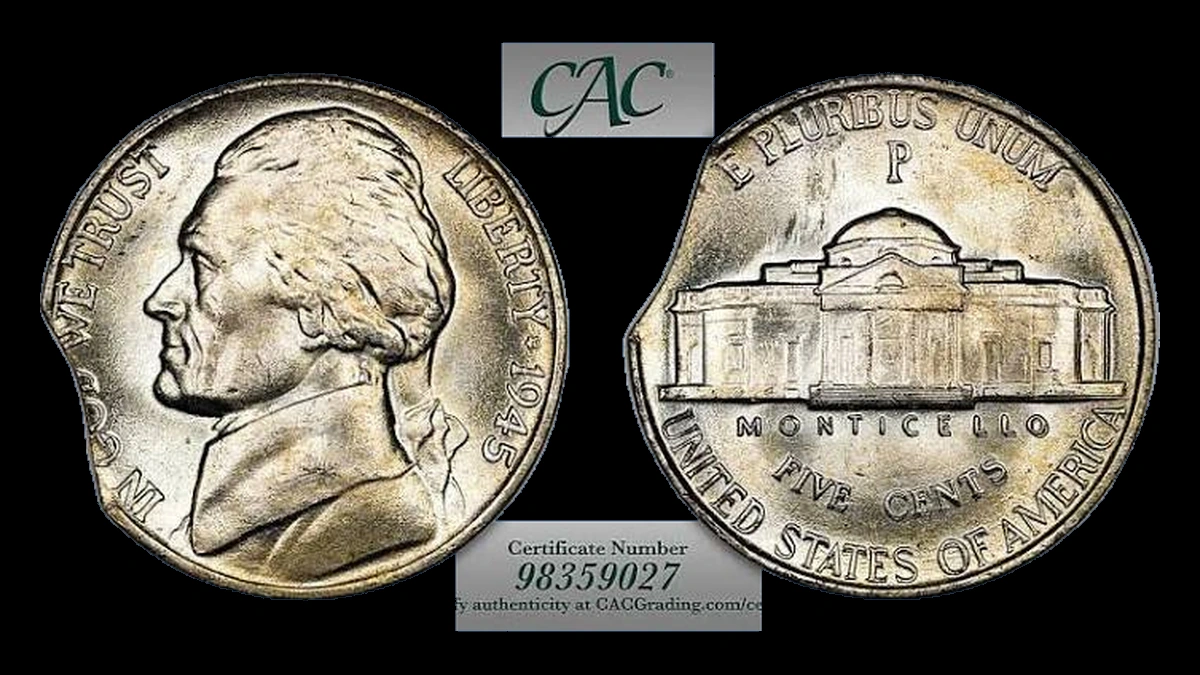
1. 1945 Nickel A Curved Opening in the Edge: Clipped Blank Error
A blank-cutting punch can overlap an earlier hole in the metal strip, leaving an incomplete disk. Its gap remains as the design is struck into the surviving metal.
A 1945-P CAC MS63 example combines a 5% curved clip and FS-801 doubled reverse and weighs 4.75 grams. A separate Philadelphia MS65 clip lies near 2:30.
How to Identify
Inspect the opening’s ends for natural rim weakening or metal flow. Saw marks and sharp cuts through finished detail point toward later removal.
The published clip-and-doubled-die combination requires two separate identifications on one coin. Its 4.75-gram measurement does not make weight alone proof of a clip.
What It’s Worth
Ordinary identified clips are estimated at $25–$200, with a comparable MS63 clip-and-FS-801 combination around $150–$400. The combination is one whole-coin estimate.
The published 4.75-gram example has no completed sale used here. The separate MS65 coin’s clip position must not be assigned to it without image evidence.
2. 1945 Nickel A Ledge Around the Edge: Partial Collar Error
A blank held only partly inside the collar can spread unevenly as the dies close. The collar is the ring that normally restrains the coin’s edge.
A cataloged 1945-P example is PCGS MS64 Full Steps. That grade and stair designation describe preservation and strike quality, not the location of its edge ledge.
How to Identify
View the edge at eye level and follow the step between contained metal and the portion that expanded. Examine it for pressure marks or scraping from later squeezing.
A nickel normally has a plain edge. The diagnostic relationship is a change in edge level, not missing reeds.
What It’s Worth
Comparable confirmed wartime partial collars are estimated at $100–$500. A clear natural step and readable identity help establish a useful comparison.
No individual sale price is supplied for the MS64 Full Steps catalog example. Its stair detail contributes to the whole coin’s appeal but does not authenticate the collar error.
3. 1945 Nickel A Solid Crescent Beside Incomplete Designs: Off-Center Strike Error
A misplaced blank can miss part of the die’s design while leaving another area untouched. That unused crescent remains metal rather than an open clip.
A period catalog lists a Philadelphia 1945 off-center wartime nickel. General reports add no universal mint, direction or percentage.
How to Identify
Find the date and large mint letter, then compare both faces. The missing design and unused metal should fit one displaced blank.
One uneven rim with a complete design may instead indicate a shifted die. Inspect the apparently unstruck area for later scraping or grinding.
What It’s Worth
Confirmed dated offsets on normal wartime metal are estimated at $100–$800. Remaining identity and surfaces matter alongside the displacement.
The Philadelphia catalog mention has no individual sale used here. The $2,350 foreign-blank combination discussed next is a different type of comparison.
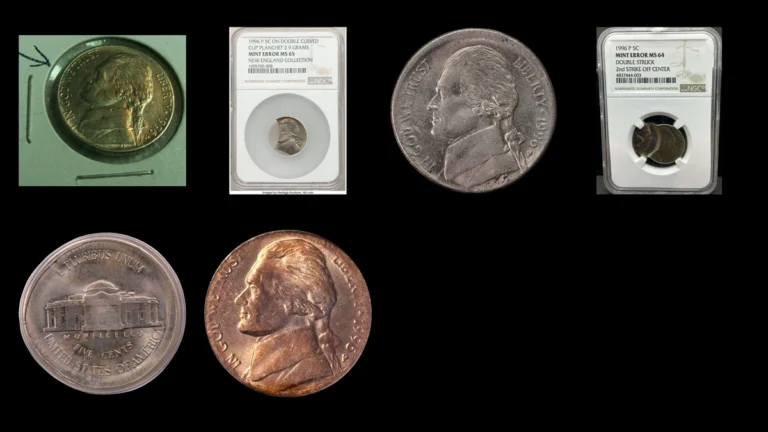
4. 1945 Nickel A Smaller Disk in the Wrong Metal: Wrong-Blank Strike Error
Recorded pieces include a Philadelphia nickel on a 3.0-gram cent blank and an older auctioned S coin labeled as a silver-dime-blank strike. Separate San Francisco examples used Netherlands East Indies quarter-gulden blanks.
One foreign-blank example weighs 3.1 grams. Another weighs 3.2 grams and was struck 40% off center toward 10:30, retaining its date and S.
How to Identify
Use the candidate’s own metal test, weight and edge evidence. Normal 1945 nickels already contain silver, so color or a positive silver test alone cannot identify a wrong blank.
A U.S. silver dime blank starts near 2.50 grams, while the quarter-gulden blank’s standard is about 3.18 grams. These standards are not measurements supplied for every auctioned specimen.
Look for naturally cropped design rather than a perimeter cut down after striking. Keep the 3.0-, 3.1- and 3.2-gram records attached to their separate coins.
What It’s Worth
Cent-blank errors are estimated at $300–$1,500, with identified silver or foreign-blank pieces around $1,000–$5,000. A dramatic offset may be part of the same whole-coin combination.
The older silver-dime attribution brought $3,220 in January 2006. The 40% off-center foreign-blank nickel sold for $2,350 in November 2013.
The 3.0-gram cent-blank coin was not sold in its April 2013 appearance. That offering supplies no completed price for the specimen.
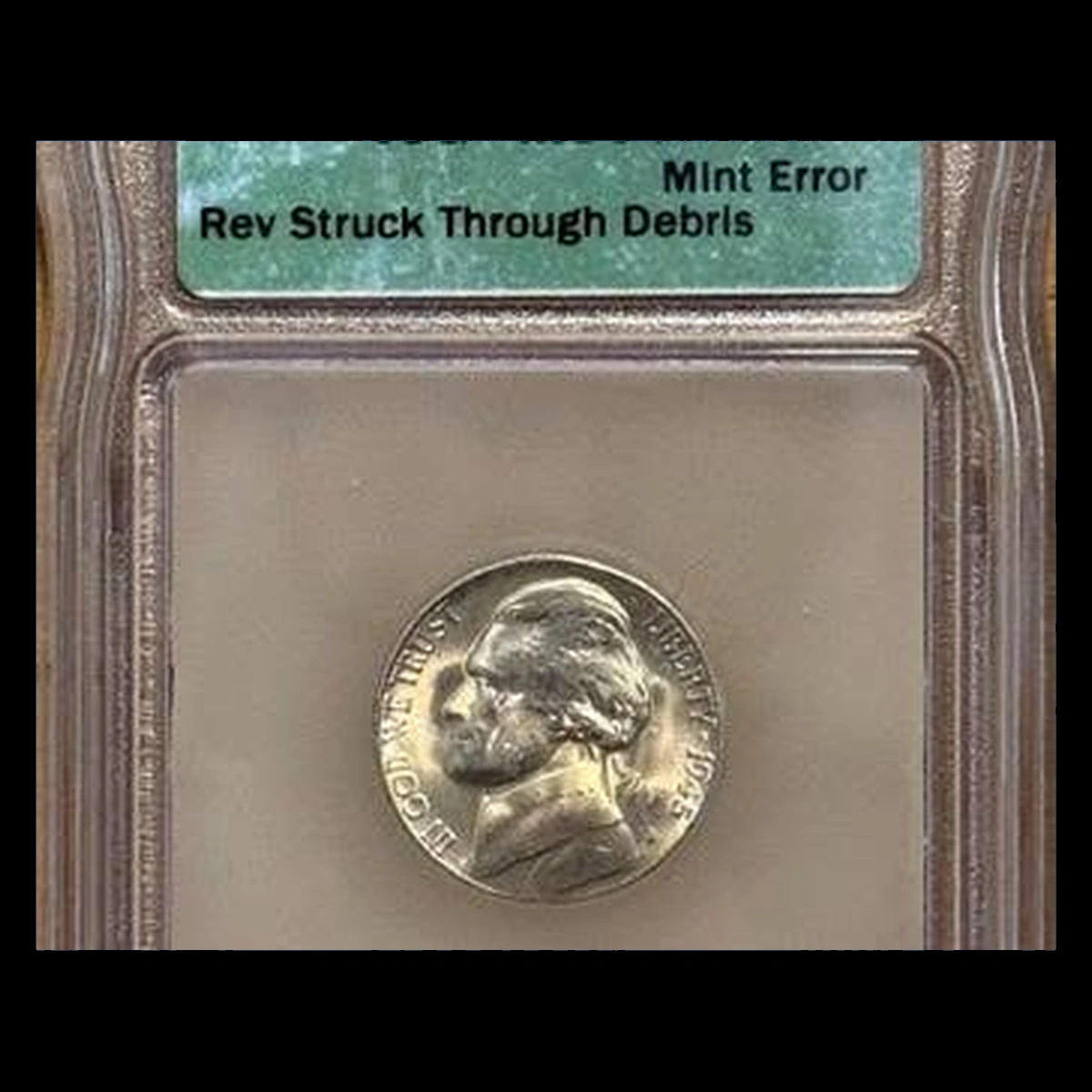
5. 1945 Nickel Material Still Attached Where the Design Stops: Retained Strike-Through Error
An obstruction can stay embedded after preventing part of the design from forming. Its boundary and the surrounding struck metal together explain the event.
The 1945 year report establishes no particular material or mint. General possibilities such as cloth or wire are not separate confirmed examples.
How to Identify
Leave the object in place and photograph its boundary under several lighting angles. Look for original design interrupted where the object blocked the die.
Glue, solder or fresh pressure damage over complete lettering suggest later attachment. Added material can affect the total weight, so an exact normal reading is not the test.
What It’s Worth
Confirmed retained-object strikes are estimated at $150–$1,000. The object’s relationship to the original strike matters more than an interesting shape.
This is a conditional range for the reported category. No specific 1945 cloth or wire sale is established by the evidence.
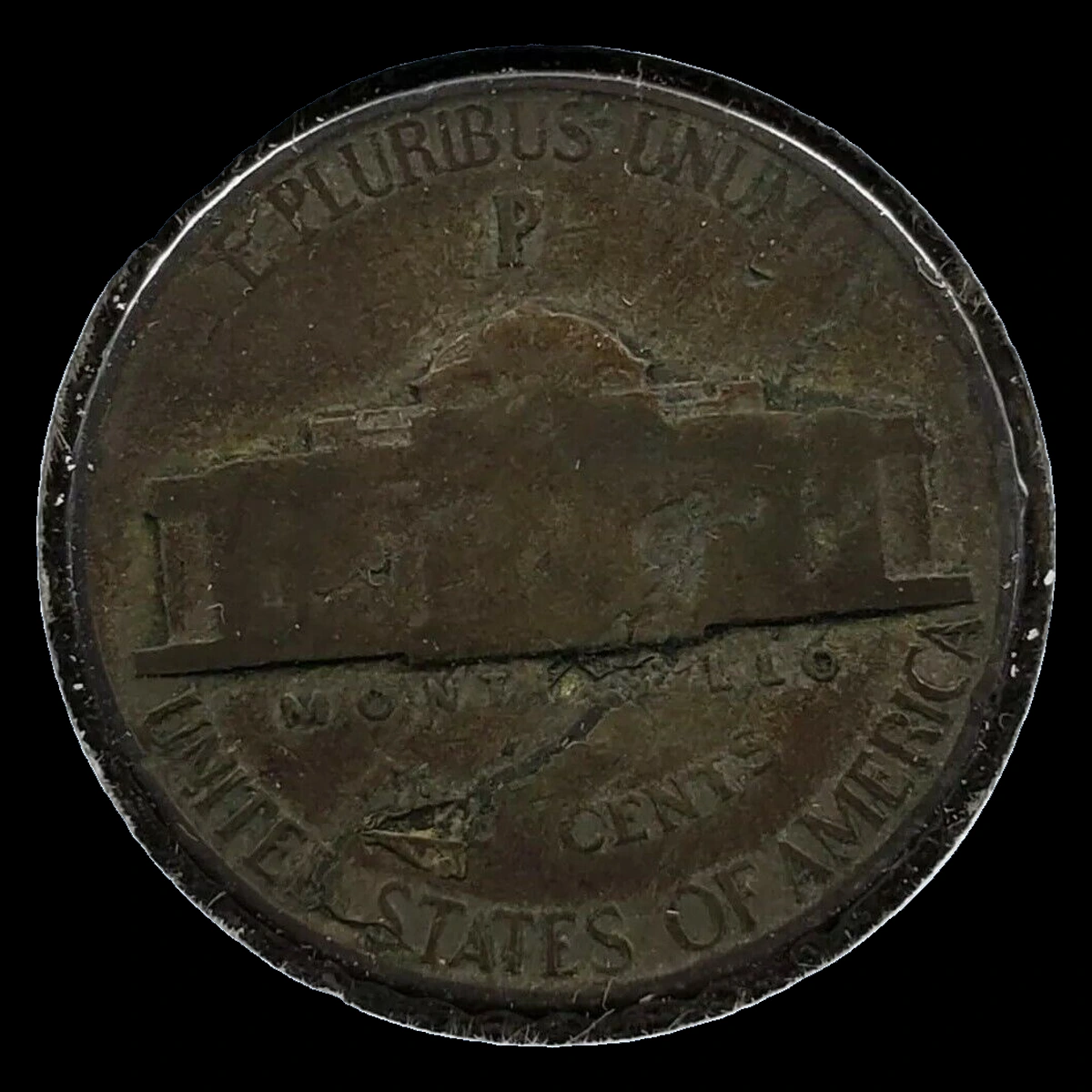
6. 1945 Nickel Flaking Original Metal: Lamination Error
A weakness inside the wartime alloy can let a thin patch separate. The resulting flap or recess is called a lamination.
San Francisco examples are reported, and the same general problem can occur on other wartime nickels. A dark rough surface without an actual separation may instead be toning or corrosion.
How to Identify
Trace the boundary of any attached flake without lifting it. Look for original surface continuing over a split rather than a dug-out gouge.
Check the edge if the opening reaches it, but do not pry it wider. A small retained flake may change the coin’s weight very little.
What It’s Worth
Clear genuine laminations are estimated at $10–$150. Their size and the condition of the remaining coin affect the comparison.
No individual result fixes the price for every reported surface problem. Cleaning or pulling away metal can obscure the original separation and reduce appeal.
7. 1945 Nickel A Raised Line Across Jefferson: Die Crack Error
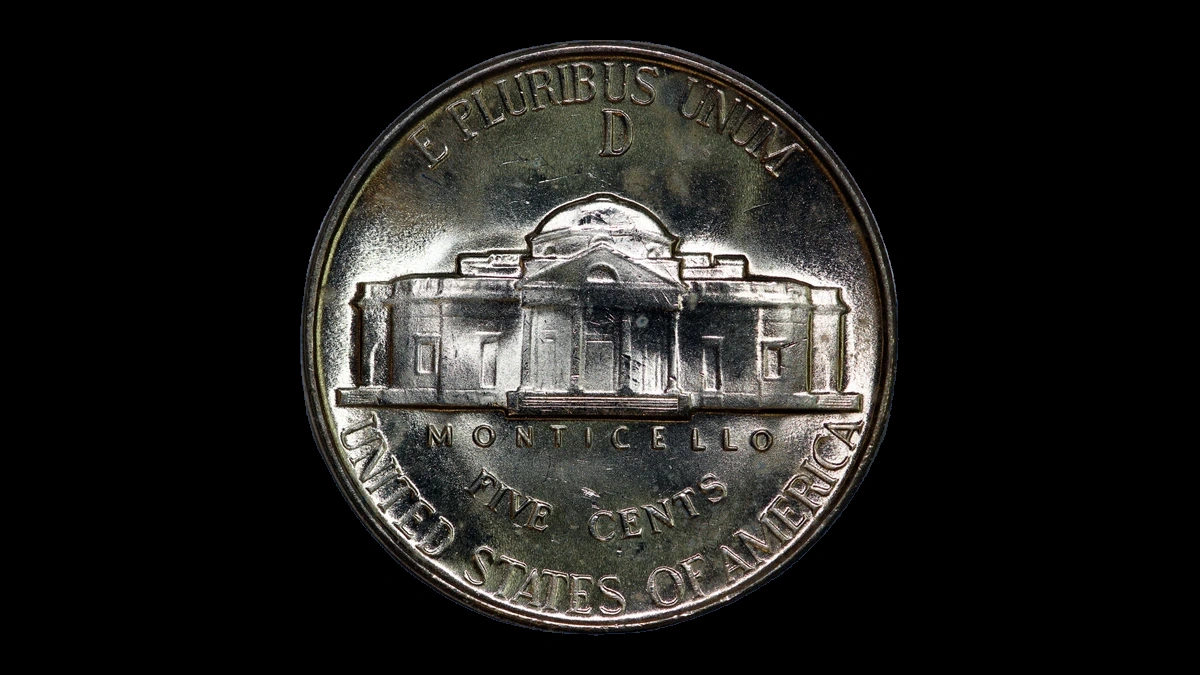
A crack in a die fills with coin metal during striking, creating a narrow ridge. A San Francisco report describes a portrait-crossing feature on 1945-S nickels.
The line must be original raised metal. A bright-edged scratch can cross the portrait too.
How to Identify
Inspect the middle of the line under side lighting. A recessed center suggests a scratch even if displaced metal rises beside it.
Follow the feature without rubbing it and include the large S above Monticello in photographs. The mint identifies the reported type, but cannot establish the line’s origin by itself.
What It’s Worth
Confirmed modest portrait cracks are estimated at $5–$100. Clear original ridges generally offer more than faint marks obscured by wear.
The year report has no separate auction record assigned here. Later cuts should not receive the same premium merely because their edges catch the light.
8. 1945 Nickel A Second Outline in the Large Mint Letter: Repunched Mintmark Error
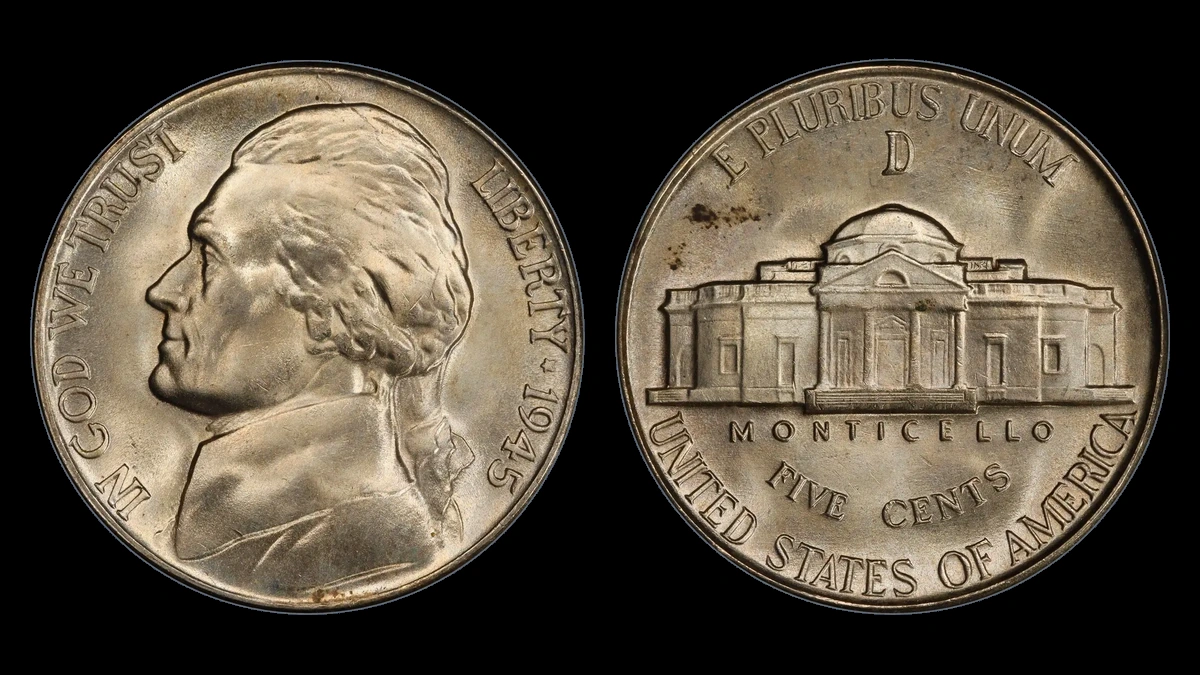
An earlier placement of the mintmark punch can leave an extra curve or stem. Reports include P/P, D/D and S/S, each repeating its own mint letter.
The wartime letter is large and sits above the dome. The smaller side-position mintmarks of many other years are not the correct location for this examination.
How to Identify
Compare both the inner curves and outer strokes with the same identified mintmark pattern. A recognizable partial letter is more useful than general thickness.
Low flat shelves caused by movement during striking can imitate extra outlines. A match needs the correct raised shape in the correct place.
What It’s Worth
Identified repunched mintmarks are estimated at $10–$300. The exact pattern and condition prevent all P/P, D/D and S/S examples from sharing one price.
On a coin that also has a foreign blank, the mintmark is part of the complete object’s valuation. It does not justify adding another full coin price.
9. 1945 Nickel Repeated Raised Lettering: Doubled and Tripled Dies Error
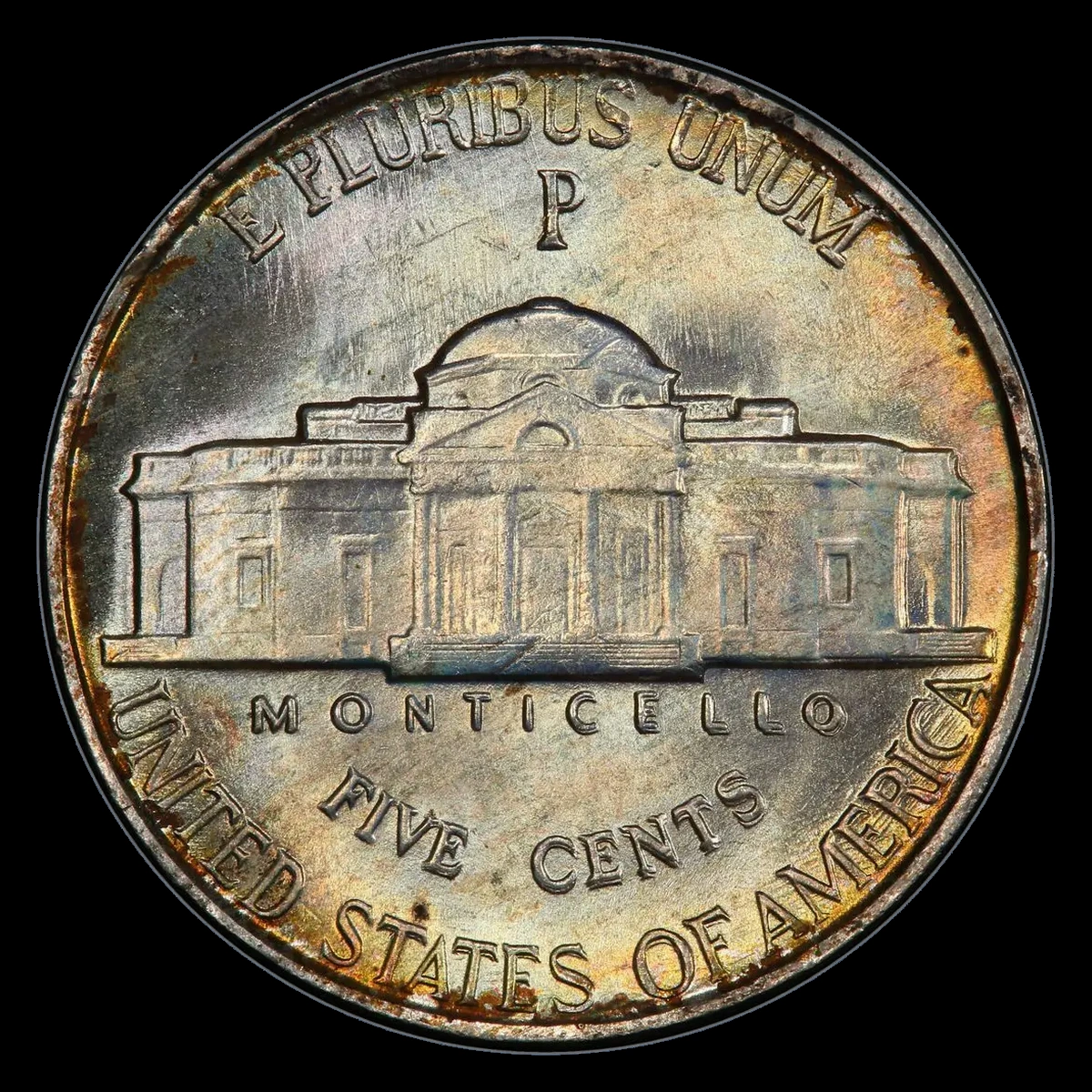
Philadelphia FS-801 has prominent reverse doubling, including MONTICELLO and FIVE CENTS. Denver FS-101 instead affects the obverse motto, LIBERTY and date.
Other close or tripled reverse patterns, including San Francisco reports, require their own matches. The FS catalog labels are not designer initials, which did not appear as small FS letters on 1945 nickels.
How to Identify
Choose the correct mint and face before inspecting repeated letter outlines. On FS-801, compare MONTICELLO’s ending and FIVE CENTS rather than general thickness.
Rounded repeated detail differs from flat striking-movement shelves. Clear stair lines help assess quality but cannot identify doubling by themselves.
What It’s Worth
Minor reported patterns are estimated at $10–$150 and identified ordinary examples at $25–$1,500. Outstanding Full Steps pieces can reach a separate $3,000–$15,000 level.
PCGS records $14,100 in March 2014 for an MS66 Full Steps Philadelphia doubled reverse. The exceptional whole-coin result cannot be assigned to every doubled-looking letter or the separate Denver obverse variety.
Conclusion
The wartime specifications are essential when judging a 1945 nickel. Silver content and a large mint letter are normal, while an unusual blank needs its own weight, metal and original strike evidence.
For smaller features, distinguish raised die detail from scratches and preserve any loose metal or retained object. Keep combined errors on one coin together in its valuation, and reserve the exceptional doubled-die comparison for the matching variety and quality.