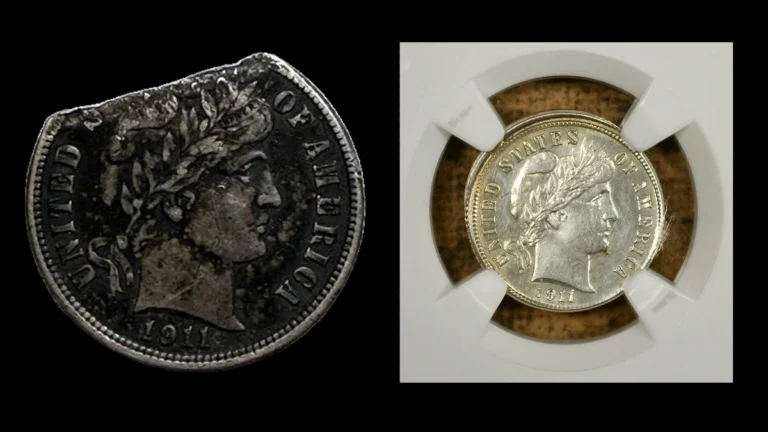
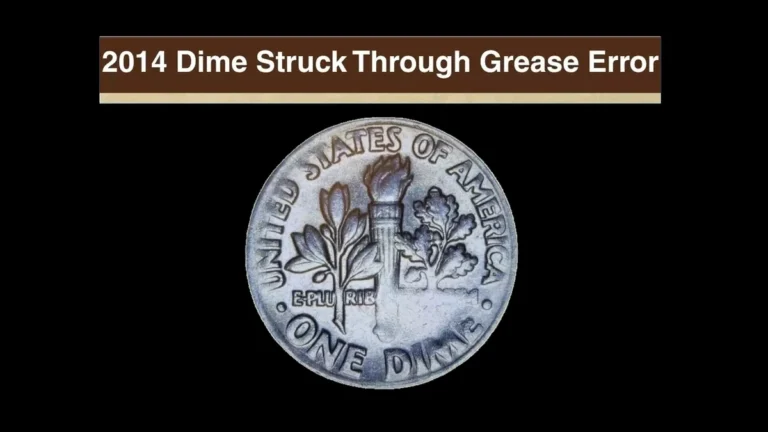
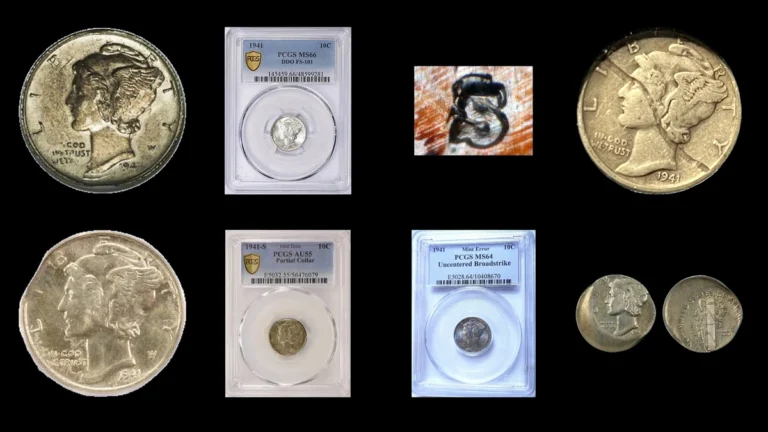
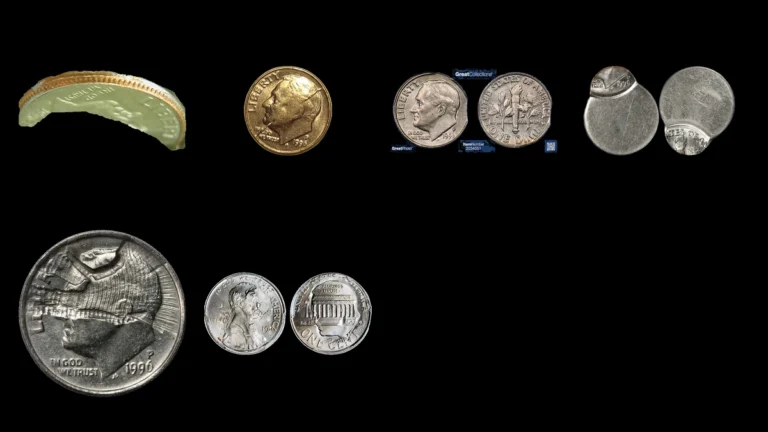
Rare 1948 Dime Errors (List & Pictures)
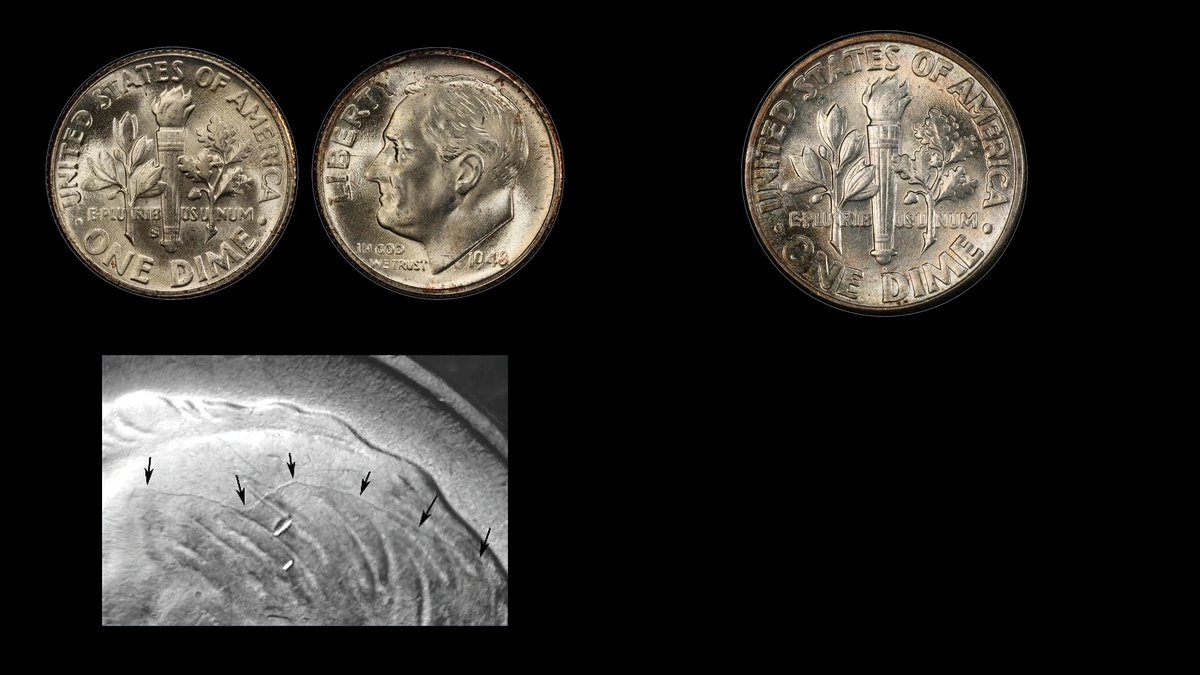
A line above the surface and a crack through the metal tell different stories. On a 1948 dime, deciding which you have is often more useful than starting with an error name.
This guide to 1948 dime errors covers ten types with estimated whole-coin values of $15–$750. A clearly identified S/S mintmark example brought $377 in November 2019; begin on the reverse, then inspect the coin’s surface and outline.
| Where to look | Possible feature |
|---|---|
| S beside the torch | Earlier S from a repunched mintmark |
| Reverse words | Reported doubled design |
| Final S in STATES toward the flame | Raised die-crack line |
| Opening within the metal | Cracked blank or separating layer |
| Rim and complete outline | Cud, clip, oval blank, broadstrike, or off-center strike |
1. 1948 Dime Small Curves Sit below the S: Repunched Mintmark Error
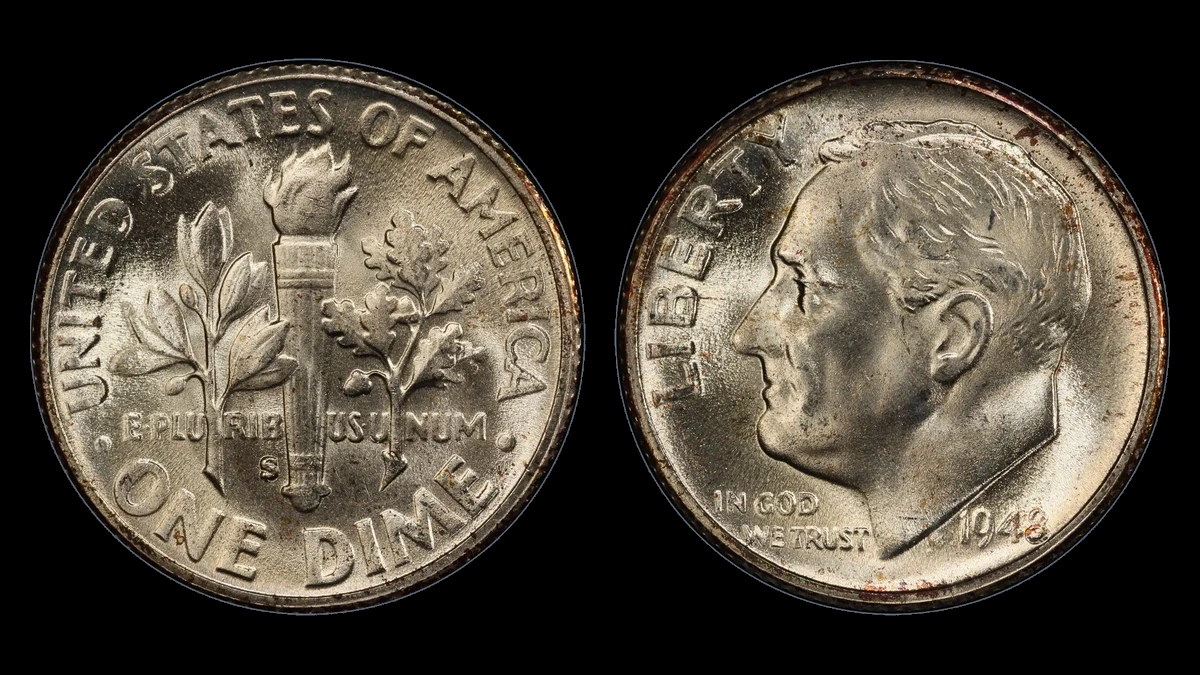
On 1948-S FS-501, parts of an earlier S appear below and to the right of the final letter. The mintmark was punched into the die by hand, and its position shifted between impressions.
The die then copied the overlapping shapes onto coins. Other repunched S patterns exist for 1948, so FS-501 is one cataloged pattern within this broad type.
How to Identify
Find S to the left of the torch base and keep enough nearby design in the photograph to preserve its orientation. Trace the curves below and to the right for the FS-501 comparison.
The extra strokes should fit another S. A lump, stain, or flat shelf is not automatically part of an earlier letter.
Check the surrounding surface for alteration as well as the letter’s shape. Normal weight does not authenticate a mintmark added to a finished coin.
What It’s Worth
$25–$500 is a useful estimated range for identified examples from worn through better unworn grades. The MS66 FS-501 result was $377 on November 17, 2019.
MS66 describes very good preservation without circulation wear. Clear earlier curves, clean surfaces, and sharp torch bands can all contribute to the complete coin’s price.
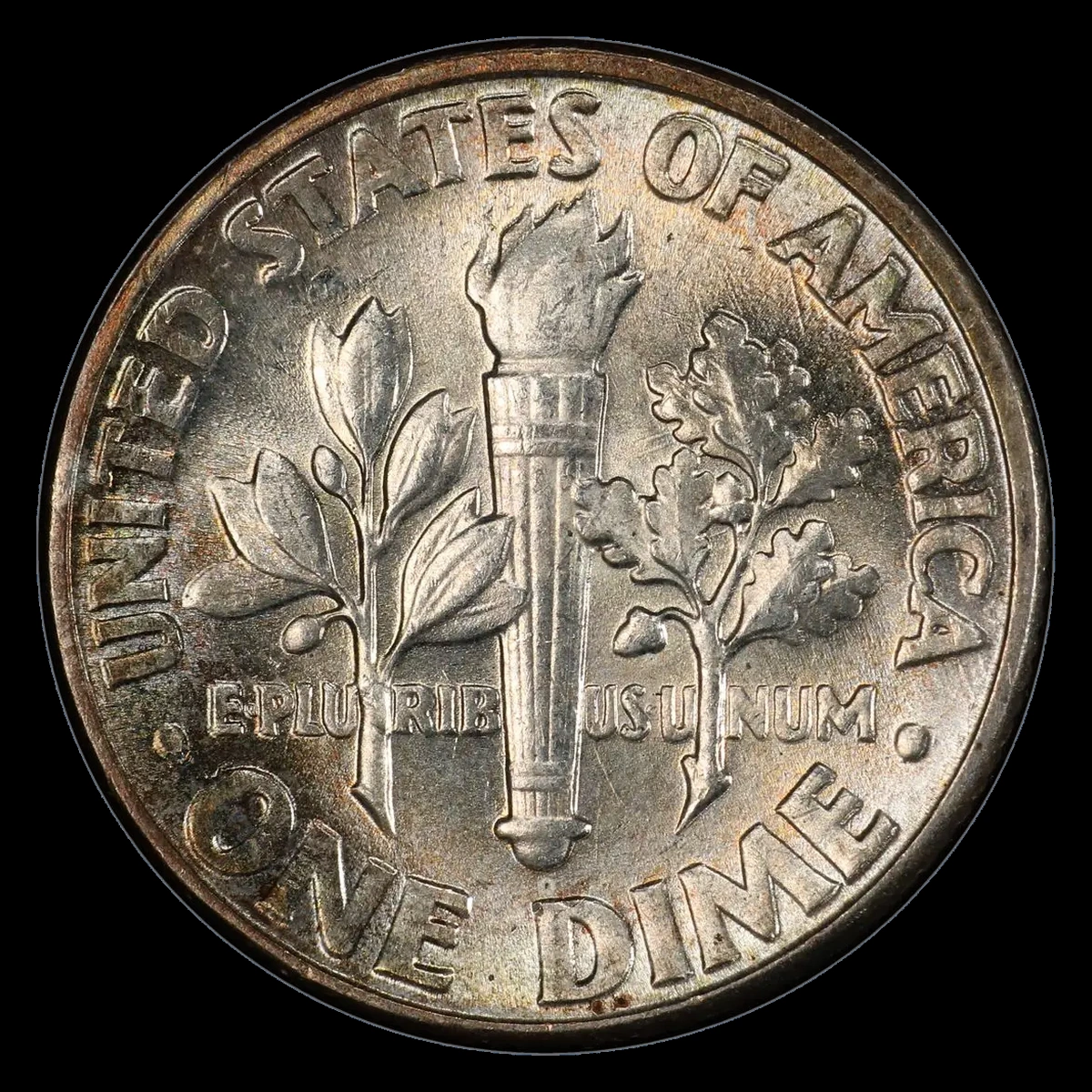
2. 1948 Dime Reverse Letters Have Repeated Strokes: Reported Doubled Die Error
The Philadelphia reports direct attention to UNITED STATES OF AMERICA and ONE DIME. They do not supply one complete letter-by-letter pattern for every candidate.
A doubled die already carries repeated detail before it strikes a coin. An extra-looking edge can also have other causes, so thick lettering is only the starting observation.
How to Identify
Confirm the 1948 date and the absence of a reverse mint letter for Philadelphia. Enlarge complete words before focusing on one corner.
Try light from two directions: a reflection changes, while a real raised stroke remains part of the metal. Low, flat shelves may result from movement during striking rather than a doubled die.
Compare several neighboring letters with an identified 1948 example. Do not assign a different year’s catalog number simply because its doubling seems similar.
What It’s Worth
$25–$300 is the comparison estimate for a correctly identified minor reverse doubled die in circulated through attractive lower unworn grades. No exact 1948 sale is supplied.
A 1947-S FS-801 graded ANACS MS65 sold for $120 in May 2022. Its different mint and pattern make it a general silver-Roosevelt comparison, not an identification guide for 1948.
3. 1948 Dime A Ridge Runs through STATES toward the Flame: Die Crack Error
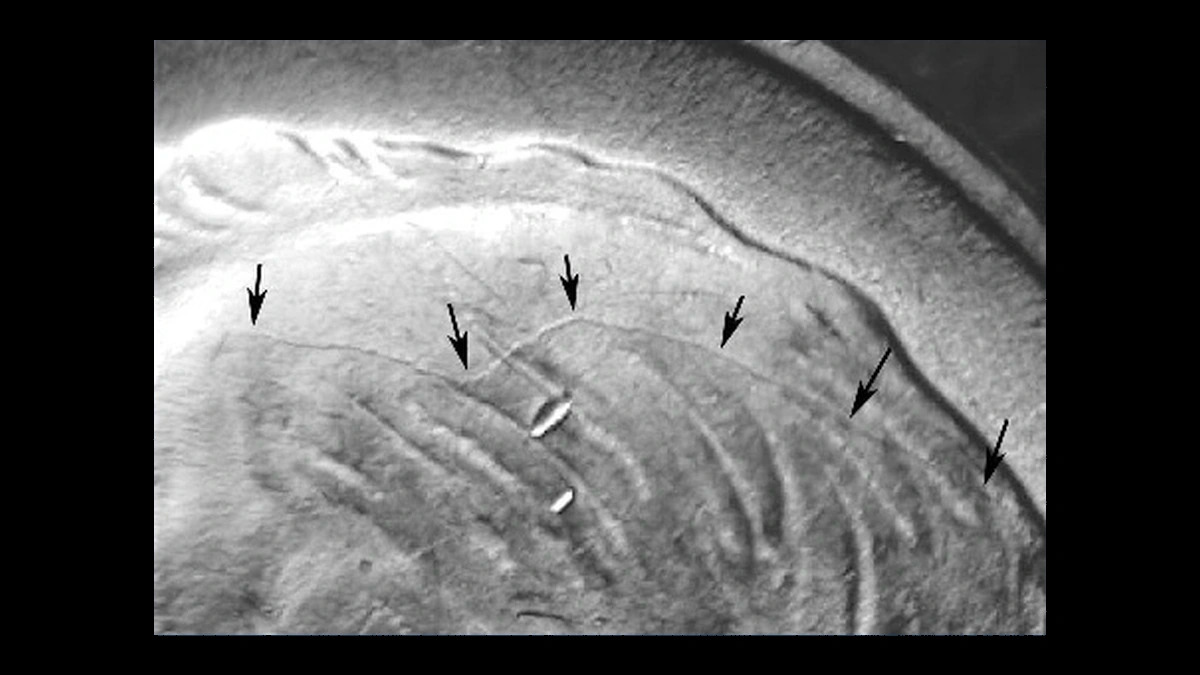
One illustrated 1948-S has a raised line from the rim through the final S in STATES and down beside the flame’s right edge. That coin also has a repunched mintmark.
The line formed when silver entered a crack in the stamping tool. The coin copied the crack as a ridge rather than splitting open itself.
How to Identify
Follow the continuous route in Wexler’s illustration, moving from the letter toward the flame. Avoid joining unrelated marks into an imagined line.
A low lamp makes its raised center easier to see. A scratch often has a recessed channel with metal pushed up along the sides.
Other 1948-S cracks can follow different routes. The documented path identifies this comparison, rather than every crack from the date.
What It’s Worth
$15–$100 is the estimate for clear small cracks on worn through ordinary unworn coins. Similar minor cracks on nearby silver Roosevelt dates provide the context.
No transaction price is supplied for this particular route. If the coin also has a repunched S, value the complete coin once instead of adding two whole-coin estimates.
4. 1948 Dime A Real Opening Enters the Metal: Cracked Blank Error
Old specialist listings describe a 1948-S crack near seven o’clock and a separate 1948-D edge crack near three-thirty. These are openings in the coin’s metal, unlike the raised die-crack line above.
A weak blank can split under striking pressure. A finished coin can also crack when bent, so the surrounding surface is part of the diagnosis.
How to Identify
Use the mintmark to select the correct record and include the entire face when noting clock position. The S and D examples do not describe two cracks on one coin.
Examine the opening from both faces and the edge without flexing it. Bending, crushed details, or fresh break surfaces can point toward later damage.
A split may open while removing very little metal. Weight alone therefore cannot determine whether it began before or after striking.
What It’s Worth
$50–$350 is the estimated whole-coin range for genuine cracked blanks in collectible circulated through lower unworn condition. Neither listed 1948 specimen has a supplied selling amount.
A visible natural opening with intact surrounding detail is easier to assess. A deep crack caused by later bending does not qualify merely because it looks dramatic.
5. 1948 Dime The Surface Peels in a Thin Layer: Lamination Error
Instead of opening through the coin, a weakness can let a thin surface layer lift. If the layer falls away, it may leave a rough shallow area with some design missing.
The 1948 guide includes lamination without a fixed location. These dimes are 90% silver alloy throughout, not modern clad coins with separate outer layers over a copper center.
How to Identify
Photograph an attached flap from the side and leave it untouched. Look for a thin boundary continuing into the coin’s own metal.
Scrape marks across the opening or scattered corrosion pits offer different explanations. A rough patch without a layered edge is less useful evidence.
The standard weight is 2.50 grams and diameter about 17.9 millimeters. An attached flap may preserve nearly all the weight, while a missing layer and circulation wear can both reduce it.
What It’s Worth
$15–$150 covers the supplied estimate from small flakes to obvious natural separations on worn or modest unworn dimes. It draws on similar silver Roosevelt metal flaws.
An intact flap can show the cause more clearly than a tiny rough spot. The estimate includes the whole coin and does not apply to ordinary scraping or corrosion.
6. 1948 Dime Raised Metal Replaces Design at the Rim: Cud Error
A cud is a broad raised patch connected to the rim. It forms when part of a die’s edge breaks away and silver fills the missing space during striking.
The year list gives no fixed position for the 1948 report. A small inner lump or a rim pushed inward by an impact needs a different comparison.
How to Identify
Keep the rim in the image and trace how the normal design disappears into the patch. The connection to the edge is essential.
Added material may sit over design that remains complete underneath it. Check for seams, altered surface texture, or a crushed edge.
Weak detail on the opposite face can support a die break but does not prove it alone. The whole boundary should fit an original raised area replacing design.
What It’s Worth
$50–$200 is the estimate for small genuine rim breaks. Larger clear cuds on attractive silver Roosevelt dimes have an estimated $200–$600 range.
These are type comparisons rather than recorded 1948 auction results. Patch size matters, but solder or impact damage does not earn a mint-error premium simply by creating more raised metal.
7. 1948 Dime A Large Curve Is Missing near the Top: Clipped Blank Error
Heritage describes a 1948-S with a 20% curved clip near one o’clock. Its incomplete blank formed when the cutting punch overlapped an earlier hole in the metal strip.
NGC graded the coin MS63 Full Bands. The grade means unworn with visible marks, and Full Bands describes separated horizontal torch bands rather than the missing metal.
How to Identify
Inspect both ends of the curve where they meet the regular rim. Natural transitions in the struck metal support a gap that existed before the design formed.
Keep the date and S connected to the one-o’clock gap in the photographs. Filing or saw marks through finished detail point toward a later cut.
The rim opposite the gap may be weak, though the effect need not be obvious. A lower weight supports missing metal but does not establish its cause on its own.
What It’s Worth
$50–$400 is the estimate for genuine 1948 clips across worn and attractive unworn grades. The supplied comparison is a 1947-S 10% curved clip, NGC MS66, sold for $104 in December 2024.
That comparison has a smaller gap and a higher grade. Doubling the clip percentage does not automatically double the price.
8. 1948 Dime The Whole Blank Is Oval: Elliptical Planchet Error
A Philadelphia 1948 dime listed by GreatCollections was struck on an oval incomplete blank weighing 1.9 grams. NGC graded it MS62, an unworn coin with noticeable marks.
Some outer design could not fit on the smaller piece of metal. This full-outline change is different from a small curved clip on an otherwise round blank.
How to Identify
Record the long and short widths separately instead of averaging them into one diameter. Compare the listed 1.9 grams with the normal 2.50-gram standard.
Look for naturally struck boundaries around the oval. Later squeezing can stretch or crush a finished design, while filing removes completed edge detail.
A clear date is needed to assign 1948. Leave a certified coin sealed in its holder and use its recorded weight rather than opening it for another measurement.
What It’s Worth
$150–$650 is the estimate for genuine elliptical silver Roosevelt dimes with readable dates and collectible surfaces. Shape, preservation, and surviving design influence the comparison.
The 1948 NGC MS62 listing shows a $200 opening bid, not a completed sale. Nearby-year clipped-dime results provide broad context rather than a fixed premium for the oval outline.
9. 1948 Dime Metal Spreads around a Complete Design: Broadstrike Error
A Philadelphia 1948 broadstrike appears in the auction archive as ANACS AU58, meaning very light wear. Its blank spread without proper restraint from the collar, the ring that normally controls width and forms edge grooves.
The design remains complete despite an expanded or uneven border. The record does not establish one direction of expansion for every 1948 broadstrike.
How to Identify
Follow the outer design on both faces before measuring the extra width. All intended details should fit within the spread metal.
Check where edge grooves weaken or disappear and whether the border looks naturally struck. Crushed letters, a flattened portrait, or impact marks can indicate later pressure.
The coin should retain its metal apart from ordinary wear. Extra width alone is not enough when a normal finished dime can be pressed wider.
What It’s Worth
$75–$500 is the estimate for genuine worn through attractive unworn broadstrikes. The 1948 archive entry documents the AU58 example without a selling figure used here.
A 1946 NGC MS66 Full Torch broadstrike sold for $258.50 in October 2012. Its different year, stronger preservation, and sharp torch detail make it context rather than an exact value for the lightly worn 1948 coin.
10. 1948 Dime Design Is Missing beside an Unstruck Crescent: Off-Center Strike Error
An off-center blank receives only the part of the design beneath the dies. The unused crescent is still metal, unlike a clip where part of the blank is absent.
The year guide reports the category without fixing a mint, direction, or percentage. Each specimen needs its own complete view.
How to Identify
Read the date and compare both faces for related incomplete design beside original blank metal. Inspect the boundary for scraping or grinding that could remove finished details.
A shift on only one face can come from a misaligned die. A wider coin with the full design belongs with broadstrike comparisons.
If the displaced strike lost the mintmark area, do not assume Philadelphia. Missing design cannot establish that a mint letter was never present.
What It’s Worth
$75–$750 is the estimate from modest worn offsets to bold, attractive readable-date examples. More blank metal can make the error easier to display, but percentage alone does not set its value.
A 1964 silver dime graded ANACS MS65 and struck 60% off-center sold for $134 in December 2025. It is a different-year sale illustrating why condition, appearance, and surviving design also matter.
Conclusion
Use the surface itself to separate a raised die line, a real split, and a peeling layer. At the rim, decide whether metal is raised, missing, spread outward, or left blank beside lost design.
The small mintmark and reverse varieties need their own matching contours. Keep the actual mint, condition, and specimen with each comparison, and count several features on one coin within one whole-coin value.