Rare 1951 Half Dollar Errors (List & Pictures)
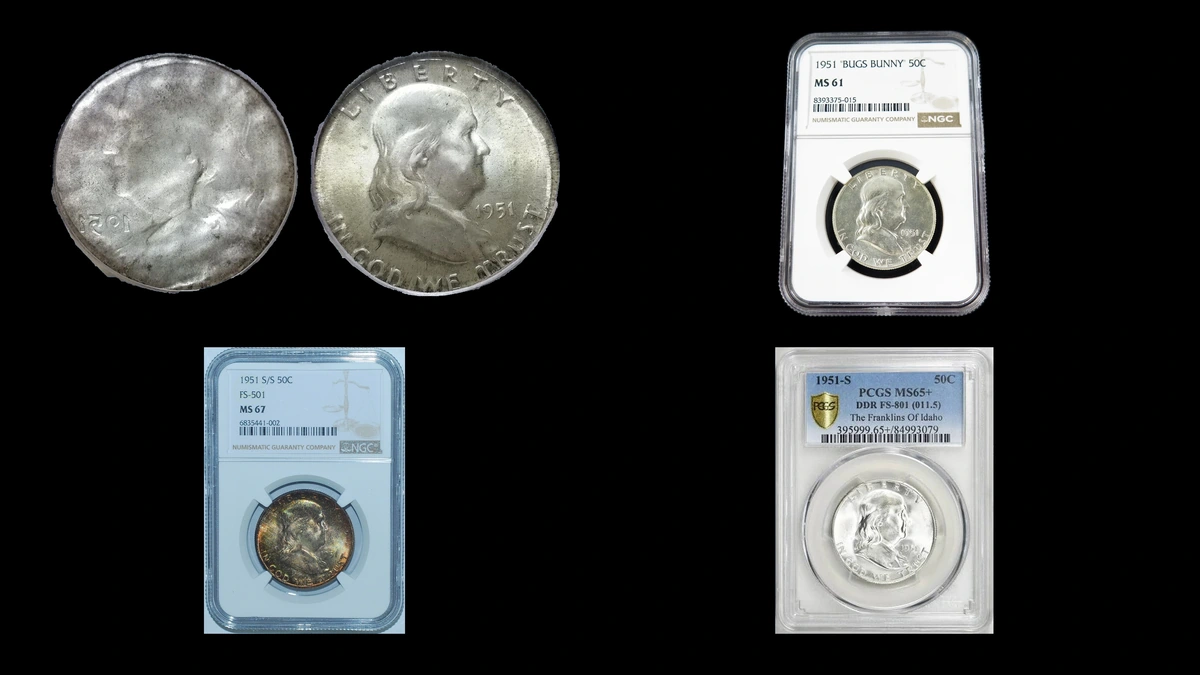
Width, weight, and tiny raised details each help sort 1951 half dollar errors. The estimated $40–$4,000 span covers altered coin size, thin metal, clashes, and repeated die details.
The supplied high result is $3,782 for an exceptional repunched-S coin sold in May 2026. Start by checking the coin’s size, then move from Franklin’s mouth to the mintmark and design on the back.
| Clue | Best check | Category | Estimated value |
|---|---|---|---|
| Smaller coin with missing outer design | Weight and complete outline | Struck on quarter blank | $1,500–$3,500 |
| Normal width but unusually light | Thickness and weight | Reported quarter stock | $250–$750 |
| Small raised “teeth” | Franklin’s upper lip | Bugs Bunny die clash | $40–$300 |
| Extra S curves | Middle and bottom of mintmark | Repunched mintmark | $50–$4,000 |
| Repeated back outlines | Issue-specific reverse reference | Doubled die reverse | $75–$1,000 across business strikes and Proofs |
The usual half dollar weighs 12.50 grams and measures about 30.6 mm across, with a grooved edge. Use those figures for the size checks below; D or S above the bell identifies Denver or San Francisco, while Philadelphia has no letter.
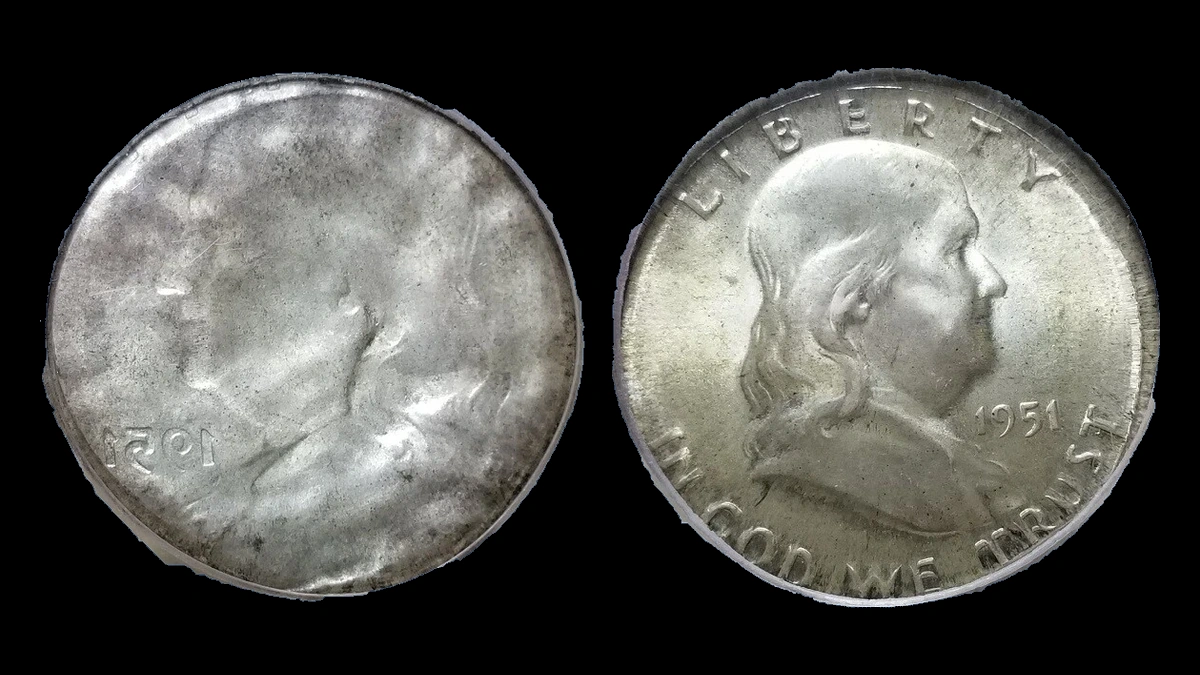
1. 1951 Half Dollar A Half-Dollar Design on Smaller Metal: Quarter Blank Error
The documented Philadelphia coin cannot contain the entire design because it was struck on a quarter blank. All of LIBERTY and much of the denomination lettering lie beyond its edge.
Its impression sits toward twelve o’clock and the reported weight is 6.3 grams. A thin strike-through mark near three o’clock on the front belongs to this same specimen.
A Denver half on a quarter blank is also reported. The Philadelphia coin’s design position and extra mark should not be assigned to that separate example.
How to Identify
Compare the measured weight with a silver quarter’s normal 6.25 grams as well as the half-dollar standard. The auction coin’s 6.3 grams is consistent with the smaller denomination’s metal disc.
Measure the outline and examine where letters run out of room. The missing design should follow naturally from the smaller blank rather than from later removal of the coin’s edge.
Look for filing, fresh cuts, and damaged grooves that could indicate a normal half was reduced in size. Keep the readable date, both faces, and the edge in the record.
What It’s Worth
Estimated range: $1,500–$3,500 for comparable certified examples with readable dates. The comparison rests on an older auction record.
The NGC MS63 Full Bell Lines Philadelphia coin sold for $1,840 at Heritage on June 4, 2010. Full Bell Lines, or FBL, describes sharply defined horizontal lines near the bell’s bottom.
The strike-through mark and FBL designation are attributes of that one coin. Their values cannot be added as separate full error prices.
2. 1951 Half Dollar Normal Width With Too Little Metal: Thin Quarter Stock Error
A full-width coin can also be underweight. Denny Polly reported a 1951-S weighing 153.1 grains, approximately 9.92 grams, and described it as struck on a blank cut from silver strip intended for quarters.
The cutting tool supplied half-dollar width, while the thinner strip supplied less metal. Both faces show weak detail, consistent with insufficient metal to fill the stamping tools fully.
How to Identify
Establish the width before interpreting the weight. A diameter near 30.6 mm separates the reported thin-stock possibility from the smaller quarter-blank error above.
Compare thickness at several points with a normal Franklin half and inspect the edge. Grinding or filing can remove metal after striking and leave cuts or uneven surfaces.
The published report gives about 9.92 grams for the S-mint example. Low weight and weak design alone do not establish that quarter strip, specifically, was the source.
Check for chemical damage as well as mechanical removal. Original stamped surfaces across a uniformly thin, full-width coin provide stronger evidence for a manufacturing problem.
What It’s Worth
Estimated range: $250–$750 for a confirmed thin-stock example. No sale is supplied for the reported 1951-S.
A 1962 Franklin weighing 10 grams brought $305.50 at Heritage in February 2017, graded MS62. The published comparison describes its stock as rolled twenty percent too thin.
That later coin supports the broad thin-metal comparison. It is a different year with a different stock description, not confirmation of a 1951-S quarter-stock transaction.
3. 1951 Half Dollar Raised Shapes on the Upper Lip: Bugs Bunny Die Clash Error
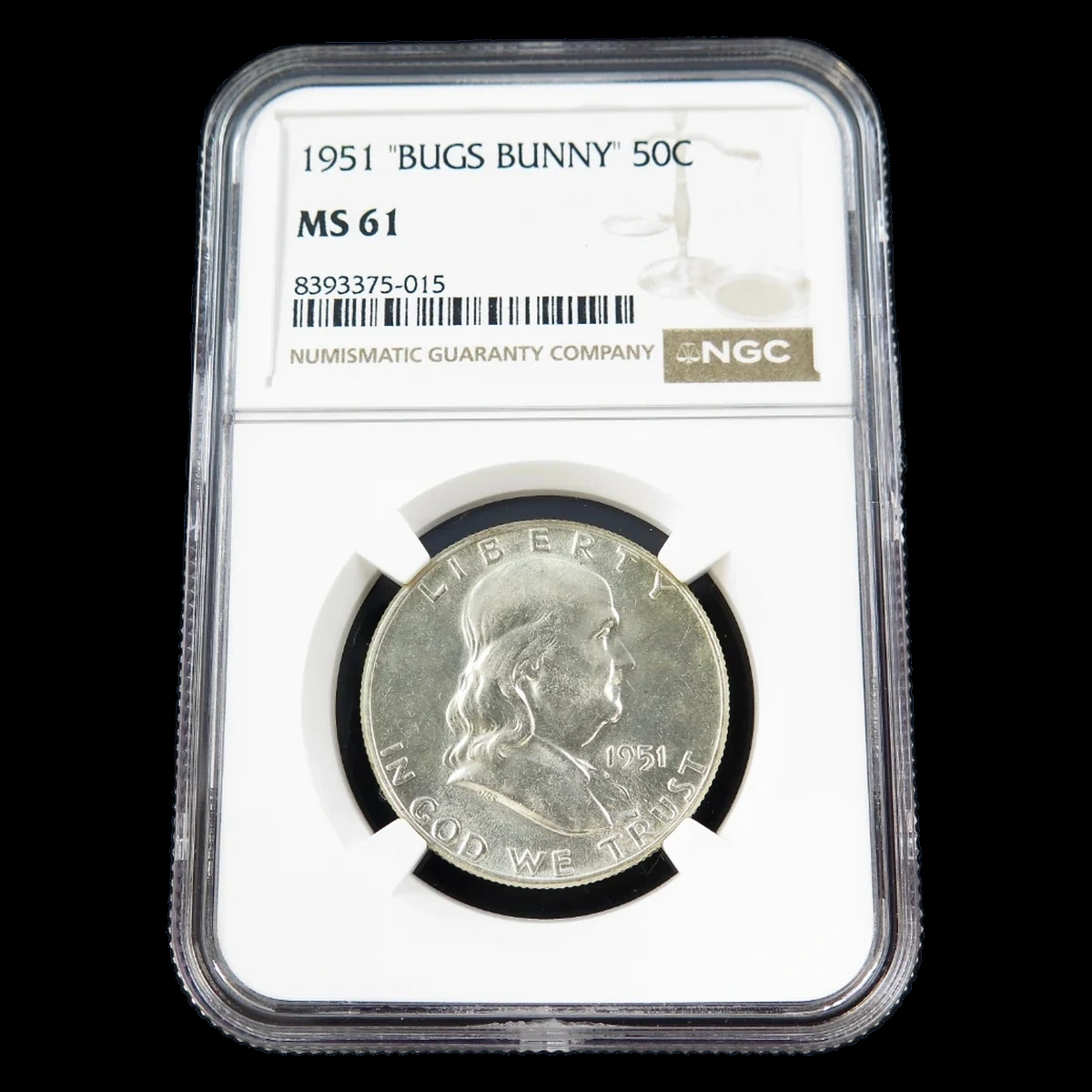
For a normal-size Philadelphia coin, inspect Franklin’s mouth. The small raised projections called Bugs Bunny “teeth” reproduce marks transferred from the reverse eagle’s wing.
The dies are the steel tools carrying the designs. When they met without a blank, the wing marked the front tool, which passed the added shapes to later coins.
How to Identify
Compare the upper-lip projections with a documented 1951 Bugs Bunny under magnification. Their shape and raised character are more useful than the general impression of an odd-looking mouth.
Change the lighting to separate the projections from a cut or dirt around the lip. Check the date and confirm there is no mintmark above the bell.
What It’s Worth
Estimated range: $40–$300 from worn coins through attractive unworn examples. A coin graded MS64 FBL sold on eBay for $235 in November 2020.
FBL describes bell-line quality rather than another error. Clear mouth marks, remaining detail, and surface preservation all affect the whole coin’s price.
4. 1951 Half Dollar Extra Curves Beneath the S: Repunched Mintmark Error
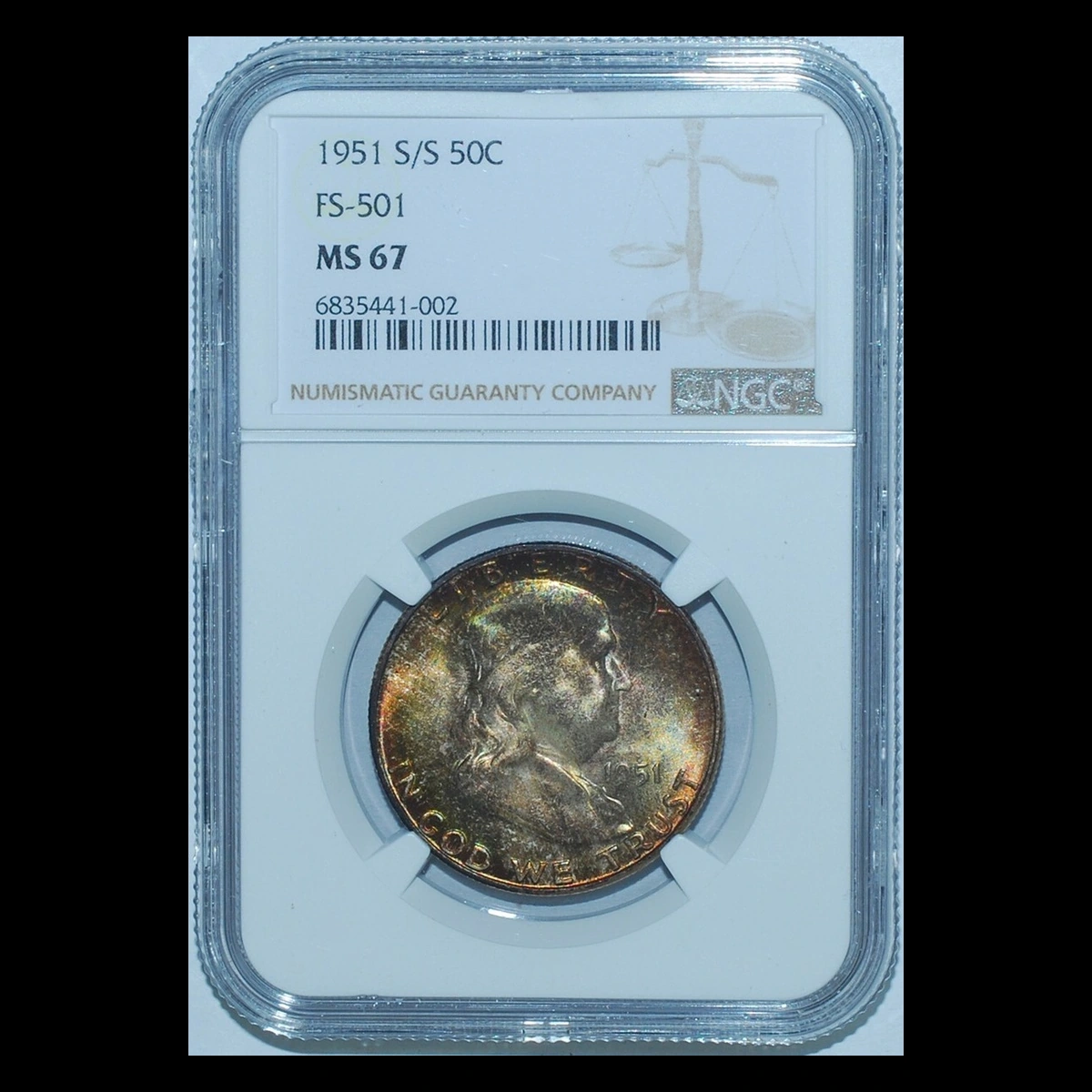
On San Francisco coins, move to the letter above the bell and examine its middle and bottom. Traces of an earlier S can survive below the final letter.
The mintmark punch was applied to the die in overlapping positions. The coin copied what remained of both impressions.
How to Identify
The specialist Franklin photographs show the useful lower S curves. Match those rounded fragments rather than accepting any thickening of the letter.
The same mintmark may also display a flat shelf at its top from movement during striking. Keep that effect separate from the earlier punched letter visible lower down.
Examine nearby metal for nicks and displaced silver. A correct position needs the correct earlier-letter shape too.
What It’s Worth
Estimated range: $50–$4,000 from worn examples to exceptional coins with sharp bell lines. The top of that range involves unusually strong preservation.
A PCGS MS66 brought $145 at Stack’s Bowers in September 2025. An NGC MS67+ FBL reached $3,782 at Heritage in May 2026.
The second S does not explain that price gap on its own. Grade, surfaces, and bell-line quality distinguish the exceptional coin from a typical example of the variety.
5. 1951 Half Dollar Repeated Detail on the Back: Doubled Die Reverse Error
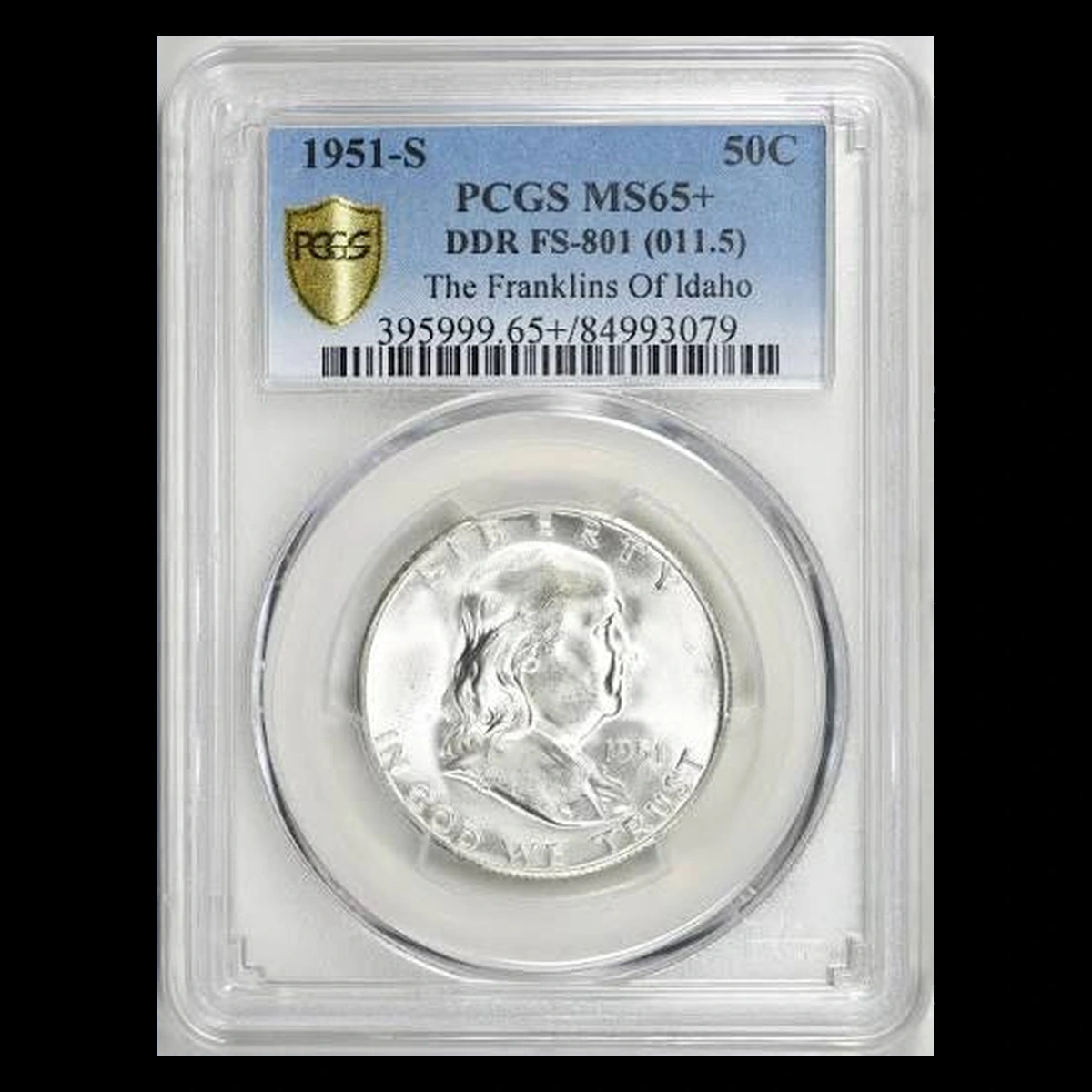
The final check concerns repeated outlines in the reverse design itself. The supplied evidence covers San Francisco FS-801 business strikes and a separately listed Philadelphia Proof variety.
A business strike was made for ordinary use; a Proof was specially produced for collectors. Both can carry doubled dies, where the stamping tool already contains the repeated detail.
How to Identify
Determine the issue before comparing the doubling. The San Francisco coin has an S, while the Philadelphia Proof has no mint letter.
A reliable grading description helps establish Proof manufacture. Polishing an ordinary coin may make it bright, but does not convert it into a Proof.
Choose photographs of the correct issue and match the extra reverse outlines. Flat strike-related shelves or scratches beside letters need a different explanation.
What It’s Worth
San Francisco estimate: $75–$400. Stack’s Bowers sold an MS63 for $109 in April 2026 and an MS66+ for $336 in March 2023.
Philadelphia Proof estimate: $250–$1,000. The supplied information does not give a Proof sale, and the S-mint transactions are only background for that separate issue.
Proofs with frosted designs and mirrorlike backgrounds need suitable Proof comparisons. Their production type and surface contrast should remain part of the valuation.
Conclusion
Use measurements to distinguish a small quarter blank from full-width thin stock, then inspect the mouth and reverse details. Those steps separate physical metal problems from features already present in the dies.
The $40–$4,000 estimates span several grades and production types. Match the mint, condition, and exact variety before comparing prices, especially when using a top-grade repunched-S result or a separate Proof estimate.