Rare 1948 Half Dollar Errors (List & Pictures)
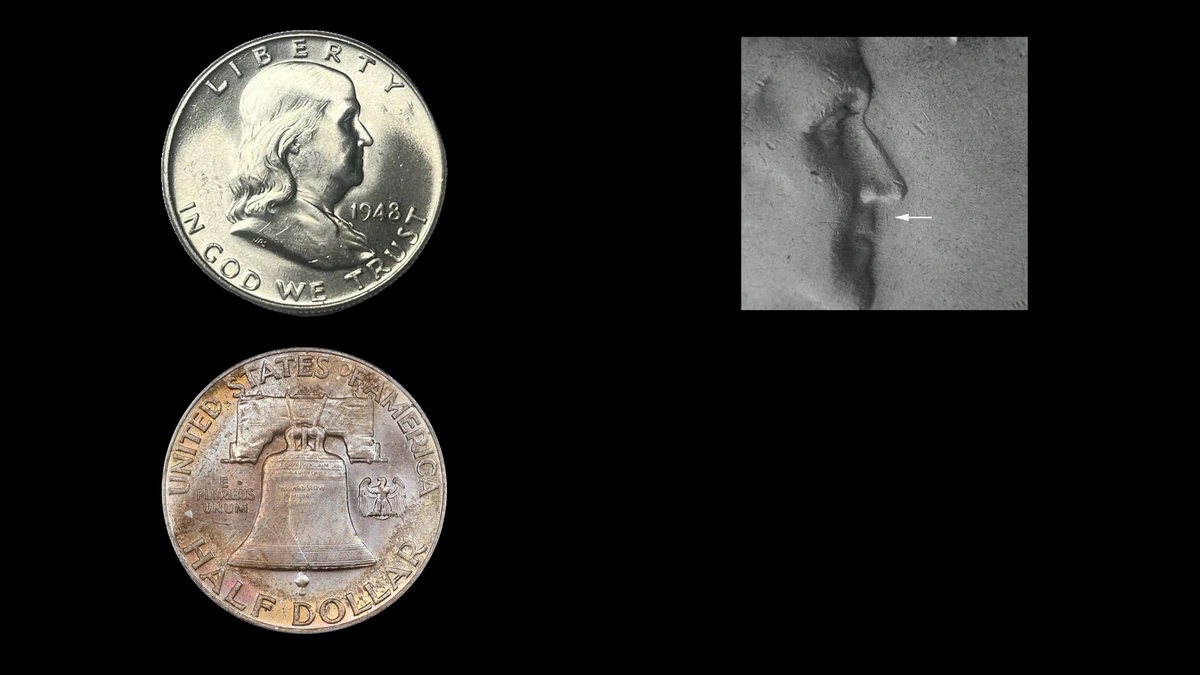
Read each design’s date separately when examining the most unusual piece in this guide to 1948 half dollar errors. The Franklin design stamped over a Lincoln cent brought $14,100 in January 2016, but its complete 1948 date belongs to the cent.
Estimated values across the examples range from $40–$15,000. Check that two-design piece first, then examine a normal-sized half’s front marks and reverse lettering.
| What you see | Where to examine | Error | Estimated value |
|---|---|---|---|
| Lincoln-cent and Franklin designs together | Whole copper-colored coin | Double denomination | $8,000–$15,000 |
| Curved impression with tiny fibers | Forehead and nose toward TRUST | Struck through string | $75–$250 |
| Faint reverse-design traces | Around the portrait | Obverse die clash | $40–$2,700 |
| Small repeated letter outlines | E PLURIBUS UNUM | Doubled die reverse | $50–$9,000 |
A normal silver Franklin half weighs 12.50 grams and measures about 30.6 mm, with grooves around the edge. Those figures apply to regular half-dollar blanks; the cent overstrike below started with a different coin.
1. 1948 Half Dollar Lincoln Details Under Franklin: Double-Denomination Overstrike Error
On the documented copper-colored piece, a finished 1948 Lincoln cent entered the half-dollar press and received part of the much larger Franklin design. Surviving details from both denominations make it a double-denomination error.
The two designs lie approximately at right angles. The cent’s 1948 appears above Franklin’s ear, while only 19 survives from the half-dollar date.
How to Identify
Identify coherent cent details before tracing the Franklin impression. Two complete design systems, even if only partly visible, provide stronger evidence than a few random dents resembling letters.
Keep the dates attached to their own designs. Combining the half’s 19 with the cent’s final digits would create a date the half-dollar strike does not actually show.
Compare the overlap and missing portions with the certified specimen. Squeezing two coins together after minting can create impressions, but those need to be distinguished from the recorded overstrike.
Record the actual weight and outline without expecting normal half-dollar measurements. A half struck on an unused cent blank would also be a different error because that blank would not already carry Lincoln-cent designs.
What It’s Worth
Estimated range: $8,000–$15,000 for a comparable certified double-denomination piece with both designs recognizable. The NGC MS64 Brown example brought $14,100 on January 6, 2016.
Heritage described the Franklin strike as undated and assigned 1948 to the underlying cent. MS64 indicates no circulation wear, while Brown describes the copper color.
2. 1948 Half Dollar A Curved Mark With Fine Fibers: Struck Through String Error
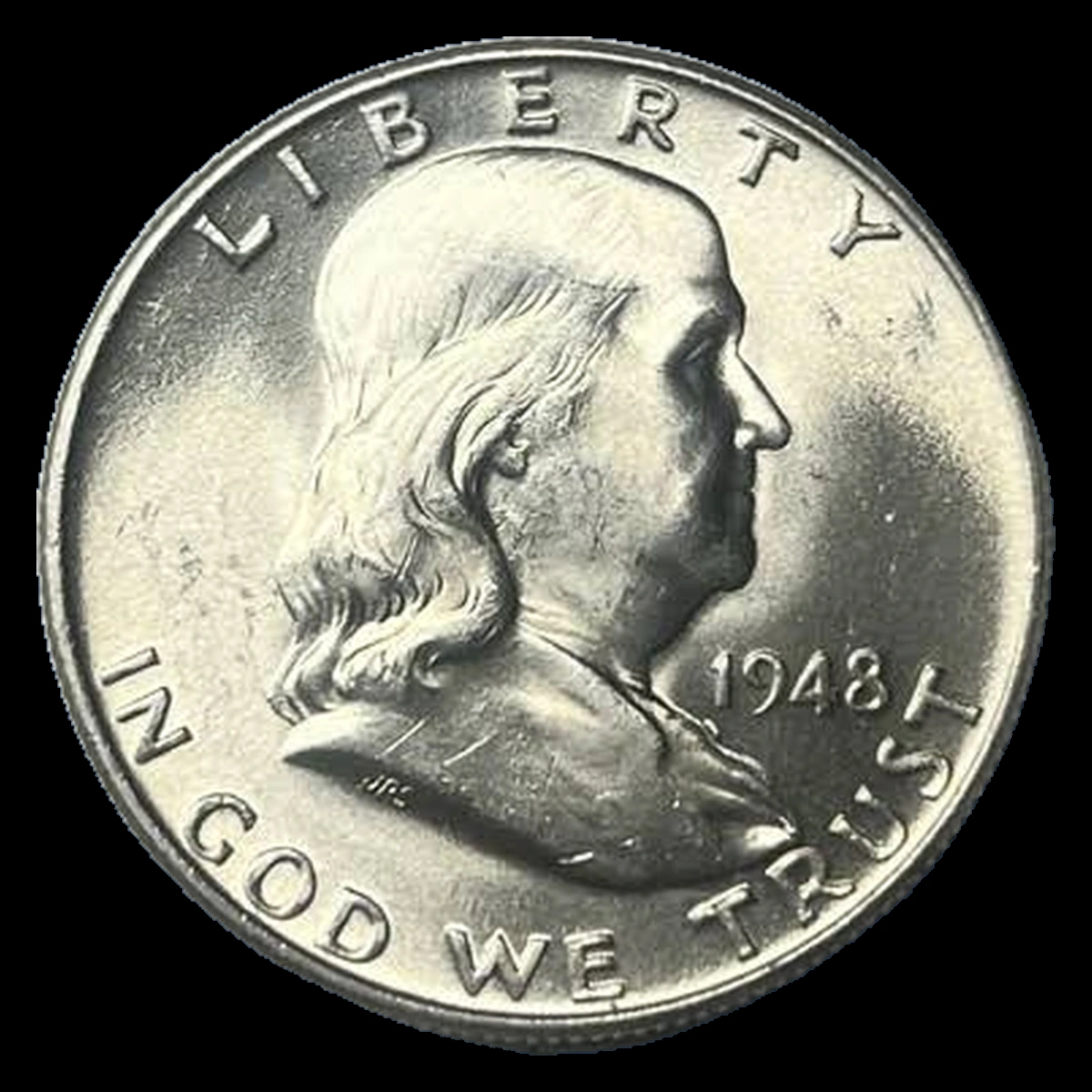
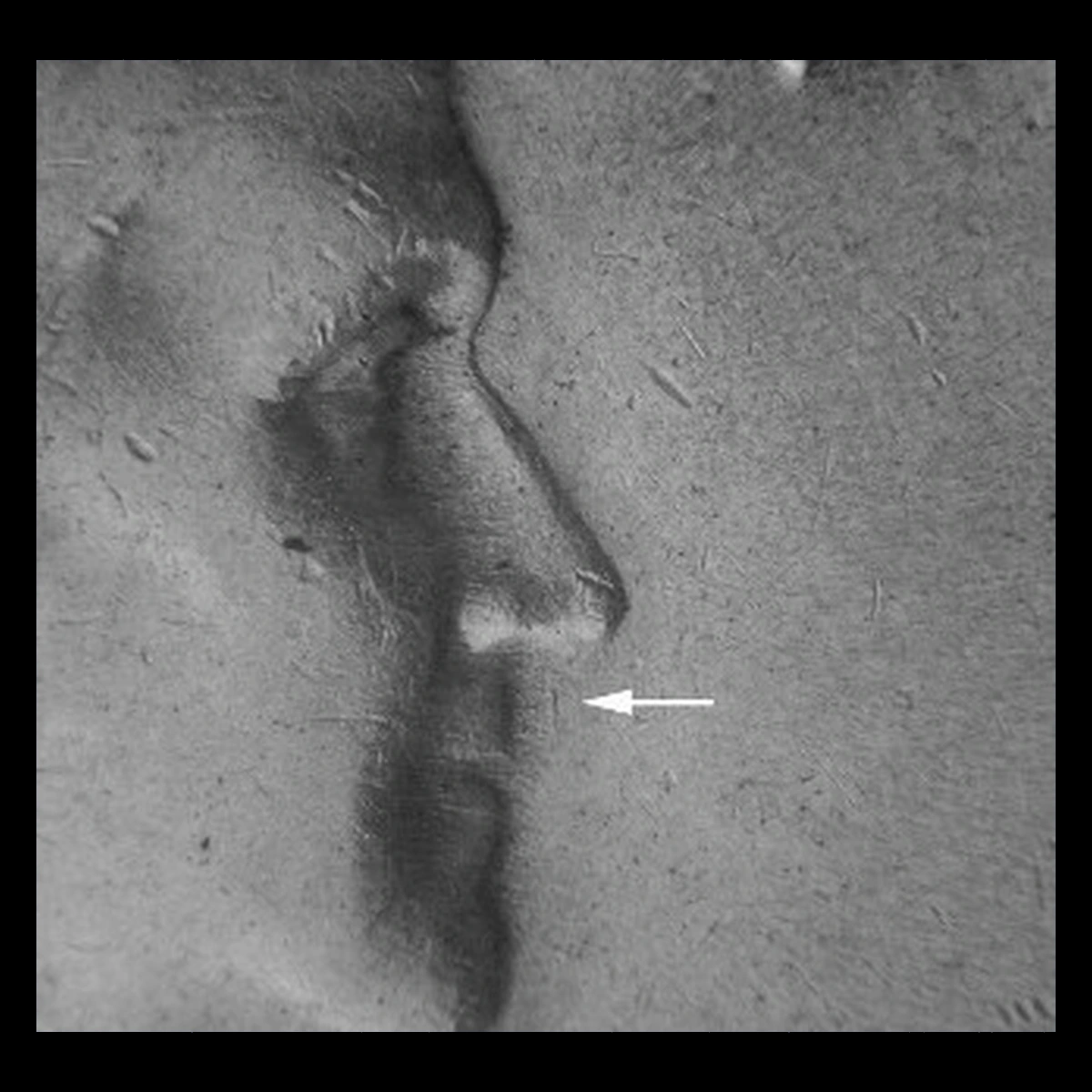
Denny Polly’s illustrated 1948 half shows a curve near Franklin’s forehead and nose extending toward the final T of TRUST. Tiny fiber impressions at its upper end support the string identification.
The texture records material caught between the silver and the die during striking. The die pressed the string into the surface while forming the surrounding design.
How to Identify
Use the CONECA illustration to locate the curve, then concentrate on its upper end. A shallow lighting angle can reveal the small fiber texture better than direct glare.
A smooth arc by itself has several possible explanations. Look for evidence of the intervening material instead of assuming any curved mark was made by string.
A later scratch may expose a bright cut and push silver up along its sides. Retain photographs of both faces so the date, mintmark area, and affected front stay connected to the same coin.
What It’s Worth
Estimated range: $75–$250 for examples with a clear impression and comparable surfaces. Heritage recorded $139 in June 2023 for a 1948 front struck-through-string half graded NGC MS63 Full Bell Lines.
Full Bell Lines refers to clear lines near the bell’s bottom and is a strike-quality designation. The auction record does not identify that coin as Polly’s illustrated specimen.
3. 1948 Half Dollar Unwanted Contours Around the Portrait: Obverse Die Clash Error
FS-401 identifies the recognized Philadelphia 1948 obverse die clash. “Obverse” means the front, where traces associated with the reverse design appear around Franklin.
The explanation begins with an empty space in the press: the two dies met without a blank between them. Contact marked the tools, and subsequent coins reproduced the unwanted contours.
How to Identify
Check above the Liberty Bell for the mintmark area. The Philadelphia reference has no mintmark, so a coin marked D needs a different comparison.
Match the shallow portrait-area contours with an identified 1948 FS-401. Random polishing lines or scratches lack the same relationship to the opposite design.
The Liberty Bell’s crack is part of the intended reverse design. Similarly, a Bugs Bunny nickname or one toothlike projection cannot replace a match to this year’s actual Philadelphia clash pattern.
Try several light angles while leaving any deposits untouched. Removing material to sharpen a view can damage the surface and obscure the evidence.
What It’s Worth
Estimated range: $40–$2,700 spans circulated examples through selected higher-grade coins without circulation wear. Preservation and clear bell lines account for much of the wide range.
A PCGS MS65 Full Bell Lines example sold for $329 at Heritage in February 2026. PCGS also records a December 2020 eBay result of $2,550 for MS66+ FBL.
Both amounts price complete coins with the variety and their particular grades. The high figure cannot be assigned to a faint unexplained mark on an otherwise ordinary half.
4. 1948 Half Dollar Repeated Outlines in the Small Motto: Doubled Die Reverse Error
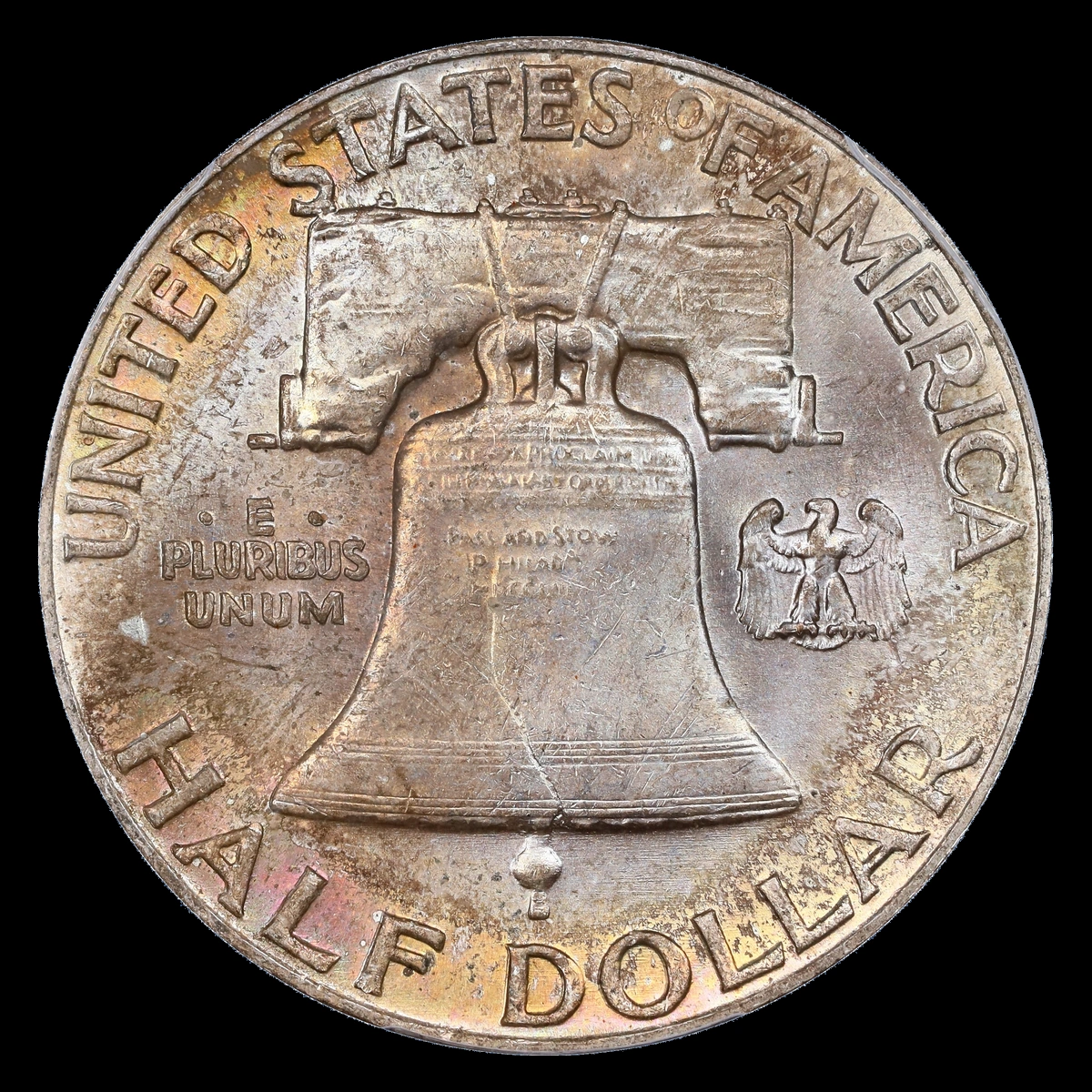
On Philadelphia’s doubled reverse, small extra outlines appear in E PLURIBUS UNUM to the left of the bell. Denver also has a recognized doubled reverse dated 1948.
Both use the catalog number FS-801, making the mintmark essential to choosing a reference. The duplicated detail belongs to the die itself and does not require two strikes on the coin.
How to Identify
Frame the entire small motto with the bell’s left edge for orientation. Compare the extra contours through a magnifier, keeping their shape and spacing visible.
If a D appears above the bell, use the Denver example rather than Philadelphia’s pattern. A shared catalog number does not make those two references interchangeable.
Distinguish the repeated shapes from a low, flat shelf beside a letter. Movement during striking and strong reflections can make lettering appear doubled without the same duplicated design in the die.
What It’s Worth
Estimated range: $50–$9,000 covers circulated pieces through selected superb Philadelphia examples. Denver coins require their own matched sale comparisons.
PCGS records $8,550 for a Philadelphia MS67 FBL sold on eBay in January 2021. Exceptional preservation and clearly formed bell lines are important parts of that result.
Conclusion
The unusual cent overstrike needs two separately read designs and dates, while the silver halves call for texture and variety comparisons. Philadelphia and Denver doubled reverses also need separate reference pictures despite sharing FS-801.
Estimated values of $40–$15,000 span very different objects and conditions. In the highest-priced example here, 1948 dates the cent; the surviving Franklin design remains only partly dated.