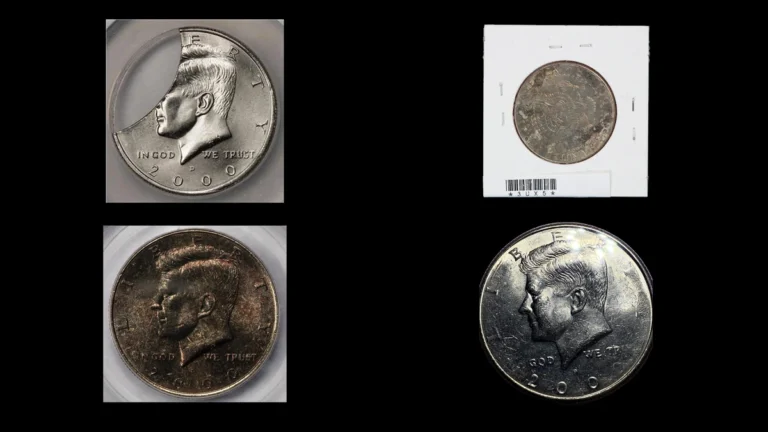
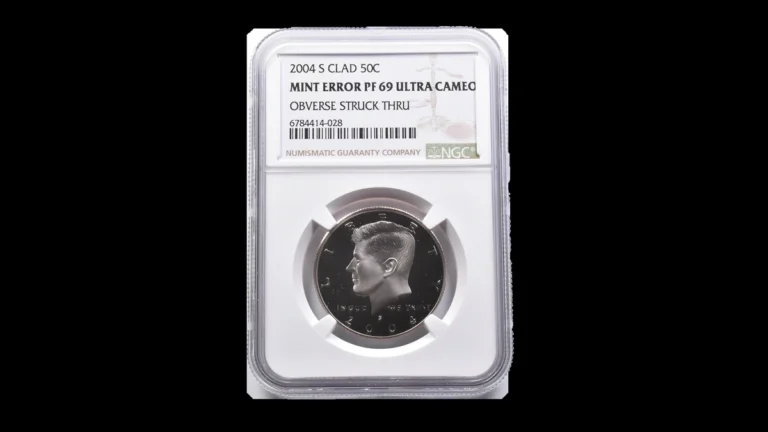
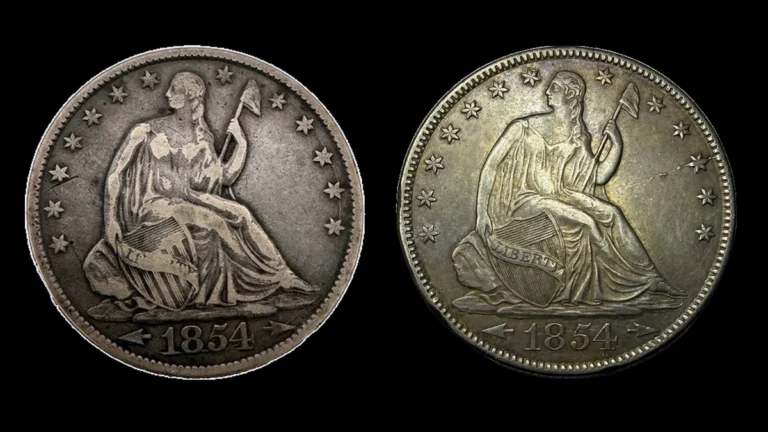
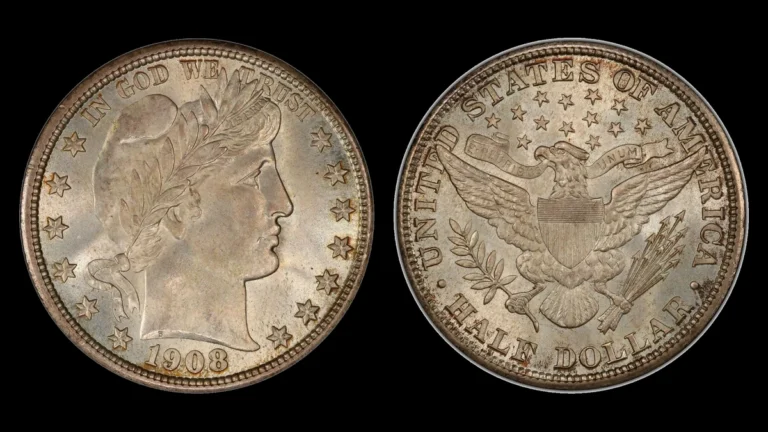
Rare 1958 Half Dollar Errors (List & Pictures)
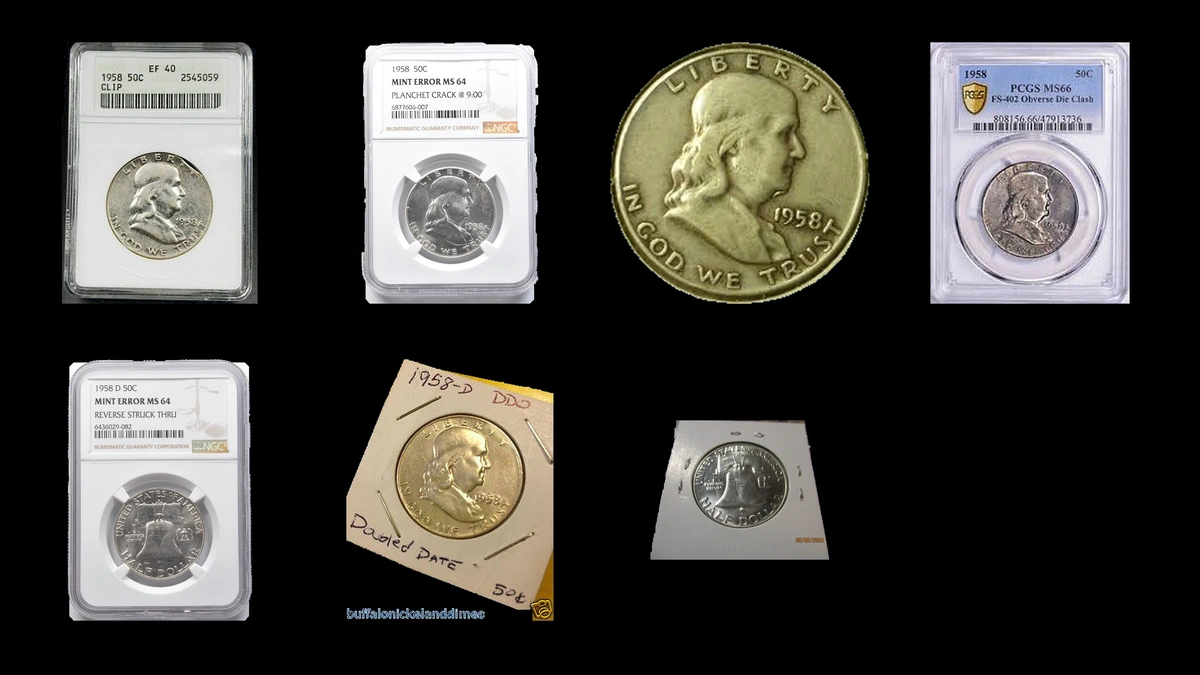
Size, edge shape, and tiny portrait marks all provide clues to 1958 half dollar errors. A quarter-blank strike sold for $1,440 at Heritage in December 2020, while a separate exceptional clash variety has a reported $6,250 marketplace record.
The supplied estimates span $50–$6,250. Start with the outline and edge, then work across the portrait, date, and mintmark; the Liberty Bell’s familiar drawn crack is normal design.
| Inspection clue | Category | Estimated range |
|---|---|---|
| Small and unusually light | Quarter blank | $1,500–$5,000 |
| Missing perimeter metal | Clipped planchet | $60–$400 |
| Two levels along edge | Partial collar | $200–$1,200 |
| Opening through the coin | Cracked planchet | $100–$650 |
| Raised rim patch | Cud | $100–$800 |
| Peeling band across head | Lamination | $50–$300 |
| Raised neck or chin feature | Reported Goiter Neck | $50–$250 |
| Extra front outlines | FS-402 clash | $75–$6,250 by grade |
| Weak patch on proof | Strike-through | $100–$1,000 |
| Extra bar on 5 or repeated contours | Reported obverse variety | $75–$600 |
| Additional D fragment | Repunched mintmark | $75–$500 |
Normal silver halves weigh 12.50 grams and measure about 30.6 millimeters, with grooves around the edge. Record whether the coin has a Denver D above the bell or no mintmark for Philadelphia, and distinguish ordinary strikes from specially made collector proofs.
1. 1958 Half Dollar A small half dollar with incomplete outer words: Quarter blank Error
The documented 1958-D weighs 6.3 grams because it was struck on a silver quarter blank. Heritage described the NGC MS62 coin as fairly centered, retaining parts of most outer words.
How to Identify
Compare its weight with the quarter standard of 6.25 grams, about half that of a normal half dollar. A quarter blank begins near 24.3 millimeters across but can spread during striking.
The lettering should end naturally where the small blank could not receive the larger design. Filing or trimming a normal half later produces a different edge and interrupts already formed details.
Both denominations used 90% silver, so silver content alone cannot identify the wrong blank. Confirm the surviving date and D directly.
What It’s Worth
Comparable authenticated quarter-blank errors are estimated at $1,500–$5,000. The NGC MS62 1958-D sold for $1,440 on December 15, 2020.
Its readable identity and fairly centered strike are useful comparison points. Serious damage or much less surviving design can change the result substantially.
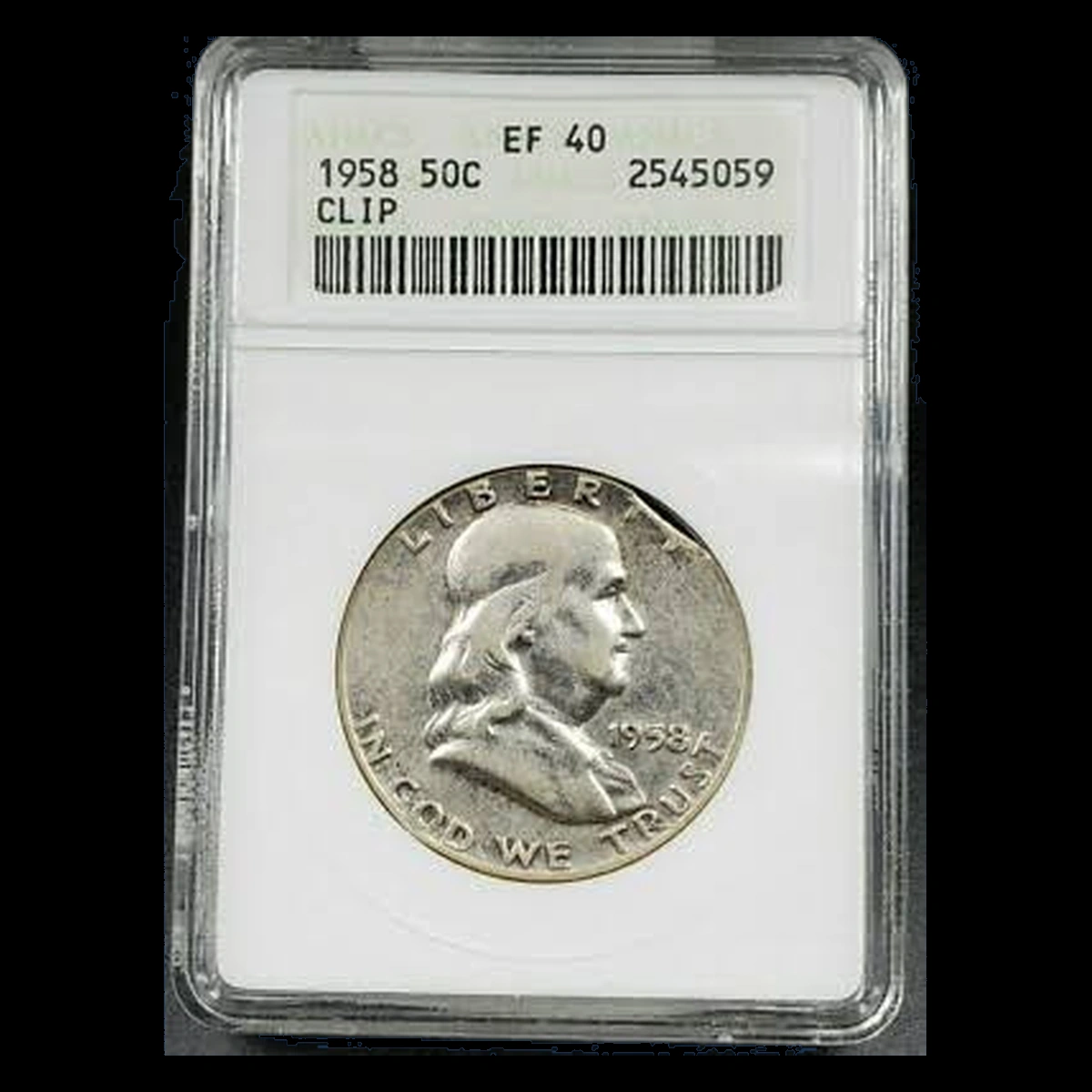
2. 1958 Half Dollar A curved bite or straight missing section: Clipped planchet Error
Reported clips include a tiny gap near eight o’clock on a Philadelphia ANACS MS65 and a separate 6% straight clip near 8:30. The latter interrupts IN, part of G, and UNITED on the reverse.
Another cataloged straight clip measures 4%, so these sizes belong to different specimens. In each case, the blank was incomplete before its design was struck.
How to Identify
Inspect both points where the missing section meets the normal rim. Original metal and lettering should show formation around the existing gap rather than fresh cutting through a finished coin.
Match straight and curved clips to the appropriate type of reference. Opposite-rim weakness can support the diagnosis, while saw marks or filing suggest later removal.
What It’s Worth
Genuine clips are estimated around $60–$400, depending on condition, size, and clarity. A Heritage lot sold for $120 in October 2021 containing both a 1958 PCGS MS63 4% straight clip and a 1961 ANACS MS63 straight clip.
The $120 is a two-coin total. It cannot be assigned entirely to the 1958 or divided into proven individual prices.
3. 1958 Half Dollar A step around the edge: Partial collar strike Error
A partial collar strike occurs when only part of the blank’s thickness is held by the collar ring. The contained portion receives edge grooves while the exposed portion can spread, creating a stepped junction.
How to Identify
Rotate the coin through a full circle and examine how the grooved portion meets the expanded metal. A thick-looking rim in one face-on photograph is insufficient.
Exclude a cut groove, filing, or crushed edge ridges that could imitate the step. The 1958-D NGC AU58 record does not establish a specific tilt direction, and no metal needs to be missing.
What It’s Worth
Franklin partial collar strikes are estimated at $200–$1,200 across circulated and attractive unworn grades. Heritage recorded the 1958-D NGC AU58 at $253 in January 2010.
That historical result concerns a lightly worn coin. A clear, undamaged edge structure and clean surfaces are more useful valuation clues than a dramatic angle in one photograph.
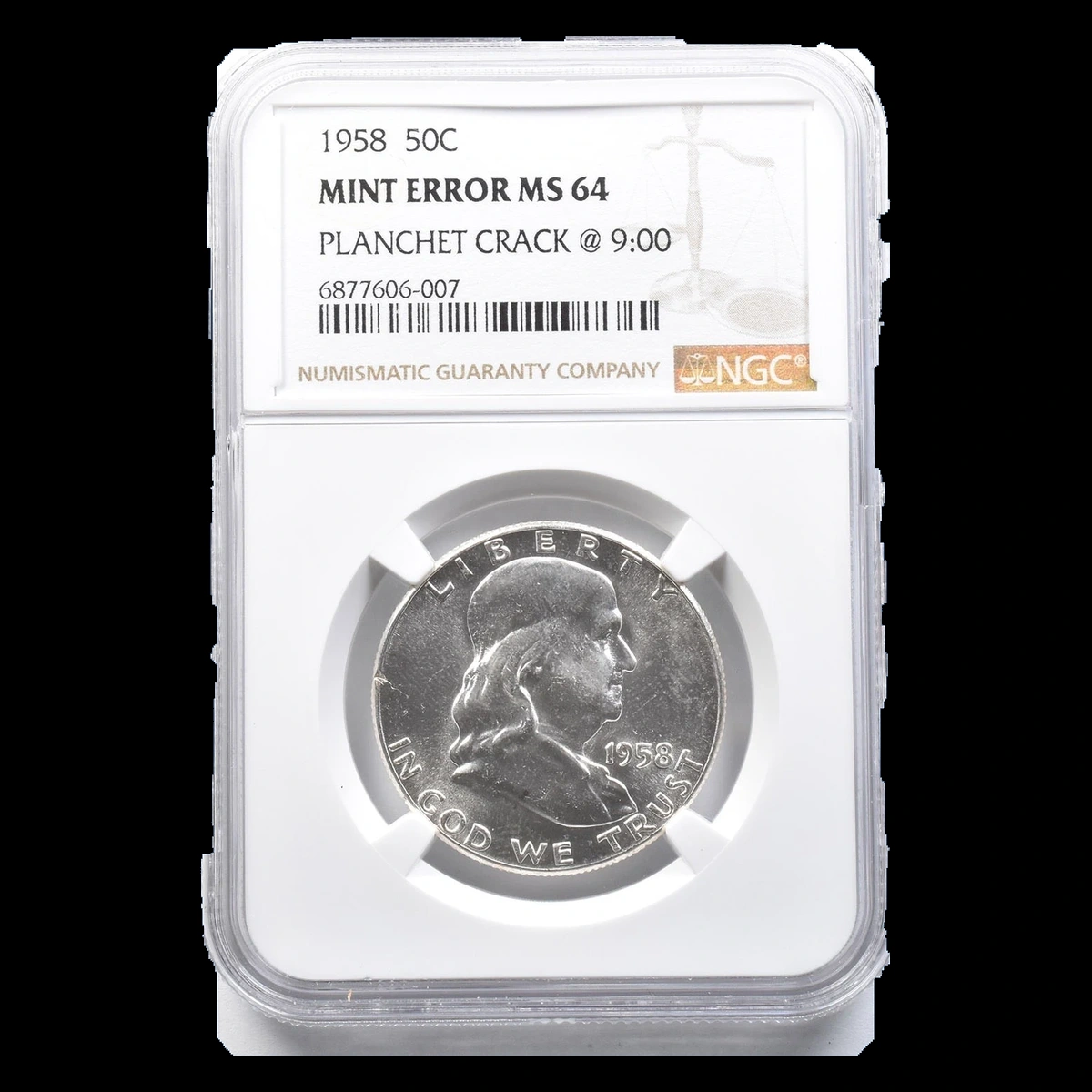
4. 1958 Half Dollar An opening from the lower rim into the portrait: Cracked planchet Error
A specialist documented a 1958 blank cracked before striking, with an opening beginning near 6:30 on the obverse. It crosses the lower motto into Franklin’s portrait, while the reverse path passes the first T in STATES toward the right side of the bell’s support.
How to Identify
Trace the front opening through D in GOD and R in TRUST, then compare the reverse landmarks. The March–April 2019 ErrorScope account identifies a pre-strike fracture rather than a ridge copied from a cracked die.
Examine how struck details meet the opening and inspect the edge for later bending. Do not flex the coin; the Bell’s normal drawn crack is unrelated to a fracture through the blank.
What It’s Worth
An otherwise ordinary collectible half with a genuine pre-strike crack is estimated at $100–$650. The specialist description supplies diagnostics but no sale price.
A separate 1960 split-blank example sold for $630 in June 2023. That larger separation provides broad context rather than a result for this 1958 fracture.
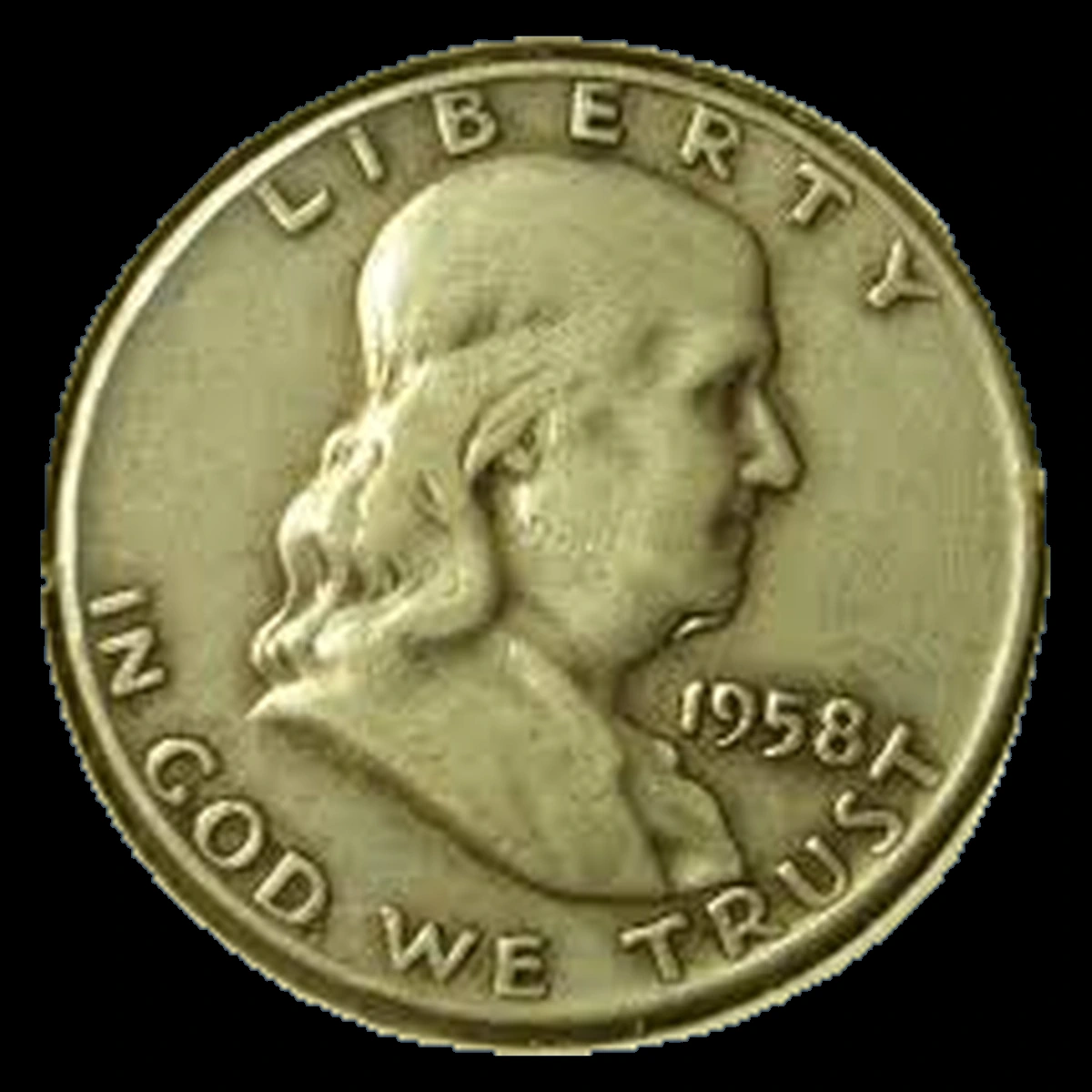
5. 1958 Half Dollar A mound replacing detail at the rim: Cud Error
A cud forms after a piece breaks away from the die’s perimeter, leaving space into which coin metal rises. The result is a raised patch that meets the rim and replaces part of the intended design.
How to Identify
Establish the actual rim connection and follow the boundary of lost detail. A small interior lump or the bell’s normal crack is not the same feature.
Look for seams or solder-like texture from added material, and compression from a later rim blow. The supplied 1958 report names no fixed side, size, or clock position.
What It’s Worth
Modest through prominent genuine cuds are estimated at $100–$800 on circulated or lower uncirculated grades. A 1976-D Kennedy reverse die break graded NGC MS65 sold for $256 in June 2026.
The comparison differs in design, metal, and break shape. It does not establish a 1958 sale or a uniform price for every raised patch.
6. 1958 Half Dollar A separating band across Franklin’s upper head: Lamination Error
Jim’s Coins described a 1958-D lamination extending from about 3:30 to 9:30 across the upper head and into the fields on both sides. The coin was described as unworn, but the record does not establish which portions of the layer remain attached.
How to Identify
Follow the band under side lighting to locate an actual opening or separation boundary. A dark line alone may be color, and a scratch can carry displaced metal along its edges.
Lamination follows a weak layer within the silver alloy. Leave attached metal in place and judge whether nearby detail agrees with natural separation rather than later cutting.
What It’s Worth
Visible local laminations are estimated at $50–$300 across circulated and ordinary unworn Franklin halves. A 1957 NGC MS63 lamination sold for $74.49 including fees at Pristine in January 2021.
No sale price is supplied for the 1958-D listing. A broad band is more conspicuous than a tiny seam, but its appearance and retained metal still require individual assessment.
7. 1958 Half Dollar An unusual swelling near the neck or chin: Reported Goiter Neck Error
The Denver feature nicknamed Goiter Neck is described as extra metal around Franklin’s neck or lower jaw. A year guide proposes a gouge in the die, but supplies neither a numbered variety nor an independently established cause.
How to Identify
Compare with a normal 1958-D under identical light before deciding that the portrait is enlarged. Shadows can exaggerate ordinary contours.
Inspect the suspected swelling for added-metal seams, solder-like texture, or a nearby dent that pushed metal outward. A naturally joined raised feature supports further investigation but the nickname alone settles nothing.
What It’s Worth
A convincing mint-made neck feature is estimated at $50–$250 on worn or ordinarily preserved unworn coins. No recorded Goiter Neck sale is supplied.
The recognized 1958 FS-402 clash has a reported $450 MS66 result, but it is a different feature with a different cause. That comparison cannot assign the neck report an FS-402 identity or price.
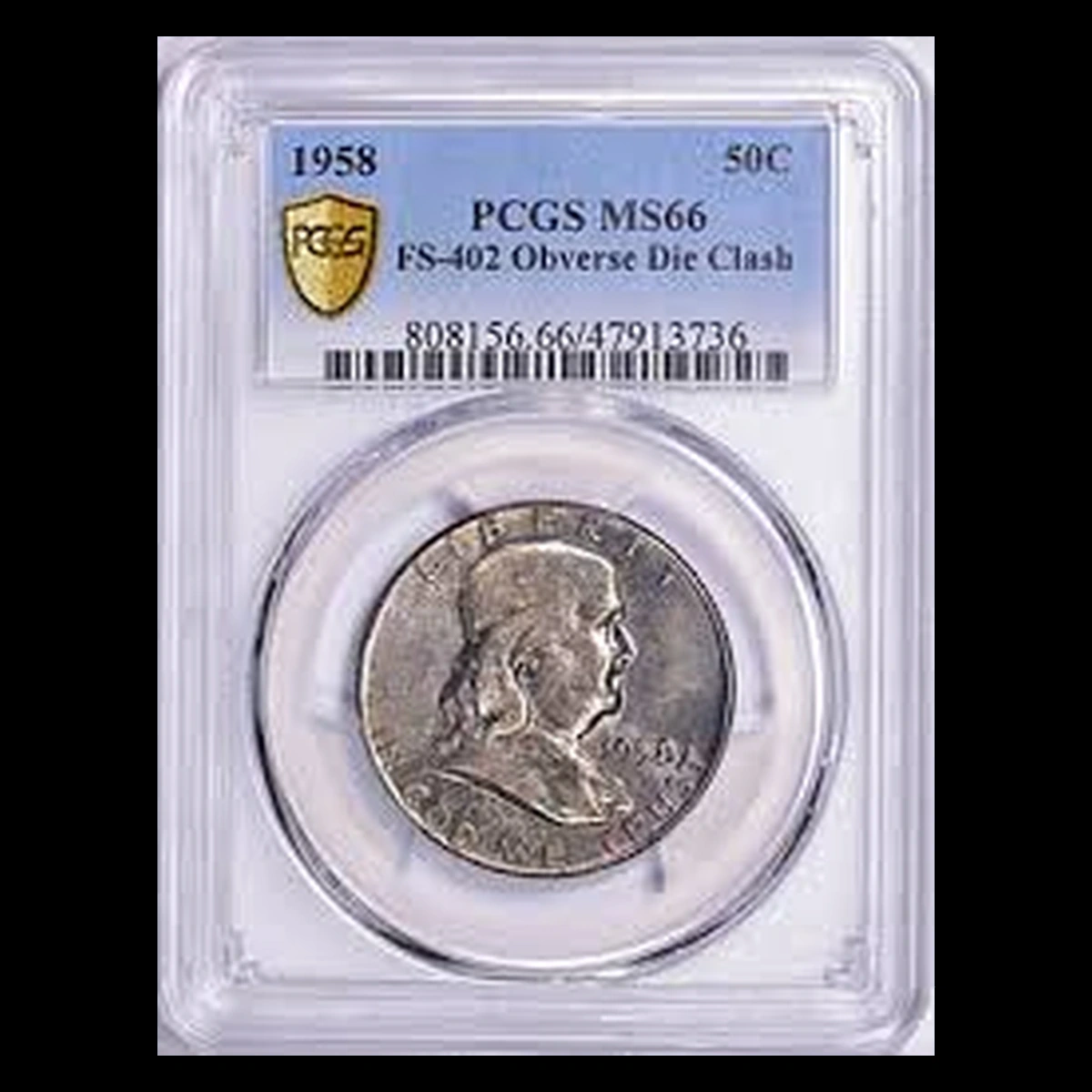
8. 1958 Half Dollar Extra obverse design traces: FS-402 die clash Error
The Philadelphia FS-402 carries outlines transferred after the dies met without a blank between them. A full opposite-side eagle or bell need not survive, and later die polishing can weaken individual traces.
How to Identify
Locate the extra contours using an attributed FS-402 photograph, then compare the corresponding reverse design in its reversed orientation. Random field scratches do not provide the same match.
Confirm the absence of a mintmark and examine Full Bell Lines separately if the price depends on that designation. It describes sharp fine lines at the bell’s base, not another clash subtype.
What It’s Worth
Ordinary identified examples are estimated at $75–$450, with exceptional preservation around $2,000–$6,250. PCGS records an MS66 marketplace result of $450 in January 2023.
The MS67 Full Bell Lines record is a reported eBay result of $6,250 in February 2021. It prices the complete high-grade coin and is not a guaranteed auction-house value or a $6,250 clash premium.
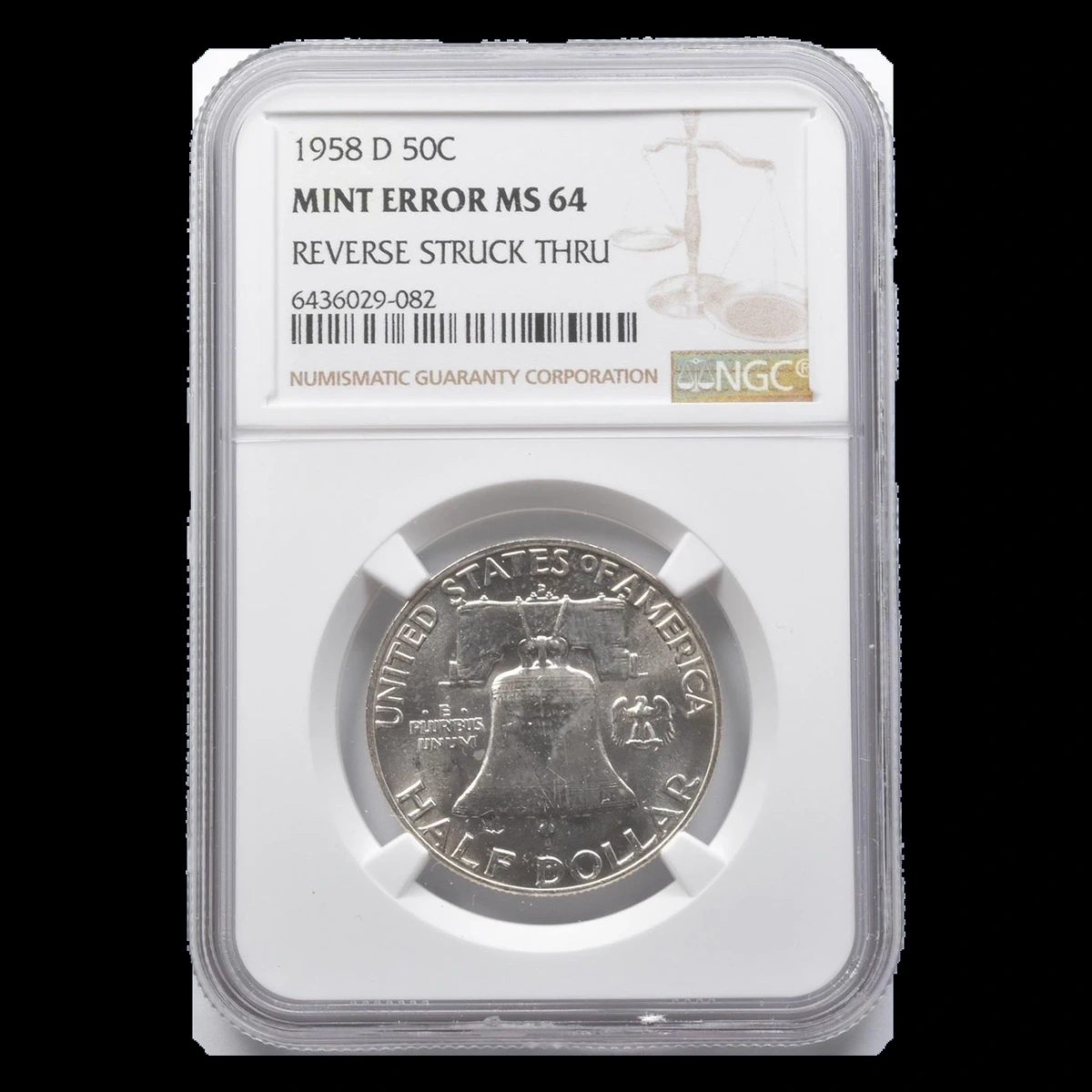
9. 1958 Half Dollar An interrupted area on a reflective proof: Strike-through Error
A year account reports an NGC PF64 1958 proof with a strike-through, but provides no exact location or obstruction material. A barrier between die and blank can leave a depression or prevent intended detail from forming.
How to Identify
First distinguish a mark on the plastic holder from one on the coin by changing focus and lighting. Keep a sealed holder closed.
Look for an original interruption of proof detail rather than a cut crossing a finished reflective surface. Later abrasion may leave fine scratches, and brightness alone cannot identify wire, cloth, or grease.
What It’s Worth
Genuine proof strike-throughs are estimated around $100–$1,000, depending on visibility and preservation of the surrounding surface. The reported PF64 has no original transaction attached here.
A 1951-S NGC MS64 strike-through was recorded at $134 in April 2026. It provides context for a modest error, but its ordinary-strike finish and different year limit the comparison.
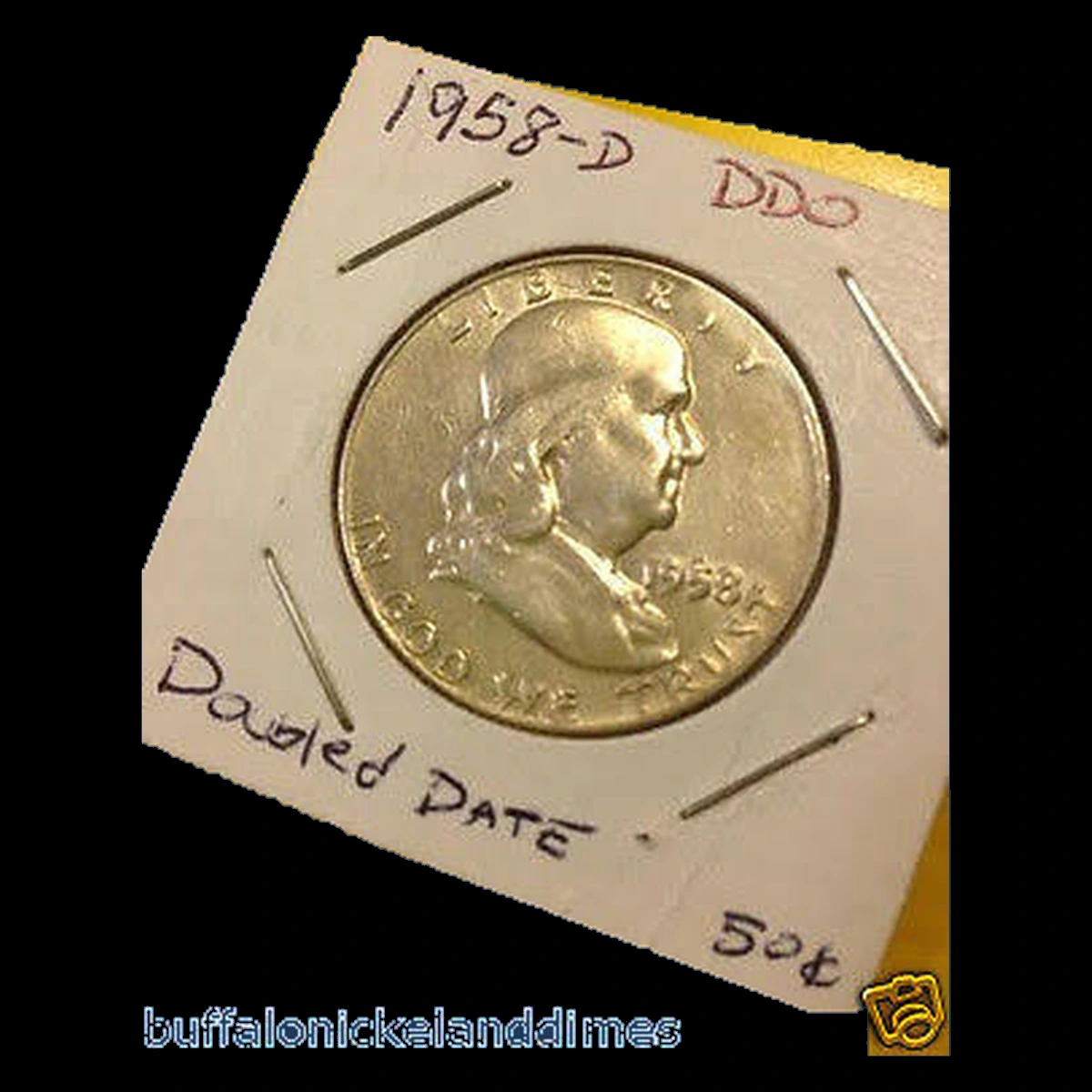
10. 1958 Half Dollar An extra stroke on the 5 or other front contours: Reported doubling Error
The Double Bar 5 nickname describes an additional horizontal stroke near the top of the digit. The year guide also reports obverse doubling, without establishing whether the two descriptions identify the same die.
How to Identify
Compare the top of the 5 with a normal date at equal magnification. Decide whether the added shape is rounded metal, a flat shelf from striking, or an unrelated tool flaw.
Continue across the date and front lettering to test for coherent repeated outlines. These are inspection areas, not a documented list of doubled letters, and one extra bar does not prove that the whole front was doubled.
What It’s Worth
A supported minor obverse variety with clear extra detail is estimated at $75–$600. This is one whole-coin range for potentially overlapping reports, not two added premiums.
The $450 MS66 FS-402 record concerns a recognized clash rather than doubling. No Double Bar 5 sale is established by that separate same-year result.
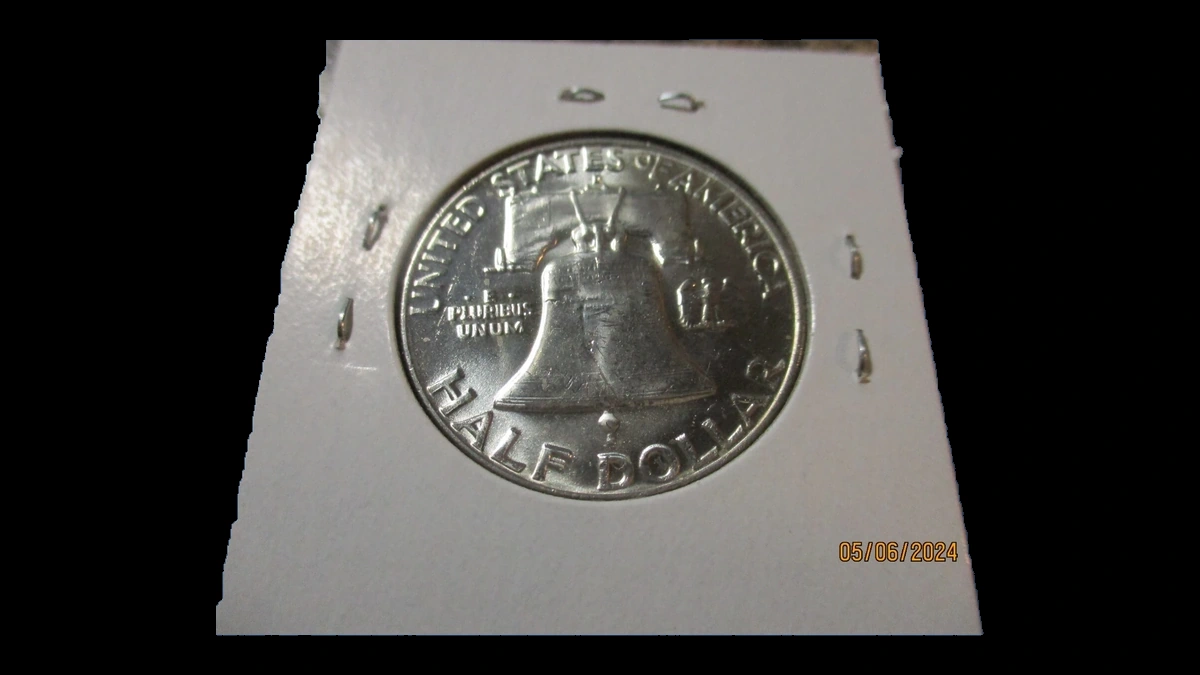
11. 1958 Half Dollar A repeated curve beside D: Repunched mintmark Error
A second piece of the D above the bell can survive from another placement of the mintmark punch in the die. The supplied 1958 guide reports repunching without assigning a direction or specialist number.
How to Identify
Follow the main D’s stem and bowl, then compare the extra fragment with the same letter shape. The actual separation must be matched to a confirmed same-year half-dollar variety.
Move the light to exclude reflections and inspect for scratches or displaced metal. A flat striking shelf can make a mintmark look doubled without preserving an earlier punch.
What It’s Worth
Clearly identified minor repunching on ordinary collectible coins is estimated at $75–$500. A 1952-S FS-501 MS65 transaction recorded by PCGS at $590 in May 2021 provides broader Franklin context.
That earlier San Francisco variety is not a 1958-D sale or attribution. A readable second letter fragment and original surfaces matter more than an unclear line seen only at extreme enlargement.
Conclusion
Keep the evidence specific when examining a 1958 half: a crack through the metal differs from the Bell’s design, and a quarter blank differs from a clipped half-dollar blank. Surface nicknames need physical confirmation.
Several prices belong to other dates or exceptional grades, and the straight-clip auction total covers two coins. Matching the actual feature, finish, and condition is essential before deciding which figure meaningfully applies.