Rare 1953 Nickel Errors (List & Pictures)
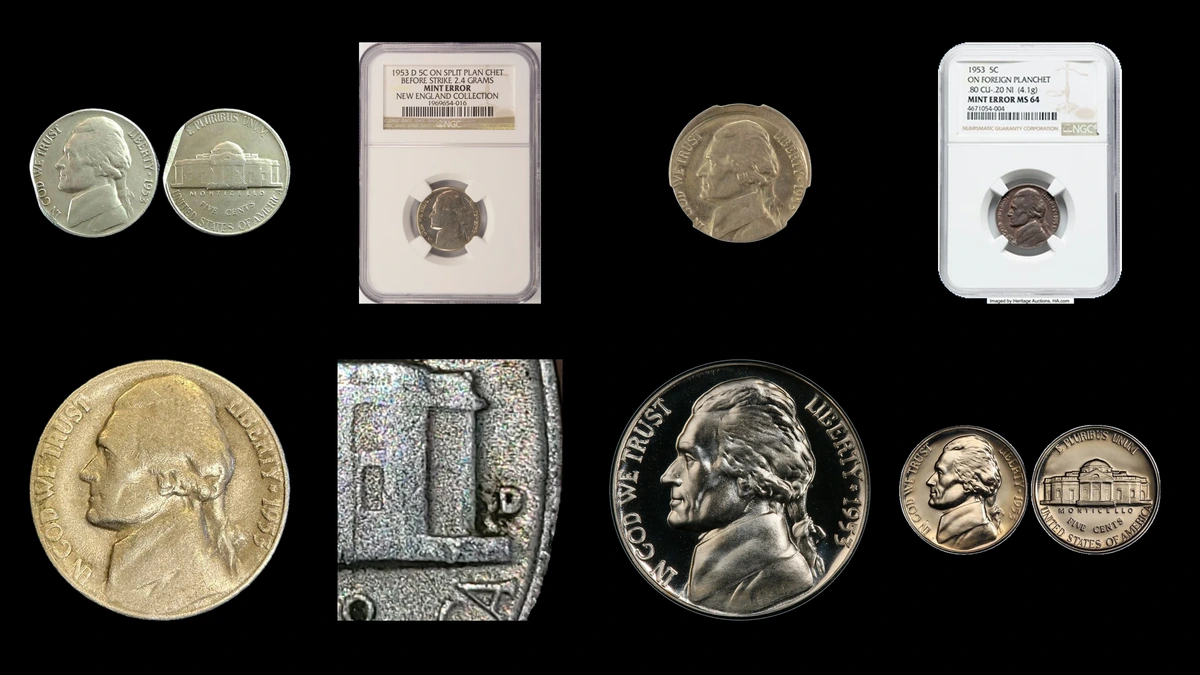
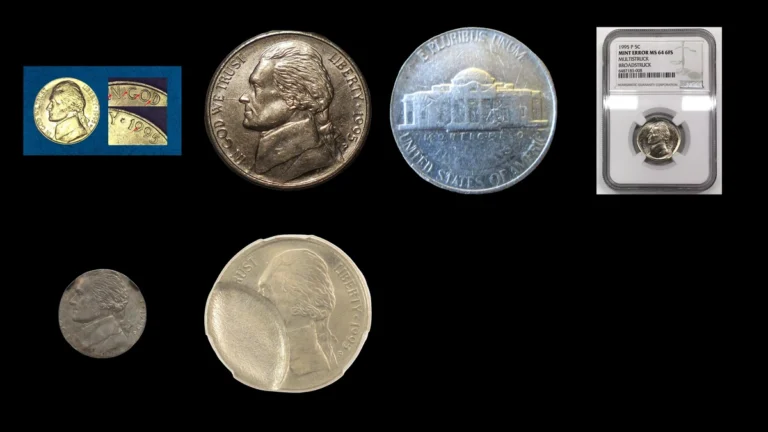
A 1953-S nickel struck over a finished Lincoln cent sold for $4,025 in September 2010. Estimated values for 1953 Jefferson nickel errors extend from $5–$6,000, including much smaller flaws and Proof varieties.
Inspect the outline and original metal before comparing repeated designs, mintmarks or the special hair-ribbon detail.
| Visible clue | Error or variety | Estimated range |
|---|---|---|
| Gap in outline | Clipped blank | $20–$150 |
| Thin piece or loose surface metal | Lamination or split | $10–$250 |
| Unused metal beside displaced design | Off-center strike | $75–$900 |
| Distinct overlapping impressions | Double strike | $150–$700 |
| Older Lincoln detail | Finished-cent overstrike | $2,500–$6,000 |
| Unusual weight and alloy | Foreign or unidentified blank | $300–$1,200 |
| Blocked design | Strike-through | $20–$700 |
| Raised ridge or patch | Die crack or break | $5–$100 |
| Additional D or S outline | Repunched mintmark | $5–$400 |
| Extra Proof design detail | Doubled die or re-engraved ribbon | $75–$700 |
An ordinary 1953 nickel weighs 5 grams and measures 21.21 millimeters, with a plain edge and a 75% copper, 25% nickel alloy. D and S mintmarks appear beside Monticello; specially prepared Proofs need separate finish comparisons.
1. 1953 Nickel A Missing Section of the Edge: Clipped Blank Error
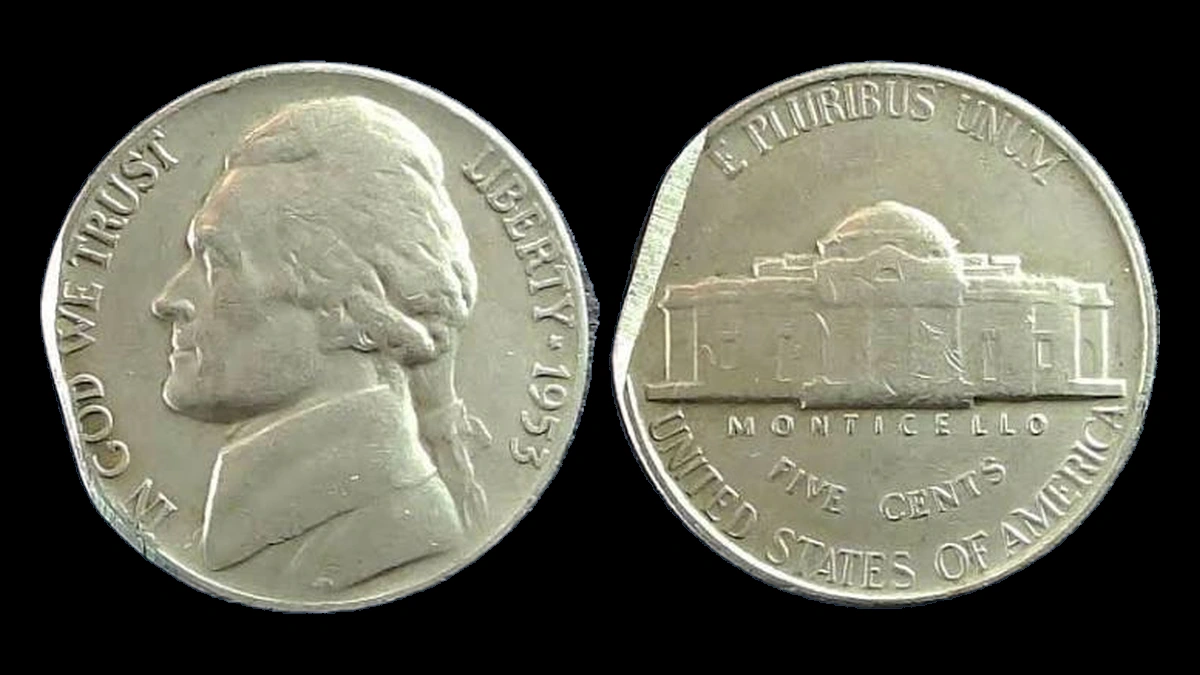
A clipped blank was incomplete before entering the press. Its remaining design formed beside the existing gap instead of being cut away afterward.
The year-list report gives no fixed mint, shape or percentage. Those details must come from the actual coin.
How to Identify
Follow the struck rim and lettering toward the opening. Natural weakening or flow differs from sharp cuts, file strokes and a folded edge.
The opposite rim may be weak, although that clue is not always obvious. Missing weight supports missing metal, but cannot prove a Mint origin by itself.
What It’s Worth
Confirmed 1953 clips are estimated at $20–$150. A readable date and original boundary make comparison easier.
No individual sale or standard clip percentage accompanies the general report. A large gap that removes identification is not automatically more desirable.
2. 1953 Nickel Peeling Metal or a Thin Disk: Lamination and Split Blank Error
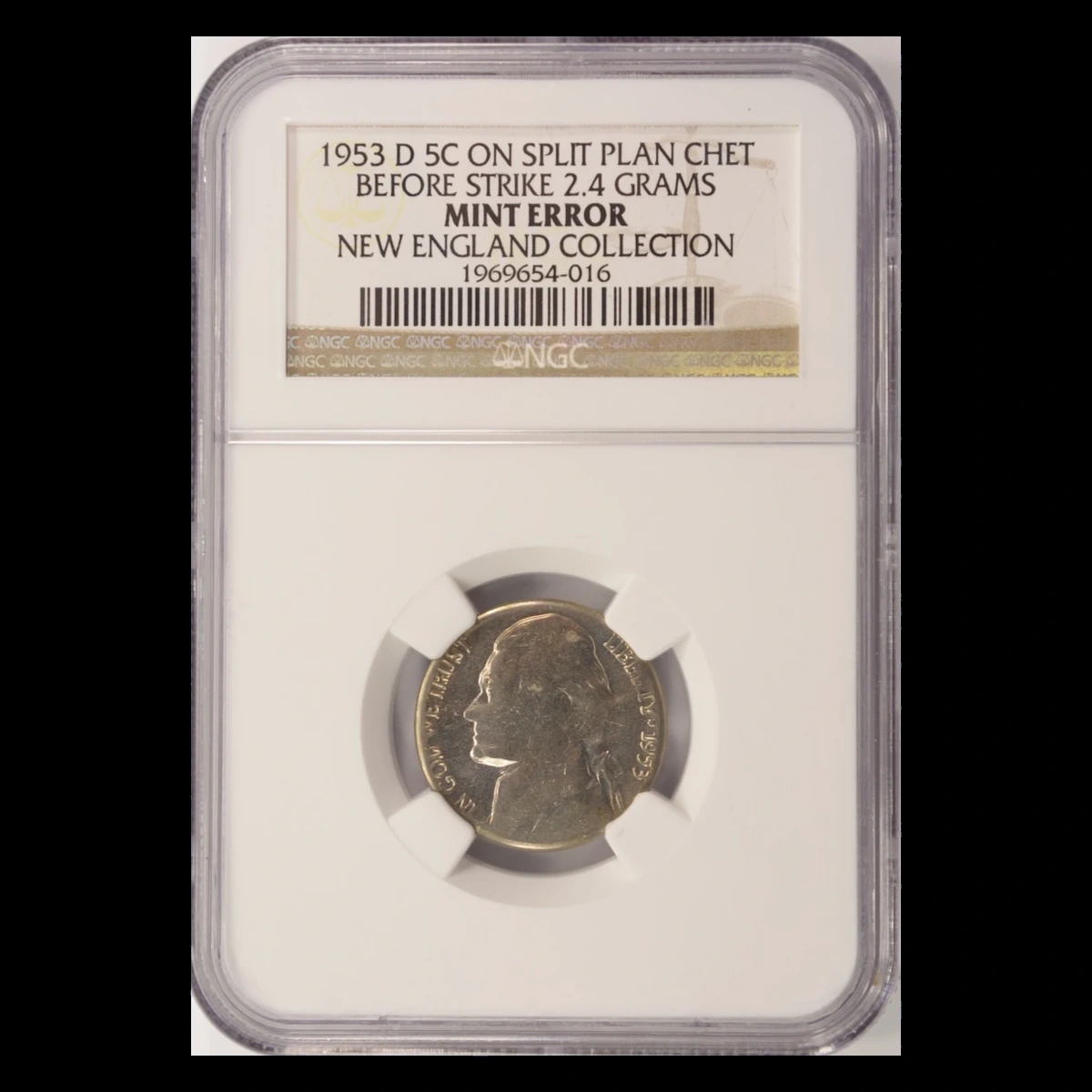
Weakness within the alloy can cause a surface peel or divide much of a blank’s thickness. The timing of the split changes what appears on the exposed metal.
The documented Denver split-before-strike piece weighs 2.4 grams and has soft central detail. Other 1953 lamination and post-strike split reports do not share that established mint or weight.
How to Identify
A split surface exposed before striking can receive design, while a later split reveals an interior that received no direct die impression. Compare that relationship without moving a fragile flap.
Record each piece’s own weight and outline. The normal alloy has no separate outer coating whose loss would explain every peel.
What It’s Worth
Small laminations are estimated at $10–$75 and more obvious split pieces at $40–$250. Identify the form and timing before applying the range.
The 2.4-gram 1953-D sold with a separate 1960-D split blank for $126.50 in October 2010. That is a two-coin total; the companion’s 2.5-gram weight does not belong to the 1953 coin.
3. 1953 Nickel A Slightly Displaced Design: Off-Center Strike Error
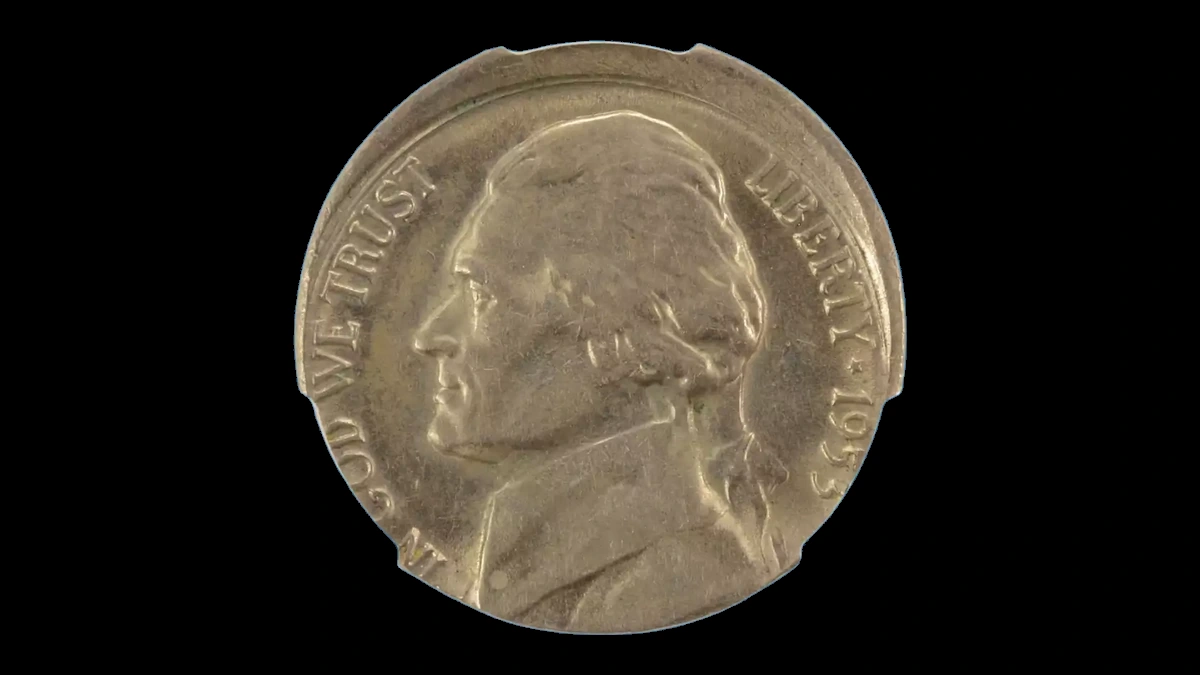
The recorded 1953-S example is only 5% off center, yet has an attractive NGC MS65 Five Full Steps grade. The blank’s position caused the offset; sharp stair detail describes the quality of the same coin.
How to Identify
Look for design lost beyond the edge beside genuinely unused metal. An uneven rim alone may instead indicate that one die was out of position.
Compare both faces and locate the S beside Monticello. Soft stair lines are not evidence of an off-center strike.
What It’s Worth
Confirmed dated examples are estimated at $75–$900. Grade, remaining date and degree of shift influence the whole-coin value.
The 5% San Francisco coin brought $546.25 in September 2010. Its price reflects the attractive unworn grade and stair detail as well as the modest offset.
4. 1953 Nickel Two Intersecting Designs: Double Strike Error
A coin can move before receiving another blow from the press. The later impression covers part of the earlier design, leaving two distinct sets of details.
The auctioned 1953 MS63 example has about 40% overlap between strikes. That description is not a statement that it was 40% off center.
How to Identify
Trace two recognizable versions of a date, portrait or other feature. Follow where the newer impression crosses and flattens the older one.
Compare both faces before reconstructing the movement. Fine doubled lettering built into a die is different from two widely displaced design centers.
What It’s Worth
Clearly identified double strikes are estimated at $150–$700. Readable overlap and preserved identification can make the sequence more appealing.
The cataloged MS63 coin sold for $195.50 in January 1997. This historical result is not a current guarantee for every repeated impression.
5. 1953 Nickel A Cent’s Date Beneath Jefferson: Finished-Cent Overstrike Error
An already struck 1953-S Lincoln cent entered the nickel press and received a 1953-S nickel design. Part of the earlier cent date survives on Jefferson’s clothing.
The recorded piece is graded NGC MS65 Red and Brown. Its old design is the key distinction from a nickel made on an unused cent blank.
How to Identify
Locate the earlier date and follow it beneath the newer nickel impression. A brown small disk alone cannot show that the host had already been struck.
The period cent starts near 3.11 grams and 19.05 millimeters, though the later strike can spread it. Inspect the actual edge for a join, coating or signs of coins pressed together after minting.
What It’s Worth
Comparable identified examples are estimated at $2,500–$6,000. Clear evidence of both designs strengthens the comparison.
The MS65 Red and Brown overstrike sold for $4,025 on September 24, 2010. This is one complete object, rather than separate cent and nickel values added together.
6. 1953 Nickel Light Weight and a Different Mixture: Unusual-Alloy Blank Error
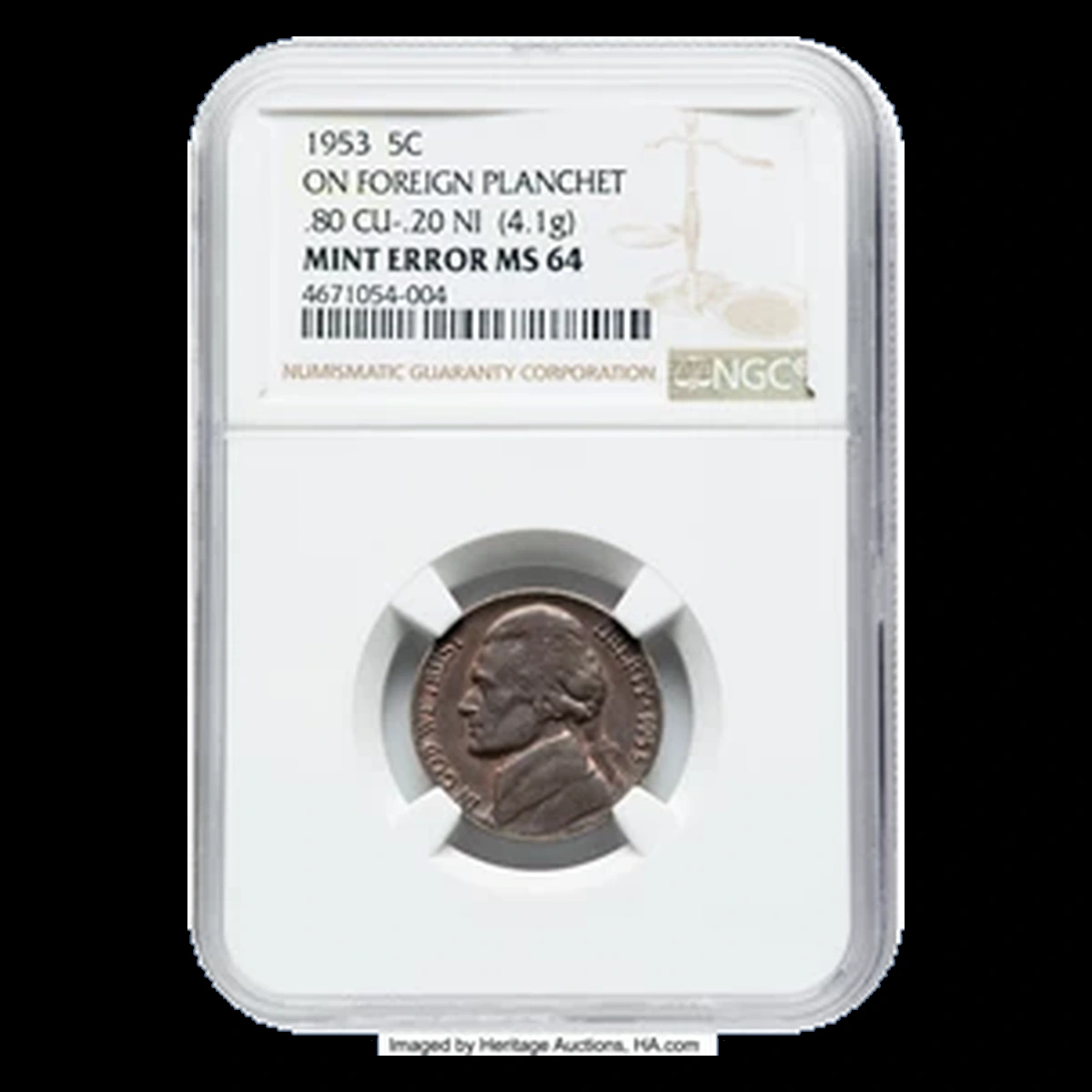
The documented 4.1-gram coin contains about 80% copper and 20% nickel. Both its weight and mixture differ from those of an ordinary nickel.
The auction calls it a foreign blank without establishing a country. A proposed Haitian comparison has a different weight and contains zinc, so it does not settle the origin.
How to Identify
Use a credible metal test alongside actual weight and dimensions. A color resemblance cannot identify either the alloy or a foreign denomination.
Examine both faces and the edge for corrosion, grinding or plating. Those changes can alter a normal nickel’s appearance or weight without creating the reported blank.
What It’s Worth
Comparable authenticated unusual-alloy blanks are estimated at $300–$1,200. The range does not include a proven Haitian-denomination premium.
The NGC MS64 specimen sold for $444 in March 2023. Its measured metal and weight provide the basis for comparison, while its original intended use remains uncertain.
7. 1953 Nickel A Patch of Blocked Design: Strike-Through Error
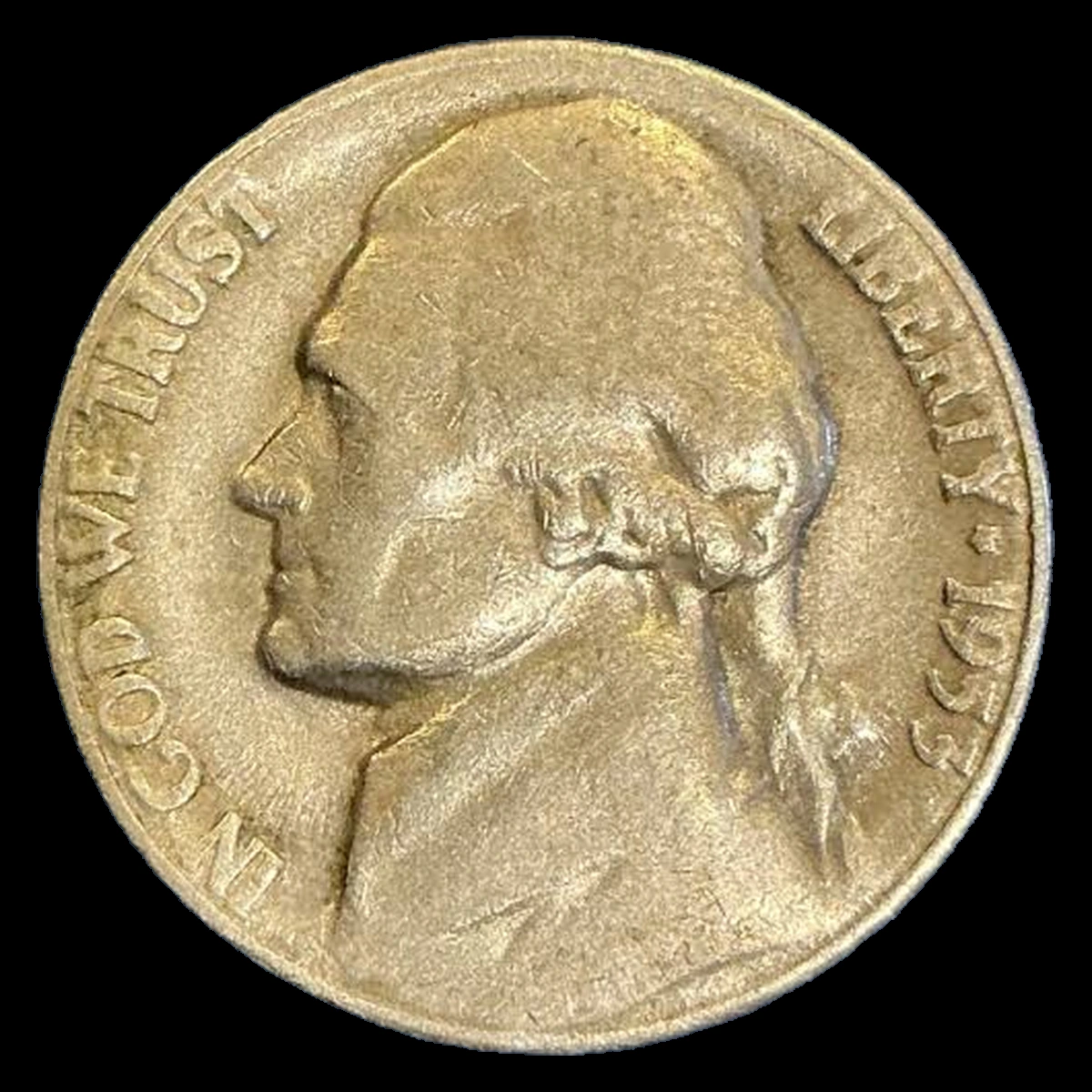
Material caught between a die and blank can leave weak detail or an impressed patch. Regular 1953 nickels are reported without a fixed material or location.
A separate cataloged Proof67 has a reverse strike-through and appeared with a 1938-D coin affected on its front. The companion’s mint and affected face do not describe the 1953 Proof.
How to Identify
For the Proof, begin with the reverse identified in the auction catalog. Follow normal detail into the interrupted area.
Fresh cuts through finished lettering can indicate scraping. A smooth patch cannot identify cloth, wire or a retained object without further visible evidence.
What It’s Worth
Clear regular-strike obstructions are estimated at $20–$200, with comparable identified Proof reverse errors around $100–$700. Finish and preservation remain part of those totals.
No completed individual result is assigned to the cataloged Proof. Its two-piece listing does not establish a separate price for this coin.
8. 1953 Nickel Raised Ridges or Patches: Die Cracks and Breaks Error
A cracked die leaves extra raised metal where the coin fills the opening. Missing steel can produce a larger patch, called a cud when it connects to the rim.
General guides mention 1953 examples, but the older claim specifically naming San Francisco requires confirmation. An S alone does not establish a known crack path.
How to Identify
Use side light to distinguish a raised ridge from a scratch with a cut center. For a larger patch, determine whether it actually reaches the rim.
Inspect the edge for an impact and the patch for solder or deposits. The feature should belong to the original coin metal rather than sit over completed detail.
What It’s Worth
Confirmed small cracks or breaks are estimated at $5–$100. Visibility and overall condition influence the premium.
This range does not authenticate the older San Francisco attribution or establish a particular cud sale. Added material and later displaced metal require different explanations.
9. 1953 Nickel An Extra S or Inverted D: Repunched Mintmark Error
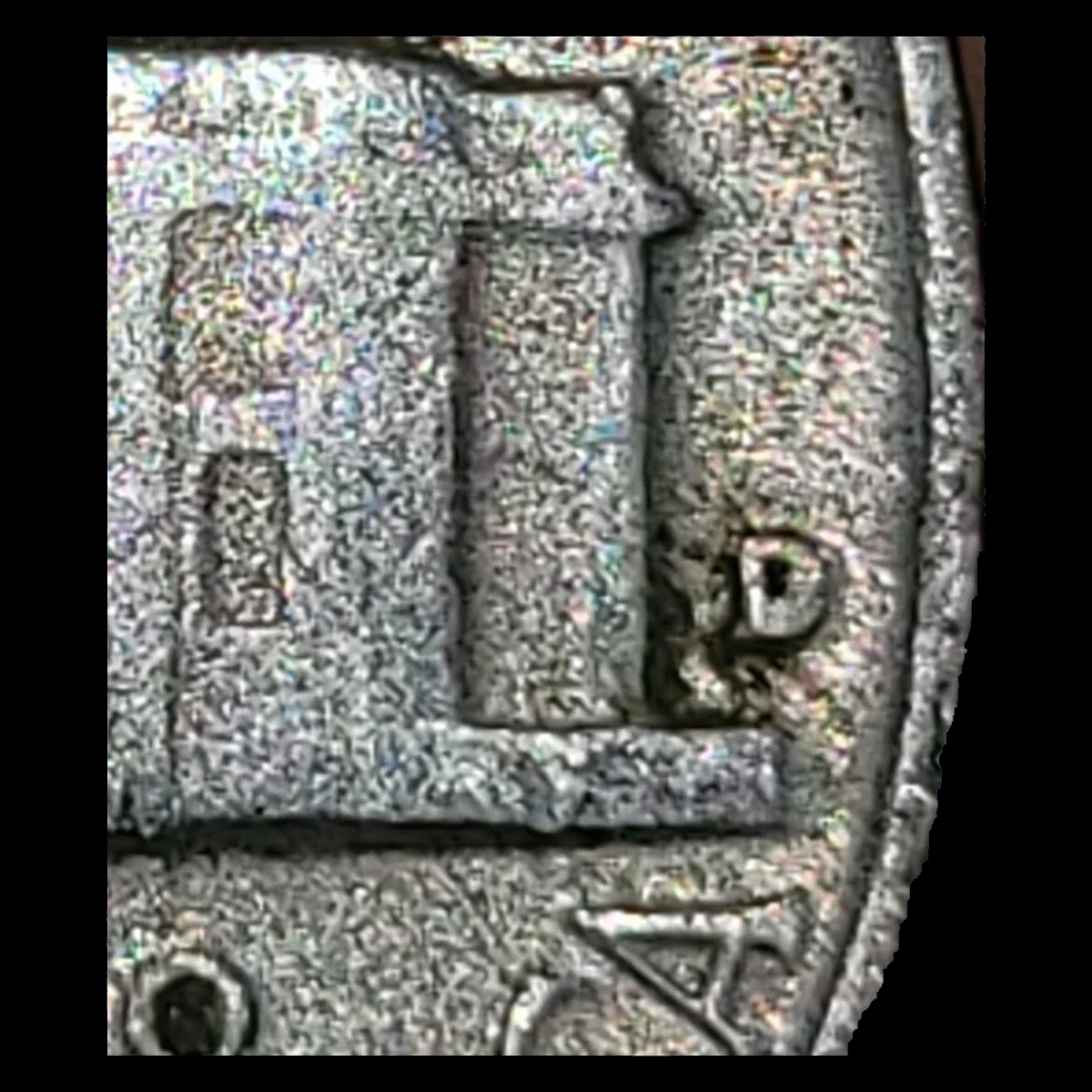
The small mint letter was punched into the die separately. Listed 1953-S varieties show additional S details to the left or right, while a Denver variety has an inverted D beneath the main D.
The inverted remnant belongs to an earlier punch in the tool. It does not mean the finished coin was struck upside down.
How to Identify
Keep the entire mintmark beside Monticello visible and compare with Wexler’s mintmark images. Match the secondary curves rather than selecting a direction from a thick corner.
A flat shelf from movement during striking does not establish an inverted letter. A similarly named quarter variety’s catalog number cannot identify a Jefferson nickel.
What It’s Worth
Identified S repunching is estimated at $5–$100, and confirmed D over inverted D at $30–$400. Clarity of the older impression and condition determine the useful comparison.
These are estimated ranges without individual auction records supplied for the forms. Price the specific matched variety rather than a generally doubled-looking mintmark.
10. 1953 Nickel Extra Proof Lettering: Doubled Die Error
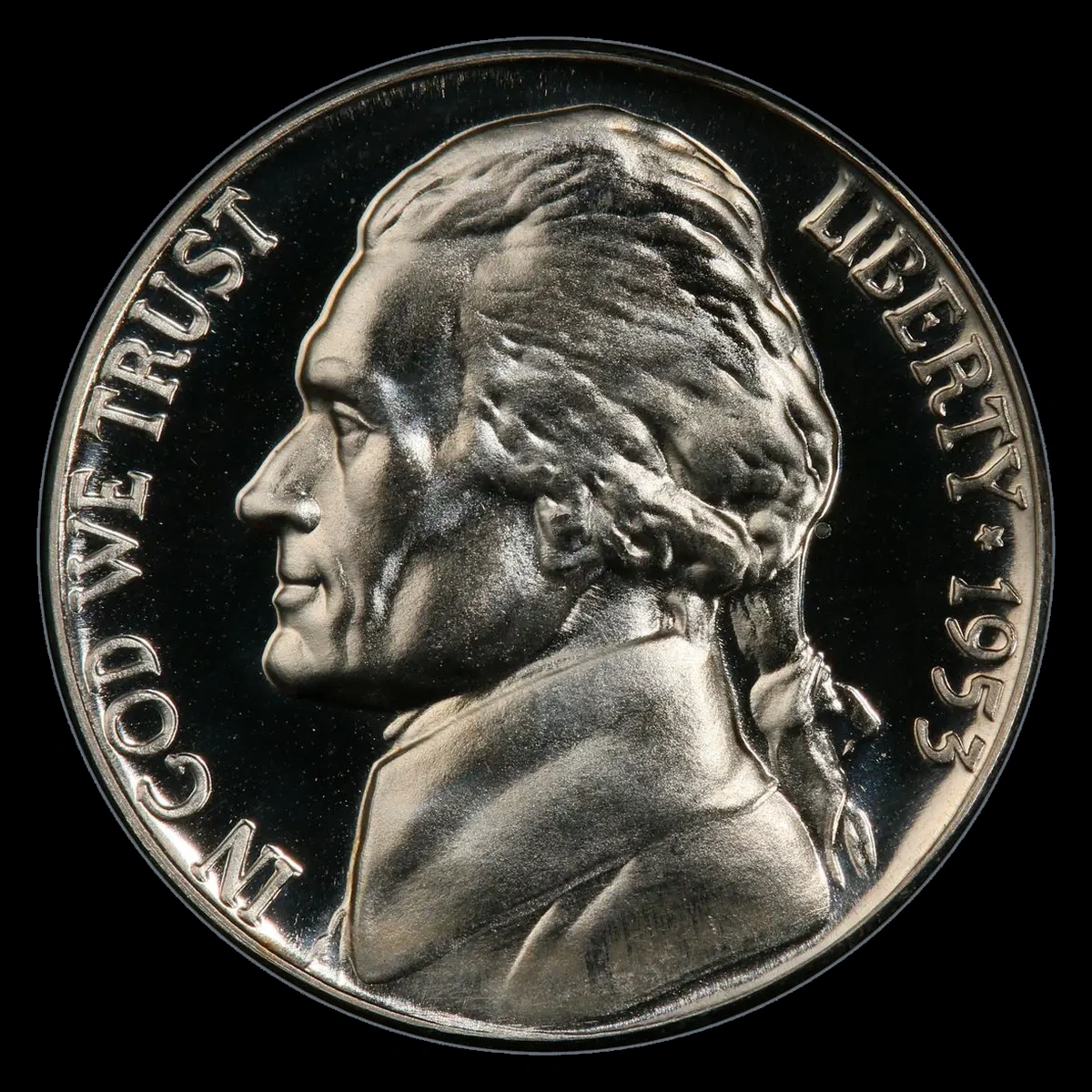
The recognized FS-101 Proof carries repeated obverse detail already present in the die. The variety has been recorded in PR67 Cameo, indicating a well-preserved Proof with contrasting raised design and background.
That contrast is a finish characteristic. The repeated metal outlines identify the variety.
How to Identify
Confirm the Proof finish, then compare lettering and date with an identified FS-101 image. Rounded repeated outlines or split detail differ from a low flat shelf.
Change the light to eliminate reflections as an explanation. A polished ordinary nickel does not become a Proof because it shines.
What It’s Worth
Identified FS-101 Proofs are estimated at $75–$500. Surface preservation, visible doubling and contrast all affect the comparison.
PCGS listed a $250 guide value for PR67 Cameo. That is a guide figure rather than an actual auction result.
11. 1953 Nickel Reinforced Hair-Ribbon Lines: Re-Engraved Proof Design Error
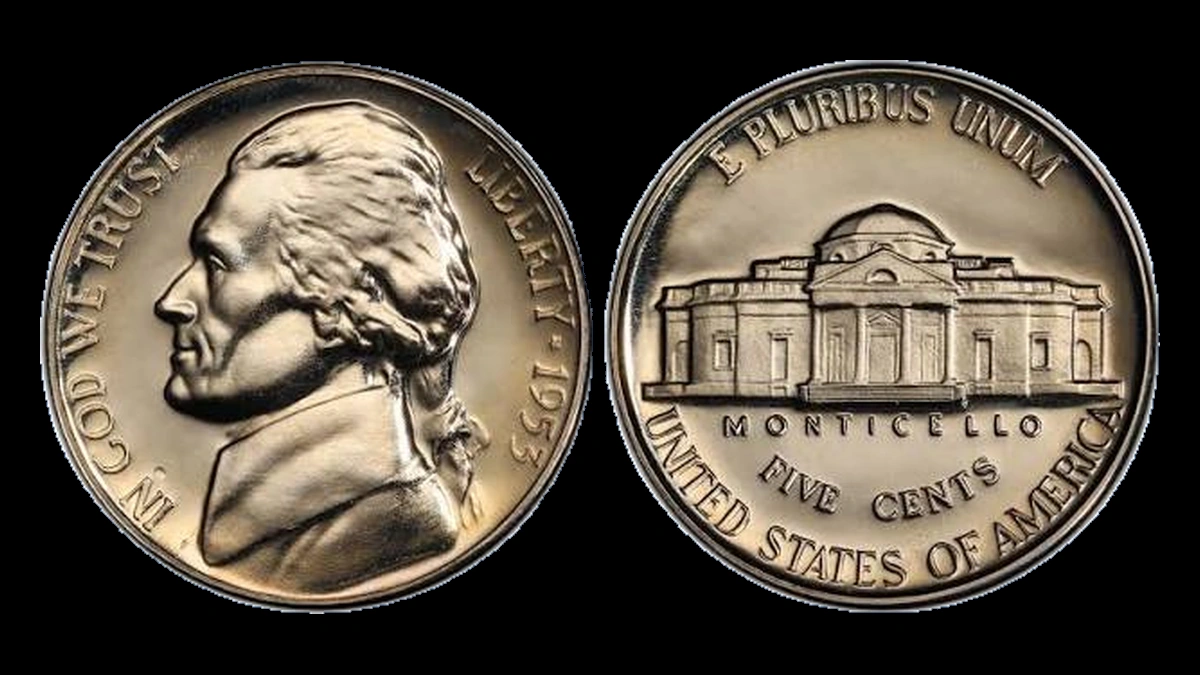
FS-401 identifies a Proof variety with stronger lines around Jefferson’s hair ribbon. Additional cutting in the die produced raised details when coins were struck.
This is a reworked design rather than a close second copy of the lettering. Heavy-looking digits elsewhere do not identify it.
How to Identify
Compare the ribbon with a normal 1953 Proof and an identified FS-401. Follow the strengthened lines in that location instead of searching for general thickness.
A later scratch cuts into the coin and can push metal to its sides. Preserve Proof surfaces in their holders and avoid wiping them to sharpen a photograph.
What It’s Worth
Comparable identified Proofs are estimated at $100–$700. Ribbon attribution, preservation and contrast guide the comparison.
PCGS records $646 for a PR67 FS-401 in March 2017. Its auction archive separately lists PR67 at $210 in a January 2023 eBay Best Offer record.
Conclusion
For 1953 nickels, the strongest clue may be an earlier cent date, a struck split surface or a very small remnant under a mintmark. Each calls for its own comparison rather than a general premium for an unusual appearance.
Keep Proof finishes and stair quality separate from the error mechanism. Preserve group-price context, use the actual metal measurements and leave uncertain mint or foreign-blank identities open until the evidence supports them.