Rare 1892 Half Dollar Errors (List & Pictures)
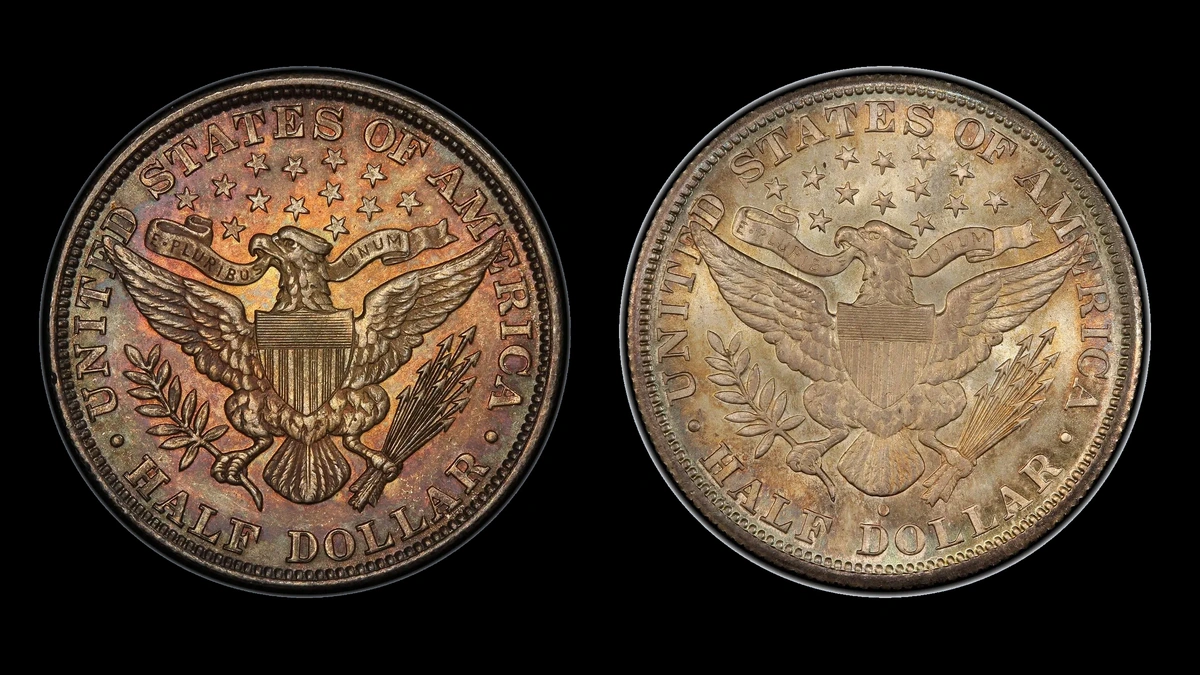
Start with Liberty’s portrait when checking 1892 half dollar errors: this guide concerns Barber halves, not the same-year Columbian commemorative. Estimated values for the grades discussed range from $200 to $9,500.
A documented $8,550 sale in April 2025 belongs to a worn Micro O variety. Follow the front lettering and date, then inspect the back’s repeated details and mintmark size before selecting a price comparison.
| Inspection point | What to find | Category | Estimated value |
|---|---|---|---|
| Motto and front stars | Repeated outlines | Doubled die obverse | $250–$650 around AU |
| Below date digits | Earlier numeral strokes | Repunched date | $200–$500 around AU |
| Back letters, stars, and ribbon ends | Multiple outlines | Tripled die reverse | $300–$1,000 around AU |
| Upper part of S | Earlier serif to the left | Repunched mintmark | $800–$1,600 around XF |
| Complete O below eagle | A distinctly smaller letter | Micro O | $4,000–$9,500 in lower grades |
S identifies San Francisco, O identifies New Orleans, and no mintmark identifies Philadelphia. Normal specifications are 12.50 grams before wear and roughly 30.6 mm in diameter, with a grooved edge.
1. 1892 Half Dollar Repeated Motto and Star Edges: Doubled Die Obverse Error
Examine IN GOD WE TRUST and the neighboring stars as a group. The Barber Coin Collectors’ Society survey reports doubling in both areas on the Philadelphia coin.
“Obverse” means the front. A doubled die carries repeated design detail in the steel stamping tool itself, allowing coins struck from it to repeat the same pattern.
How to Identify
Compare several motto letters and star points under equal magnification. The reported combination needs evidence in both areas, not just one thick letter.
Look for rounded duplicate outlines or separated star points that agree with a documented example. Broad flat shelves may come from movement during striking.
Confirm the absence of a mintmark below the eagle. Extra strokes in the date require a separate check because repeated date punching can occur without this front-wide design doubling.
What It’s Worth
Estimated range: $250–$650 for an identified example around AU, or About Uncirculated. AU coins have only light circulation wear.
An 1892 AU50 tripled-reverse half sold for $336 at Heritage in November 2024. It provides a condition comparison from the same year, but its repeated details are on the opposite face.
No supplied transaction establishes the price of this reported doubled front. Clear attribution and surface quality remain important when using the estimate.
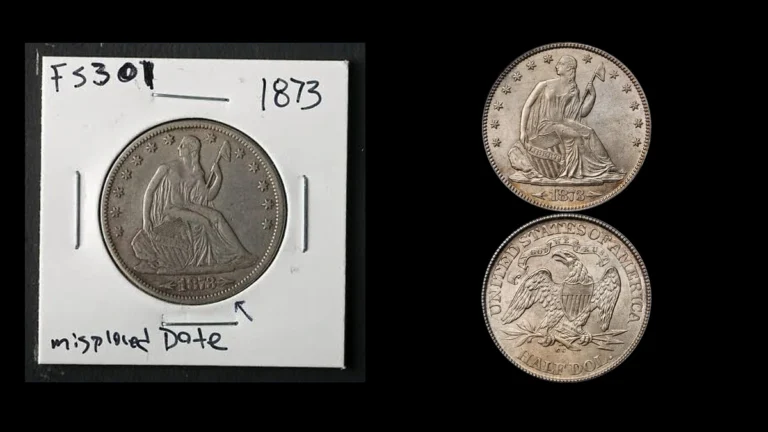
2. 1892 Half Dollar Numeral Fragments Below the Date: Repunched Date Error
Move down to the date and hold its baseline level. The reported Philadelphia repunching lies south of the final digits, meaning below them in this orientation.
Earlier numeral impressions survived when the date punch was applied again to the die. Coins copied the uncovered portions as raised strokes.
How to Identify
Inspect the shapes beneath the digits with light from both sides. Each claimed remnant should resemble part of an earlier numeral in a matching Barber reference.
A nick can push silver beside a number, while movement during striking can create a low ledge. Position below the date alone cannot distinguish either effect from repunching.
Keep the portrait visible in the reference view. Repunched dates also exist on 1892 Columbian commemorative halves, whose different design does not provide the required Barber match.
What It’s Worth
Estimated range: $200–$500 for a clearly attributed, lightly worn example. The estimate assumes readable earlier strokes and comparable surfaces.
The $336 AU50 tripled-reverse sale noted above supplies same-year context. It is a different variety, so its price should not be described as a repunched-date result.
3. 1892 Half Dollar Multiple Outlines Around the Eagle: Tripled Die Reverse Error
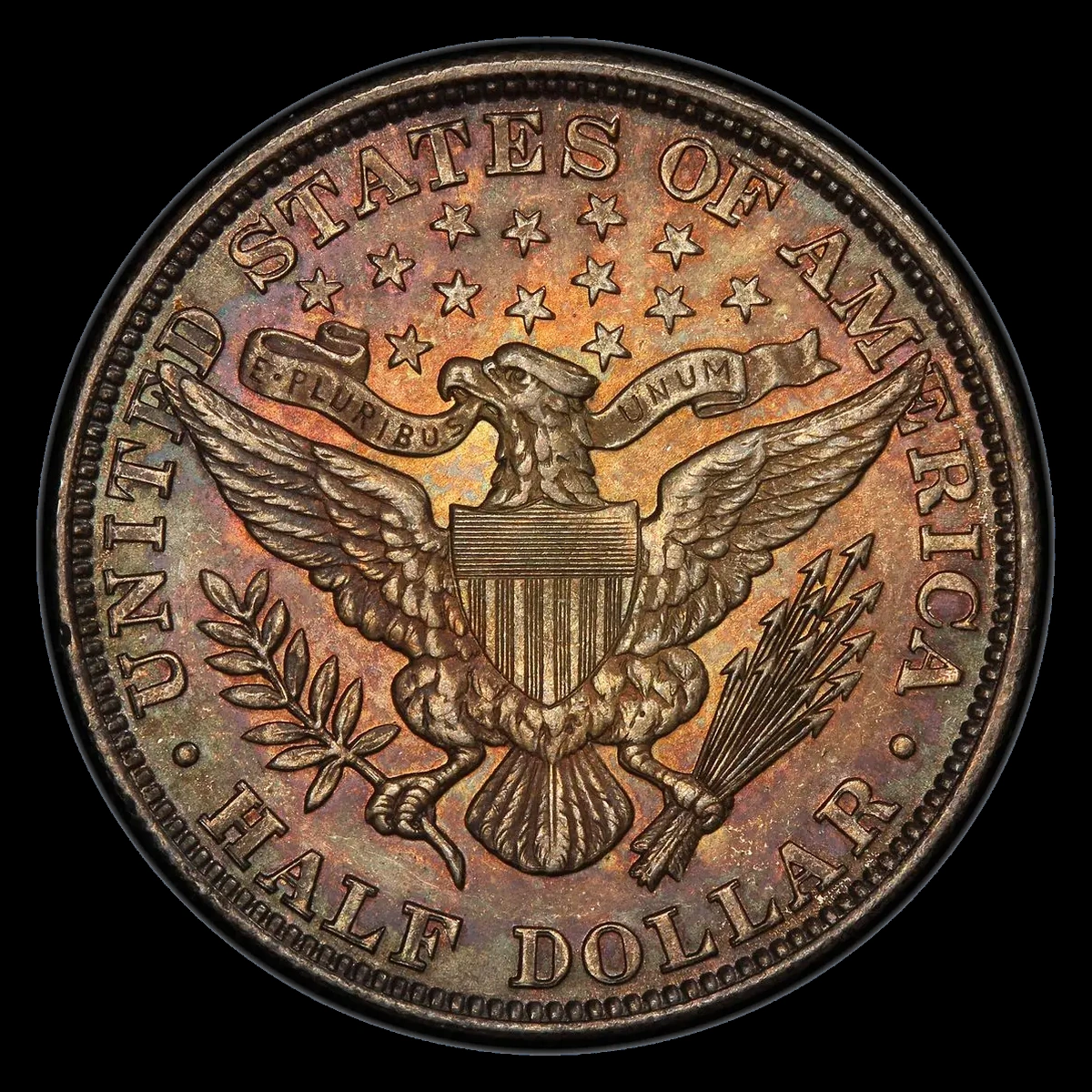
Turn the coin over and compare the outer lettering, stars, and ribbon ends. FS-801 is the recognized Philadelphia tripled-die reverse variety.
The back die received repeated design impressions during its manufacture. Those impressions were already in the tool when it struck each coin; “tripled” does not mean three strikes on the finished half dollar.
How to Identify
Use a full reverse picture to locate the diagnostic areas, then enlarge each one. Agreement across letters, stars, and ribbon ends provides stronger evidence than counting apparent edges on a single letter.
Wear may obscure some of the outlines, so three equally clear copies need not survive everywhere. Compare the remaining raised detail with a labeled FS-801.
Reflections and flat shelves should not be counted as complete design impressions. Also keep this reverse attribution separate from the reported doubled motto on the front.
What It’s Worth
Estimated range: $300–$1,000 for comparable AU examples. Greysheet records an NGC AU58 FS-801 at $960 in a January 28, 2026 Stack’s Bowers sale.
The PCGS AU50 Heritage example brought $336 on November 12, 2024. AU58 generally has less wear than AU50, although surfaces and buyer interest also influence the difference.
These records value two separate complete coins. The upper result is not a fixed extra amount to add to every FS-801.
4. 1892 Half Dollar A Small Extra Stroke Left of the S: Repunched Mintmark Error
If the reverse has an S, inspect its upper serif, the small stroke at the letter’s top. The reported S/S shows an earlier serif to its left.
The mintmark punch left part of an earlier S uncovered after being applied in a different position. References call the leftward displacement west when the reverse is upright.
How to Identify
Hold the eagle upright throughout the comparison. Changing the photograph’s rotation can make a leftward feature appear above or below the letter.
Compare the small extra stroke with the upper serif of a known 1892-S/S. A lump beside the mintmark may be damage or a small die defect without being part of another S.
Check the surrounding silver for cuts or disturbed metal that could indicate an added mintmark. Both the shape and location of the earlier serif must agree with the reference.
What It’s Worth
Estimated range: $800–$1,600 around XF condition, with light wear and a convincing S/S identification. The ordinary date and mint already account for substantial value.
PriceCharting lists ordinary PCGS XF45 eBay results of $1,071.50 in August 2025 and $1,207.50 in April 2026. Neither is identified as an S/S transaction.
Those comparisons do not establish a separate repunching premium. The additional serif needs confirmation before the variety estimate becomes relevant.
5. 1892 Half Dollar An O That Is Too Small: Micro O Mintmark Error
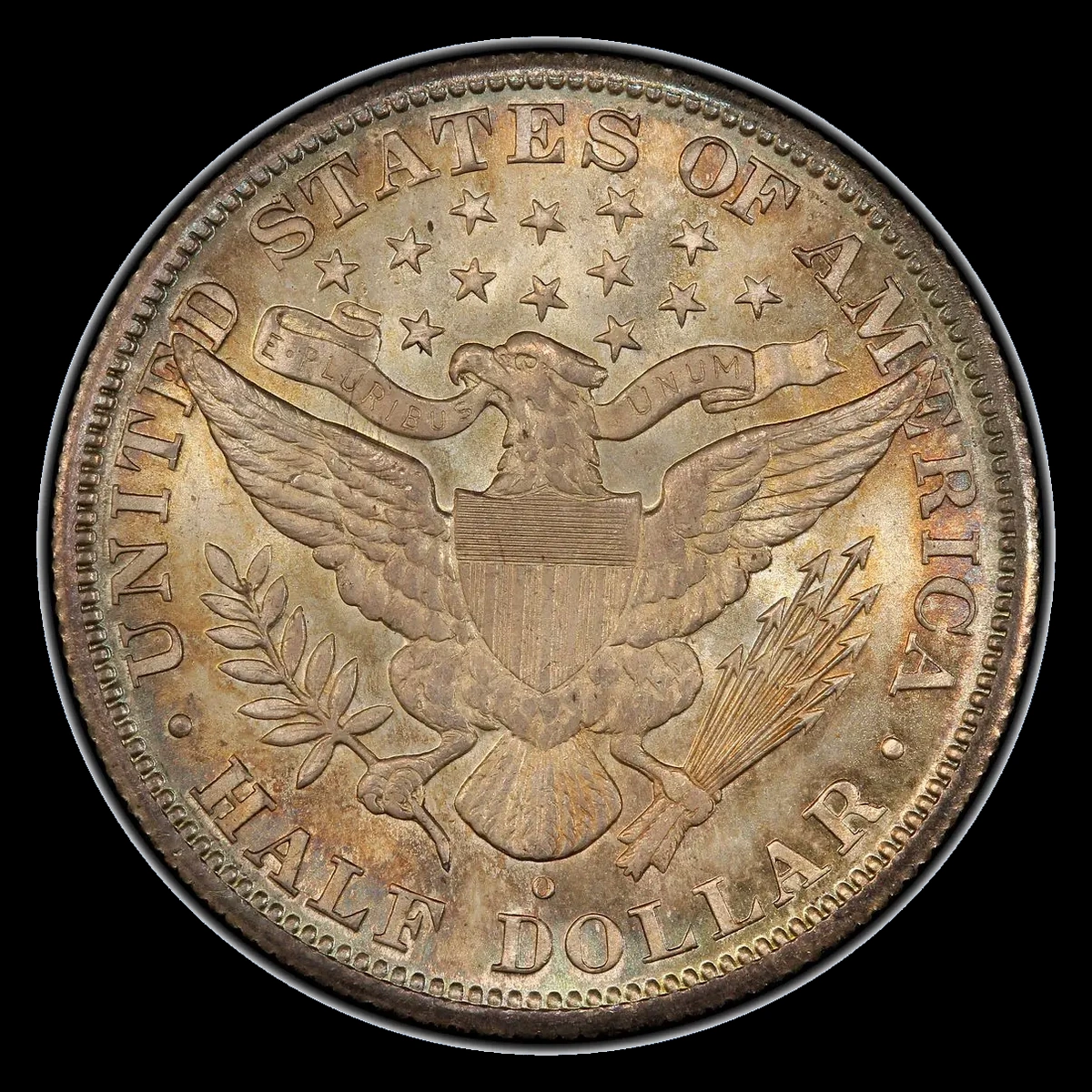
An O takes the inspection in a different direction: compare the entire letter’s size. The Micro O is a smaller mintmark on a full-size New Orleans half dollar.
NGC explains that a quarter-size mintmark punch was mistakenly used on a half-dollar die. The wrong tool was the letter punch, not the metal blank used for the coin.
How to Identify
Place photographs of a suspected Micro O and a normal 1892-O at the same scale. Unequal enlargements can either manufacture a size difference or conceal the real one.
Trace the complete letter rather than its brightest surviving edge. Wear, weak striking, or shadow can hide parts of a normal O and make it seem unusually small.
Inspect for cuts that may have reshaped the mintmark. A secure match requires the small outline of an authenticated Micro O, while the coin itself retains normal half-dollar dimensions.
What It’s Worth
Estimated range: $4,000–$9,500 for comparable lower-grade examples. Better-preserved Micro O coins need separate price references.
Greysheet records Heritage sales of $5,760 for a PCGS Good 4 in June 2025 and $8,550 for a PCGS VG8 CAC in April 2025. Both grades describe heavily worn coins.
The recognized small mintmark is essential even at those low grades. A worn normal O does not enter this range merely because little of the letter remains visible.
Conclusion
Begin by confirming the Barber design, then follow the inspection area that matches the unusual detail. Date strokes, repeated designs, and mintmark differences call for distinct reference images.
The $200–$9,500 estimates depend on the stated grades as well as the varieties. In particular, compare Micro O photographs at equal scale and keep ordinary mintmarked-coin sales separate from confirmed repunched-mintmark results.