Rare 1958 Quarter Errors (List & Pictures)
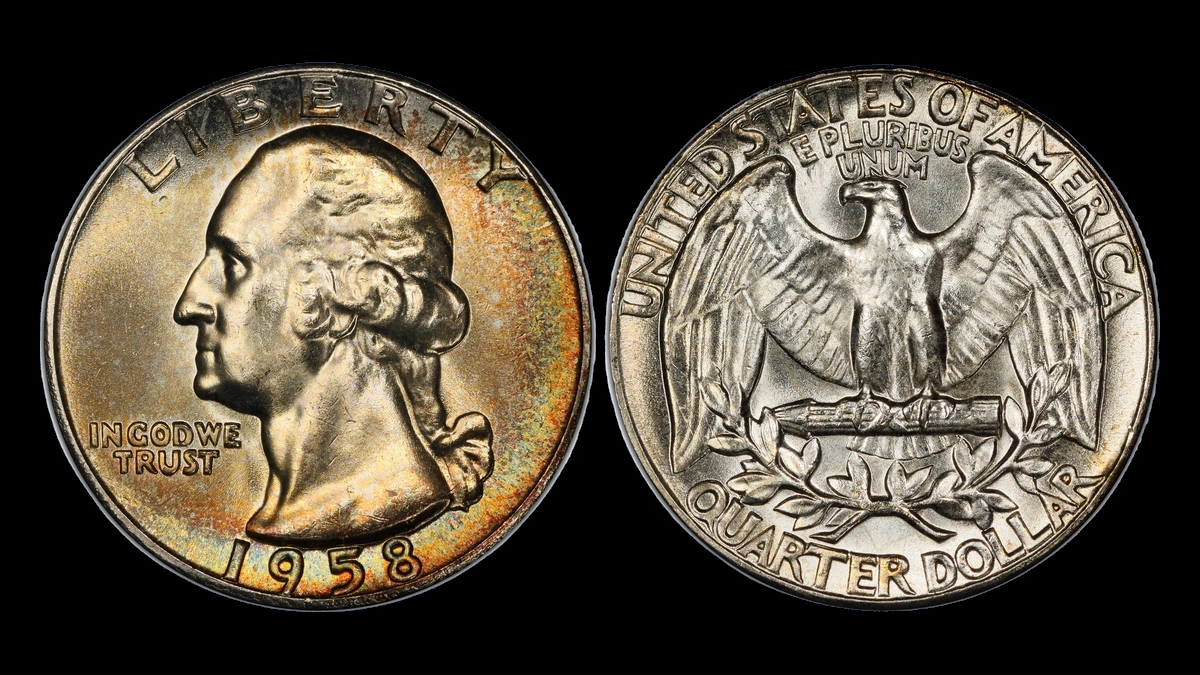
First determine whether a 1958 quarter is a circulation issue or a Proof collector coin. That distinction changes how you interpret both an unusual reverse design and several important prices.
The 1958 quarter errors below have estimated values of $20–$20,000. A Proof with a complete backward portrait on its reverse sold for $12,337.50 in January 2017; use the face-to-face comparison first, then inspect lettering, metal, and outline.
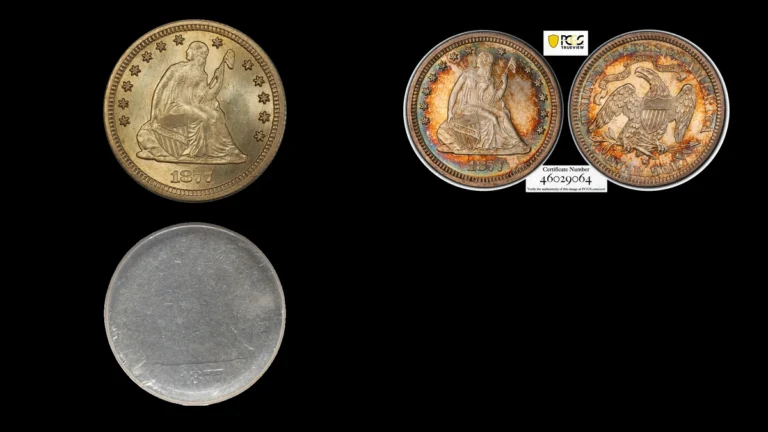
1. 1958 Quarter Washington Replaces the Eagle: Full Proof Brockage Error
The reverse of the documented PCGS PR62 Proof carries a complete recessed, backward copy of Washington and the front lettering. A previously struck coin pressed its raised design into the new blank during striking.
This transfer is called a brockage. The recorded image is complete and unstretched, while a small abrasion on the normal front is a separate condition mark.
How to Identify
Confirm both the reversed direction of the lettering and the recessed relief under side lighting. A photograph flipped horizontally reverses everything, whereas a brockage is a copied image within the coin itself.
Compare the full portrait and outer lettering with the normal front design. Preserve the Proof surfaces for specialist examination, since later squeezing between finished coins can also transfer detail but may leave different surrounding damage.
What It’s Worth
$7,500–$20,000 is an estimate for comparable authenticated full Proof brockages. The PCGS PR62 example sold for $12,337.50 in January 2017 despite its noticeable surface imperfections.
2. 1958 Quarter A Clear Gap between E and S: Type B Reverse Error
The Type B reverse has greater separation between E and S in STATES than the usual circulation design. It was intended for Proofs, but some Philadelphia circulation quarters received it in 1958.
The collectible variety is that design on a circulation coin. The same reverse on a normal Proof is expected.
How to Identify
Compare the E-S gap with a confirmed 1958 Type B reverse at the same scale. Check intact letter edges so wear or scraping does not create a false wide gap.
Establish the original issue and finish as well as the reverse type. A polished circulation coin can look shiny, and a reflective surface alone does not establish Proof status.
What It’s Worth
$20–$5,000 is the estimated range for the circulation variety, with exceptional condition driving the upper end. An MS67+ brought $4,800 in March 2019, while an MS66+ sold for $666 at GreatCollections in October 2025.
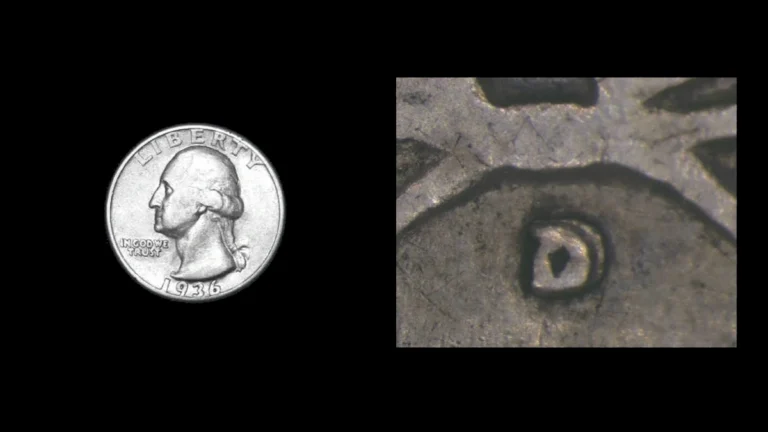
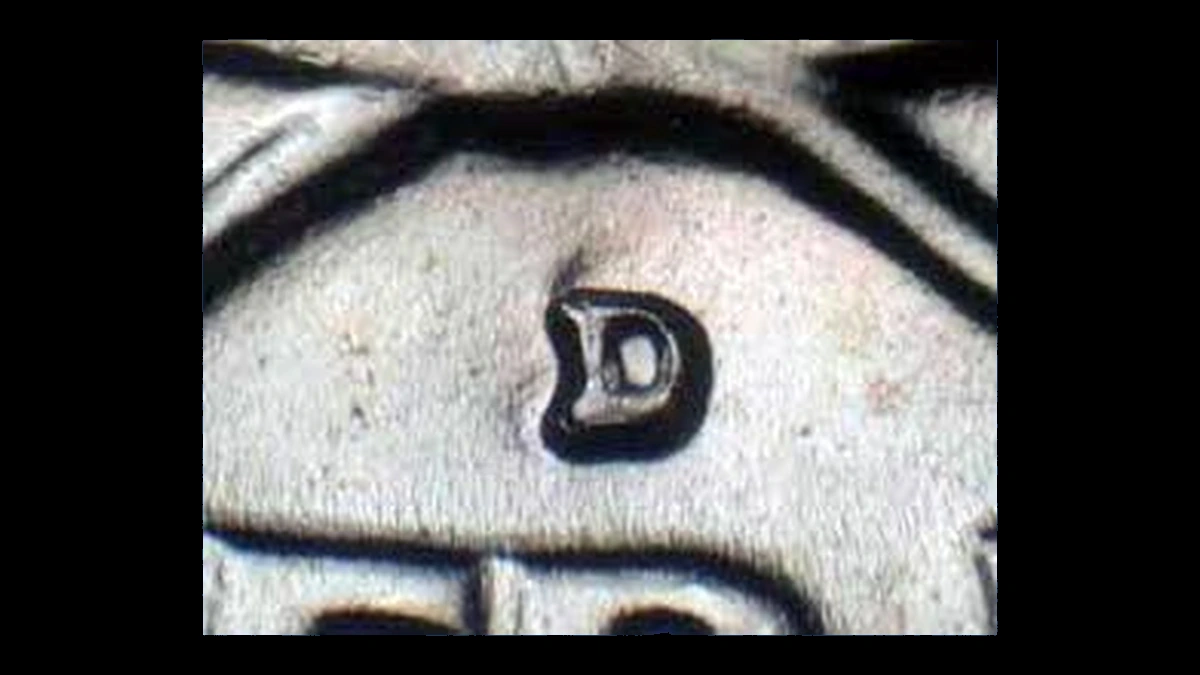
3. 1958 Quarter A Second D Outline: Repunched Mintmark Error
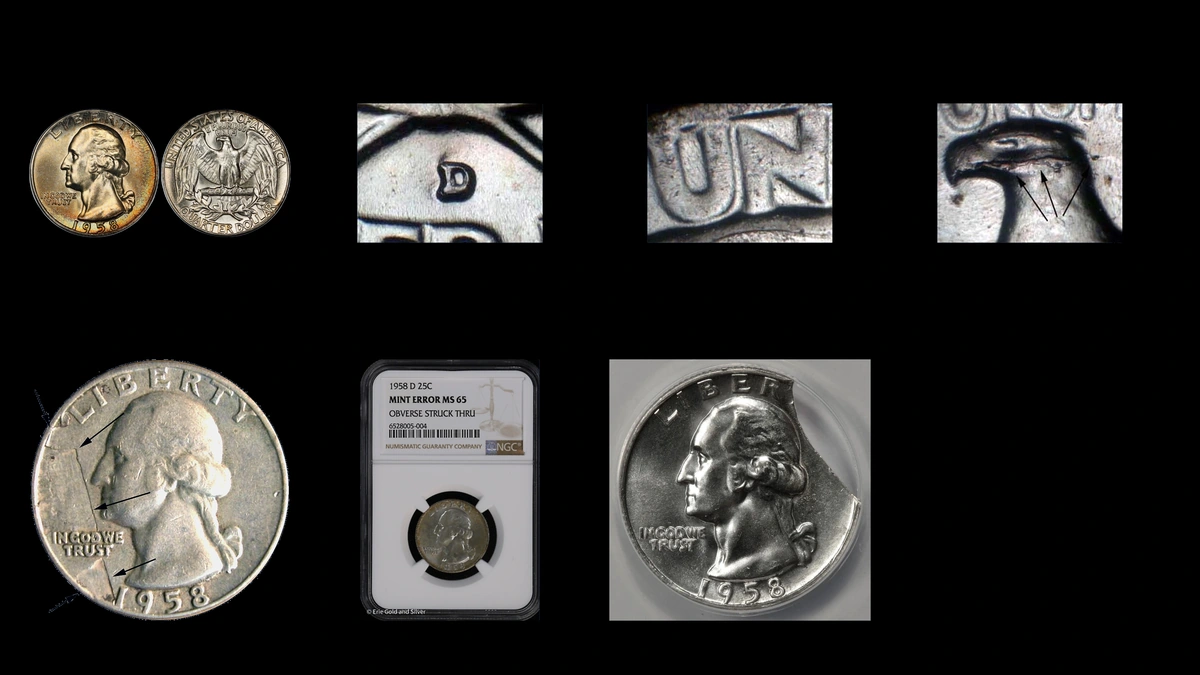
The reported 1958 repunched mintmark concerns the D below the eagle on the reverse. Repeated placement of the mint-letter punch into the die could leave remnants of an earlier impression.
How to Identify
Trace the upright and curved part of the main D before comparing any extra metal with a second letter shape. The surrounding surface should be checked for an impact or scratch that could imitate a remnant.
Use an attributed 1958-D reference; the report supplies no universal direction to assign here. Flat shelves from strike movement and reflected edges are not sufficient evidence of repunching.
What It’s Worth
$25–$500 is an estimate for a confirmed repunched-D variety. PCGS records a different-year 1962-D MS65 at $495 on eBay in August 2021, but that comparison does not establish the 1958 punch pattern or its price.
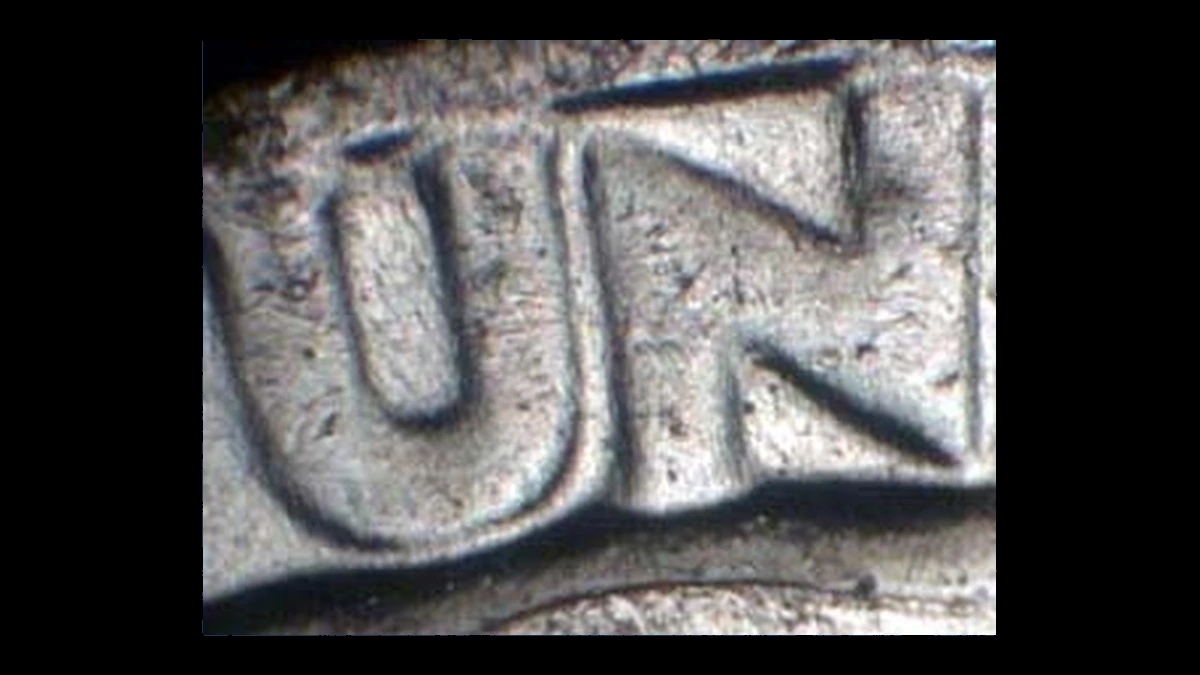
4. 1958 Quarter Repeated Letter or Eagle Edges: Doubled Die Error
Front-side reports concern the date and lettering, while reverse reports point to words and the eagle. They are separate candidates rather than proof of a single 1958 quarter doubled on both faces.
A doubled die carries repeated detail in the stamping tool itself. That differs from giving one coin two separate strikes.
How to Identify
Compare several adjoining details with an attributed coin of the same date, mint, and finish. A coherent secondary outline provides more evidence than one thick letter or soft feather.
Move the light to rule out reflections and examine the edges for flat mechanical-doubling shelves. Preserve the opposite face in photographs for identification without assuming it also has doubling.
What It’s Worth
$30–$600 is a working estimate for authenticated minor doubled dies. A stronger, separately identified 1962 Philadelphia FS-101 reached $3,290 in July 2016, which should not be used as the price of a generic 1958 report.
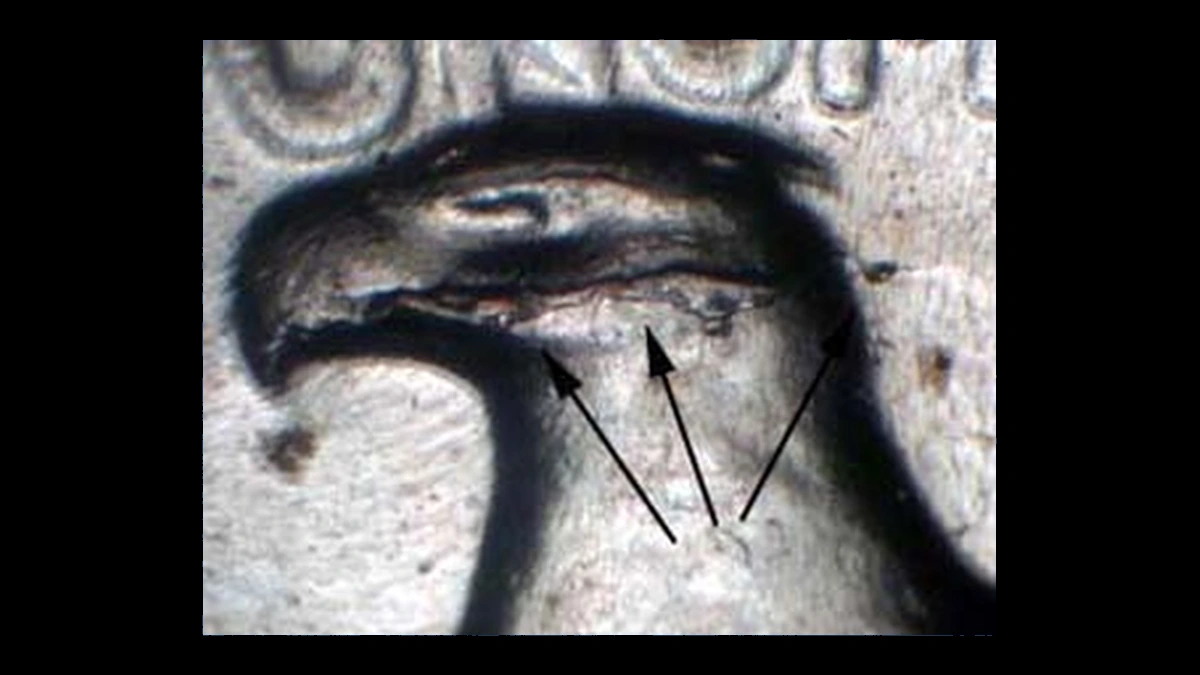
5. 1958 Quarter Raised Lines or an Edge Lump: Die Cracks and Cuds Error
Metal entering a crack in the die can form a narrow raised ridge on the quarter. A larger missing piece connected to the rim can leave a raised patch known as a cud.
How to Identify
Follow a suspected line through its junctions with letters or the portrait under angled light. It should be raised, rather than a cut with displaced metal pushed alongside it.
For a cud, establish a continuous connection to the rim and identify the design replaced by extra metal. A depressed dent or material added after minting does not fit that description.
What It’s Worth
$20–$300 is estimated across small cracks and more visible rim-connected breaks. A faint ridge on a worn silver coin may add little, while a clear original patch is easier to demonstrate.
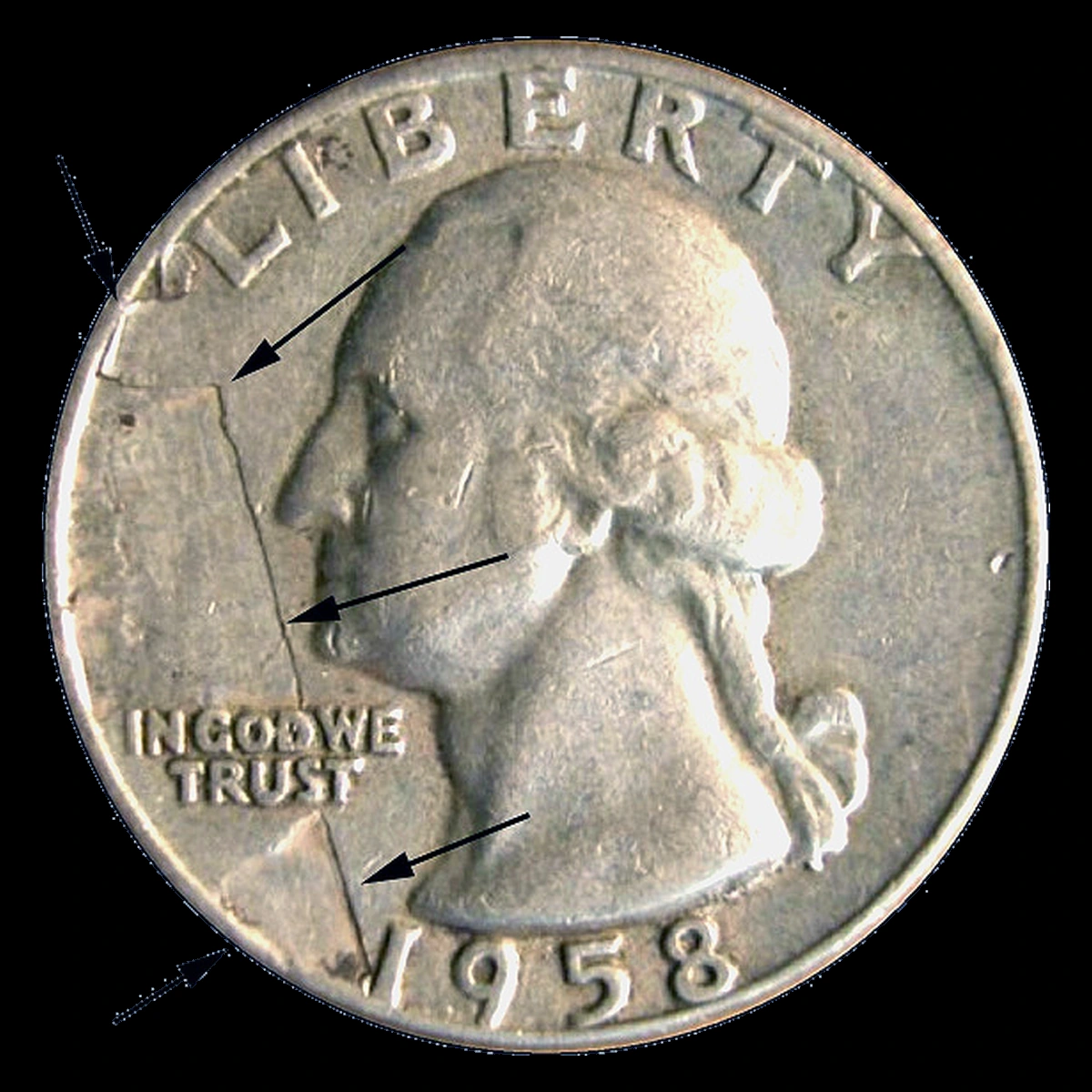
6. 1958 Quarter Two Recesses near the Motto: Lamination Loss Error
On an illustrated 1958-D, one large and one small surface flake came away after the coin was struck. Their recesses lie above and below IN GOD WE TRUST on the left side.
This is separation within the silver alloy, called lamination. It is not a modern clad coin losing a manufactured outer sheet.
How to Identify
Compare the two openings with the documented Denver lamination, including the surviving motto and boundaries. Their relationship to already struck detail supports the stated sequence.
Inspect for peeling metal rather than a gouge or fresh tool tracks. Leave any attached edge undisturbed so that the original separation remains available for examination.
What It’s Worth
$30–$500 is an estimate for genuine lamination loss. Larger or multiple recesses do not guarantee a higher price, since extensive disruption can also reduce the coin’s visual appeal.
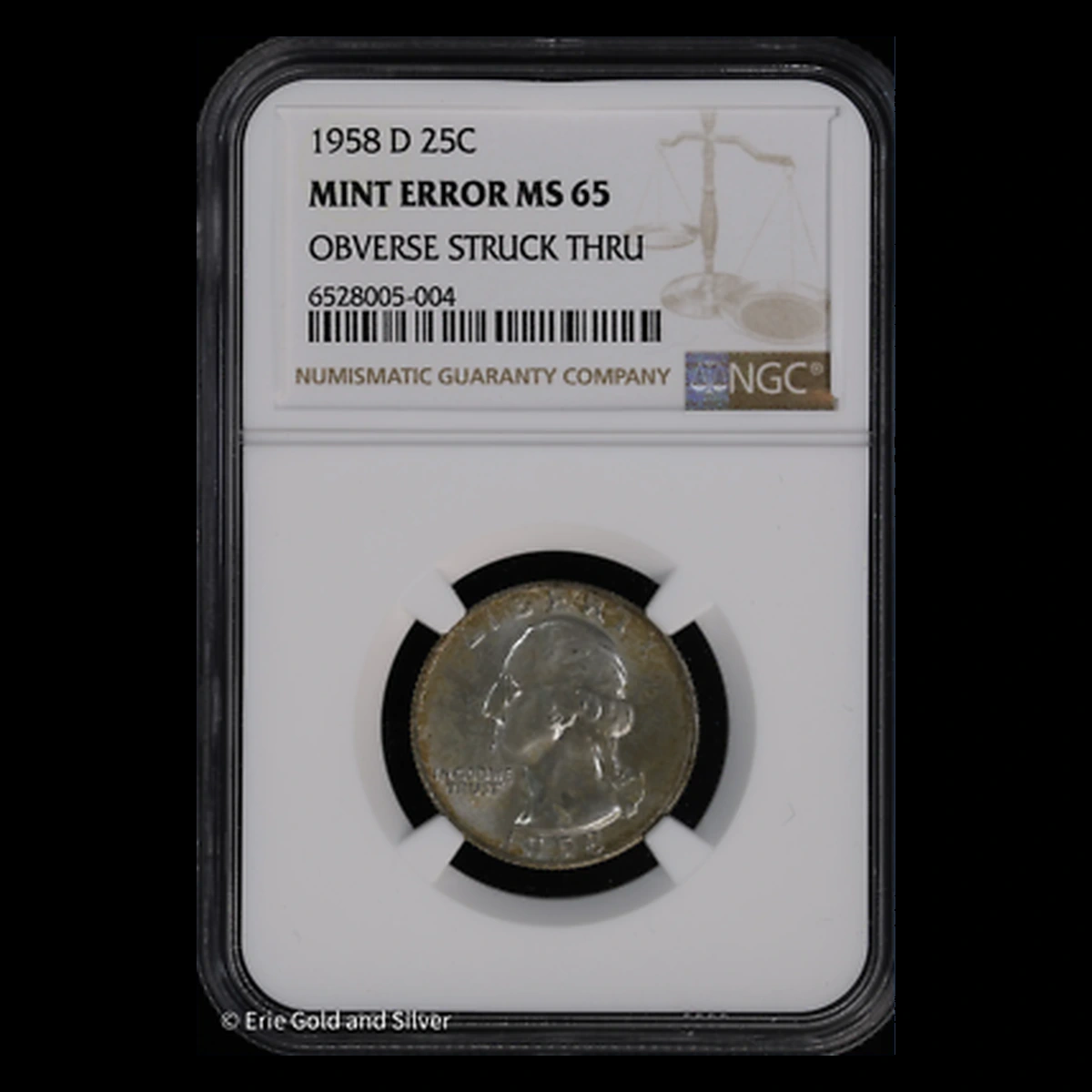
7. 1958 Quarter An Impression or Locally Missing Detail: Struck-Through Error
Reported 1958 examples include grease-related weakness and an MS62 quarter described with debris affecting the front. An obstruction between die and blank can prevent detail from forming or leave a shaped hollow.
How to Identify
Compare neighboring high points to distinguish a local interruption from general wear. A firm object may produce a defined boundary, while grease can soften letters without leaving a distinct object shape.
Check for later impacts and scratches across the affected area. The supplied report does not establish retained debris, so do not describe an object as still attached merely because a hollow exists.
What It’s Worth
$20–$1,000 is estimated across modest weakness and substantial object impressions. A published year guide reports $735 in 2022 for the 1958 MS62 front-debris example; that reported price is not a benchmark for every weak letter.
8. 1958 Quarter Thickness Gradually Decreases: Tapered Planchet Error
A tapered blank has less metal toward one side, which may leave weaker design in that sector. A dealer inventory records a PCGS MS66 example without supplying a universal taper direction or measurement.
How to Identify
For a loose coin, compare thickness at several points gently and relate the change to weaker design on both faces. A single dented rim or one faint word does not establish a gradual taper.
Look for grinding that crosses finished details, since later removal can mimic thinness. A certified coin should remain sealed while its visible edge and design are assessed together.
What It’s Worth
$100–$1,000 is an estimate for an authenticated tapered-planchet quarter. A demonstrable gradual change on preserved surfaces is more useful than unexplained weakness, and no supplied sale prices the recorded MS66 inventory coin.
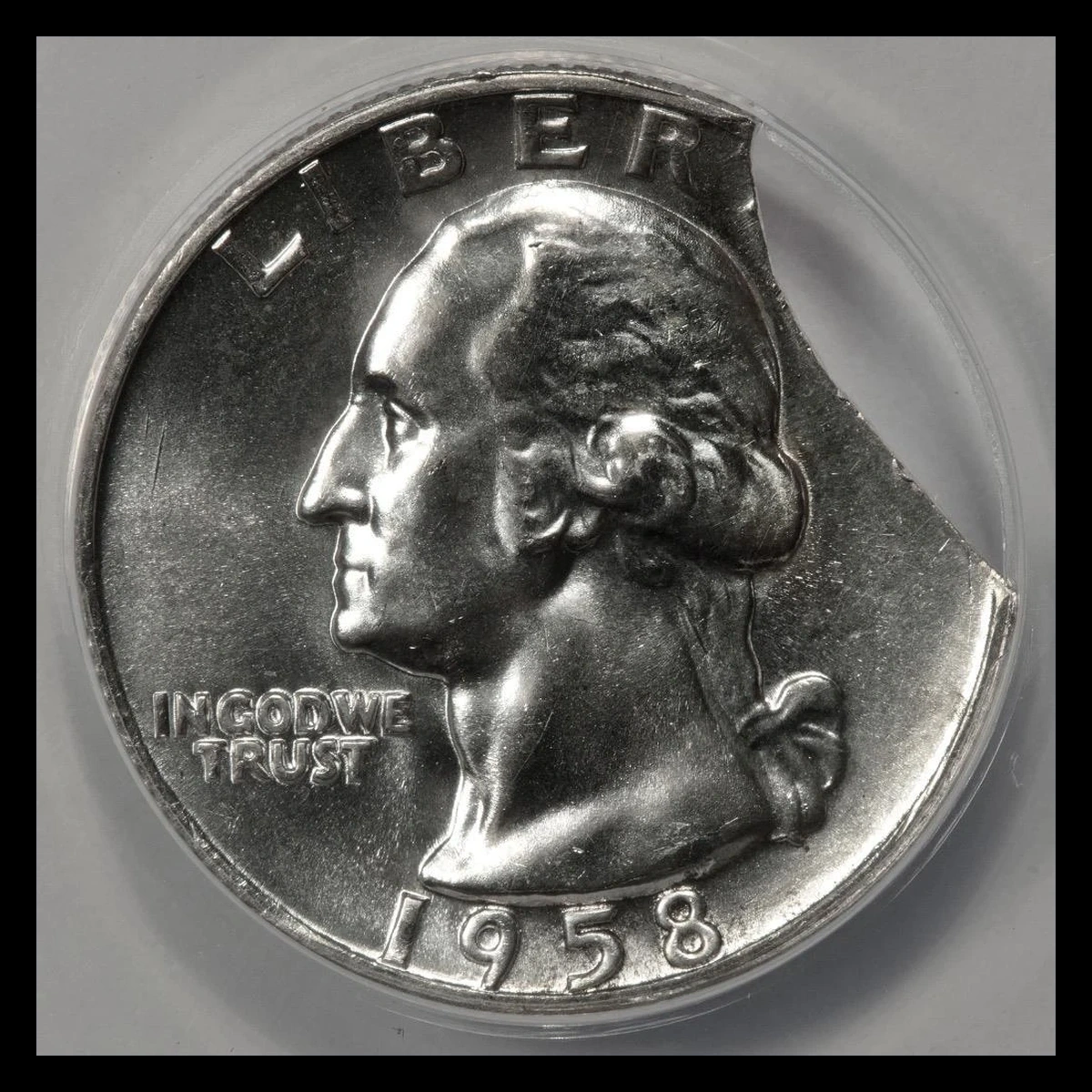
9. 1958 Quarter A Section of the Edge Is Absent: Clipped Planchet Error
A clipped blank lacks part of its metal before striking. The 1958 reports include a curved example, while the category can also include other original blank-cutting shapes.
How to Identify
Inspect both endpoints for how the rim and nearby design formed beside the gap. A later saw cut may slice abruptly through detail that had already been completed.
Opposite-rim weakness can support a genuine clip but is not compulsory. As common reference standards, a normal 1958 quarter weighs 6.25 grams and is about 24.3 millimeters across; lower weight alone cannot distinguish a clip from later filing.
What It’s Worth
$25–$400 is an estimated range for ordinary genuine clips. A 1966 clad quarter with a 20% straight clip sold for $124 in June 2024, a different-year and different-metal comparison.
10. 1958 Quarter Complete Designs inside a Wider Border: Broadstrike Error
Without normal restraint from the collar, the ring controlling the edge, a blank can spread outward during striking. A broadstrike may keep the complete design while developing an uneven expanded border.
How to Identify
Trace the outer lettering on both faces to confirm that the intended design remains on the metal. Missing design opposite an unstruck crescent instead points toward an off-center strike.
Inspect the edge grooves and the portrait for natural spreading versus later crushing. The reports provide no fixed expansion amount, and a wide hammered coin does not qualify on diameter alone.
What It’s Worth
$50–$500 is estimated for authenticated 1958 broadstrikes. A slightly worn 1966 uncentered broadstrike in AU58 brought $222 in June 2024, but that sale concerns a later clad quarter.
11. 1958 Quarter A Bare Crescent beside an Incomplete Design: Off-Center Strike Error
An off-center blank sits partly outside the dies, leaving some metal untouched and some intended design beyond its edge. The supplied 1958 category has no common percentage assigned to every example.
How to Identify
Read the surviving year and photograph any reverse mintmark area that remains. Compare both faces to establish one displaced strike on the same blank.
Examine the bare surface for grinding, seams, or erased detail. An added ring or a flattened section can look blank without being original unstruck metal.
What It’s Worth
$50–$1,500 is an estimate for a genuine 1958 off-center quarter. A 1943-S silver example struck 35% off center sold for $2,640 in July 2022, which is a different-date comparison rather than a 1958 record.
12. 1958 Quarter Quarter Details on a Nickel Blank: Wrong Planchet Error
An NGC MS60 dealer-listed example preserves about 95% of its date on an undersized nickel blank. Another listing describes a nickel-planchet coin of that grade with its reverse rotated 30 degrees.
The wrong blank and rotation are combined features of the latter listing. Neither the date visibility nor rotation should be assumed on every example.
How to Identify
Read the cropped date and inspect how the quarter’s outer design meets the smaller metal. A nickel blank starts near 5.0 grams and 21.2 millimeters, although striking can expand it.
To assess the reported rotation, hold Washington upright and flip top to bottom without a sideways twist. The eagle’s consistent 30-degree tilt must be demonstrated with fixed orientation, not separately straightened images.
What It’s Worth
$300–$1,500 is an estimate for comparable authenticated nickel-planchet quarters. Historical dealer asks were $650 for the rotated example and $700 for an MS60 with most of its date visible; neither is a confirmed auction result.
13. 1958 Quarter A Very Small Silver Quarter: Dime Planchet Error
A dime blank and a quarter blank both contain 90% silver in 1958, so their color does not identify the error. The smaller blank cannot accommodate the entire quarter design.
A PCGS MS63 example appears in an older dealer listing. Its preserved central design needs to be considered with the original edge rather than treated as a quarter simply cut down afterward.
How to Identify
Locate recognizable quarter lettering, Washington, and any surviving date digits. A silver dime blank starts around 2.50 grams and 17.9 millimeters, much less metal than the quarter standard.
Inspect where the interrupted design reaches the edge for natural striking rather than filing or trimming. These starting measurements are references, and the larger dies can spread the smaller blank.
What It’s Worth
$500–$2,500 is an estimate for authenticated silver-dime-planchet quarters. A 1958 example in MS63 sold for $810 in July 2022, while an older $1,695 dealer listing for an MS63 was an asking price.
14. 1958 Quarter A Brown Quarter with Date and D Intact: Cent Planchet Error
The documented NGC MS65 Brown 1958-D weighs 3.05 grams and retains its complete date and mintmark. Rose and orange remain in the brown surface, with partial rims at the lower front and upper reverse.
The copper-based blank was intended for a cent instead of a silver quarter. The amount of surviving identity is a specific advantage of this example, not a guarantee for every wrong-planchet coin.
How to Identify
Compare the date, D, and partial rim locations with the recorded specimen. Check that the copper-based metal continues through the edge rather than appearing only as plating.
The measured 3.05 grams is close to the period cent standard of 3.11 grams. Preserve the original color and struck surfaces, since scraping or cleaning can obscure evidence of the blank’s construction.
What It’s Worth
$800–$3,000 is a working estimate for comparable Denver cent-planchet quarters. The 3.05-gram NGC MS65 Brown sold for $1,380 in February 2011, and a separate PCGS MS64 Brown realized $1,680 in January 2018.
Conclusion
The finish and original blank matter as much as the unusual feature on a 1958 quarter. Type B is expected on a Proof, while a small silver disk and a small copper-based disk require different wrong-planchet comparisons.
Keep measured weights, grades, and prices tied to their actual specimens. Photographs of both faces and the edge help separate a true strike-related feature from later damage without disturbing the evidence.