Rare 1873 Quarter Errors (List & Pictures)
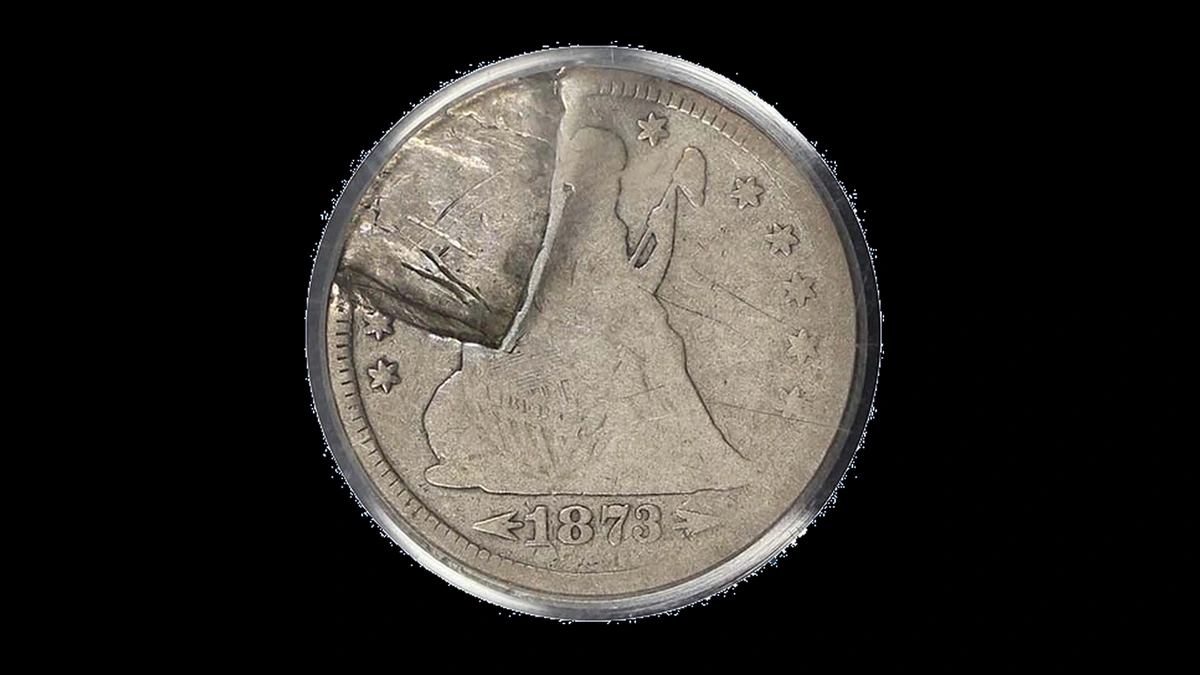
A worn 1873-CC Arrows quarter sold for $6,600 in December 2019 without an advertised mint error. That normal-coin comparison helps frame the 1873 quarter errors below, with estimated whole-coin values of $50–$18,000.
Read the mintmark and check the arrows beside the date before examining the reported mintmark, design, metal, or striking feature.
| Feature | Evidence status | Applicable range |
|---|---|---|
| Repeated mintmark | Reported type; exact pattern unspecified | $75–$2,500 for confirmed worn to lightly worn S examples |
| Doubled design | No confirmed pattern supplied | $50–$2,500 for confirmed ordinary Philadelphia examples |
| Front metal separation | Documented CC Arrows G6 coin | $5,000–$18,000 for comparable worn coins |
| Off-center design | No exact specimen supplied | $500–$10,000 for authenticated P or S examples |
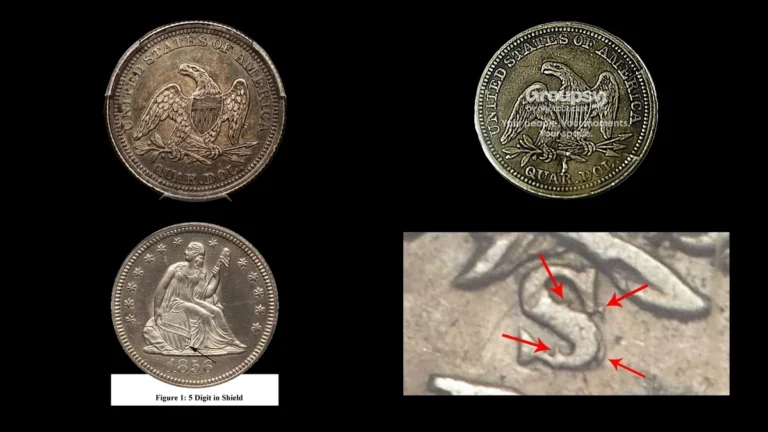
1. 1873 Quarter An extra S or CC contour: reported repunched mintmark Error
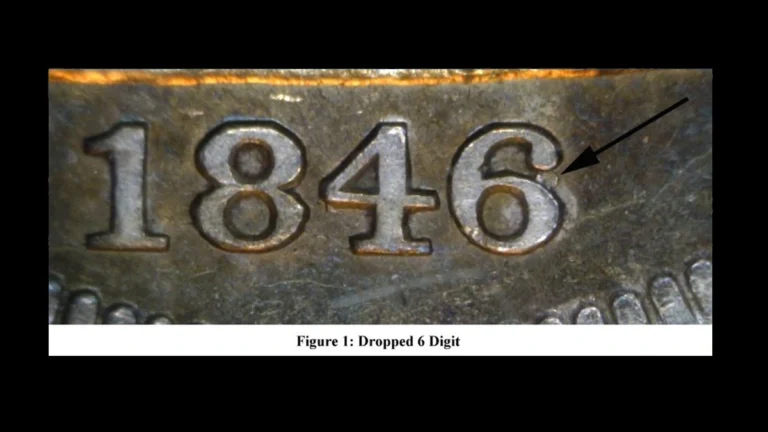
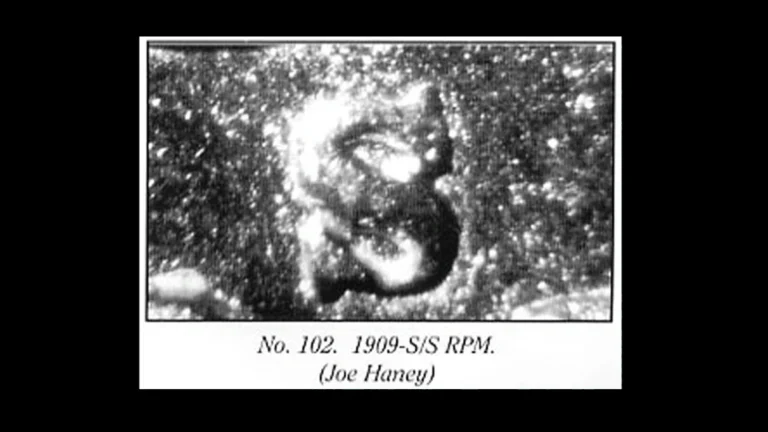
The mintmark below the eagle can contain a trace of an earlier letter impression. Workers punched mintmarks into the die before coin production, and a second application out of alignment could leave part of the first.
The year guide reports repunched mintmarks without establishing a specimen or overlap direction. A broad S or the ordinary spacing between two Cs does not prove repunching.
How to Identify
Identify S or CC first, then examine whether the extra feature follows a recognizable part of that letter. A small die chip or rough corrosion can produce an unrelated bump.
Philadelphia quarters normally have no mintmark, so an isolated lump in that location is not automatically a repeated letter. Compare the complete mintmark with a matching normal issue and an attributed variety reference.
What It’s Worth
A confirmed repunched mintmark on a worn to lightly worn 1873-S quarter has an estimated whole-coin range of $75–$2,500.
This estimate excludes rare Carson City issues and exceptional grades. No specific auction result is supplied for a confirmed 1873 repunched-mintmark pattern.
2. 1873 Quarter Closely repeated design outlines: reported doubled die Error
A doubled die carries repeated detail in its own design and transfers that pattern to multiple coins. It is a different process from a coin developing a flat shelf as metal or a tool moves during striking.
The supplied year guide names the category without establishing a confirmed front or reverse pattern. It also leaves the mint and Arrows or No Arrows issue unspecified.
How to Identify
Photograph the suspected lettering, star, or other feature under two light directions. Follow raised separation through neighboring details rather than relying on general thickness.
Normal arrows beside the date and different shapes of 3 are not doubling by themselves. A convincing attribution needs the same pattern on a documented example from the matching issue.
What It’s Worth
The conditional estimate is $50–$2,500 for a confirmed doubled design on a worn or moderately preserved ordinary Philadelphia quarter.
Rare Carson City quarters and collector Proofs require separate comparisons. This is not an auction range established for a specific 1873 doubled die.
3. 1873 Quarter Silver separating on the front: lamination Error
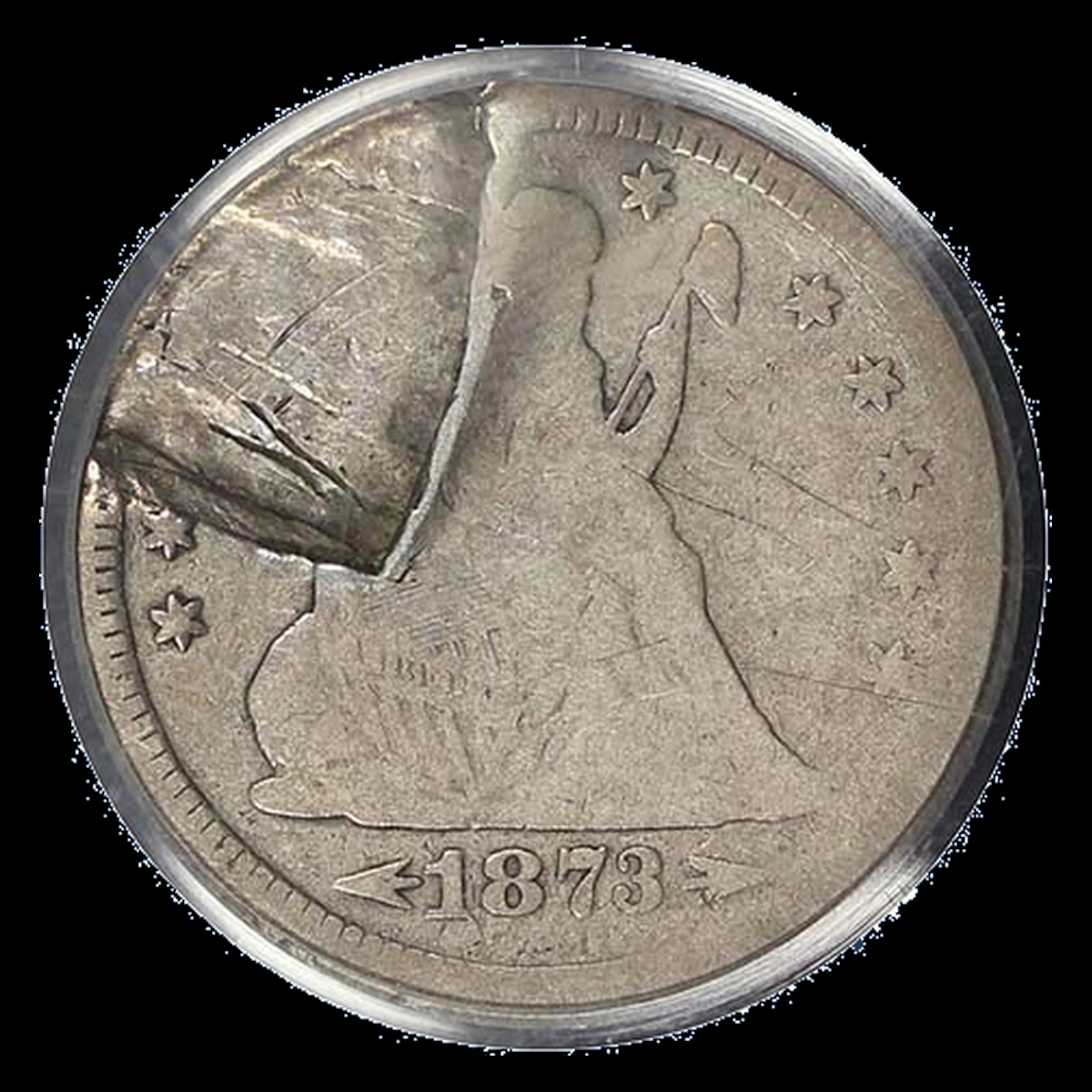
A documented 1873-CC Arrows quarter graded PCGS G6 has a front lamination. G6 describes heavy wear with the major outlines still recognizable.
A lamination is a split near the surface within the metal used to make the blank. It may leave a thin flap or a shallow rough opening where a piece separated.
This silver-copper alloy is not constructed like a modern copper-centered clad quarter. A missing bonded outer layer is therefore the wrong explanation for the documented flaw.
How to Identify
Confirm both CC and the arrows beside the date before comparing the certified example published in Mint Error News. Its combination of mint, design, and heavy wear matters.
Use side lighting to follow the separation boundary without probing beneath loose metal. If the coin is in a grading holder, leave it sealed for the visual examination.
A raised die-crack ridge adds metal to the struck image, while lamination separates the blank’s own metal. Scraping can also disturb the surface but may leave cutting marks rather than a naturally layered opening.
What It’s Worth
A genuine heavily worn 1873-CC Arrows quarter with comparable lamination has an estimated whole-coin range of $5,000–$18,000. Much of the price comes from the scarce issue itself.
Heritage sold a different PCGS G6 Arrows coin for $6,600 on December 6, 2019. That auction did not advertise lamination, so it is a normal-coin comparison rather than the error specimen’s sale.
4. 1873 Quarter Blank metal beside incomplete artwork: reported off-center strike Error
A misplaced blank can receive the design across only part of its surface. The resulting unstruck crescent lies opposite artwork that ran beyond the metal.
No exact mint, percentage, or photographed 1873 example is established by the supplied report. Arrows and No Arrows candidates must retain their own identities.
How to Identify
Compare both faces for one consistent displacement and identify where intended detail is missing. A shift confined mainly to one face may be a misaligned die, while an expanded coin with complete designs may be a broadstrike.
Read the surviving date, arrows, and mintmark without completing missing details by guesswork. The Arrows issue normally weighs 6.25 grams, compared with about 6.22 grams for No Arrows; normal diameter is about 24.3 millimeters.
These standards help evaluate a loose coin, but the original strike boundary remains essential. Look for edge cuts, flattening, or grinding that could explain an altered outline.
What It’s Worth
The conditional range is $500–$10,000 for authenticated Philadelphia or San Francisco examples from worn through lightly marked unworn condition.
This estimate uses comparable early silver striking errors, not a recorded 1873 sale. A Carson City example needs separate valuation because the rare issue can dominate the total.
Conclusion
The arrows and mintmark determine which 1873 quarter belongs in a price comparison. They are especially important when a worn Carson City coin is compared with a more common Philadelphia or San Francisco issue.
Keep the documented front lamination separate from reported categories that still lack an exact pattern or specimen. A raised extra outline, separating metal, and an incomplete strike each require their own physical evidence.