Rare 1977 Dime Errors (List & Pictures)
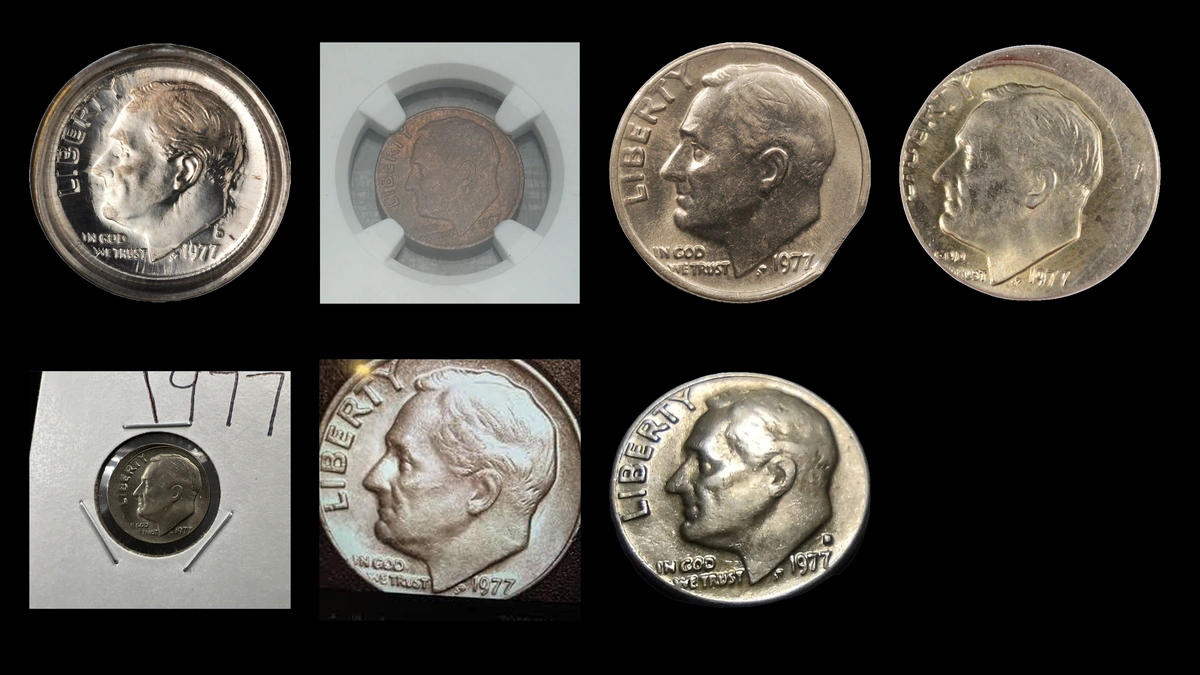
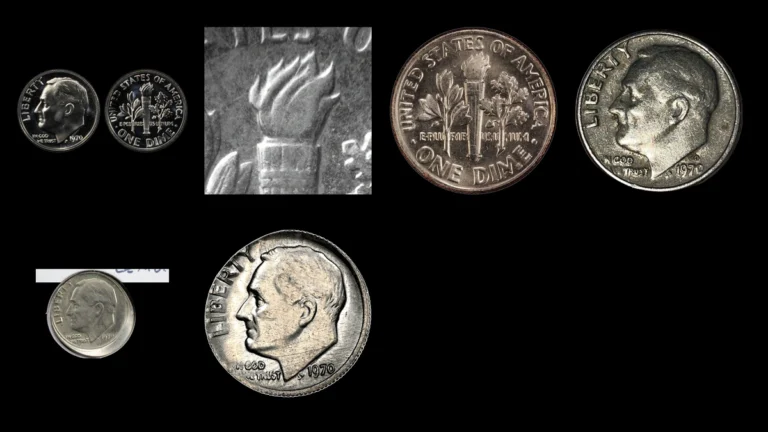
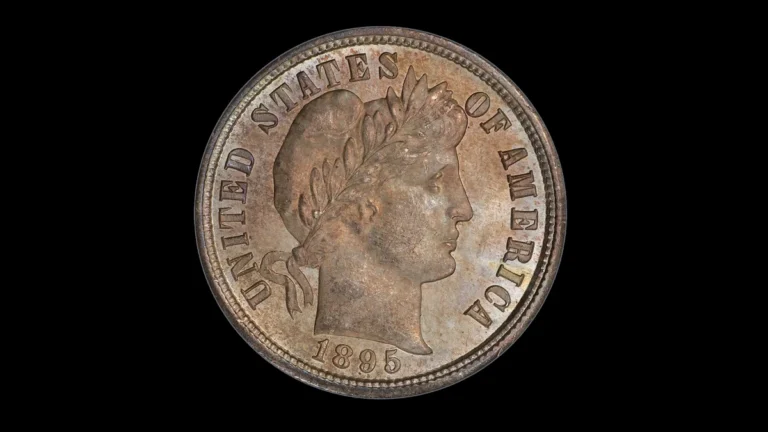
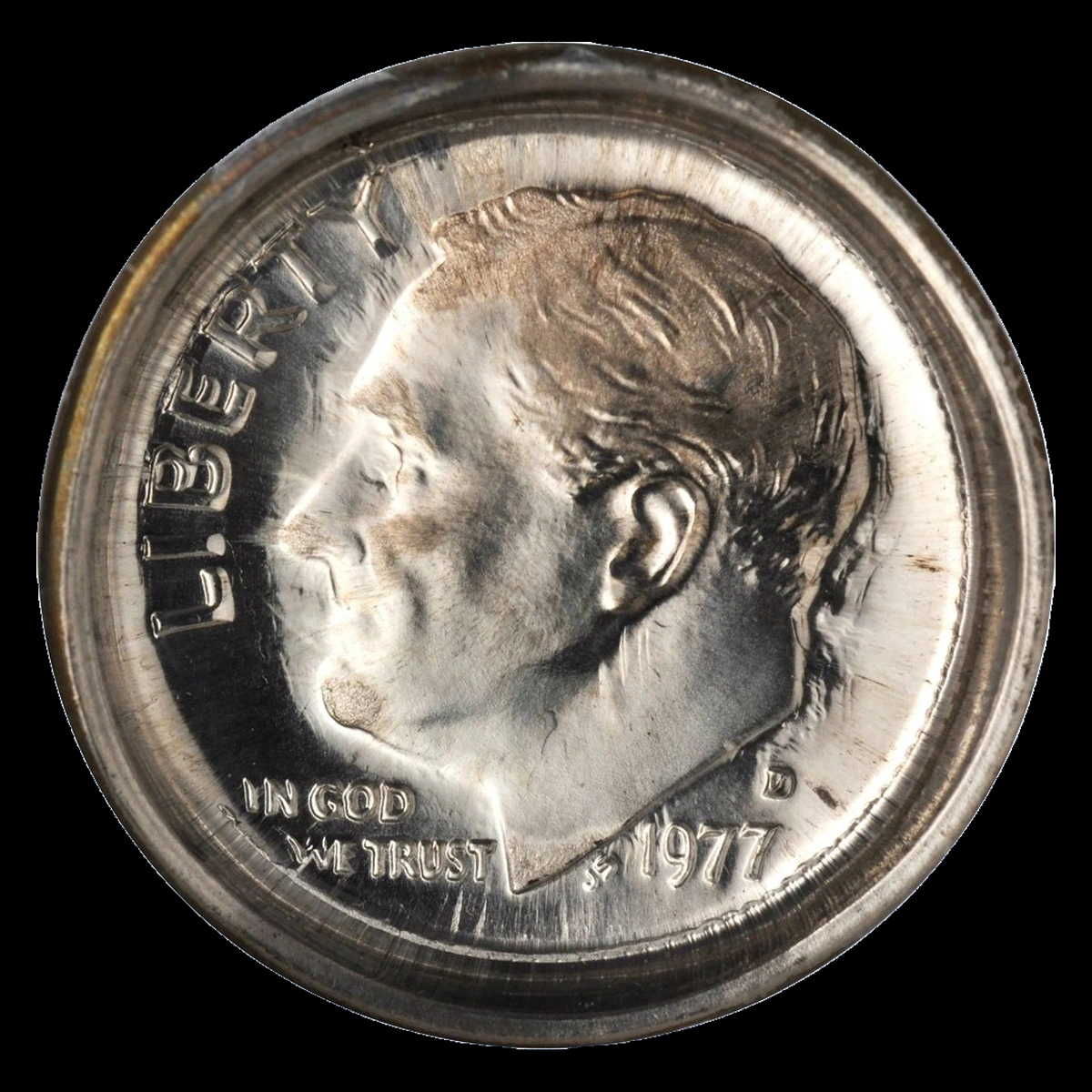
A cup-shaped Denver dime supplies the largest documented sale here among 1977 Roosevelt Dime errors: an NGC MS69 die cap brought $1,725 in April 2006. Other reported mistakes affect the metal, edge, or individual design details.
Estimated values span $5–$3,000. Begin with the overall shape and metal, then examine the lettering; remember that a normal 1977 Philadelphia dime has no mintmark.
1. 1977 Dime A Raised Wall Wraps around the Center: Die Cap Error
A coin that sticks to a die can remain in the press as more blanks are struck. Its edge can gradually rise around the tool, producing a cup-like die cap.
The documented 1977-D front cap was graded NGC MS69, with bright pale-gray surfaces and light golden color in Roosevelt’s hair. It is the stuck coin itself, rather than a later coin struck beneath it.
How to Identify
Start with a side view of the wall and examine how the design continues into stretched metal. Do not flatten or reshape the cap to make it easier to photograph.
Inspect both faces instead of expecting a blank reverse. Later bending can create a cup shape but may leave abrupt folds or scratches inconsistent with natural growth around the die.
A normal dime begins near 2.268 grams and 17.91 millimeters, with a grooved edge. A cap’s altered width and depth are part of the error, so normal diameter is only a starting reference.
What It’s Worth
Genuine 1977-D caps are estimated at $500–$3,000. Shape and preservation strongly influence the comparison.
The NGC MS69 front cap sold for $1,725 in April 2006. Its unusually clean surfaces contributed alongside the striking error.
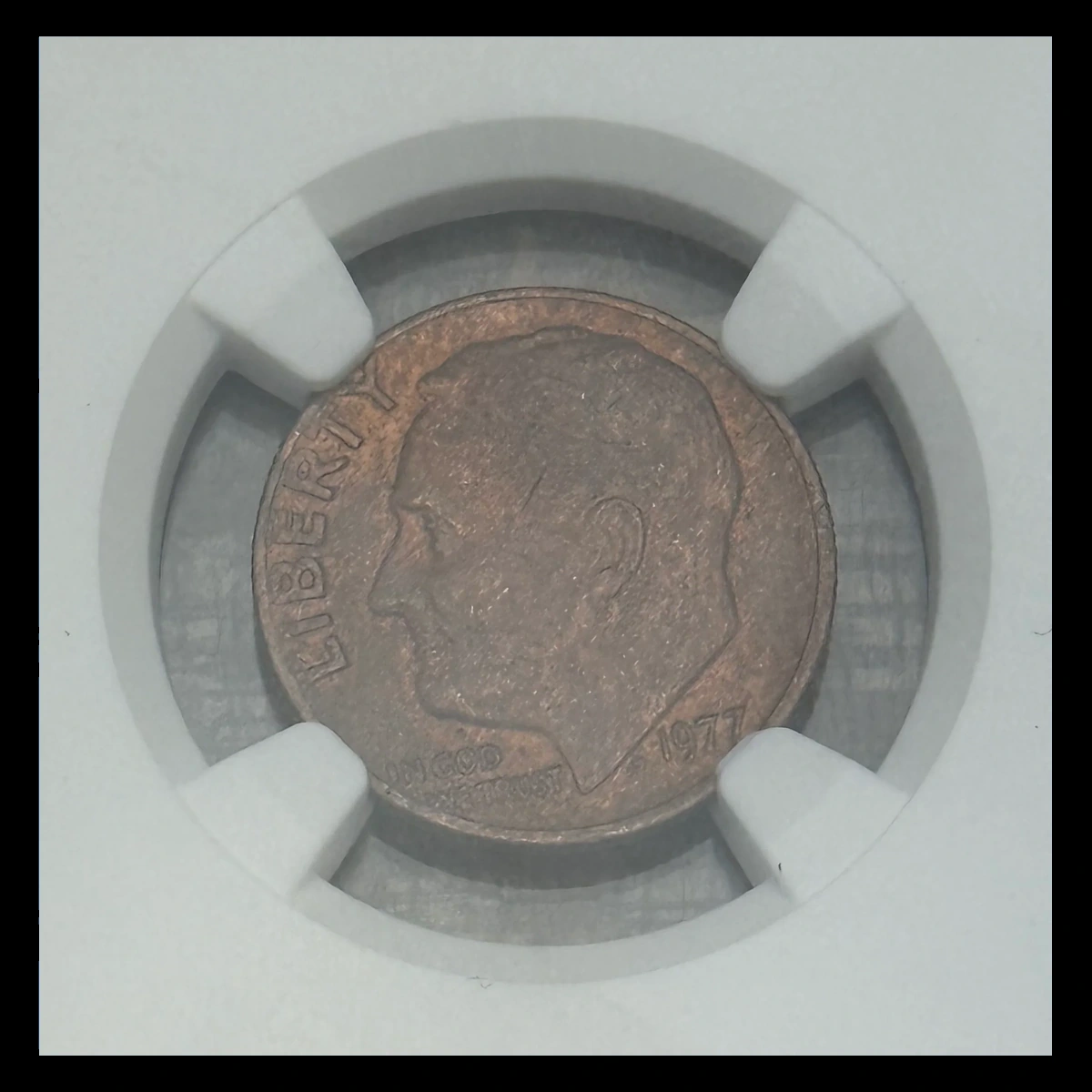
2. 1977 Dime A Copper-Colored Front Lacks Its Outer Metal: Missing Clad Layer Error
The documented 1977-D dime is missing its front outer layer, exposing the copper center beneath Roosevelt. It weighs 1.9 grams and was graded NGC MS64.
Ordinary dimes have copper-nickel outer layers bonded to a copper core. Separate Philadelphia reports do not inherit the Denver specimen’s exact weight or grade.
How to Identify
Compare the exposed front with the retained reverse layer and examine the edge boundary. Actual missing metal should explain both the surface and an appropriate weight reduction.
The 1.9-gram reading belongs to the recorded Denver coin, while 2.268 grams is the normal standard. Use existing measurements for a holdered coin rather than removing it.
Look for chemical attack, artificial stripping, or an added film. Red or brown color without physical layer loss cannot establish the same error.
What It’s Worth
Comparable genuine missing-front-layer examples are estimated at $40–$750. The NGC MS64 Denver specimen sold for $45 in April 2020.
A later 1988-D missing-layer dime graded NGC MS65 brought $360 in June 2024. That is a different coin and year, not another sale of the 1977 example.
3. 1977 Dime A Small Area Peels rather than a Whole Face: Local Delamination Error
A flap or peeled patch can result from weakness within the metal or its bonded layers. The 1977 reports distinguish such local separation from loss of an entire outer layer.
No fixed location or separation stage is established. The relationship between the peeling surface and its design must explain when the opening formed.
How to Identify
Leave attached metal undisturbed and follow any struck detail onto it. Whether the design continues across the layer or ends at a rough opening can help establish the sequence.
Check the boundary for gouging or a pried edge. A tiny flake may produce little measurable weight change, so the original connection matters more than a dramatic scale difference.
What It’s Worth
Genuine local peeling is estimated at $10–$250. Area, visibility, and surrounding condition affect the whole value.
The $45 same-year Denver missing-front-layer sale describes a different extent of loss. A small local flake should not automatically inherit the price or description of a whole missing layer.
4. 1977 Dime Roosevelt Appears on a Reported Cent Blank: Wrong Planchet Claim Error
This claim requires a dime design on the larger copper-alloy blank used for a 1977 cent. It is the opposite of a Lincoln cent design struck on dime metal.
A contemporary cent blank began at about 3.11 grams and 19.05 millimeters, making it heavier and wider than a dime blank. Later copper-plated zinc cent specifications are not appropriate for 1977.
How to Identify
Confirm Roosevelt’s design and record actual weight, diameter, and metal composition. Copper color alone could reflect a missing clad layer or a later coating.
Inspect how the larger disc met the dime collar and how the design formed on it. The larger blank’s entry into the striking position needs credible specialist examination, not an assumption from a cropped photograph.
What It’s Worth
A genuinely identified example has a conditional estimated value of $500–$2,500. No documented 1977 sale is supplied for the year-list claim.
The starting blank, original metal, readable dime identity, and preservation all need to agree. A photograph of the reverse denomination mismatch cannot authenticate this proposed error.
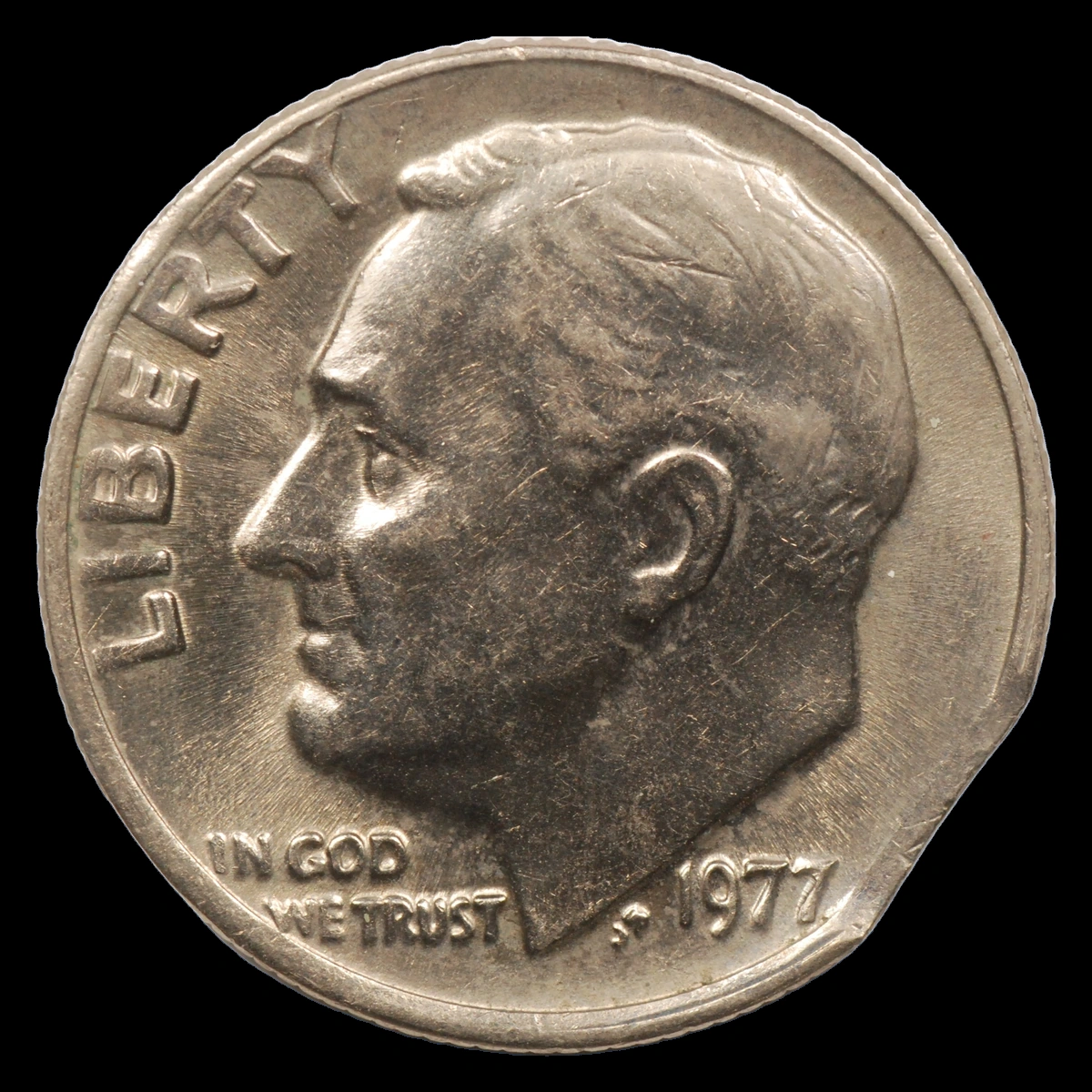
5. 1977 Dime One or More Openings Interrupt the Disc: Clipped Blank Error
Philadelphia and Denver incomplete blanks are reported for 1977. Their missing sections existed before the rims and designs formed.
No universal size or clock position is established. Several openings can occur on a coin, but counting them does not determine whether they are genuine.
How to Identify
Inspect each gap’s endpoints for a struck rim approaching the shortage naturally. Abruptly sliced letters and filing through the remaining grooves can reveal later cutting.
Look for possible weakness opposite a gap as supporting evidence. Reduced weight confirms a shortage, while the boundary must establish that it preceded striking.
What It’s Worth
Genuine 1977 clips are estimated at $20–$350. Shape, missing amount, readable identity, and condition guide the comparison.
A 1997-P nickel with a 20% clip brought $124 in March 2025. This other-date, other-denomination result offers broad context rather than a price for a particular 1977 dime.
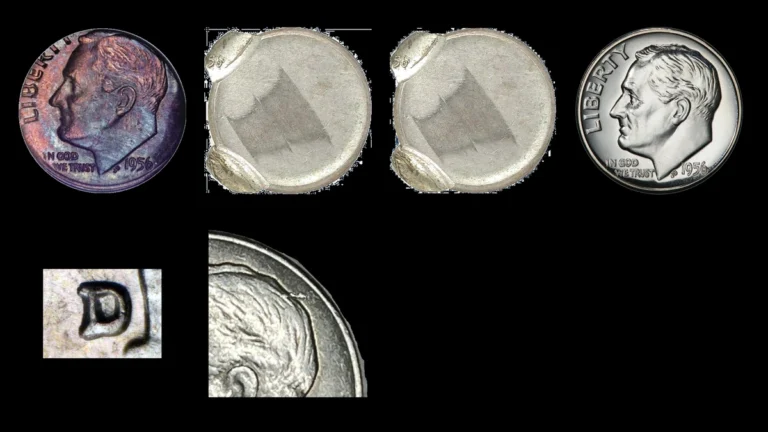
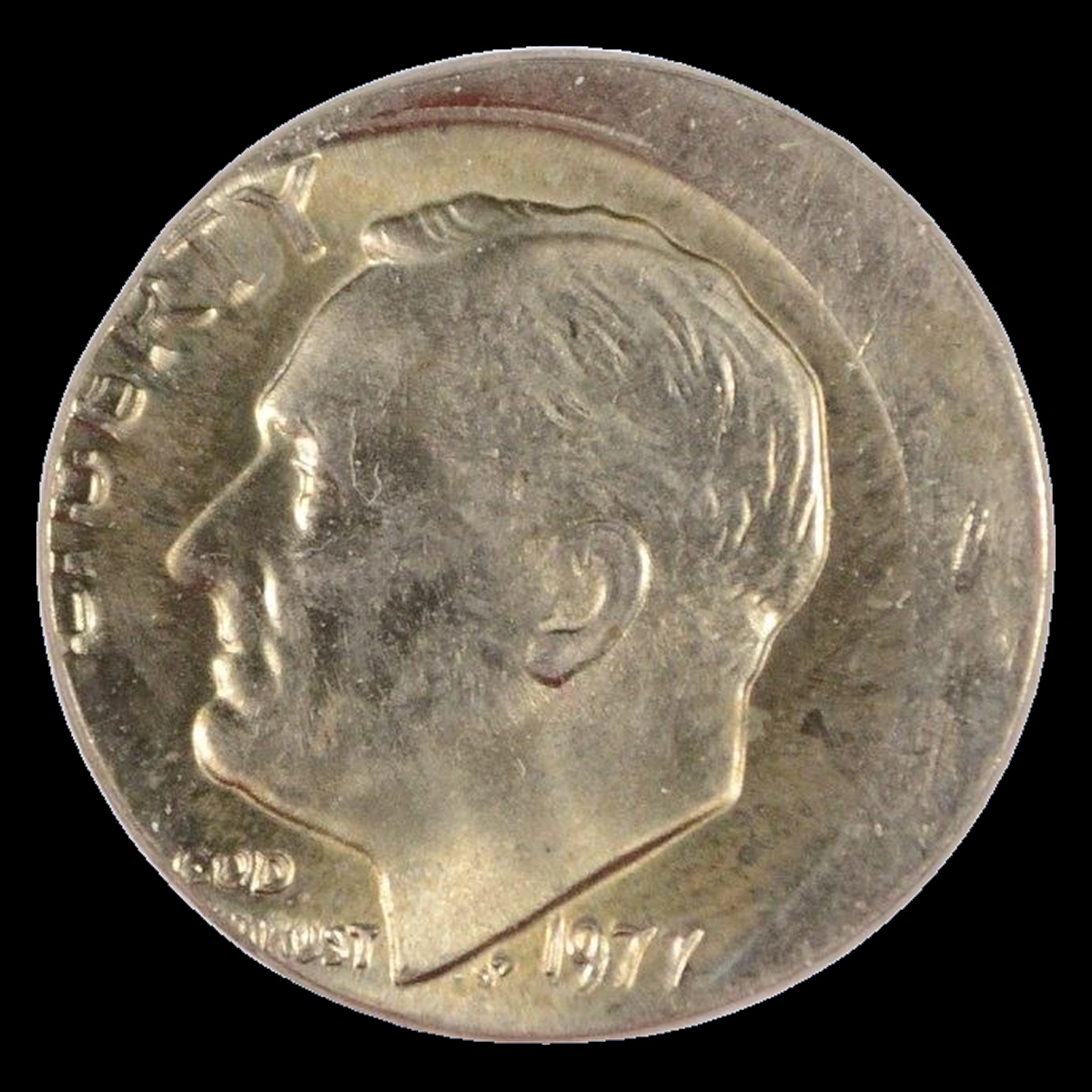
6. 1977 Dime A Bare Crescent Borders a Fifteen-Percent Shift: Off-Center Strike Error
The documented Philadelphia example was struck 15% off center toward 1 o’clock and graded ANACS MS63. Some of its blank remained outside the striking area.
The absence of a mint letter is normal for Philadelphia in 1977. It is not an additional missing-P error.
How to Identify
Orient the dated face upright and compare its displacement with the reverse. Both faces should reflect the same misplaced blank.
Examine the transition from struck detail into untouched metal for scraping or flattened old lettering. A shift affecting only one face may involve die alignment rather than an off-center blank.
What It’s Worth
Dated genuine 1977 off-center dimes are estimated at $25–$500. Readable identity and preservation remain important even on a dramatic shift.
A separate 1977 dime struck 10% off center, graded NGC MS64 Full Bands, sold for $109 in June 2026. That coin’s percentage and grade must not be transferred to the 15% ANACS specimen.
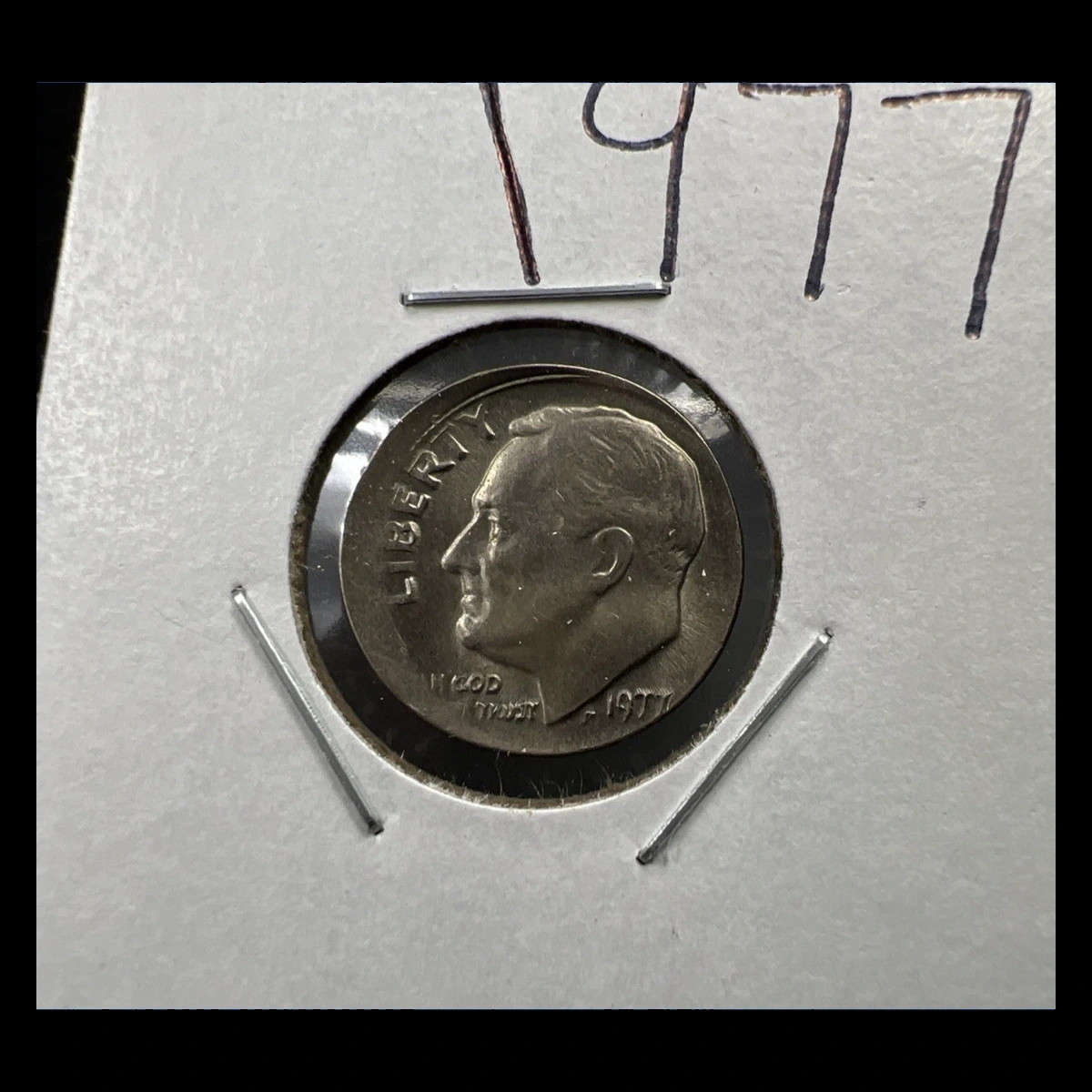
7. 1977 Dime The Full Design Sits inside an Expanded Border: Broadstrike Error
A collar that fails to contain the strike allows metal to spread outward. The resulting broadstrike retains its complete design within the enlarged outline.
The supplied 1977 report fixes neither mint nor measured diameter. A smooth edge on a normal-width coin does not establish the same error.
How to Identify
Read the outer lettering on both faces before interpreting the wide border. Missing design opposite a blank crescent calls for an off-center comparison instead.
Check the expanded area for natural metal flow and reduced grooves rather than later flattening. Hammering can widen the outline while crushing already struck detail.
What It’s Worth
Genuine 1977 broadstrikes are estimated at $25–$400. This is a comparison-based range without an auction result for the unnamed report.
A 1988-P dime with overlapping strikes, the second also broadstruck, sold for $80.50 in May 2005. Its two-effect combination does not directly price a simple expanded strike from 1977.
8. 1977 Dime Earlier Lettering or Portrait Detail Remains: Multiple Strikes Error
A dime that fails to leave the press can receive another blow in a different position. The newer design may partly overwrite the first and alter the coin’s outline.
The 1977 report supplies no fixed mint, angle, or second-strike percentage. Those features have to be read from the actual coin.
How to Identify
Locate two traceable design positions and follow where they overlap on both faces. A narrow shelf beside a letter is different from an earlier portrait or word in another position.
Check the edge for joins, crushing, or later squeezing. Do not infer a flip or a particular rotation unless the surviving impressions demonstrate it.
What It’s Worth
Genuine repeated strikes are estimated at $60–$800. Recognizable earlier lettering and original surfaces improve the comparison.
A 1997-P double-struck dime graded NGC MS64 brought $138 in December 2020. Its off-center second impression is a later-year comparison, not a direction or layout established for 1977.
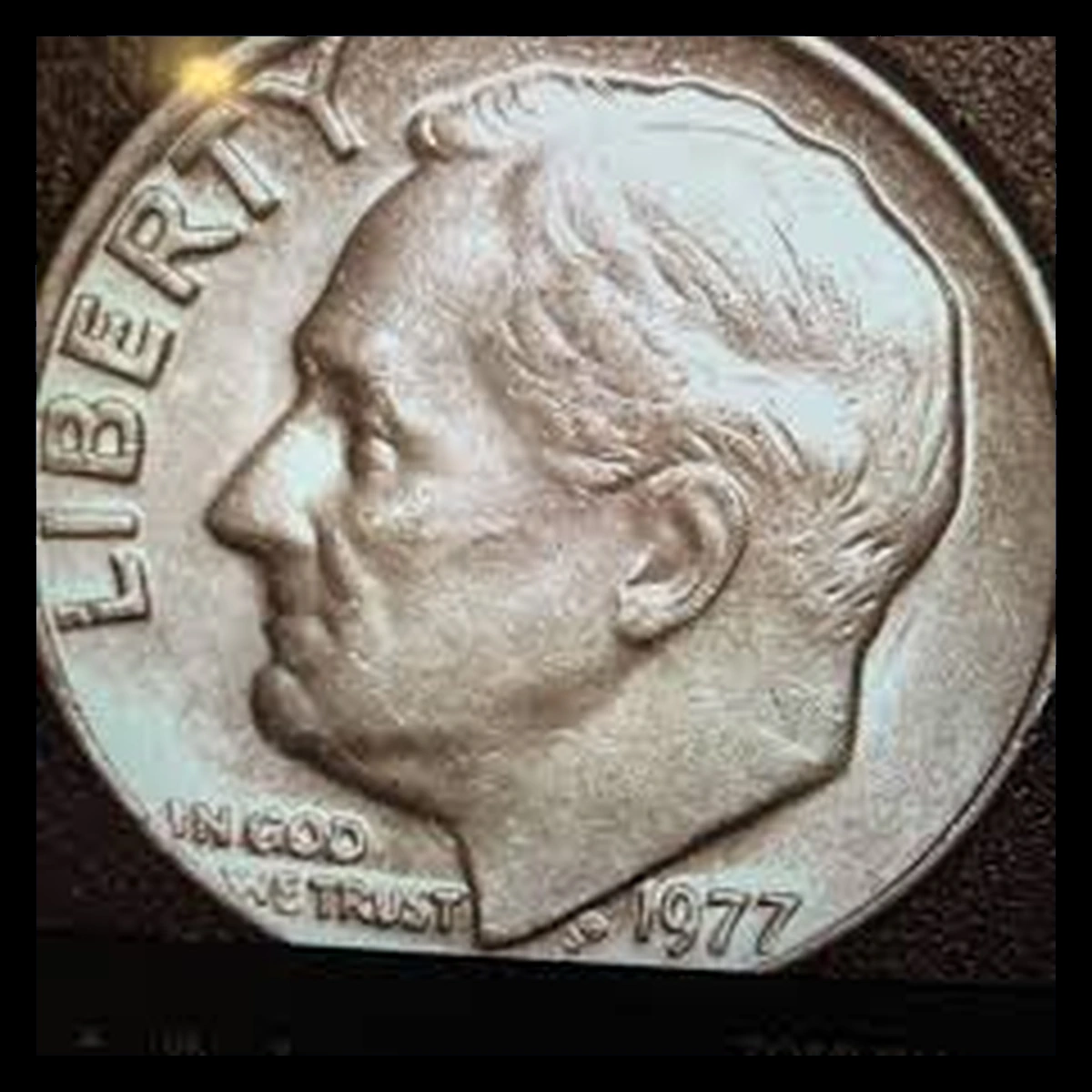
9. 1977 Dime A Patch or the D Is Weak: Struck Through and Filled Die Error
Material blocking a die can prevent a letter or local patch from forming fully. The 1977 reports include general strike-throughs and a clogged Denver mintmark.
The D normally sits above the date near Roosevelt’s neck. An empty space there is also normal on a Philadelphia coin, so absence alone cannot establish a missing Denver letter.
How to Identify
For a suspected clogged D, find surviving letter detail or other matching die features that establish Denver origin. An ordinary no-mintmark coin does not satisfy that test.
For a separate blocked patch, compare its boundary with nearby preserved detail and inspect for scraping. A smooth impression does not identify grease or any other particular substance.
What It’s Worth
Genuine blocked-design errors are estimated at $5–$200. Distinct impressions generally provide stronger comparisons than a barely weakened letter.
No verified sale is supplied for the reported clogged D. Normal Philadelphia coins and letters removed by wear or scraping do not receive that error premium.
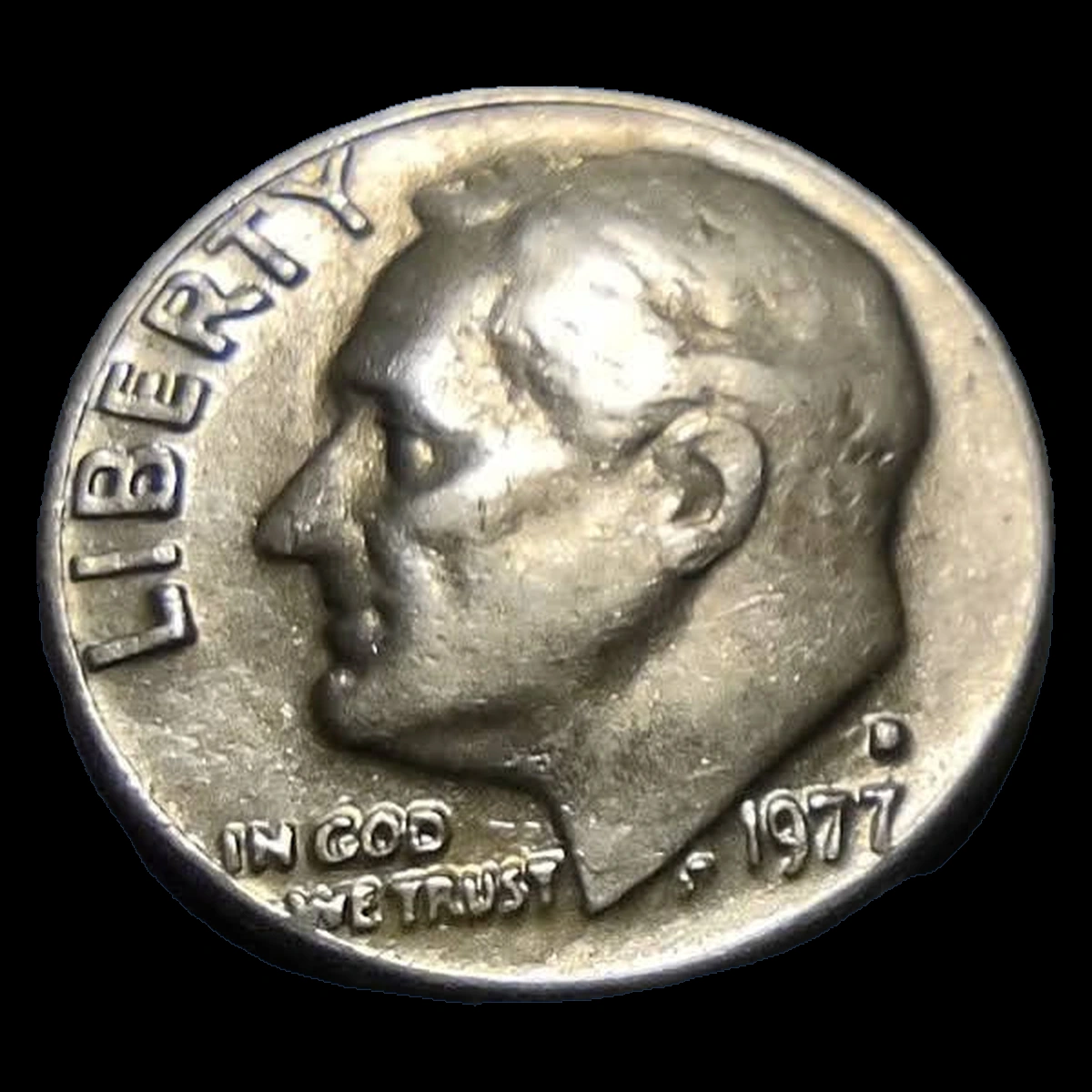
10. 1977 Dime Extra Formed Outlines Follow Letters: Reported Doubled Dies Error
The front reports point to LIBERTY, the motto, and date, while reverse reports mention E PLURIBUS UNUM, ONE DIME, and the country name. No mint, fixed direction, or catalog pattern is established here.
A doubled die contains repetition before it strikes a coin. It can therefore transfer two outlines in one blow without the coin being double struck.
How to Identify
Select one face and compare several related details with a normal 1977 coin. Seek formed repeated contours rather than general thickening.
A flat shelf reducing the original letter can result from movement during the strike. Each reported pattern needs its own identified comparison, and front and reverse doubling should not be presumed to coexist.
What It’s Worth
Genuine identifiable doubled designs are estimated at $15–$300. The range follows minor modern Roosevelt varieties rather than a confirmed sale of a named 1977 variety.
Separation and condition influence value after the pattern is matched. Vague thick letters or mechanical shelves do not automatically receive the same premium.
Conclusion
A 1977 dime can lose metal, spread, curl around a die, or receive another impression, but each process leaves different evidence. Preserve fragile shapes and compare both faces with the edge before choosing a category.
Philadelphia’s normal lack of a mintmark is especially important when testing a missing-D claim. For a reported cent blank, use the heavier, larger copper-alloy standard of 1977 and keep the direction of the denomination mismatch clear.