Rare 1972 Dime Errors (List & Pictures)
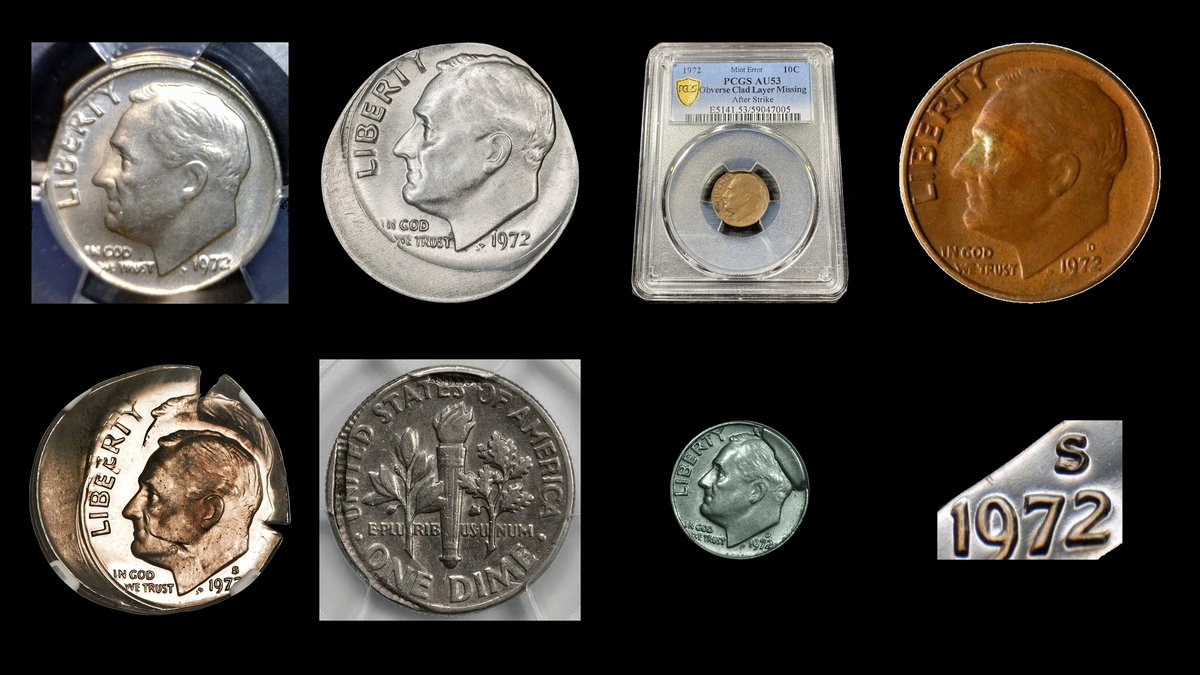
A 1972-S Proof dime double-struck with obverse-die rotation brought $2,160 in January 2018. Estimated values for 1972 Roosevelt dime errors range from $10–$5,000 across small die varieties and major striking mistakes.
Begin with the whole outline and metal, then match the exact ordinary-strike or Proof sequence before using its price.
| Clue | Possible error | Estimated range |
|---|---|---|
| Straight gap and large unused area | Clip with off-center strike | $100–$900 |
| Complete design in expanded metal | Broadstrike | $25–$450 |
| Thin detached struck layer | Off-center strike followed by separation | $50–$500 |
| Exposed copper or faulty outer metal | Defective or missing clad layer | $50–$750 |
| Incorrect copper-alloy disk | Reported wrong blank | $500–$2,500 |
| Distinct repeated impressions | Double strike | $50–$5,000 |
| Metal wrapped into a cup | Die cap | $500–$3,000 |
| Sunken backward design | Brockage | $100–$1,000 |
| Raised obverse patch | Die break | $10–$400 |
| Extra S or design outlines | Repunched mintmark or doubled die | $15–$300 |
A normal 1972 dime weighs 2.268 grams and measures 17.91 millimeters, with a reeded edge and copper-nickel outer layers around a copper center. San Francisco Proofs are specially prepared collector coins; their finish should be identified separately from an error.
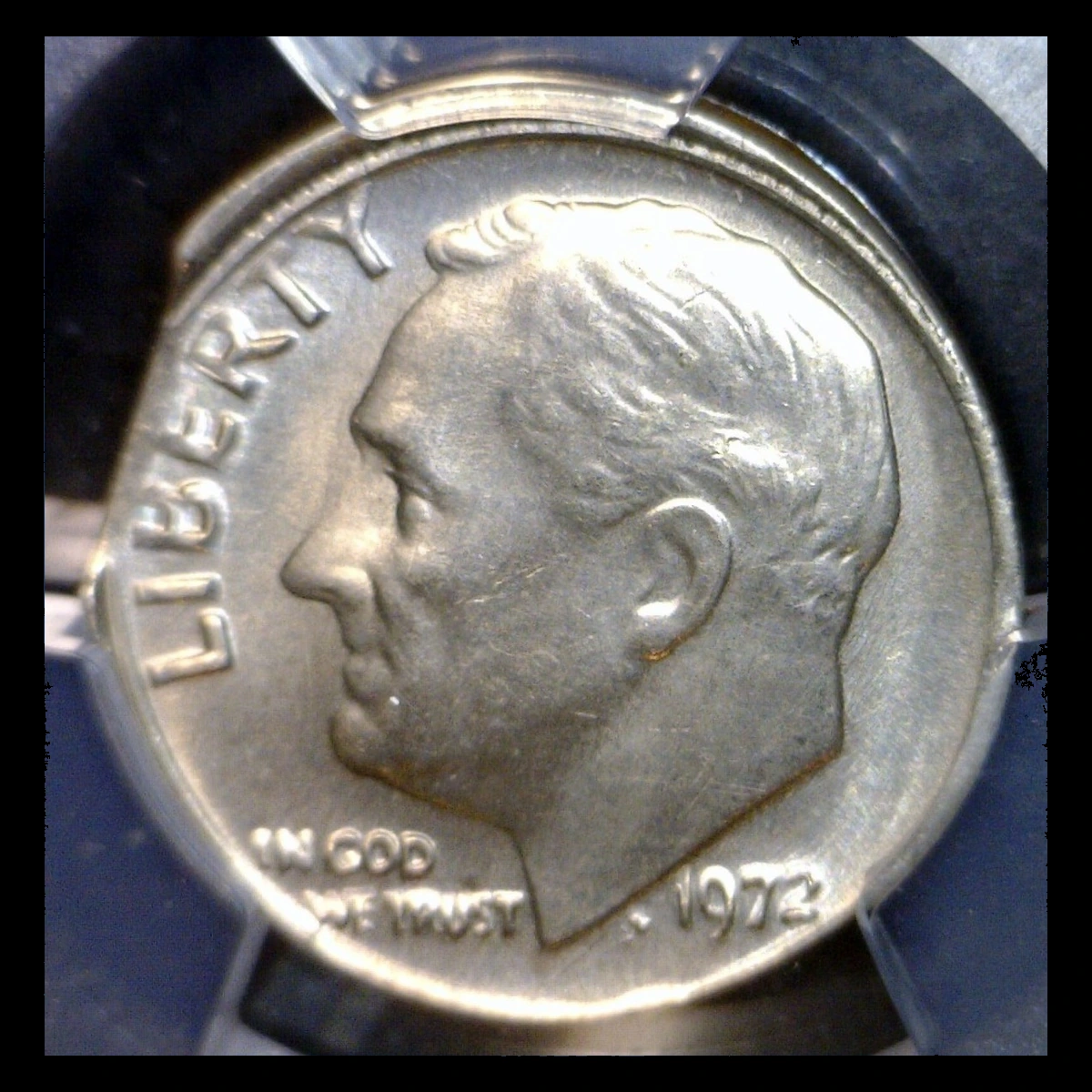
1. 1972 Dime A Straight Gap Beside Bare Metal: Clip and Off-Center Strike Error
The recorded Denver coin has a 25% straight clip and was struck 90% off center. PCGS graded it MS62.
The blank was incomplete before the press struck only a small portion of it. The empty gap and solid unused area show different stages of one coin’s manufacture.
How to Identify
Inspect the straight opening’s ends separately from the tiny struck portion. Nearby metal should have formed around the original shortage rather than been cut afterward.
Keep the date, mint and whole outline in photographs. Neither percentage establishes curved or ragged clips without another actual specimen.
What It’s Worth
Comparable genuine combinations are estimated at $100–$900. The two features belong in one whole-coin valuation.
The MS62 piece appeared at GreatCollections in June 2025 without a final amount used here. A different-denomination 1997-P nickel with a 20% clip sold for $124 in March 2025.
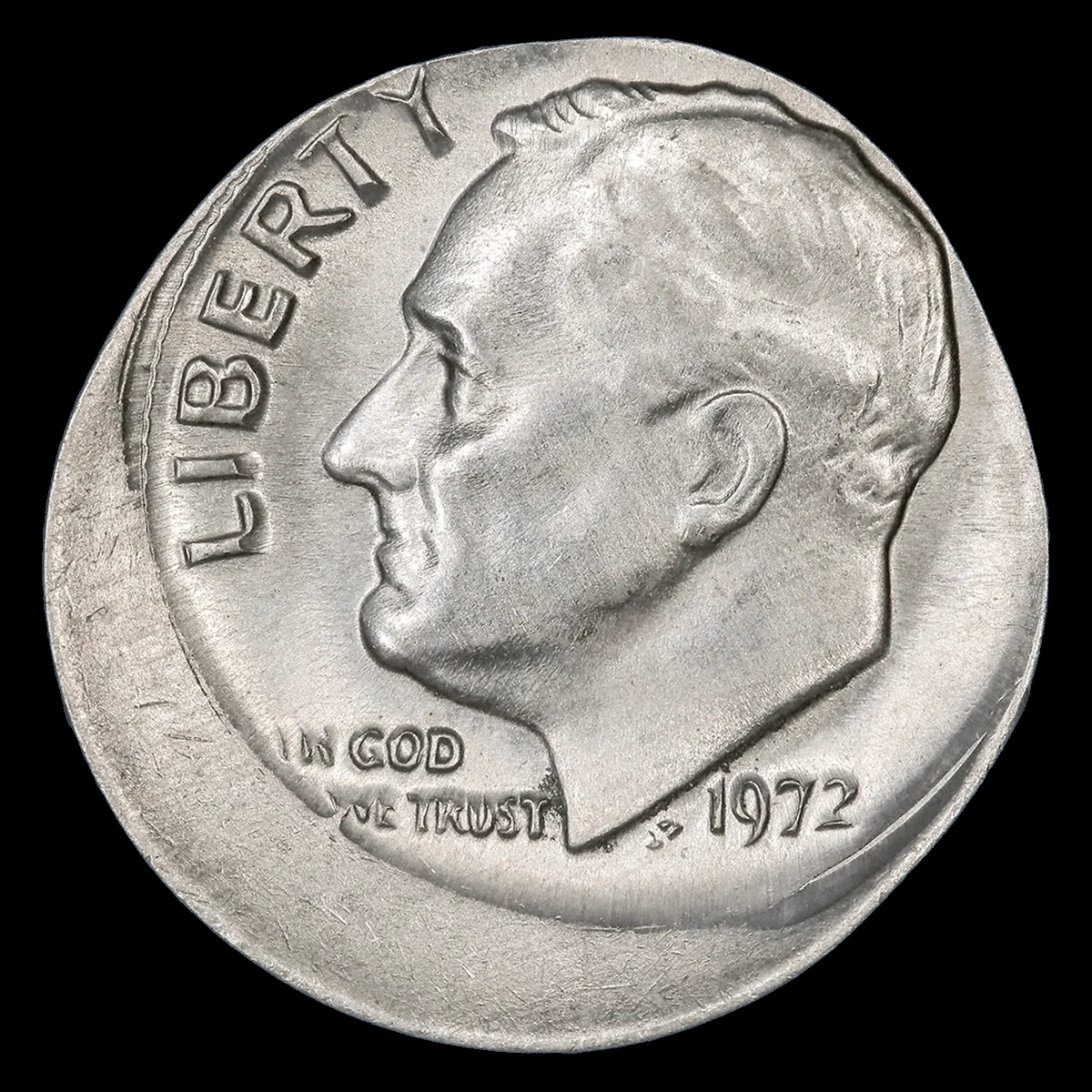
2. 1972 Dime Full Lettering Within Extra Width: Broadstrike Error
A Philadelphia example was graded NGC MS63 Full Bands after its metal spread beyond normal collar restraint. The collar is the ring that controls the edge and forms the reeds.
Full Bands describes separation in the torch’s bands. The dime shared an auction lot with a multiply struck 1999 cent, whose extra strikes do not belong to it.
How to Identify
Measure several spans and verify that the intended design stays on the available metal. An off-center strike instead loses detail beyond the blank.
Inspect the border and altered edge reeds for original flow rather than later hammering. Keep photographs of the actual dime separate from its lot companion.
What It’s Worth
Genuine 1972 broadstrikes are estimated at $25–$450. The shared lot is not used as an individual sale of the MS63 Full Bands dime.
A 1988-P dime with a broadstruck second impression sold for $80.50 in May 2005. Its additional overlapping strike makes it a different-year compound comparison.
3. 1972 Dime A Thin Layer Retaining an Off-Center Design: Post-Strike Separation Error
The recorded Philadelphia piece first received an 85% off-center strike. An outer layer then separated, leaving a thin struck piece weighing 0.36 gram.
ANACS graded the surviving layer MS63. Its weight describes that detached layer, not a complete dime.
How to Identify
Support the fragment without bending it and compare the struck outside with the exposed interior. The design should show that striking preceded separation.
Inspect the broken boundary and any surviving reeds for cutting marks. Low weight alone cannot distinguish an original separated layer from deliberately removed metal.
What It’s Worth
Genuine off-center pieces with an identified separated layer are estimated at $50–$500. Surviving identity and natural fracture texture matter.
No auction amount is assigned to this 0.36-gram layer. The separate two-gram defective-layer dime below sold for $168, but its price does not establish a value per gram of metal.
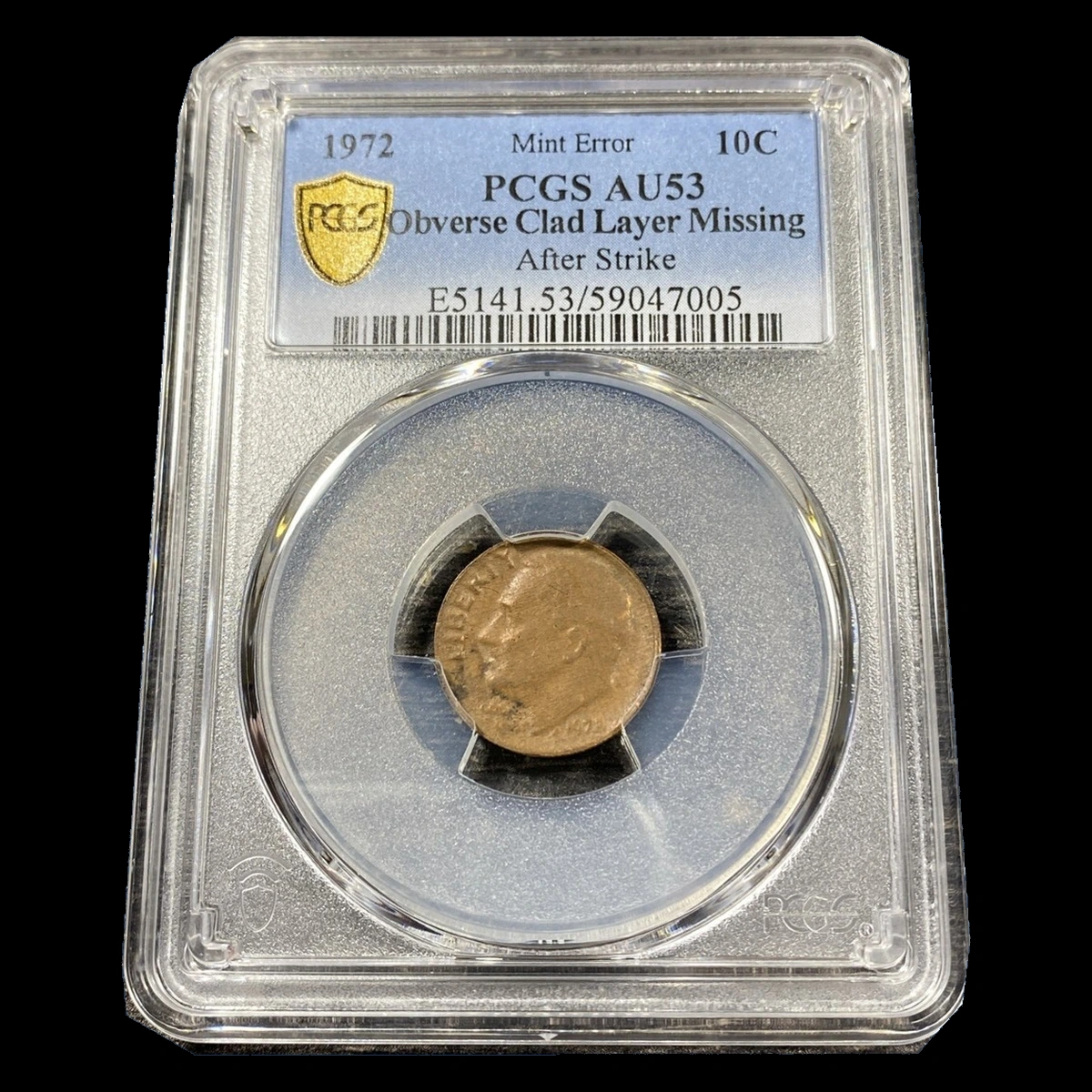
4. 1972 Dime Defective or Missing Outer Metal: Clad-Layer Error
A Philadelphia NGC AU58 specimen weighs two grams and has a defective obverse layer. It is not described as losing that entire layer.
A separately offered AU58 has partial reverse loss, while other Philadelphia and Denver reports concern whole-face missing layers. Their weights, affected sides and extent remain separate.
How to Identify
Choose the actual affected face and follow the boundary between copper and remaining outer metal. A local defect should not be renamed whole-layer loss without evidence.
Compare the face with the bonded structure at the edge. Coatings, acid damage or deliberate stripping can create copper color without the same original error.
What It’s Worth
Authenticated partial defects through full single-face losses are estimated at $50–$750. Preservation and the area affected guide the comparison.
The two-gram defective-front-layer coin sold for $168 in November 2020. That weight and result do not belong to the separate reverse-loss or Denver reports.
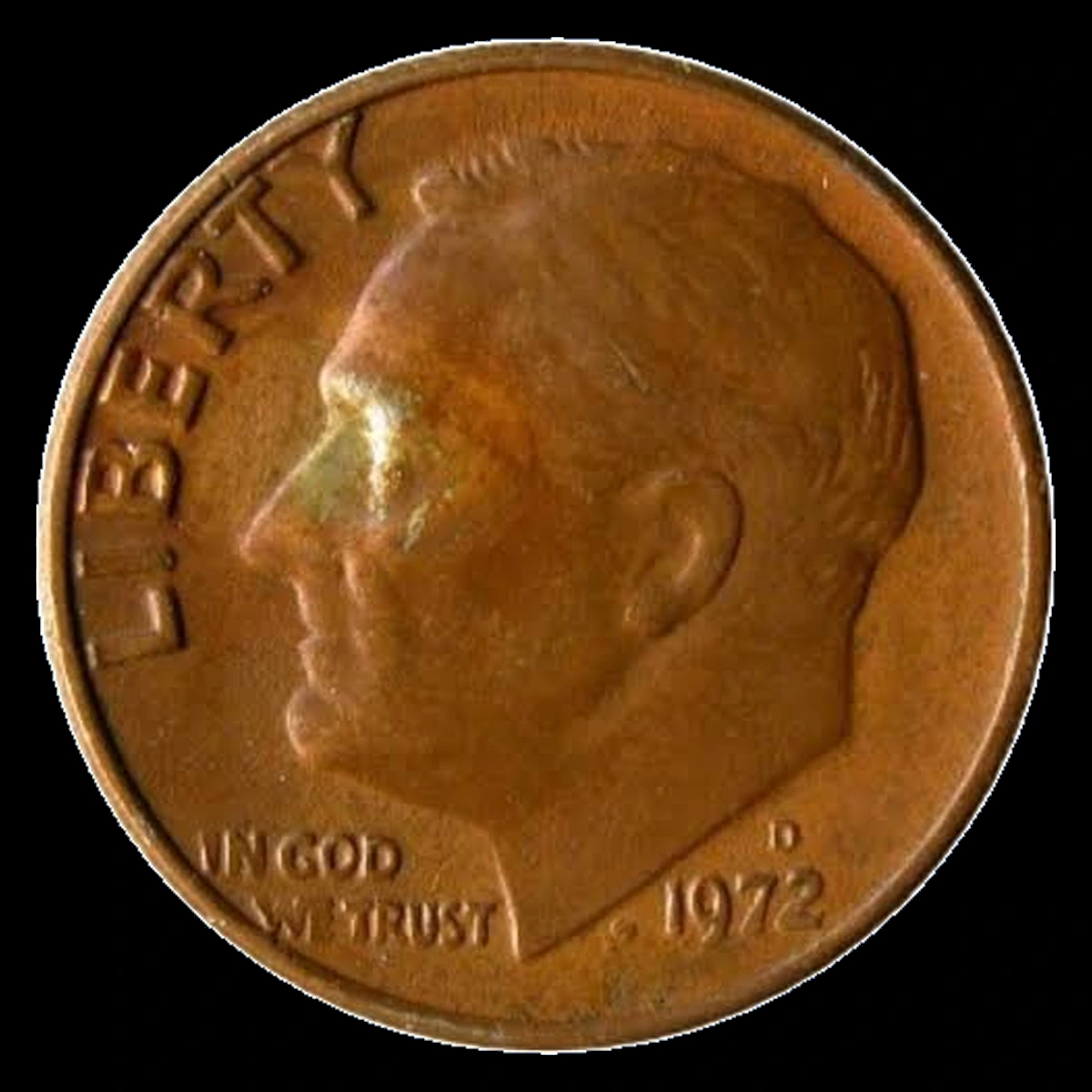
5. 1972 Dime Roosevelt on an Incorrect Copper-Alloy Disk: Wrong Blank Error
The general reports associate the starting metal with cent production. A full cent blank and a dime-sized disk punched from cent metal are different possibilities.
The complete cent blank starts larger and heavier than a dime. A dime-sized disk from the same metal would require its own measurements.
How to Identify
Compare actual readings with the period cent’s standard 3.11 grams and 19.05 millimeters. These are not measured values supplied for the reported error.
Confirm Roosevelt designs rather than a Lincoln design on dime metal, since the direction of the mismatch matters. Inspect for plating, trimming and original interaction with the reeding collar.
Metal analysis and blank size should agree before choosing either attribution. Copper color alone cannot distinguish a wrong blank from a changed ordinary dime.
What It’s Worth
An authenticated incorrect copper-alloy blank has a conditional estimate of $500–$2,500. The two proposed starting disks need separate physical comparisons.
No recorded sale establishes the general claim here. Neither possibility inherits a three-gram measurement without being weighed.
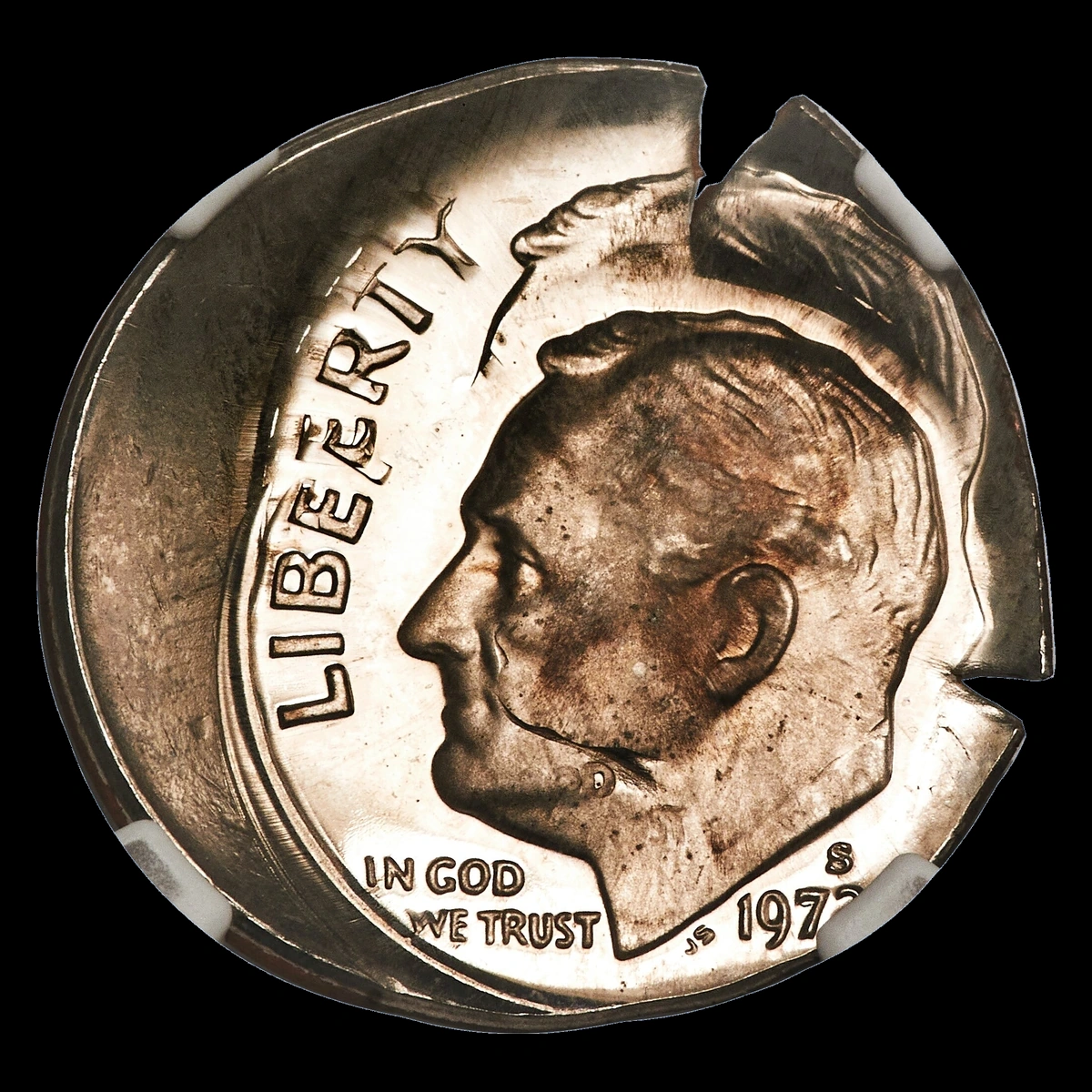
6. 1972 Dime Distinct Strikes on Ordinary and Proof Dimes: Double Strike Error
The Denver example has a normal first strike and an approximately 85% off-center second strike, with another blank blocking its reverse. Both dates and D marks survive.
Three separate San Francisco Proofs show obverse-die rotation, rotation within the collar, or two off-center impressions. Their grades are respectively NGC PR67 Cameo, PCGS PR65 and NGC PF67 Star.
The PF67 Star coin has a cup-like shape. That appearance does not by itself establish that it became a die cap.
How to Identify
On the Denver piece, locate both dated impressions and the blocked reverse area. Its separate reverse wheel mark is later damage, not another Mint error.
For a Proof, select the exact two-strike relationship before comparing photographs. No fixed turning angle is supplied, and the three examples should not be combined.
What It’s Worth
Ordinary double strikes are estimated at $50–$1,000, while comparable major Proof examples are estimated at $1,000–$5,000. Visibility, condition and the actual sequence matter.
The PR67 Cameo obverse-rotation coin sold for $2,160 in January 2018. The cup-shaped Proof’s dealer page says sold without giving a price.
7. 1972 Dime A Coin Wrapped Around a Die: Die Cap Error
A coin that remains attached to a die can spread around it as more blanks are struck. The resulting raised wall produces the cap’s cup-like form.
The general 1972 cap report supplies no mint or certified specimen. The cup-shaped Proof double strike is a separate record unless attachment to a die is established.
How to Identify
Examine the wall, struck center and both faces without flattening the object. Their metal flow should support wrapping around a tool rather than a bend imposed afterward.
A later coin struck through the cap is a receiver, not the cap itself. Do not assume either face is blank without examining it.
What It’s Worth
Authenticated 1972 die caps are estimated at $500–$3,000. Shape, preserved design and reliable identification are central.
A 1977-D obverse cap in NGC MS69 sold for $1,725 in April 2006. That later-year high-grade result does not prove a cap mechanism for the cup-shaped 1972-S double strike.
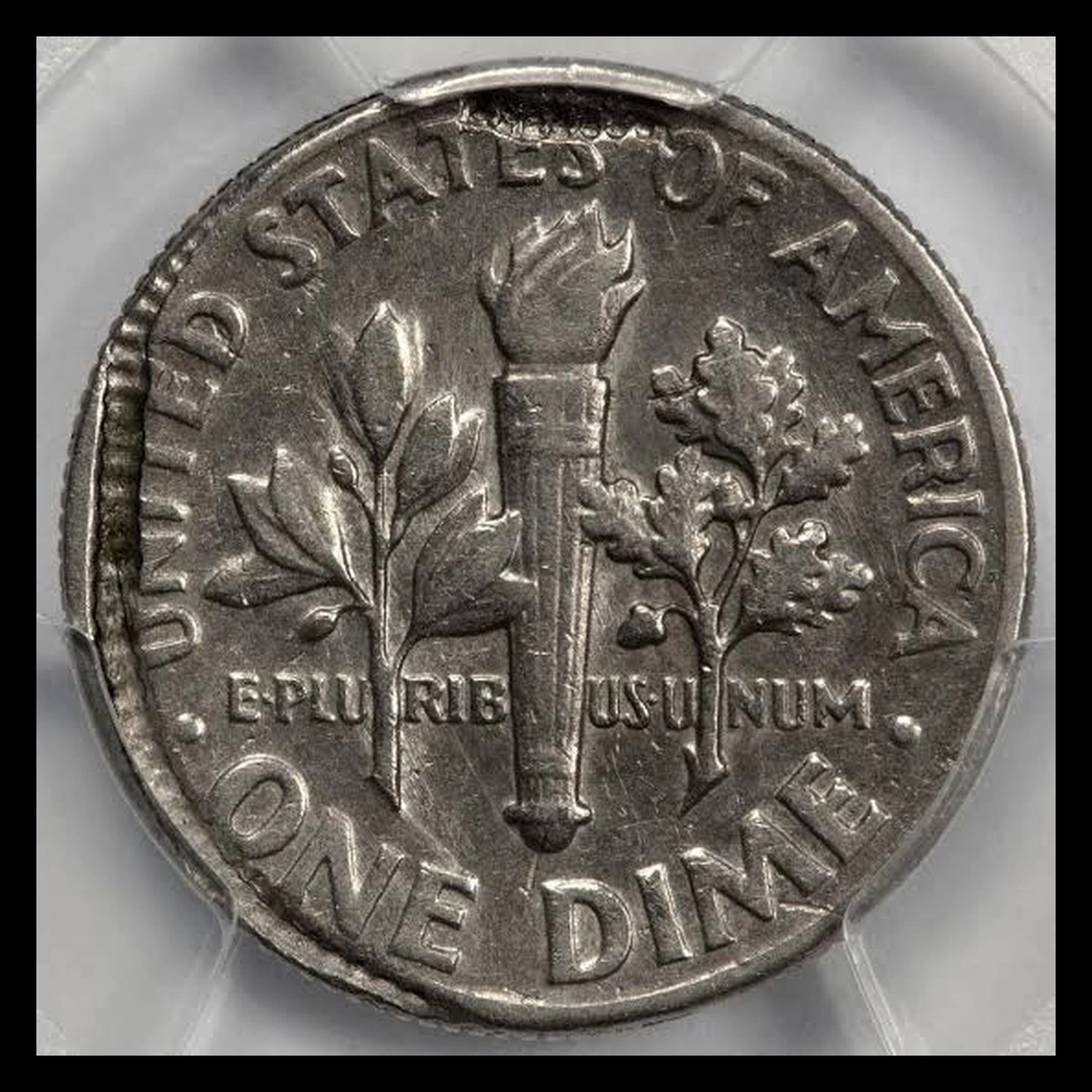
8. 1972 Dime A Recessed Backward Image: Brockage Error
A struck coin caught against another blank can press its raised design into that blank. The resulting sunken mirror image is called brockage.
The 1972 report establishes no mint, affected face or percentage. A specimen is needed before supplying those details.
How to Identify
Find a recognizable reversed letter or design and confirm that it lies below the surface. Weak lettering or faint raised traces do not establish the same effect.
Inspect the opposite face and edge for joins or crushing from later pressure. Coins squeezed together outside the Mint can imitate a transferred image.
What It’s Worth
Genuine 1972 brockages are estimated at $100–$1,000. Coverage, clarity and original surfaces determine the comparison.
A 2001-P partial brockage with strong clash marks sold for $79 in November 2014. Its different year and accompanying feature make it context rather than a direct match.
9. 1972 Dime A Raised Front Patch: Die Break Error
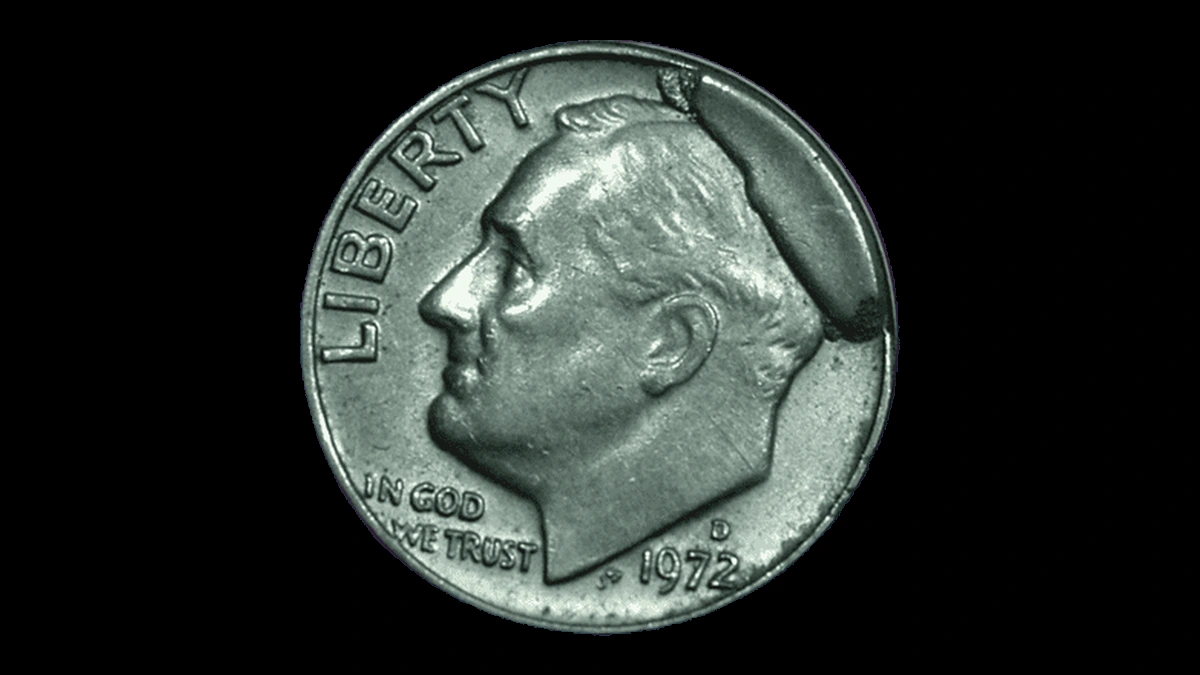
The cataloged Denver NGC MS64 coin has an obverse die break. Metal rose into space left by missing steel instead of receiving the intended detail.
The description supplies no exact width, clock position or variety number. A raised lump must be examined before it receives that identity.
How to Identify
Follow the patch into the surrounding original design under low light. A seam, glue or a dent with pushed-up metal can indicate another cause.
Inspect nearby edge reeds for impact damage. The actual specimen’s outline must supply any more precise location.
What It’s Worth
A genuine 1972-D obverse break is estimated at $10–$400. Size, visibility and preservation guide the comparison.
No result is quoted for the MS64 specimen. A 1970-D nickel with two obverse breaks sold for $63 in October 2022 as a different-date, different-denomination comparison.
10. 1972 Dime Another S Outline Above or Beside the Mintmark: Repunched Mintmark Error
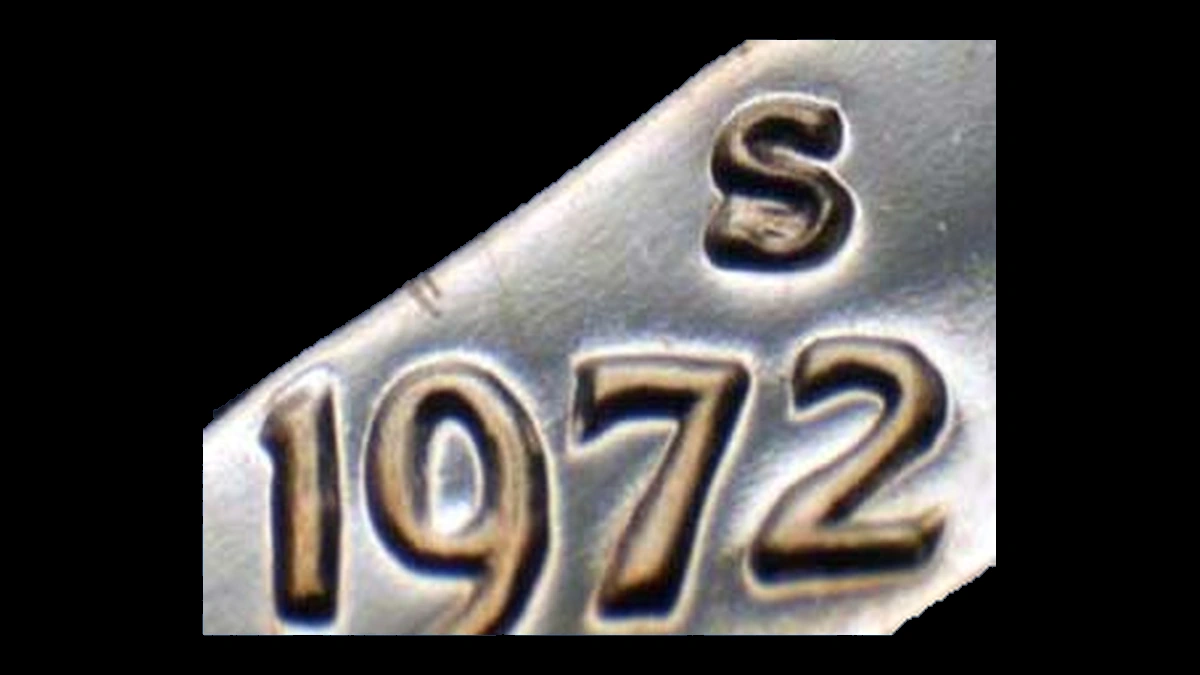
Three cataloged 1972-S Proof patterns preserve an earlier S punch. One appears above the main letter, while two distinct varieties have rightward remnants.
The mintmark was punched into the die separately. The coin could receive both surviving outlines in a normal strike.
How to Identify
Find the S above the date and compare its complete secondary curve with the appropriate catalog image. The two rightward patterns belong to different tools despite their shared direction.
Change the light to distinguish fixed rounded relief from glare or a flat shelf. Keep an intact Proof set closed rather than opening it for basic inspection.
What It’s Worth
Recognizable repunched-S varieties are estimated at $15–$250. The exact pattern and Proof preservation determine the useful comparison.
No separate auction result is assigned to each catalog listing. Cleaning and surface damage can reduce the value of the underlying collector coin.
11. 1972 Dime Extra Date, TRUST and JS Detail: Doubled Obverse Error
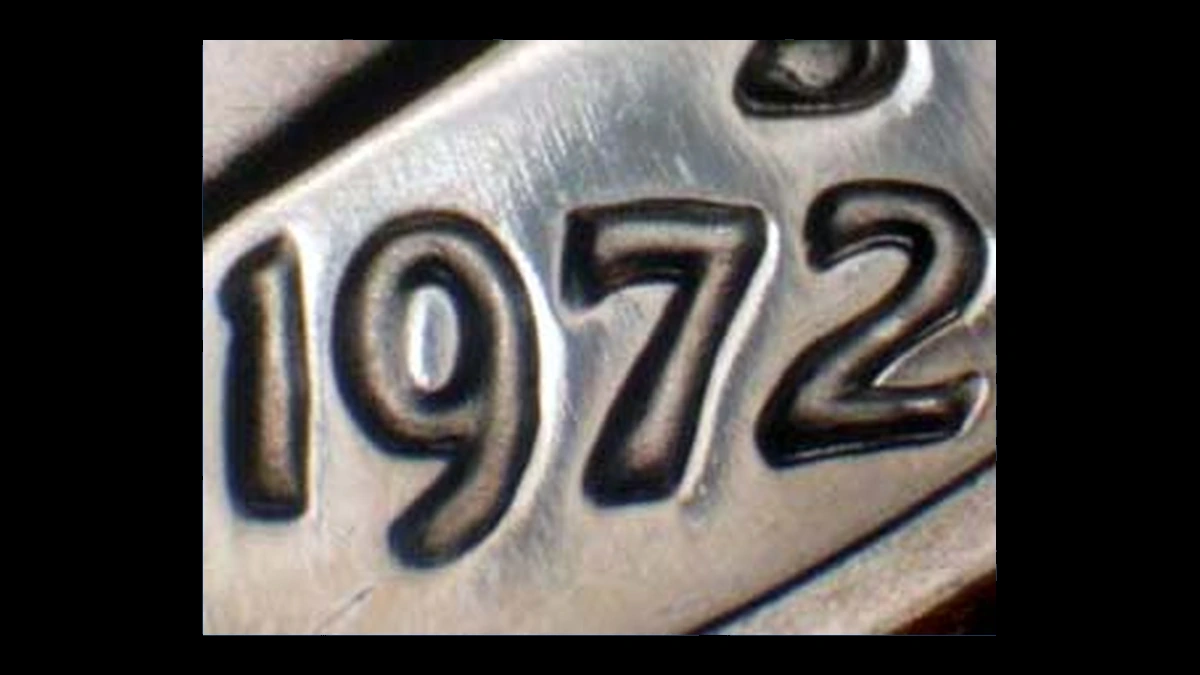
Two cataloged 1972-S Proof varieties repeat detail in the date, TRUST and the small JS initials. One has slight inward doubling, while the other shows stronger detail in the same areas.
JS identifies the designer and is distinct from the mintmark S. An older general front-doubling report should not automatically receive either Proof attribution.
How to Identify
Compare multiple affected features with the appropriate cataloged Proof pattern. Shared locations do not mean the two dies have identical separation.
Look for formed extra contours rather than thick letters caused by reflections or wear. Flat shelves from striking movement are a separate effect.
What It’s Worth
Identifiable doubled obverses are estimated at $15–$300. Mint, finish, exact pattern and preservation all belong in the comparison.
No individual sale is assigned to the two Proof patterns here. A matched die feature is required before a named-variety premium is relevant.
Conclusion
The 1972 dime examples show why measurements and names must stay with the actual specimen. A 0.36-gram piece is a detached struck layer, while a two-gram dime has a different outer-metal defect.
For the Proofs, identify the particular strike sequence rather than combining their descriptions. Keep cup shape separate from proven die attachment, and value each coin’s combined features once while preserving the distinction between reported categories and documented examples.