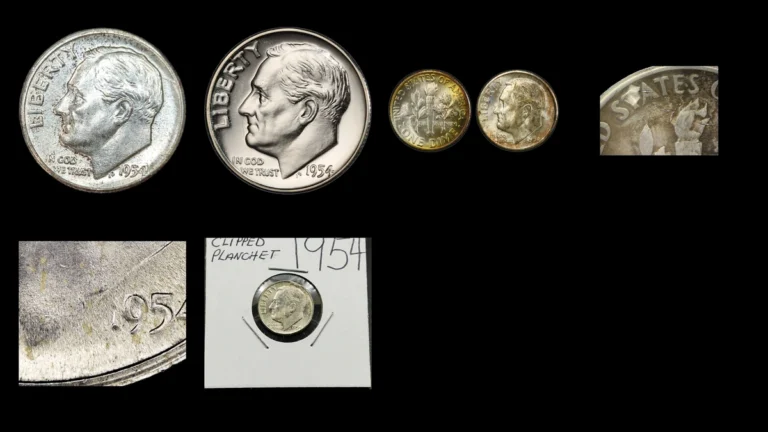
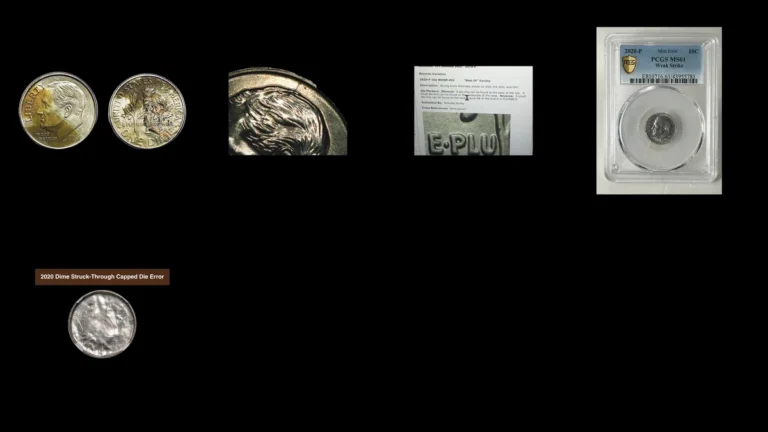
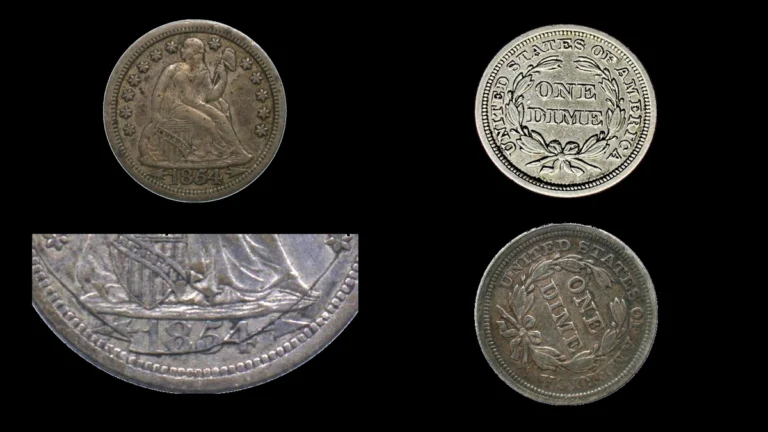
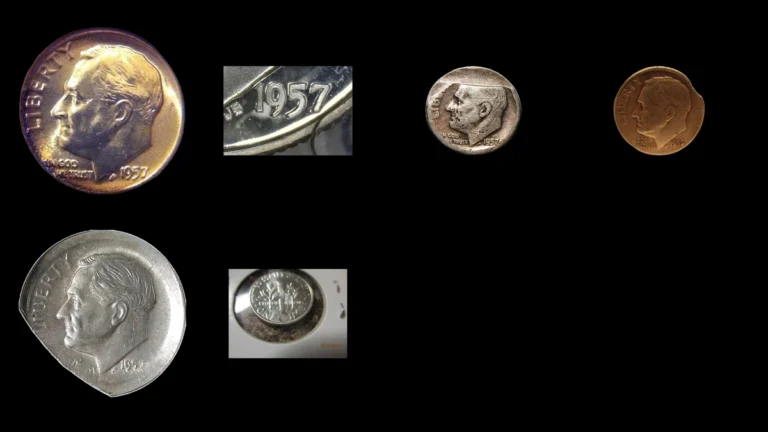
Rare 1963 Dime Errors (List & Pictures)
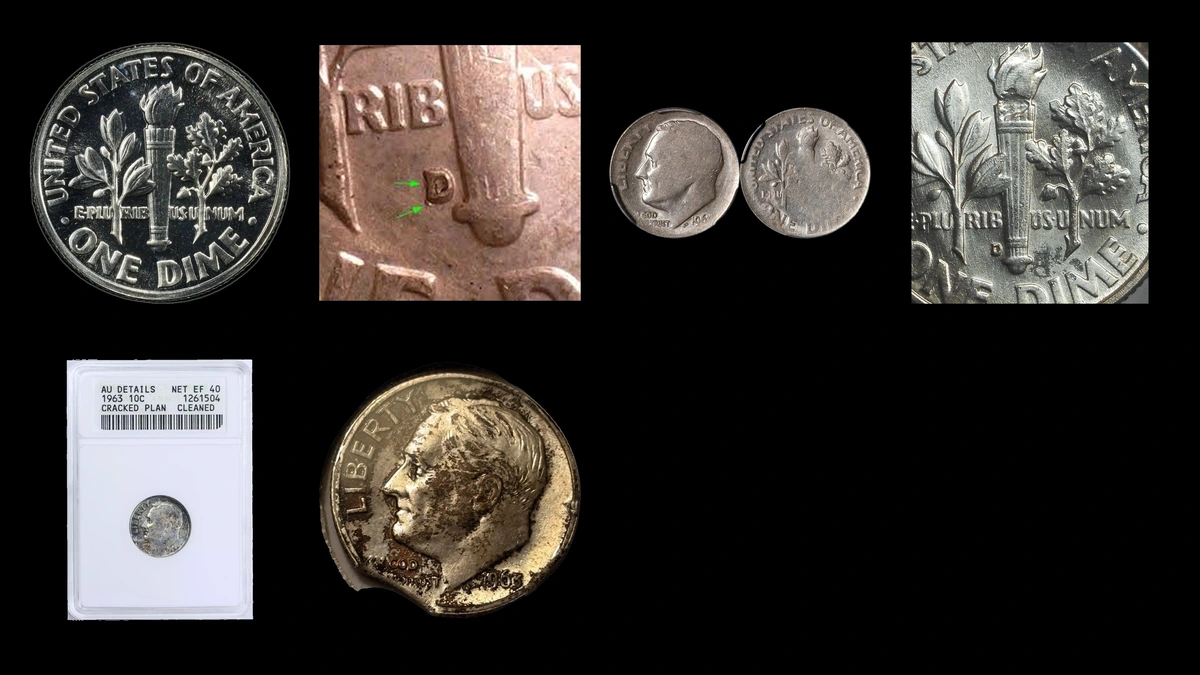
Ordinary and Proof 1963 dimes both contain 90% silver, but their doubled-die varieties need different references. An ordinary Philadelphia FS-805 reverse in MS66 brought $384 in February 2019.
Estimated values for the 1963 dime errors below span $15–$800. Check the mintmark and finish first, then examine whether unusual detail is repeated, weakly formed, missing, or interrupted by an actual opening in the metal.
1. 1963 Dime Repeated Details on the Front or Back: Doubled Dies Error
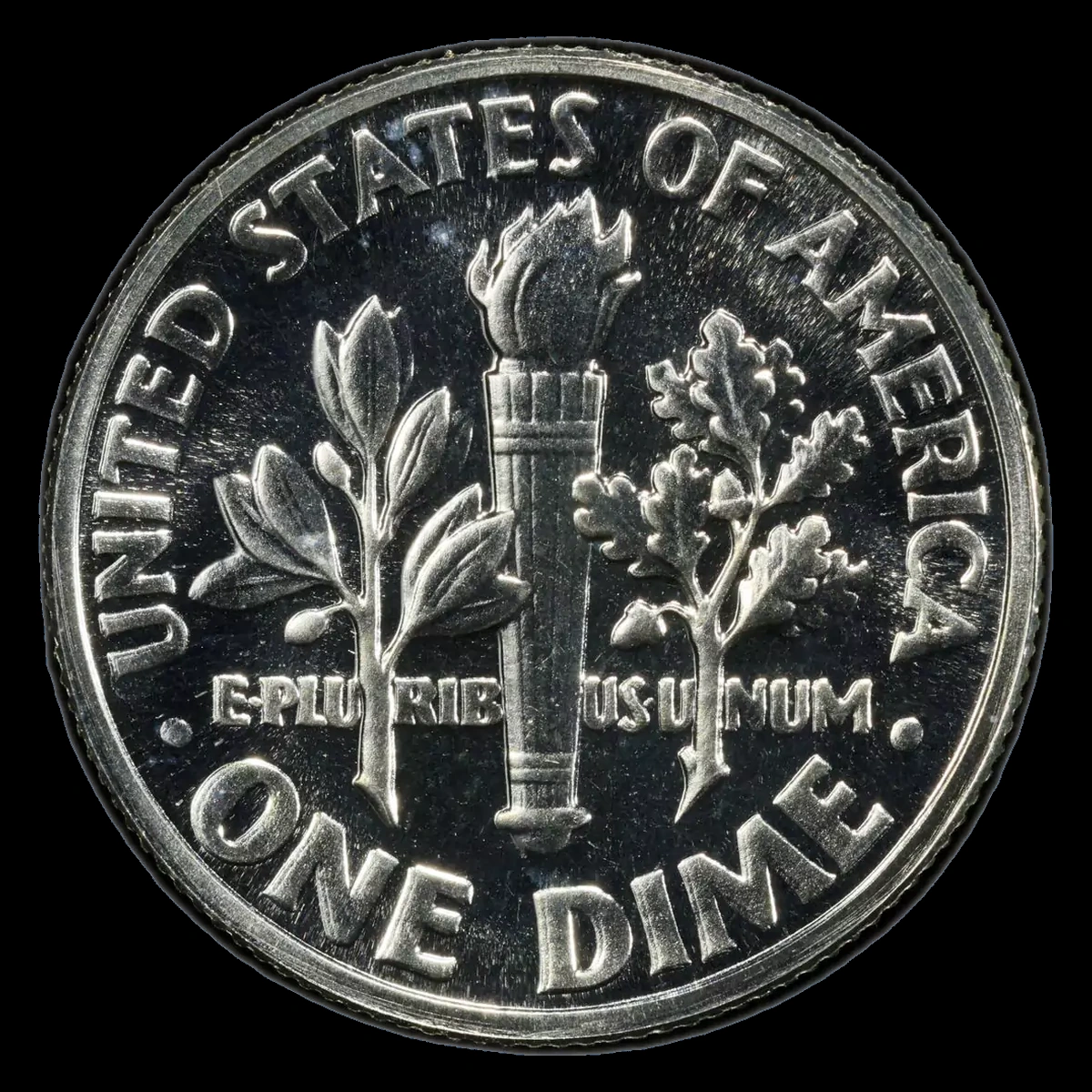
The Proof reverse variety FS-801, formerly numbered FS-017, affects ONE DIME, the motto, and torch details. Those two numbers name the same variety.
Ordinary Philadelphia coins have a different reverse variety, FS-805, plus a front-doubling report involving IN GOD WE TRUST and LIBERTY. The repeated detail originated in the die, the tool carrying the design.
How to Identify
Choose a reference for the correct finish before comparing details. FS-805 requires its own country-lettering and nearby-detail match rather than the separate Proof variety’s shapes.
Inspect repeated raised outlines under changing light to separate them from glare or a flat shelf caused by movement during striking. Cameo describes frosted design against a reflective background and does not itself establish doubling.
What It’s Worth
$30–$500 is estimated for identified ordinary doubled dies, while the Proof FS-801 is estimated at $100–$800. The ordinary FS-805 in PCGS MS66 sold for $384 in February 2019.
2. 1963 Dime Extra Parts of a D: Repunched Mintmark Error
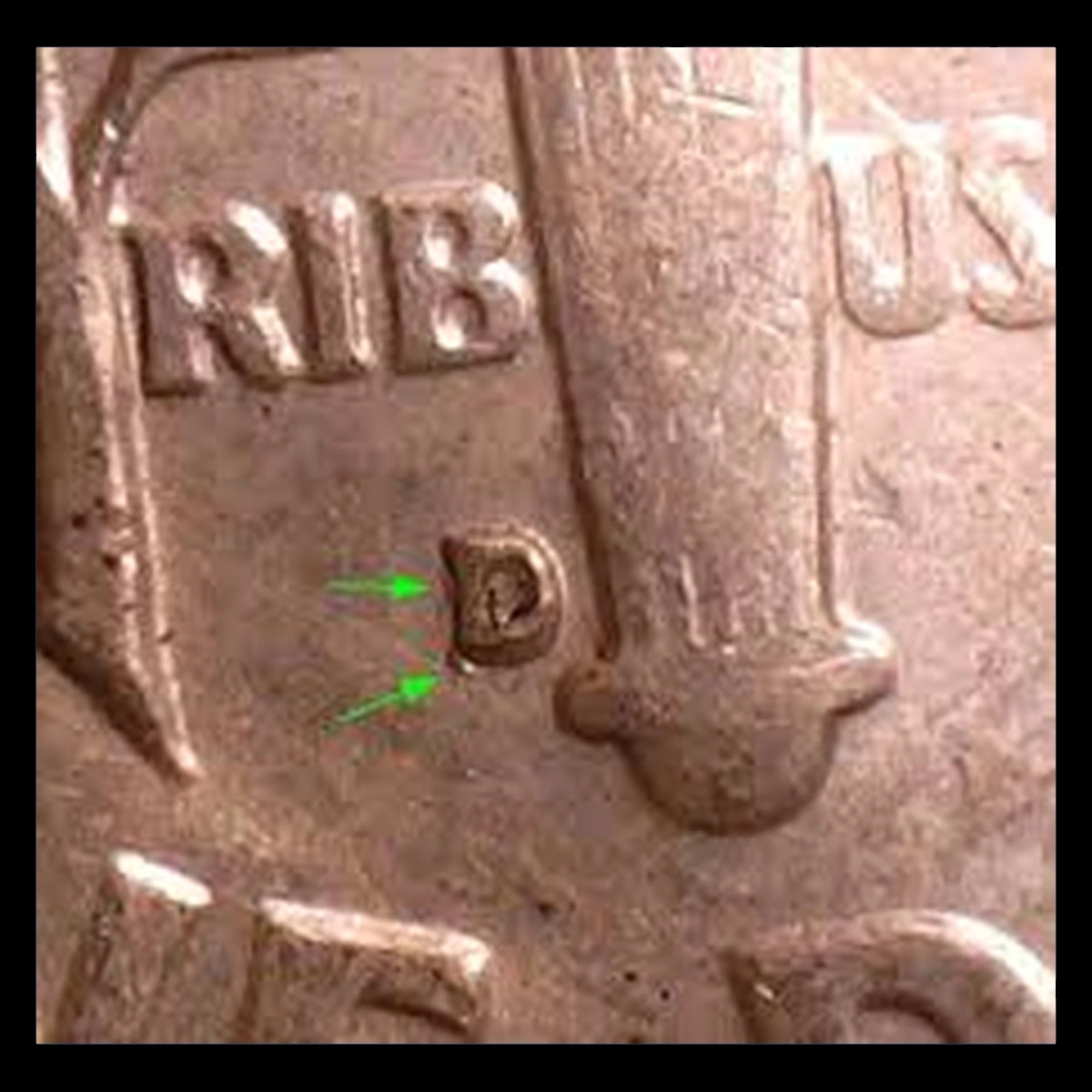
The Denver mintmark lies to the left of the torch’s base on the reverse. Because it was punched into the die separately, another punch position could leave pieces of an earlier D beside the final letter.
The 1963 report establishes no single direction for the extra outline. Its actual strokes need matching rather than assuming any thick D is repunched.
How to Identify
Trace the full upright and curved side, then look for extra raised segments that fit another D. Compare with an attributed 1963-D photograph in the same orientation.
A random chip, scratch, or flat shelf beside the letter may imitate part of the effect. An ordinary Philadelphia dime has no D, which is normal rather than a missing-mintmark error.
What It’s Worth
$15–$200 is an estimate for confirmed minor repunched mintmarks. Clear surviving letter remnants and undamaged surrounding surfaces support a stronger comparison than a worn, indistinct lump.
3. 1963 Dime Shallow Detail across the Coin: Weak Strike Error
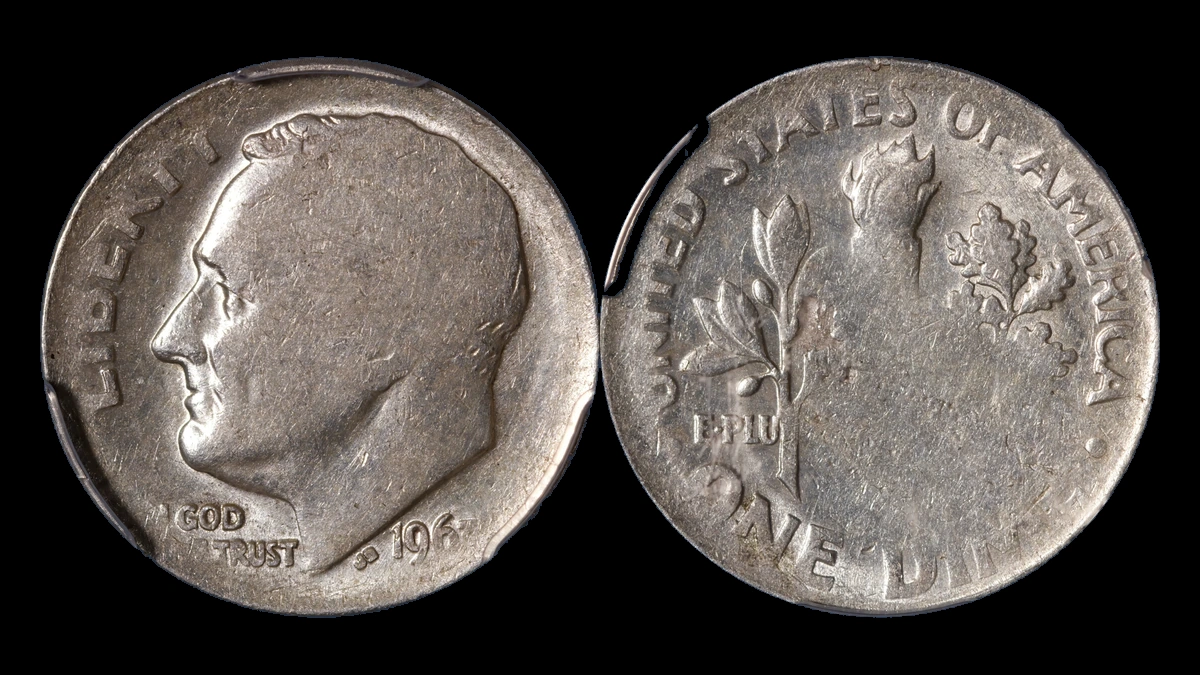
A collector’s record identifies a Philadelphia weak strike in PCGS AU58. The coin has slight circulation wear as well as incomplete original detail, and those two effects should remain separate in its description.
How to Identify
Compare protected lettering with Roosevelt’s exposed high points and inspect the torch side too. Wear first affects exposed areas, while a weak strike can also leave protected details shallow.
Check for chemical roughness or rubbing that could remove finished detail. The record does not establish an intentional press test, and shallow design alone cannot prove that purpose.
What It’s Worth
$20–$250 is an estimated whole-coin range for identified weak strikes. The AU58 record supplies a condition example without a stated auction price; an unclear worn portrait does not automatically qualify.
4. 1963 Dime A Local Reverse Impression: Struck-Through Error
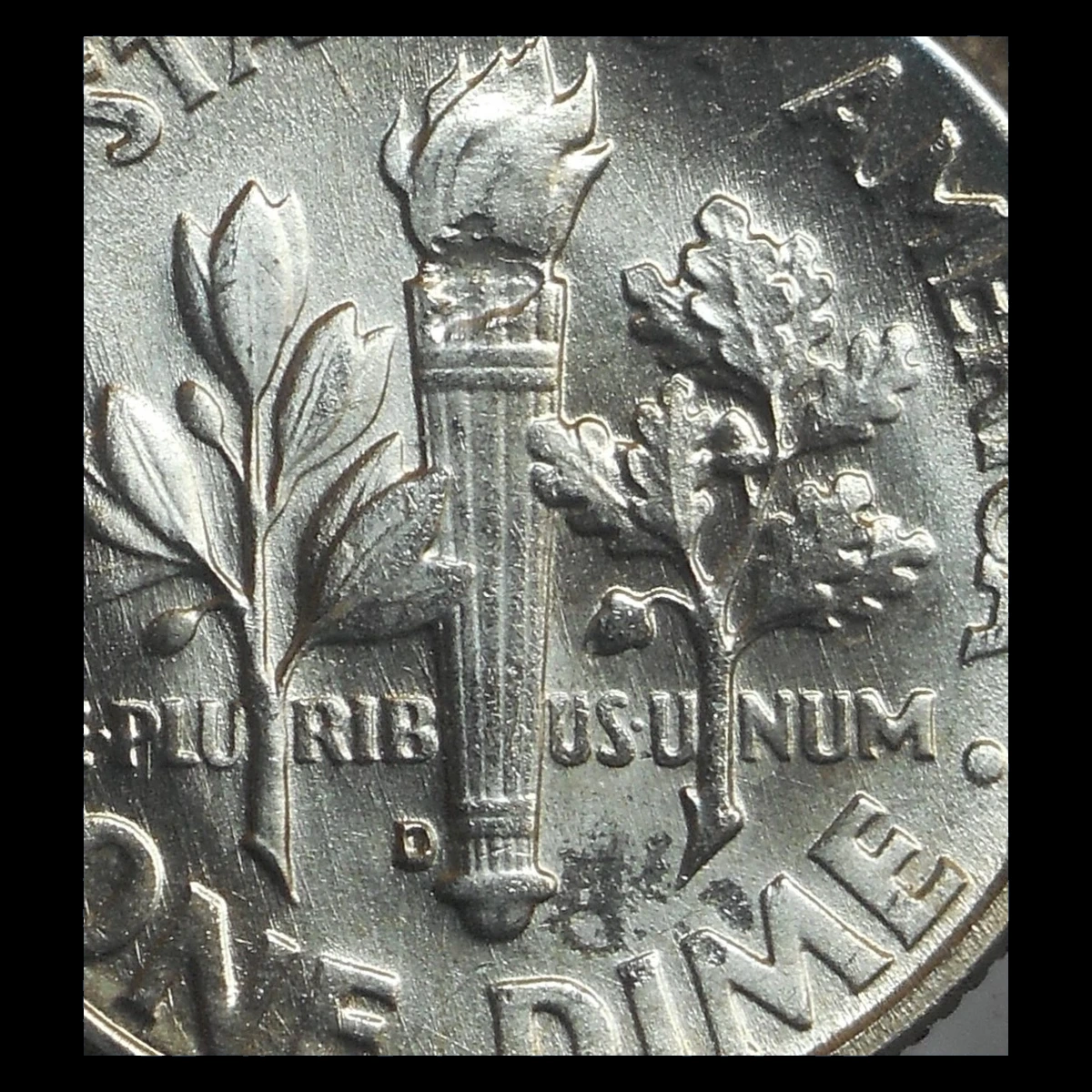
The supplied report concerns an interruption on the reverse without identifying the exact object, mint, or finish. Material caught between a die and the blank can prevent normal letters or torch details from forming.
How to Identify
Follow the boundary where normal design meets the affected area. A local hollow or missing detail must be distinguished from rubbing, cuts, or corrosion across an already finished coin.
View the actual surface under several light angles. Ordinary Cameo contrast is not an obstruction impression, and a shapeless weak patch cannot identify string or cloth.
What It’s Worth
$20–$400 is estimated for an authenticated reverse strike-through. A 1954-S quarter struck through string sold for $186 in July 2021, but that different coin neither prices this dime nor identifies its obstructing material.
5. 1963 Dime An Opening Enters the Metal: Cracked Planchet Error
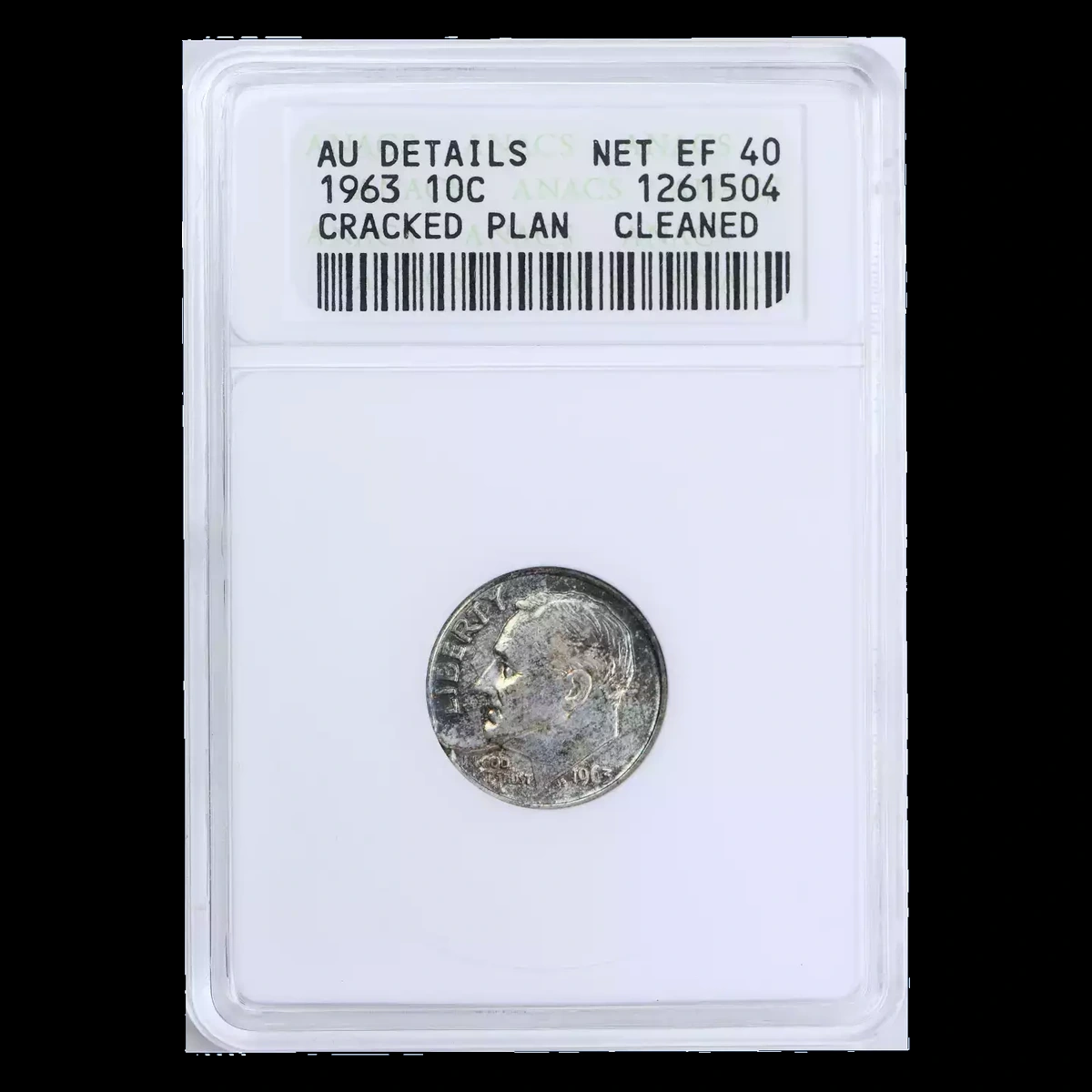
An NGC MS65 Philadelphia example has a crack entering its edge near 9:30 and a recorded weight of 2.4 grams. Unlike a raised die-crack ridge, this feature opens the coin’s own metal.
For common reference, a normal 1963 silver dime weighs 2.50 grams and measures about 17.9 millimeters across. A slightly low weight does not reveal how deeply a crack penetrates.
How to Identify
Follow the opening inward from the edge without inserting anything or bending the dime. A side view is needed to distinguish a shallow opening from a split through the coin or a loose surface flake.
Compare the documented clock position in the same orientation and inspect nearby design for crushing or sharp later cuts. A raised line resting on otherwise solid metal belongs to a different category.
What It’s Worth
$40–$500 is an estimate for a genuine cracked-planchet dime. A tapered and cracked 1946 quarter sold for $45 in July 2021, a different-denomination comparison rather than a sale of the 1963 MS65.
6. 1963 Dime A Very Thin Dime with a Separation Surface: Split Planchet Error
A 1963-D in NGC MS62 was cataloged as struck on a split blank and weighs 1.4 grams. Separation along a weak layer left much less metal than a normal silver dime contains.
How to Identify
Examine both faces to locate the rough separation texture and its relationship to the struck design. The supplied description does not fix which face carries that texture.
Inspect the edge gently for thinness, and check for grinding lines or chemical pits that might explain artificial metal loss. The recorded 1.4 grams supports this particular coin but cannot authenticate a different lightweight dime by itself.
What It’s Worth
$50–$600 is estimated for comparable authenticated split-planchet pieces. The NGC MS62 Denver example sold for $99 on July 15, 2021, with its readable identity and preserved separation surface important to the comparison.
7. 1963 Dime Irregular Metal or an Original Hole: Defective Planchet Error
Separate Philadelphia examples include a surface-defect coin in NGC MS63 weighing 2.2 grams and a holed-planchet coin in MS65 weighing 2.3 grams. A Denver defective-blank report supplies neither of those measurements.
A flaw present before striking can alter how nearby design forms. An originally holed blank must be separated from a finished dime drilled or corroded later.
How to Identify
For a surface flaw, trace the surrounding lettering or portrait to see how it meets the irregular area. For a hole, inspect both openings and the inner boundary for drill tracks, cutting lips, or displaced metal.
The exact hole position and outline belong to the individual specimen and are not established here. Keep the two Philadelphia weights with their correct coins and record a Denver candidate independently.
What It’s Worth
$30–$300 is estimated for original irregular surface defects, while genuine holed blanks may fall around $75–$750. These ranges require a confirmed original blank problem rather than low weight or roughness alone.
8. 1963 Dime Curved, Straight, or Ragged Gaps: Clipped Planchet Error
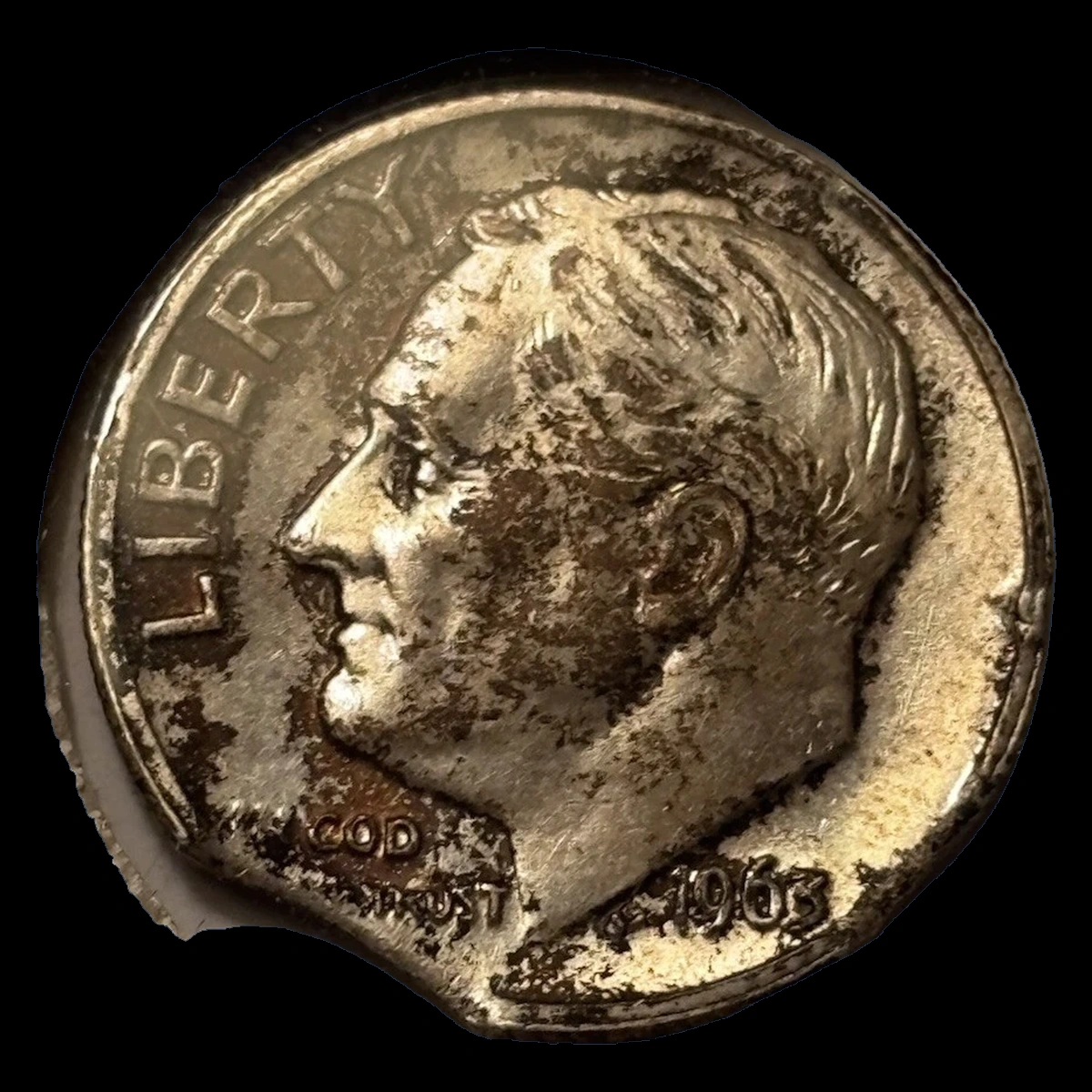
Philadelphia reports include an NGC MS61 double curved clip, a 1.9-gram straight clip described as 30%, and separate ragged clips weighing 2.28 and 2.13 grams. Denver also has a curved-clip report without a specified position or matching weight.
How to Identify
Match the outline first, then examine how the rim and design approach each missing section. An original clip leaves evidence of striking beside absent metal, unlike filing through already finished detail.
Opposite-rim weakness may support a clip but is not required for every shape. The straight clip’s Full Bands designation concerns the torch’s preservation, not an extra mint error.
What It’s Worth
$20–$300 is estimated across the reported clip types. The 2.13-gram ragged clip in NGC MS65 is recorded at $109 in July 2021; its price and grade should not be assigned to the 2.28-gram coin or straight clip.
9. 1963 Dime A Wider Outline around Complete Detail: Broadstrike Error
A broadstrike forms when the collar, the ring controlling the edge, fails to restrain the blank. Metal spreads outward while the intended design can remain complete.
How to Identify
Compare width in several directions and follow the outer lettering on both faces. Unequal border width is possible, but missing design beside a bare crescent calls for an off-center comparison.
Inspect Roosevelt, the torch, and the edge for crushed detail or hammer marks. A dime enlarged by later pressure does not become a broadstrike merely because it exceeds normal diameter.
What It’s Worth
$30–$350 is an estimate for genuine simple 1963 broadstrikes. Clear natural expansion with readable identity offers better evidence than slight rim unevenness on a worn coin.
10. 1963 Dime Missing Design beside Untouched Metal: Off-Center Strike Error
A misplaced blank can receive only part of the dime design while retaining unstruck metal on the other side. The supplied 1963 report gives no established mint or shared displacement percentage.
How to Identify
Read the surviving date before estimating the shift, then compare where both designs meet the same blank. A complete design inside extra metal is more consistent with a broadstrike, while a shift on only one face may concern die alignment.
Do not infer Philadelphia when the mintmark area was never struck. Inspect the plain silver for grinding, erased letters, or a seam rather than accepting every blank-looking area as untouched metal.
What It’s Worth
$40–$700 is estimated for authenticated 1963 off-center dimes. A later clad 1967 example struck 50% off center sold for $93 in January 2022; that result supplies neither a specific percentage nor an exact value for a silver 1963 coin.
Conclusion
For a 1963 dime, start with the correct mint and finish before assigning a variety name. The Proof reverse has two catalog numbers for one variety, while ordinary FS-805 is a separate pattern.
When metal is missing or split, keep each measured weight with its own specimen and inspect the edge as well as both faces. A hole, clip, crack, and thin split blank require different evidence despite sometimes similar rough surfaces.