Rare 1964 Quarter Errors (List & Pictures)
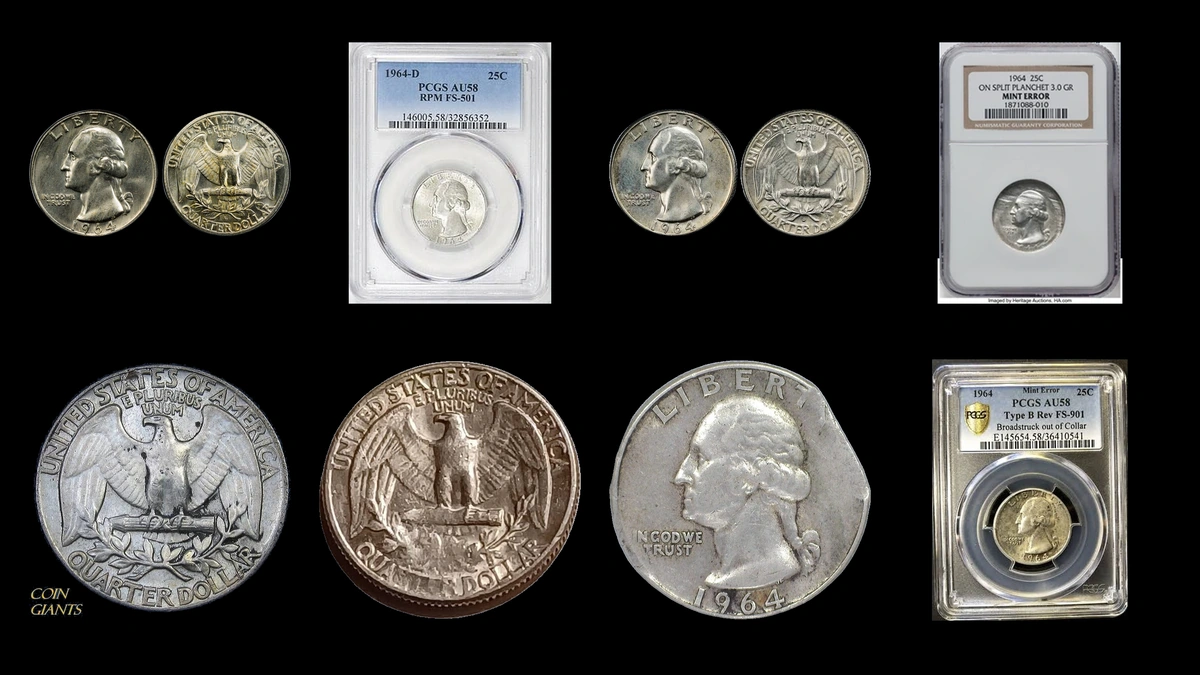
Not every light 1964 quarter began on a dime blank, and not every doubled-looking design received two strikes. The coin’s size, edge, and surviving details help separate those possibilities.
Estimated whole-coin values for 1964 quarter errors range from $25–$10,000. A Denver Type C reverse in exceptional condition brought $8,400 in June 2023.
Start with the reverse design and small repeated marks, then examine the metal, outline, and striking sequence.
1. 1964 Quarter A Different Eagle Design: Type B and Type C Reverses Error
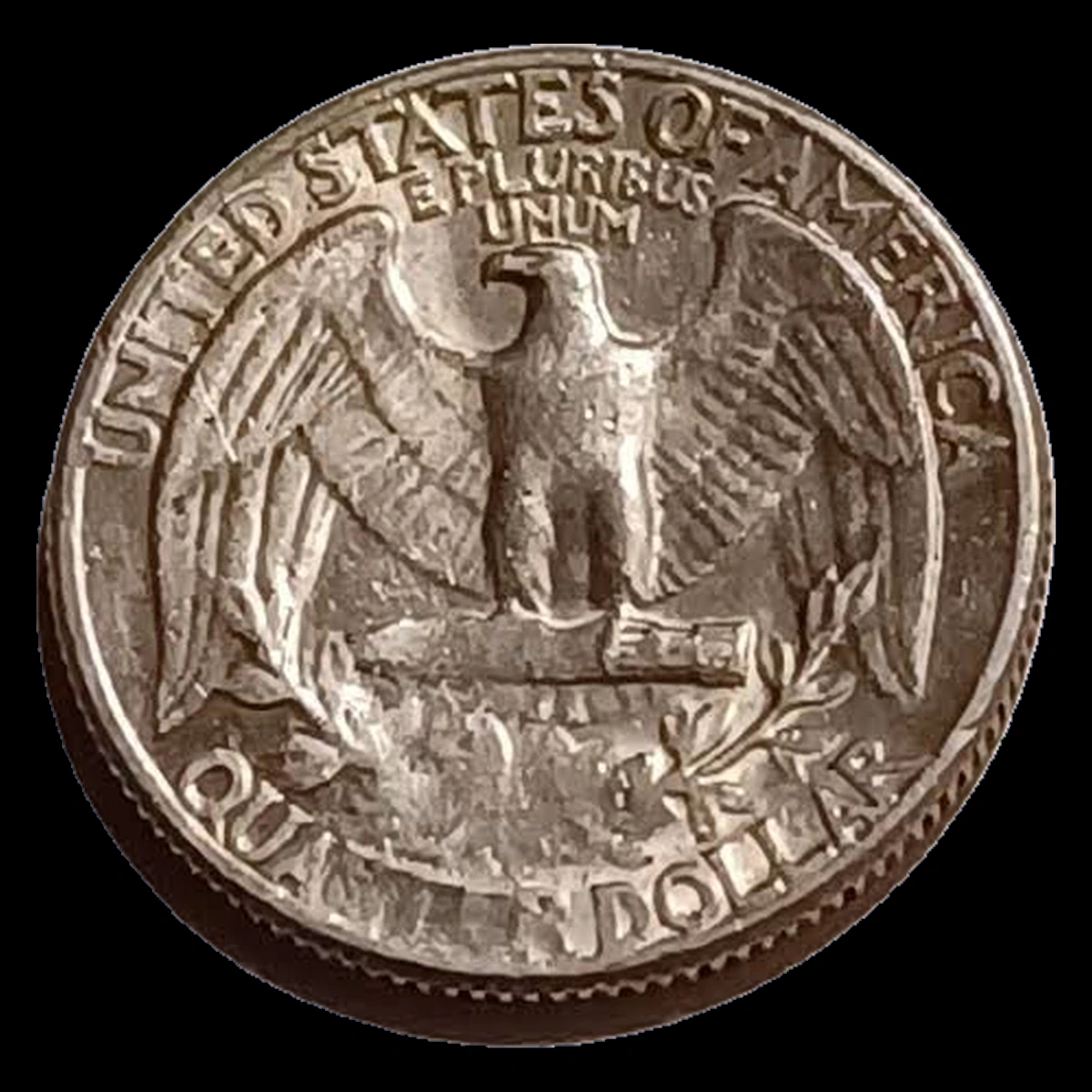
Some ordinary Philadelphia quarters have a Type B reverse normally associated with Proof production. Denver Type C uses a newer reverse design associated with the coming clad quarters.
The Denver coin still contains 90% silver. A change in eagle design does not mean its metal changed to copper-nickel.
How to Identify
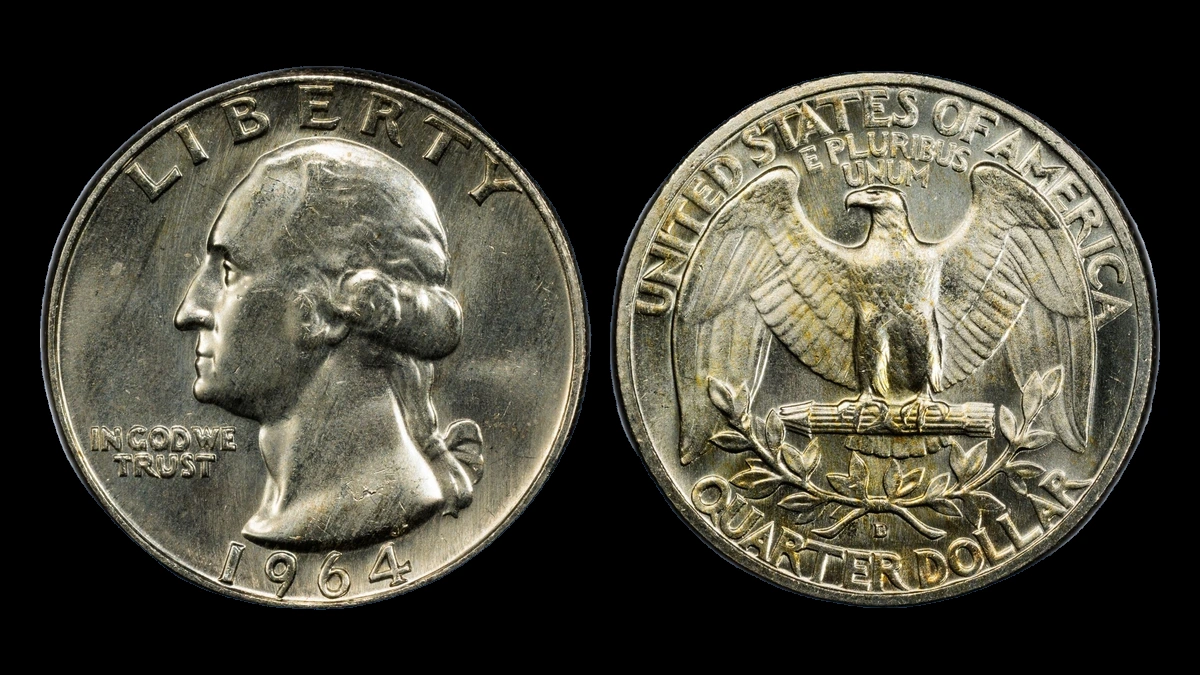
Separate an ordinary Philadelphia coin from a specially made Proof first. Type B is normal on a Proof and is not an error there merely because the same design appears on circulation coins.
For ordinary Philadelphia Type B, compare the clearer gap between E and S in STATES and stronger detail around E PLURIBUS UNUM. The more specific FS-901a listing needs its own reference.
For Denver Type C, find the D below the wreath and compare the sharper leaves and lower-relief reverse with a certified example. Keep mint and finish attached to the design match.
What It’s Worth
$25–$10,000 spans the two groups. Ordinary Philadelphia Type B examples may fit $25–$1,500, while Denver Type C can fit $100–$10,000 across a wide range of preservation.
PCGS records $8,400 for a Type C MS66+ in June 2023. Its exceptional grade explains much of that high comparison.
2. 1964 Quarter Extra D Outlines below the Wreath: Repunched Mintmarks Error
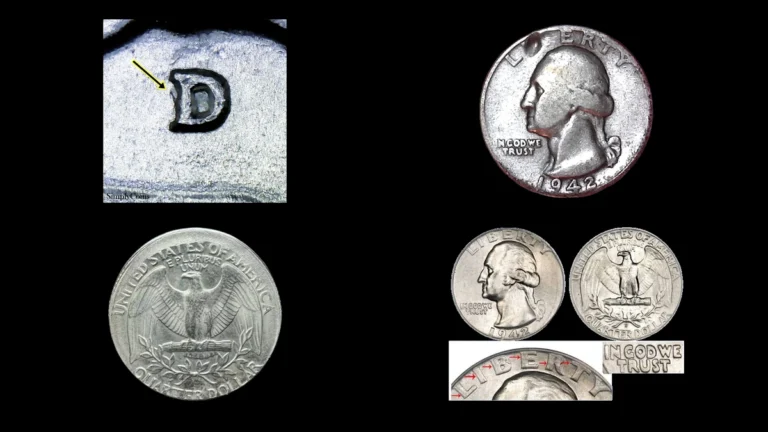
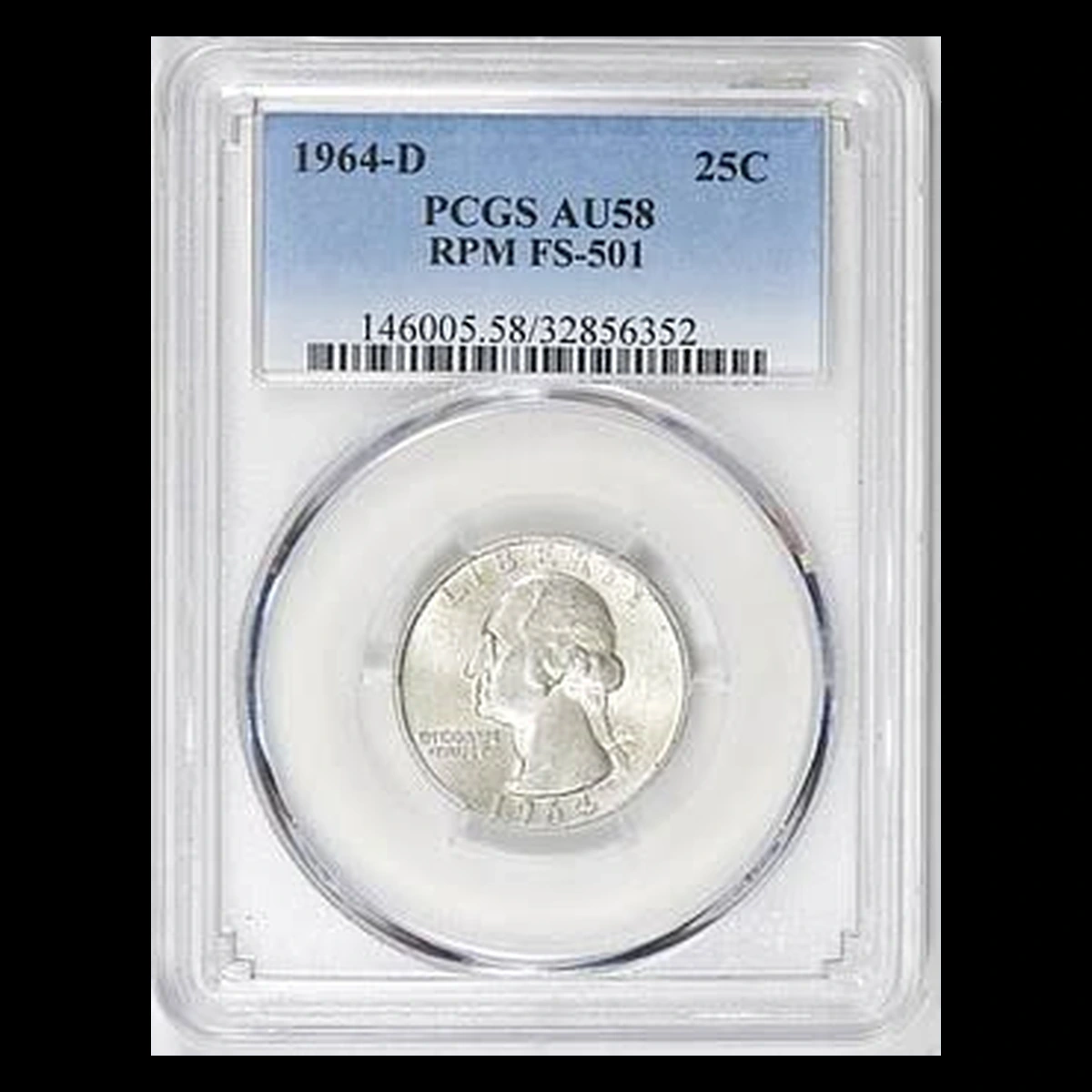
The Denver mintmark sits on the reverse below the wreath. Earlier punch impressions can remain around the final D when the worker changed its position.
FS-501 has remnants above the letter, while FS-502 has them to the right. Other listed patterns have lower, turned, or multiple earlier outlines.
How to Identify
Follow the complete extra letter shape rather than selecting a variety from direction alone. FS-503, also called WRPM-005, has its own above-D pattern and is separate from FS-501.
The complex WRPM-001 includes several earlier positions. Match its full arrangement rather than treating every bump near D as one of those impressions.
Flat shelves from striking movement and dirt inside the letter do not establish repunching. Use lighting that shows original raised contours.
What It’s Worth
$25–$1,000 is the estimate for genuine repunched mintmarks in ordinary worn through attractive unworn condition. Pattern, clarity, and preservation all matter.
A small speck or shared direction alone does not justify the upper end.
3. 1964 Quarter Repeated Lettering, Leaves, or Date Details: Doubled Dies Error
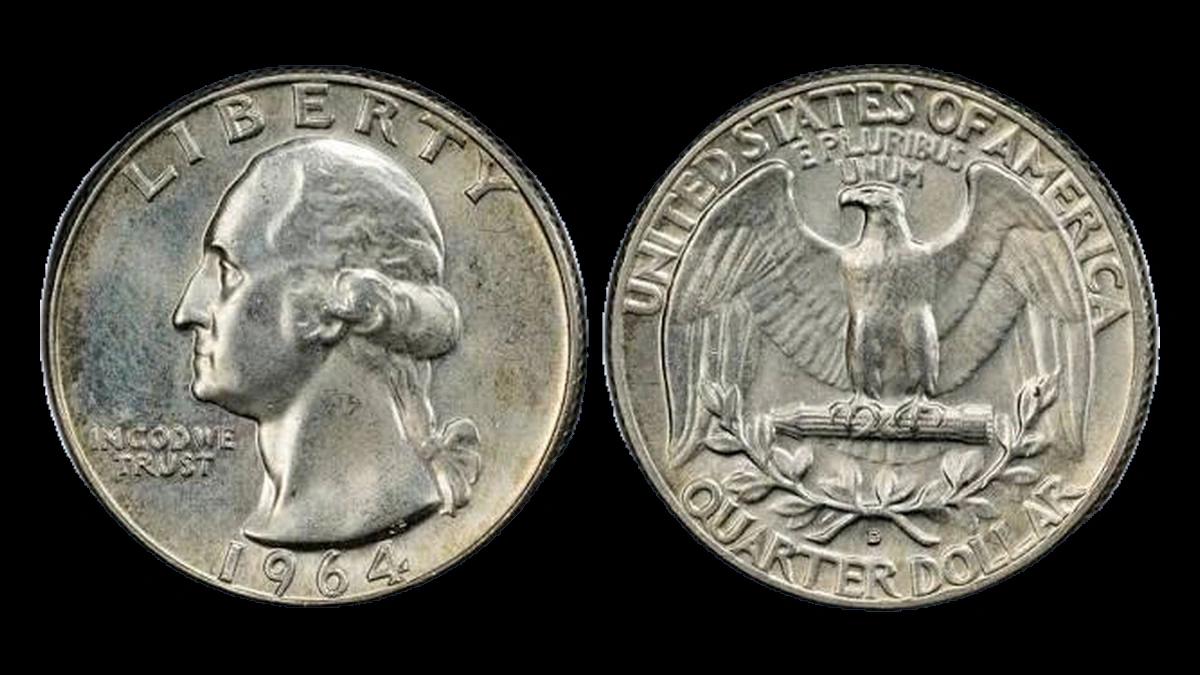
Cataloged doubling covers both faces of Philadelphia and Denver circulation coins, plus Philadelphia Proofs. The repeated detail existed in the die before striking.
Some catalog numbers repeat across different issues. Philadelphia FS-801 and Denver FS-801 are different reverse patterns, and Proof WDDO-001 is separate from ordinary Philadelphia FS-101.
How to Identify
Match mint and finish before examining LIBERTY, the motto, date, or hair ribbon. Proof patterns can have very close outward repetition at LIBERTY, while a Denver pattern called WDDO-014 concentrates on the top of 6.
Philadelphia reverse FS-801 through FS-804 need separate photographs of denomination, wreath, feathers, and motto. Denver FS-801 strongly repeats inscriptions and the lower wreath.
Denver WDDR-003 is much more local, affecting a leaf above and left of Q. Rounded matching detail is stronger evidence than flat shaved-looking shelves.
What It’s Worth
$25–$5,000 is the estimated span from minor worn examples to desirable patterns in excellent condition. A correct number from the wrong mint or finish cannot establish the same value.
The range is not a premium for every thick letter. The complete repeated pattern needs to agree.
4. 1964 Quarter A Crack around Surviving Design: Pre-Cud Error
The cataloged Denver PC-25c-1964D-01 shows a stage before a rim-connected piece of die fully breaks away. The design remains within the developing crack boundary.
A fully missing die piece would leave a raised blank area instead. The earlier stage is called a pre-cud.
How to Identify
Match the complete crack path and the surviving detail inside it with the catalog photograph. A raised line elsewhere on a Denver quarter does not establish this pattern.
Use side light to separate the ridge from a scratch with a sunken center. Inspect the rim for impacts that pushed metal into a misleading shape.
What It’s Worth
$25–$800 is the estimate for authenticated pre-cud and related crack examples. A clear boundary on undamaged metal makes the stage easier to show.
Do not assign an early crack the value of a later, larger break that the coin does not have.
5. 1964 Quarter Peeling Metal or a Large Flat Separation: Lamination and Split Blank Error
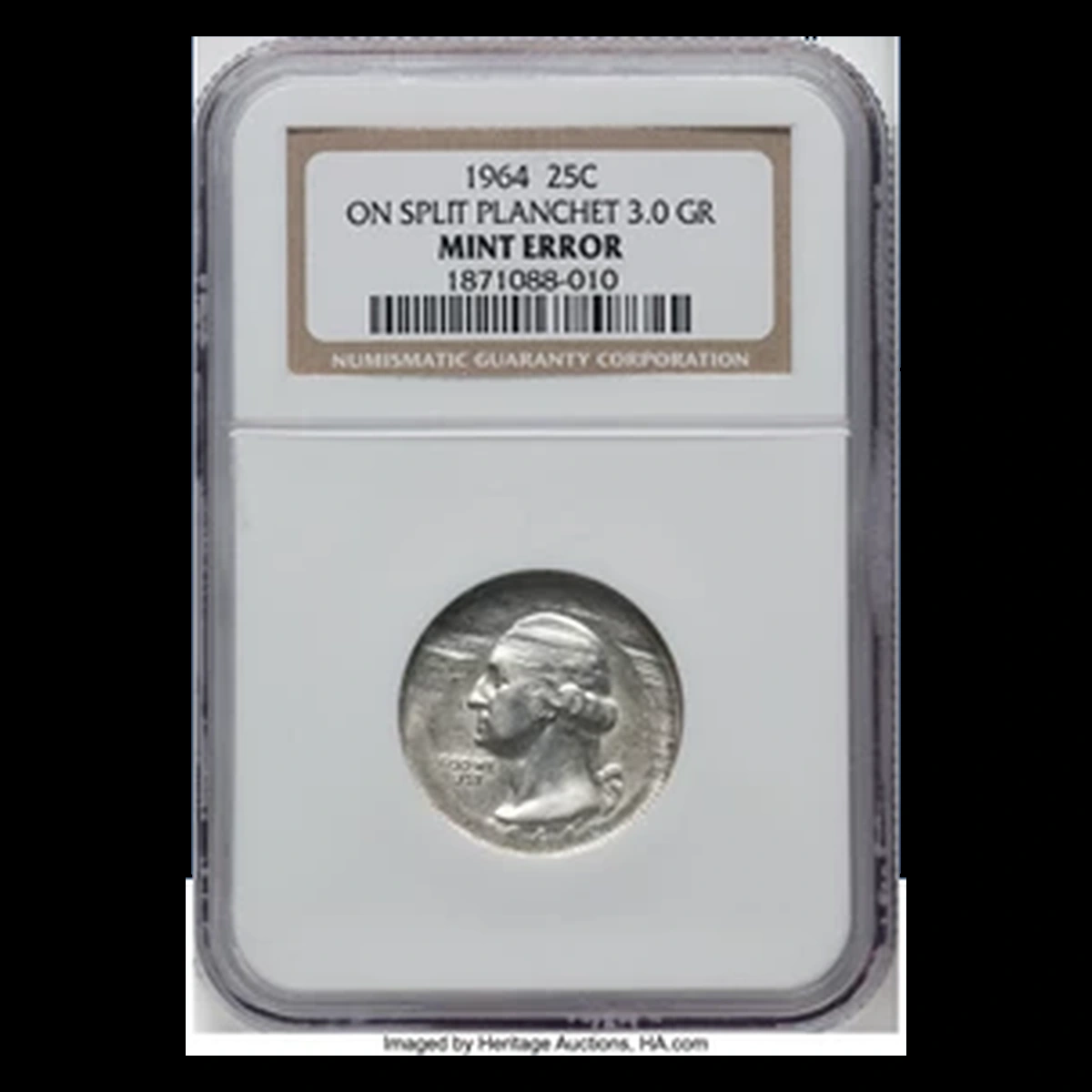
A Denver NGC MS64 quarter has a local front lamination. A separate Philadelphia piece struck on a split blank weighs 3 grams.
Both involve weakness within the original metal, but their remaining structures differ. The larger split’s timing cannot be determined from weight alone.
How to Identify
For a small peel, follow the thin layer into the intact surface without lifting it. For a larger split, inspect both flat faces and the edge for exposed layers and surviving design.
A normal silver quarter weighs 6.25 grams. The recorded 3-gram piece is not automatically a smaller-denomination blank or proof that separation happened before striking.
Look for filing and scraping that could have removed silver later. Preserve any attached or matching loose pieces.
What It’s Worth
$25–$750 is the estimate across genuine local laminations and split-blank examples. The visibility, original boundary, and condition determine useful comparisons.
The Denver front peel and Philadelphia split piece need separate photographs and measurements.
6. 1964 Quarter A Full-Size Quarter That Is Too Light: Thin or Tapered Stock Error
A quarter-sized blank can be underweight without being a dime blank. The Philadelphia records include a 4.8-gram underweight coin with no stated grade.
A separate NGC MS64 coin struck from dime-thickness stock weighs 5.2 grams. An NGC MS65 tapered blank weighs 5.3 grams and becomes thinner across part of its width.
How to Identify
Use weight and diameter together, then inspect the edge from several directions. Uniform thinness differs from a gradual taper.
Check for a bend that makes a photograph appear thinner on one side. Filing, corrosion, or heavy wear can also reduce weight.
The 4.8-gram description establishes underweight metal only. It does not prove thin stock or tapering by itself.
What It’s Worth
$100–$1,500 is the estimate for authenticated underweight, thin-stock, or tapered quarters. A clear physical explanation supports the error premium.
A light coin with damaged surfaces should not inherit the value of a confirmed original thickness defect.
7. 1964 Quarter An Irregular Surface beneath the Design: Defective Planchet Error
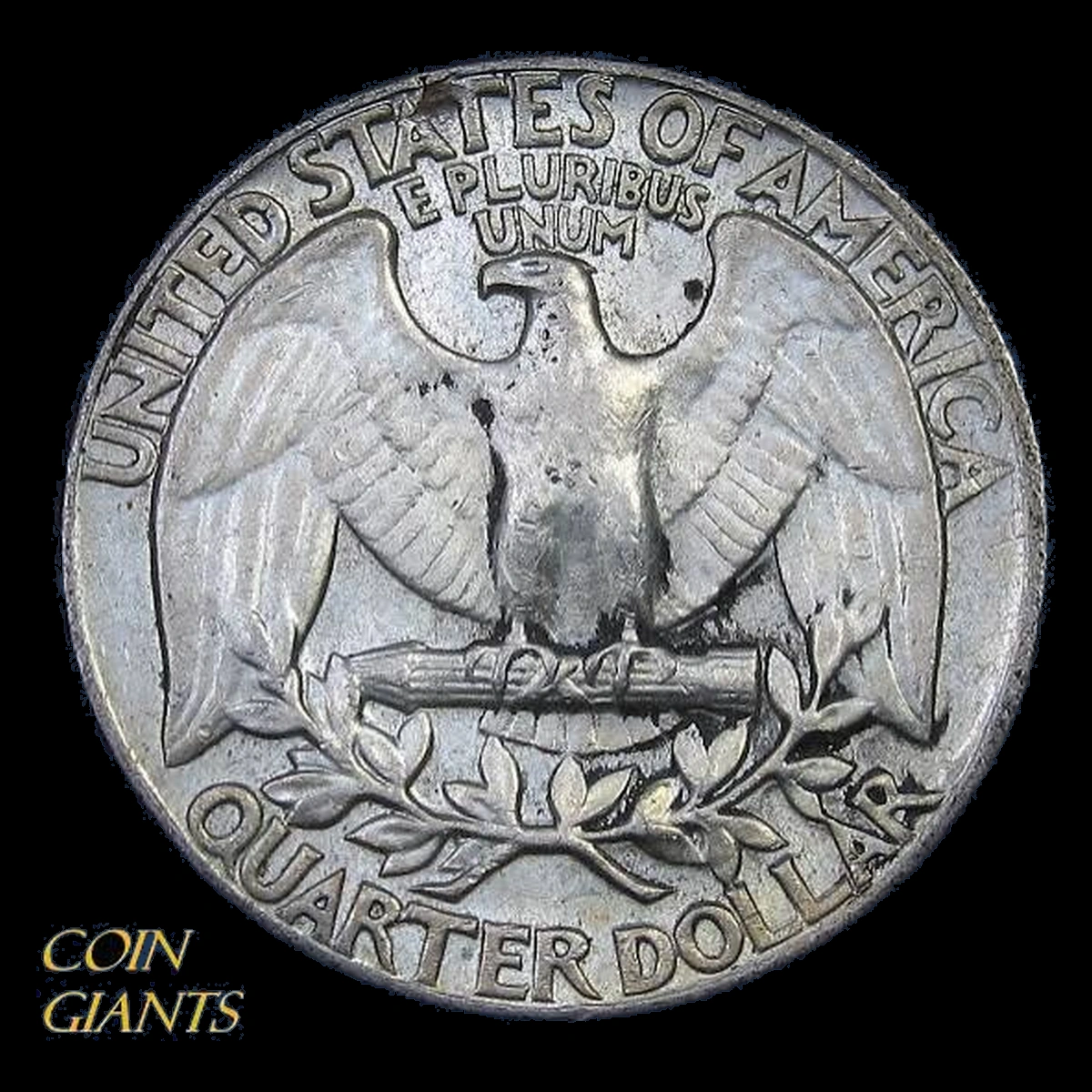
A planchet is the prepared blank that receives the strike. Philadelphia defective-planchet records include an NGC MS65 coin and two MS64 descriptions at 5.8 grams.
Matching weight and grade do not prove the two MS64 records describe the same specimen. The general attribution also does not establish one shared flaw shape.
How to Identify
Inspect where normal design meets the unusual metal. Determine whether the design formed across the area or whether later damage cut through it.
Photograph both faces and the edge, checking for tool cuts, dragged metal, and corrosion. A 5.8-gram reading alone cannot identify the same defect as a cataloged example.
What It’s Worth
$50–$1,500 is the estimate for a confirmed original blank flaw. Size, clarity, and surrounding preservation help establish the comparison.
An unexplained rough patch needs more evidence before it receives an error premium.
8. 1964 Quarter Broadly Shallow Designs: Reported Die Adjustment Strike Error
NGC cataloged a Denver example as a die adjustment strike. That term describes an unusually weak striking result associated with setting the press.
The label does not reveal an exact pressure. Missing detail must still be distinguished from wear, later squeezing, or a small grease-blocked patch.
How to Identify
Compare weakness across both faces, including protected areas. Circulation usually rubs exposed high points, while a weak blow can leave broader shallow detail.
Look for original surface shine within the faint design rather than broad rubbed patches. Keep the readable date and D in the photo set.
What It’s Worth
$100–$2,000 is the estimate for an authenticated severe weak strike with clear 1964-D identity. Original surfaces help demonstrate that the design never formed fully.
A poorly detailed quarter is not automatically a press-setting error. Later wear or pressure changes the comparison.
9. 1964 Quarter A Deep Reverse Hollow: Strike-Through Error
A 1964-D NGC MS64 quarter has a deep reverse impression where material blocked the die. The source does not identify the object.
Depth alone cannot prove that a hollow formed at the mint. A later gouge can remove finished design too.
How to Identify
Follow intact eagle or letter detail into the boundary. An original obstruction can prevent detail from forming while leaving neighboring design sharp.
Check several sides for torn silver, tool tracks, or pushed lips. Do not name wire or cloth without a matching texture, and leave any material attached.
What It’s Worth
$100–$2,500 is the estimate for an authenticated deep strike-through. Shape, visibility, and surface preservation matter together.
The MS64 grade supplies an unworn comparison. An empty impression should not receive a premium for a rare retained object that is not present.
10. 1964 Quarter A Straight Missing Section: End Clip Error
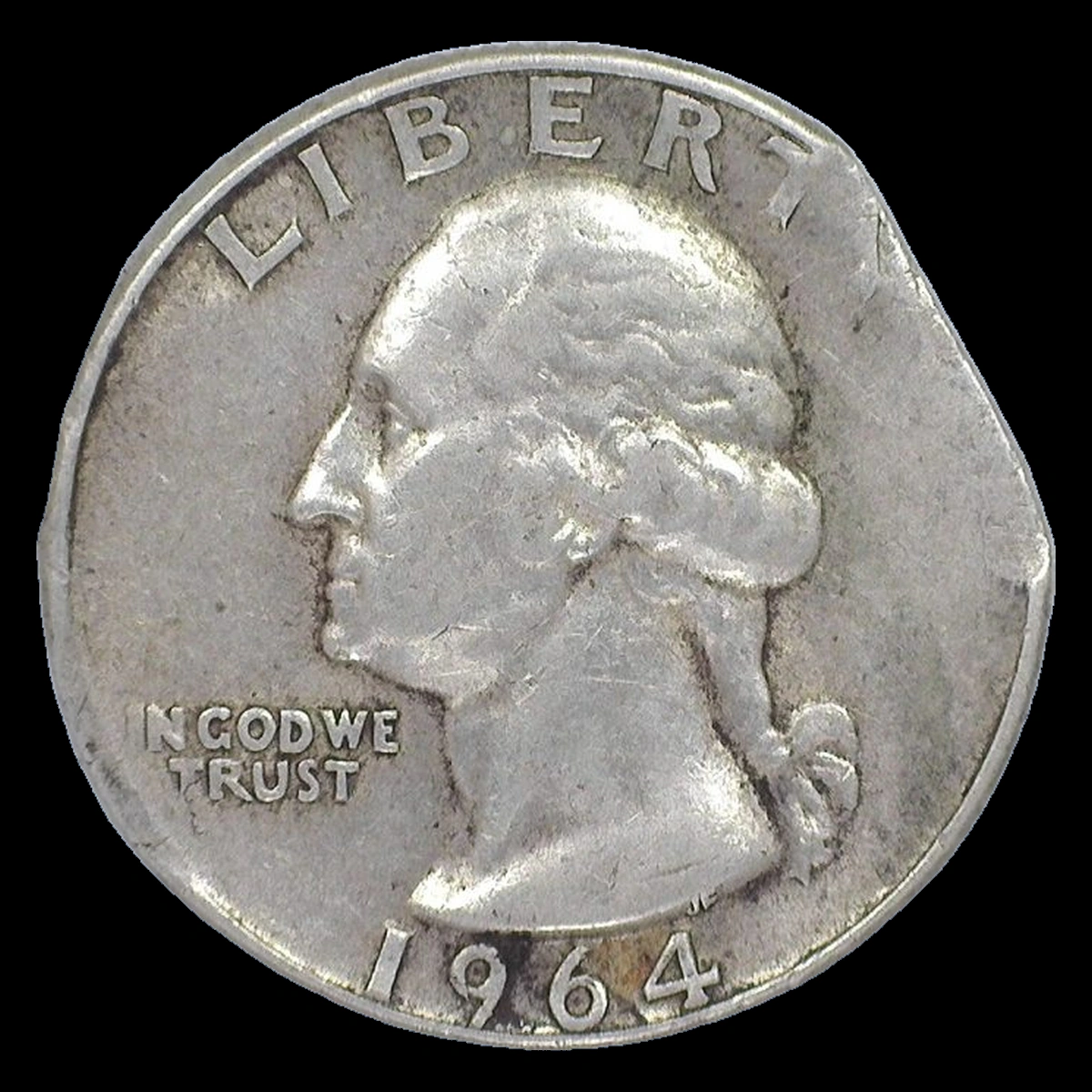
The documented Denver MS63 example has an 18% straight clip. Part of its blank was incomplete before striking.
This straight edge differs from the curved gap made when a blank cutter overlaps an earlier round hole. Later cutting can imitate either shape.
How to Identify
Inspect the missing side and both endpoints for saw marks, scraping, or burrs. Then examine how the original rim and nearby letters approach the gap.
Opposite-rim weakness can provide support but need not be obvious. A lower weight also fits later cutting, so the struck boundary is essential.
What It’s Worth
$75–$1,500 is the estimate for a genuine 1964-D straight clip. Size, condition, readable identity, and natural edge transitions affect the price.
The 18% description belongs to the recorded MS63 coin. It is not a standard size for every straight-clip quarter.
11. 1964 Quarter Full Designs on Expanded Metal: Broadstrike Error
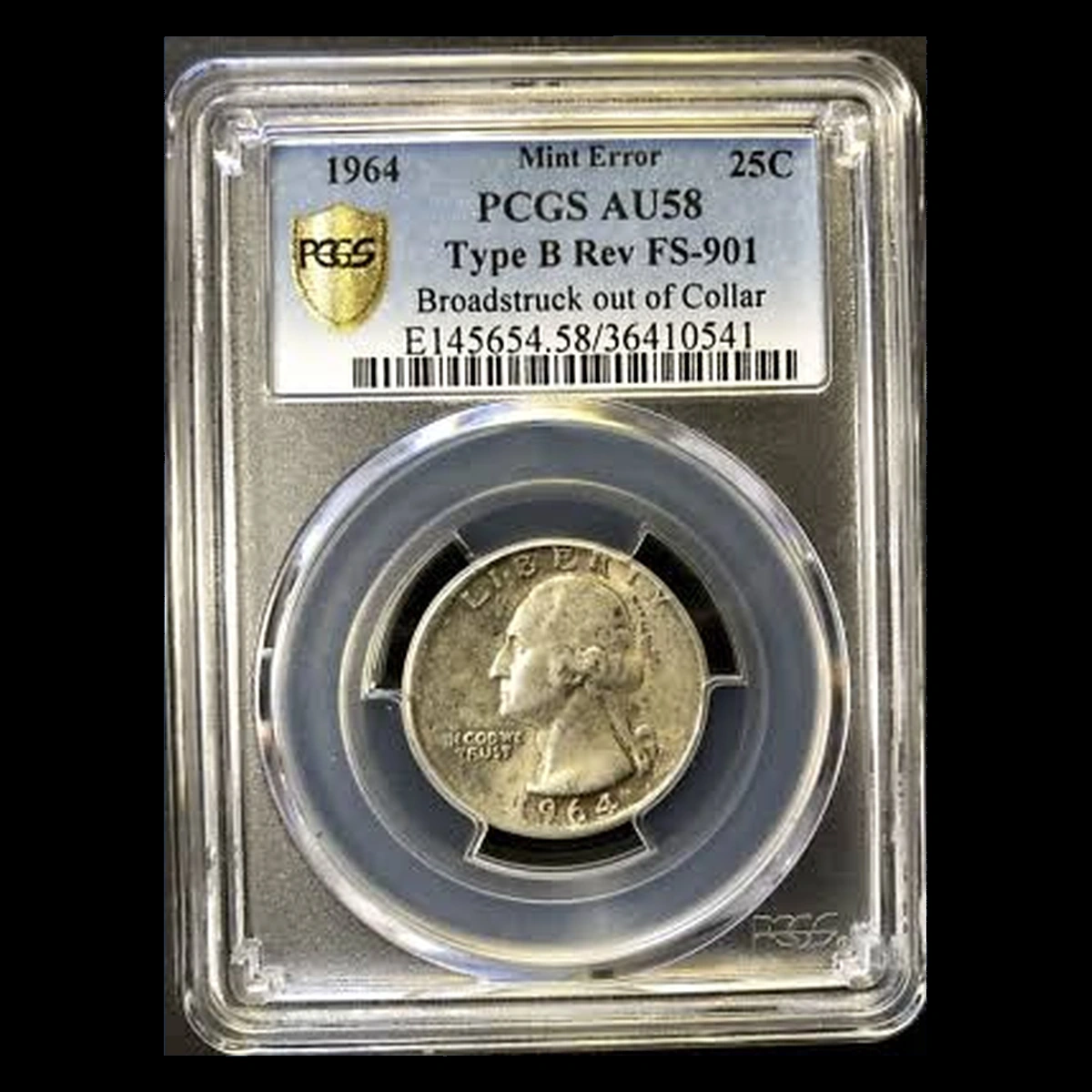
Philadelphia examples include centered and uneven broadstrikes, plus a strike on a Type 1 blank. The collar did not restrain the blank normally, allowing the metal to spread.
Type 1 means the blank’s rim had not been raised during preparation. It has nothing to do with the eagle’s Type A, B, or C design.
How to Identify
Follow every outer letter on both faces to confirm that the intended design remains complete. Compare the expanded outline with the normal 24.3-millimeter width.
Look for original metal flow rather than a rolled rim or later flattening. A Type 1 attribution needs a certified comparison of the blank preparation as well.
What It’s Worth
$50–$1,000 is the estimate for genuine broadstrikes. A specimen with an unworn-details assessment and reverse wheelmark sold for $204 in June 2025.
The wheelmark is later damage, not another mint error. Separate uneven MS65 and Type 1 MS64 examples need their own condition comparisons.
12. 1964 Quarter A Step along the Edge: Partial Collar Error
A Philadelphia PCGS MS62 quarter combines partial-collar striking with a Type 1 blank. Some metal stayed inside the retaining ring while the rest spread.
The edge records incomplete collar contact as well as the blank’s unraised starting rim. These are features of one coin.
How to Identify
View the edge at eye level and rotate it. Find the transition between the grooved section and metal that expanded beyond the collar.
Photograph the physical step from several angles and check for ground grooves or crushed metal. Compare the complete coin with the attributed Type 1 example.
What It’s Worth
$50–$1,200 is the estimate for a genuine partial-collar quarter with clear identity. A visible step and preserved grooves make a stronger display.
Do not add a separate Type 1 price to the collar-error estimate. Both describe the same PCGS MS62 specimen.
13. 1964 Quarter The Eagle Turns Far from Upright: Rotated Dies Error
A recorded 1964-D PCGS MS64 quarter has a 150-degree clockwise rotation. The angle describes the relationship between its front and back.
It is not a percentage of off-center striking or the movement between two overlapping impressions.
How to Identify
Practice a top-to-bottom flip with a normal quarter while keeping Washington upright at the start. Repeat the same movement with the candidate without twisting sideways.
Measure the eagle’s departure from upright and leave both photographs unrotated. Check that a holdered coin is not moving inside its holder.
What It’s Worth
$100–$1,500 is the estimate for an authenticated Denver rotation of this size. Clear orientation evidence and preserved surfaces guide the comparison.
The angle must belong to the actual coin. Rotating a photograph adds no error value.
14. 1964 Quarter A Large Bare Crescent: Off-Center Strike Error
A Philadelphia PCGS MS64 example was struck 40% off-center. Some intended design missed the blank, leaving original metal unstamped on the other side.
The percentage describes displacement, not the angle between the faces. An uneven broadstrike instead keeps its complete design.
How to Identify
Photograph the visible year together with the unstruck crescent. Then check that the reverse fits the same misplaced blank.
Inspect where struck and unstruck metal meet and where lettering runs beyond the edge. Filing can remove letters but does not create an original blank crescent.
What It’s Worth
$150–$3,000 is the estimate for authenticated off-center quarters. A substantial shift with readable date and original surfaces supports stronger interest.
The recorded 40% MS64 coin is a physical comparison, not a guaranteed price for every dramatic outline.
15. 1964 Quarter A Backward Eagle across the Front: Brockage with Broadstrike Error
The documented coin has a sunken mirror image covering about 90% of the front. Only a narrow strip near six o’clock met the normal front die directly.
Its outline expanded, reverse lettering stretched outward, and faint raised Washington traces remained within the affected face. PCGS graded it MS63 and placed the date in parentheses because the final digits are indistinct.
How to Identify
Compare the normally raised strip near six o’clock with the much larger recessed backward eagle image. Side lighting helps show the difference in relief.
Keep the label’s attributed year, (1964), separate from a claim of a fully readable date. The two thin test scratches on the upper reverse are later damage.
What It’s Worth
$250–$3,000 is the estimate for a comparable authenticated combination. The attributed 1964 brockage and broadstrike sold for $329 in April 2013.
The mirror image, expansion, condition, and date attribution all belong to one valuation. The test scratches do not add mint-error value.
16. 1964 Quarter Quarter Designs on Dime or Nickel Stock: Wrong Blank Error
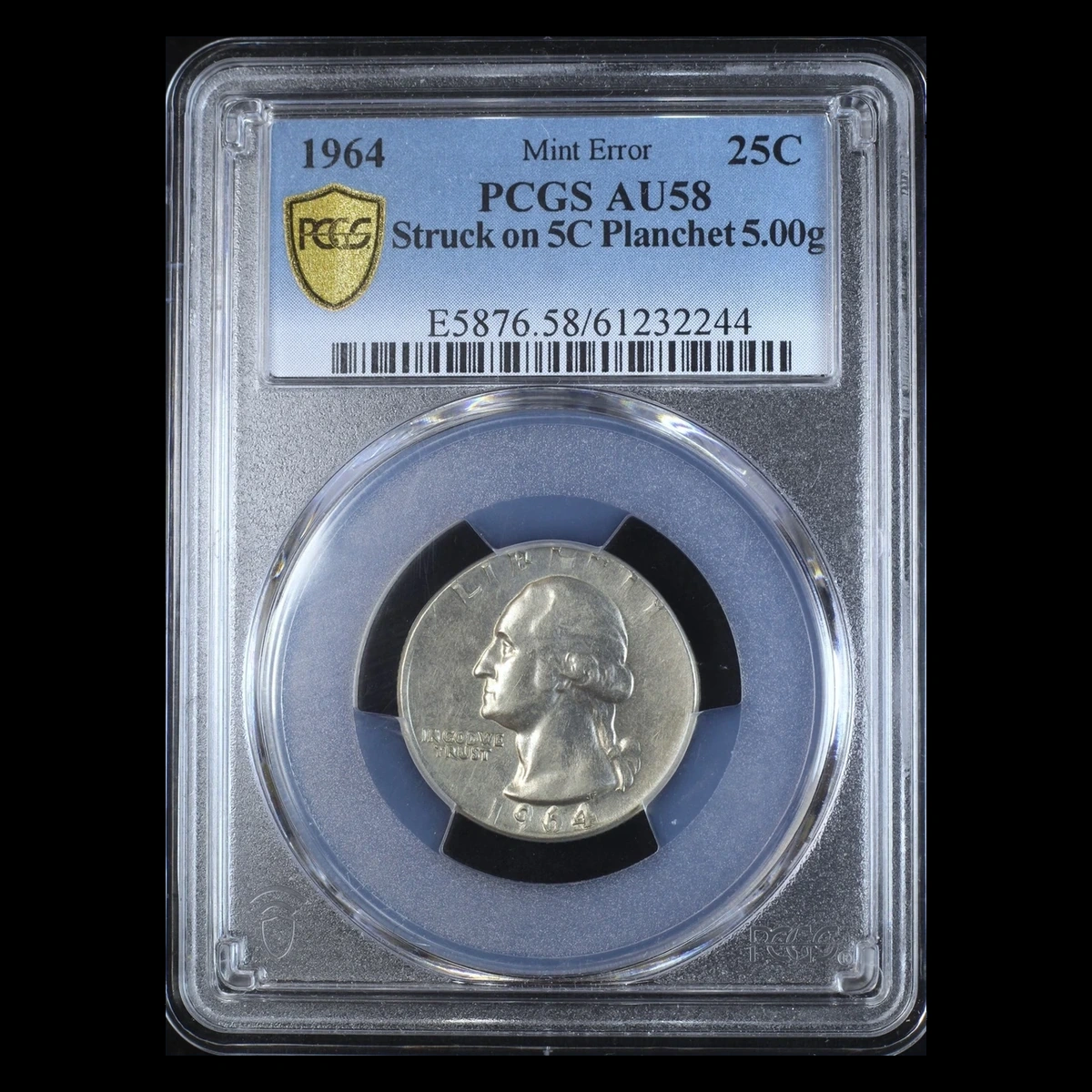
Philadelphia quarters are recorded on silver dime blanks weighing 2.5 grams and a nickel blank weighing 5 grams. Smaller blanks cannot hold the quarter’s outer design normally.
A Denver NGC MS63 dime-blank example has its year attributed as (1964). Its complete date should not be assumed readable.
How to Identify
Use weight, diameter, and design fit together. A dime blank starts smaller than a quarter-sized blank cut from dime-thickness stock.
Allow for spreading during striking and inspect the edge for filing. The nickel blank also needs its copper-nickel composition distinguished from the silver dime and quarter alloys.
Record only the date and mint details that survive or are established by attribution. Do not turn partly missing numerals into four clearly visible digits.
What It’s Worth
$250–$5,000 is the estimate for authenticated smaller-blank quarters. Exact blank identity, readable design, and preservation determine the comparison.
A Philadelphia dime-blank quarter graded NGC MS66 and weighing 2.5 grams brought $552 in July 2021. Its grade and weight belong to that specimen.
17. 1964 Quarter Two Designs after a Turn or Shift: Double Strike Error
One Philadelphia PCGS MS64 quarter first struck inside the collar, then received a broadstrike after a roughly 90-degree counterclockwise turn. Another MS64 coin received a second strike 90% off-center.
The repeated number describes different things: degrees measure a turn, while percent measures displacement. The second coin also retains partial-collar features from its first strike.
How to Identify
For the turned broadstrike, map letters or portrait edges from both impressions. Check the quarter-turn relationship and the expansion caused by the later unrestricted blow.
For the 90% off-center example, find the small area reached by the second strike, toward seven o’clock in the catalog image. Its first strike had collar contact near five and spreading near eleven.
Preserve the reference image’s orientation for those positions. Do not combine the two MS64 descriptions into a single event.
What It’s Worth
$500–$7,500 is the estimate for authenticated double strikes of these kinds. Recognizable separate designs and original surfaces strengthen the appeal.
The 90% off-center example did not sell in its May 2007 Heritage offering. That listing supplies no completed transaction price.
Conclusion
Check what each number actually measures before comparing 1964 errors. A weight can describe a split, thin stock, or a smaller blank, while a figure of 90 may refer to degrees or off-center percentage.
The same care applies to catalog labels: mint, finish, and the exact physical pattern must match. Keep both faces, edge views, and any condition problems attached to the specimen whose value you are considering.