Rare 1965 Penny Errors (List & Pictures)
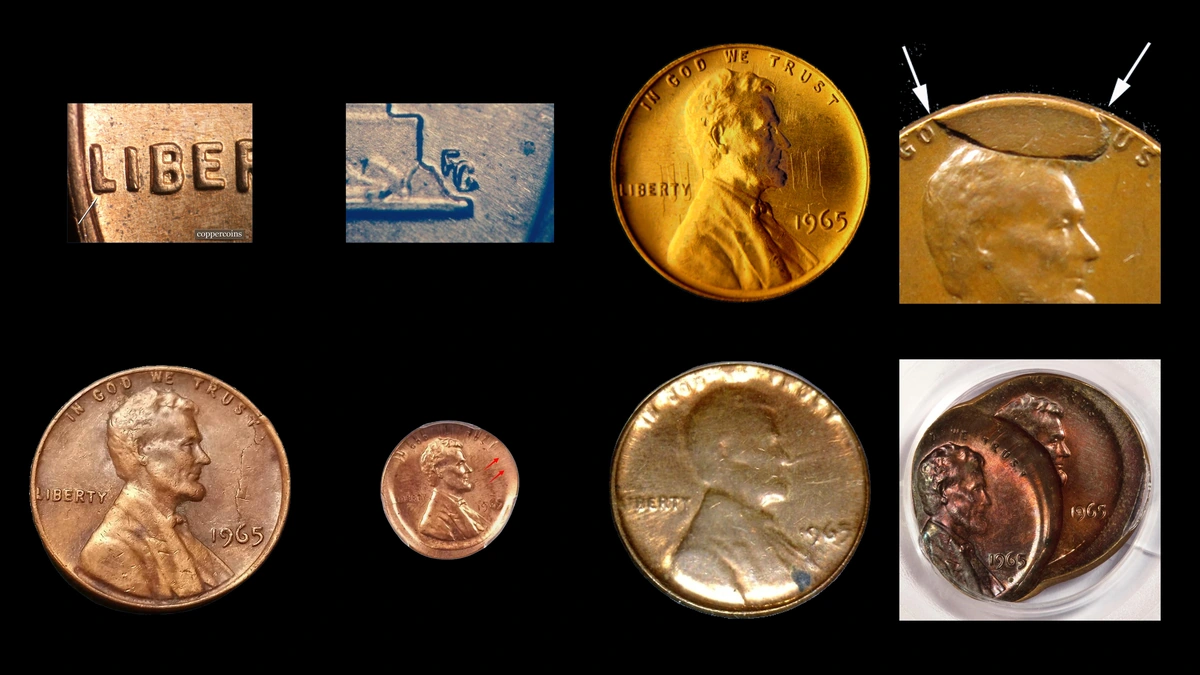
The 1965 penny errors below range from small raised chips to cents struck on dime blanks, with estimates of $3–$15,000. The highest supplied sale is $9,987.50 for a silver dime-planchet cent in January 2013.
Work through lettering, surface structure, and outline before comparing unusual metal or overlapping designs.
No mintmark is normal on both circulation cents and Special Mint Set coins from 1965. Special Mint Sets were made for collectors, but they were not the conventional Proof issue, which was absent that year.
| What you notice | Possible type | Estimated range |
|---|---|---|
| Small repeated design or faint opposite-side traces | Doubled die or clash | $5–$275 |
| Raised line, surface flap, or opening | Die break, lamination, or cracked blank | $3–$500 |
| Wide, incomplete, or displaced outline | Broadstrike, clip, or off-center strike | $10–$750 |
| Blurred reverse, cup, or joined bodies | Cap-related strike, die cap, or bonded pair | $25–$4,500 |
| Overlapping designs or smaller pale metal | Repeated strike, dime overstrike, or wrong blank | $50–$15,000 |
A normal cent is 95% copper and 5% zinc throughout, weighs 3.11 grams, and measures 19.05 millimeters across its plain edge. Use those standards once the shape or metal calls for measurement, rather than expecting a scale reading to identify a doubled die.
Inspect small details with a magnifier under changing light. Preserve attached layers, unusual shapes, and certified holders.
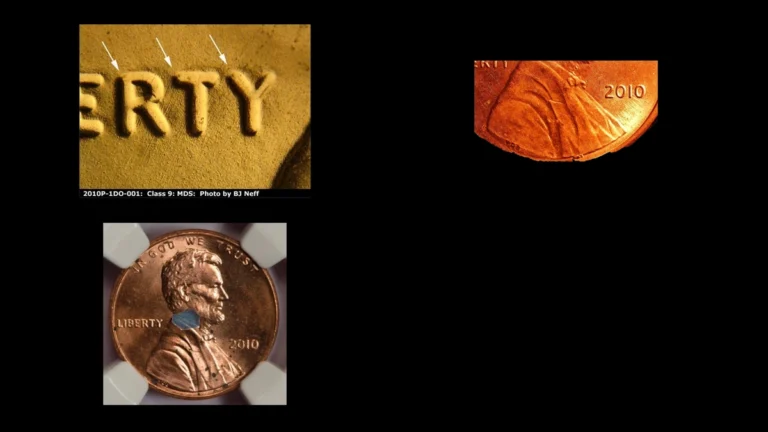
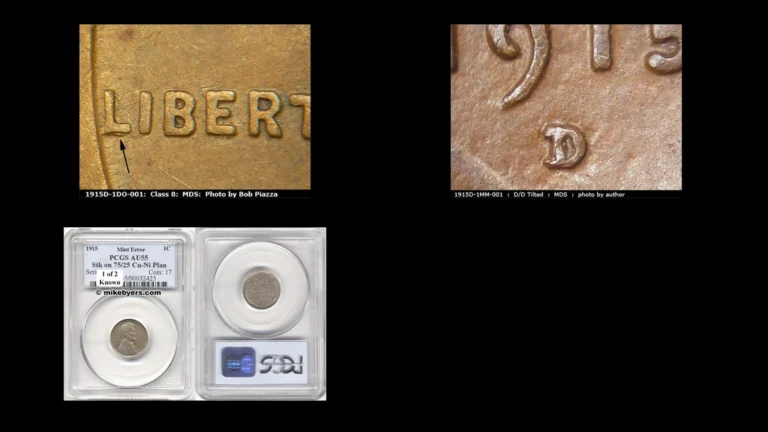
1. 1965 Penny Extra detail on the 5, L, or T: Doubled-Die Obverse Error
Several 1965 varieties carry small repeated features on the front design. Their dies already contained the extra detail before any coin was struck.
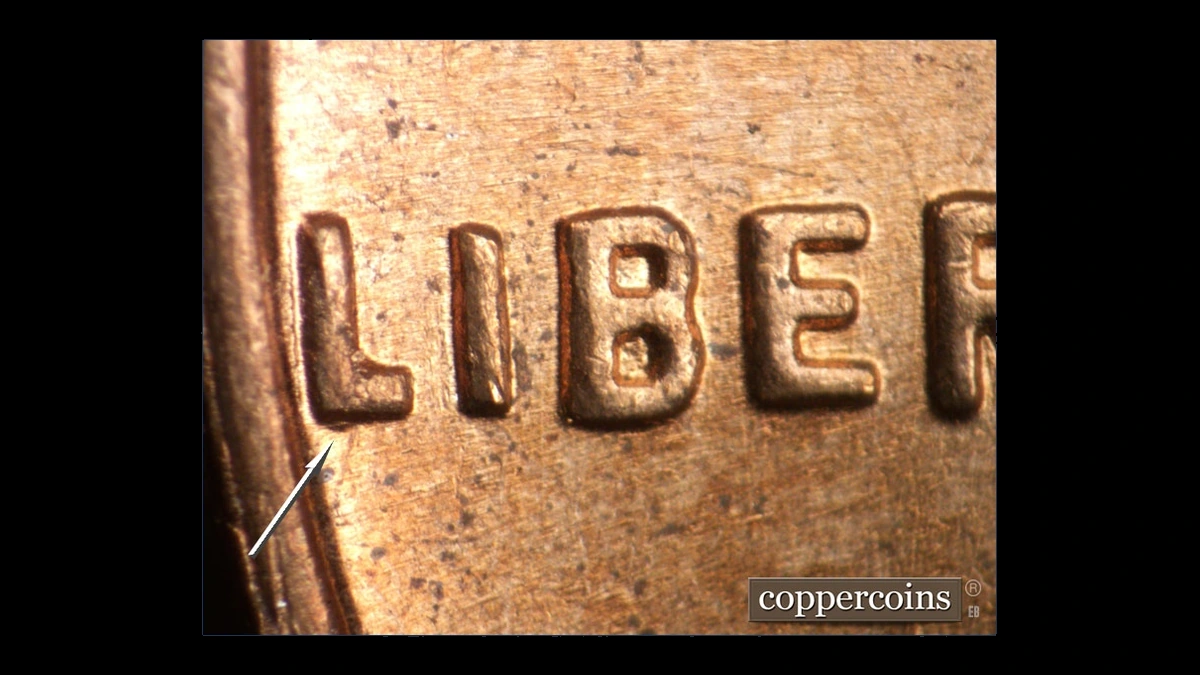
The cataloged positions include the top of 5, L in LIBERTY, and the final T in TRUST. Two L varieties are associated with Special Mint Set coins, while other listings do not specify a finish.
How to Identify
Choose the affected feature before matching a catalog entry. WDDO-001 emphasizes the top of 5, while WDDO-002 also includes detail at the upper left of the last T.
Other patterns involve L or the final T’s upper right. Wexler’s 1965 photographs distinguish these locations and the SMS entries.
One L pattern also has curved lines below LIB and reverse marks near STATES and PLURIBUS. Those are supporting clues for that die, not requirements for every doubled obverse.
Look for the specified raised repeated shape rather than a flat shelf from movement during striking. Neither a missing mintmark nor an assumed SMS finish can replace the design match.
What It’s Worth
Identified minor doubled obverses are estimated at $5–$250. Strength of the extra detail and preservation affect the comparison.
Keep an SMS example with the corresponding collector issue when evaluating condition. The supplied estimates are not completed sales for each cataloged pattern.
2. 1965 Penny Matching extra outlines across the reverse: Doubled-Die Reverse Error
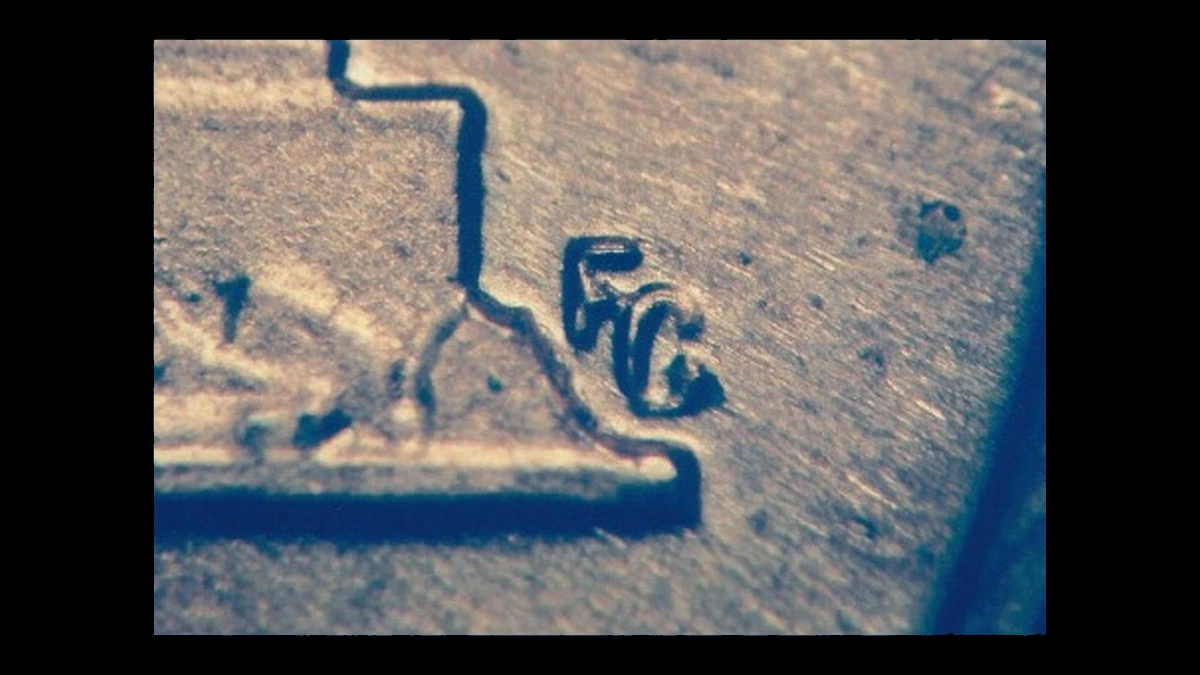
The listed reverse variety has a slight clockwise shift visible in several design areas. These include upper AMERICA, lower ONE CENT, FG, and the upper UN in UNITED.
Several related outlines make a more useful match than one letter that merely looks thick. The listing does not determine whether the coin has an ordinary or SMS finish.
How to Identify
Compare the direction of the extra detail across all the named areas. Reflections or isolated surface marks should not explain the supposed doubling better.
Supporting marks include a short northward line in front of Lincoln’s nose and a mark inside the upper N of UNITED. Check that both faces belong to the same candidate rather than combining photographs of different coins.
What It’s Worth
Identified examples are estimated at $5–$275. Clear original surfaces preserve the fine separation needed for a convincing attribution.
This range concerns the listed pattern, not a sale price for the catalog photograph. Finish and condition still need to be established on the actual coin.
3. 1965 Penny A faint shape belongs to the opposite design: Die Clash Error
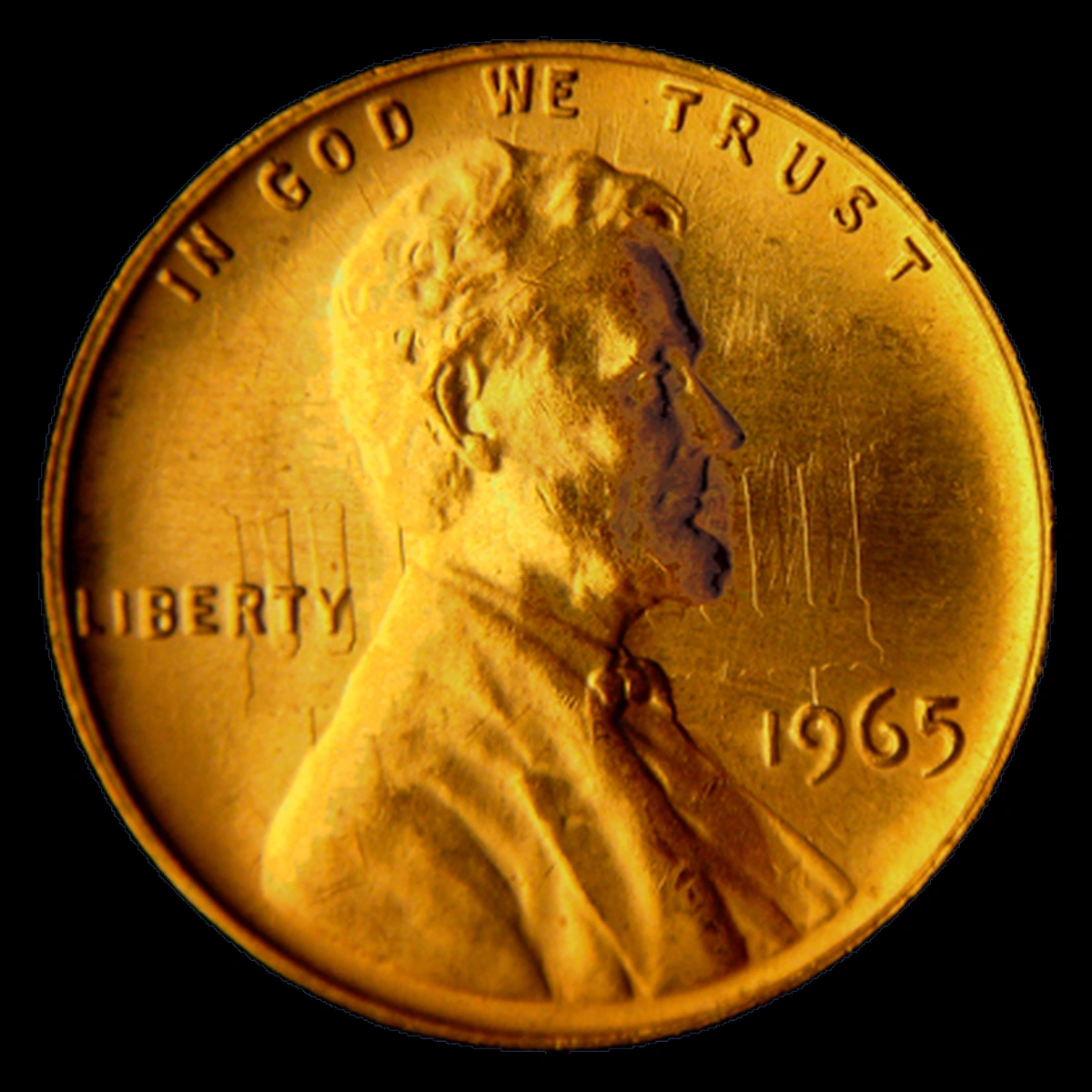
A clash occurs when the dies contact one another without a blank between them. Traces from that contact can appear alongside the normal design on later coins.
The supplied year report lists 1965 clashes without specifying one diagnostic position or grade. A familiar clash location from another date cannot fill that gap.
How to Identify
Compare photographs of both faces at the same scale and look for a recognizable opposite-side curve, letter, or building feature. Its position must fit the proposed die contact as well as its shape.
Move the light to distinguish the trace from a scratch cut into the surface. A stray line crossing Lincoln is not enough to establish a clash.
What It’s Worth
A recognizable clash is estimated at $10–$150. Clear transferred shapes offer stronger evidence than vague background lines.
No individual auction result accompanies the broad 1965 report. Wear and cleaning can make the small features harder to judge.
4. 1965 Penny Raised bars, trails, or rim patches: Die Chips, Cracks, and Cuds Error
Metal entering a crack in a die forms a raised trail on the coin. A small missing piece can create a chip, including the bar between B and E that collectors call BIE.
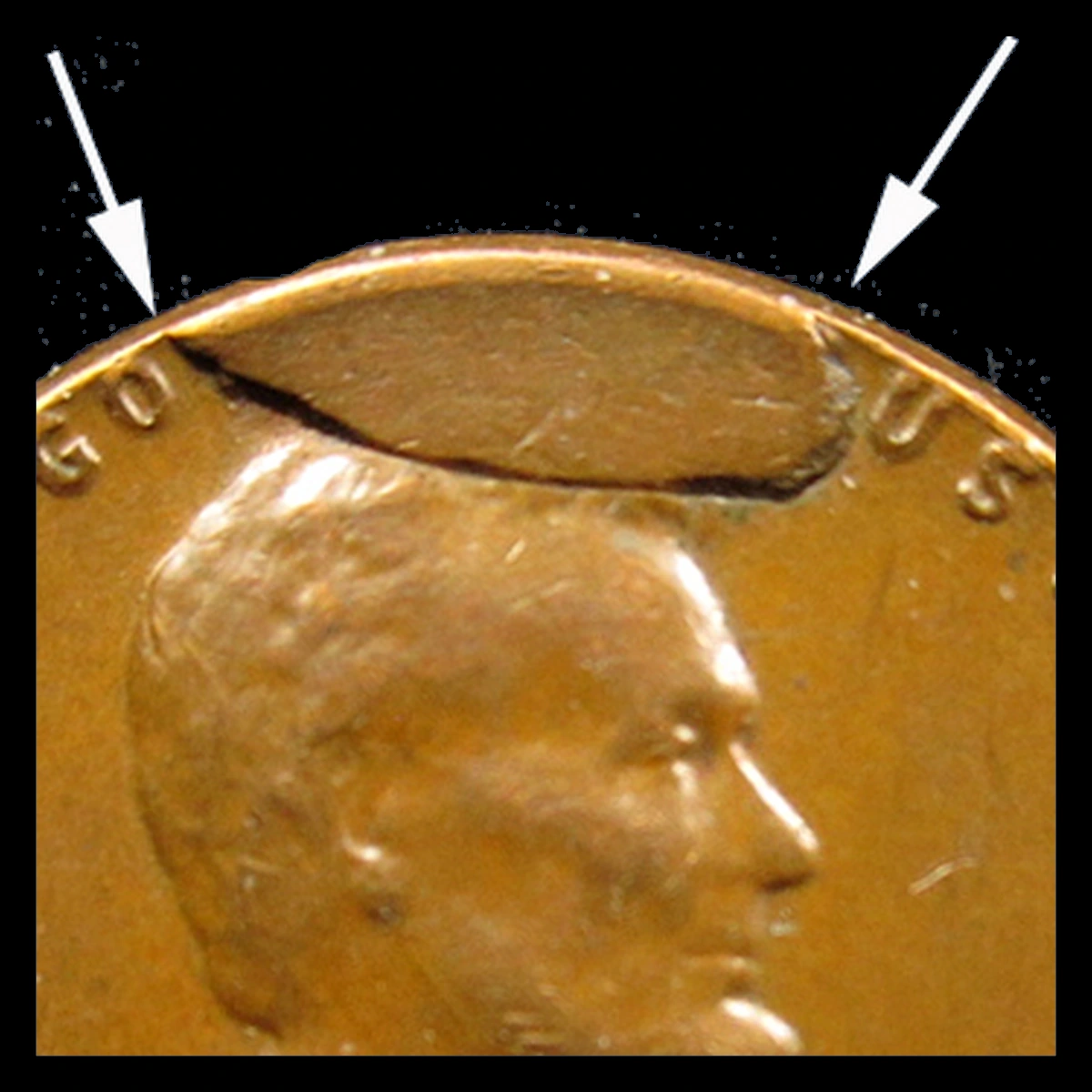
A larger broken area connected to the die’s edge produces a rim-connected mound called a cud. The supplied 1965 reports describe these forms without assigning fixed positions to every example.
How to Identify
Trace the raised feature to its endpoints. A BIE chip belongs between the specified letters, while a cud must reach the rim.
An interior mound is not a cud simply because it is large. Look for seams or foreign material that might indicate something attached after striking.
A raised line from a cracked die also differs from an actual opening through the coin. The latter belongs to a blank defect or later damage.
What It’s Worth
Modest chips and narrow cracks are estimated at $3–$25; stronger rim cuds at $25–$500. The size and clarity of the damaged-die feature matter.
A 1977 cud cent graded PCGS MS63 Red and Brown brought $138 in May 2021. It is a different-year comparison, rather than a realized price for the reported 1965 types.
5. 1965 Penny A layer lifts from the surface: Lamination Error
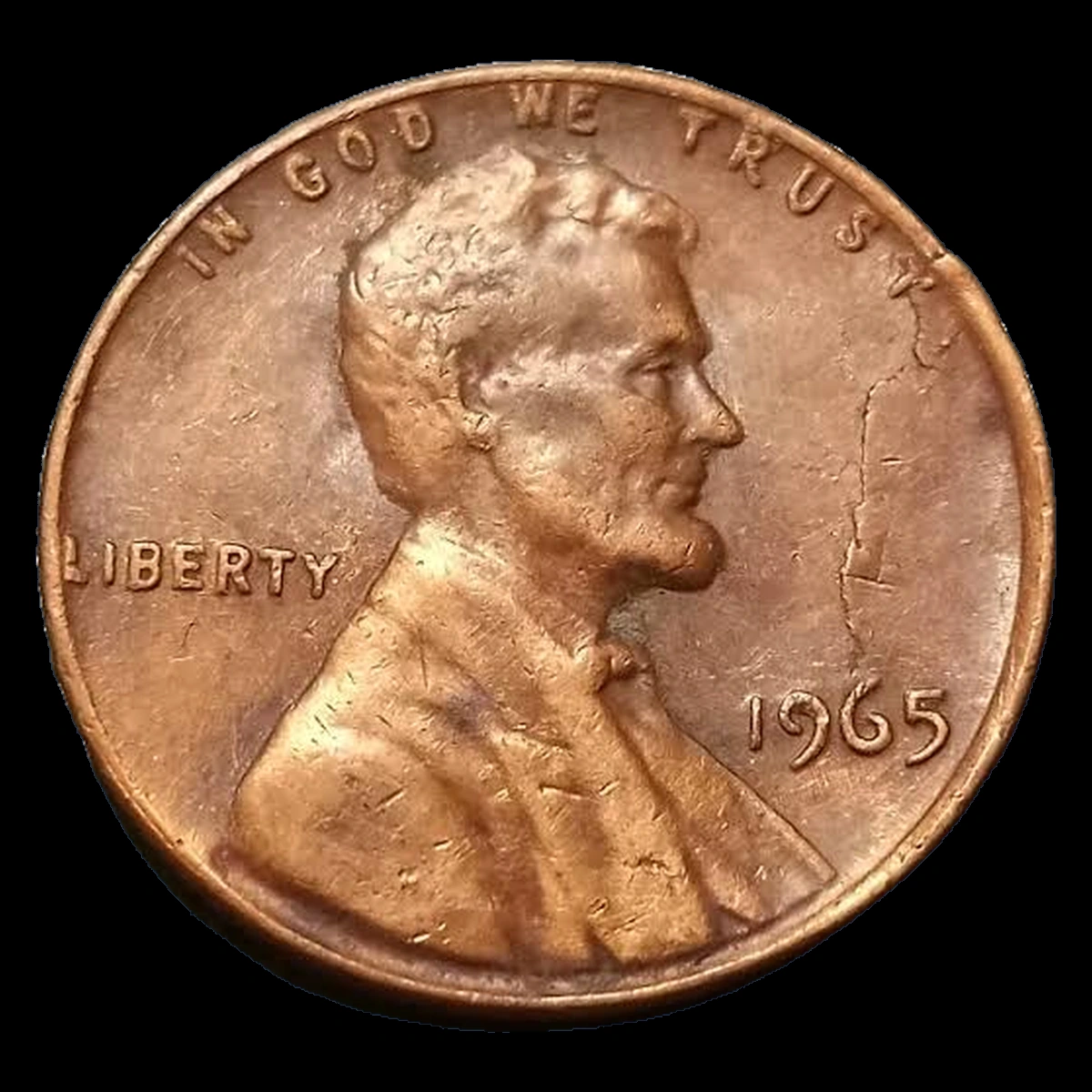
Lamination separates a layer within the cent’s alloy and can leave a flap or rough exposed patch. On a 1965 cent, it is not the failure of modern copper plating over a zinc core.
The year guide reports this error without naming a certified specimen. The extent and location must therefore come from the individual coin.
How to Identify
Inspect the boundary at a low angle for a thin layer continuing into the original metal. Surviving design beside or across the separation can help explain its relationship to striking.
Scraping, corrosion, and added coatings can imitate lost surface metal. Do not lift a retained flap to investigate; if it remains attached, the coin may still weigh close to normal.
What It’s Worth
Identified 1965 lamination is estimated at $5–$300. A broad, intact flap is generally easier to demonstrate than a tiny rough spot.
This is a range for the reported type, without a priced specimen in the supplied record. Later damage can reduce appeal or undermine the diagnosis.
6. 1965 Penny An opening crosses the metal: Cracked Planchet Error
An actual gap can reflect a defect in the blank before striking. Heritage recorded a 1965 cent graded NGC MS63 Brown as struck on a defective cracked planchet.
A planchet is the prepared blank that receives the coin design. The supplied record does not establish one required crack location.
How to Identify
Examine how the surrounding struck design meets the opening and follow it toward the edge if it extends there. A raised line on solid metal points to a die crack instead.
Look for bending, saw marks, or fresh tearing that could explain a later split. Do not flex the coin to widen the gap.
A crack can exist without much missing metal. Near-normal weight therefore does not rule out the defect.
What It’s Worth
A confirmed defective cracked blank is estimated at $20–$350. The supplied MS63 Brown listing establishes a reported unworn example with noticeable marks, but provides no individual realized price here.
A clearly original opening and preserved design make a stronger comparison than an ambiguous split caused by later bending.
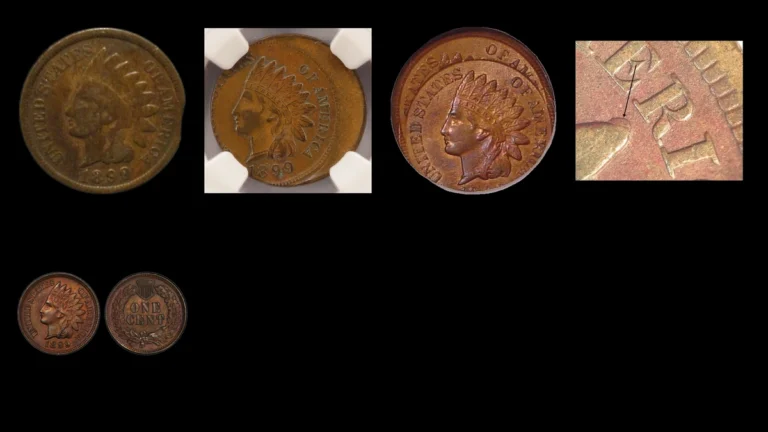
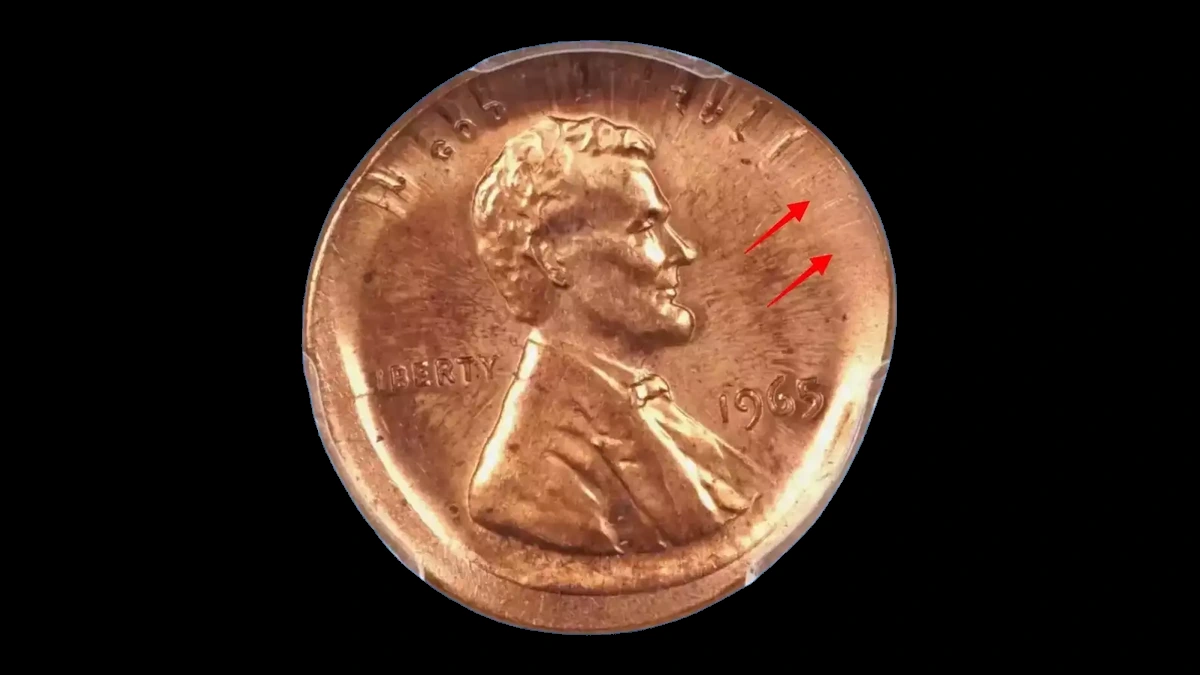
7. 1965 Penny Full design inside a wider outline: Broadstrike Error
The collar normally restrains the blank’s edge during striking. When that restraint fails, metal can spread outward while retaining the whole design.
The supplied 1965 guide reports broadstrikes without pricing an individual example. A larger diameter is a starting clue, not a complete identification.
How to Identify
Follow the portrait and lettering toward the expanded edge on both faces. The design should reflect original striking and outward flow rather than later pressure flattening the letters.
A simple broadstrike redistributes the original metal and should not lose weight merely because it becomes wider. Missing design beside an unstruck crescent instead suggests off-center placement.
Counting-machine marks can occur afterward, even on a genuine broadstrike. They are damage, not an extra mint-made feature.
What It’s Worth
Identified broadstrikes are estimated at $20–$400. Complete readable design and natural expansion support the comparison.
No individual broadstrike sale is assigned in the supplied evidence. Later scraping or flattening does not increase the error’s value.
8. 1965 Penny Part of the blank is absent: Clips and Elliptical Forms Error
The 1965 records include curved, straight, ragged, and elliptical incomplete blanks. One coin combines a 4% ragged clip with a separate 5% off-center strike.
Other examples weigh 2.2 grams for an elliptical form, 2.6 grams for a straight clip, and 2.0 or 1.8 grams for separate curved clips. Those measurements belong to different coins.
How to Identify
Determine whether metal is actually absent before calling a blank-looking area a clip. On the combination example, the unstruck crescent still contains metal, while the ragged clip does not.
Inspect how the design and rim approach each missing boundary, looking for later cut or file marks. Compare intact arcs with a normal cent rather than forcing an irregular coin into a round holder.
The listed weights illustrate variation, not thresholds that identify each shape. Original striking around the incomplete blank is the central evidence.
What It’s Worth
The estimated range is $10–$650 across confirmed clipped and elliptical forms. The missing section, readable date, and preservation affect the result.
The 4% ragged-clip and 5% off-center combination graded PCGS AU58 brought $79 in March 2025. That lightly circulated coin’s sale is not a price for one of the separately weighed examples.
9. 1965 Penny A blank crescent faces missing design: Off-Center Strike Error
A misplaced blank can receive only part of the dies’ designs. The year report includes examples around 40% to 60% off center, with different surviving areas.
The blank crescent is still part of the coin’s metal. Its presence, rather than the normal absence of a mintmark, is the error to examine.
How to Identify
Find the 1965 date and trace its impression into the struck-to-blank boundary. Check the other face for consistent displacement.
Natural unstruck texture should explain the crescent better than abrasion that erased an ordinary design. A simple off-center strike can retain normal weight because it loses design, not metal.
What It’s Worth
The estimate is $15–$750, depending on displacement, visible date, and condition. The broad 40%–60% report does not give every example the same price.
A separate 1965 cent struck 40% off center, graded PCGS MS63 Red, sold for $61 in July 2022. Its retained copper-red color and unworn but marked surfaces belong to that particular comparison.
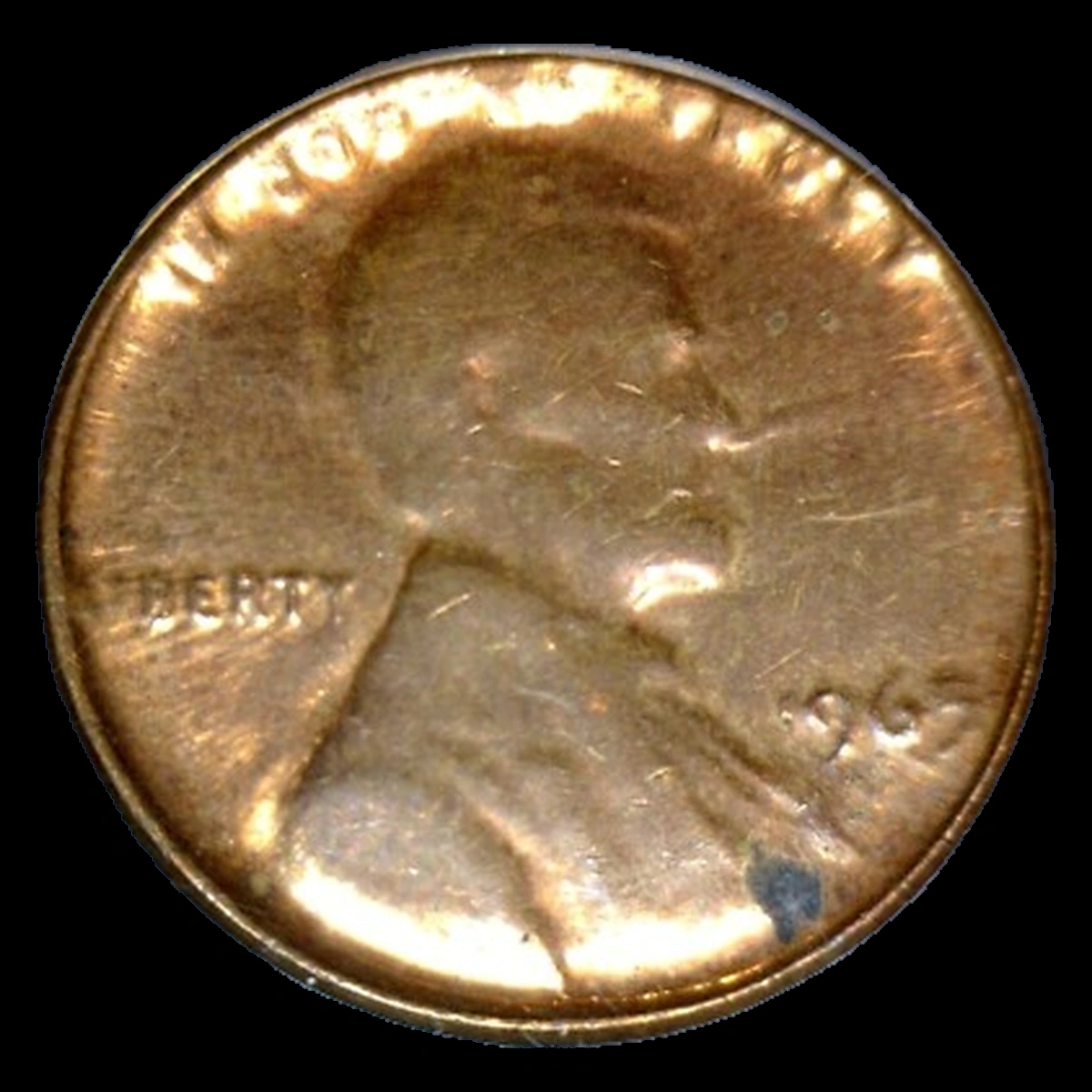
10. 1965 Penny The Memorial is distorted by an obstruction: Struck Through a Die Cap Error
A coin stuck over a die can prevent the next blank from contacting the engraved tool directly. The later coin receives softened or distorted detail through this covering.
The recorded 1965 example was struck through a capped reverse die, affecting the Memorial side. It is the coin struck beneath the obstruction, not necessarily the cup-shaped cap itself.
How to Identify
Compare the affected reverse with Lincoln’s side and follow changes from distorted to clearer detail. Uniformly worn high points on both faces suggest a different explanation.
Polishing scratches can also explain missing detail. A generally smooth or weak coin needs more evidence than softness alone to support a cap strike.
What It’s Worth
Confirmed cap-struck reverses are estimated at $25–$600. Degree of distortion and preservation influence how clearly the obstruction can be understood.
The NGC MS62 Brown example sold for $61 in July 2021 in Heritage’s archive. The actual deep cap discussed below has its own identity and price evidence.
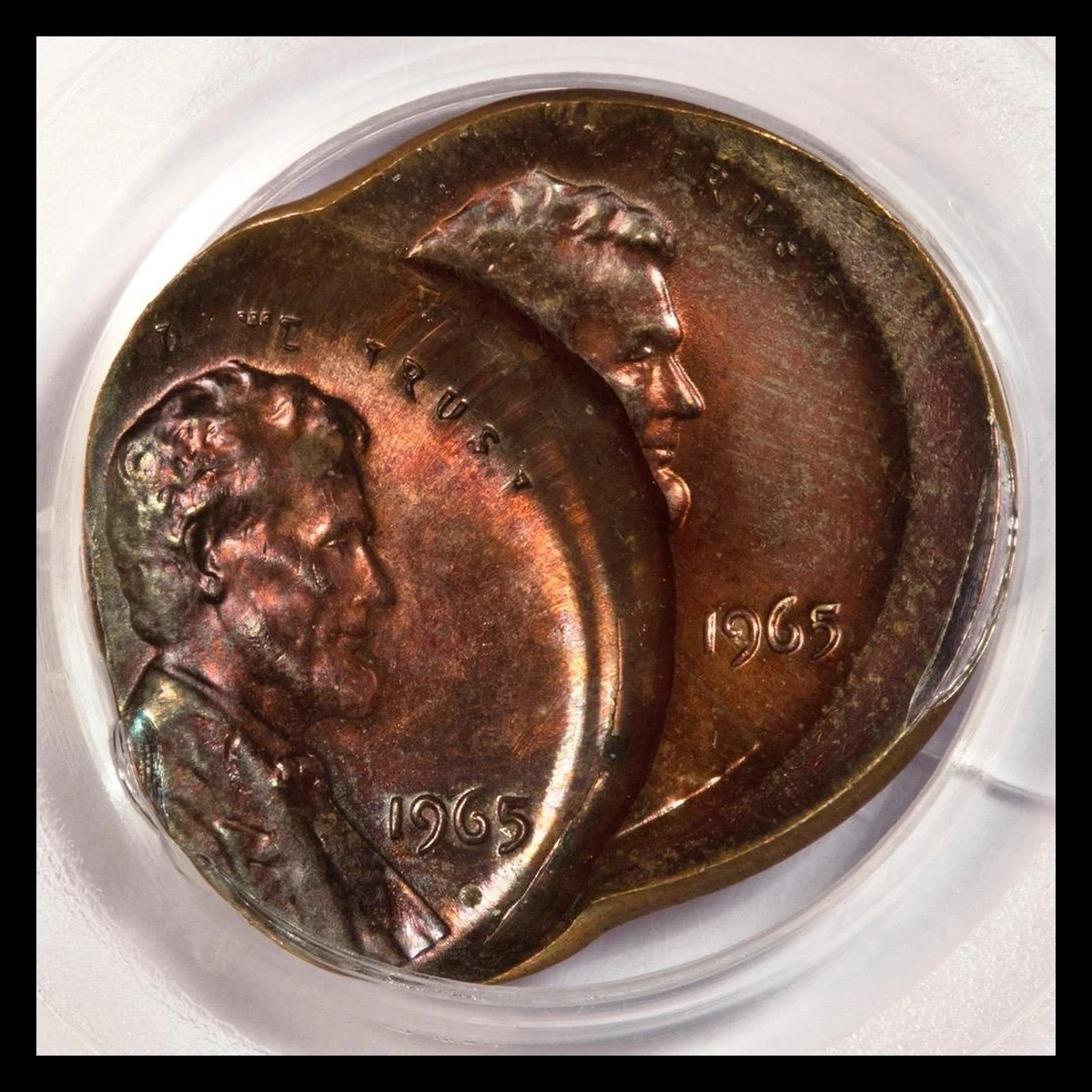
11. 1965 Penny Separate impressions overlap or form a bridge: Multiple Strikes Error
Repeated strikes can create different shapes depending on how the coin moves. The records include an expanded off-center double strike, a separate coin with a 75% off-center second strike, and a saddle form with neighboring impressions divided by an unstruck bridge.
A reported flipover form involves the coin turning over between strikes. It can place portions of Lincoln and the Memorial together on one face.
How to Identify
Find a connected design feature from each impression before counting strikes. Small doubled letters inherited from a die do not demonstrate movement of the whole coin.
For a saddle strike, inspect the side profile and bridge between the impressions. Preserve its bend rather than flattening it to resemble an ordinary cent.
Match the arrangement actually present, keeping the expanded, 75% second-strike, saddle, and flipover reports separate. One example’s outline cannot be used as another’s missing view.
What It’s Worth
Identified repeated-strike forms are estimated at $50–$2,500. Clear second designs and distinctive combinations can strengthen collector appeal.
The expanded, displaced double strike graded NGC MS64 Red sold for $186 in April 2020. It does not supply an individual sale for the saddle or flipover reports.
12. 1965 Penny The coin forms a deep cup: Die Cap Error
A coin that stays attached to a die can spread up around it as striking continues. The listed 1965 deep obverse cap formed around the die carrying Lincoln’s front design.
Its raised wall and stretched opposite face distinguish the object from a flatter coin merely struck through another cap.
How to Identify
Start with a side view and follow original design from the cup’s base into the rising wall. The entire shape should be consistent with repeated mint striking.
Tool marks or sharp forced bends may expose a later manufactured cup. Record width and height gently without compressing the wall or changing its shape.
What It’s Worth
Genuine deep caps are estimated at $400–$3,000. Depth, recognizable design, and preservation influence the comparison.
The PCGS MS65 Red example brought $840 in July 2022 in Heritage’s archive. Its grade describes an unworn coin with relatively few marks, and the result concerns the cap itself.
13. 1965 Penny Two coin bodies remain joined: Bonded Pair Error
A bonded pair preserves two bodies joined during striking. Their shared contact and related designs must explain the assembly as a mint event.
The supplied dealer listing calls a 1965 pair Gem BU Brown, describing attractive unworn brown surfaces. That wording is a seller’s assessment rather than independent certification.
How to Identify
Inspect the joined edge for two bodies and the way displaced metal connects them. Glue, solder, or a seam without related struck detail needs another explanation.
Two normal cent blanks start at a combined 6.22 grams, though the actual assembly still needs examination. Record the joined object without trying to separate it.
Read surviving dates and designs where visible. A readable date on one member does not establish a hidden date on the other.
What It’s Worth
An identified 1965 bonded pair is estimated at $500–$4,500. This range concerns the assembly and its preservation, not two independent ordinary cents.
A 1985 bonded cap pair graded NGC MS68 Red sold for $881.25 in February 2014. Its later date, exceptionally preserved surfaces, and cap shapes distinguish it from the generally described 1965 dealer example.
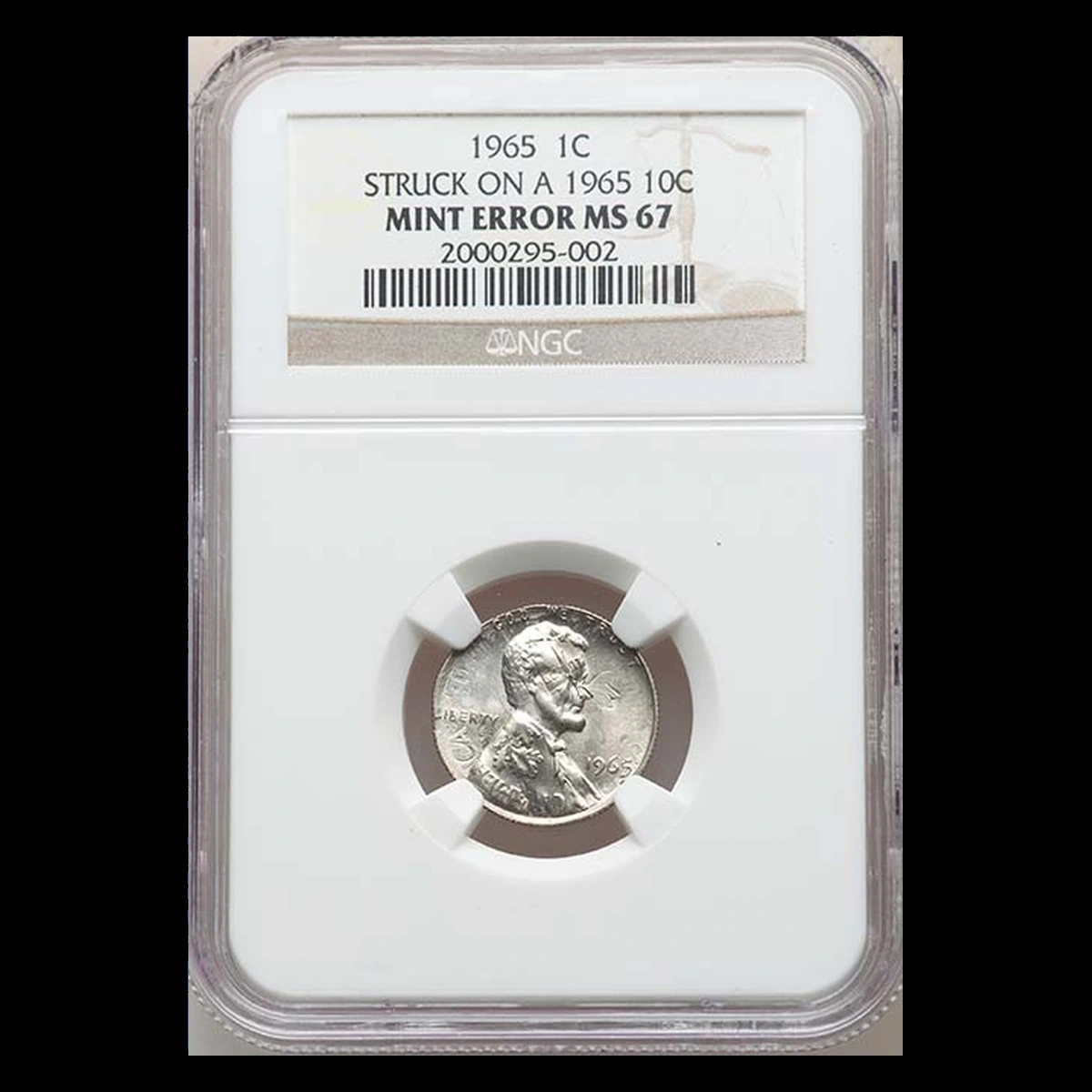
14. 1965 Penny Roosevelt details survive under the cent design: Cent over Dime Error
A finished 1965 dime can receive a later strike from cent dies. The older dime design distinguishes this double-denomination error from a cent struck on an unused dime blank.
The cataloged NGC MS67 example retains dime details and dates on both faces. Its cent design is flipped relative to the dime and rotated about 130 degrees counterclockwise.
How to Identify
Read the cent date and separately locate the older dime date and recognizable Roosevelt design. Trace both sets of detail rather than relying on one unexplained line.
The flipped relationship and approximate rotation describe the cataloged MS67 piece specifically. They are not mandatory positions for every cent-over-dime example.
A clad dime starts near 2.268 grams and 17.9 millimeters, with possible expansion during the later strike. Measurements support the host identification but cannot replace surviving host design.
What It’s Worth
Identified cent-over-dime combinations are estimated at $500–$6,000. Survival of both designs and dates adds information beyond the numeric grade.
A separate 1965 cent-over-dime graded PCGS MS65 brought $881.25 in May 2017. That completed sale is not assigned to the NGC MS67 coin with the described rotation.
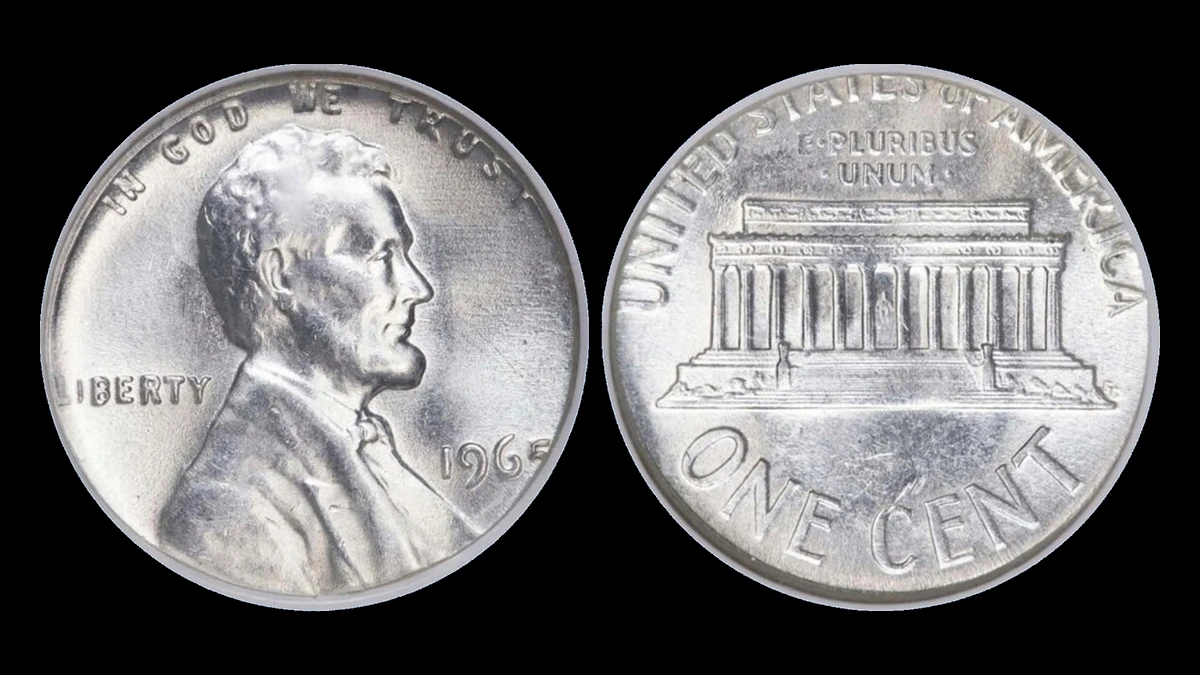
15. 1965 Penny A small pale coin has no older dime design: Silver or Clad Dime Planchet Error
The cent dies also struck unused dime blanks with different compositions. One documented 1965 example used a 90% silver blank weighing 2.50 grams, while other records concern lighter copper-nickel clad blanks.
A further record describes a damaged dime blank weighing 2.2 grams. That weight alone does not establish its alloy or link it to every other damaged-blank listing.
How to Identify
Compare measured weight with the silver blank’s 2.50 grams and a normal clad blank’s approximately 2.268 grams. Both begin smaller than a cent, near 17.9 millimeters across, though striking can spread them.
Inspect edge structure, crowded outer lettering, and any earlier damage crossed by the strike. Use nondamaging composition testing rather than scraping the metal.
A pale coating or low weight cannot establish the valuable silver type. Recognizable older Roosevelt detail would instead point toward a previously struck dime.
What It’s Worth
Identified silver examples are estimated at $6,000–$15,000, clad examples at $300–$2,500, and comparable damaged dime-blank errors at $200–$1,500. Metal and condition must remain separate in the comparison.
The NGC MS65 silver-planchet cent brought $9,987.50 in January 2013. Its unworn surfaces had relatively few marks.
A separate damaged-clad-blank example graded MS62 sold for $640.50 in April 2026. That result cannot be transferred to an unidentified 2.2-gram candidate solely because their descriptions both mention damage.
Conclusion
A 1965 cent needs the right comparison for its particular feature: a repeated letter, an open crack, a cap-shaped body, or a smaller blank each calls for different evidence. The missing mintmark is normal, and SMS status should not be confused with a conventional Proof.
Keep separate specimens’ measurements and sale prices separate. Especially with pale cents, establish whether the metal was an unused blank or a finished dime before choosing a value range.