Rare 1970 Penny Errors (List & Pictures)
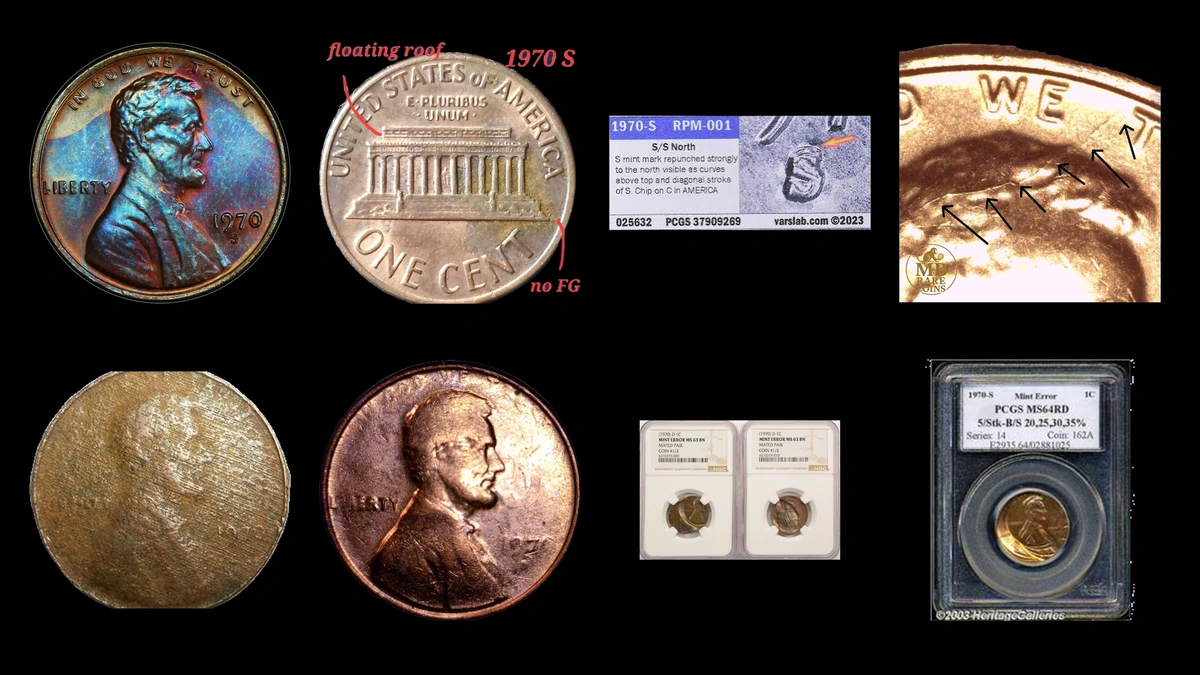
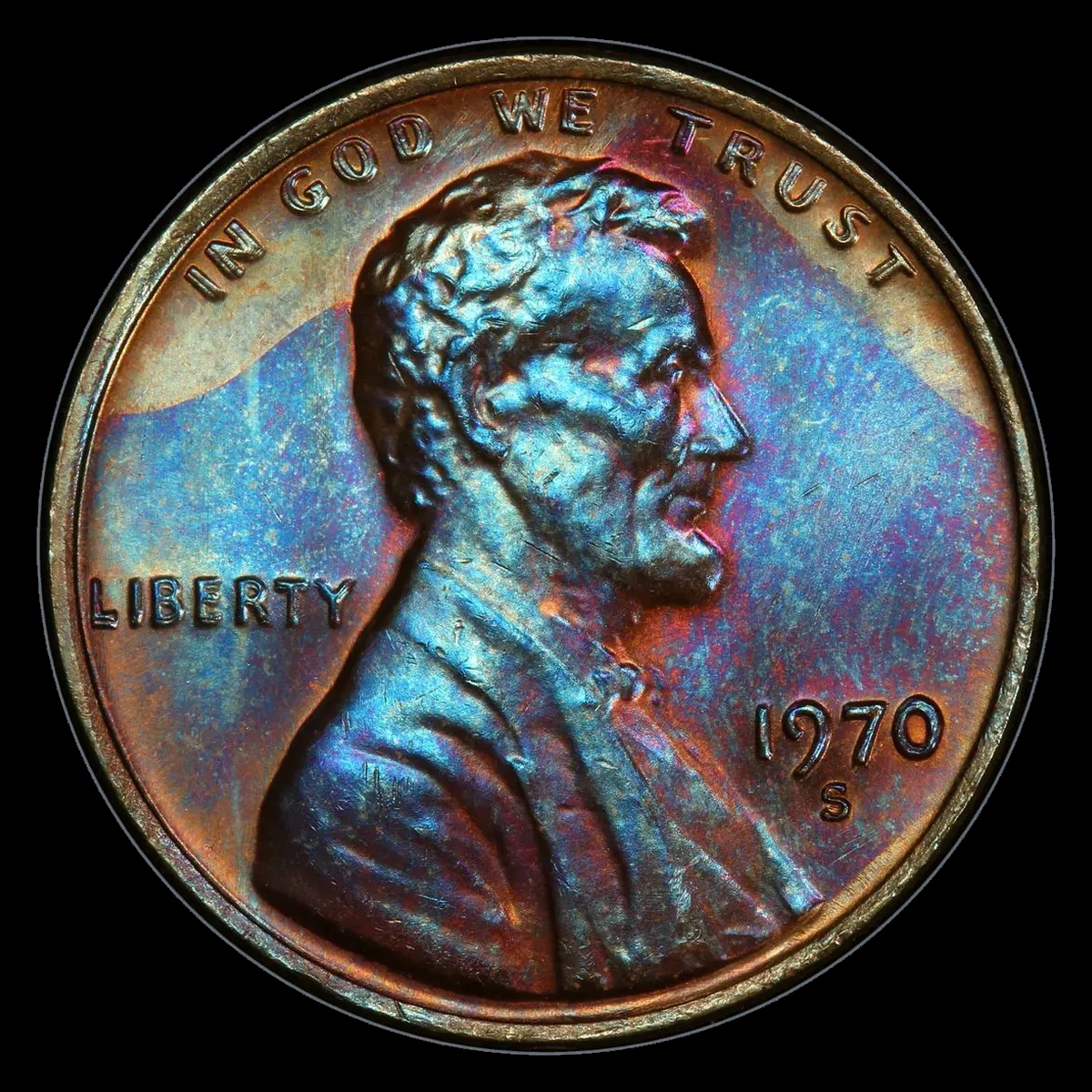
A strong doubled date can be the most valuable clue among 1970 penny errors. An exceptionally preserved 1970-S doubled-front cent sold for $38,400 in August 2024.
The estimates below span $2–$40,000, from missing roof supports to unusual wrong-blank combinations. Check the mint, finish, and actual feature together, since an S can identify either a circulation coin or a collector Proof.
1. 1970 Penny The Date and Words Have Separated Outlines: Doubled Dies Error
The major S Large Date front variety clearly repeats the date, LIBERTY, and motto. Other 1970 patterns are much smaller, sometimes affecting part of L, 7, 0, or FG.
These details originated on different dies before striking. A faint extra digit cannot establish the strong S variety on its own.
How to Identify
Compare the full date and both front lettering areas for the major variety. Choose separate photographs for Denver, Philadelphia, S circulation, and S Proof patterns.
Back varieties have their own repeated words or initials. Flat shelves beside reduced letters differ from the rounded extra contours of a doubled die.
What It’s Worth
$5–$300 is the estimate for minor circulation varieties, with identified Proof patterns around $25–$1,000. The major S Large Date front variety spans about $1,000–$40,000.
PCGS records $38,400 in August 2024 for an MS66+ Red example. That extraordinary preservation and strong pattern do not price every doubled-looking 7.
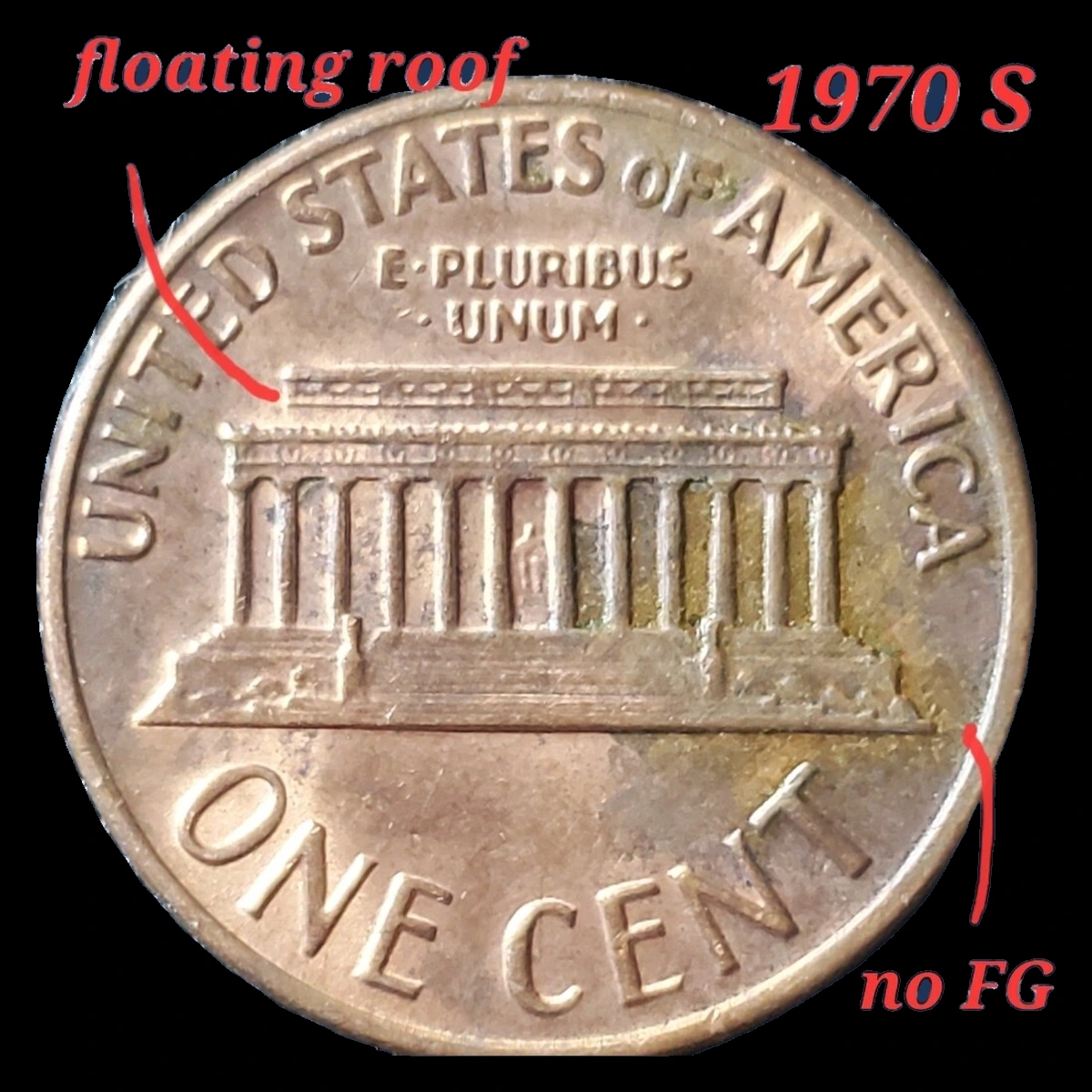
2. 1970 Penny Fine Roof Connections or FG Disappear: Polished-Die Detail Error
Heavy die polishing can remove shallow roof supports and make the Memorial appear to float. Missing FG initials are also reported, but occur at a different location.
One late stage of a Denver doubled-front die shows a floating roof. The roof alone does not identify that doubled die.
How to Identify
Compare the end-column roof connections and FG separately with a normal cent. Sharp neighboring details beside local loss support a stronger comparison than general wear.
Dirt or a weak strike can also hide fine features. Missing FG does not require a floating roof, and neither automatically proves doubling.
What It’s Worth
$2–$50 is the estimate for clearly identified polishing-related loss. A clean example with obvious local absence is more appealing than a worn Memorial.
No particular 1970 sale is supplied for this range. Any separate doubled-die premium requires its own pattern match.
3. 1970 Penny Extra Strokes Surround D or S: Repunched Mintmark Error
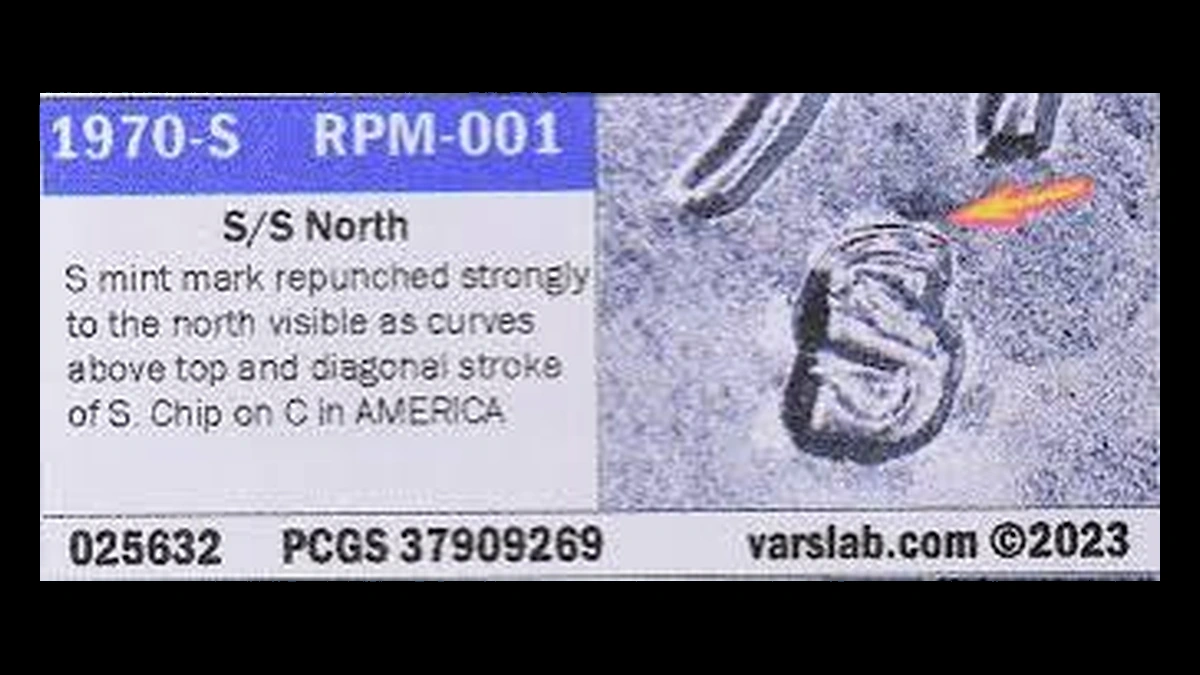
Workers punched mint letters into individual dies by hand. Repeated placements could leave another D or S outline beside the final letter.
Denver includes downward and northeastward patterns, while S circulation and Proof varieties have their own overlaps. Three punch traces on one S still form one variety.
How to Identify
Identify the letter and finish before comparing the extra curve or upright. A Denver downward repeat needs a different match from a tilted or upward S.
Trace enough of the extra stroke to recognize another letter placement. An isolated lump or flat shelf is not a substitute.
What It’s Worth
$3–$150 is the estimate for minor circulation repunches. Strong examples and identified Proof varieties can fit around $25–$300.
These are comparison ranges rather than recorded sales for every entry. Visible separation and preservation matter more than counting punch traces.
4. 1970 Penny A Raised Patch Replaces the Design: Cracks and Cuds Error
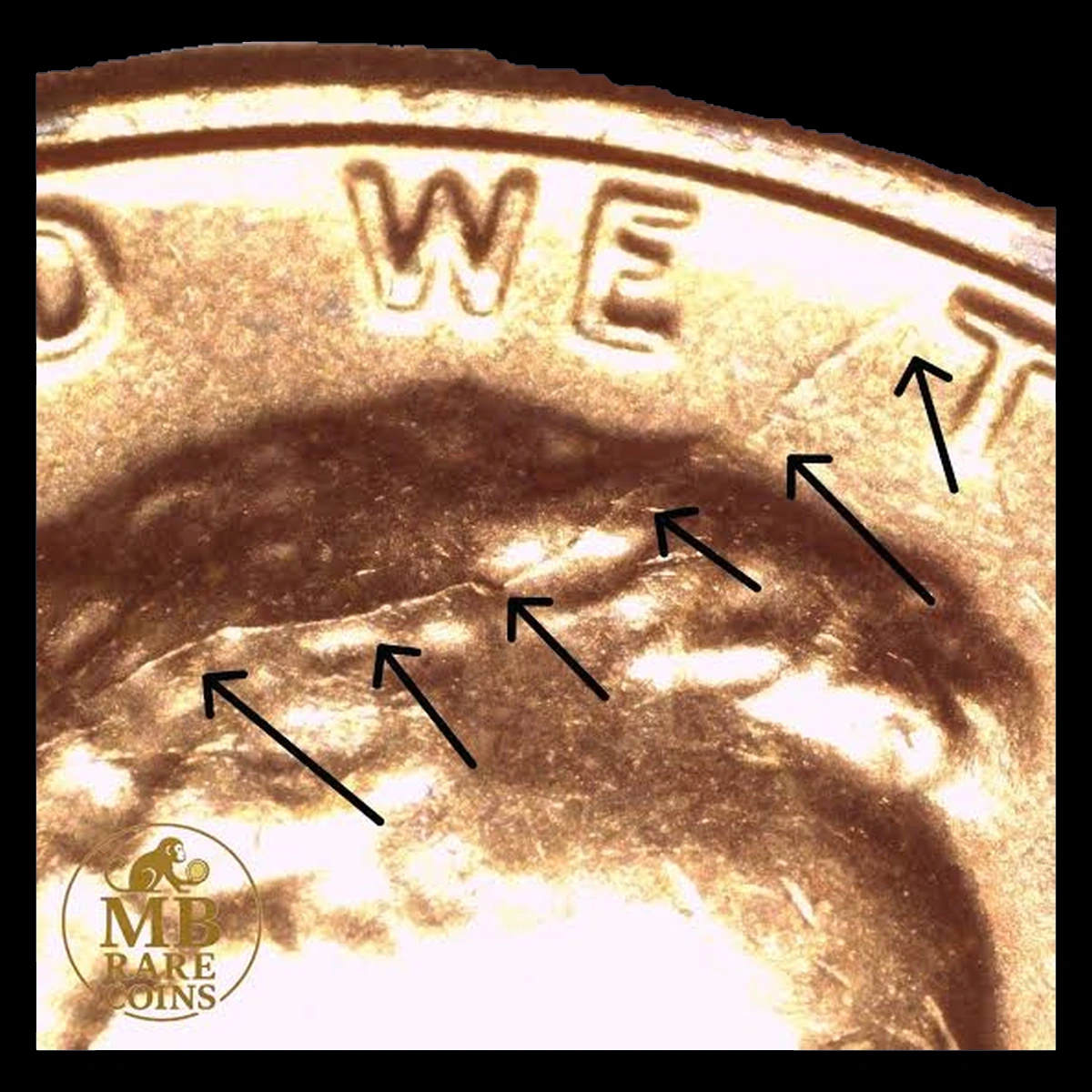
A die crack can leave a narrow ridge, while a missing piece at its edge creates a rim-connected cud. Recorded 1970 breaks affect different faces and locations.
One S Large Date example combines a cud with a later-stage capped-die strike. That additional softened image belongs to its own specimen.
How to Identify
Use side light to follow raised metal and trace a cud to the rim. Match the complete shape to the correct mint rather than choosing by size alone.
A scratch cuts the surface, and attached metal can imitate a lump. On the S combination, verify cap-related distortion separately from the break.
What It’s Worth
$2–$40 suits small cracks, while larger identified cuds fit about $40–$1,000. Related effects on one penny receive one overall value.
A substantial 1979 cud sold for $1,020 in May 2021. It offers context for a major copper-alloy break, not a price for every 1970 raised mark.
5. 1970 Penny Dark Particles Accompany a Rough Hollow: Metal Defect Error
A specialist account favors contaminated metal and separation before striking for one 1970-D. The coin weighs 2.93 grams and has dark particles on its faces and edge.
The rough hollow lies in the lower-left back. The material and every step of its formation were not chemically established.
How to Identify
Inspect how struck design reaches the hollow and how nearby metal moved. Keep the retained particles in place so their position remains available for examination.
Dark color alone cannot name the substance. Compare pre-strike separation, an embedded obstruction, and later corrosion using the actual surface.
What It’s Worth
$25–$400 is the estimate for a confirmed mint-made defect of this kind. It is not a realized price for the specialist’s specimen.
A 1966 cent with a separating front layer sold for $61 in July 2021. That is a broad metal-failure comparison rather than proof of the 1970 coin’s precise cause.
6. 1970 Penny The Coin Is Thin across Its Whole Body: Split Metal Error
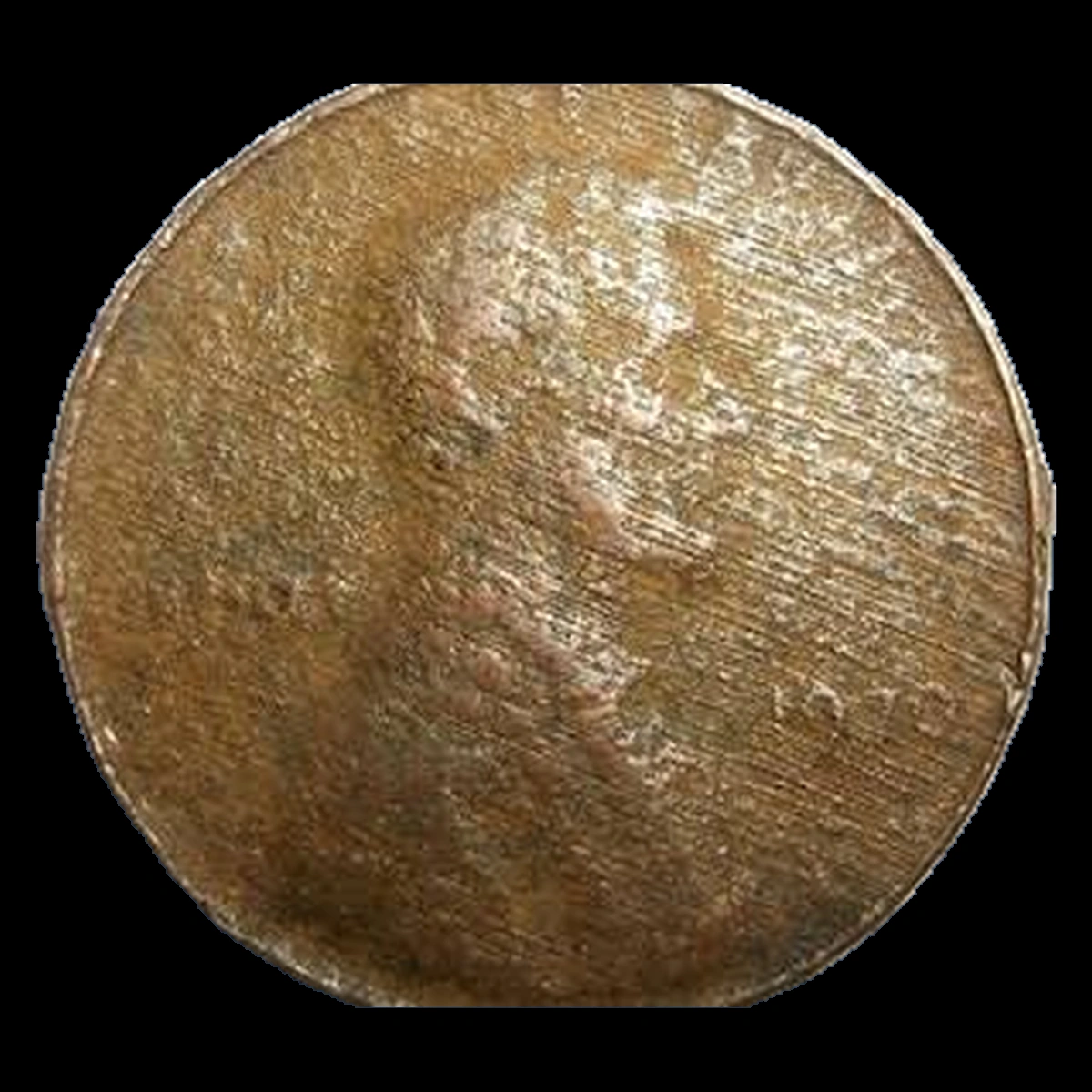
The reported 1970-D split-blank coin weighs 1.69 grams and carries a PCGS MS62 Red and Brown grade. Internal separation can reduce thickness without cutting a bite from the outline.
How to Identify
Compare the edge and exposed textures with a normal 3.11-gram copper-alloy cent. Grinding can also thin a coin and should leave a different surface.
Look at how design meets separated texture to assess timing. Weight alone cannot show whether the metal separated before or after striking.
What It’s Worth
$50–$450 is the estimate for a clearly identified split-metal cent with original surfaces. Different remnants retain different amounts of metal.
A 1971-D struck after its blank split sold for $59 in June 2023. Its established sequence should not automatically be assigned to the 1.69-gram 1970 report.
7. 1970 Penny A Foreign Material Interrupts the Design: Struck-Through Error
A 1970-S Large Date has struck-through effects on both faces without a named obstruction. A separate Denver specimen retains dark filling across parts of Lincoln and WE TRUST, plus a smaller piece behind the shoulder.
Fine metal particles occur in the Denver material. That evidence differs from an empty impression after an object has fallen away.
How to Identify
Leave retained material untouched and follow how the design formed around it. Do not identify every dark spot as the same substance.
For the S coin, inspect both empty impressions for original blocked detail. A later dent can cut or push an already completed design.
What It’s Worth
$15–$200 is the estimate for clear ordinary impressions, while convincing retained-material pieces can fit $50–$500. Preserved evidence helps explain the difference.
The S example graded NGC MS64 Red and Brown sold for $114 in April 2023. No sale is supplied for the separate retained-material Denver coin.
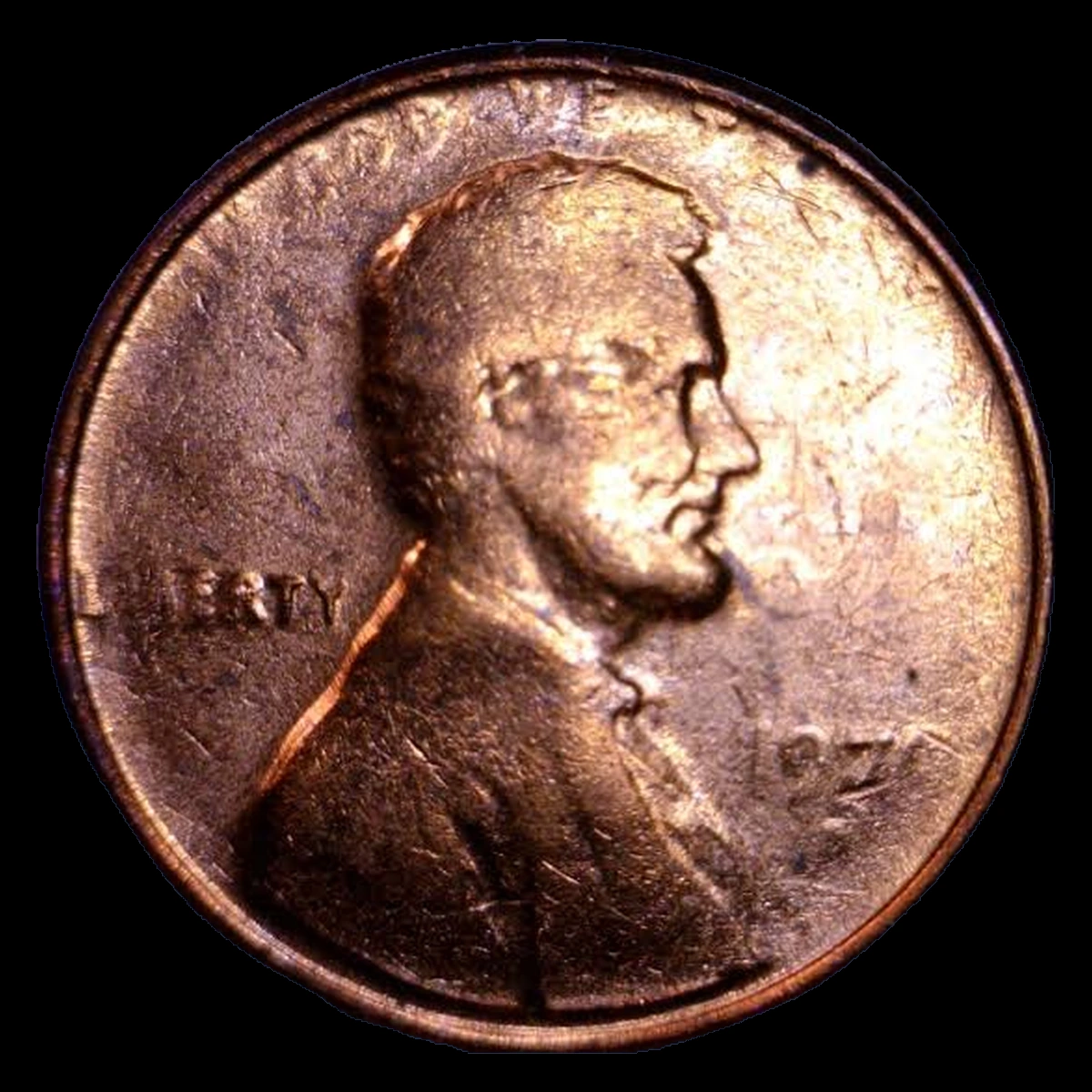
8. 1970 Penny A Thin Coin Cover Softens the New Strike: Capped-Die Receiver Error
A 1970-S found in an original roll shows a later-stage strike through a thinning die cap. The cap was an earlier coin stuck to the die, with this penny receiving the design underneath.
A separate Denver listing records a capped-die strike without establishing the same stage.
How to Identify
Compare the affected face’s coherent distortion with the other face’s clearer design. Isolated weakness on a worn coin is insufficient.
The receiving penny need not have a tall cup rim. A Denver candidate must match its own appearance rather than borrow the S coin’s late-stage description.
What It’s Worth
$30–$600 is the estimate for identified covered-die strikes. Clear original effects generally provide stronger examples than simple blur.
A slightly worn 1973-D late-stage cap strike brought $31 in October 2022. It illustrates the modest end without supplying a sale for either 1970 record.
9. 1970 Penny Part of the Design Is Sunken and Backward: Partial Brockage Error
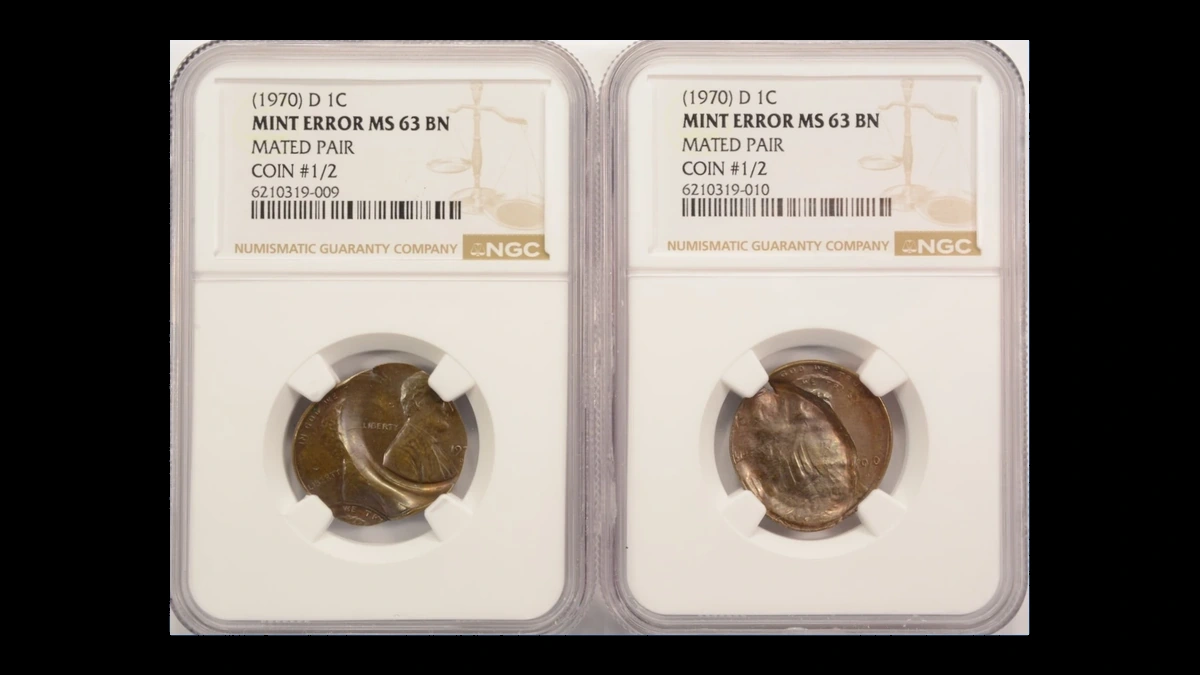
A struck coin can impress its raised design into the next blank, making a recessed mirror image. The recorded Philadelphia 1970 partial brockage is graded ANACS MS60 Brown.
How to Identify
Choose a recognizable letter or portrait fragment and check both its direction and depth. A brockage sinks into the surface instead of standing up normally.
The supplied record establishes no position or percentage. Follow the actual contact boundary and check for later squeezing that could transfer a false impression.
What It’s Worth
$100–$800 is the estimate for genuine partial brockages. Readable transferred detail helps place the coin within the range.
A 2001 partial brockage sold for $79 in March 2025. Its later zinc-centered metal and different condition make it a broad comparison.
10. 1970 Penny A Complete Design Sits within Extra Width: Broadstrike Error
The reported 1970-D broadstrike spread beyond its usual boundary when the collar did not restrain the blank. No specimen diameter is supplied in the year report.
How to Identify
Check that intended outer details remain inside the metal, then compare several widths with the usual 19.05 millimeters. An off-center strike instead loses design beyond the blank.
Later hammering can widen a finished penny while crushing its details. The enlarged border should fit naturally struck surfaces.
What It’s Worth
$15–$300 is the estimate for identified 1970-D broadstrikes. Clear spread and original condition strengthen the comparison.
A 1980 copper-alloy broadstrike brought $57 in March 2021. This is a related sale rather than a measured or priced record for the reported 1970 coin.
11. 1970 Penny The Back Fails to Stand Upright: Rotated Dies Error
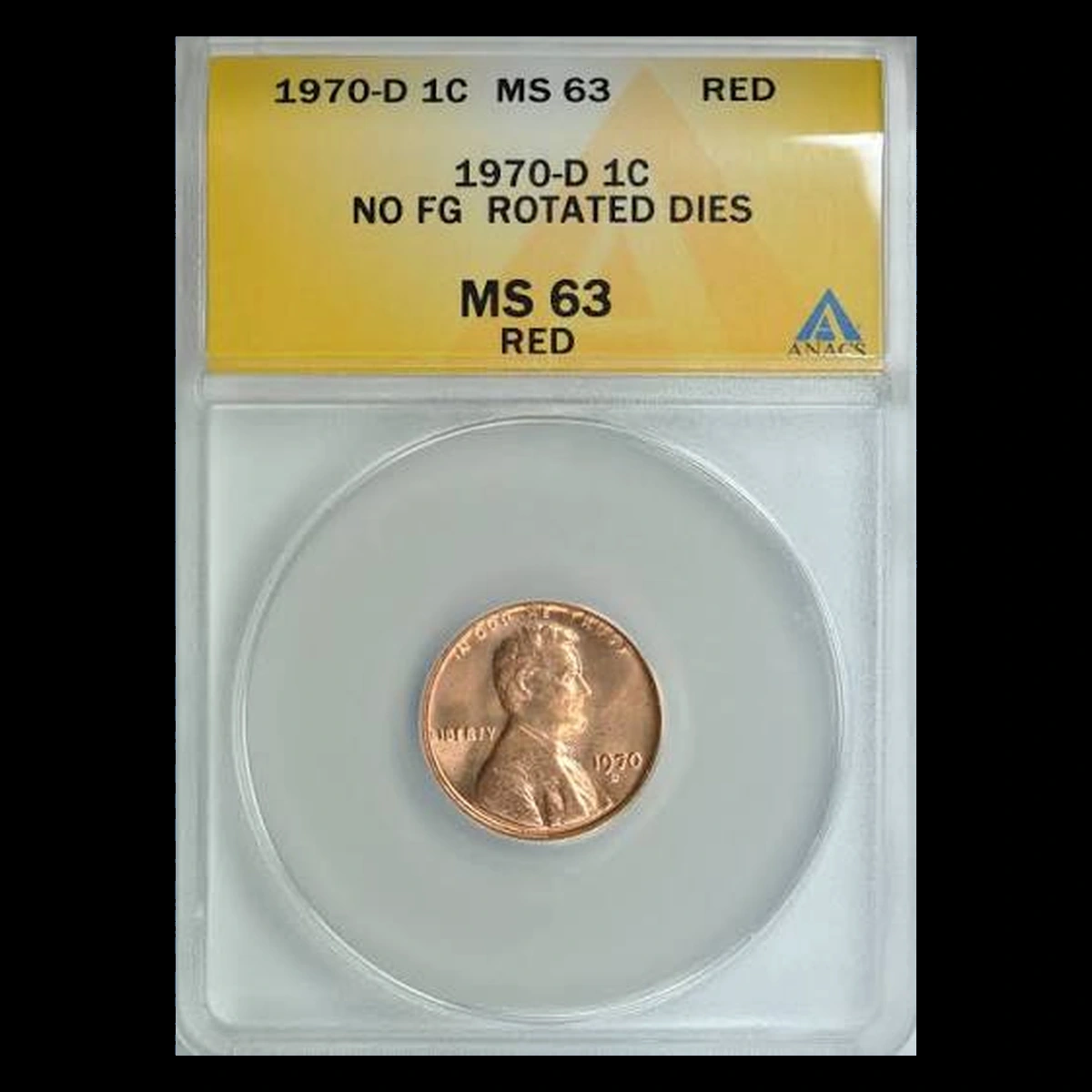
The 1970 year guide reports rotation without specifying one mint or angle. The error concerns how the two faces align, not an extra set of design details.
How to Identify
Hold Lincoln upright and turn the cent top to bottom without a sideways twist. The Memorial should normally finish upright.
Record a controlled flip or preserve that relationship in photographs. Independently rotated face images cannot prove the angle, and an edge seam may reveal an assembled novelty.
What It’s Worth
$20–$300 is the estimate for a clear authenticated rotation. The actual angle and coin’s condition guide the comparison.
No realized price is supplied for a particular 1970 angle. A slight tilt is a weaker example than a plainly demonstrated large turn.
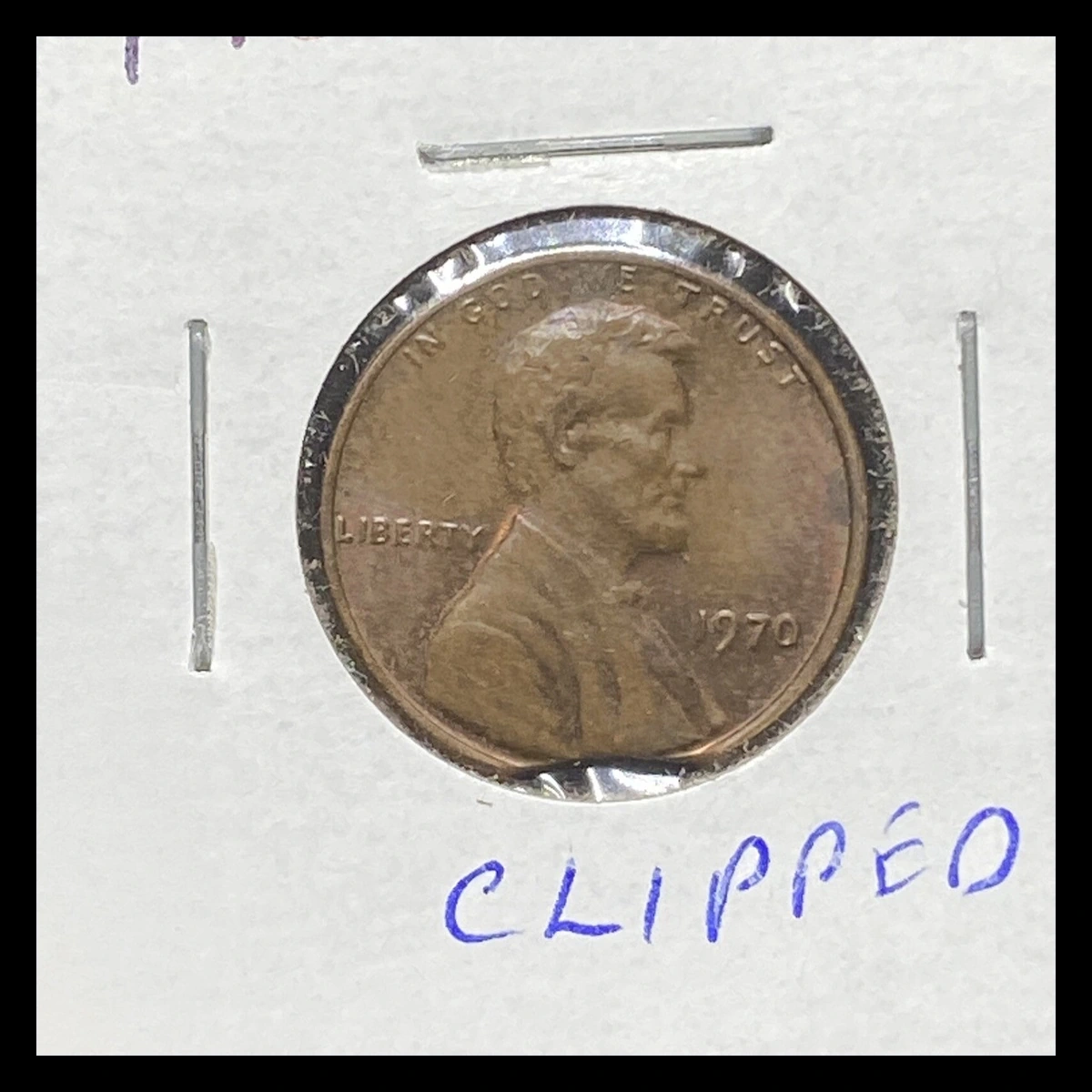
12. 1970 Penny One or Two Curved Sections Are Missing: Clipped Blank Error
A Denver example has a curved clip, while a separate S Large Date circulation coin has two overlapping curved gaps. Large Date describes its digits, not the size of the missing sections.
How to Identify
Inspect how the original rim and nearby letters meet the gap. A later saw cut slices through design that was already finished.
Show both gaps together on the S example and keep the Denver coin’s separate outline distinct. Weak opposite rim detail can support a clip but is not equally visible on every specimen.
What It’s Worth
$10–$150 is the estimate for many single clips, with clear double clips around $40–$400. The number of gaps is only part of their appeal.
A 1967 cent with a 13% straight clip sold for $39 in July 2021. Its different missing boundary offers general copper-alloy context.
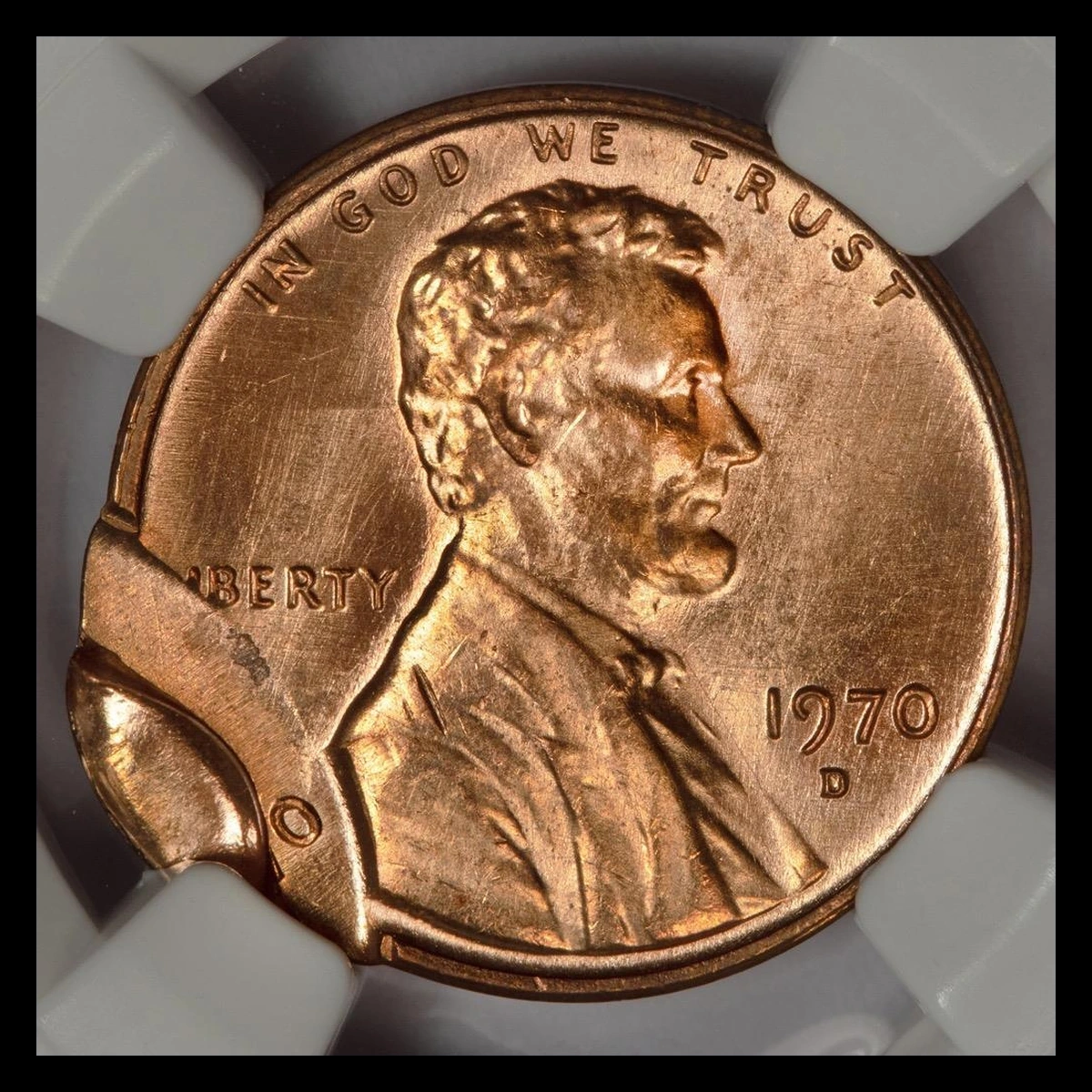
13. 1970 Penny A Shifted Design May Accompany a Curved Depression: Off-Center and Indent Error
A recorded S Large Date cent is 45% off center and has a genuine designation without a numerical grade. A separate Denver specimen combines displacement with a front indent from an overlapping blank.
How to Identify
On the Denver combination, find both the plain unstruck crescent and the curved indent. They are different boundaries on the same coin.
Compare both faces and read the surviving date. The S coin’s 45% displacement and condition designation cannot supply missing details for Denver.
What It’s Worth
$20–$600 suits ordinary dated off-center cents, while a clearer indent combination can fit $100–$1,000. The combined object receives one total.
A 1968-D cent 60% off center brought $47 in July 2021. A large displacement alone does not guarantee a large price.
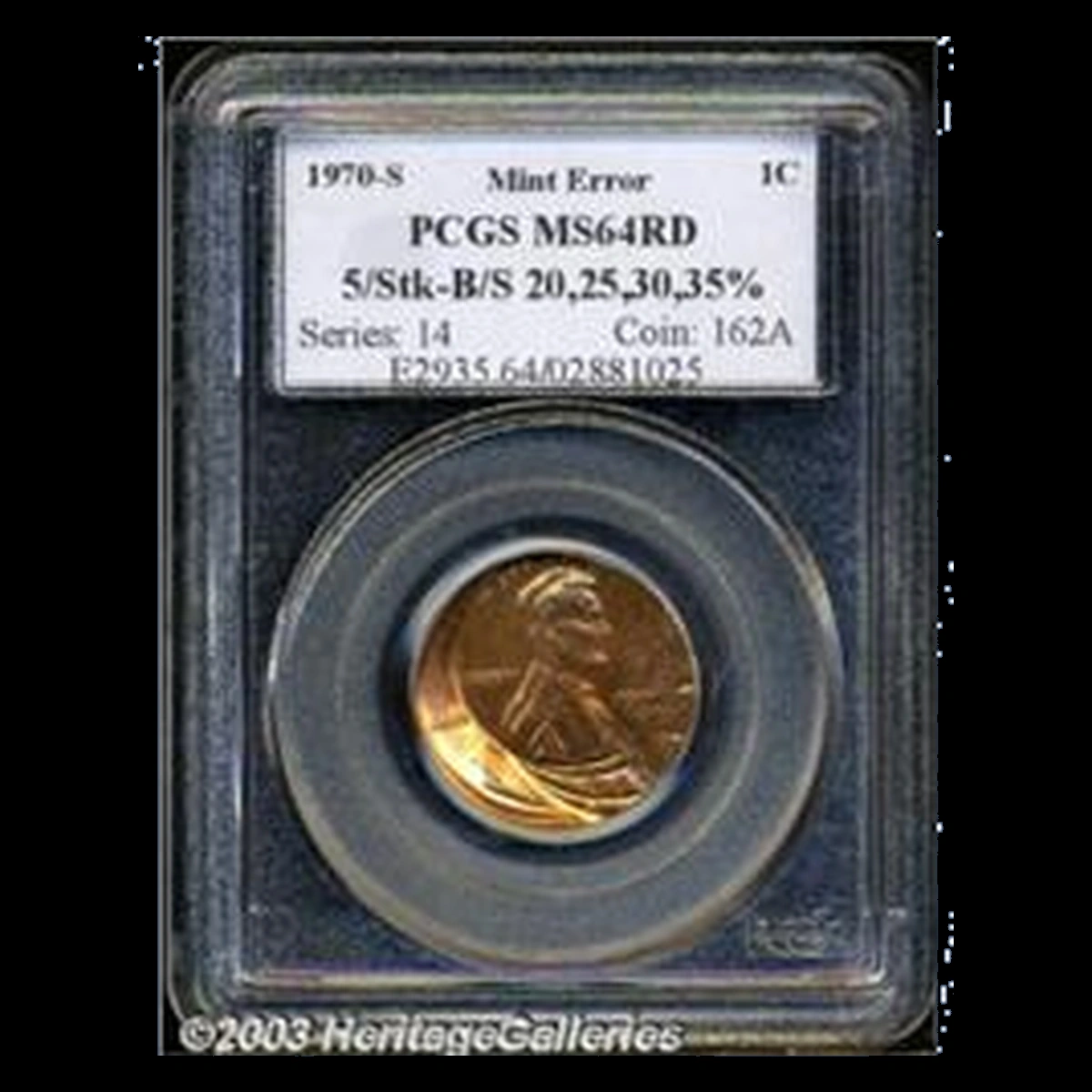
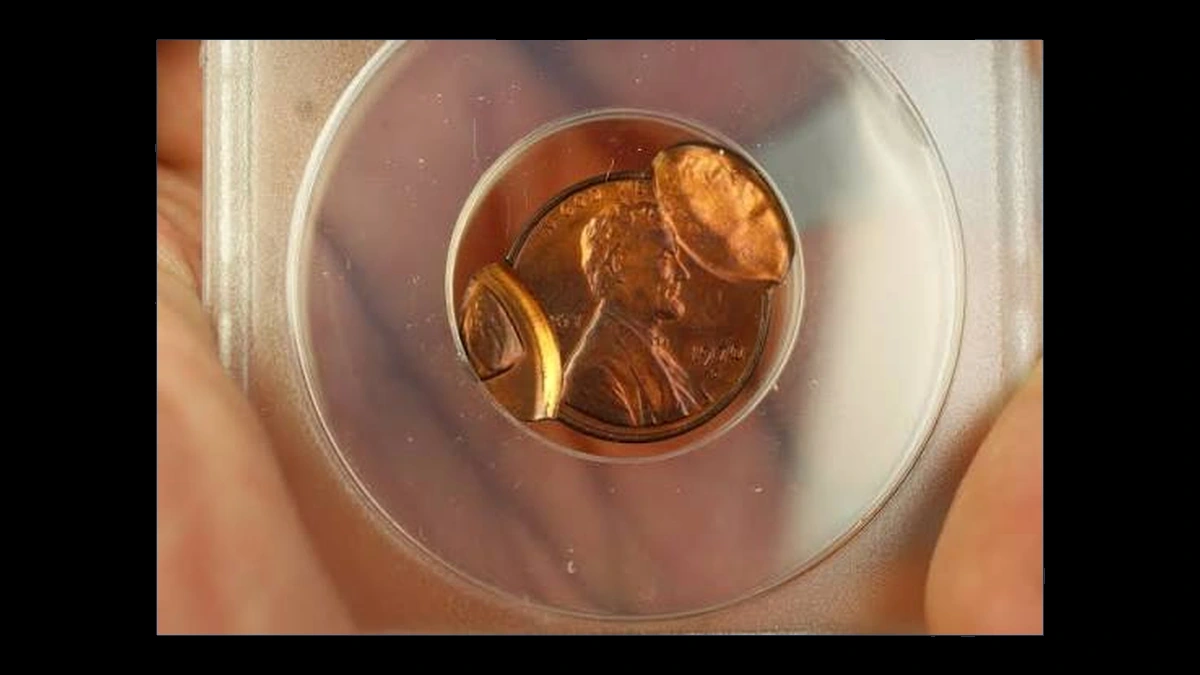
14. 1970 Penny Several Cent Impressions Overlap: Multiple Strikes Error
Ordinary 1970-S Large Date examples include a double strike with an 80% off-center second blow and one face blocked. A separate coin has five impressions, with later shifts reported at 20%, 25%, 30%, and 35%.
How to Identify
Trace the changing positions of dates, portraits, or lettering rather than counting unrelated lines. The five-strike sequence does not consist of five equal shifts.
Check both faces to locate the blocked area on the 80% double strike. These circulation errors differ from normal aligned repeated blows in Proof production.
What It’s Worth
$75–$1,000 is the estimate for ordinary double strikes, rising to about $500–$3,000 for a clear five-strike combination. Readability matters alongside the number of blows.
A 1979-D with its second strike 70% off center sold for $660 in June 2025. That is a different-year double-strike comparison.
15. 1970 Penny Three Impressions Flank a Curved Middle: Flipover Saddle Strike Error
The Denver coin first received an off-center strike, then flipped and landed between neighboring striking positions. Two dies struck separate parts simultaneously, leaving a curved middle like a saddle.
Triple counts the first impression plus the two later ones. It does not mean three separate saddle events.
How to Identify
Use side views to locate the raised middle and separate struck areas. Then follow the earlier impression and the differently oriented designs created after the flip.
Leave the curve intact and inspect for later tool damage. Flattening it would remove useful evidence of the simultaneous strikes.
What It’s Worth
$800–$3,000 is the estimate for this identified combination. All three impressions contribute to the value of one object.
The PCGS MS62 Red example sold for $1,322.50 in February 2007. A separate 1967 saddle-and-triple-strike cent brought $1,200 in July 2021.
16. 1970 Penny Cent Designs Crowd an Unused Clad Dime Blank: Wrong Blank Error
Ordinary 1970-D and 1970-S cents are reported on clad dime blanks. These smaller blanks have pale outer layers around a copper core.
How to Identify
A standard clad dime blank starts near 2.268 grams and 17.91 millimeters across. Compare the layered metal, limited design space, and actual weight together.
An unused blank has no older Roosevelt portrait or torch beneath the cent. A pale coating on a normal penny does not create that smaller layered structure.
What It’s Worth
$300–$1,500 is the estimate for authenticated circulation examples. Readable date and mint details help their appeal.
A 1976-D dime-blank cent brought $480 in December 2024. This range excludes the separate Proof multiple-strike combination below.
17. 1970 Penny A Philippine Blank Receives the S Design: Foreign Blank Error
A reported 1970-S was struck on a Philippine five-sentimos blank before that blank received foreign designs. The report does not establish whether the cent strike was ordinary or Proof.
How to Identify
Record the actual weight, dimensions, and alloy before naming the blank. Unfamiliar color or a low weight can also result from alteration.
No Philippine lettering is expected on an unused disc. The S identifies the mint but does not settle the production finish.
What It’s Worth
$700–$3,500 is the estimate for a verified example of the reported type. Its confirmed finish and preservation would guide the individual comparison.
A 1972-D on a Philippine five-sentimos blank sold for $1,500 in April 2022. That result supplies neither a sale nor a Proof identity for the 1970-S report.
18. 1970 Penny A Dime-Blank Cent Becomes a Cup: Wrong-Blank Die Cap Error
The documented 1970-D began on a clad dime blank and stuck to the front die. Its 2.2-gram body developed a low wall near 9 o’clock and a much higher section near 1:30.
The back remains fairly clear, though upper outer letters weakened as metal flowed toward the rising front wall.
How to Identify
Compare the wall’s changing height in side views and follow the design into the stretched metal. The cap itself is different from a flat receiving coin struck beneath one.
Use the certified record for a fragile holdered example. A later-bent cent cannot reproduce both the verified wrong blank and its original metal flow.
What It’s Worth
$1,000–$4,000 is the estimate for a comparable authenticated wrong-blank cap. It values the complete combination.
The NGC MS66 example sold for $1,380 in April 2008. Its two error features are not separate maximum prices to add together.
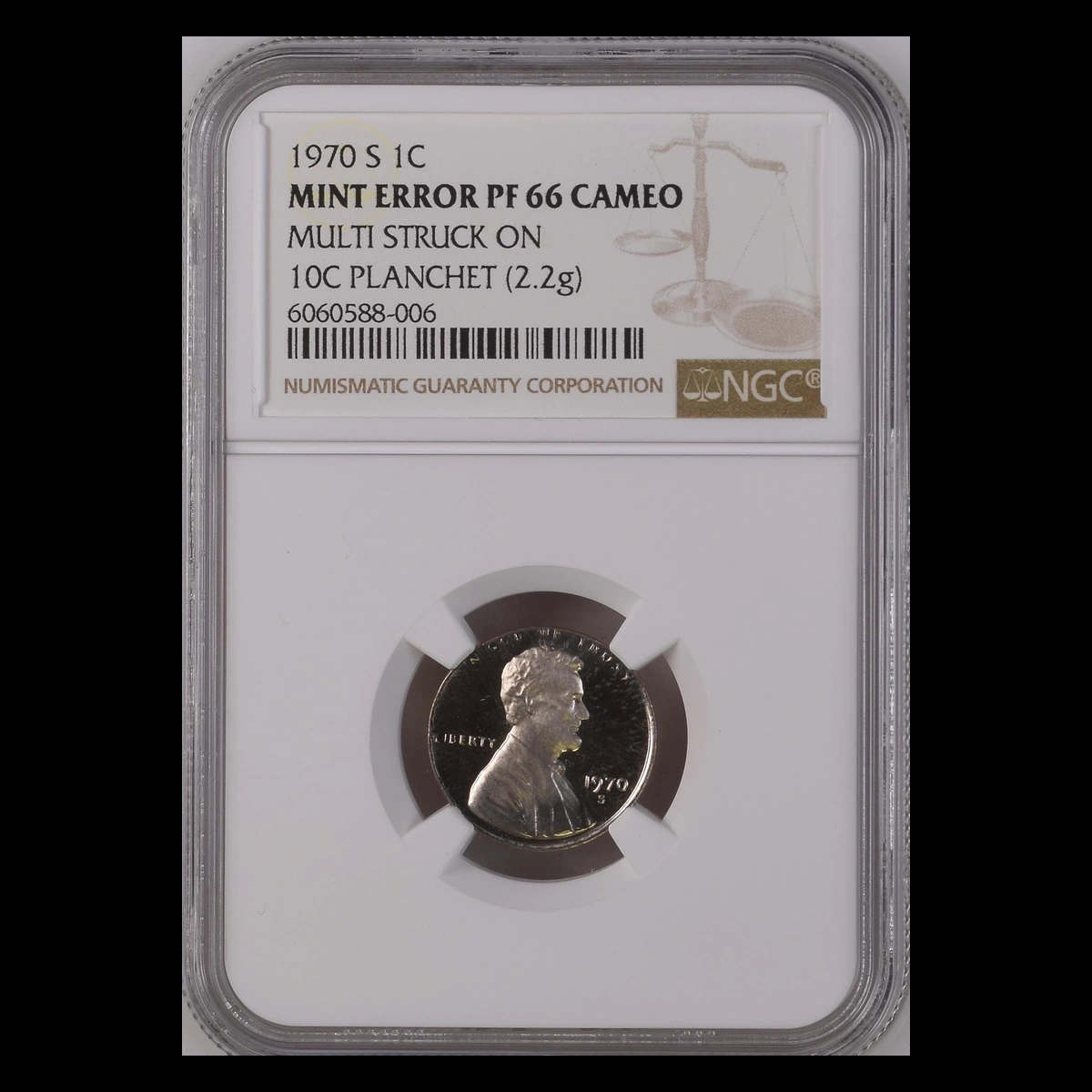
19. 1970 Penny A Proof on Dime Metal Has Extra Strike Positions: Multiple-Strike Wrong Blank Error
The 1970-S Large Date example weighs 2.2 grams and is graded NGC PR66 Cameo. It combines an unused clad dime blank with a genuine Proof multiple-strike error.
How to Identify
Find cent details that show a changed strike position rather than glare or the normal aligned blows used for Proofs. Cameo describes contrast between frosted design and reflective background.
The layered metal and absence of older dime designs support an unused blank. Shine alone does not turn an ordinary S coin into this specimen.
What It’s Worth
$2,000–$6,000 is the estimate for the authenticated Proof combination. The dealer lists it as sold without a visible realized amount.
A 1968-S Proof on a clad dime blank brought $2,280 in July 2021. That comparison lacks the separately assessed extra-strike feature of the 1970 coin.
20. 1970 Penny A Silver Dime Blank Is Reported: Silver Wrong-Blank Candidate Error
A secondary year account reports this possibility without a certified 1970 specimen. Older silver dime blanks normally contain 90% silver and weigh about 2.50 grams.
Those are reference standards. They are not measurements or test results for a verified coin in that report.
How to Identify
Confirm the actual date, mint, finish, and original strike before relying on the category. Non-destructive metal testing must establish silver throughout the blank.
Check for clad layers, plating, or grinding that could explain a pale, light coin. A silver-colored surface and one weight reading cannot settle the attribution.
What It’s Worth
$1,000–$15,000 is a conditional estimate for an independently authenticated 1970 cent on a silver dime blank. It does not assert that the reported candidate has been verified.
A confirmed higher-grade 1980-D silver dime-blank cent sold for $18,000 in August 2025. That later coin provides context for the rare metal rather than evidence for this 1970 report.
Conclusion
The highest 1970 values depend on specific identities, especially the major S doubled die and unusual blank-and-strike combinations. A small extra line, floating roof, or silver-looking surface needs a narrower comparison.
Keep the mint, finish, and physical evidence together when describing a find. Retained material, thin separated metal, and raised cap walls are useful clues that should remain untouched while the coin is examined.