Rare 1869 Quarter Errors (List & Pictures)
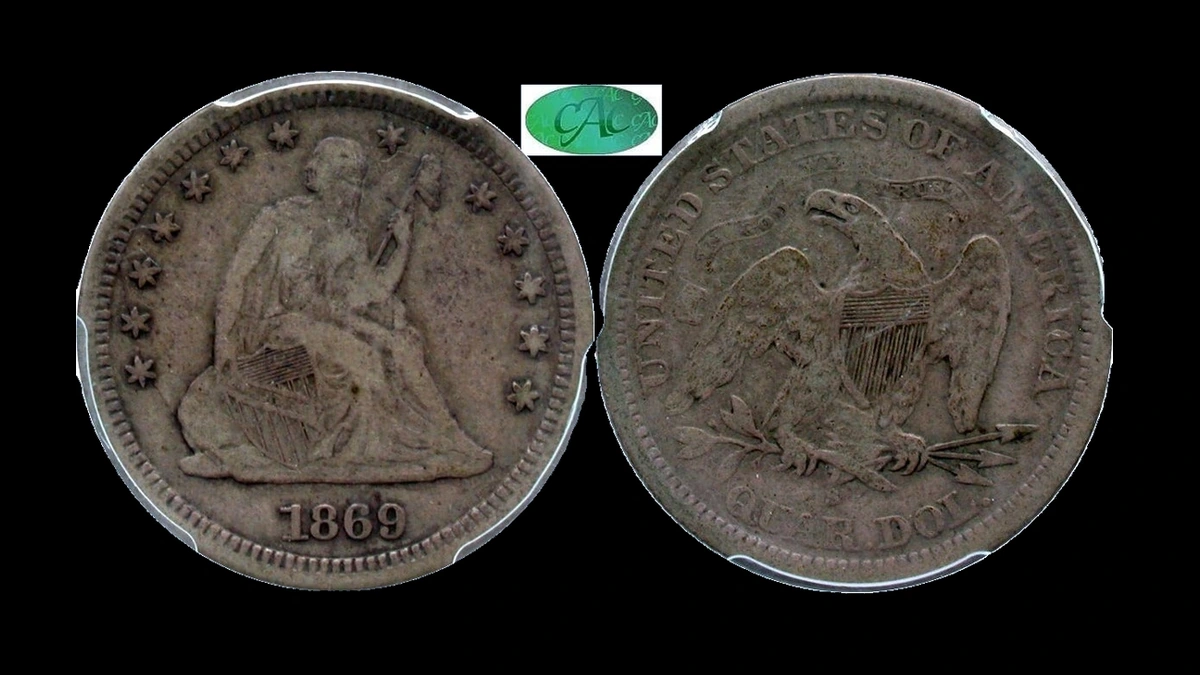
A curved line on a San Francisco quarter and doubled detail on a Philadelphia Proof represent two separate 1869 quarter errors. One came from a cracked tool; the other is a reported repeated design in the tool itself.
The estimated whole-coin range is $300–$6,000 for the conditions discussed. An 1869-S quarter with an upper-front crack sold for $2,764.60 in February 2012.
Use the mint and finish to choose the right comparison before inspecting the small details.
1869 Quarter A Curved Ridge across the Upper Front: Circular Die Crack Error
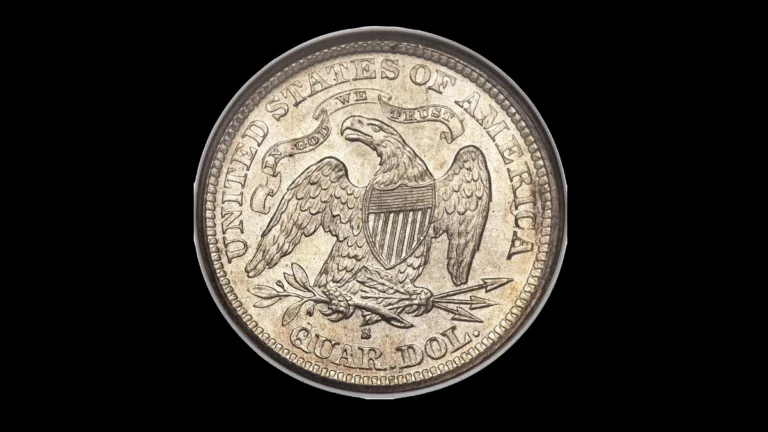
The reported 1869-S variety has a curved raised line developing around the upper front. A split in the die, the steel stamping tool, allowed silver to fill the gap during striking.
The resulting ridge can grow clearer as the tool deteriorates. An early example need not show a heavy line or a complete circle.
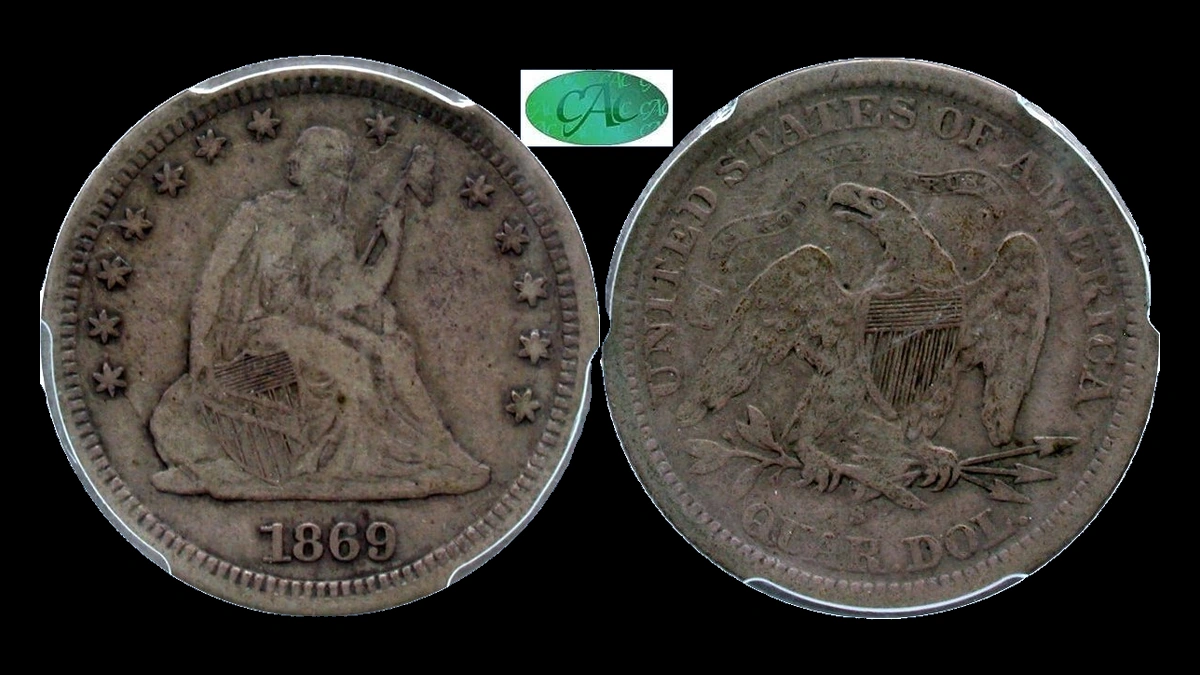
Gerry Fortin described a PCGS VF25 coin with the characteristic crack just beginning to form. The two dies used for that variety are identified as Briggs 1-A.
How to Identify
Start in the upper part of the front and follow the curve under side lighting. Check that it stands above the background rather than cutting into the silver.
Compare the path with nearby design details in Fortin’s photographed example. A circular scratch does not reproduce the same raised die feature simply because its outline is similar.
Keep the full 1869 date and reverse mintmark in view as well. The S and lower lettering may be faint on worn examples, so avoid relying on one cropped close-up.
VF25 describes a worn coin that still retains substantial detail. Its early crack is a useful reminder that die damage can appear at different stages.
What It’s Worth
$300–$4,000 is the estimated range for worn through lightly worn 1869-S examples with this characteristic crack. Much of the value comes from the scarce issue and the condition of the complete coin.
An NGC AU55 example sold for $2,764.60 in February 2012, with a catalog description noting a crack at the top of the front. AU55 means light circulation wear.
The VF25 coin had a $950 reserve and no bids. That figure was a minimum requirement for the offering, not a completed sale.
1869 Quarter Repeated Front Details on a Proof: Doubled Die Error
A separate Philadelphia Proof variety is known as Flynn DDO001, also called Briggs 2-B. A doubled die carries repeated design detail before striking, so coins made from it can share the same extra shapes.
Heritage cataloged an NGC PR64 example under that name. PR64 identifies a specially made collector Proof with some visible imperfections.
The short catalog description does not state exactly which letters or details are doubled. The name alone therefore cannot tell a beginner where to place a magnifier.
How to Identify
Begin with a confirmed photograph or specialist reference for Flynn DDO001. Compare the full front, then enlarge the same area on the reference and your coin.
The extra shape must occupy the matching position. Thick lettering by itself is not enough to establish the variety.
Move the lamp while keeping the coin still. Reflections can shift along a Proof’s polished surfaces, but an actual raised repeat stays in the same place.
Keep a graded Proof in its holder and avoid rubbing loose examples. The San Francisco circular crack is a different feature and should not be used to identify this Philadelphia doubled die.
What It’s Worth
$600–$6,000 is the estimate for a correctly identified Flynn DDO001 Proof in the collector conditions discussed. Reflective surface quality, sharp detail, and signs of cleaning all affect the whole-coin price.
Heritage’s PR64 catalog listing documents a coin with this attribution. It does not make every apparent doubled edge an example of the variety.
A correct match also does not erase scratches, haze, or disturbed surfaces. Those condition differences remain important when choosing a value comparison.
Conclusion
The San Francisco search follows a raised curved crack, while the Philadelphia Proof search requires an exact doubled-design match. Their different mints and finishes should stay attached to every photograph and price comparison.
An early crack can be subtle, and a bright Proof reflection can be misleading. Change the lighting, preserve the original surface, and compare a known example before deciding which description fits.