Rare 1979 Penny Errors (List & Pictures)
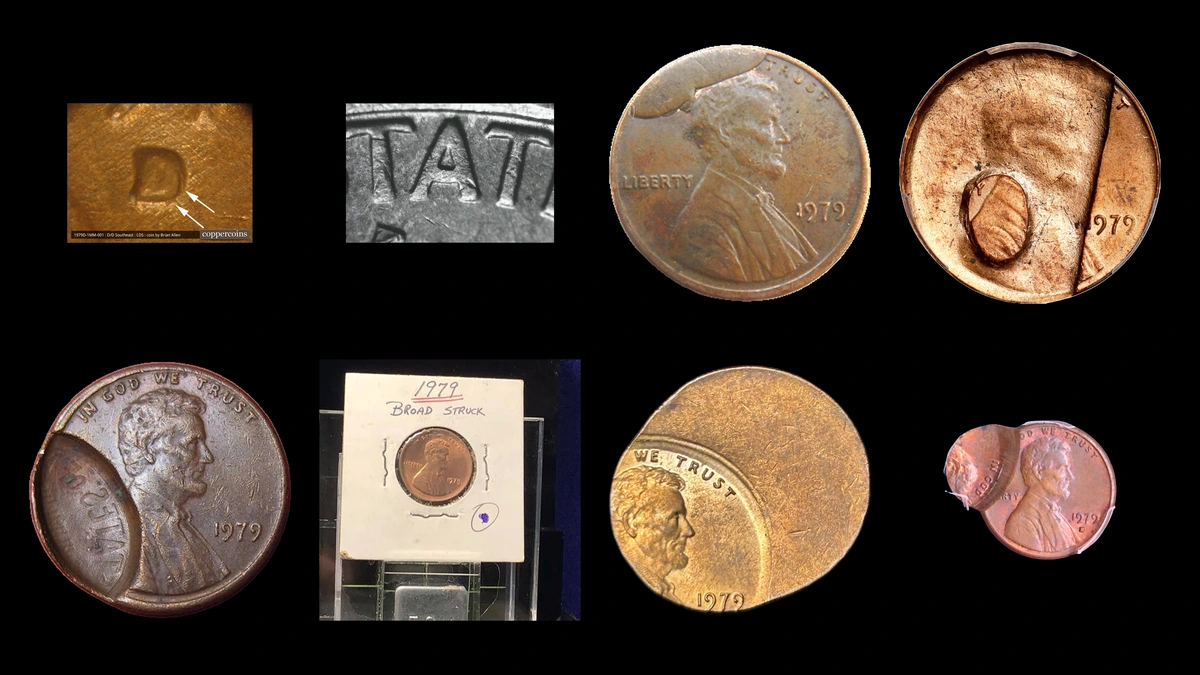
A massive 1979-D bonded cluster sold for $10,925 in August 2012. Estimated values for 1979 penny errors run from $2–$20,000, covering much smaller letter varieties as well as extraordinary joined objects.
Begin with the mintmark and raised details, then inspect the outline and thickness. This date uses copper alloy throughout, with a normal weight of 3.11 grams, diameter of 19.05 mm, and smooth edge.
| What changes | Error group | Estimated value |
|---|---|---|
| D has another outline | Repunched mintmark | $3–$150 |
| Design details repeat | Doubled die | $2–$150 |
| Raised bar, line, or rim patch | BIE, crack, or cud | $2–$1,500 |
| Impressed texture or blocked design | Struck-through error | $10–$500 |
| Backward recessed image | Brockage | $100–$1,000 |
| Missing curved sections | Clipped blank | $20–$500 |
| Expanded complete design | Broadstrike | $15–$250 |
| Design beside plain metal | Off-center strike | $20–$2,000 |
| Several strike positions | Multiple or saddle strike | $75–$2,000 |
| Thin metal with two impressions | Split blank struck twice | $150–$1,200 |
| Raised cup walls | Die cap | $150–$1,500 |
| Unexpected blank metal | Wrong planchet | $250–$2,000 |
| Many joined discs | Bonded cluster | $8,000–$20,000 |
1. 1979 Penny A Second Shape Around D: Repunched Mintmark Error
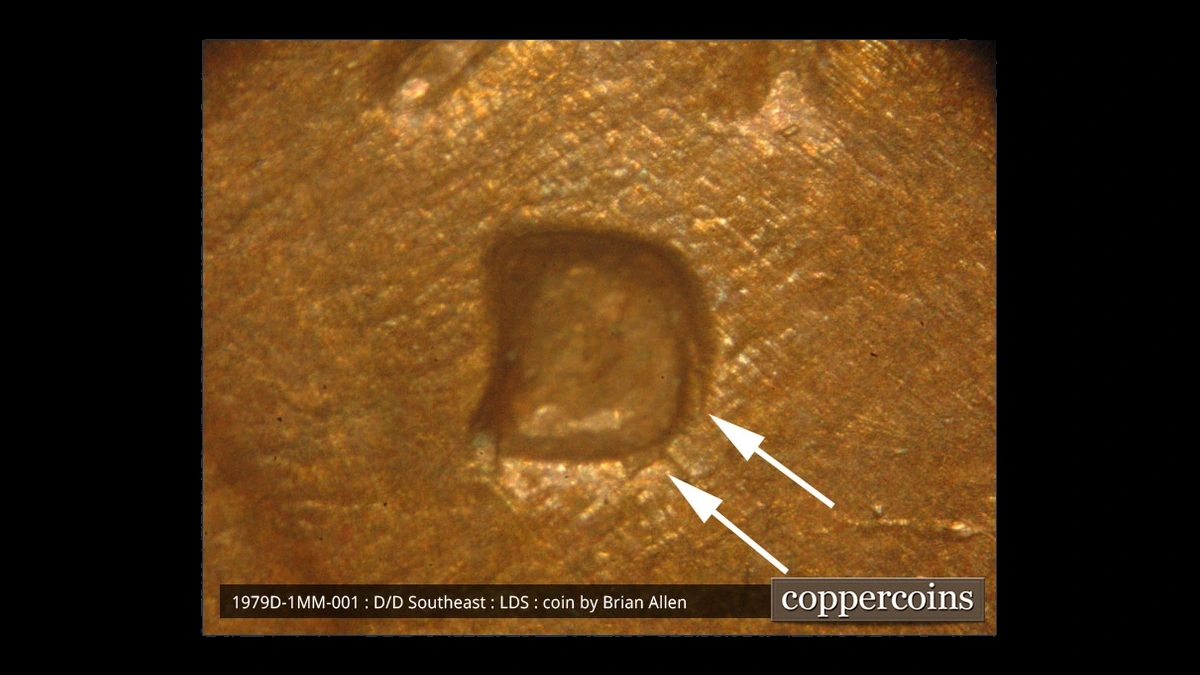
The Denver mint letter was added separately to the die in 1979. Repositioning its punch could leave part of an earlier D beside the final placement.
How to Identify
Compare the extra curve, upright, or fork with the three listed 1979-D patterns. One has an impression toward the lower right, while others show tilted or rotated overlaps.
Inspect nearby metal for hits and keep damaged-punch marks distinct from a true earlier letter. Three visible edges do not prove that the D was punched three times.
What It’s Worth
A confirmed 1979-D repunched mintmark has an estimated value of $3–$150. Readable extra outlines and clean surfaces support stronger comparisons.
No selling record is assigned to all three forms. A supposed third edge should not create an automatic premium without establishing what caused it.
2. 1979 Penny Thickened Letters with a Repeatable Pattern: Doubled Die Error
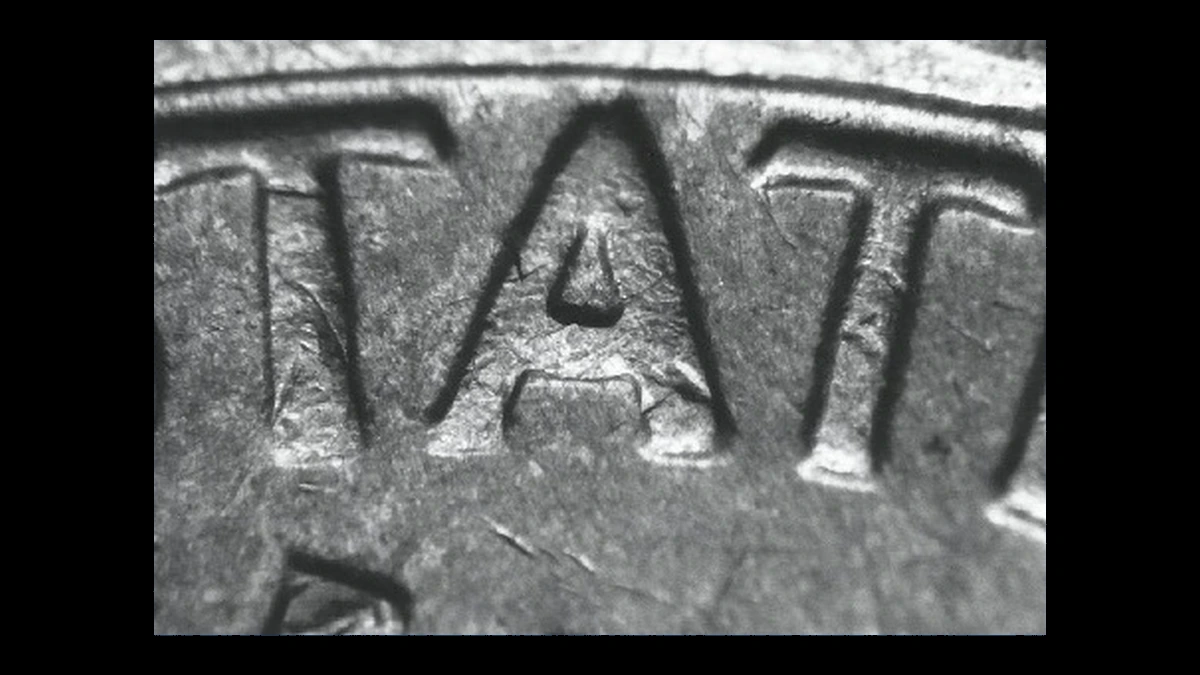
A cataloged Denver reverse variety has doubled detail in lettering and dots. The repeated design was in the stamping tool before it made the coin.
How to Identify
Match the actual extra design, then use supporting marks such as the short line from the lower third column toward the second column space. That fine line helps identify the die but is not itself the doubling.
Philadelphia and Denver front-side reports need their own confirmed matches. Flat strike shelves, die wear, and the normal A–M spacing on this date do not establish a valuable doubled die.
What It’s Worth
Confirmed minor 1979 doubled dies have an estimated value of $2–$150. A clear variety match matters more than generally thick letters.
This is a comparison range rather than a verified auction result for each reported form. An unconfirmed front-side candidate should not receive the premium merely from an extra-looking edge.
3. 1979 Penny Raised Bars, Lines, and Rim Patches: BIE, Cracks, and Cuds Error
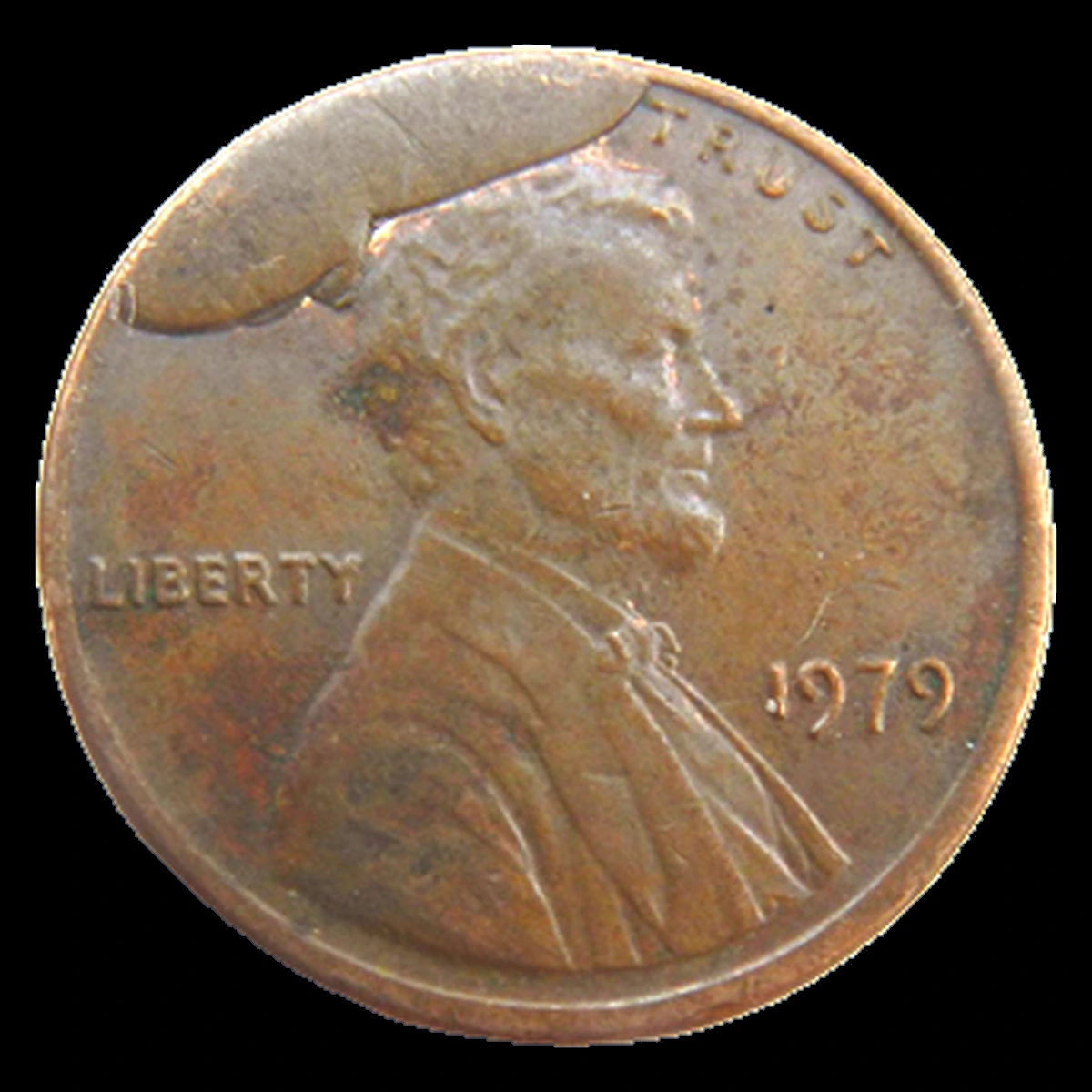
A damaged die can leave a small bar between B and E in LIBERTY, a thin raised crack line, or a larger patch. A rim-connected missing piece of the tool produces the patch called a cud.
How to Identify
First locate the feature: the B–E gap, an internal line, or the rim. Match the complete outline to an example from the same mint instead of choosing an attribution by year alone.
Attached metal can leave a seam, while an edge hit may push normal metal inward. Both differ from original raised metal filling an opening in the die.
What It’s Worth
Estimated values span $2–$1,500, from modest chips to large desirable cuds. Size, visual appeal, and preserved surfaces account for that wide spread.
A Philadelphia cud graded PCGS MS64 Brown sold for $1,020 on May 22, 2021. That recorded result should not be transferred to every tiny 1979 BIE bar or crack.
4. 1979 Penny Texture or Design Is Impressed Through an Obstruction: Strike-Through Error
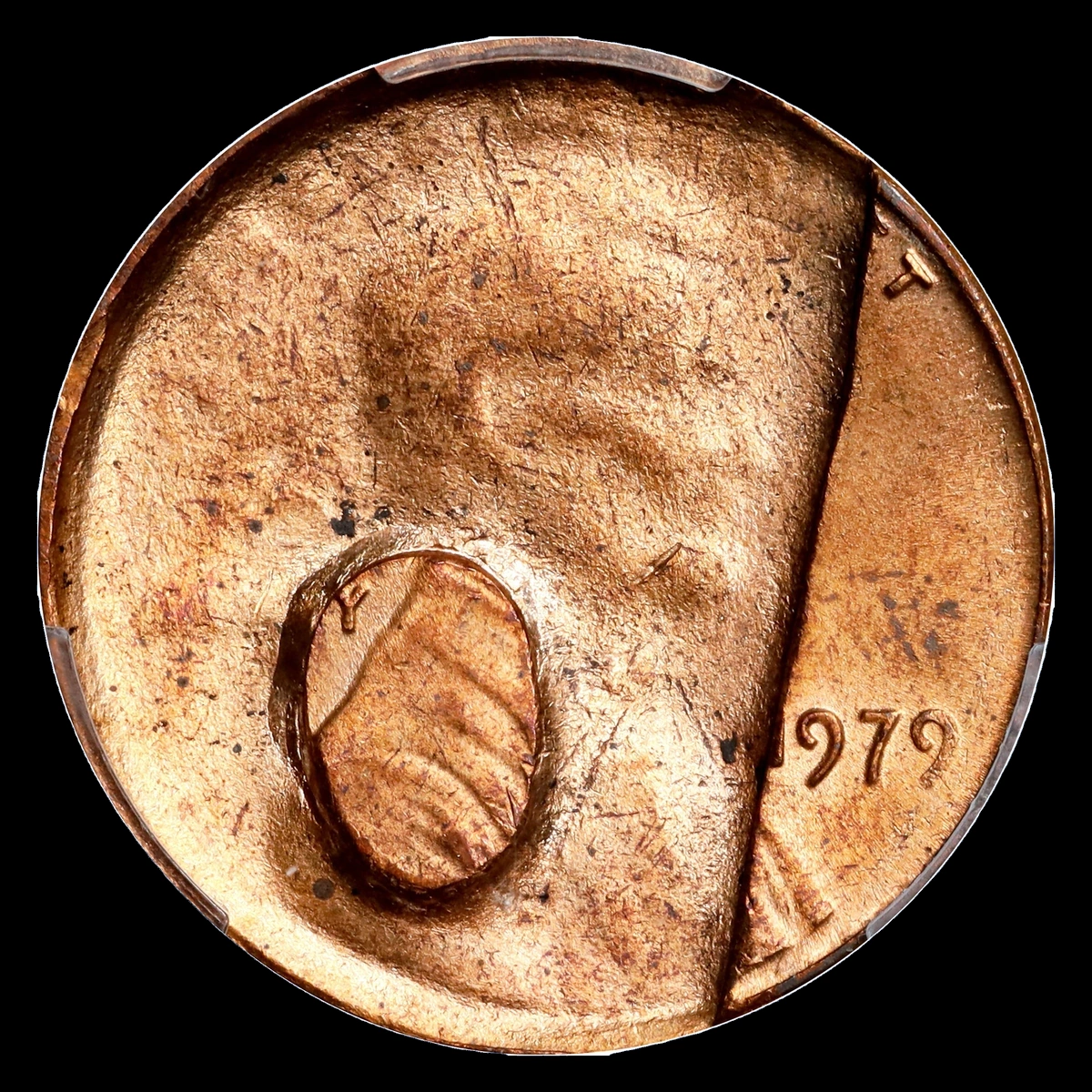
Material caught between the blank and die can leave a texture or prevent normal detail from forming. Reports include a narrow cloth impression on a 1979-D front, a separate Philadelphia two-sided obstruction, and a Philadelphia late-stage cap strike.
How to Identify
A cloth impression should be recessed into the surface, not raised woven material. Examine its repeating texture and boundary without assuming that one weak letter identifies the obstruction.
For the two-sided report, inspect both faces; for a cap strike, compare the distorted design with the appropriate stage. The coin struck through a trapped cap is different from the cup-shaped cap itself.
What It’s Worth
A genuine 1979 strike-through has an estimated value of $10–$500. Recognizable original texture or clear cap-related distortion makes a stronger example.
A 1995 late-stage cap strike sold for $180 in March 2025. That different-year reference concerns the cap mechanism, not the separate cloth and two-sided reports.
5. 1979 Penny A Backward Image Below the Surface: Brockage Error
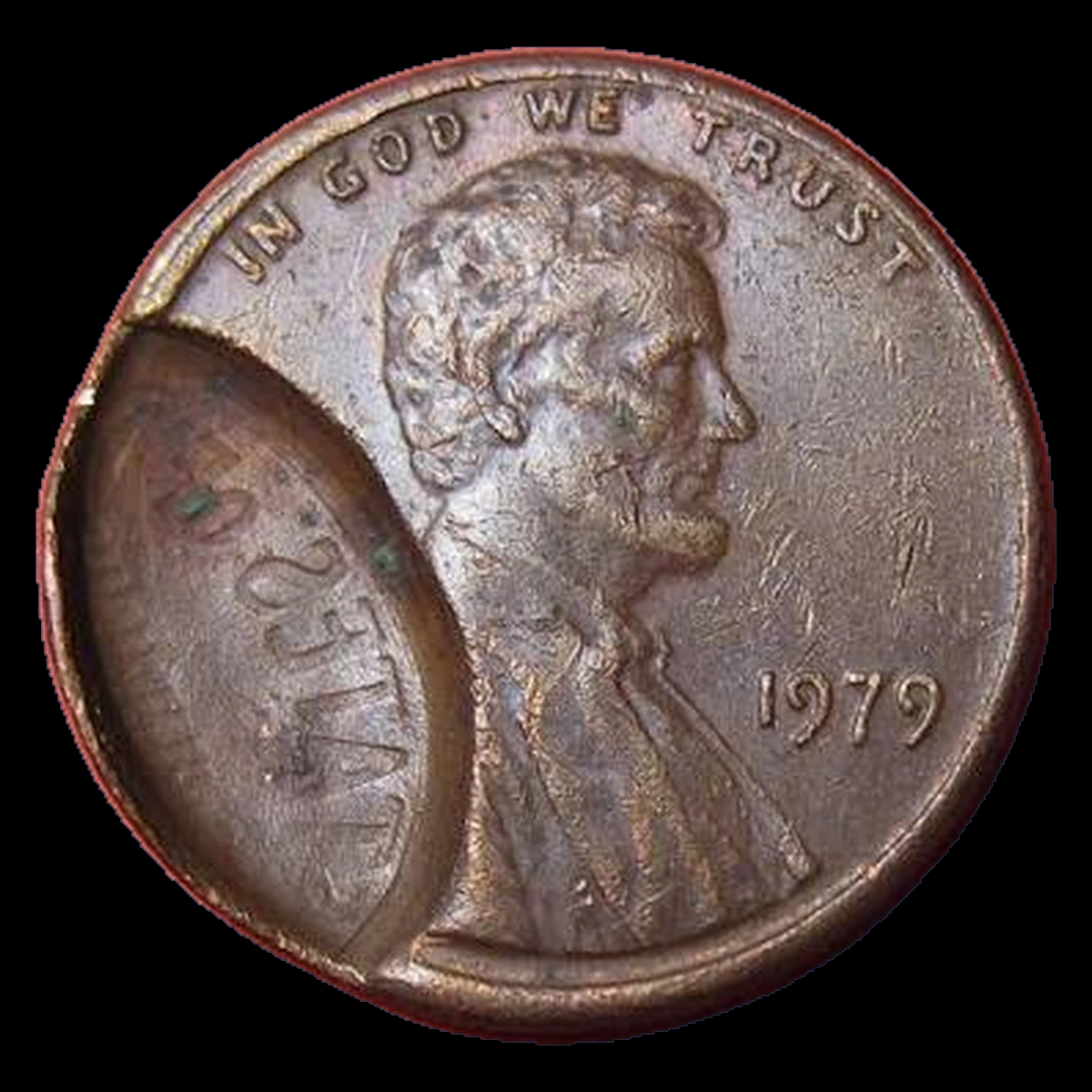
An already struck coin can block a new blank and press a reversed image into it. The resulting brockage needs recognizable transferred detail rather than simply a blank or worn face.
How to Identify
Use side lighting to establish that the unexpected design is recessed, then compare it with a mirrored normal design. The visible letters and portrait fragments should make sense together.
Later squeezing between finished coins can imitate this effect. Inspect both faces and the edge for crushing, and evaluate the metal movement as part of the whole strike.
What It’s Worth
An authenticated 1979 brockage has an estimated value of $100–$1,000. Broad readable transferred detail can be more desirable than a small crowded patch.
No verified sale is supplied for the year-specific report. A later vise impression does not qualify for the same error range even if its reversed image is clear.
6. 1979 Penny Several Curved Gaps: Clipped Blank Error
A reported 1979-D coin has three curved gaps and an off-center design. An incomplete blank can result when the cutting process overlaps holes already present in the metal strip.
How to Identify
Study the whole outline before deciding whether it began as a normal clipped disc or leftover metal between cutouts. Three gaps do not mean three strikes.
Inspect each boundary for original design formed against missing metal and exclude fresh cuts or filing. Reduced weight should fit the missing material, though later cutting can also make a coin lighter.
What It’s Worth
Genuine 1979 clips and stronger combined examples have an estimated value of $20–$500. Several clear gaps with an off-center design can be more interesting than a single small clip.
No verified sale is supplied for the three-gap Denver report. A simpler 2021 straight-clip cent sold for $114 in September 2025, providing only a different-year comparison.
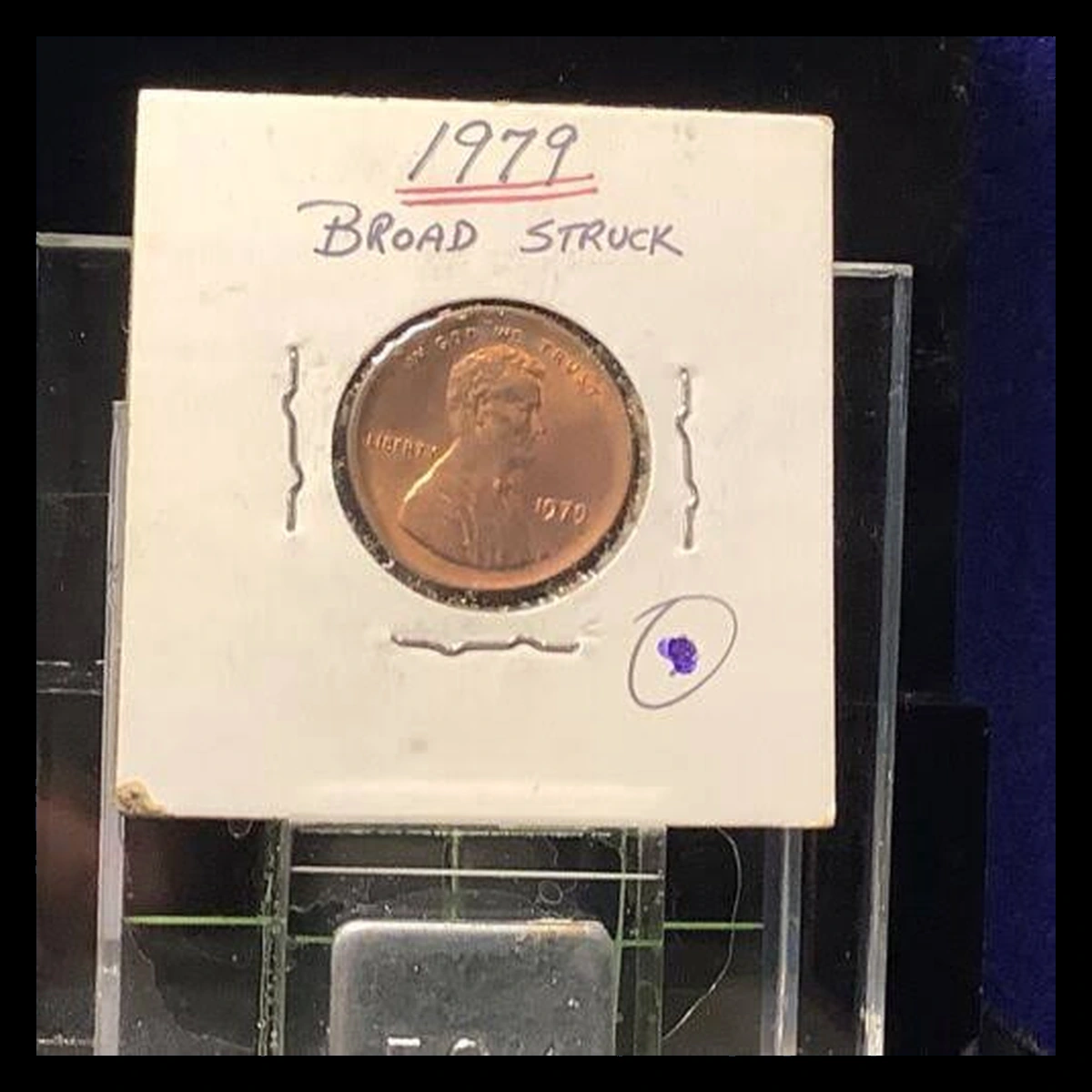
7. 1979 Penny Complete Designs with Extra Spread: Broadstrike Error
A collar normally limits how far a blank can spread during striking. When that restraint fails, a broadstrike can widen while retaining the complete portrait and Memorial.
How to Identify
Check both outer inscriptions and compare width in several directions. Philadelphia and Denver examples are reported, and genuine spreading need not be evenly distributed.
Hammering can also enlarge a cent while crushing letters and high points. The expanded area should belong naturally to the original strike rather than later flattening.
What It’s Worth
An ordinary 1979 broadstrike has an estimated value of $15–$250. The amount of spread and surface quality guide the comparison.
A 1999 broadstrike graded PCGS MS65 Red sold for $67 in March 2023. That later cent has different metal, so it is a price reference for the mechanism rather than a close physical match.
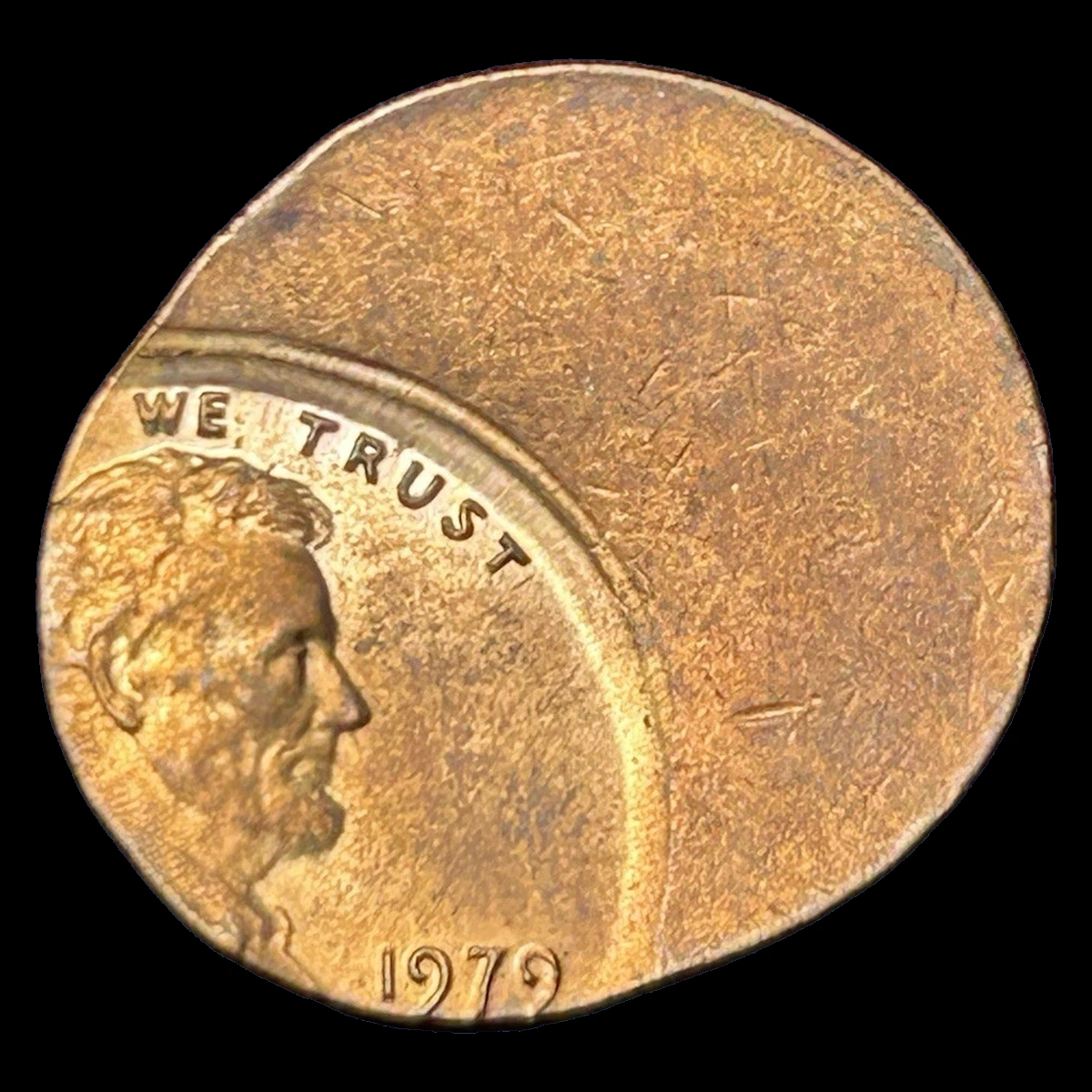
8. 1979 Penny An Incomplete Design Beside Blank Metal: Off-Center Strike Error
A blank sitting partly outside the dies can retain a plain section beside its design. Reports include Denver examples around 35% and 70% off center, Philadelphia coins, and a separate S Proof report.
How to Identify
Compare both faces for the same displacement and record the date and mintmark only where they remain visible. A one-sided die shift or a clipped-away section needs a different explanation.
A claimed 1979-S error must have genuine Proof manufacture as well as the displaced strike. Neither the filled S nor the clearer S used on this year’s normal Proofs is itself an off-center error.
What It’s Worth
The overall estimated range is $20–$2,000, with ordinary strikes around $20–$500 and authenticated off-center S Proofs separately estimated at $500–$2,000. Finish and error both need confirmation.
No verified sale establishes the reported Proof’s price. Its estimate must not be applied to a Denver coin merely because the displacement looks similar.
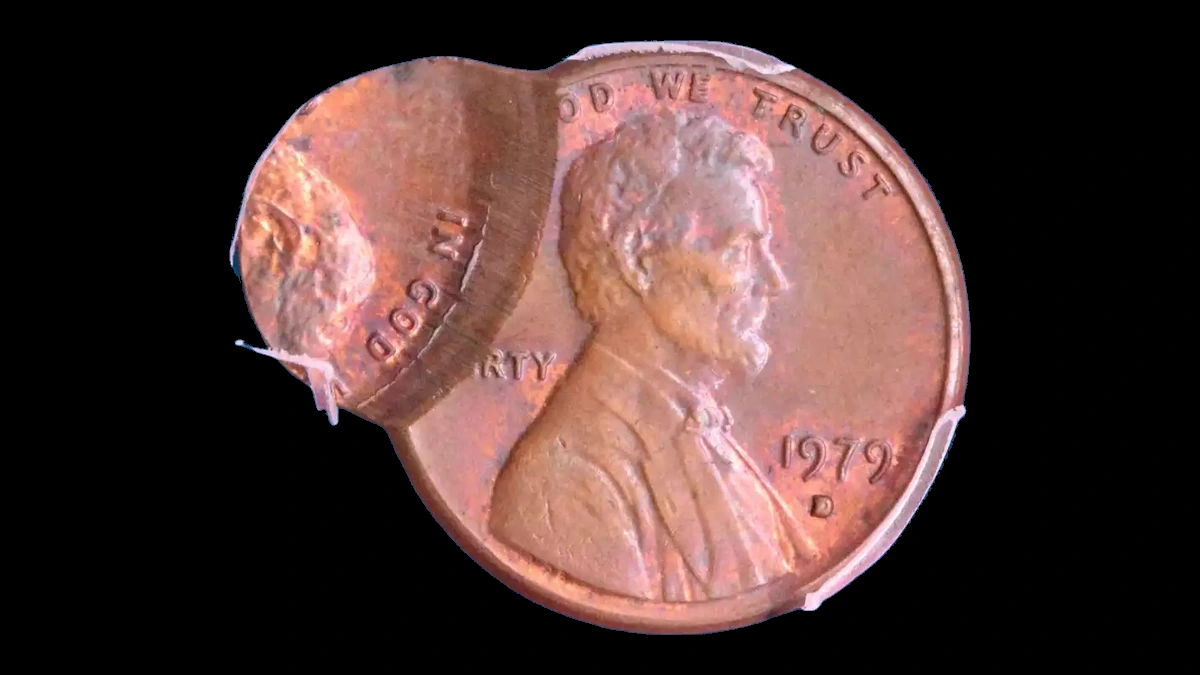
9. 1979 Penny Separate Impressions and a Raised Bridge: Multiple or Saddle Strike Error
A coin that remains or returns between the dies can receive another impression after moving. Recorded examples include Philadelphia and Denver double strikes and a separate Denver saddle-shaped triple strike.
How to Identify
Trace each struck area before counting blows. For a saddle, examine the raised bridge connecting those areas rather than treating a bend alone as proof.
Check for later pressure marks and distorted finished design. A forced bend does not add another genuine portrait or date impression.
What It’s Worth
Estimated values run from $75–$2,000 across ordinary double strikes and more unusual authenticated saddle arrangements. Readable impressions and natural metal flow are central.
A 1979-D coin with its second strike 70% off center, graded PCGS MS64 Brown, sold for $660 in June 2025. That is not a sale of the separately listed saddle coin.
10. 1979 Penny Thin Metal Carries Two Strikes: Split Blank Struck Twice Error
The reported 1979-D combination began with a blank separated through its thickness and later struck twice. The thin metal and repeated design are separate features of the same coin.
How to Identify
Inspect thickness and weight against an ordinary 3.11-gram cent, without imposing one target weight on every split. Look for design struck into a naturally separated surface rather than a coin ground thin afterward.
Trace the two impressions independently after examining the blank. A 1979 copper-alloy coin does not have the thin copper skin and zinc center used on later cents.
What It’s Worth
The estimated whole-coin value is $150–$1,200 for an authenticated split blank with a double strike. No verified sale is supplied for the reported NGC specimen.
The $660 June 2025 double-strike comparison was not described as a split blank. It supports comparison of the repeated strike only, not the thin-metal attribution.
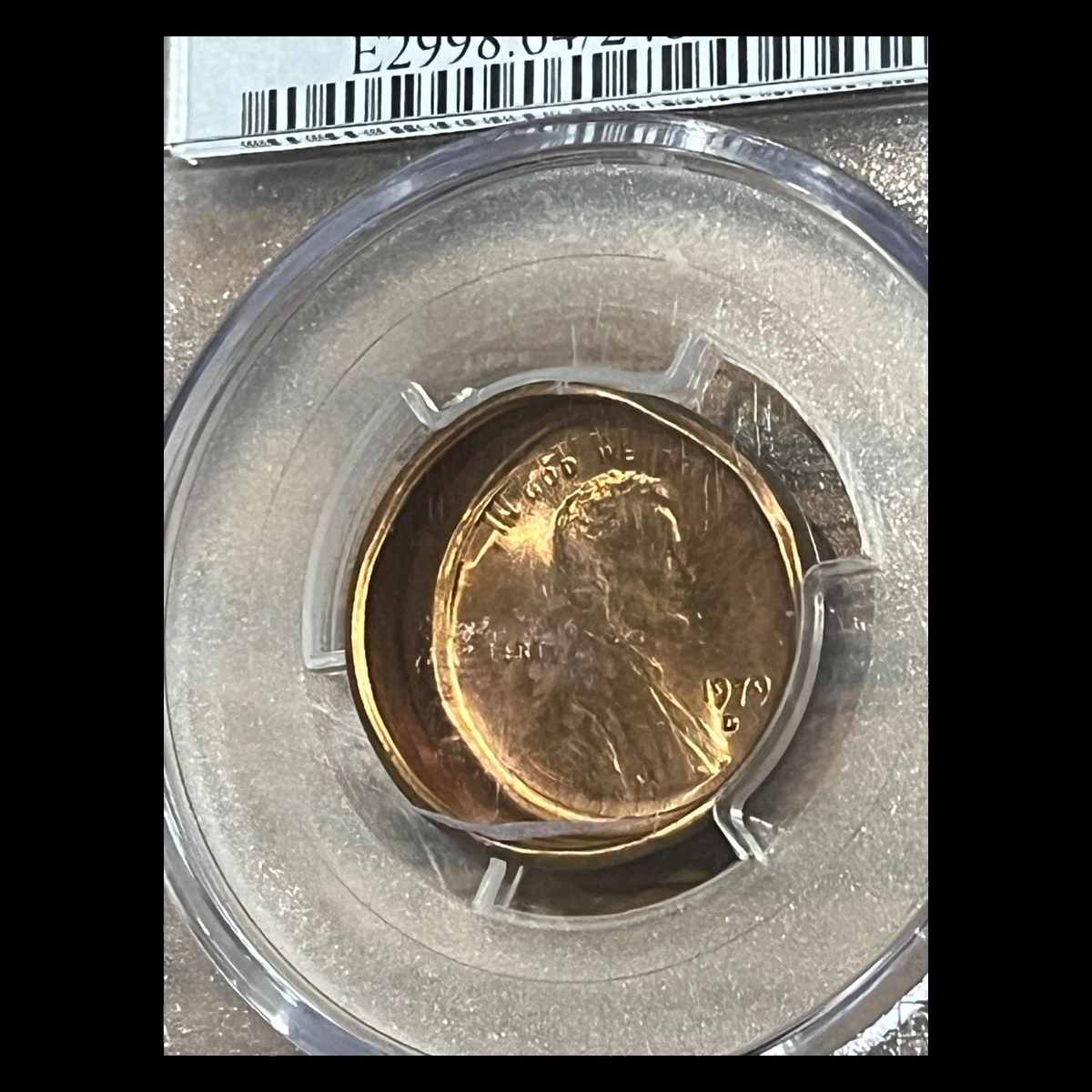
11. 1979 Penny The Cent Forms a Cup: Die Cap Error
A cent stuck to a die can be pushed around its sides by further strikes. Denver reports include a deep portrait-side cap, a reverse cap, and a separate cap combined with a double strike.
How to Identify
Examine the walls, surviving design, and transition into the cup from the side. Genuine caps vary in what remains visible; one completely blank face is not a universal requirement.
Look for gripping marks or pinched folds that could explain later bending. Keep the piece intact and distinguish it from a separate coin struck through a cap.
What It’s Worth
Authenticated 1979 caps have an estimated value of $150–$1,500. Depth, complexity, and intact original detail affect appeal.
The deep 1979-D front cap graded PCGS MS64 Red sold for $329 on January 11, 2016. That sale does not establish the prices of the separately recorded reverse and double-struck caps.
12. 1979 Penny The Metal Belongs to Another Coin: Wrong Blank Error
One reported Denver cent was struck on a U.S. dime blank. A separate Philadelphia piece was identified as a Dominican Republic 10-centavo blank weighing 2.7 grams.
How to Identify
Compare composition, weight, and surviving design space before naming a donor coin. A dime blank normally begins around 2.268 grams and 17.91 mm, though striking can expand it.
Clad dime metal has bonded outer layers around a copper center. The foreign-blank claim needs its own metal evidence; the recorded 2.7-gram weight alone cannot identify a country.
What It’s Worth
Confirmed 1979 wrong-denomination or foreign-blank cents have an estimated value of $250–$2,000. Established blank identity and preserved coin details guide the price comparison.
The Philadelphia Dominican Republic-blank example graded NGC MS63 sold for $300 on November 27, 2019. A 2007-D dime-planchet cent graded PCGS MS66 brought $600 in March 2023, a different-year comparison to the Denver report.
13. 1979 Penny Many Discs Become One Mass: Bonded Cluster Error
The large 1979-D cluster is estimated to contain 33 or 34 discs joined under repeated blows. Its layers spread outward and upward around a die as the mass grew.
How to Identify
Examine the entire object for connected strike deformation, compressed layers, and surviving design. Glue, solder, and simple stacking can imitate a silhouette without reproducing its minting history.
Do not separate the layers or convert total weight into an exact disc count. The estimate of 33 or 34 discs also does not establish an exact number of strikes.
What It’s Worth
An estimated $8,000–$20,000 applies to a spectacular authenticated cluster of this scale. The valuation concerns the whole mass and does not apply to each disc or a small bonded pair.
The large Denver cluster realized $10,925 at Stack’s Bowers in August 2012. Its visible strikes and extensive original bonding make it a very different comparison from ordinary small errors.
Conclusion
For 1979, begin with the correct copper-alloy construction and 3.11-gram standard. A thin split blank cannot be explained as peeling zinc-cent plating, and a missing piece of the outline needs different evidence from an unstruck area.
Keep each specimen’s effects together when comparing values. A three-clip coin, a cap with another strike, and the large bonded cluster are complete objects, not collections of separate prices to add or divide.