Rare 1934 Penny Errors (List & Pictures)
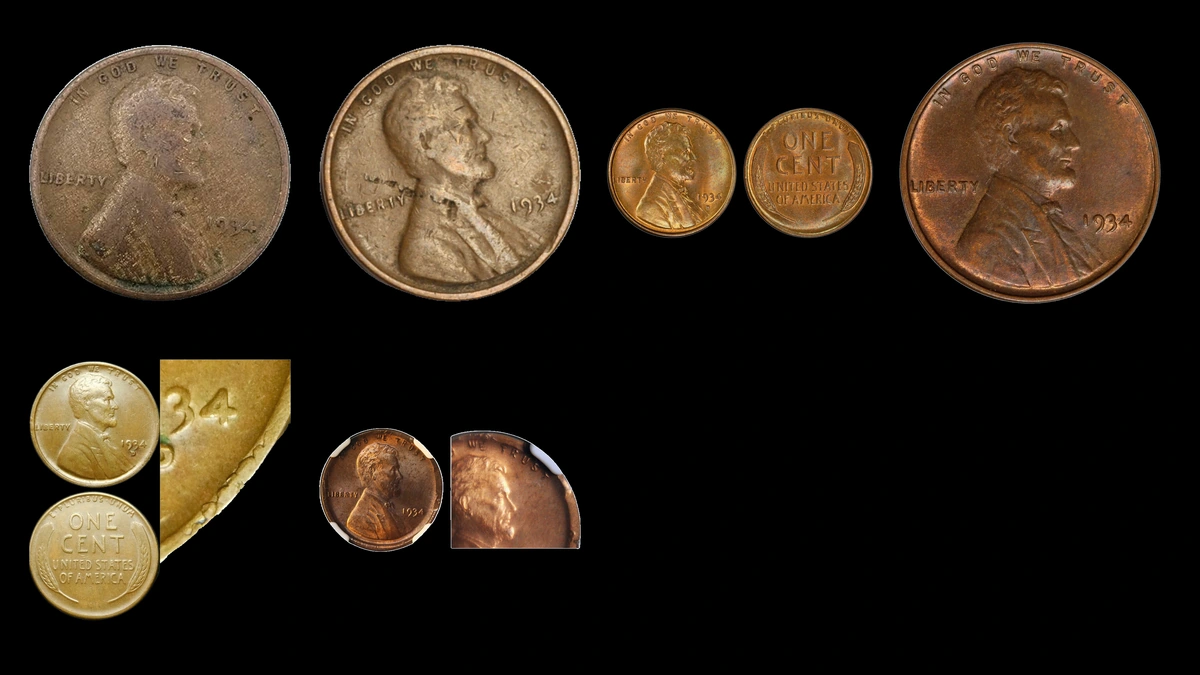
A silver-dime-blank cent sold for $4,080 in September 2024, despite its circulation wear. Other 1934 penny errors can be much more modest, including streaked alloy or small raised cracks.
Estimated whole-coin values run from $3 to $8,000. Begin with the surface texture and small design features, then examine the edge and any displaced impressions before considering an unusual metal claim.
| First observation | Possible explanation | Estimated value |
|---|---|---|
| Color bands or a loose layer | Uneven alloy or lamination | $3–$300 |
| Extra D or design outline | Repunched mintmark or doubled die | $5–$2,500 |
| Raised line or rim patch | Die crack, chip, or cud | $3–$750 |
| Deep opening or missing edge | Clamshell split or clip | $15–$500 |
| Wide or shifted image | Broadstrike or off-center strike | $25–$2,500 |
| Two design positions | Double strike | $200–$4,000 |
| Confirmed silver blank | Wrong-planchet strike | $2,000–$8,000 |
A normal 1934 cent is solid copper-rich alloy, about 3.11 grams and 19.05 millimeters across, with a plain edge. Record measurements when safe, keeping calipers and fingers away from loose metal.
1. 1934 Penny Color Bands without Grooves: Uneven Alloy Mixing Error
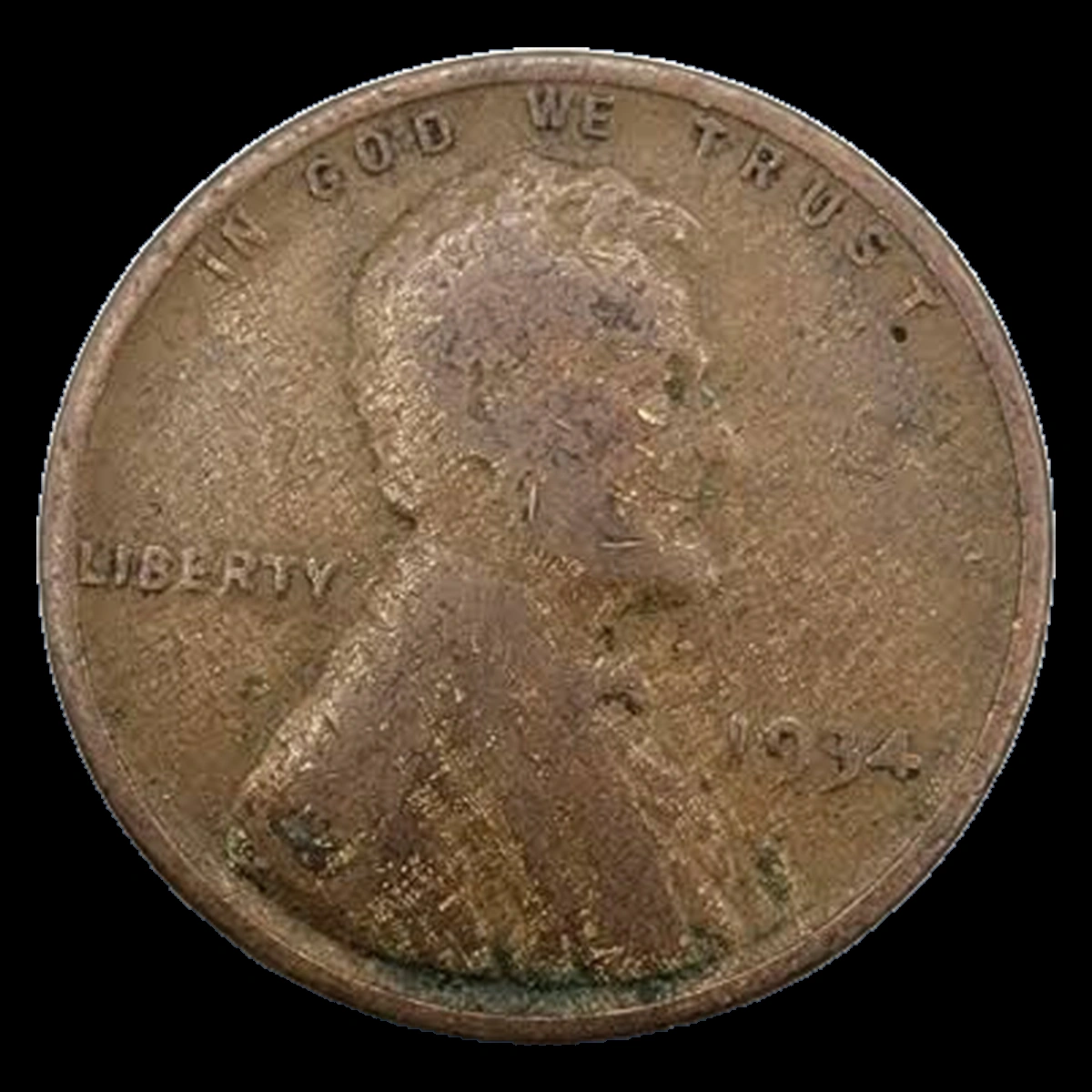
Long bands can make a cent look like wood grain when its alloy mixture tones unevenly. CONECA’s glossary illustrates this effect with a 1934 coin.
How to Identify
Follow a band across the field and through raised detail, checking whether the metal remains intact. Cleaning scratches are physical grooves, even when parallel lines imitate a striped appearance.
Change the light and inspect the surrounding original surface. Color alone cannot exclude chemical treatment or establish the alloy’s mixing history.
What It’s Worth
Attractive original examples are estimated at $3–$100. Visual appeal and overall preservation matter more than the woodgrain nickname.
No sale amount is supplied for CONECA’s illustrated cent. Stripes caused by cleaning do not receive this same comparison.
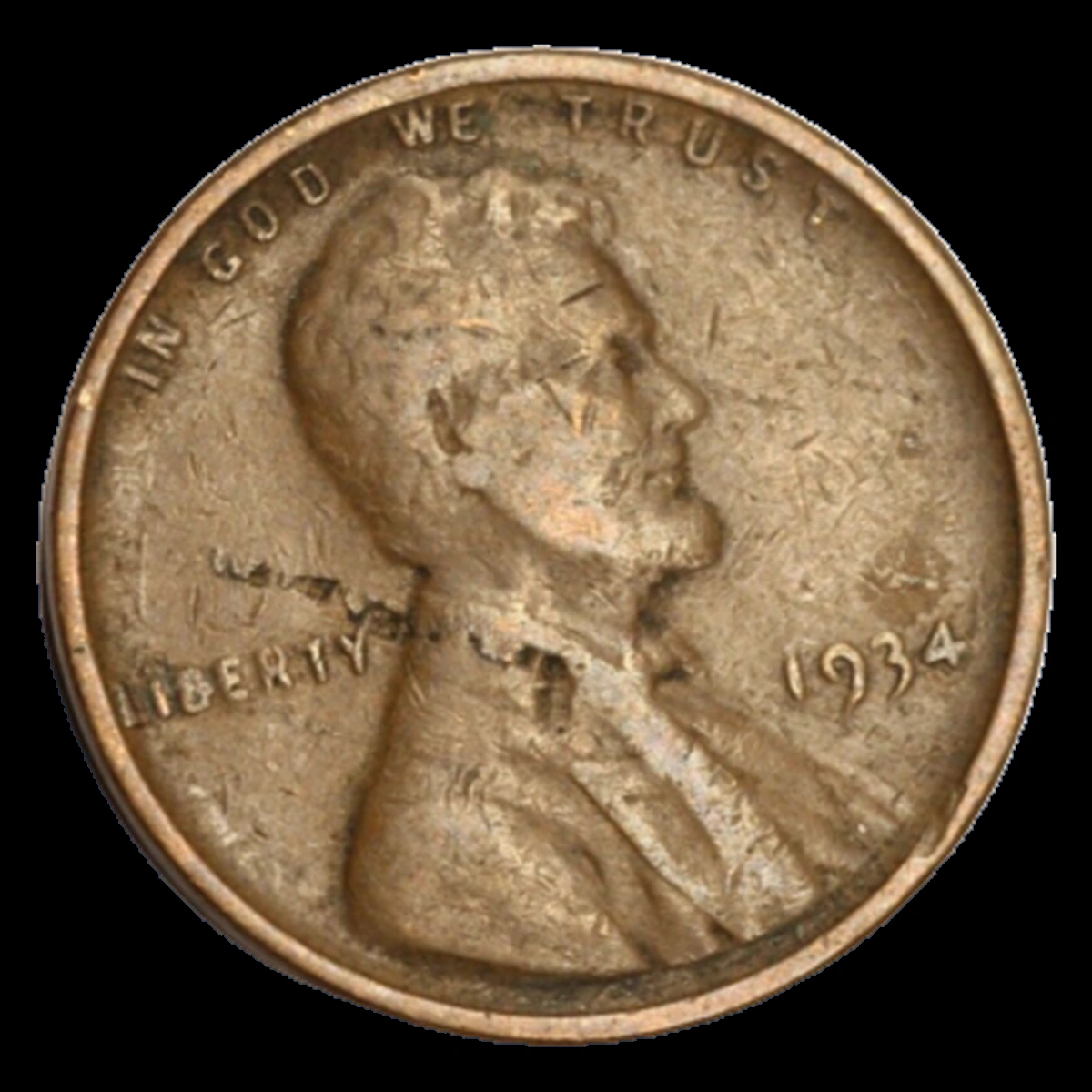
2. 1934 Penny A Thin Surface Sheet Separates: Lamination Error
An internal weakness can release a thin layer from the coin’s alloy. This is not the copper plating separating from a modern zinc core.
How to Identify
Look for a seam under a retained flap or a natural boundary around a lost layer. Avoid lifting attached metal to test it.
The general 1934 report specifies no standard face or path. A gouge with cut edges or pushed-up copper needs to be distinguished from a layered separation.
What It’s Worth
Genuine surface laminations are estimated at $5–$300. Tiny peels on worn coins may add little, while larger original layers are easier to recognize.
A 1941-S retained reverse lamination graded PCGS MS66 Red sold for $69 in April 2020. Its well-preserved condition and later date make it a qualified comparison.
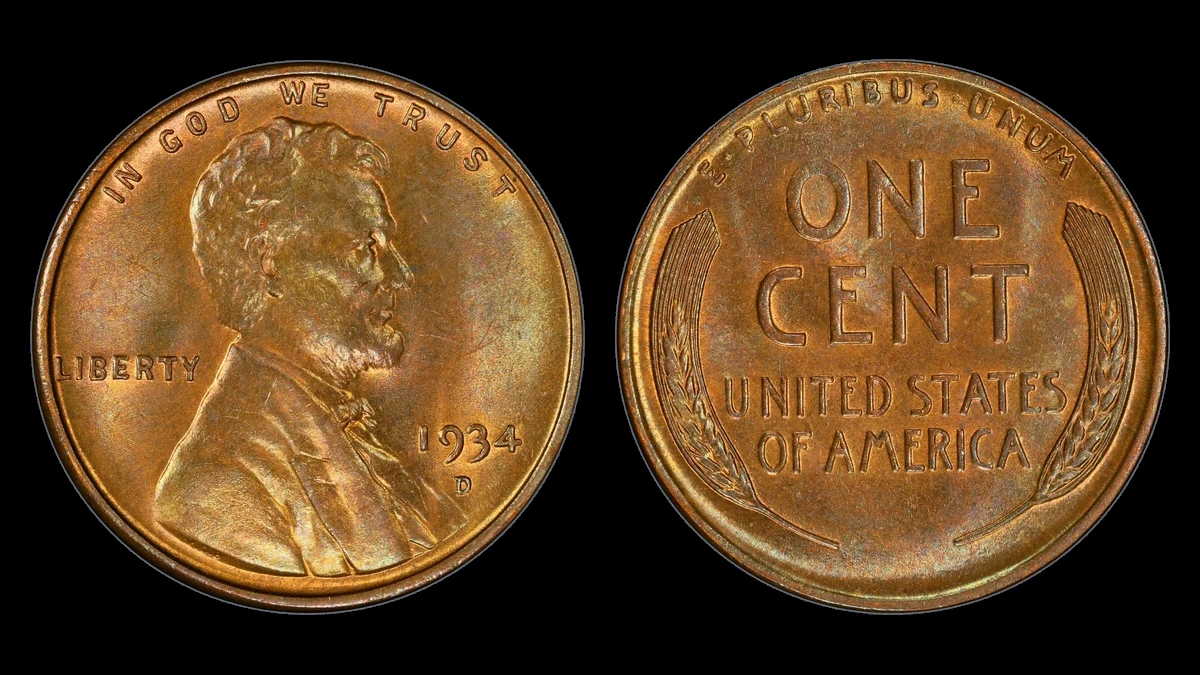
3. 1934 Penny An Earlier D Survives inside the Mintmark: Repunched Mintmark Error
Denver mintmarks were punched into the die by hand. Repeated placements could leave earlier uprights and curves beside or within the final D.
How to Identify
FS-504 can show nearly a full earlier D inside and above the main letter. FS-503 has several earlier punch positions, with stronger traces on early coins and fewer visible remnants after die wear.
Match the entire letter pattern and its position below the date. Direction alone does not distinguish varieties that both show leftward remnants.
What It’s Worth
Estimated values extend from $5 to $1,500, with modest matched repunches around $5–$250. Stronger named varieties in excellent condition account for the upper portion.
No specific transaction is supplied to price every 1934 repunched D. An early sharp example should not automatically be compared with a later weak die state at the same premium.
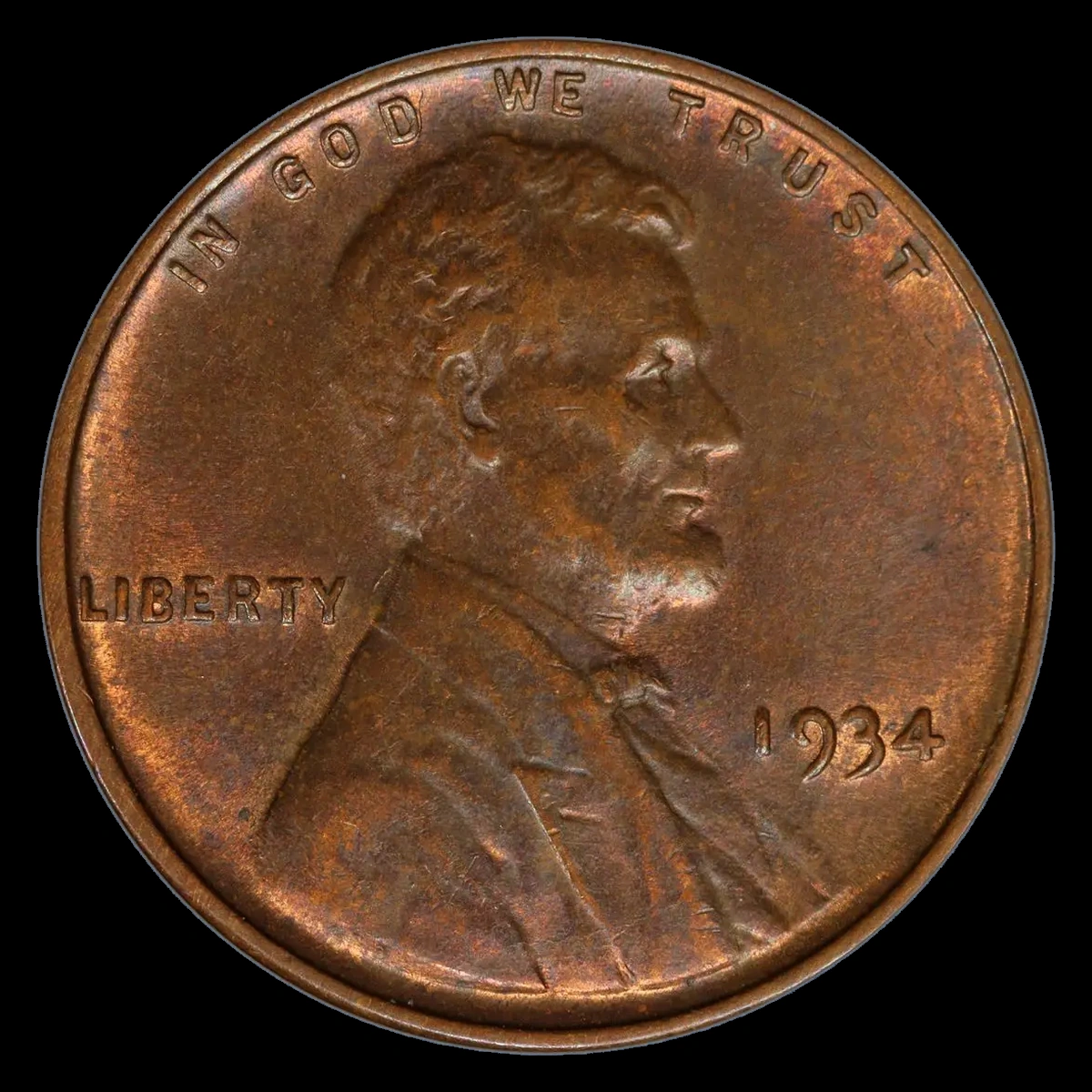
4. 1934 Penny Extra Date, Eye, or Wheat Detail: Doubled Die Error
A doubled die carries repeated design detail before striking a coin. Philadelphia FS-101 shows shallow earlier date shapes toward the lower right, while Denver FS-101 has a different thickened-date pattern.
How to Identify
Determine the mint before selecting the reference photograph. The shared FS-101 number does not make the Philadelphia and Denver designs identical.
Inspect shallow Philadelphia remnants with low-angle light and compare several features. Eyelid, motto, and reverse wheat varieties need their own matching diagnostics rather than the date photograph.
What It’s Worth
The estimated whole-coin range is $5–$2,500: minor matched varieties about $5–$250, and clearer named examples in stronger condition about $100–$2,500. Exact attribution matters.
A Philadelphia FS-101 graded PCGS VF35 brought $129 in July 2015. It is a circulated same-year example, not a universal price for every doubled 1934 feature.
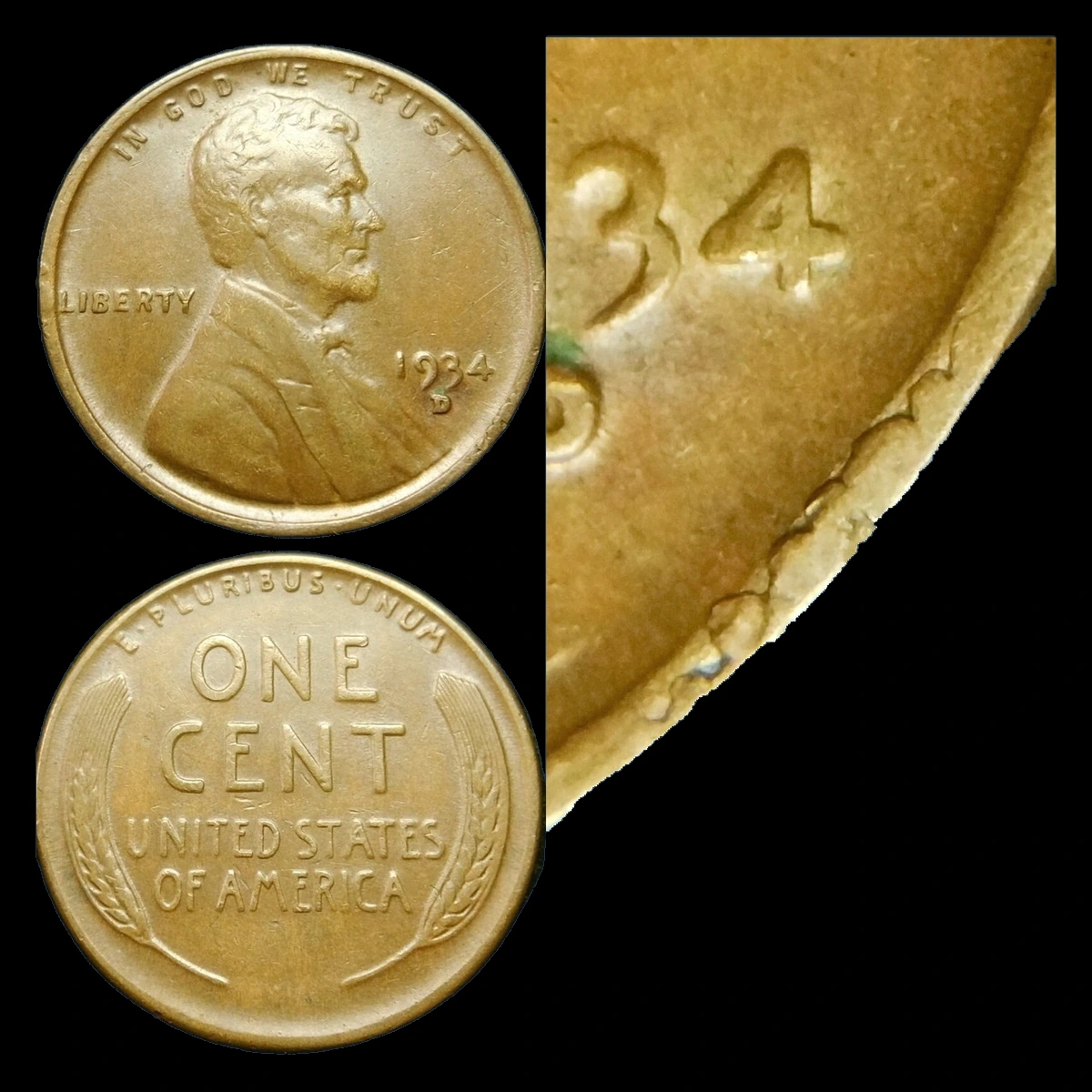
5. 1934 Penny Raised Lines, Letter Chips, and Rim Patches: Die Breaks Error
Coin metal entering a die crack creates a raised line. A missing rim section produces a cud, while a broken section that stays in place can continue to stamp some detail.
How to Identify
For a large patch, check its rim connection and whether shifted design survives inside it. A thin line between rim points may still be only an earlier crack stage.
For a small chip in LIBERTY, a bar between B and E is the BIE form. Philadelphia and Denver have separate recorded break patterns that require individual comparisons.
What It’s Worth
Estimate $3–$750 across these forms, with small cracks and BIEs around $3–$50 and larger rim breaks around $40–$750. Each whole coin receives one assessment.
A 1934 major-break cent graded ANACS F12 sold for $41 in August 2021. Its substantial wear limits comparison with a sharply preserved example.
6. 1934 Penny A Deep Split Opens like a Shell: Clamshell Planchet Error
The coin’s metal can separate deeply while remaining connected along part of its edge. This clamshell opening extends farther through the disc than a small surface peel.
How to Identify
Use an edge-on view to show both the existing opening and the intact connection. Do not force the sides apart.
Inspect for tool marks and later bending. A connected split may retain nearly its original weight because the separated portions are still present.
What It’s Worth
Comparable genuine 1934 clamshell splits are estimated at $40–$500. The original connection and a readable opening matter alongside condition.
The Philadelphia PCGS VF30 example sold for $54 in December 2024. Its circulated grade and actual result show that a dramatic error name does not guarantee a high price.
7. 1934 Penny A Section of the Outline Is Missing: Clipped Blank Error
An incomplete disc can enter the press and receive a design around its missing area. A curved clip may form when the blanking punch overlaps a previous hole in the strip.
How to Identify
Inspect both ends of the gap for natural rim formation, then look across the coin for possible opposite-rim weakness. Saw grooves, burrs, and cut completed letters suggest later damage.
The 1934 report does not establish a universal shape or position. A light weight confirms lost metal but cannot establish when it disappeared.
What It’s Worth
Genuine 1934 clips have an estimated range of $15–$350. The missing boundary, remaining date, and preservation guide the assessment.
A 1925 curved clip graded ANACS VF20, weighing 2.92 grams, sold for $56 in March 2023. That weight and curved shape belong to the comparison coin, not every 1934 clip.
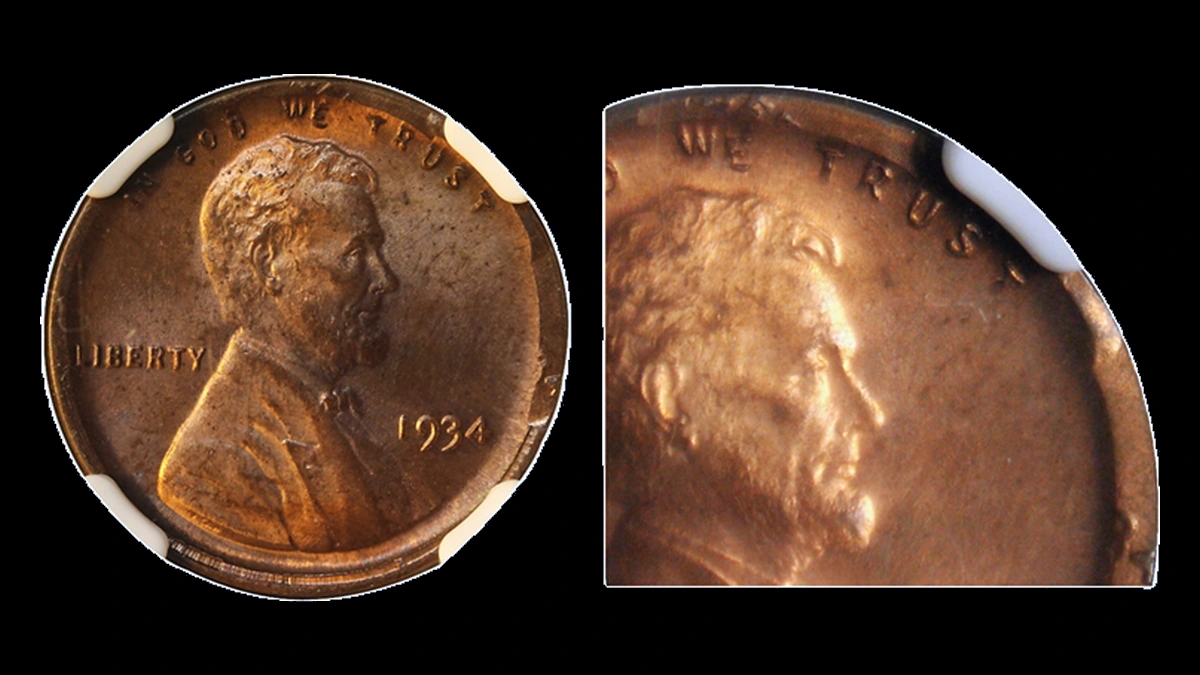
8. 1934 Penny Complete Lettering inside a Wider Disc: Broadstrike Error
A failed collar can allow metal to spread beyond its normal width during striking. The intended design remains on the disc despite the enlarged margin.
How to Identify
Follow the outer lettering on both faces and inspect the spread for later hammering. A widened outline alone does not prove a mint broadstrike.
The recorded Philadelphia example has an NCS AU Details description and a front wheel mark. That later mechanical mark is a separate condition problem.
What It’s Worth
Estimated whole-coin values run $25–$500 for genuine 1934 broadstrikes. Natural margins and preserved surfaces make stronger examples.
The coin with the front wheel mark sold for $39 in March 2021. Its damage must remain part of the comparison with an untouched broadstrike.
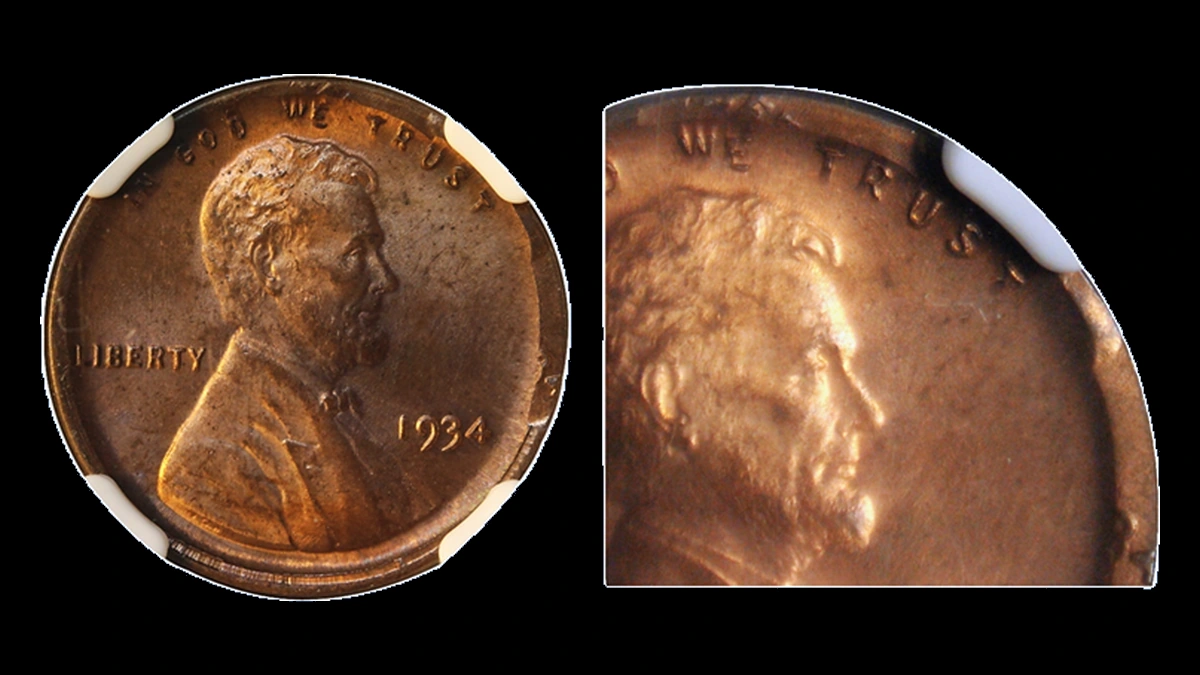
9. 1934 Penny Part of the Design Misses the Blank: Off-Center Strike Error
A disc seated away from the dies’ center receives an incomplete image with unused metal beside it. The unstruck portion has not necessarily lost any metal.
How to Identify
Read the actual date, then compare both faces against the same blank position. Inspect the unused area for grinding that could have removed an ordinary design.
Separate examples include 20% toward twelve o’clock, 25% toward eight, 55% toward twelve, and a worn 10% example without a supplied direction. They are different coins rather than a sequence of blows.
What It’s Worth
Estimate $40–$2,500 for genuine dated 1934 off-center cents. Displacement, legibility, and preservation must be considered together.
The 20% ANACS XF40 coin brought $79 in March 2025. The 55% PCGS MS64 Brown coin sold for $576 in September 2019, with stronger preservation as well as a larger shift.
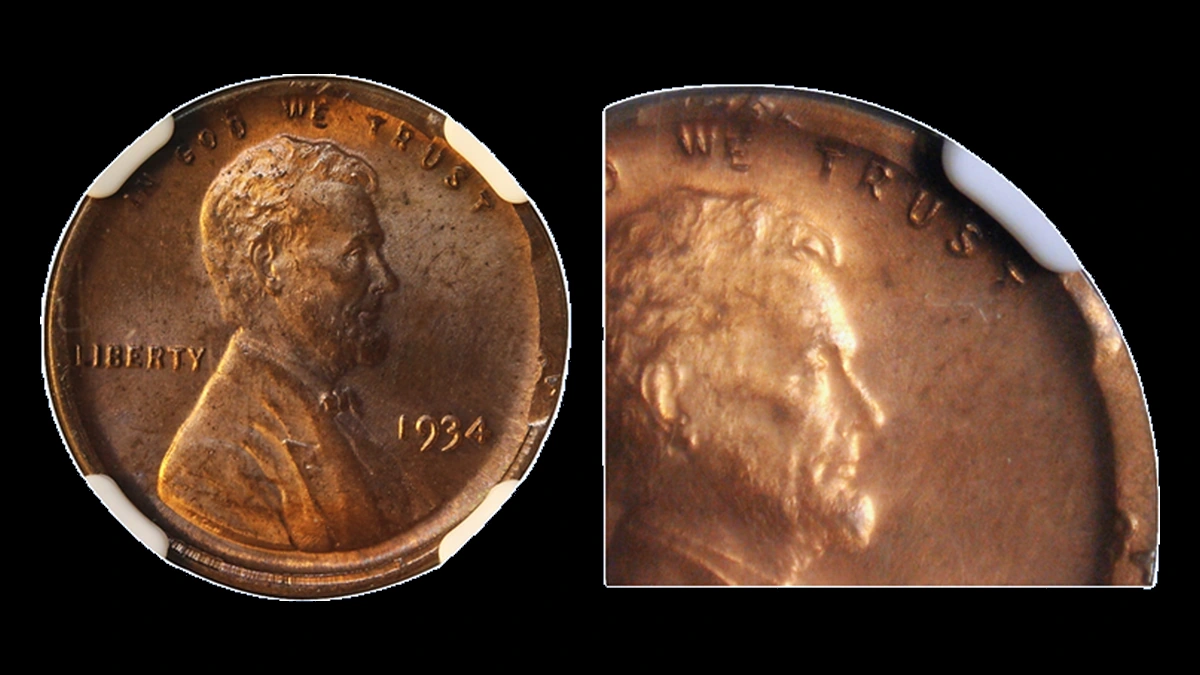
10. 1934 Penny One Impression Overlays Another: Double Strike Error
A second blow can leave a distinct duplicate image or erase most of the first. The order of those impressions matters when reconstructing the coin’s movement.
How to Identify
The Philadelphia 15% second-strike example differs from an older coin with an 85% second blow toward seven o’clock and incomplete collar contact during both strikes. Trace coherent repeated detail before assigning either pattern.
In the centered-second-strike example, a 50% off-center first blow was largely erased by a centered broadstrike. Its remaining outer half-ring belongs to the earlier image, not the later blow.
What It’s Worth
Genuine 1934 double strikes are estimated at $200–$4,000. The clarity of the surviving sequence and the coin’s condition shape that broad range.
The PCGS MS64 Brown example with a 15% off-center second strike sold for $360 in August 2020. The 85% and centered-second-strike coins require separate comparisons.
11. 1934 Penny Lincoln’s Design on a Smaller Silver Disc: Dime-Blank Strike Error
A blank intended for a silver dime can receive the cent design in the wrong press. The recorded 1934 Philadelphia example is a Lincoln cent on that silver blank, not a normal Mercury dime.
How to Identify
A normal silver dime blank starts at 2.50 grams and 17.91 millimeters, smaller and lighter than a cent blank. Those are starting standards, not newly measured values for this particular error, and the cent strike can spread the disc.
Have the alloy tested without cutting or scraping the coin. Silver-colored plating can imitate the appearance while leaving bronze underneath.
What It’s Worth
Comparable authenticated 1934 silver-dime-blank cents are estimated at $2,000–$8,000. Preservation and original surfaces remain important even for this unusual metal.
The PCGS VF30 example sold for $4,080 in September 2024, as shown in the recorded result. Its worn but identified wrong-planchet status is essential to that comparison.
Conclusion
Surface color, a thin peel, and a deep connected split need different evidence, even when all look unusual in a photograph. Raised die damage and repeated designs add another set of distinct clues.
The $3–$8,000 estimates apply to whole coins with those features established. Preserve fragile layers, record later damage separately, and compare each specimen with the correct mint, condition, and striking sequence.