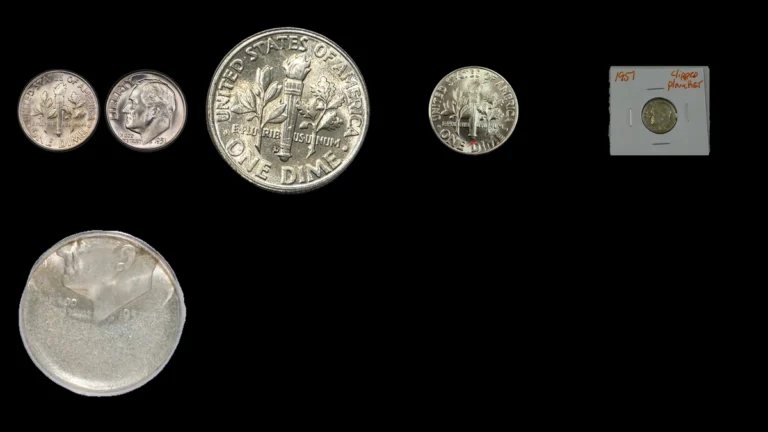
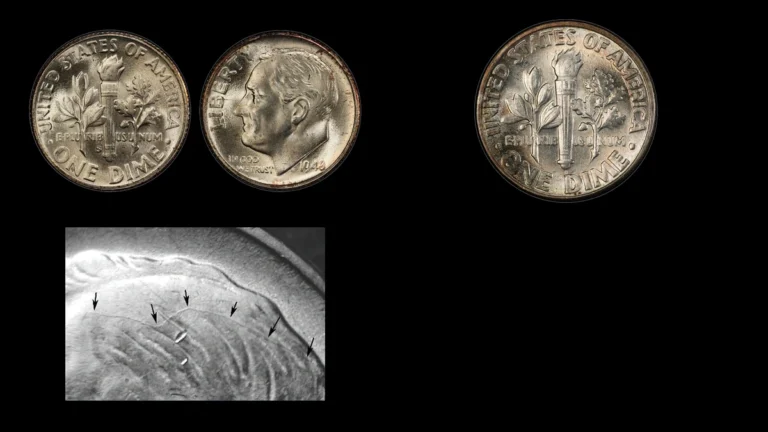
Rare 1982 Dime Errors (List & Pictures)
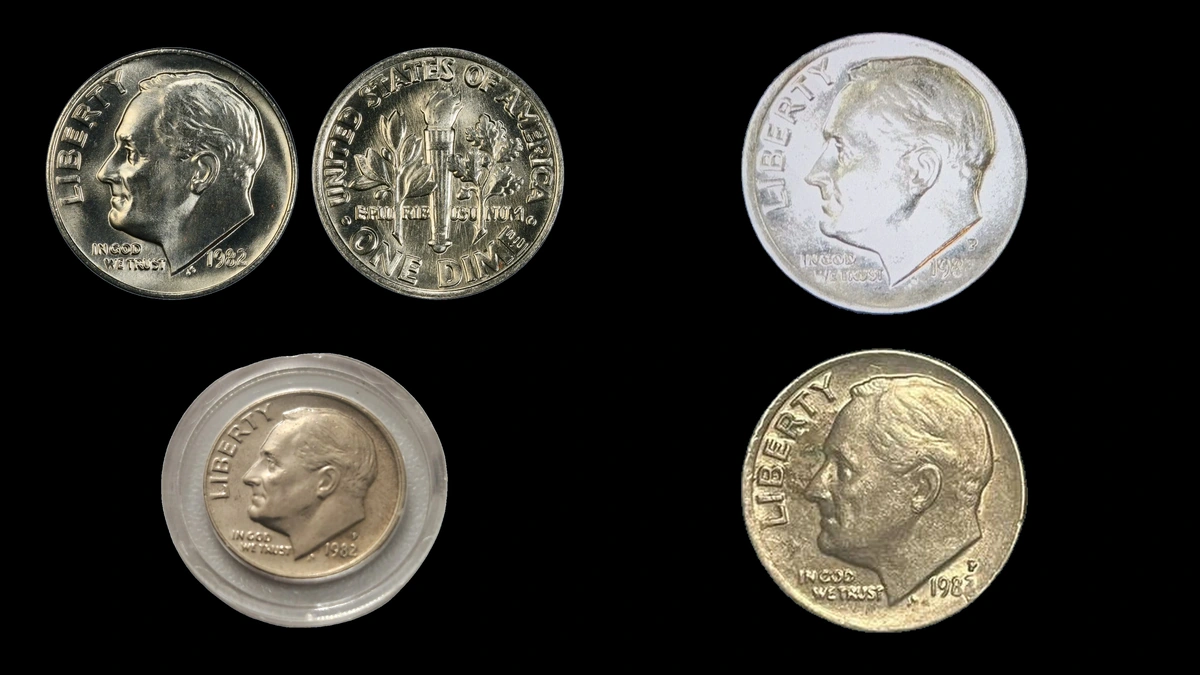
A strong-strike 1982 No P dime graded MS68 sold for $2,185 in May 2004. The 1982 dime errors below have estimated whole-coin values from $5 to about $2,200.
Resolve a missing P before moving to edge steps, expanded outlines, and exposed copper. Standard measurements are 2.268 grams and 17.9 millimeters; normal weight alone cannot explain an absent letter.
| First observation | Feature | Estimated whole-coin range |
|---|---|---|
| P absent from original die | No P variety | $50–$500 typical; $2,000–$2,200 historical exceptional level |
| Localized weak detail | Grease-filled die | $5–$75 |
| Changing ledge around edge | Tilted partial collar | $30–$200 |
| Complete design within expansion | Broadstrike | $50–$300 |
| Truncated design and plain metal | Off-center strike | $30–$500 |
| Raised patch joins rim | Cud | $40–$400 |
| Outer layer absent | Missing clad layer | $75–$600 |
| Coin and matching shell survive | Clad shell struck with dime | $300–$1,500 for pair |
1. 1982 Dime The die never carried the P: missing mintmark variety Error
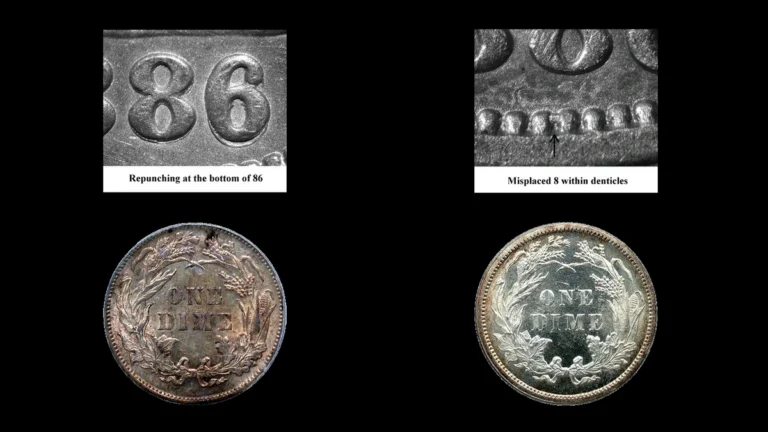
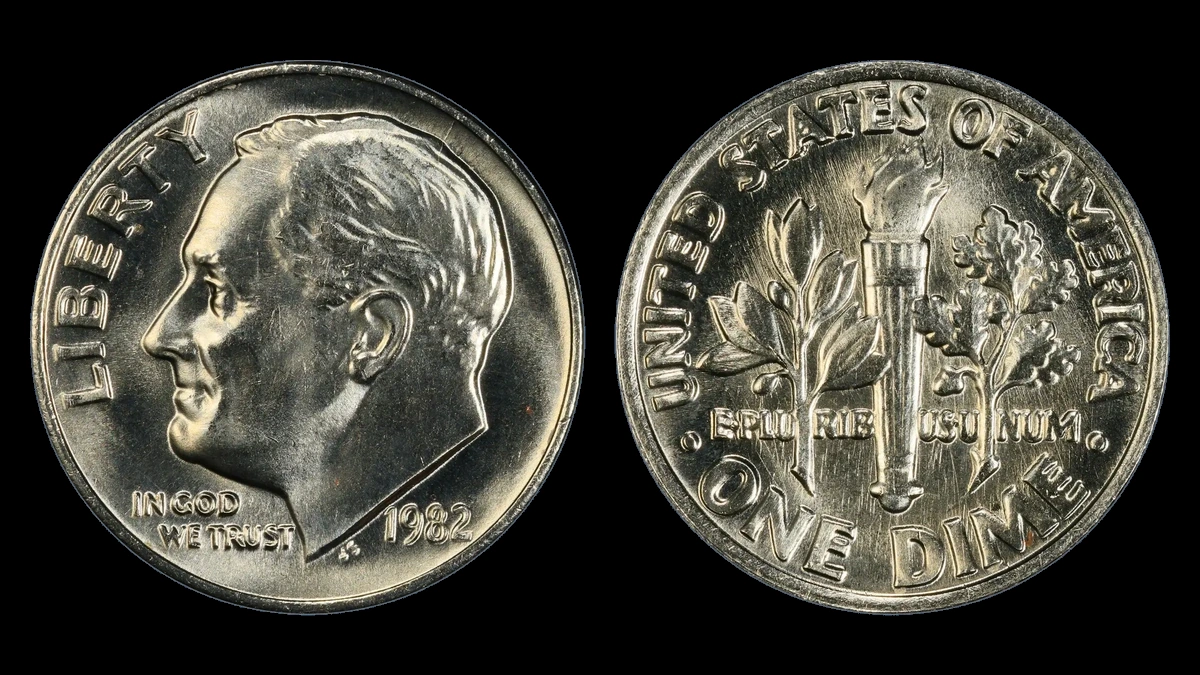
An ordinary 1982 Philadelphia dime should have P above the date beside the lower-right neck. The recognized No P variety came from a die on which the mintmark had been omitted.
Collectors distinguish strong and weak strikes by their overall design detail. These are descriptions of strike strength, not two different explanations for omitting the letter.
How to Identify
Compare the empty area with a normal 1982-P and inspect it for scratches, smoothing, a hollow, or a remnant of the letter. A missing-looking P alone cannot settle whether the cause is omission, blockage, or alteration.
Use a recognized comparison for the appropriate strike strength. Weak examples have flatter peripheral detail, including the outer part of 2, while strong strikes preserve fuller design.
This is a regular Philadelphia circulation variety. It should not be confused with No S Proof errors on specially made collector coins of other years.
What It’s Worth
Typical genuine examples have an estimated whole-coin range of $50–$500. The exceptional historical MS68 level is approximately $2,000–$2,200.
PCGS lists $2,185 for a strong-strike MS68 at Heritage in May 2004. A more ordinary ANACS MS64 strong strike brought $192 in June 2024.
The gap illustrates the importance of preservation and individual quality. An absent letter on a worn or altered coin cannot borrow the exceptional historical result.
2. 1982 Dime A recess was temporarily blocked: grease-filled die Error
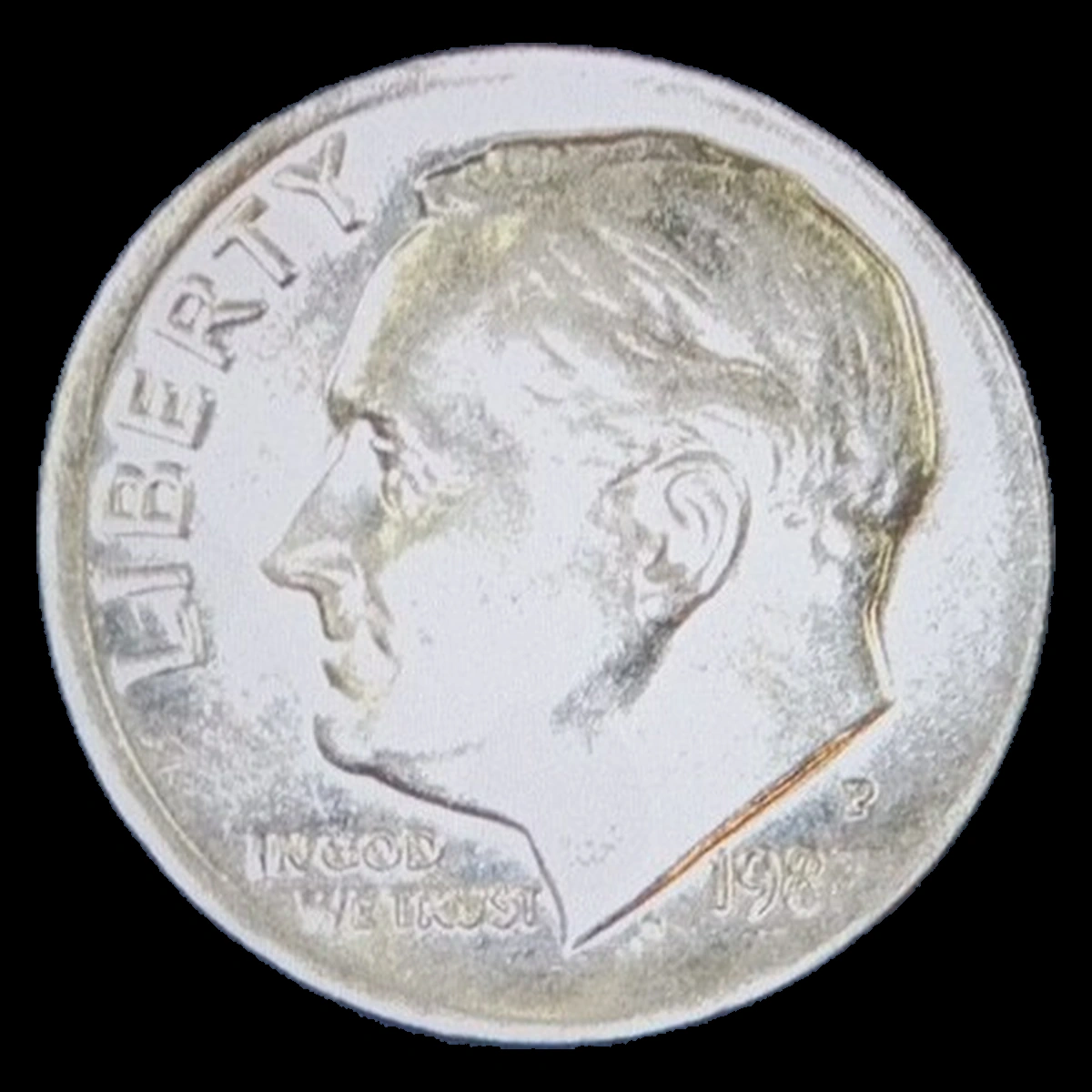
Grease or debris can stop metal from filling the die recess that normally forms P. The coin may then have a weak letter beside much clearer neighboring details.
Other areas of the 1982 design are also reported with this type of weakness. A temporary obstruction is different from a die prepared without the mintmark at all.
How to Identify
Compare the affected area with the date and portrait high points. Broad wear differs from selective weakness next to sharp details.
Look for any surviving P without rubbing the surface. A faint remnant supports weakness, while scratches or a hollow in its place suggest possible removal.
Measurements cannot identify the reason for a missing letter. A No P purchase requires comparison with recognized full-coin features and an appropriate attribution.
What It’s Worth
Small genuine blocked areas are estimated at $5–$25, with larger clear interruptions around $25–$75 for the whole coin. These ranges use minor modern-dime comparisons.
No transaction for a specific 1982 blocked-design specimen is supplied. An ordinary weak or worn P should not be assigned the No P variety’s price.
3. 1982 Dime The edge step changes height: tilted partial collar Error
The useful view of this error is from the side. A tilted blank sat partly within the collar, leaving some metal confined and the rest able to spread.
The edge can combine a reeded strip with an expanded smoother section separated by a changing-height step. Heritage listed an ANACS MS64 1982-P example.
How to Identify
Rotate the coin and follow the transition around its circumference. The changing height distinguishes the tilted relationship from simply noticing a ledge in one photograph.
Inspect for crushed detail or dents from later rolling and squeezing. The reeded band and expanded part should fit an original partial-collar strike.
Record narrower and wider spans if the coin is safely accessible. Keep a sealed example in its holder and use existing measurements.
What It’s Worth
A visible genuine tilted partial collar is estimated at $30–$200 for the whole coin. Clear side views and attractive surfaces help establish its appeal.
No completed price is supplied for the Heritage ANACS MS64 listing. The range is based on comparable modern Roosevelt edge errors, not a claimed sale of that specimen.
4. 1982 Dime Complete lettering surrounds a spread-out coin: broadstrike Error
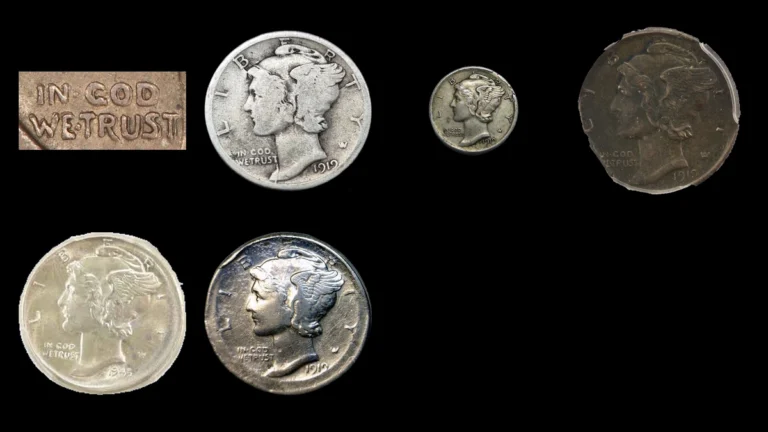
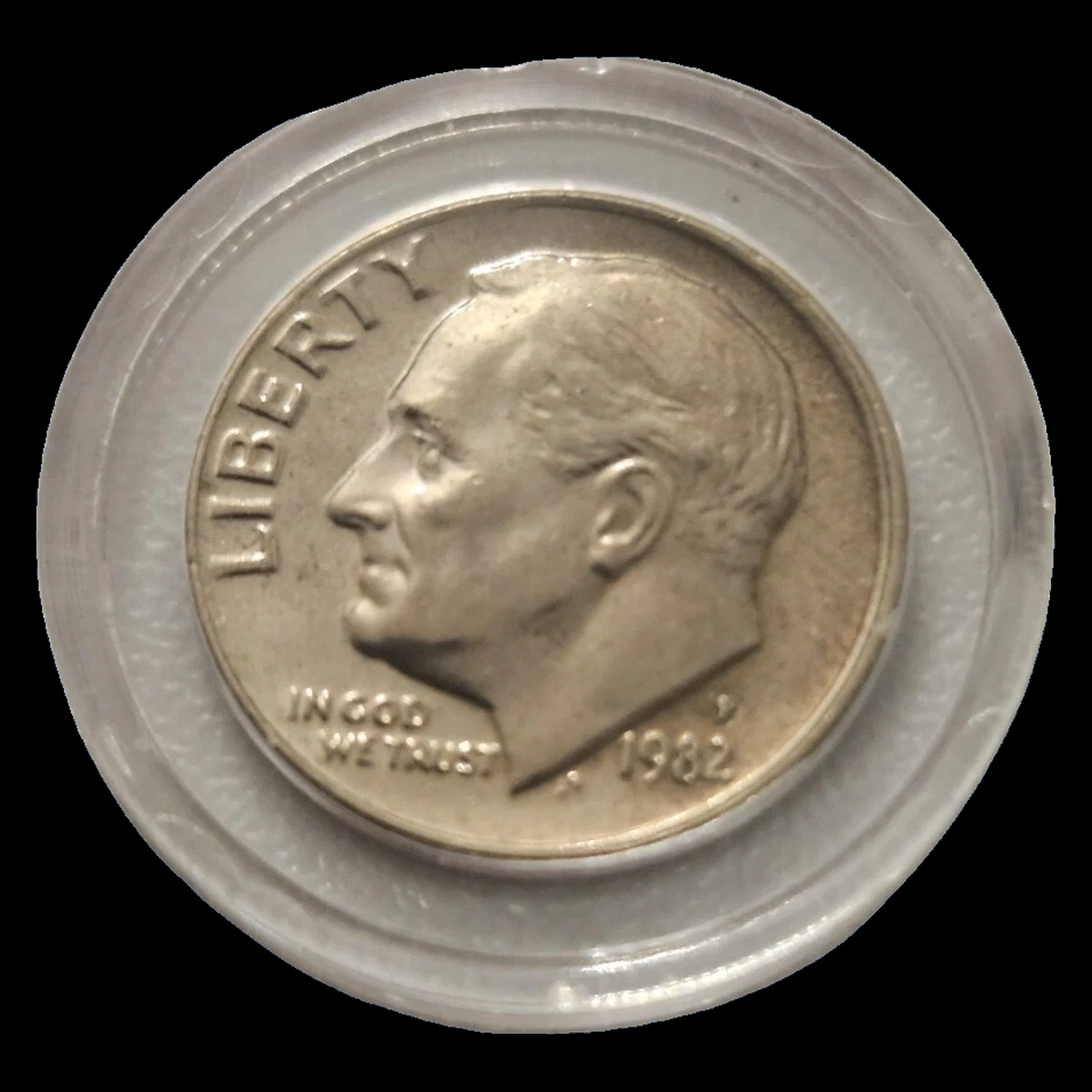
A broadstrike expands because the collar does not contain the blank. Both designs can remain complete despite the larger outline.
The reported circulation category includes Philadelphia and Denver, without one common direction of spreading. It differs from partial confinement by the collar and from an off-center strike losing design beyond the metal.
How to Identify
Follow the outside lettering on both faces before judging the width. Retained design inside natural expansion is the key combination.
Inspect the edge for incomplete or absent normal reeding. Later flattening may widen the coin while crushing the portrait and letters, which gives a different explanation.
Use several diameter measurements rather than estimating from a photograph. Spreading can change shape without substantially reducing weight.
What It’s Worth
Modest through clear expansion on collectible examples is estimated at $50–$300 for the complete coin. Surface condition affects where a specimen fits.
A 2000-P NGC MS65 dime sold for $159 in September 2025, but it was also struck more than once. That different-year combination supplies limited context for a simple 1982 broadstrike.
5. 1982 Dime Incomplete designs meet untouched metal: off-center strike Error
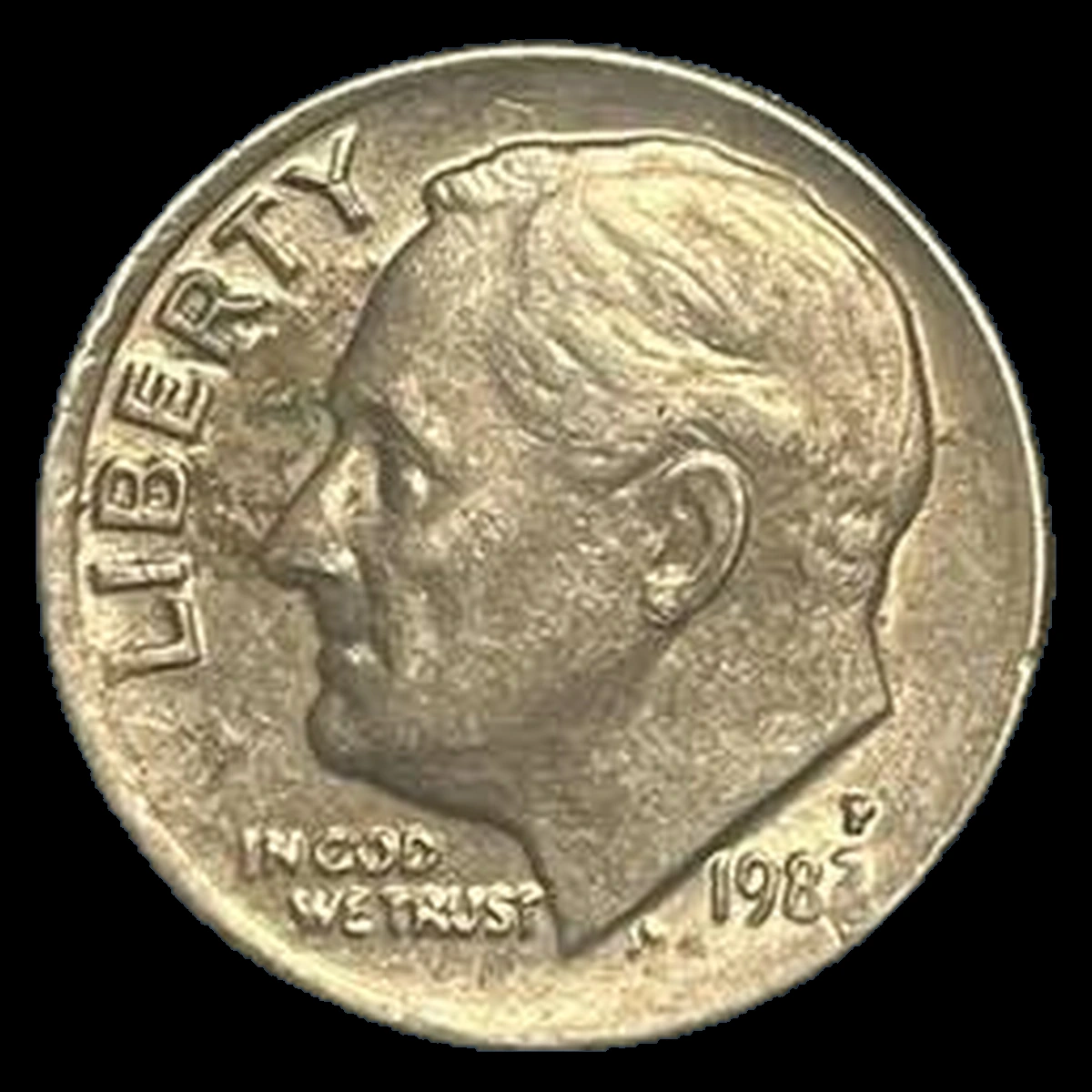
Some of the design misses the blank when the disc sits partly outside the dies. The opposite portion retains original plain metal.
Philadelphia and Denver examples are reported, but each needs its own direction and amount of shift. An uneven border without matching evidence on both faces is insufficient.
How to Identify
Read the full date rather than filling in an absent digit. Then compare the complete outlines and the relationship of both impressions to the plain area.
A centered face opposite a shifted one may indicate a misaligned die. A ground surface that removes finished detail also differs from metal that never received the strike.
Examine the remaining reeding and margin for cuts. Record only the mint information that survives on the actual specimen.
What It’s Worth
Smaller readable-date offsets are estimated at $30–$150, while larger attractive examples can fit $150–$500. Both ranges describe the whole coin.
A 1977 NGC MS64 Full Bands dime struck ten percent off-center brought $109 in June 2026. Its different year, preservation, and separated torch bands limit how directly that result applies to a 1982 candidate.
6. 1982 Dime A raised patch replaces design at the rim: cud Error
A cud records a piece missing from the edge of a die. During striking, metal fills the resulting gap and creates a raised patch joined to the coin’s border.
The 1982 reports include Philadelphia and Denver circulation examples without one universal clock position. A small isolated interior bump has a different relationship to the rim.
How to Identify
Keep the rim in every close view and follow nearby design toward the patch. The missing portion of the die cannot impress its normal detail there.
Look for added solder, folded metal, or crushed edge grooves from a later impact. Weakness on the opposite face may support the striking explanation but is not required to be equally clear.
A deposit covering otherwise intact letters is not the same as an original raised break. The patch should belong to the struck metal and connect directly to the border.
What It’s Worth
Smaller clear cuds are estimated at $40–$150, with larger prominent breaks on attractive coins around $150–$400. These are whole-coin comparison ranges.
No specific 1982 cud auction result is supplied. A lump made by solder or impact does not qualify merely because its size resembles a genuine break.
7. 1982 Dime An outer face layer is absent: missing clad layer Error
The normal pale surfaces cover a copper center. Partial or complete loss of an outer layer can expose copper while the remaining metal still carries design detail.
The reports include Philadelphia and Denver without establishing one face or patch shape. Brown color from heat, stains, or later treatment does not prove missing metal.
How to Identify
Start at the edge and compare both sides of the layered structure. Where some outer metal remains, trace its boundary with the exposed copper.
Reduced weight can support actual loss, but acid or grinding can also make a coin lighter. Inspect the surface and design for signs of those later treatments.
Compare the exposed design with a confirmed original missing-layer example. The layer structure, weight, and struck surface should support one explanation together.
What It’s Worth
Genuine partial through full face-layer losses are estimated at $75–$600 for the whole coin. Extent and preservation affect the result.
A 2019-P missing eighty percent of its front layer sold for $139 in September 2024, graded PCGS MS61 Full Bands. That differs in year, amount missing, and condition from an unidentified 1982 example.
8. 1982 Dime The dime and a matching outer shell survive: struck-together pair Error
A specialist catalog describes a broadstruck 1982-D dime and a thin clad shell struck together. Both pieces were offered as a matched set from the same event.
The shell is separated outer metal, and its relationship with the coin is central. A random disc placed beside a damaged dime cannot establish that they met in the press.
How to Identify
Photograph both faces of both pieces and compare their contact areas without forcing them together. Outlines, impressions, and displaced metal should form a coherent striking relationship.
Record individual weights if safely accessible. The catalog supplies no required combined total, so the normal intact-dime weight is not an invented sum for this pair.
Measure each outline and inspect the broadstruck edge separately. A thin shell alone cannot prove association with the 1982-D coin.
What It’s Worth
An authenticated complete pair has an estimated combined range of $300–$1,500. Its appeal depends on condition and how convincingly the surviving pieces demonstrate the shared event.
The 1983 catalog reproduced in Mint Error News offered the pair for $95. That old dealer asking price is not a completed transaction.
The estimate values the matched set once. Separate full values for a broadstrike and detached shell should not simply be added together.
Conclusion
An absent P needs a cause, and the whole coin helps distinguish an omitted die letter from blockage or alteration. Edge steps, expansion, and exposed copper then lead to separate tests.
The exceptional No P auction figure should remain attached to its MS68 preservation. For the Denver shell set, preserve the relationship between both pieces and use a pair comparison rather than counting two unrelated errors.