Rare 1916 Mercury Dime Errors (List & Pictures)
A tiny D makes the 1916 Mercury dime valuable even without an error: an MS64+ Denver example sold for $31,720 in May 2026. That sale does not establish repunching on the auctioned coin.
The 1916 Mercury dime errors below span estimated whole-coin values of $20–$35,000. Begin by confirming the winged-cap design, because Barber dimes also bear this date, then check the mint letter and the larger physical features.
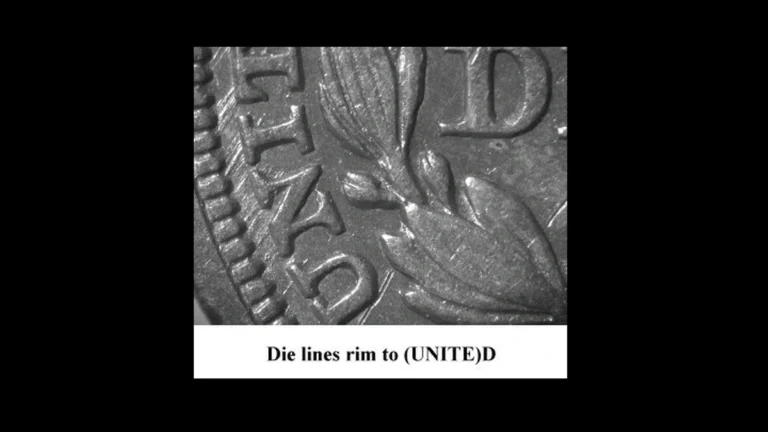
1. 1916 Dime An Earlier D Appears beside the Mintmark: Repunched Mintmark Error
Jim Brown’s account describes two Denver repunched-mintmark patterns. One shows an earlier D above the final letter; another has a repunched D positioned farther from the nearby leaf.
The mint letter was punched into the die, the steel stamping tool. A shift between punch impressions could leave part of the earlier letter beside the final one.
How to Identify
Locate D below the reverse branch and compare its relationship with the leaf. The illustrated club discussion helps keep the two reported patterns separate.
Look for the earlier letter’s actual contour rather than general thickness. Do not combine the upper-D remnant from one pattern with the position of the other.
An added D on a common Philadelphia dime can imitate the rare issue. Inspect the surrounding metal and full reverse, then have the entire coin authenticated before relying on a rare-date valuation.
What It’s Worth
$1,000–$35,000 is the estimate for authenticated examples from worn condition through about MS64, an unworn grade with some marks. The mint and condition explain most of that wide range.
A 1916-D graded MS64+ sold for $31,720 in May 2026. It is a comparison for the rare Denver issue, without a repunched-mintmark attribution assigned here.
Exceptional Full Bands coins need separate comparisons; that term means sharply separated bands on the reverse bundle of rods. A second D contour does not add another complete rare-coin value.
2. 1916 Dime A Thin Raised Line Crosses the Design: Die Crack Error
The year list reports die cracks on 1916 Mercury dimes without naming a mint or exact route. A crack in a die can fill with silver during striking and leave a ridge on the coin.
The dime itself has not necessarily cracked. A later scratch instead cuts into the finished surface, sometimes pushing metal up beside the cut.
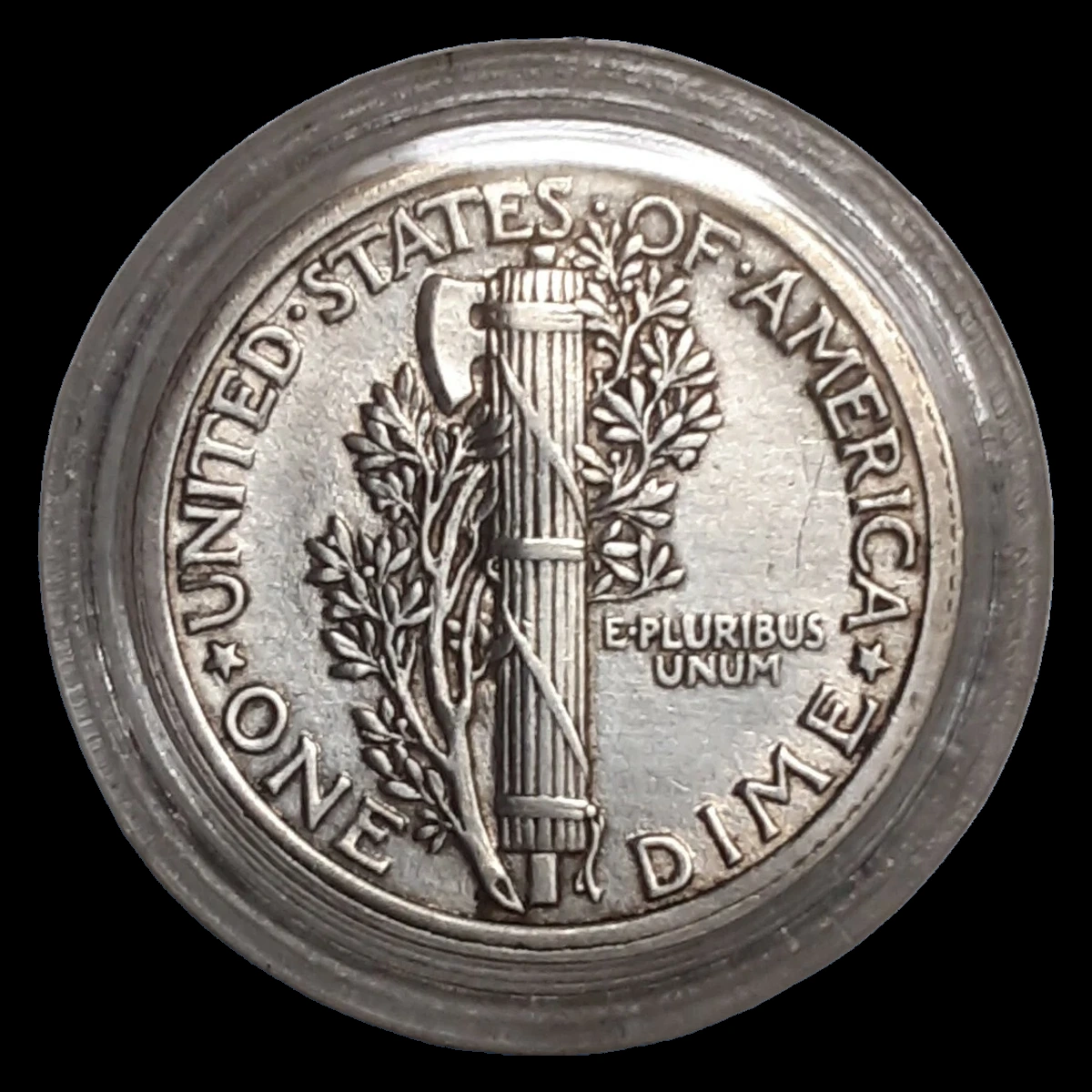
How to Identify
Follow the suspected line across nearby design and open background. Move the lamp to see whether its center stands up as a solid ridge or drops into a channel.
Keep the winged-cap portrait and reverse bundle of rods in the photographs. A similar crack on a 1916 Barber dime is a different comparison.
No particular wing location is established by the general report. A broad raised area at the rim also requires a cud check rather than simply being called a larger line.
What It’s Worth
$20–$150 is the estimated whole-coin range for worn Philadelphia or San Francisco examples with genuine modest cracks. No named 1916 crack sale is supplied.
The rare Denver issue needs its own higher baseline. Exceptionally preserved ordinary-mint dimes can also exceed this worn-coin estimate because of their condition.
3. 1916 Dime A Broad Raised Patch Joins the Rim: Cud Error
A cud forms when a piece breaks from the edge of a die. Coin metal fills the missing space and replaces normal design with a broad raised patch.
The 1916 Mercury list reports the category without a certified specimen, mint, or clock position. Those details need to come from an actual matching coin.
How to Identify
Trace the patch from the rim inward and check where normal design disappears. A narrow crack that reaches the rim does not prove that a whole section of the tool broke away.
Look for a natural boundary without a seam or changed surface from added metal. An impact can also push a rim inward and create a raised area.
Weakness on the opposite face can support a cud, but cannot replace the rim connection. A small isolated bump within the design is a different-sized die failure.
What It’s Worth
$75–$600 is the estimate for genuine cuds on ordinary Philadelphia or San Francisco examples, from worn through modest unworn condition. Size, visibility, and original surfaces influence the comparison.
This is a type estimate without a supplied sale of a confirmed 1916 specimen. The rare Denver issue and later-added metal need separate consideration.
4. 1916 Dime A Small Edge Segment Is Missing: Clipped Blank Error
The Rippere Collection included a Philadelphia Mercury dime with a small rim clip near six-thirty. PCGS graded it MS63, meaning unworn with visible marks.
The gap was present before the blank received its design. Striking shaped the remaining metal around the missing section.
How to Identify
With the front upright, find the reference coin’s small gap near six-thirty. Examine both places where the normal struck rim meets the opening.
Natural changes in the neighboring design and possible weakness on the opposite rim can support an original clip. Saw marks, file lines, or fresh burrs suggest a later notch.
A normal Mercury dime starts at 2.50 grams and measures about 17.9 millimeters. Measure an intact span, and remember that wear also lowers weight.
What It’s Worth
$75–$700 is the estimate for genuine Philadelphia clips in worn through attractive unworn condition. The June 2025 Rippere catalog identifies the MS63 coin without a sale amount used here.
A different-year Mercury clip graded PCGS MS66 sold for $192 in March 2025. That comparison shows why a high grade alone does not promise a four-figure error price.
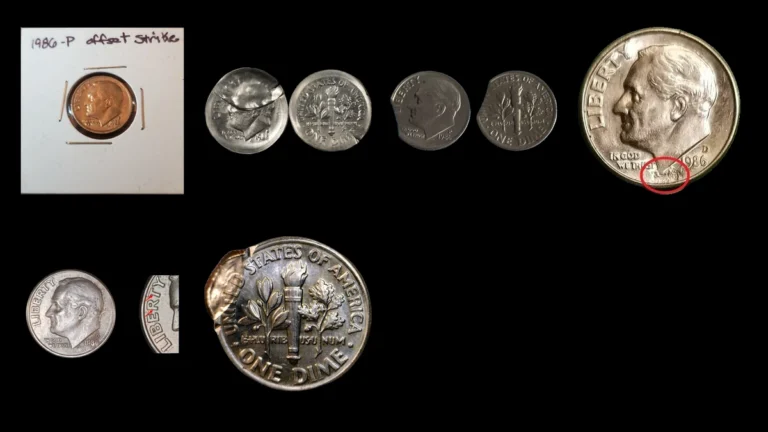
5. 1916 Dime The Full Design Sits inside an Enlarged Border: Broadstrike Error
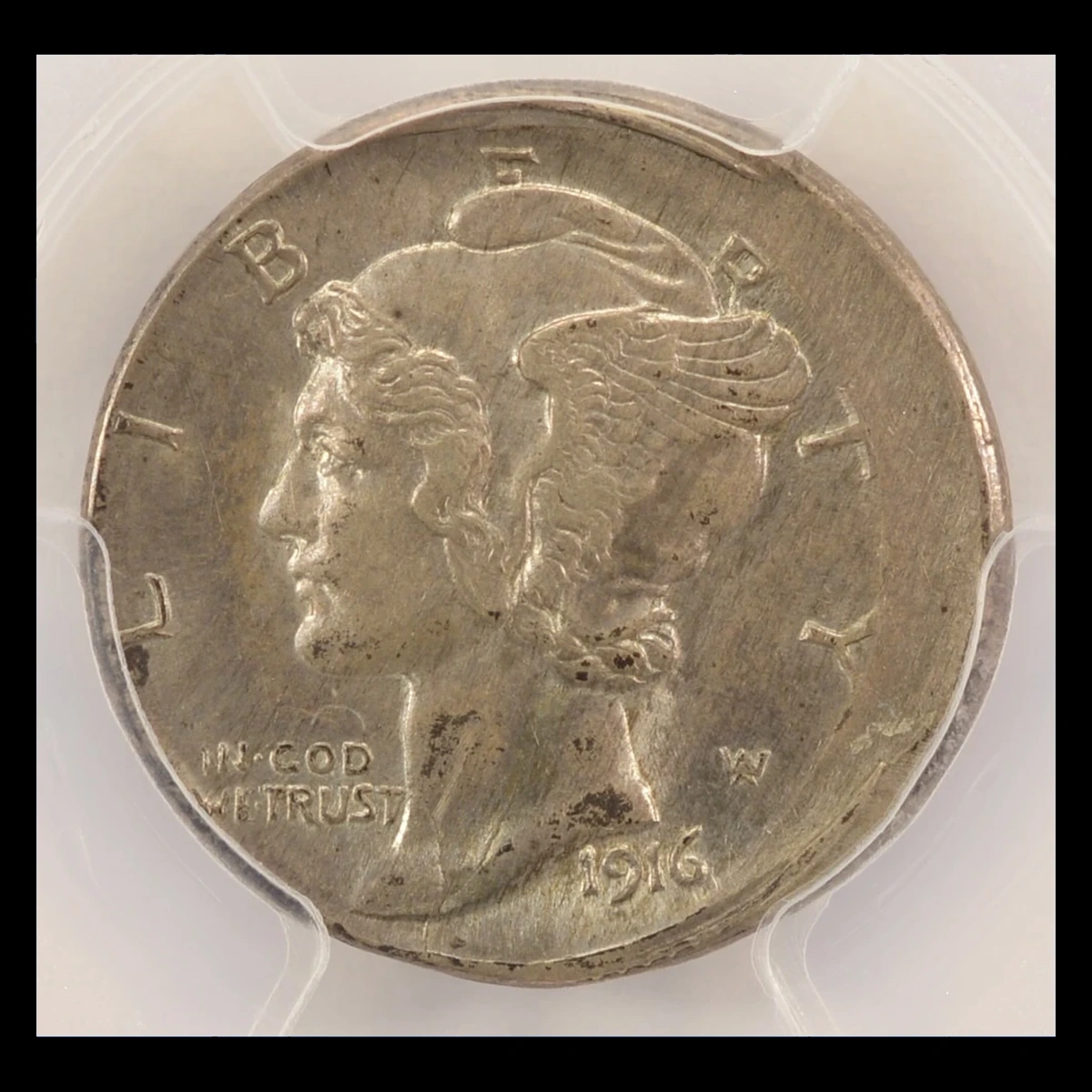
Sullivan Numismatics’ 1916-S has a wide, uneven margin but keeps its entire design. It is described as an uncentered broadstrike.
The collar normally controls width and forms the edge grooves. Without proper restraint, the metal spread outward while the design was being struck.
How to Identify
Follow all the outer letters on both faces to confirm that the whole design remains. The dealer describes about 10% of the blank showing beyond the picture, which does not mean 10% of the design is missing.
Inspect the expanded outline and the edge for natural changes in the grooves. Grinding or hammering can widen or smooth an ordinary coin but leaves different surface evidence.
Confirm S low on the reverse, left of the bundle of rods. The documented PCGS Uncirculated Details coin has minor reverse scratches despite having no circulation wear.
What It’s Worth
$300–$1,500 is the estimate for genuine San Francisco broadstrikes from collectible worn through attractive unworn condition. The scratched dealer example has a $450 asking price.
The ask is not a completed sale. Stronger surfaces and a clear natural spread can support the upper range, while the listed coin’s scratches remain a condition drawback.
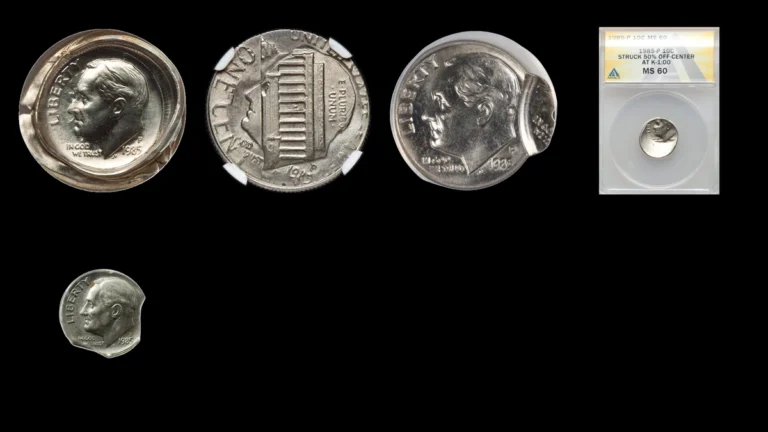
6. 1916 Dime Part of the Design Falls beyond the Blank: Off-Center Strike Error
Heritage’s 1916-S example was struck 10% off-center toward eleven o’clock. ANACS graded it XF45, indicating wear with strong remaining detail.
The blank sat partly outside the dies, so some design missed the metal and another area stayed bare. Its brown and tan aging color is separate from that striking error.
How to Identify
Read 1916 beside the winged-cap portrait and locate S on the reverse. Then compare the full front with the documented eleven-o’clock shift.
Look for related missing design on both faces beside original unstruck metal. A single shifted face with a differently centered opposite design may indicate a misaligned die instead.
Inspect the boundary for cuts or grinding. An undated extreme error or a same-year Barber dime must stay separate from this readable-date Mercury comparison.
What It’s Worth
$250–$2,000 is the estimate for collectible worn through better-preserved or more dramatic readable-date examples. The documented XF45 sold for $207 on March 1, 2003.
That is a historical same-year sale, not a fixed current price. Keep its 10% displacement, San Francisco mint, and worn grade together when comparing another coin.
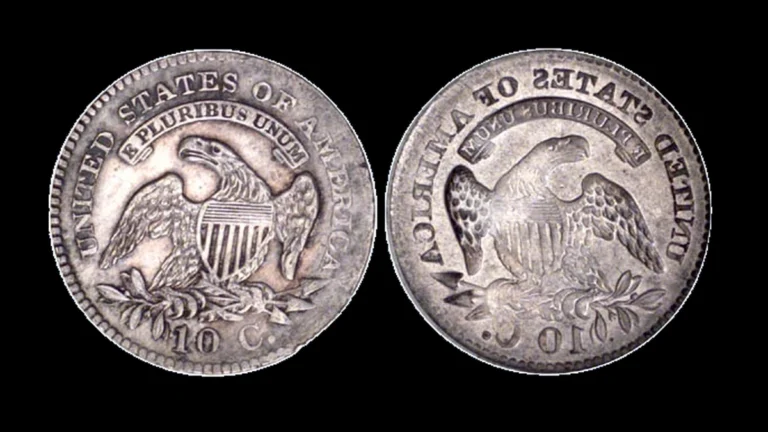
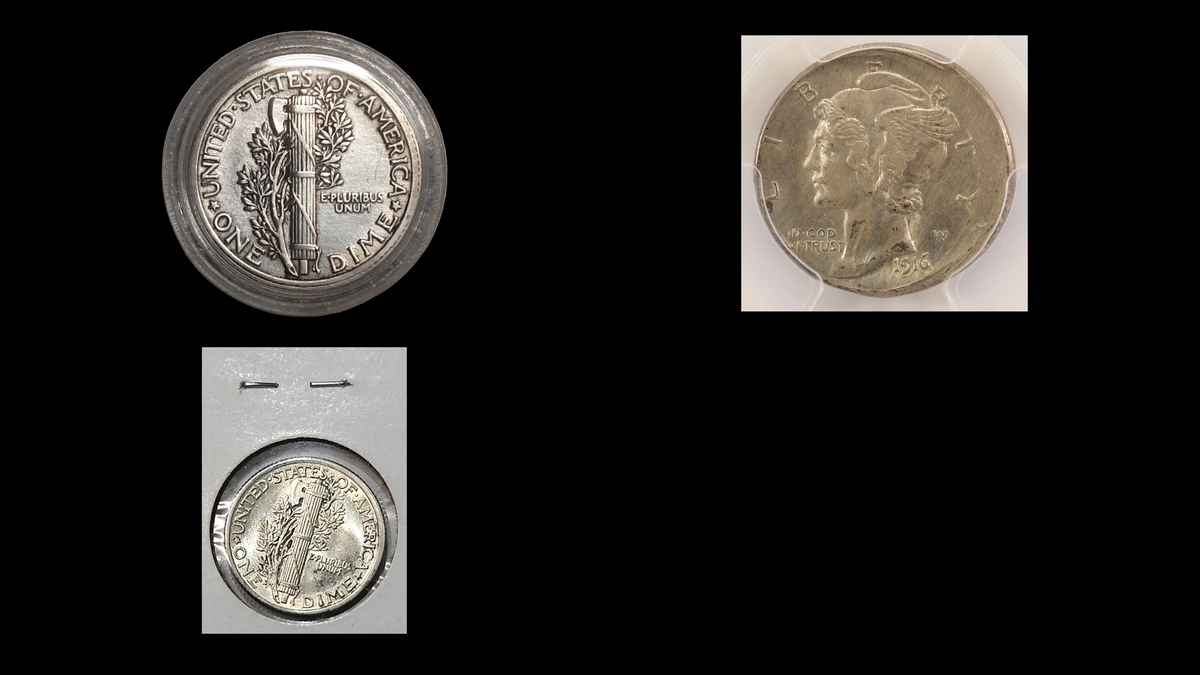
7. 1916 Dime The Back Leans after a Normal Flip: Rotated Reverse Error
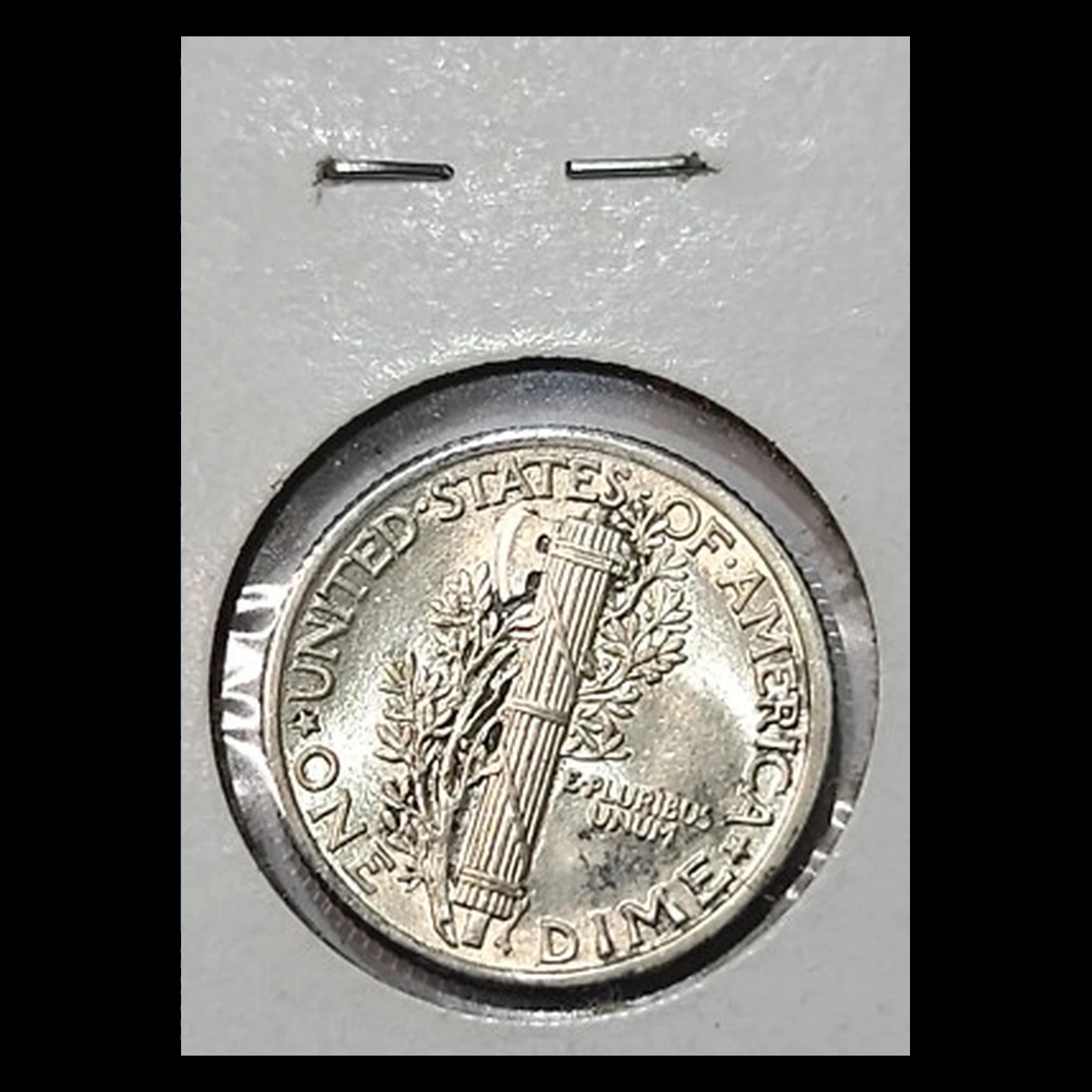
An unworn Philadelphia Mercury dime is reported with an unusually tilted reverse, but the account gives no measured angle. The error concerns the direction of one die relative to the other.
Both designs can remain centered despite the rotation. Turning each photograph upright separately removes the relationship needed to show it.
How to Identify
Hold Liberty upright in a clear holder that keeps the coin from spinning. Flip it from top to bottom without twisting sideways.
The reverse bundle of rods should normally finish upright. Measure any tilt against a fixed vertical line and repeat the flip.
A coin sitting crooked in its holder is not proof of rotated dies. The same reverse angle must appear after repeated controlled turns, and the unstated report cannot be assigned a 90-degree or 180-degree angle.
What It’s Worth
$100–$1,000 is the estimate for genuine examples with visible, repeatable rotation. Better preservation and a larger demonstrated angle can support the higher portion.
The year guide places its reported unworn example near $195. That guide figure is not a documented auction sale and does not price a dramatic half-turn that the report never describes.
Conclusion
Keep the winged-cap design, readable date, and actual mint together when studying a 1916 Mercury dime. The rare Denver coin’s baseline value explains why its prices differ so sharply from ordinary Philadelphia and San Francisco examples.
For physical errors, decide whether metal is missing, has spread, or carries an incomplete design. Use a controlled flip for rotation and a close match for the small mintmark patterns.