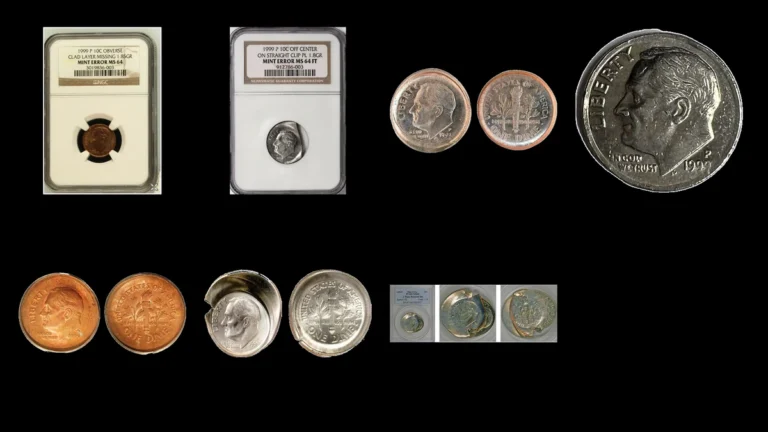
Rare 1898 Dime Errors (List & Pictures)
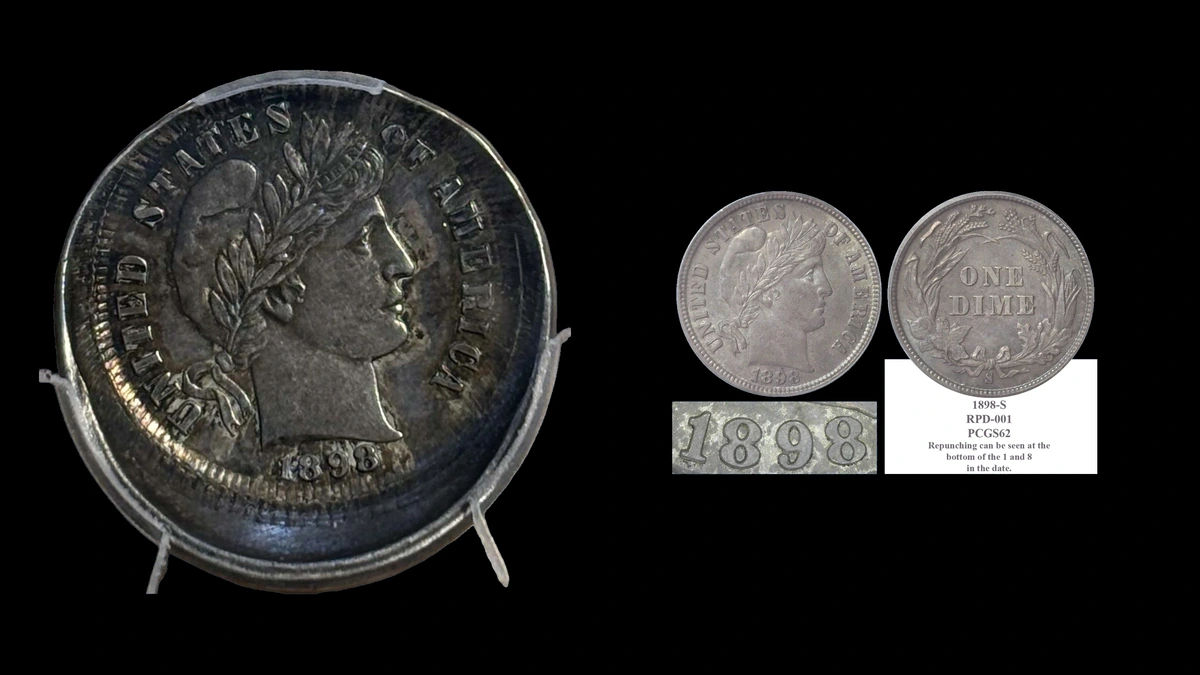
The outline of the coin provides one route into 1898 dime errors; the mintmark and fine design details provide another. Estimated whole-coin values range from $25–$15,000, and an unusual die cap realized $8,235 in January 2026.
Check shape first, then use the mint to choose the correct date and wreath comparisons.
| Observation | Possible identification | Estimated value |
|---|---|---|
| An uneven or expanded border | Reported broadstrike or misaligned die | $50–$600 |
| A cup with displaced designs | Uncentered obverse die cap | $6,000–$15,000 |
| Small extra numeral strokes | Repunched date | $25–$2,500 |
| Doubled bow and wreath details on an O coin | Doubled die reverse | $50–$1,500 |
1. 1898 Dime The border is uneven or unusually wide: Reported Broadstrike or Misaligned Die Error
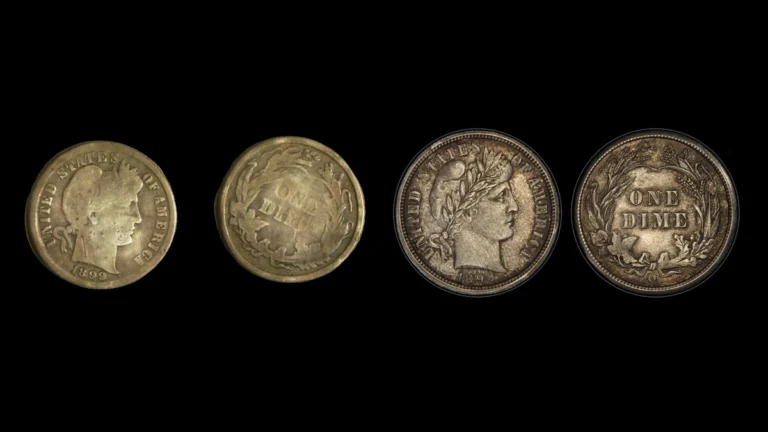
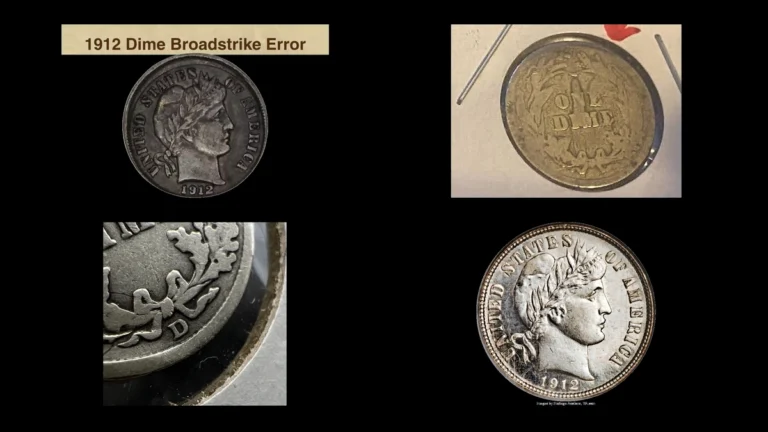
The supplied listing used several descriptions for one reported 1898 coin: a small broadstrike, a misaligned die, and a small off-center strike. These terms identify different results and cannot all be accepted from a combined title.
A broadstrike expands when the collar, the ring controlling the coin’s width, fails to restrain it normally. A misaligned die shifts the design made by an out-of-position stamping tool, often affecting just one face.
An off-center strike instead involves displacement that can leave design missing on both sides. The coin’s surviving details must determine which explanation fits.
How to Identify
Photograph both faces while keeping the same edge position identifiable. Check whether the shift affects one design or both, and distinguish missing design from lettering that simply sits close to the rim.
Look for unstruck metal and measure the widest part if the coin is accessible. An ordinary Barber dime measures about 17.90 millimeters and weighs 2.50 grams, with a grooved edge.
Examine the edge for filing, flattening, or missing metal that could explain the outline after minting. A front view alone does not establish an off-center strike.
What It’s Worth
The estimate is $50–$600 for a modest genuine striking error of this kind. No completed sale price accompanies the original report.
A different-year 1902 off-center Barber dime graded ANACS AU50 sold for $561.20 in June 2026. Its light wear and confirmed error make it a comparison, not an 1898 auction record.
A slight shift restricted to one face would generally call for a lower comparison. Identify the actual error before applying the broad estimate.
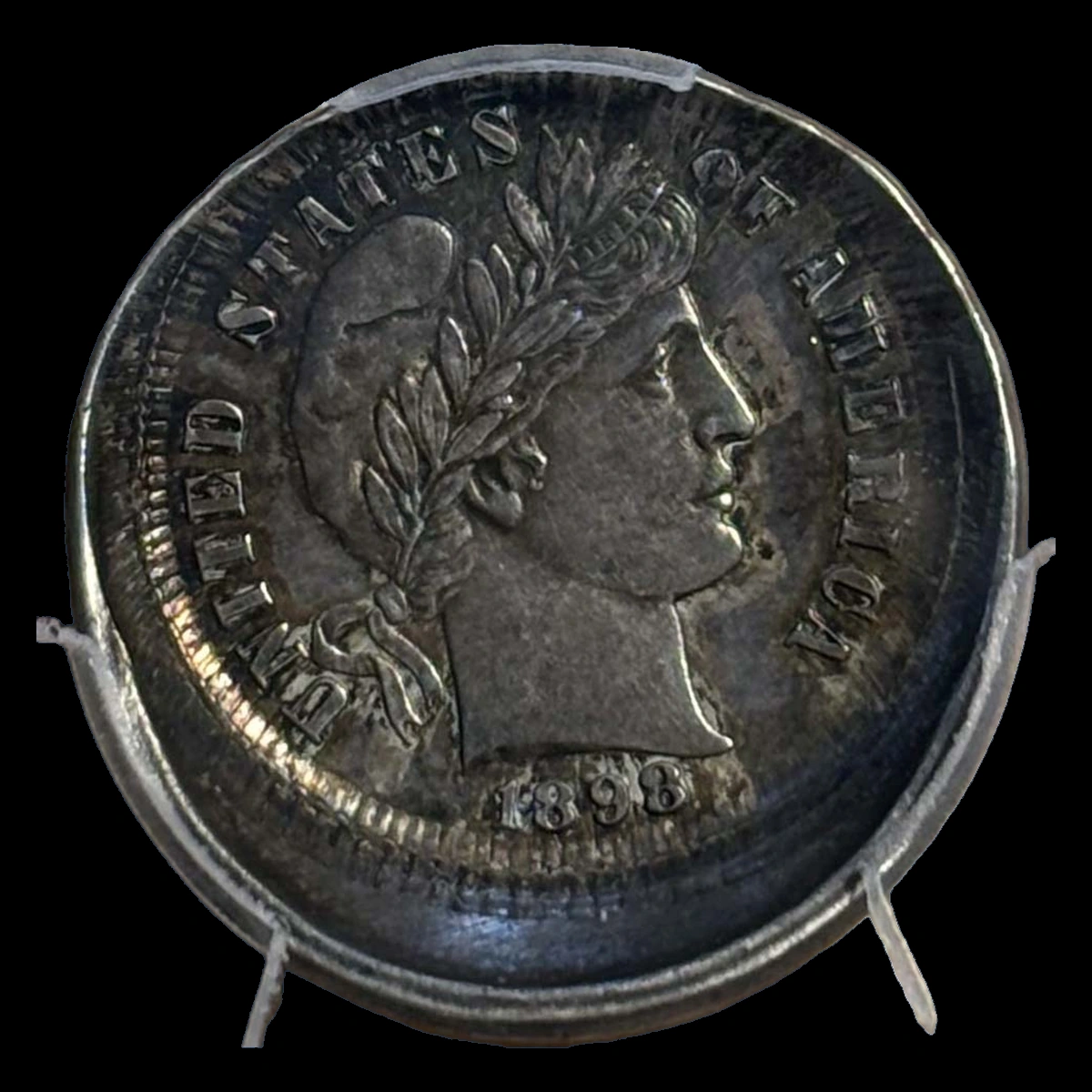
2. 1898 Dime The coin forms a cup with displaced designs: Uncentered Obverse Die Cap Error
The documented 1898 cap has an unevenly positioned obverse design and a slightly off-center reverse. Its raised walls add a third dimension that an ordinary flat photograph can conceal.
The coin remained on the obverse die as new blanks entered the press. Repeated pressure spread its metal outward and upward around that tool, producing the cap itself.
Mike Byers describes the two displaced designs on this example. A separate coin struck against the cap would be a different object with a different result.
How to Identify
Compare a side profile with views of both faces. The wall shape, expanded details, and unequal design positions should agree as parts of the same striking history.
Inspect the walls and remaining edge grooves for seams, cuts, or evidence of later bending. A bowl made by pressing an ordinary dime does not automatically reproduce a genuine cap’s stretched design.
Use photographs of the PCGS MS61 example for the closest comparison. Record actual width and height without flattening the coin or demanding a normal diameter; weight can still be compared with the original 2.50-gram standard.
What It’s Worth
Genuine comparable caps have an estimated $6,000–$15,000 range. The recorded 1898 specimen sold at Heritage for $8,235 on January 17, 2026.
PCGS graded it MS61, an unworn grade that allows many marks. Its surviving shape and readable design belong in the comparison along with the grade.
That result does not price a later-bent dime. The cup must first be established as a mint-made cap.
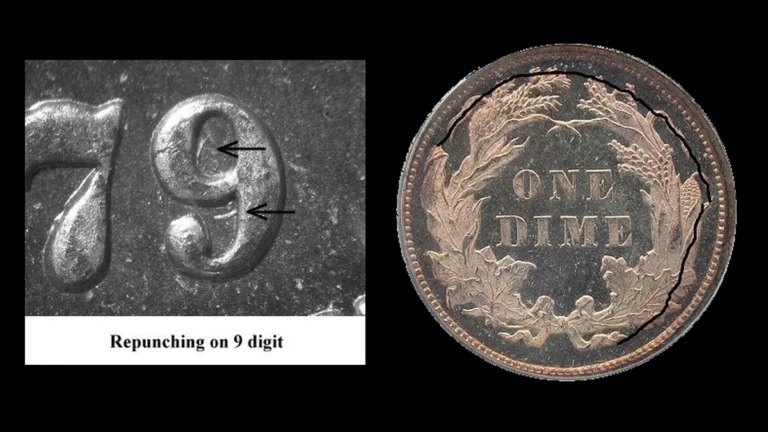
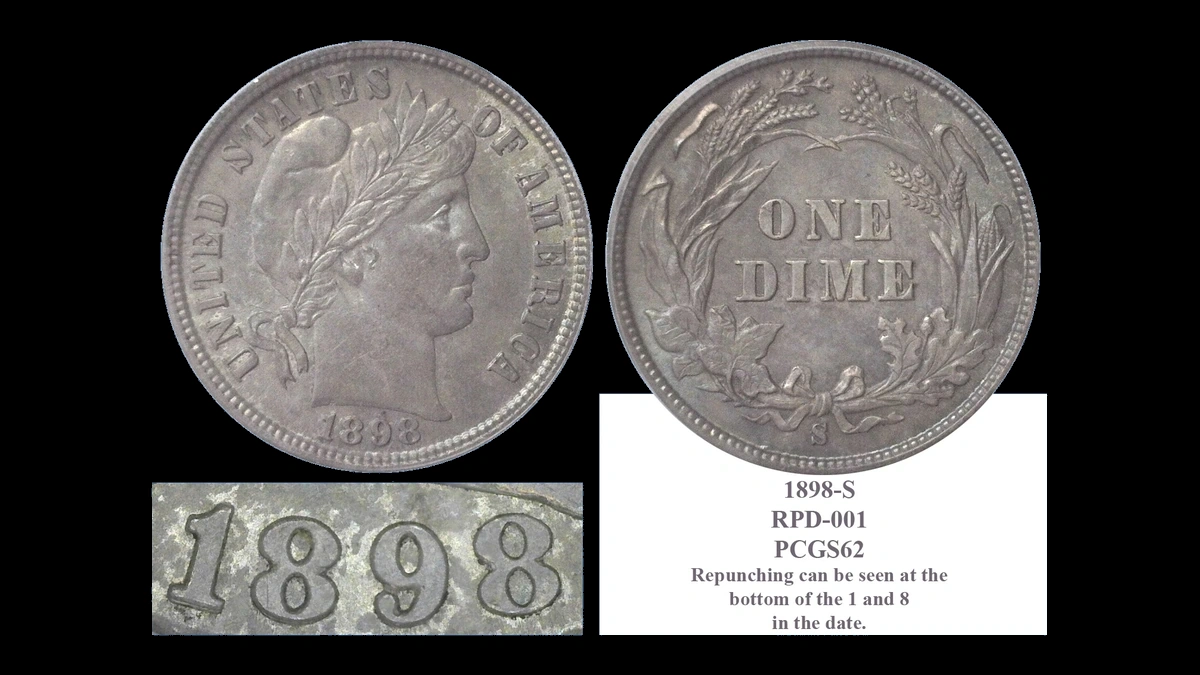
3. 1898 Dime Extra numeral pieces appear in the date: Repunched Date Error
The reported date detail depends on the mint. New Orleans examples involve a repeated 1, San Francisco reports concern the final 8, and Philadelphia reports describe remnants near the lower left of 9 and below selected numerals.
A repunched date forms when the date punch enters the die more than once and leaves parts of an earlier position. Each coin made by that tool can reproduce the retained strokes.
These descriptions refer to separate patterns. Combining all their locations would create a date diagnostic not established for any one example.
How to Identify
Read the reverse mintmark before magnifying the date: O means New Orleans, S means San Francisco, and no mint letter identifies Philadelphia here. Select a reference for that mint and the specific reported pattern.
At 10× magnification, compare the actual numeral fragments in the appropriate positions. Change the light to separate raised remnants from glare, flat shelves, or fresh engraved lines.
Keep the full date visible around the detail. Normal weight and diameter cannot establish that a suspicious numeral is unaltered.
What It’s Worth
The supplied range is $25–$2,500 for the whole coin. Mint and condition account for a substantial part of that spread.
An ordinary 1898-S graded NGC MS63 sold for $1,082.40 in April 2025. It was unworn with noticeable marks but was not identified as a repunched date.
A November 2025 PCGS-index result of $199 concerns an 1895-S FS-301 graded VF Details. That is a different-year variety with wear and a condition problem, not direct proof of an 1898 repunched-date price.
4. 1898 Dime The bow and wreath have repeated outlines: Doubled Die Reverse Error
On the 1898-O DDR-001, extra contours occur on the bow and ribbons, with additional doubling in the lower-left wreath and right-side leaves and corn. The Barber dime variety reference describes this reverse pattern.
A doubled die already contains the repeated design before the individual coin is struck. This differs from an entire coin receiving a second blow.
The paired obverse also has a repunched 1. Both features can occur on the same dime, but each requires its own visual match.
How to Identify
Confirm the O beneath the wreath, then examine the bow and ribbons. Follow the extra outlines into the specified leaves and corn rather than relying on one bright edge.
Compare the pattern with a known DDR-001 under similar lighting and magnification. The relationship among several doubled elements matters more than a single thick-looking leaf.
Check the repeated 1 as a supporting obverse feature. It cannot substitute for a matching doubled reverse.
What It’s Worth
The estimate is $50–$1,500 for worn through lower-grade unworn examples. Clear separation in the design can increase interest, but the coin’s overall preservation still matters.
An ordinary 1898-O graded ANACS AU55 sold for $312 in April 2025. That slightly worn coin was not attributed as DDR-001, so it offers a condition comparison only.
Do not add separate full-coin ranges for the reverse doubling and the repunched 1. They may describe two features on the same specimen.
Conclusion
Shape errors require both faces and the edge, while small date and wreath varieties require the correct mint-specific comparison. The reported uneven-border coin remains an identification question until its actual design placement settles the terminology.
Across the $25–$15,000 estimates, use confirmed features and comparable condition. Ordinary-date sales, different-year examples, and a genuine cup-shaped cap provide different kinds of pricing evidence.