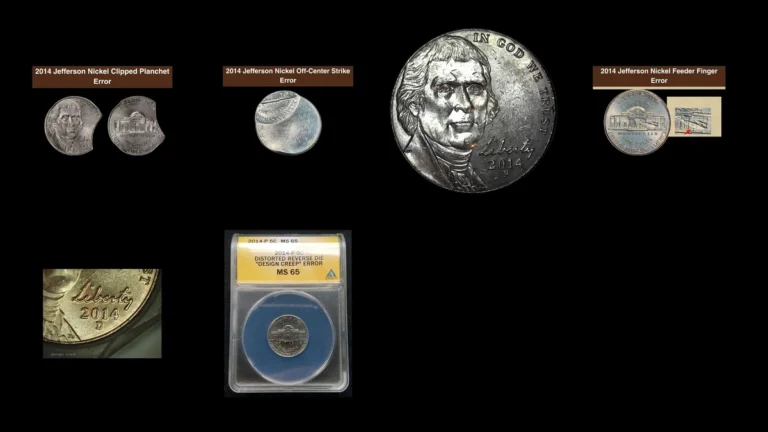
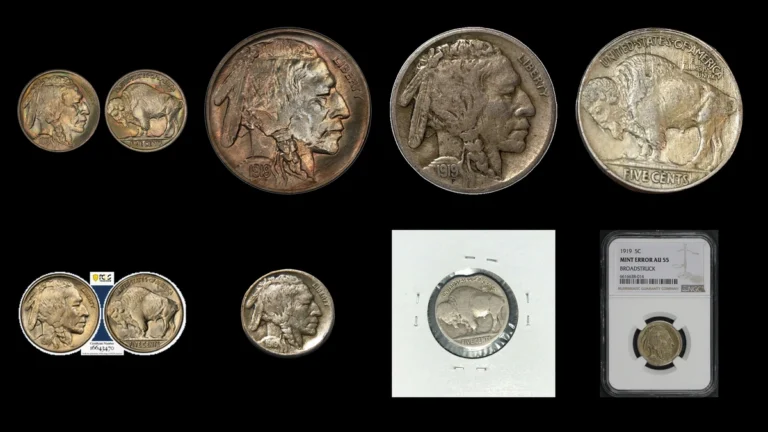
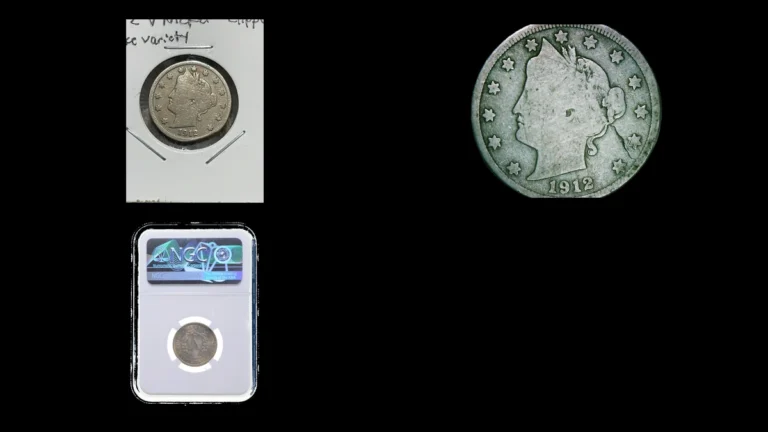
Rare 1909 Nickel Errors (List & Pictures)
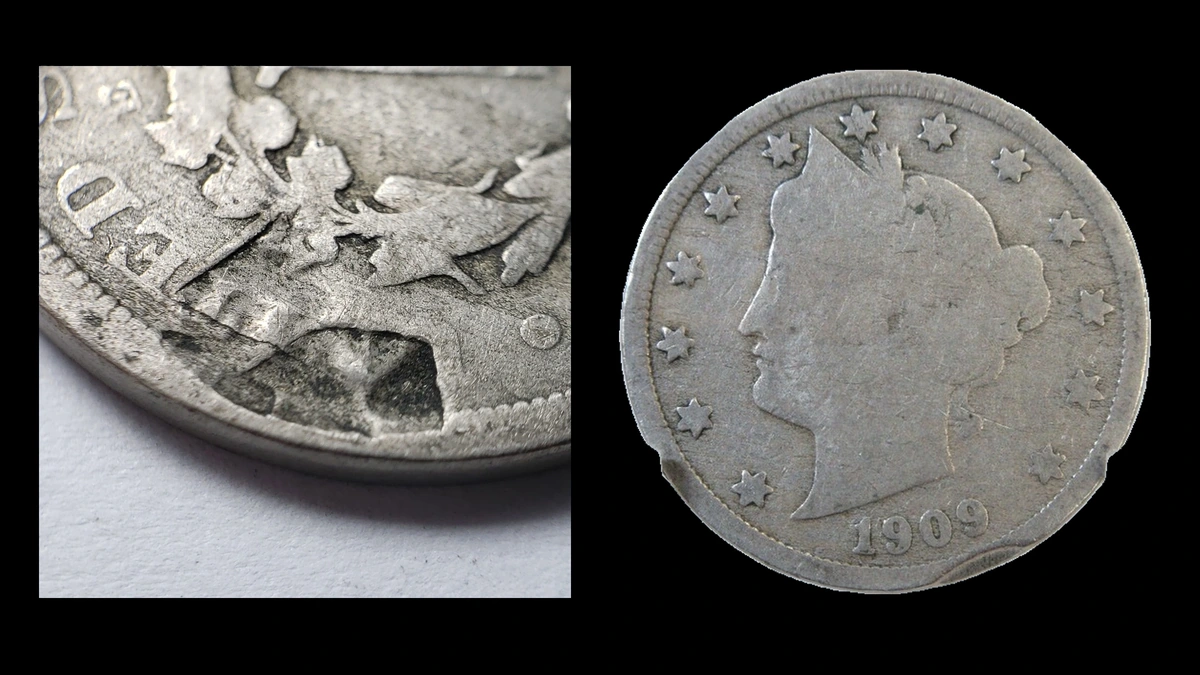
The large V on the back identifies the five-cent value, but it is the small departures from the normal design that interest error collectors. For 1909 nickel errors, the supplied year guide gives estimated values of $25–$3,500 across seven reported types.
Use the shape and surface of your coin to narrow the search: extra raised metal, a missing piece, and an extra strike each leave different clues.
1. 1909 Nickel A Ridge or Lump above the Design — Die Crack or Chip Error
Light catches a raised line differently from a scratch. A genuine die crack comes from a split in the steel tool that stamped the coin, allowing metal to push into the opening.
If a small piece of that tool breaks away, the opening can leave a lump called a die chip. The 1909 guide does not give one fixed location for these marks.
How to Identify
Move a lamp across the surface and follow the mark to both ends. A raised ridge without a cut beside it fits a die crack better than a scratch with displaced metal along its edge.
For a lump, check for glue, added metal, or a nearby impact. A small interior chip is different from a large break that reaches the rim.
What It’s Worth
$25–$750 covers the range from minor cracks to stronger tool breaks. Small cracks or chips generally belong around $25–$100, while substantial, clearly visible breaks can reach $100–$750.
These are estimated whole-coin values from the year guide. Several small marks do not each add a separate full premium.
2. 1909 Nickel A Loose Strip of Metal — Lamination Error
A flap lifting from the face of a nickel can begin inside the original metal. Weakness in the copper-nickel mixture lets a thin section separate, producing a lamination.
The 1909 listing covers this type without placing a specific flap on a certified coin. It is a local separation, not necessarily a coin split into two complete halves.
How to Identify
Find the point where the strip remains joined to the surface. A natural opening beneath a thin layer is more useful evidence than a rough patch alone.
Leave an attached flap in place. Pulling it up can destroy the feature that explains how the error formed.
A normal Liberty Head nickel weighs 5 grams, measures about 21.2 mm across, and has a plain edge. An attached flap may leave the weight close to normal, while a missing section can lower it.
What It’s Worth
$50–$500 is the guide-based estimate for genuine laminations. Large, obvious peels on attractive coins fit higher in the range than tiny flakes on worn surfaces.
The underlying nickel’s condition also contributes to the total price. Avoid treating the full value of a high-grade coin as payment for the peel alone.
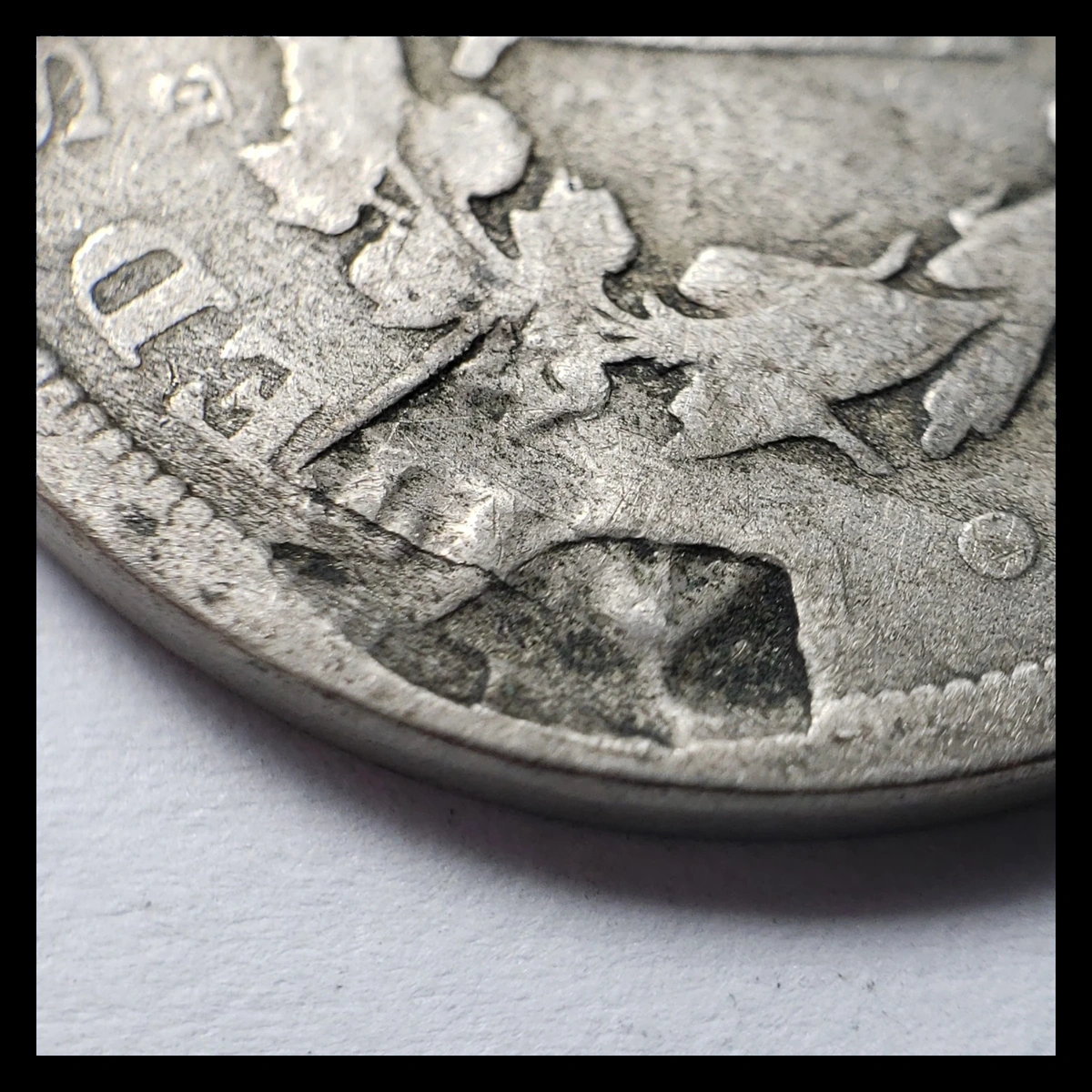
3. 1909 Nickel A Local Gap in the Design — Struck Through Error
Sometimes the metal is present but part of the design never forms. Material between the blank and the striking tool can block the impression or leave its own sunken shape.
This is called a struck-through error. The supplied 1909 guide identifies the category without naming an object or placing it on a particular face.
How to Identify
Compare the affected patch with the closest clear letters or portrait details. A local interruption surrounded by sharp design needs a different explanation from even wear across the entire coin.
Examine the patch’s border for scraping or metal pushed up by a later hit. Call it a wire or cloth impression only if its shape or texture supports that description.
An empty impression and material still attached to a coin are separate situations. Do not assume the object remains simply because its outline is visible.
What It’s Worth
$100–$1,000 is the estimated range for clearly identified examples of this reported type. Large, recognizable impressions generally have more appeal than a single weak letter.
Retained material can change the comparison, but it needs to be identified before adding a separate premium.
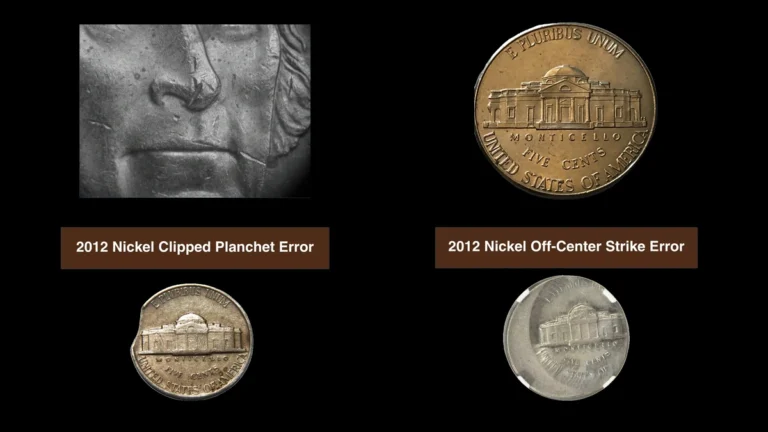
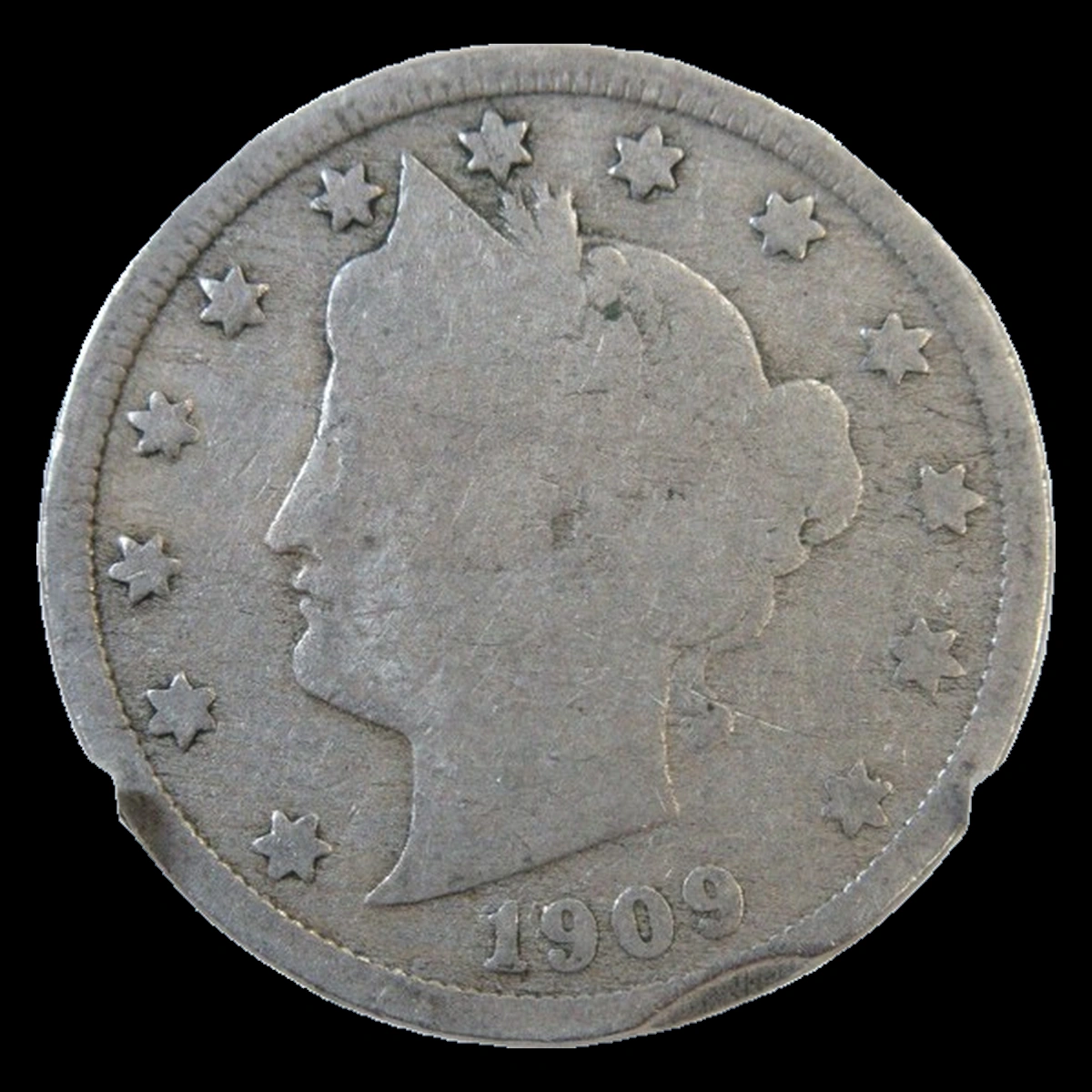
4. 1909 Nickel Part of the Outline Is Missing — Clipped Planchet Error
A blank can be incomplete before it ever reaches the coin press. The cutting punch may overlap an earlier hole in the metal strip or extend beyond the strip’s edge.
The press then strikes a nickel with a curved or straight gap. The year guide supplies no single clip shape or missing percentage that defines the 1909 issue.
How to Identify
Inspect both ends of the missing section for design drawn toward the opening. Weakness on the opposite rim can also support a genuine clip, though it is not always obvious.
A later cut may slice through finished detail and leave tool marks. Weighing the coin helps record the metal loss, but a low weight cannot by itself separate a clip from a cut.
What It’s Worth
$100–$1,250 is an estimated range for genuine 1909 clips. The larger figures suit striking gaps on well-preserved coins with readable dates.
A small clip on a heavily worn nickel should be compared with other modest examples. Missing metal caused by corrosion or cutting does not earn the same premium.
5. 1909 Nickel The Whole Design Fits on a Wider Coin — Broadstrike Error
A broadstrike can leave an expanded border around an otherwise complete design. It happens when the collar, the ring controlling the blank’s width, fails to hold the metal during striking.
The expansion may be uneven. The useful question is whether the portrait, stars, and reverse lettering still fit on the coin.
How to Identify
Measure across more than one direction and compare with the normal diameter given above. Then follow the outside details on both faces, especially beside the narrowest border.
Check for flattened lettering and hammer marks that could explain later spreading. The plain edge is normal on a Liberty Head nickel, so smoothness alone does not prove a broadstrike.
What It’s Worth
$75–$800 is the estimated range for genuine ordinary-strike examples. Broad, attractive spreading with a complete design is generally more desirable than slight expansion on a worn coin.
The year listing does not provide measurements for one graded specimen. Specially made Proof coins also need a separate comparison from ordinary circulation strikes.
6. 1909 Nickel Bare Metal beside a Cut-Off Portrait — Off-Center Strike Error
A blank that misses the intended striking position can receive only part of the design. Untouched metal remains on one side while the opposite part of the design falls beyond the edge.
The 1909 guide lists off-center strikes without specifying a direction or percentage. Those details need to be read from the individual coin.
How to Identify
Read all four date digits before calling the coin a 1909. Next, turn it over and look for the corresponding blank area on the other face.
If every part of the design remains present, consider a broadstrike. A shift seen on only one face can instead come from a misaligned striking tool.
The untouched crescent should retain an original surface. Grinding a section smooth can leave scratches and thinning that do not fit an unstruck blank.
What It’s Worth
$100–$1,500 is the guide-based estimate. A readable date, a clear shift, and attractive surfaces help an example move higher within that range.
More displacement does not always mean more value. Losing the entire date can reduce its usefulness to someone collecting this specific year.
7. 1909 Nickel Two Positions for the Same Design — Double Strike Error
A second portrait edge or a separate group of letters can show that the nickel received another blow after moving. The later strike may partly flatten the earlier design.
A complete second portrait is not required. Enough connected detail must survive to explain an additional strike, rather than just one doubled-looking letter.
How to Identify
Choose a repeated date digit, letter, or portrait feature and follow the nearby design. The extra details should form a coherent second impression.
Pressing two finished coins together can leave backward, sunken marks. Those differ from the raised design made by the original striking tools.
Normal aligned blows used to produce a Proof do not make it a displaced double-strike error. The supplied year guide does not map the strike sequence of a particular 1909 specimen.
What It’s Worth
$200–$3,500 is an estimated range for authenticated ordinary 1909 double strikes. Clear separation, recognizable design, and strong preservation support the higher figures.
Heavy damage or faint overlap can make the extra strike harder to demonstrate. The price concerns one error coin, not twice the value of an ordinary nickel.
Conclusion
For a 1909 nickel, begin by deciding whether the unusual feature adds metal, removes metal, or changes the design’s position. That first choice will point you toward the right part of this list.
Keep the plain edge in view and photograph both faces before drawing a conclusion. A clear explanation of the visible feature is more useful than choosing the highest-priced error name.