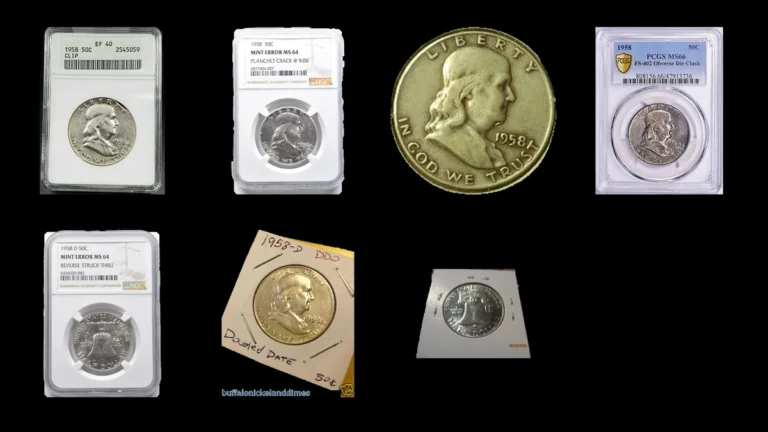
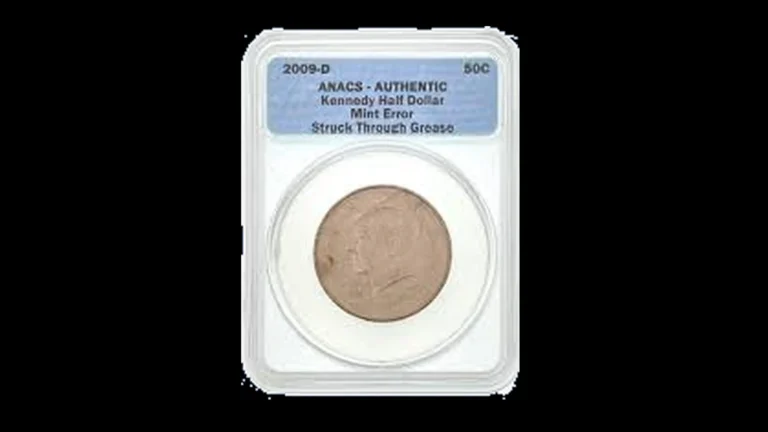
Rare 1966 Half Dollar Errors (List & Pictures)
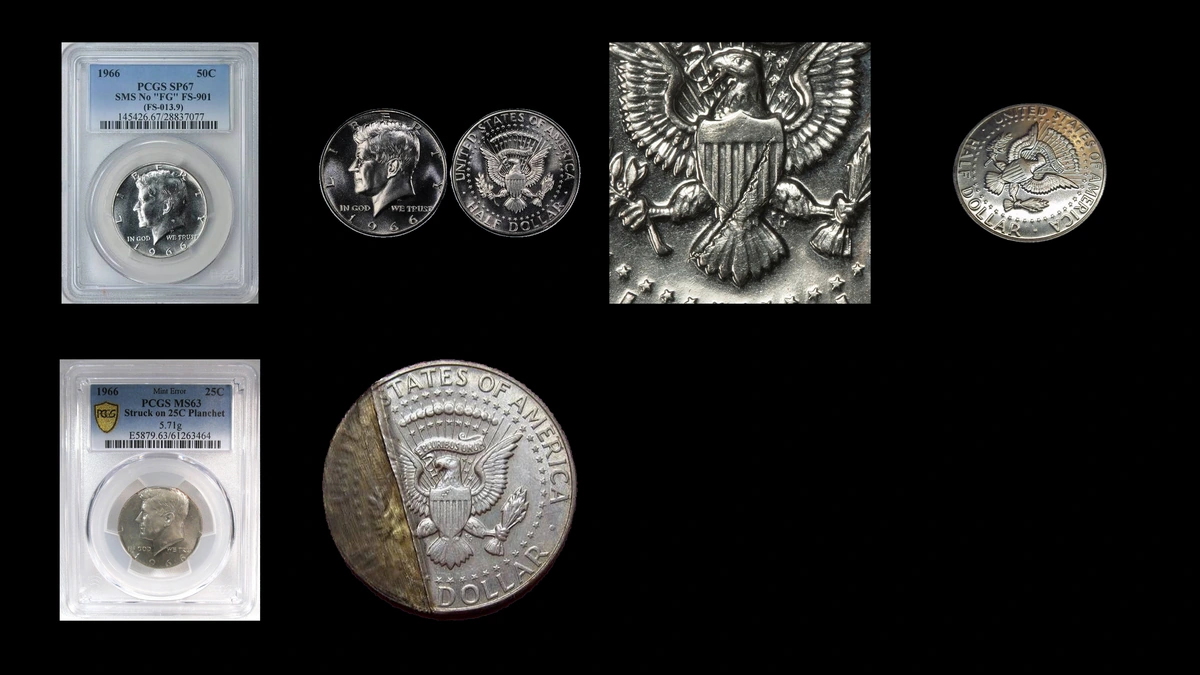
A 1966 Special Mint Set No FG half dollar graded PCGS SP68 sold for $2,365 in 2014. Its missing initials and exceptional preservation both matter to the comparison.
Estimated 1966 half dollar errors values span $50–$4,000. Separate small design varieties from missing metal and overlapping impressions using the checks below.
Ordinary and Special Mint Set, or SMS, halves have no mintmarks and contain 40 percent silver. Normal specifications are 11.50 grams, about 30.6 millimeters, and a reeded edge; SMS coins are not conventional proofs.
| Look for | Category | Estimated whole-coin value |
|---|---|---|
| Completely absent reverse initials | SMS No FG | $200–$2,500 |
| Downward motto repetition | SMS doubled obverse | $150–$1,000 |
| Broad shallow design | SMS weak strike | $200–$900 |
| Localized front interruption | SMS strike-through | $50–$500 |
| Repeatable reverse tilt | SMS rotated dies | $75–$400 |
| Small disc with outer detail missing | Quarter planchet | $600–$2,200 |
| Straight missing edge | Clip | $50–$300 |
| Lost outer layer | Missing cladding | $150–$700 |
| Displaced image and blank area | Off-center strike | $100–$800 |
| Overlap, expansion, reversed recess | Double strike with broadstrike and brockage | $1,000–$4,000 |
1. 1966 Half Dollar No Initials Remain beside the Tail: SMS No FG Error
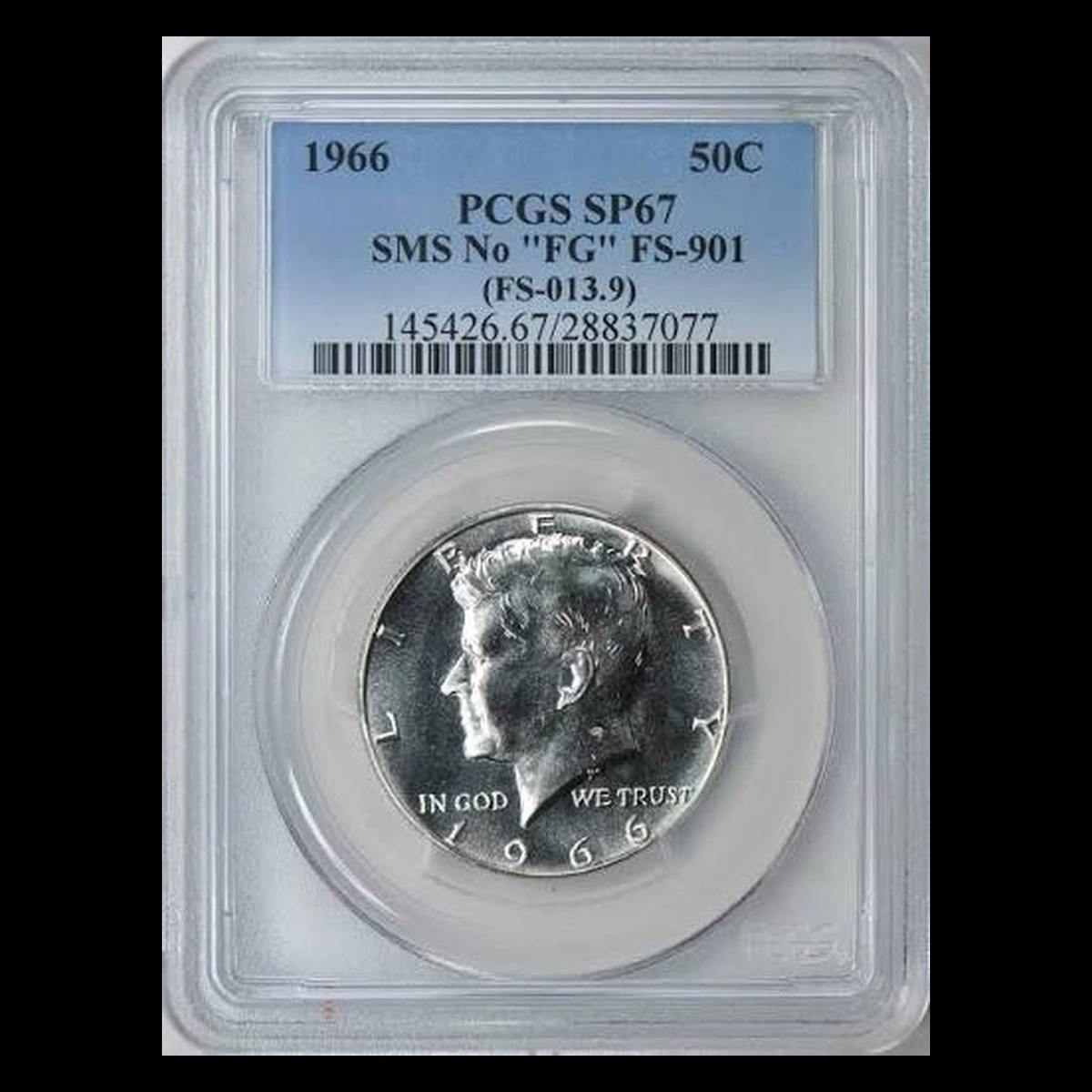
The recognized No FG variety lacks both initials of reverse designer Frank Gasparro. Heavy die polishing while addressing clash marks removed those shallow letters before later coins were struck.
The letters were therefore absent from the die’s design, not individually erased from each coin. Faint surviving strokes indicate weak FG rather than complete No FG.
How to Identify
Find the area above and to the right of the tail feathers, below the eagle’s leg on the viewer’s right. Examine it at several light angles for any remnant of F or G.
Compare adjacent details for wear and inspect the surface for smoothing, scratches, or residue. Do not clean the spot to look for hidden strokes.
Keep evidence of the SMS format with the coin’s full reverse image. Brightness alone does not establish the collector issue.
What It’s Worth
Correctly identified collectible examples have an estimated $200–$2,500 range. Condition is especially important toward the top.
PCGS reported $2,365 for an SP68 in 2014 and an approximate $200 level for SP65 in its 2020 article. Those dated comparisons do not guarantee current offers, and weak initials should not inherit complete-No-FG pricing.
2. 1966 Half Dollar Motto Letters Repeat Downward: SMS Doubled Die Obverse Error
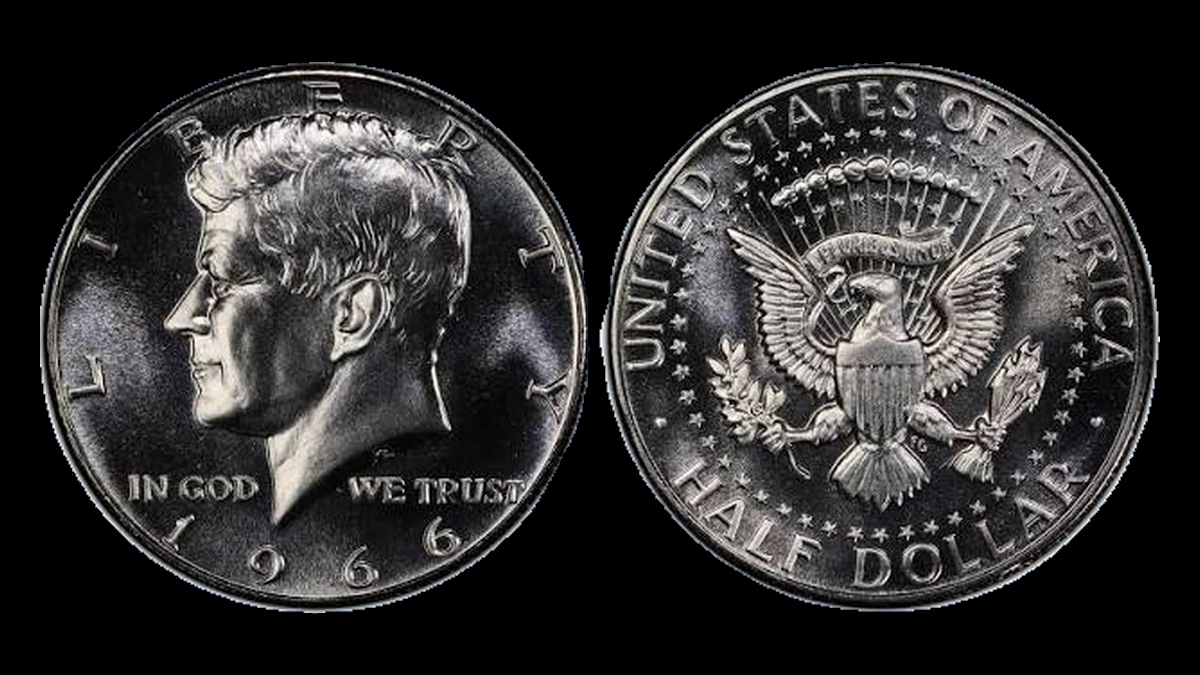
FS-103 is inspected at IN GOD WE TRUST, where the listed separation extends generally downward, or southward. A PCGS SP67 example documents this specific SMS variety.
The repeated detail already existed in the die before striking. Other 1966 SMS doubled dies need their own matches rather than being called FS-103 from the date alone.
How to Identify
Keep the motto upright and compare its extra contours letter by letter with an identified FS-103. The position of separation is more useful than general thickness.
Move the light to exclude reflections and distinguish rounded repetition from flat strike-related shelves. Verify the SMS format separately from the variety pattern.
Normal size and weight support the basic issue identification but cannot prove doubling. Preserve the complete motto with any closeups.
What It’s Worth
Confirmed SMS doubled dies have an estimated $150–$1,000 range. Particular variety, preservation, and visible separation affect value.
The SP67 FS-103 offering opened at $165 and ended in November 2025, but its final price is not supplied. The opening amount is not a completed sale or a fixed value for all 1966 doubling.
3. 1966 Half Dollar Much of the Design Is Shallow: SMS Weak Strike Cataloged as Die Adjustment Error
The cataloged Die Adjustment Strike has broadly weak detail across the SMS coin. The traditional label suggests press setup, but the appearance cannot establish an operator’s intention or a particular changed setting.
The visible evidence is a weak strike. Its broad distribution differs from one small area blocked by an obstruction.
How to Identify
Compare both faces under soft light and inspect the original texture around the shallow details. Ask whether the design failed to form fully or was removed later.
Wear usually begins at exposed high points, while chemicals can leave etched or roughened surfaces. Look for those alternatives before applying the catalog label.
Check the edge and normal measurements, but do not treat one weak letter as evidence of low pressure. Broadly shallow design with preserved original surfaces is the useful starting combination.
What It’s Worth
A convincingly identified SMS weak strike has an estimated $200–$900 range. Surface originality and the clarity of the weak impression matter.
No realized price is supplied for the Heritage cataloged example. This category also differs from No FG, which concerns lost die details in a particular location rather than general shallowness.
4. 1966 Half Dollar A Front Patch Did Not Receive Normal Detail: SMS Strike-Through Error
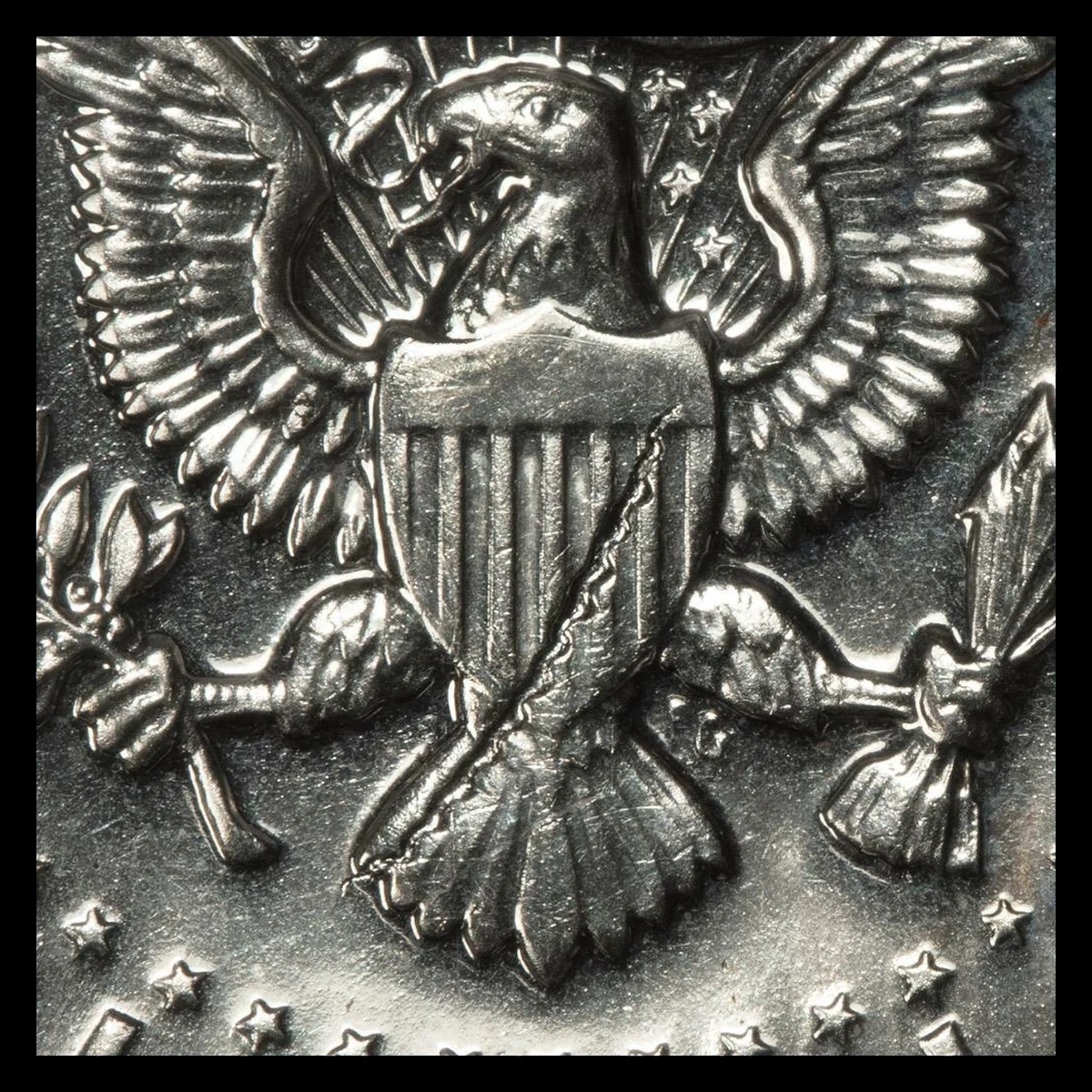
A 1966 SMS half graded NGC MS66 was included in a 2021 Heritage lot as obverse struck through. An obstruction between die and coin can leave an impression or prevent detail from forming.
The catalog does not identify the material. The overall lot also contains other coins, so neither a specific object nor an individual price should be inferred.
How to Identify
Trace where sharp front detail meets the interrupted area under angled light. Look for original design stopping naturally at the patch.
A later gouge may leave torn metal and a raised lip, while a vague hollow does not identify cloth, wire, or grease. Keep the physical observation narrower than an unsupported material story.
Inspect both faces and the edge, leaving graded coins protected in their holders. Measurements are appropriate only for accessible loose pieces.
What It’s Worth
A confirmed SMS strike-through is estimated at $50–$500, from small weak areas to clear impressions on attractive surfaces. No individual realized price is assigned to the MS66 in the mixed lot.
A 1992-D struck through a fragment bearing edge grooves sold for $336 in July 2021. It is a different-year ordinary coin with different metal and finish, and the lot’s combined value must not be substituted for a 1966 specimen price.
5. 1966 Half Dollar The Eagle Leans after a Controlled Flip: SMS Rotated Dies Error
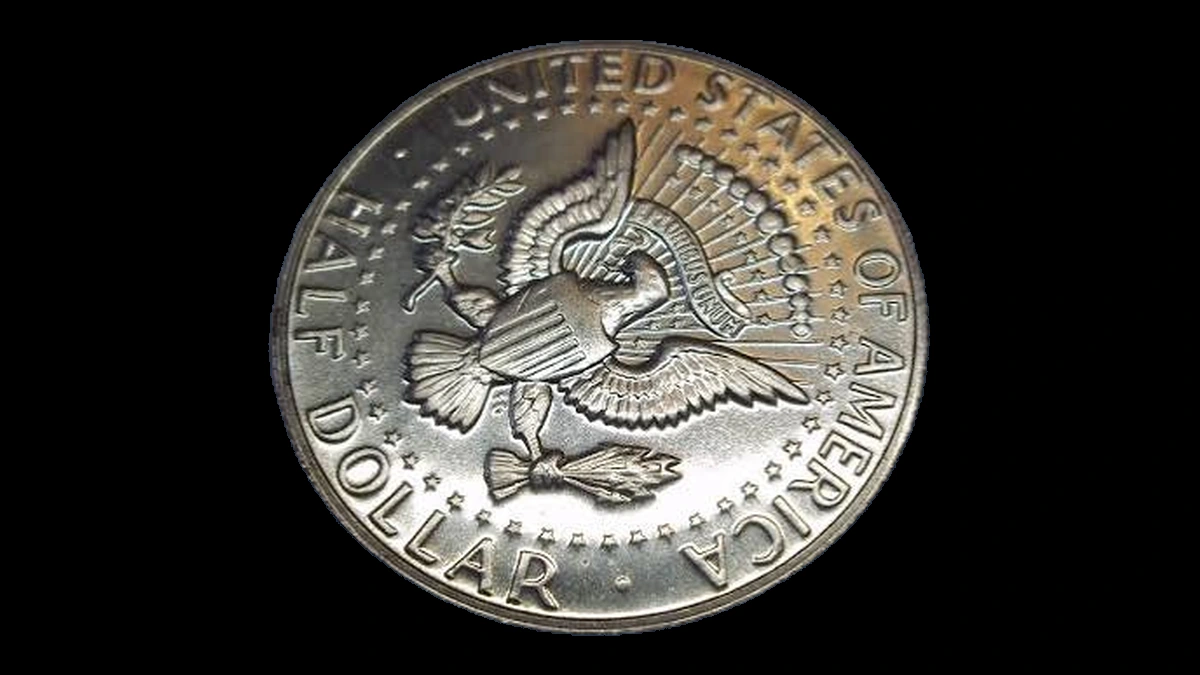
Rotation concerns the angle between the two designs, not their centering on the blank. One die turned relative to the other and left a reverse that does not stand upright after a normal top-to-bottom flip.
The supplied records include a PCGS SP65 described as 45 degrees clockwise and a separate NGC MS67 without an angle. Their measurements are not interchangeable.
How to Identify
Hold Kennedy upright beside a vertical reference, then flip top to bottom without sideways twisting. Repeat the motion to establish the same reverse lean and measure it with a protractor.
Photographs with each side independently turned upright conceal this relationship. Check for slipping in a holder before trusting the angle.
Inspect the edge for a seam from joined coin halves. Preserve the SMS identity and actual measured rotation together.
What It’s Worth
Collectible SMS coins with visible repeatable rotation have an estimated $75–$400 value. Slight deviations may add less than a large clear turn.
A separate NGC MS66 SMS rotated example sold at Heritage for $141 on April 26, 2015. No angle is supplied for that sale, so the SP65’s 45-degree measurement must not be assigned to it.
6. 1966 Half Dollar The Half-Dollar Picture Runs off a Smaller Disc: Quarter Planchet Error
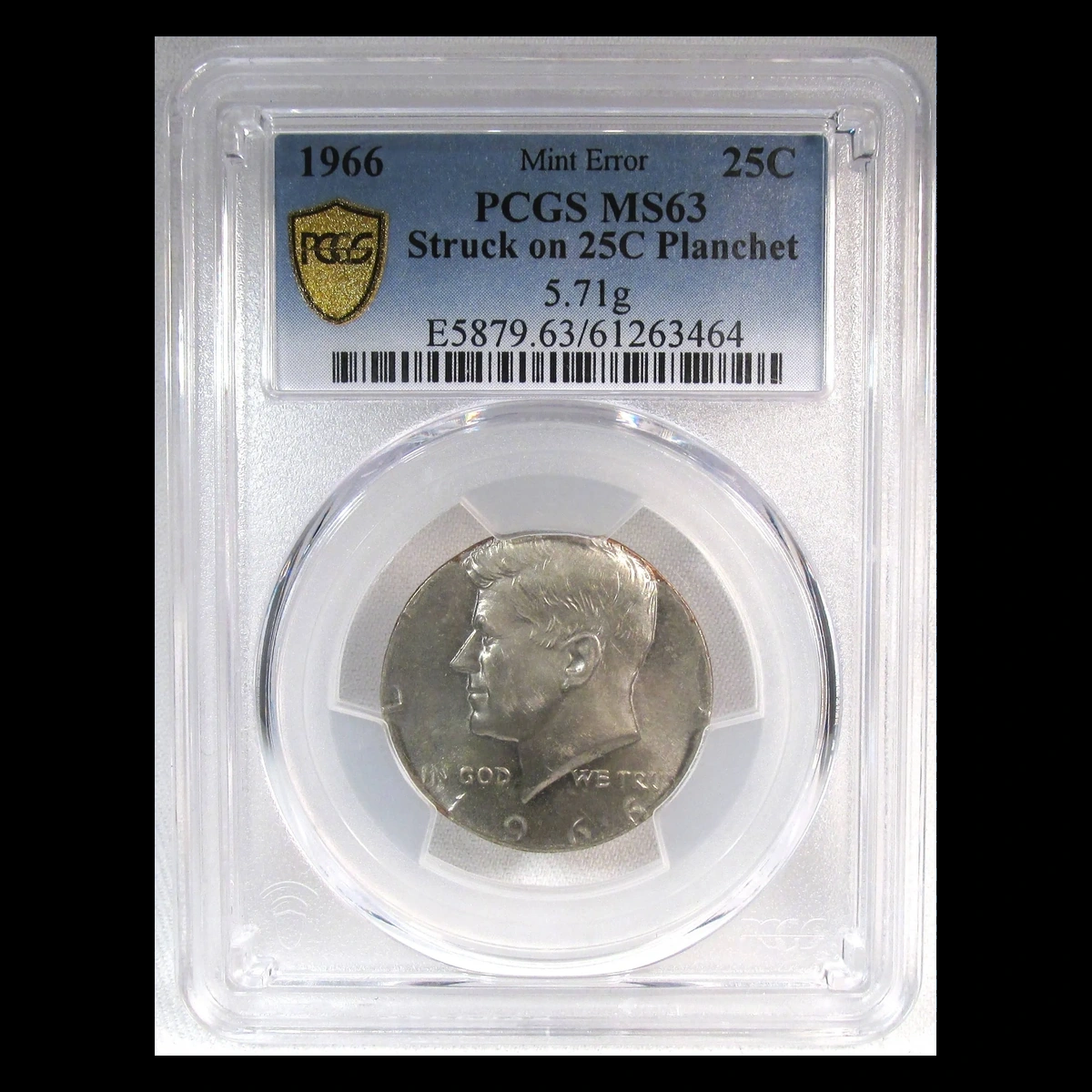
A copper-nickel quarter blank can receive the center of the half-dollar design while leaving too little metal for the outer lettering. Both ordinary and SMS 1966 examples are documented.
One ordinary example has strong central detail with distorted or missing outer words. A separate SMS retains its date and eagle but loses the denomination and parts of LIBERTY; those losses describe that specimen, not every quarter-planchet strike.
How to Identify
Compare weight and size with a copper-nickel quarter blank’s starting specifications of approximately 5.67 grams and 24.3 millimeters. Striking with the larger design can spread the blank.
Examine the layered edge and the way half-dollar details terminate at it. Filing a normal silver-clad half smaller leaves altered surfaces rather than naturally truncated striking.
Establish ordinary or SMS format independently and keep each specimen’s surviving letters distinct. The wrong blank’s copper-nickel composition differs from the intended 40-percent-silver half.
What It’s Worth
Collectible confirmed examples have an estimated $600–$2,200 range. Metal identity, finish, date survival, and preservation affect the comparison.
An ordinary NGC MS64 sold for $575 in February 2005, an SMS NGC MS65 for $1,527.50 in November 2012, and an SMS PCGS SP62 for $960 in August 2020. These historical results belong to separate coins with different condition and production formats.
7. 1966 Half Dollar A Straight Section Is Absent from the Edge: Reported Clip Error
A straight clip can form when blank cutting reaches the edge of the metal strip. The resulting incomplete disc later receives its designs, so the press itself did not cut away that edge.
The year account reports straight clips without establishing finish or the measured amount missing on a particular coin. A straight cut made after minting needs to be excluded.
How to Identify
Inspect both ends of the opening for original rim and design formation toward the gap. Compare with a normal coin to understand what detail should be present.
Look for fresh cut walls, tool grooves, or burrs in the edge. Opposite-rim weakness can be supporting evidence when present.
Weigh the coin against the 11.50-gram standard and measure an intact span. Reduced weight by itself cannot show whether the shortage predates striking.
What It’s Worth
Genuine straight clips have an estimated $50–$300 range. A larger attractive original gap may draw more interest than a small subtle one.
The year source gives an approximate $90 reference but supplies no traceable auction lot for it. Treat that number as a guide figure, not a documented sale.
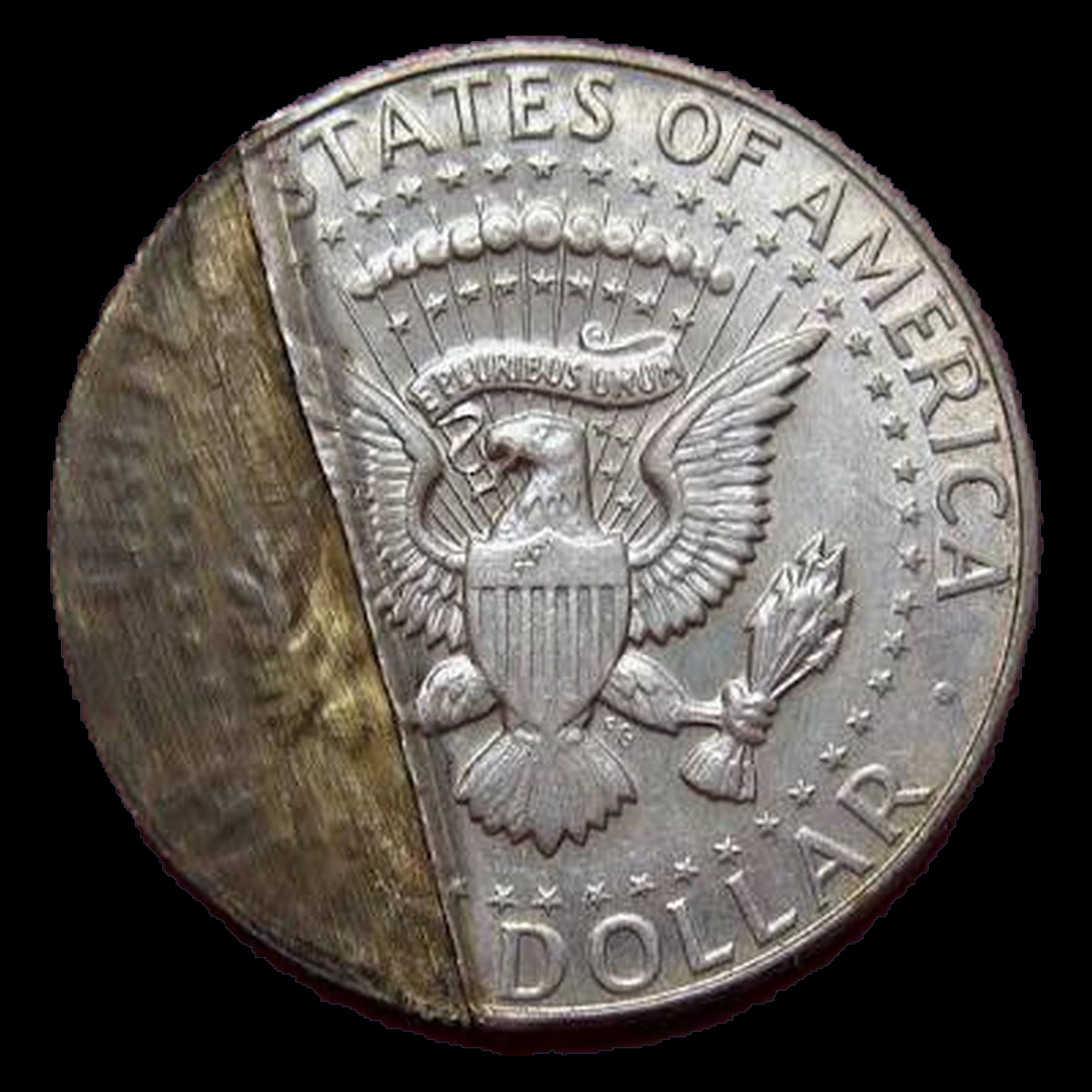
8. 1966 Half Dollar An Outer Silver-Rich Layer Is Missing: Reported Clad-Layer Loss Error
The 1966 half has silver-rich outer layers and an inner alloy that also contains silver. Losing a covering therefore does not expose the pure-copper core familiar on later Kennedy halves.
The supplied category has no identified specimen or finish. An exposed area may have a different appearance without becoming a bright copper face.
How to Identify
Inspect the edge for a physical missing-layer boundary and connect it with the affected face. Weight loss should be compatible with the amount of absent material.
Look for original struck detail beside the opening and exclude etching, filing, or artificial peeling. Darkness alone can be a surface-color change.
Use 11.50 grams as the intact starting weight and allow for wear. Neither low weight alone nor a particular copper color is a sufficient test.
What It’s Worth
Genuine outer-layer loss has an estimated $150–$700 range. The amount missing, surviving design, and overall condition affect appeal.
A 1998-P with defective obverse cladding graded NGC MS63 sold for $149 in March 2023. Its later copper-nickel construction means its color and measurements cannot be transferred directly to 1966.
9. 1966 Half Dollar The Design Misses Part of the Blank: Reported Off-Center Strike Error
An off-center blank receives a partial image while another area remains untouched. The unstruck metal should explain which outer design elements failed to appear.
No particular direction, percentage, or finish is established for the reported 1966 category. Bright surfaces alone cannot identify an SMS coin.
How to Identify
Read the surviving date and compare the design-to-blank boundary on both faces. Keep track of the same physical edge while turning the coin.
Look for grinding or scraping that could have removed an existing image. Original unstruck metal differs from a smoothed patch made after minting.
Record the outline, weight, and remaining reeding, allowing for strike-related spreading. Matching displacement on both faces is more useful than an uneven border on one side.
What It’s Worth
Confirmed collectible examples have an estimated $100–$800 range. Readable dates and attractive original surfaces strengthen comparisons.
A 1999-D struck 65 percent off center and graded NGC MS66 sold for $552 in March 2023. That later clad coin offers price context without establishing the percentage, metal behavior, or sale value of a 1966 example.
10. 1966 Half Dollar Overlapping Designs Include a Reversed Recess: SMS Double Strike, Broadstrike, and Brockage Error
The cataloged 1966 SMS NGC MS62 combines repeated impressions, expansion beyond normal width, and a recessed mirror-image design. These are three observations on one coin.
The reversed hollow image is a brockage, made when an already struck coin acted against this coin during striking. Its expanded outline also records insufficient collar restraint, while overlapping detail records another blow.
How to Identify
Separate raised normal lettering from letters that are both recessed and mirror-reversed. Change the light over intersections to distinguish those impressions from one flat shelf.
Compare both faces and the complete outline with the cataloged NGC MS62. Do not assemble the diagnosis from separate photographs of unrelated errors.
Inspect the edge for changes consistent with spreading and for signs of later squeezing. The weight should be evaluated against the original silver-clad issue while allowing for any actual damage.
What It’s Worth
The combined SMS error is estimated at $1,000–$4,000. No realized price is assigned to the described MS62 lot.
A 1964-dated half with spreading and a full reverse brockage, graded PCGS MS65, sold for $2,400 in March 2023. Its 90-percent-silver composition, finish, and affected face differ, so it is context rather than an exact value for this combination.
Conclusion
The useful first distinction for 1966 is ordinary issue versus SMS, followed by the actual feature. Complete No FG, downward motto doubling, a smaller quarter blank, and a reversed brockage image each require different evidence.
Use the correct 40-percent-silver construction when investigating missing layers, and keep separate auction specimens’ grades and measurements apart. For a coin with several errors, compare its complete appearance rather than adding prices for each component.