Rare 2013 Presidential Dollar Errors (List & Pictures)
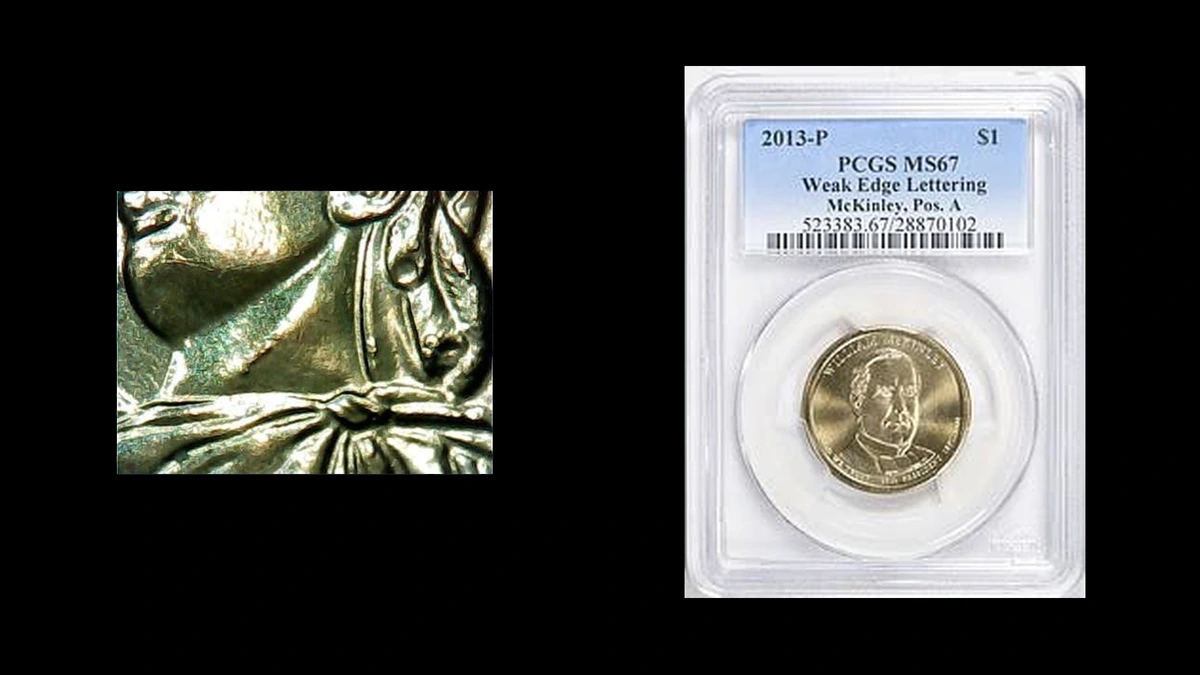
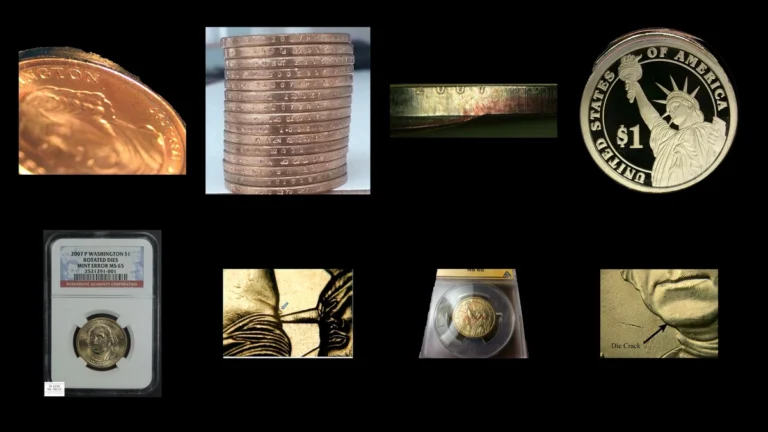
A different-year Madison dollar with completely missing edge lettering sold for $119 in July 2025. Estimated values for 2013 Presidential dollar errors range from $5–$500, including documented weak lettering on McKinley and Theodore Roosevelt issues.
This guide distinguishes those shallow characters from repeated inscriptions and separate flaws on the coin’s faces.
| Category | Estimated value | Evidence to inspect |
|---|---|---|
| Die crack | $5–$100 | Raised line with a consistent path |
| Strike-through | $10–$300 | Original design interruption |
| Repeated edge lettering | $40–$400 | Two distinct recessed sequences |
| Weak edge lettering | $40–$500 | Documented Philadelphia McKinley or Roosevelt type |
1. 2013 Dollar Raised Die Cracks Error
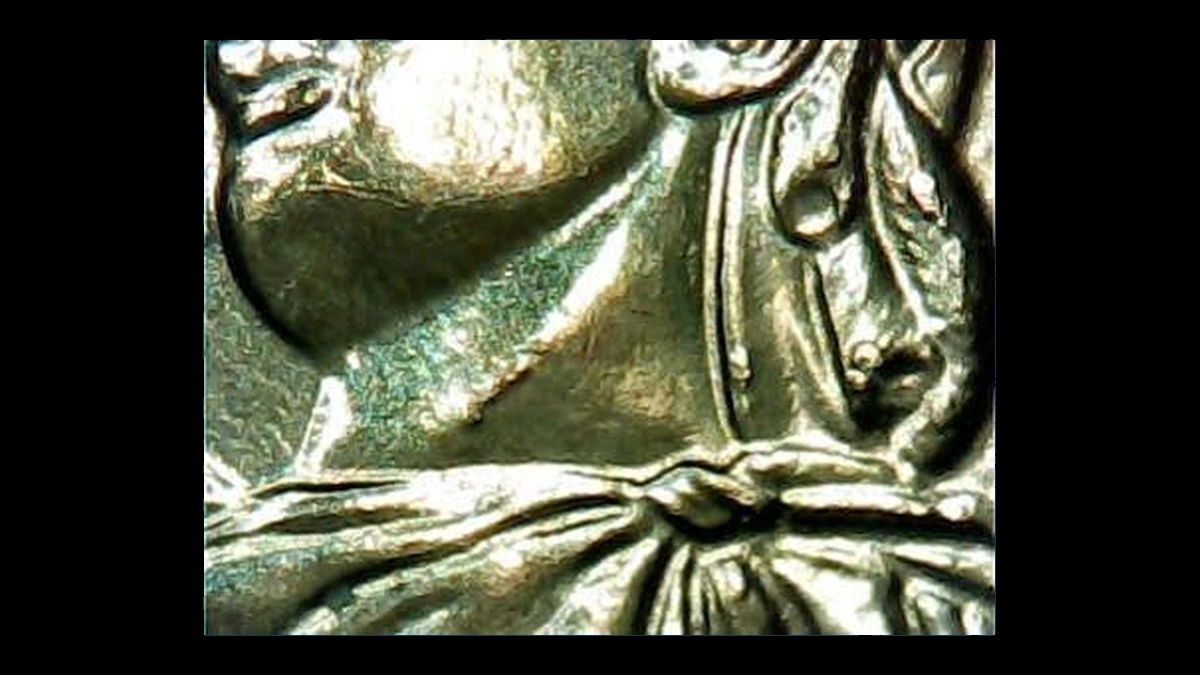
A cracked die can leave a thin ridge where coin metal entered the damaged opening. The path may become more pronounced as the tool continues to operate.
The 2013 report does not name a president or exact location. A scratch or normal engraved design line must be excluded on the actual coin.
How to Identify
Follow the line from beginning to end under angled light, inspecting any intersection with letters or portrait details. A scratch can have raised sides around a recessed center.
Compare the same area on an ordinary dollar of that president. Another coin with the same original raised route can help establish that the tool carried the feature.
What It’s Worth
Minor confirmed cracks have estimated values of $5–$100. Clear visibility and original preservation provide stronger comparisons than a faint ridge hidden by wear or staining.
A bright scratch does not qualify simply because it appears raised along one edge.
2. 2013 Dollar Struck-Through Patches Error
A localized weak patch beside sharp lettering can result from material obstructing the die. Grease can soften detail, while a solid object may leave a distinct depression.
No specific president or obstructing material is established in the 2013 reports. The visible interruption must support any more precise description.
How to Identify
Compare the affected area with nearby details of similar height and the portrait’s exposed points. Broad circulation wear differs from a local failure to form design.
Inspect the boundary for grinding or impact-displaced metal. If material remains attached, preserve it and the relationship between its edge and the original strike.
What It’s Worth
Genuine strike-throughs have estimated values of $10–$300. The size and clarity of the interruption matter alongside condition.
A different 2014-P Native American dollar with a front strike-through sold for $31 in October 2016. That other series provides scale rather than a 2013 Presidential-dollar result.
3. 2013 Dollar Reported Repeated Edge Lettering Error
Two sets of incuse characters can form when an ordinary dollar passes through the separate edge-lettering operation again. Incuse means the letters are recessed into the metal.
The 2013 report does not name a mint or president. It does not establish examples for all four designs issued that year.
How to Identify
Trace an entire word or date, then separate the second sequence across adjoining edge photographs. Overlap the images enough to maintain continuity without counting the same characters twice.
Position A and Position B describe normal inscription directions. One normally oriented sequence, viewed after turning the coin, is not a second lettering error.
Look for two consistent sets of recessed characters rather than isolated dents or raised contact marks. Connect the edge year with the president on that same coin.
What It’s Worth
A confirmed repeated-edge example has an estimated range of $40–$400. Readable repeated dates or long overlapping words are easier to demonstrate than one crowded stroke.
A different 2007-P John Adams dollar with overlapping edge letters sold for $59 in March 2010. Its unworn condition and older issue should remain part of that comparison.
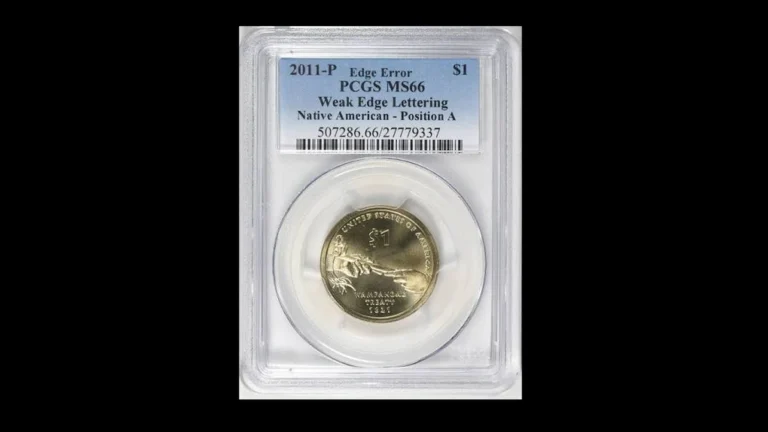
4. 2013 Dollar Weak Edge Lettering on McKinley and Roosevelt Dollars Error
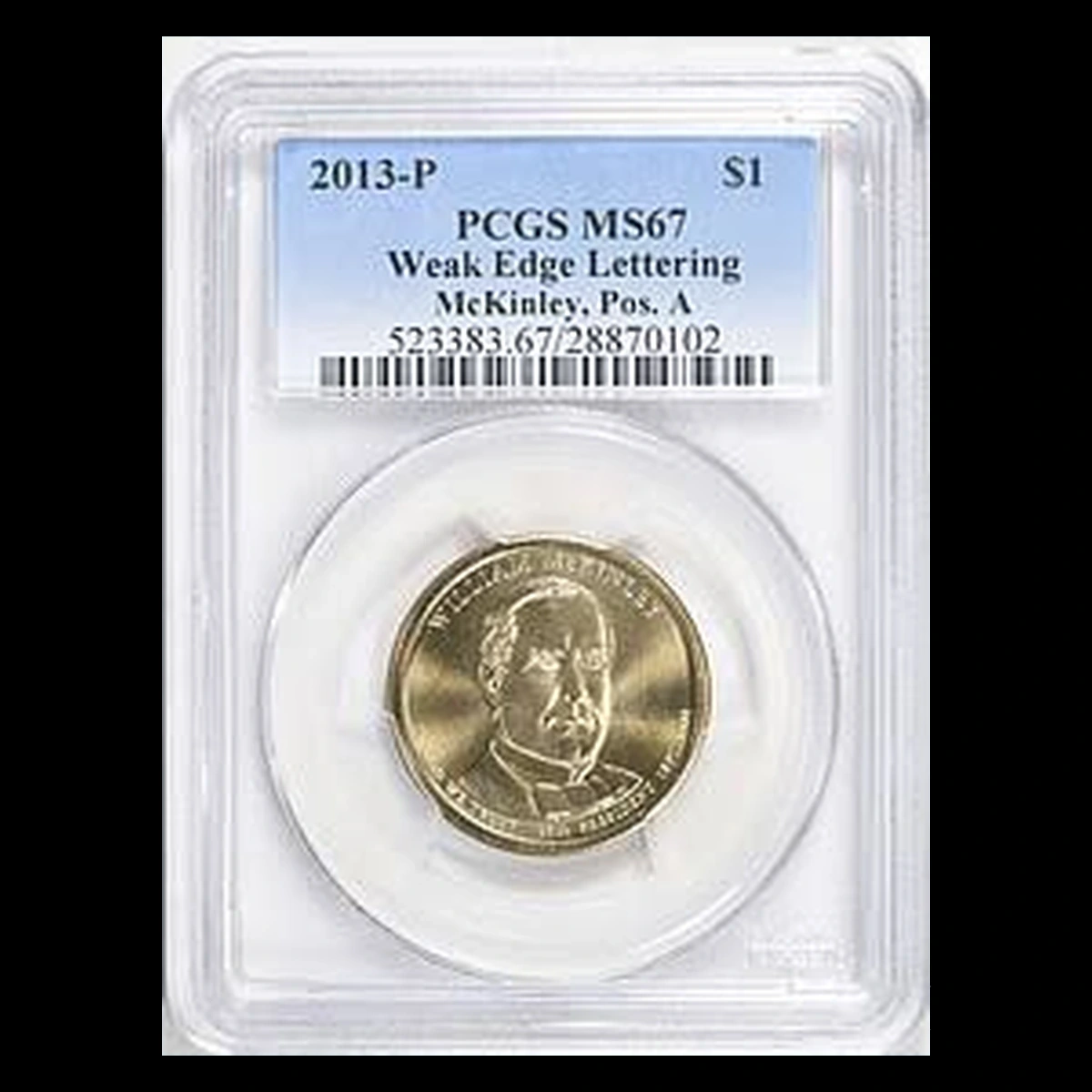
Shallow characters can remain when contact during the lettering step is weak. They may appear even on otherwise well-preserved unworn coins.
GreatCollections listed a Philadelphia McKinley dollar graded PCGS MS67 with weak edge lettering. PCGS separately lists the Philadelphia Theodore Roosevelt type; both records specify normal Position B orientation.
How to Identify
Read the year and P, then inspect the depth of characters around the full edge under changing light. Use the McKinley listing or Roosevelt reference for the appropriate president.
Look for polishing, scratches, or rounding where the edge meets the rims. Faint surviving cuts on an original edge differ from characters removed by alteration.
These Philadelphia records do not automatically identify the same error on D coins, S Proofs, Taft, or Wilson. Completely absent lettering also requires a different comparison.
What It’s Worth
Documented weak-letter types have estimated values of $40–$500. Preservation can contribute substantially, especially for a coin at the MS67 level.
A 2007 Madison dollar with completely missing lettering sold for $119 in July 2025. Its absent inscription is a different appearance from the shallow surviving characters on the 2013 types.
No separate realized amount is supplied here for either documented 2013 example.
Conclusion
Read the edge as a complete inscription before deciding whether it is weak, repeated, or merely facing the other normal direction. The documented McKinley and Roosevelt examples each need their own design and mint comparison.
For face marks, distinguish a raised tool crack from a depression or weak patch created by an obstruction. Preserve both faces and the full edge in photographs so an apparent small error remains connected to the right coin.