Rare 1990 Nickel Errors (List & Pictures)
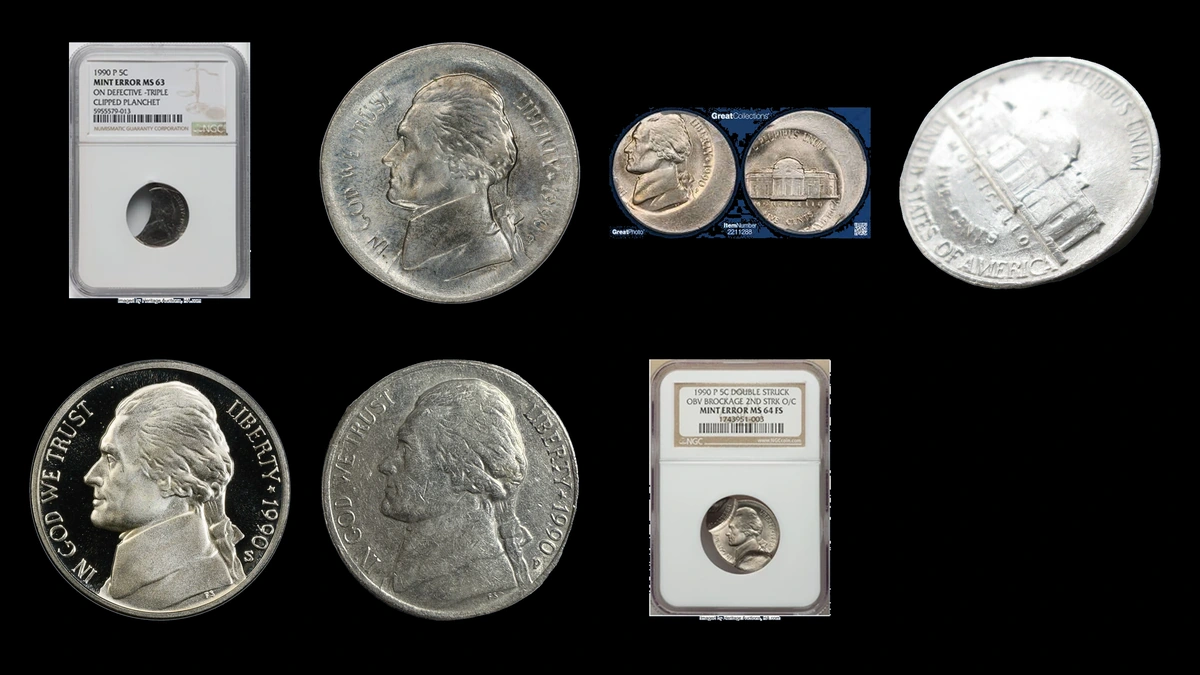
An edge view can reveal a partial collar, while the lettering may identify a doubled Proof die. Other 1990 nickel errors require tracing two overlapping strikes or recognizing a blank intended for a dime.
Estimated whole-coin values span $5–$800, with a split-die and capped-die strike combination selling for $312. Follow the outline first, then inspect raised details, blocked design, repeated impressions, and unusual metal.
| Visible clue | Category | Estimated range |
|---|---|---|
| Step in the edge | Partial collar | $20–$200 |
| Missing sections | Clipped planchet | $20–$300 |
| Wider complete design | Broadstrike | $25–$300 |
| Incomplete displaced design | Off-center strike | $30–$400 |
| Raised lines or lumps | Die crack or break | $5–$350 |
| Repeated Proof motto and portrait details | 1990-S doubled die | $30–$500 |
| Locally interrupted design | Debris strike-through | $20–$250 |
| Die-split ridge with blocked design | Split die and capped-die strike | $150–$750 |
| Overlaps with a sunken reversed image | Double strike and brockage | $100–$650 |
| Abnormal original color | Annealing error | $20–$150 |
| Small layered blank | Dime-planchet strike | $200–$800 |
1. 1990 Nickel Two Levels Form a Step in the Edge: Partial Collar Error
Part of a blank can sit above the collar while the rest remains contained by it. During striking, the exposed metal spreads farther, leaving a step between the restrained and expanded portions.
How to Identify
View the edge from the side and rotate the coin through the light. A natural step should differ from file marks, crushing, or a seam between joined pieces.
An ordinary nickel already has a plain edge, so lack of reeding is not evidence of collar failure. For loose examples, use about 5 grams and 21.21 millimeters as normal references when recording weight and outline throughout this guide.
What It’s Worth
$20–$200 is an estimated range for comparable partial-collar nickels. A Philadelphia example graded PCGS MS66+ sold for $99 on June 23, 2025, with its strong preservation contributing to the whole-coin price.
2. 1990 Nickel One or More Gaps Interrupt the Outline: Clipped Planchet Error
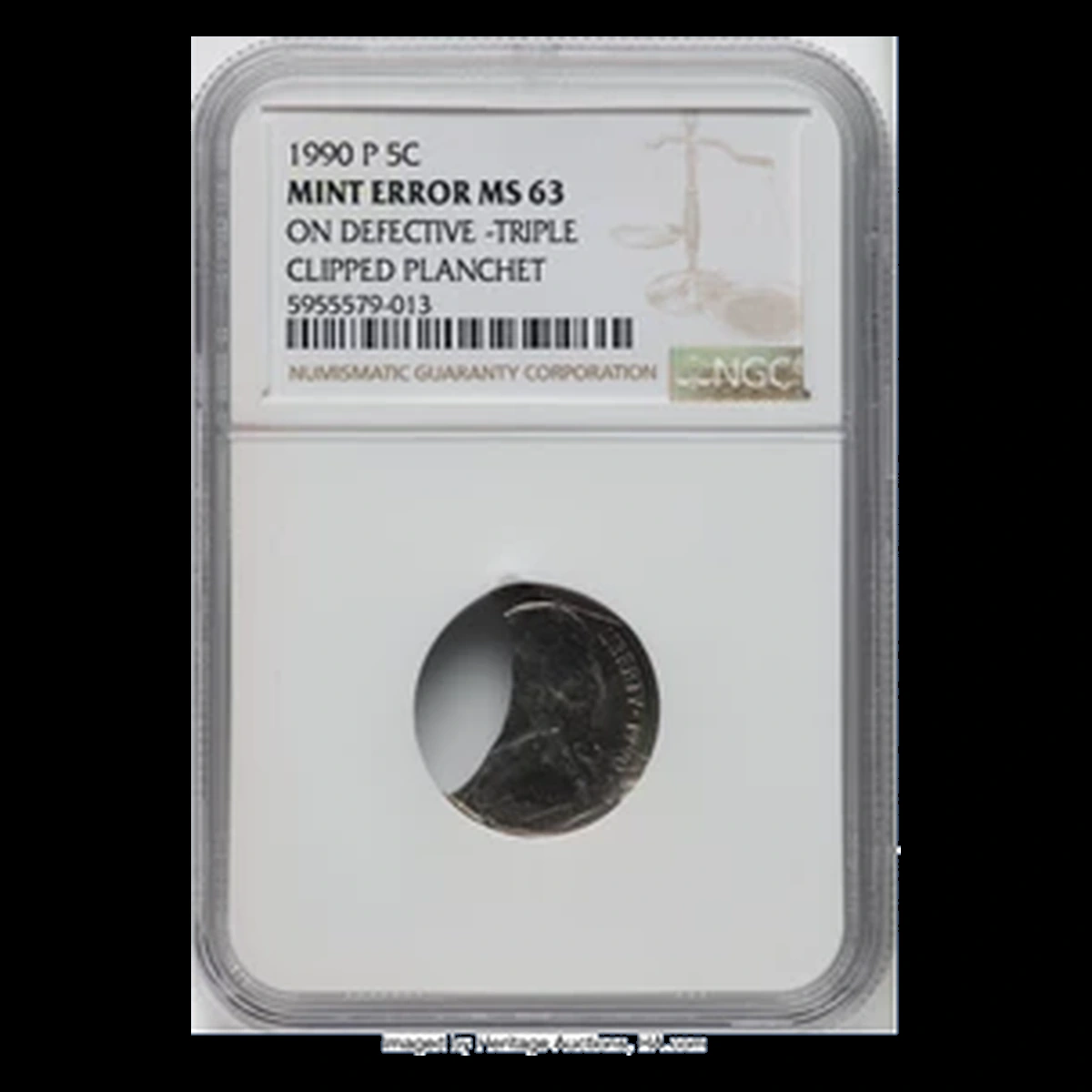
An incomplete blank can still receive Jefferson’s portrait and Monticello. The supplied Philadelphia examples include a defective blank with three clips and a separate coin with a large straight clip.
How to Identify
Examine each boundary for natural struck rim formation, checking for saw marks or filing that would indicate later metal removal. Weakness opposite a gap can help, but each missing area needs its own evidence.
The triple-clipped coin is graded NGC MS63, and the catalog does not establish the three gaps’ shapes. The separate NGC MS64 Full Steps coin has a 30% straight clip and a recorded weight of 3.5 grams.
What It’s Worth
$20–$300 is an estimated range across genuine 1990 clips. The triple-clipped MS63 example sold for $79 in June 2023, while no sale amount is supplied for the separate straight clip.
Full Steps refers to Monticello’s stair detail, not another mint error. Its contribution to condition should remain separate from the clip’s description.
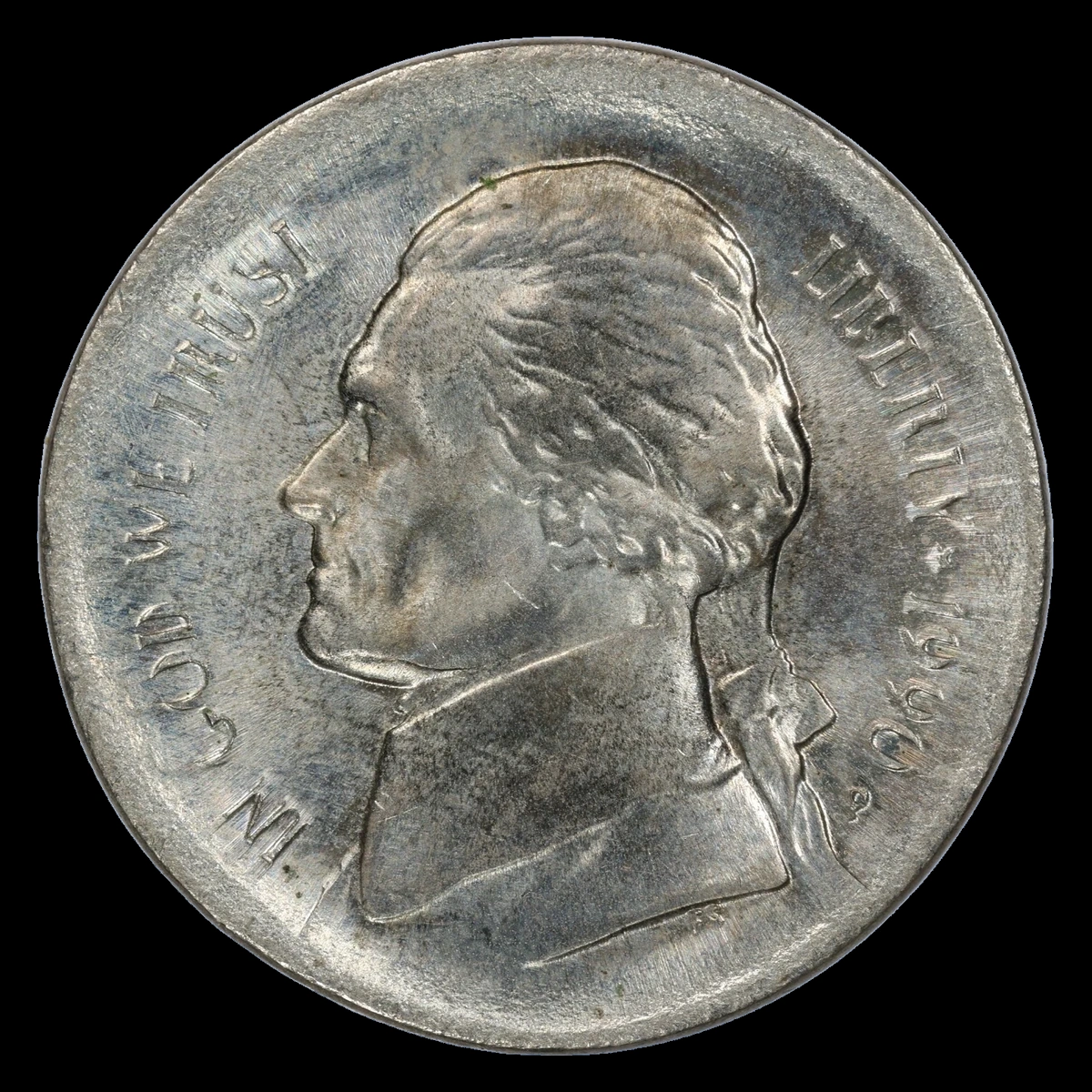
3. 1990 Nickel An Expanded Border Holds the Entire Design: Broadstrike Error
A blank can spread beyond its normal outline when the collar fails to contain it. A broadstrike preserves the intended design inside that enlarged body, even when the margins are unequal.
How to Identify
Follow all the peripheral lettering on both faces before judging the extra width. Missing design calls for an off-center comparison, while crushed relief and hammer marks can reveal enlargement after minting.
The supplied 1990 report specifies neither a measured diameter nor a fixed mint. Normal weight can support spreading without metal loss, but does not prove the cause of the expansion.
What It’s Worth
$25–$300 is an estimate for genuine ordinary-strike broadstrikes, depending on expansion and preservation. Different-year comparisons include a 1998-P sold for $57.50 in July 2002 and a 1999-P sold for $89 in March 2025.
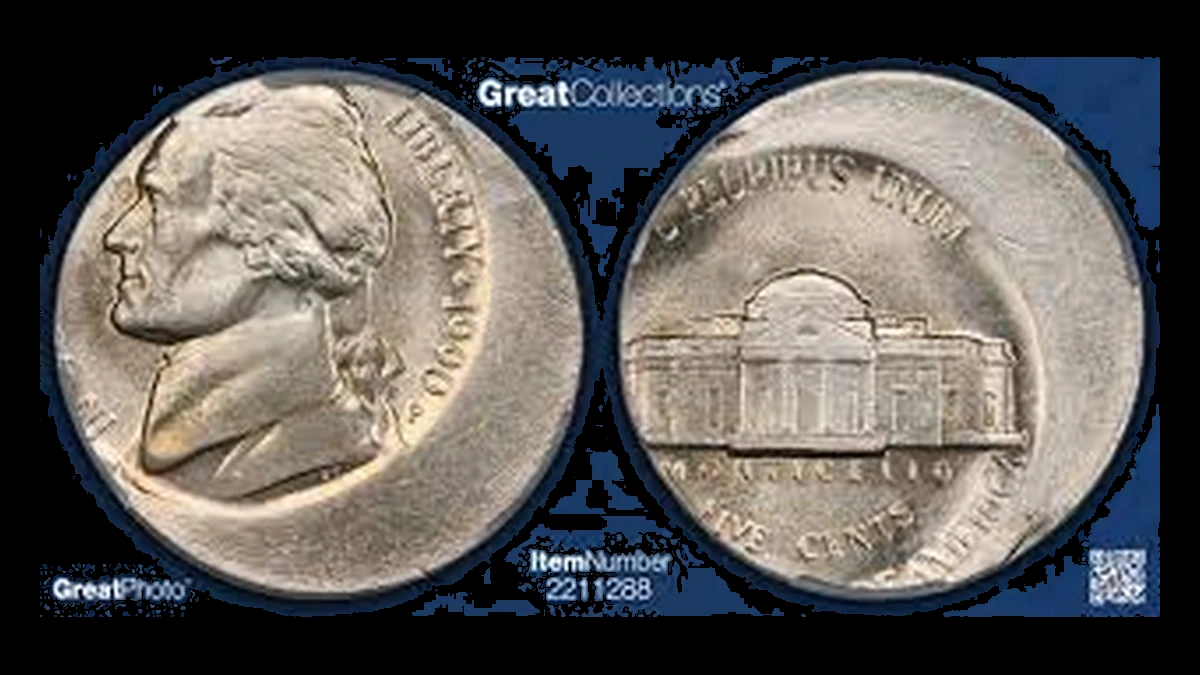
4. 1990 Nickel Part of the Design Ends beyond the Disk: Off-Center Strike Error
A misplaced blank leaves some metal untouched while some intended detail misses the disk. Reported 1990 examples include Philadelphia and Denver, with no single offset percentage or direction applying to the entire category.
How to Identify
Read the date and mint letter, then compare the missing design and unstruck crescent on both sides. The geometry should fit one displaced strike.
Inspect blank-looking areas for grinding and include the full outline in photographs. An undated piece cannot acquire a 1990 identity simply because it resembles a dated example.
What It’s Worth
$30–$400 is an estimate for genuine dated examples. A 1999-D nickel struck 65% off-center sold for $75 in September 2024, but its percentage belongs to that later coin and does not describe a supplied 1990 specimen.
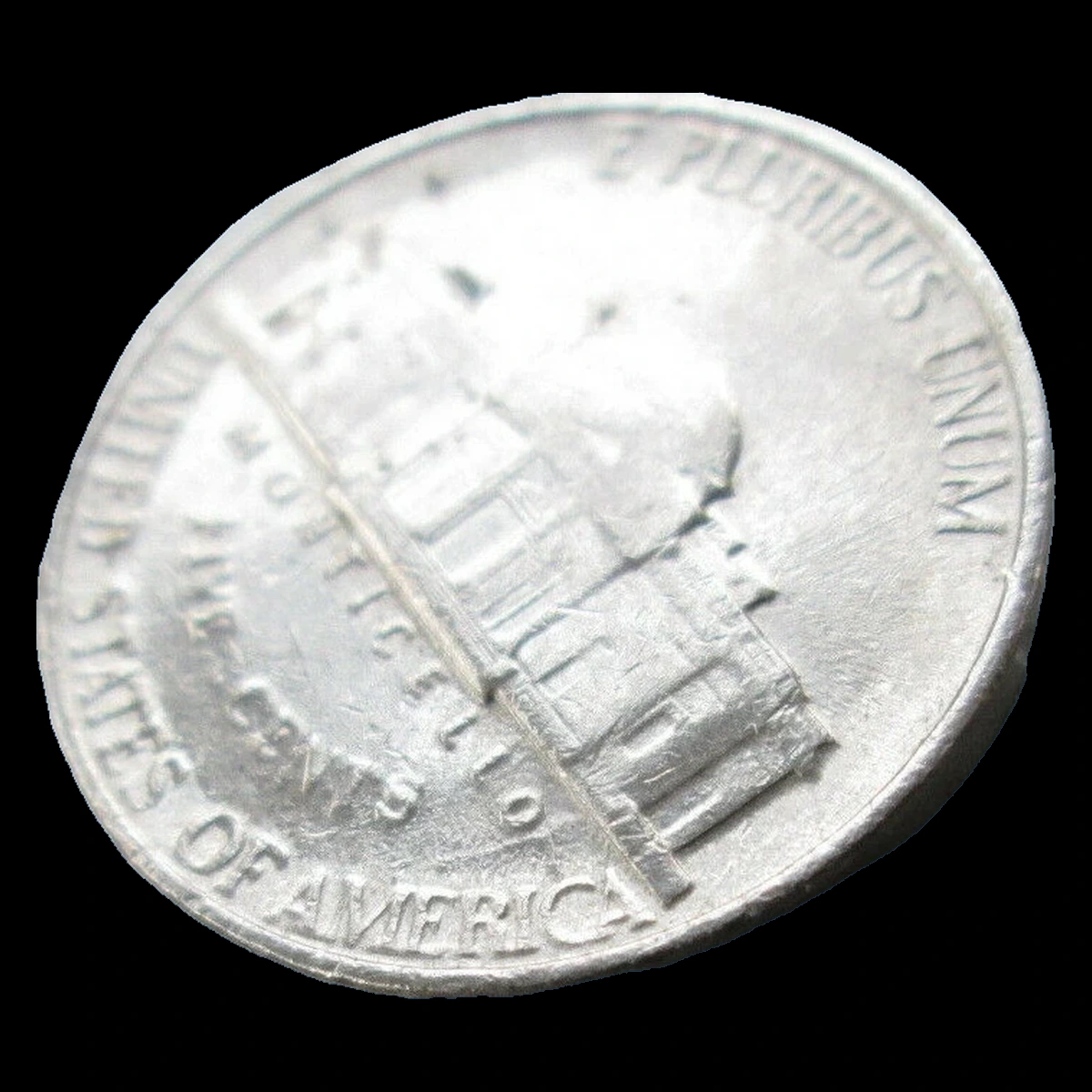
5. 1990 Nickel Ridges and Lumps Rise from the Surface: Die Cracks and Breaks Error
Metal entering a crack or missing portion of a die forms extra raised detail on the coin. A large break connected to the rim is called a cud, while an isolated small lump may be a die chip.
How to Identify
Light a line from opposite sides to check whether its center is raised or cut into the surface. A genuine opening in the coin’s metal is a different condition from a ridge copied from a cracked die.
For a larger patch, inspect its rim connection and surrounding metal for solder or impact damage. The supplied reports do not establish one 1990 mint or crack route.
What It’s Worth
$5–$50 is an estimate for small original cracks, rising to roughly $30–$350 for larger clear breaks. A worn 1983-P cud sold for $63 in July 2022, providing a different-year comparison rather than a 1990 attribution.
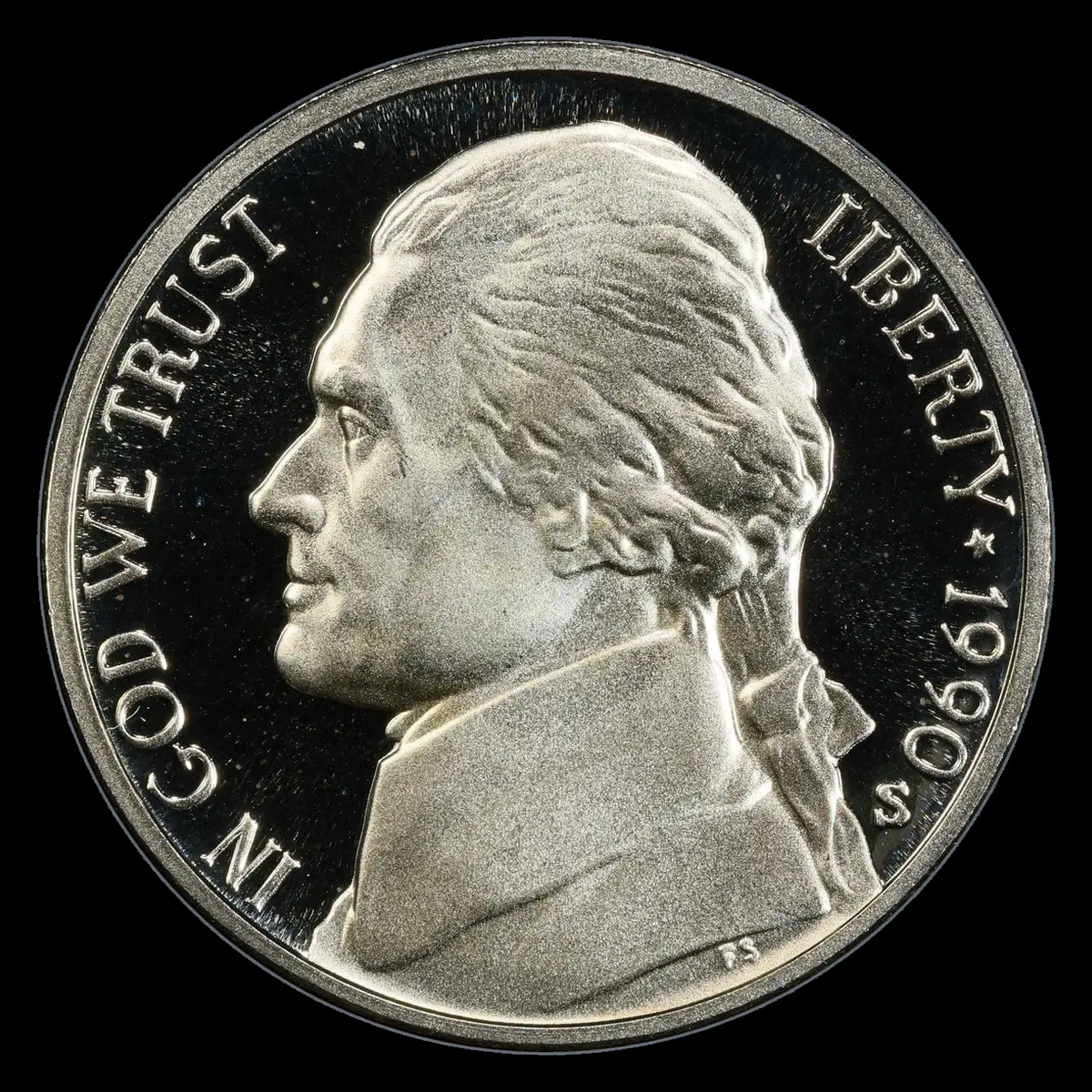
6. 1990 Nickel The Proof Motto, Initials, and Eyelid Repeat: Doubled Die Obverse Error
The 1990-S Proof FS-101 variety presents a useful three-part comparison. IN GOD WE TRUST doubles toward the right, the designer’s FS initials double toward the upper left, and a subtler extra outline appears at the upper eyelid.
How to Identify
Confirm the S mint mark and Proof manufacture, then match the three locations with the NGC variety description. Keep an encapsulated Proof in its holder while inspecting the details.
The tiny FS on the coin names the designer; FS-101 is a catalog attribution. Raised repeated contours should remain fixed under changing light, unlike glare, and differ from flat movement-doubling shelves.
What It’s Worth
$30–$500 is a comparison-based estimate for attributed examples. No completed sale is supplied for this variety, and clean Proof surfaces or a high grade alone cannot replace a diagnostic match.
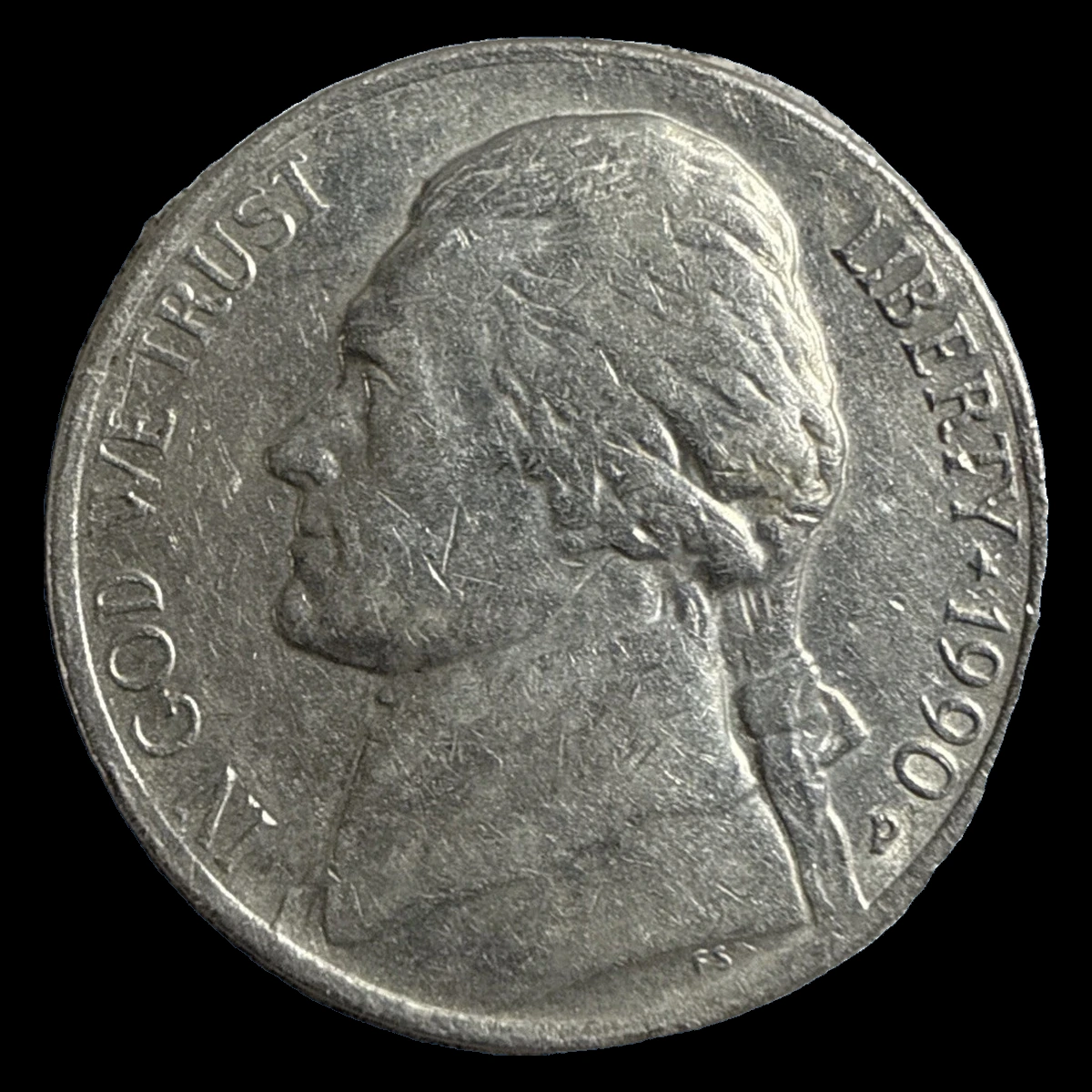
7. 1990 Nickel A Patch of Design Was Blocked: Debris Strike-Through Error
Material caught between a die and blank can prevent part of the design from forming. The recorded 1990-P example is graded ANACS MS66 with 5.5 Steps, but its catalog does not identify the debris material or exact affected location.
How to Identify
Study the transition from the disturbed patch to nearby sharp relief. Wear tends to affect exposed high points, while an obstruction can interrupt a localized area beside otherwise clear detail.
The cataloged ANACS example supports the debris attribution without proving cloth, wire, or grease. Its step notation describes Monticello’s stairs and is separate from the strike-through.
What It’s Worth
$20–$250 is an estimated range for comparable identified debris strike-throughs. The supplied MS66 example has no assigned sale price; a different-year 2000-P strike-through sold for $84 in February 2015.
8. 1990 Nickel Raised Die Damage Accompanies a Blocked Design: Split Die and Capped-Die Strike Error
The recorded Philadelphia AU58 coin combines evidence of a split die with a strike through a die cap. The cap was another coin stuck over a die, interfering with the design transferred to this new blank.
How to Identify
Distinguish raised metal created by the damaged die from an actual split through the coin. Then compare the weakened or distorted design with the identified example, excluding ordinary wear and scratches.
The supplied description does not specify a fixed ridge path or a particular letter. This coin received the capped-die strike and should not automatically be depicted as the cupped cap itself.
What It’s Worth
$150–$750 is an estimated range for a comparable confirmed combination. The PCGS AU58 example sold for $312 on December 23, 2024.
Both effects belong to one coin. Their complete values should not be calculated separately and added together.
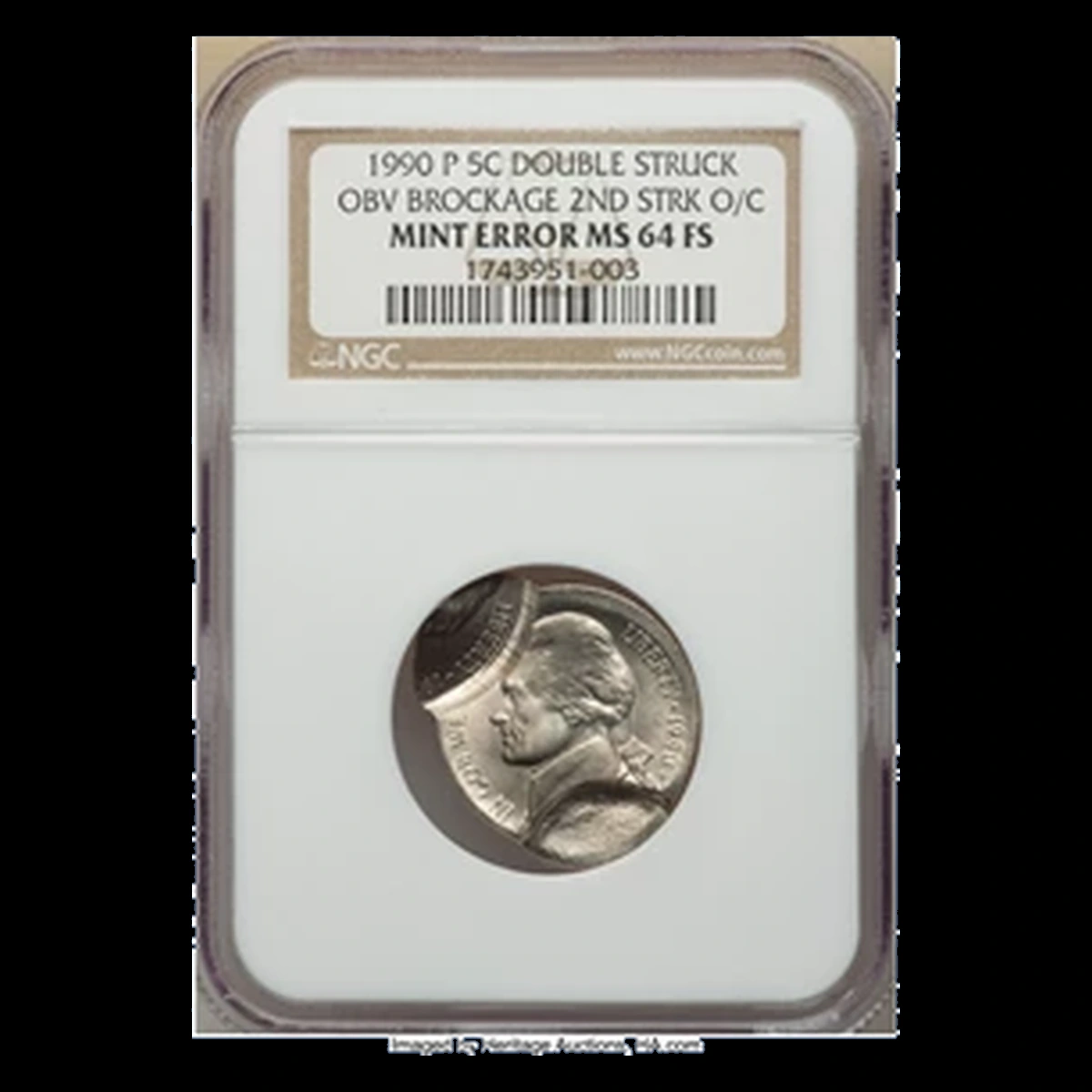
9. 1990 Nickel Overlapping Strikes Include a Sunken Reversed Image: Double Strike with Brockage Error
A Philadelphia example received an off-center second strike and a sunken mirror image from contact with another struck coin. That reversed impression is called a brockage.
How to Identify
Identify a recognizable reversed feature below the surface, then trace where the normal raised second design overlaps the first. An ordinary second raised portrait is not itself a brockage.
Compare both faces and the edge for a consistent original sequence, excluding marks from finished coins squeezed together later. The recorded NGC MS64 Full Steps specimen has no supplied rotation angle or displacement percentage.
What It’s Worth
$100–$650 is an estimated range for comparable combined errors. The MS64 Full Steps coin sold for $139 in October 2022, with recognizable overlap, reversed detail, and preservation contributing to its whole-coin value.
10. 1990 Nickel Unusual Color Covers Original Struck Surfaces: Reported Annealing Error
Heating blanks before striking softens their metal, a process called annealing. Problems at that stage can alter surface color, but dark brown or gray coloration can also develop long after minting.
How to Identify
Examine both faces and the edge under neutral light for original luster, residue, pits, or an added coating. The nickel’s copper and nickel are mixed throughout, rather than arranged as a nickel skin over a copper core.
Do not polish a test spot. If the intact surface does not clearly establish the cause, preserve it for specialist examination rather than assigning a Mint origin from color alone.
What It’s Worth
$20–$150 is an estimate for an identified preparation error with preserved original surfaces. A 2005-D improperly annealed MS62 nickel sold for $119 in December 2022, a later-year comparison that does not authenticate a 1990 candidate.
11. 1990 Nickel The Nickel Design Fills a Small Layered Disk: Dime-Planchet Strike Error
The recorded 1990-P wrong-planchet coin weighs 2.3 grams and is graded NGC AU55. Its design was struck on a blank intended for a dime, whose copper center and outer layers differ from a nickel’s uniform alloy.
How to Identify
A modern dime blank starts near 2.27 grams, well below a normal nickel’s five grams. Combine weight with the layered edge and naturally truncated peripheral design, checking for grinding or trimming.
Read the surviving date and mint letter and allow for the smaller blank spreading during the strike. No earlier Roosevelt dime design is required because this was a blank, not necessarily an already struck dime.
What It’s Worth
$200–$800 is an estimate for comparable authenticated 1990 dime-planchet strikes. The 2.3-gram AU55 example sold for $299 on January 9, 2011.
A damaged nickel reduced to a similar weight does not qualify for that comparison. The correct metal and strike relationship must support the attribution together.
Conclusion
A useful 1990 nickel inspection moves from the whole outline to the details that explain it. An edge step, a missing blank section, and a design displaced on intact metal each require a different comparison.
Keep the Proof’s three diagnostic locations together, and treat combined errors as single coins when discussing value. Original surfaces, readable identity, and a clear relationship between both faces make the strongest evidence.