Rare 2001 Dollar Errors (List & Pictures)
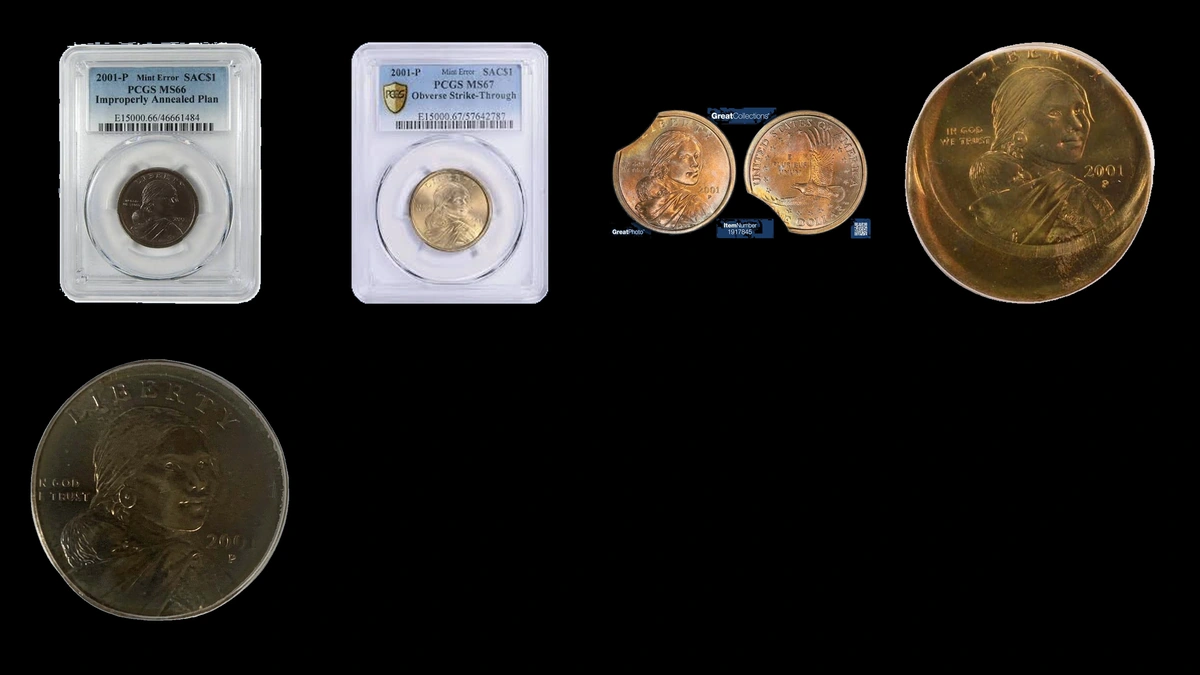
Metal identity is central to 2001 Sacagawea dollar errors, with supplied estimates from $10–$25,000. A quarter-blank example sold at auction for $5,750 in January 2009; a published ownership history separately reports $13,667 for a nickel-blank example in 2008.
Start by distinguishing surface color from missing metal, then inspect the outline and any surviving design from another coin. Keep asking prices separate from completed transactions.
| Observation | Possible identification | Estimated value |
|---|---|---|
| Copper-brown color without layer loss | Improper annealing | $25–$250 |
| Exposed copper with absent outer metal | Missing clad layer | $50–$1,500 |
| Local blocked portrait | Strike-through | $10–$400 |
| Gap in the blank | Clip | $50–$500 |
| Displaced design and bare crescent | Off-center strike | $200–$3,000 |
| Smaller blank with no earlier design | Quarter or nickel planchet | $1,000–$20,000 across the two types |
| Earlier quarter or dime details | Overstrike on a finished coin | $5,000–$25,000 across separate host types |
1. 2001 Dollar Copper-Brown Color Across Original Surfaces: Improper Annealing Error
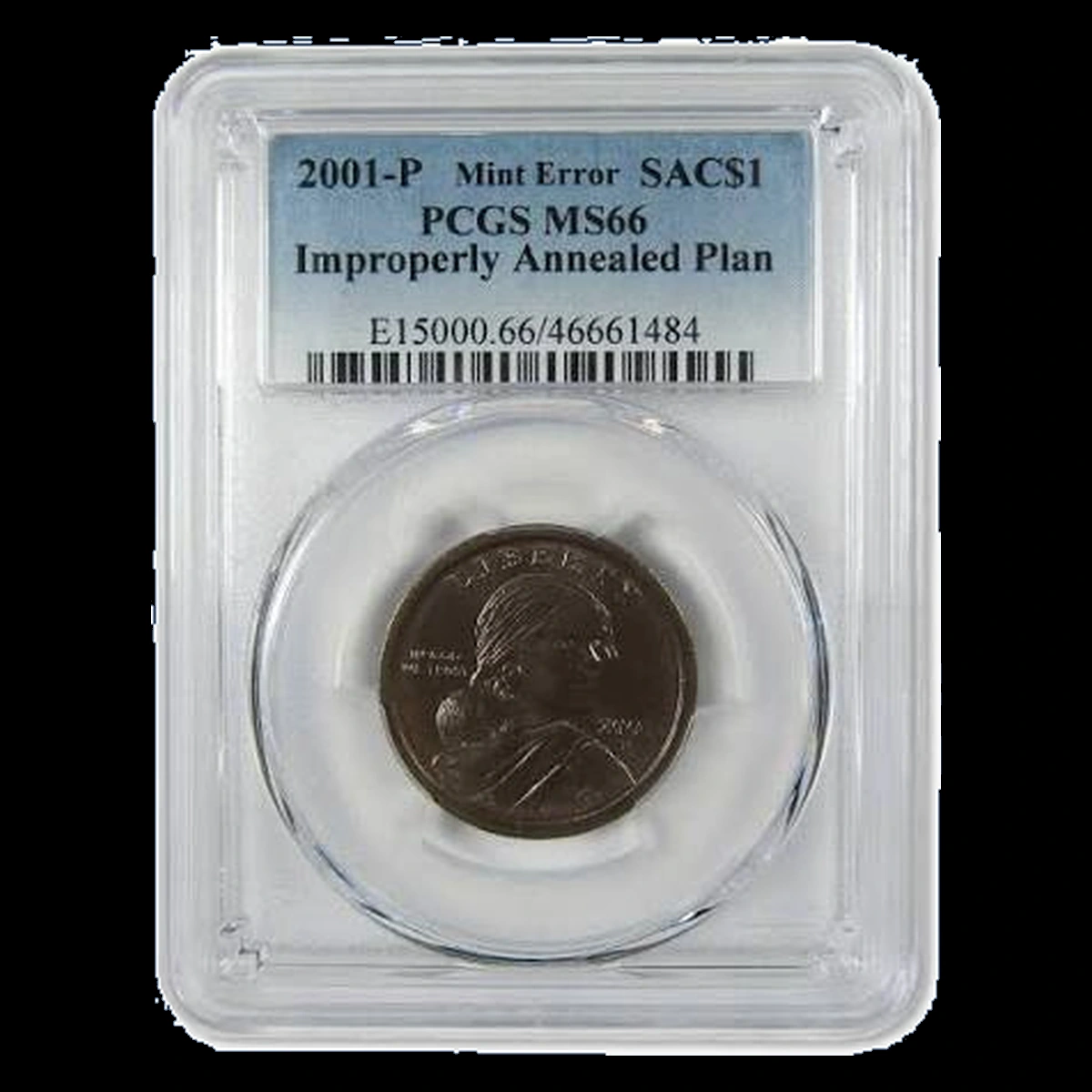
Certified Philadelphia examples have been described as improperly annealed or sintered. Annealing softens the blank through heating, while sintering here describes surface material bonded during heating rather than an outer layer falling away.
The dollar can retain its normal design and shape despite the color change. Natural tarnish, corrosion, and heating after manufacture need to be excluded before a dark coin receives the same identification.
How to Identify
Compare a normal golden dollar under the same light without cleaning either surface. Inspect both open fields and protected spaces near lettering for original texture.
Surviving shine can help describe preservation but also exists beneath ordinary tarnish. It cannot alone establish a preparation-stage heating error.
Check both faces and the edge for actual loss of an outer layer. Keep the 2001 date and P in the record when requesting a comparison with certified annealing examples.
What It’s Worth
$25–$250 is the supplied estimate for a genuine 2001-P annealing error. Original preservation and a convincing production-related surface change guide the comparison.
An archived Fred Weinberg list asked $175 for an MS68 example. Littleton also offered an error-and-normal-coin set at $94.25–$118.
Those are asking prices, and the Littleton figure covers two coins. Neither represents a completed auction for one error dollar.
2. 2001 Dollar One Copper Face with a Layer Absent: Missing Clad Layer Error
The copper core becomes exposed when a golden outer layer is missing. A documented 2001-P reverse-layer-loss example in NGC MS67 weighs 6.0 grams.
A separate ANACS MS63 report concerns front-layer loss. It should not inherit the six-gram measurement or be combined with the other coin as though both outer faces were absent.
How to Identify
Record a loose coin’s weight against the normal 8.10 grams rather than requiring every layer-loss example to weigh exactly six grams. Inspect the edge beside the affected face for how the remaining bonded layers meet.
Examine the portrait or eagle across the exposed area and compare both faces under neutral light. Staining can change color without showing a genuine layer boundary.
Scraping and chemical damage can remove metal too. Preserve any detached material with the coin and obtain an assessment of the strike and surface to establish the nature and timing of the separation.
What It’s Worth
$50–$1,500 is the supplied estimate for genuine front- or reverse-layer loss on 2001-P dollars. Preservation of the exposed design matters along with the amount missing.
Separate reverse-loss MS63 examples sold at Heritage for $87.40 and $64.40 in February 2002. The NGC MS67 six-gram specimen appeared in May 2007 but did not sell there.
An unsold appearance provides no realized price. A scraped copper-colored coin is also a poor substitute for an intact authenticated missing-layer comparison.
3. 2001 Dollar Interrupted Detail at the Lower-Right Portrait: Struck Through Thin Material Error
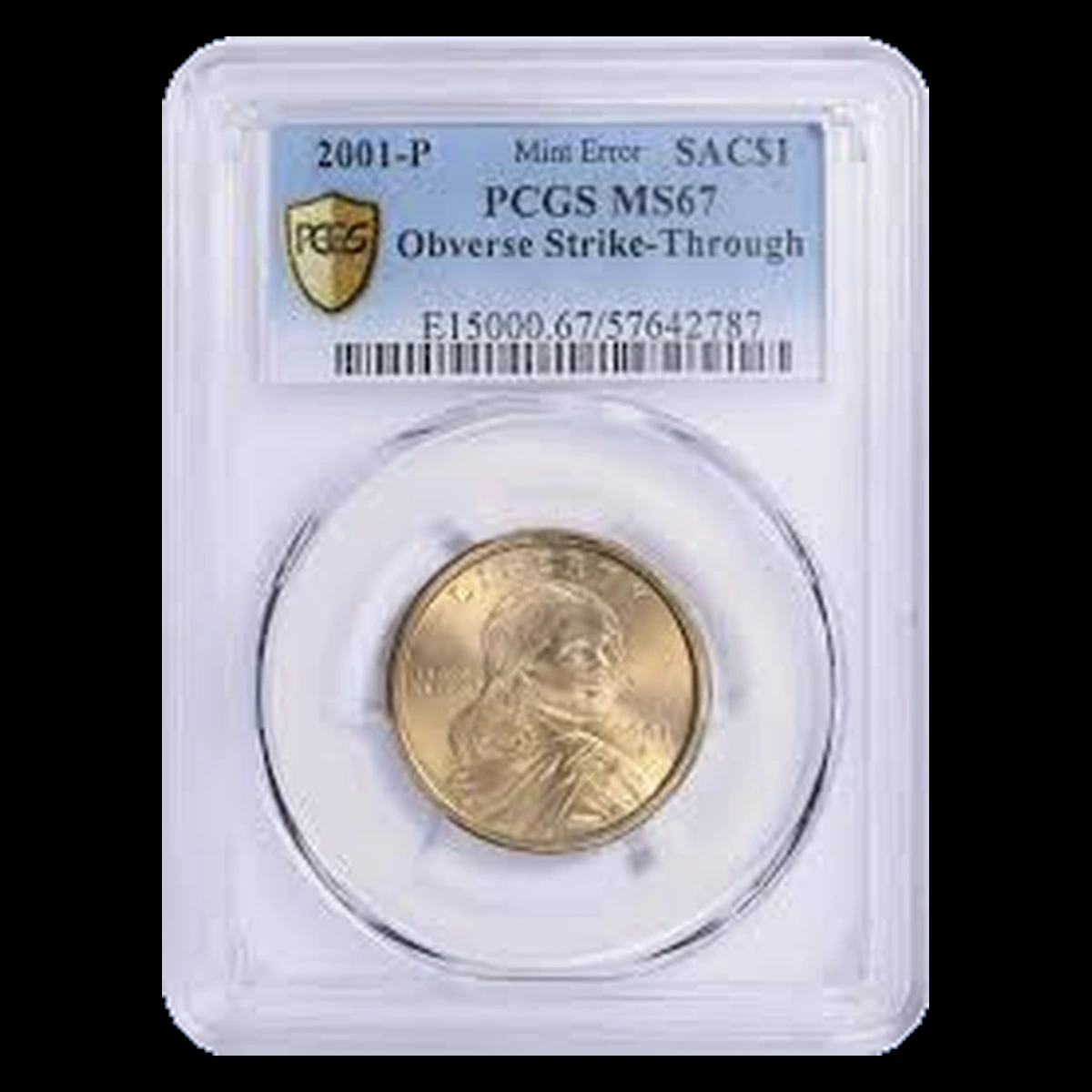
A documented Philadelphia dollar has a local interruption where a thin object blocked direct contact between die and blank. Nearby design formed more normally around the affected lower-right portrait area.
The ANACS MS62 description suggested paper, but did not positively identify the material. Toning, light marks, and fingerprint traces on the coin are separate condition features rather than evidence of a paper obstruction.
How to Identify
Compare the lower-right portrait with a normal dollar and follow the boundary between clear and interrupted design. Side lighting can reveal depth and texture without settling the material’s identity.
Record scratches, fingerprints, and wear separately from the original interruption. Such later surface features can coexist with a genuine strike-through.
Include the reverse, date, and P with the close-up. An untouched boundary gives an examiner more useful evidence than a cleaned patch or an unsupported substance label.
What It’s Worth
$10–$400 is the supplied estimate for similar 2001 strike-throughs, ranging from minor interruptions to larger clearly shaped impressions. The complete condition and affected area determine the closest comparison.
The ANACS MS62 example sold for $14.95 in February 2002. Its unworn but noticeably marked condition helps illustrate why a real error can remain inexpensive.
A later listing of the described coin was unsold. It should not be counted as another completed transaction.
4. 2001 Dollar A Curved Gap or Additional Edge Clip: Clipped Blank Error
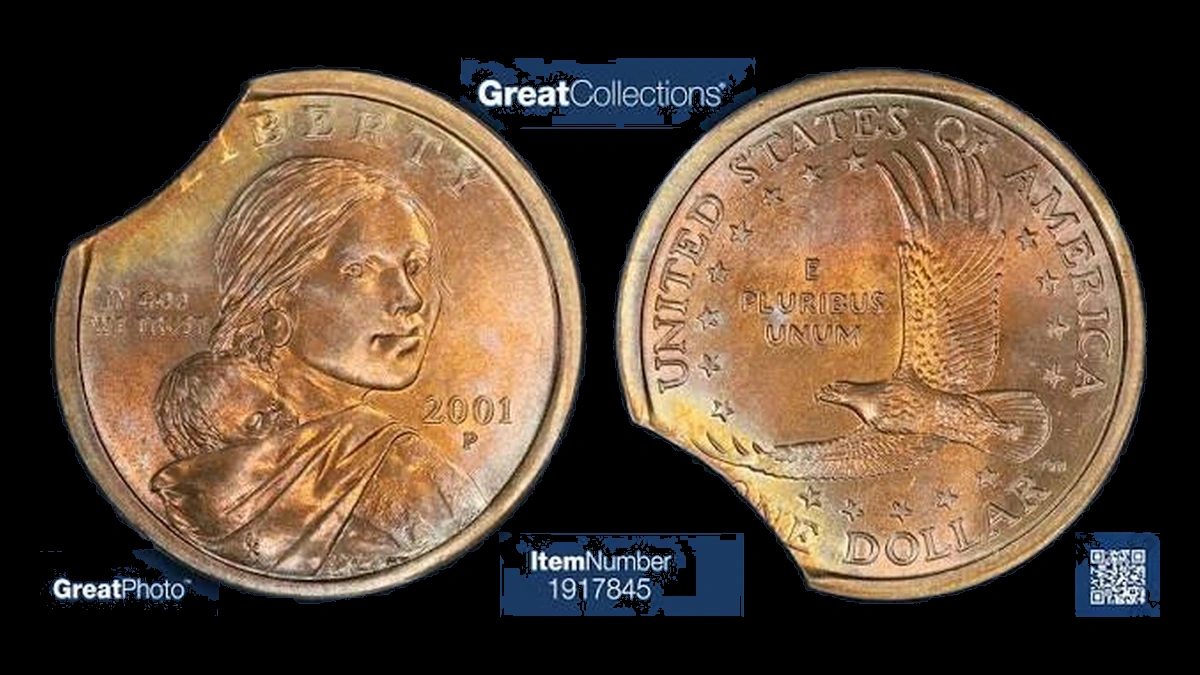
A 2001-P PCGS MS67 example has a 5% curved clip. A separate ANACS MS65 dollar combines a curved clip with another edge clip.
The metal was incomplete before striking, potentially from the blanking punch overlapping an earlier opening in the strip. These two specimens have their own gaps and should not share an invented position or measurement.
How to Identify
Study the junctions where normal rim approaches the missing section. They can show how the incomplete blank responded when the design was formed.
Inspect for saw cuts, filing, or metal folded out by later cutting, while recognizing that roughness alone does not reject a clip. A weak rim opposite the gap can provide support but is not equally visible on all examples.
Relate a loose coin’s weight loss to its missing area using 8.10 grams as the normal standard. Record both gaps separately on the ANACS example instead of assigning it the single clip’s 5% figure.
What It’s Worth
$50–$500 is the supplied estimate for genuine clipped 2001 dollars of this general kind. Larger or multiple clear gaps may attract interest when identity and original surfaces survive.
Sullivan Numismatics listed the PCGS MS67 5% clip at a $200 asking price. That offer is not a disclosed completed sale.
5. 2001 Dollar The Design Shifted Beside a Bare Crescent: Off-Center Strike Error
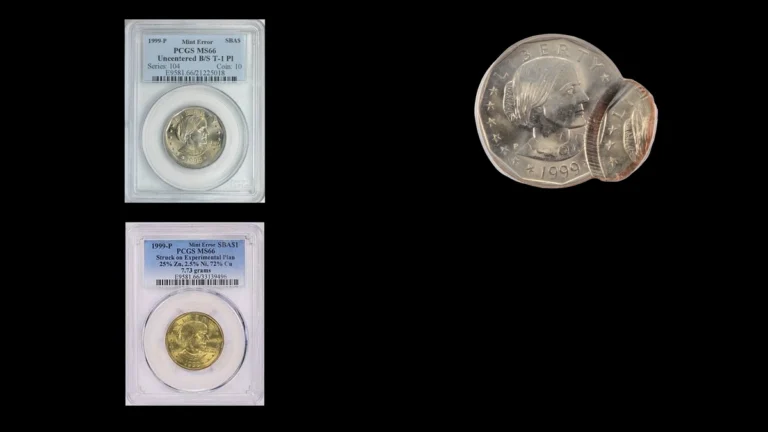
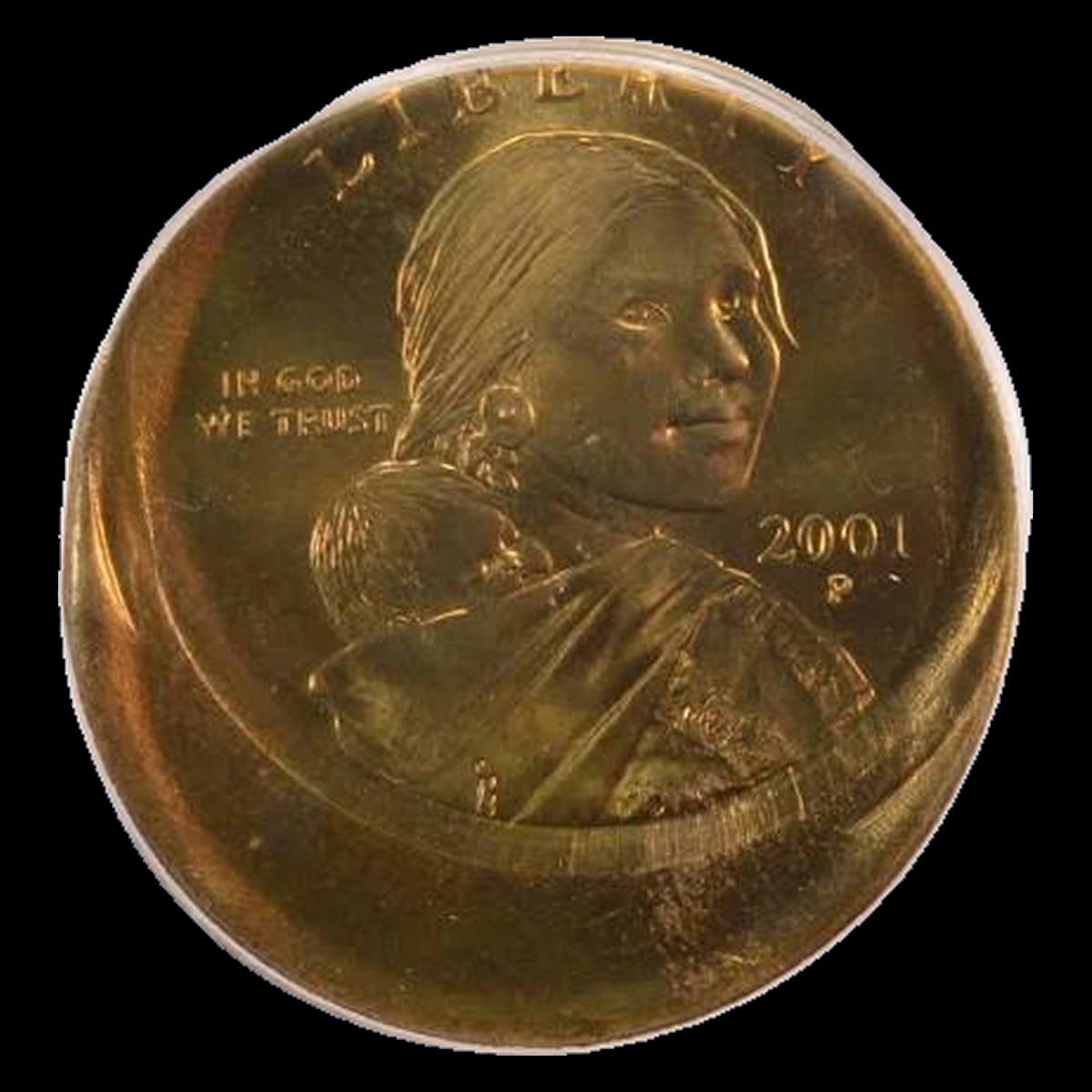
Sullivan Numismatics describes a 2001-P PCGS MS66 dollar struck 25% off-center. The blank missed its proper position, leaving unused metal beside displaced portrait and reverse designs.
The listing also mentions golden-blue toning and small white specks on the lower front. Those are surface observations and do not establish a direction for the strike.
How to Identify
Use uncropped views to compare the original outline, struck area, and bare crescent. The eagle side should show displacement consistent with the same misplaced blank.
A shifted portrait behind a centered reverse suggests a misaligned die instead. Examine the bare metal for grinding or flattened remnants of an already completed picture.
Read the 2001 date and P before matching the listed specimen. The white specks described near five o’clock must not be converted into a five-o’clock displacement claim.
What It’s Worth
$200–$3,000 is the supplied estimate for genuine 2001 off-center dollars of differing displacement and condition. An identifiable, well-preserved coin gives a stronger comparison than a damaged example with little readable design.
The 25% PCGS MS66 example has a posted asking price of $1,750. Its out-of-stock status does not disclose what a buyer actually paid.
6. 2001 Dollar Dollar Designs Crowded onto Smaller Metal: Quarter or Nickel Blank Error
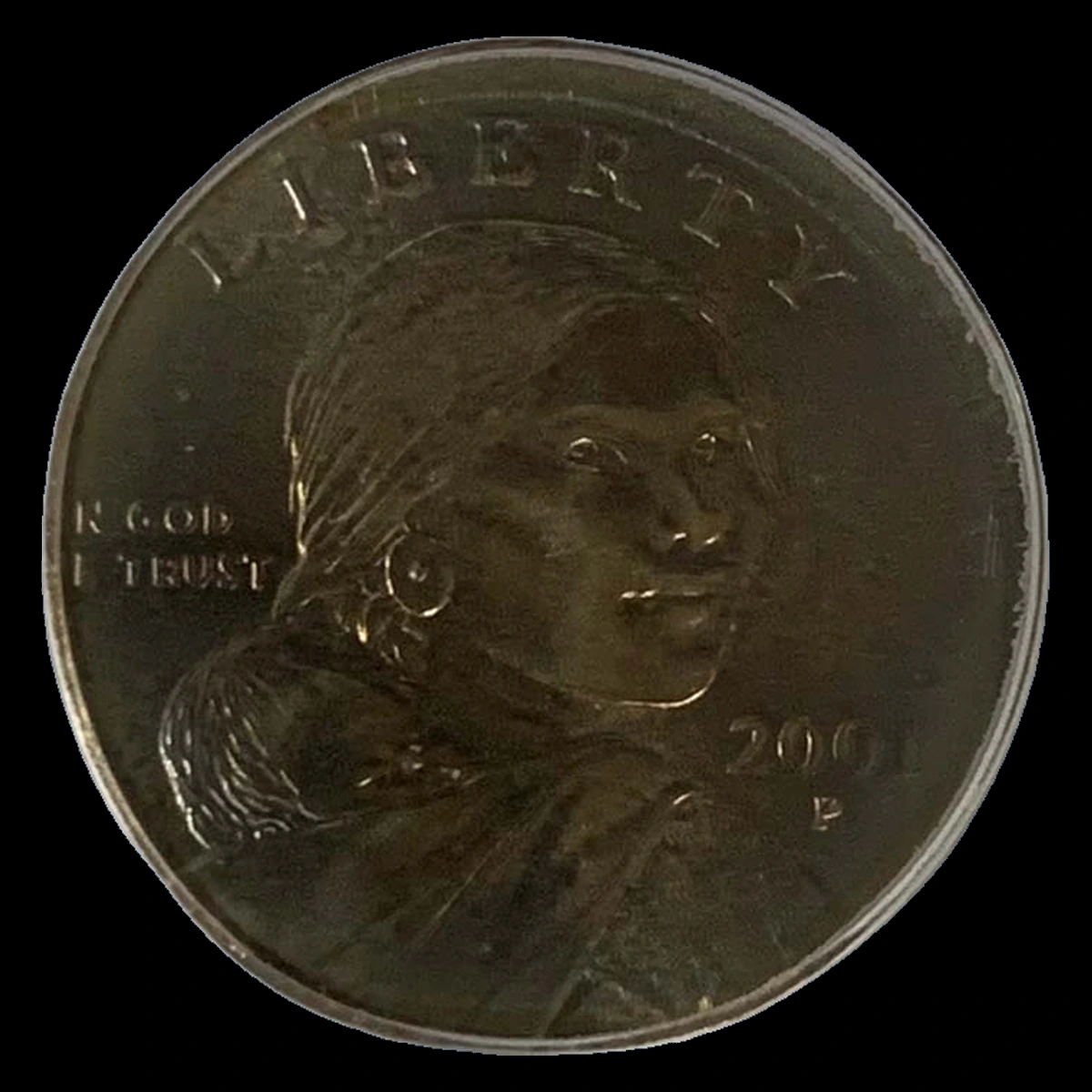
Confirmed 2001-P dollars exist on quarter and nickel blanks that had not yet received another coin’s design. Their smaller size can crowd the outer lettering or leave part of the intended border absent.
The NGC MS64 quarter-blank specimen weighs 5.4 grams, with AMERICA close to the edge and the right-side raised border missing. A different example in PCGS MS64 is identified as a nickel-blank strike.
How to Identify
Inspect composition through the edge: quarter blanks have clad layers around copper, while nickel blanks use a single copper-nickel alloy. Pale color alone cannot separate them.
A normal quarter blank starts near 5.67 grams and 24.3 millimeters, while a nickel blank starts near 5.00 grams and 21.21 millimeters. Striking can alter final width, so those standards are not measured dimensions for every error.
Keep the quarter specimen’s actual 5.4 grams tied to its crowded AMERICA, absent right border, and readable date and P. Professional metal testing can assess whether the original edge and strike agree without scraping the coin.
What It’s Worth
$1,000–$20,000 spans the supplied blank-specific estimates: $1,000–$7,000 for comparable quarter blanks and $8,000–$20,000 for nickel blanks. The two starting metals are distinct comparisons.
The NGC MS64 quarter-blank example sold for $5,750 in January 2009 and $4,406.25 in February 2013. Those are separate appearances of the same described specimen.
A published ownership history reports a different nickel-blank coin in NGC MS61 at $13,667 in 2008. The dealer-listed PCGS MS64 nickel example is marked sold without an amount, so it must not inherit that reported price.
7. 2001 Dollar An Earlier Coin Visible Beneath the Dollar: Overstrike Error
A completed Kentucky quarter carries a later dollar design on the documented NGC MS66 example. KENTUCKY and part of the horse survive beneath the newer impression, proving a different starting object from an unstruck quarter blank.
A separate report describes a 2001 Roosevelt dime with the dollar reverse impressed on one side. Its 2001 is the dime’s date and does not establish the year of dollar dies that supply no visible dollar date.
How to Identify
On the Kentucky specimen, locate KENTUCKY near one o’clock, the horse near three, and the quarter’s 2001 near seven. QUARTER remains beneath DOLLAR.
Trace those earlier elements as a coherent quarter design, separately from the dollar’s eagle and lettering. Random marks that resemble isolated letters cannot establish an overstrike.
For the dime, identify its own date and design before studying the dollar-back impression. A back-only dollar design cannot provide its missing production year.
Have the edge and overlapping impressions examined for a genuine later strike. Coins squeezed together after manufacture can transfer detail without creating an authentic Mint overstrike.
What It’s Worth
$5,000–$25,000 is the combined supplied range, with $5,000–$15,000 for the Kentucky-quarter type and $5,000–$25,000 conditionally for the reported dime host. These concern different coins and cannot be added.
Fred Weinberg’s archived listing asked $12,500 for the NGC MS66 Kentucky example. That is a dealer offer rather than a disclosed auction result.
The dime estimate values the authenticated two-design error if established, without assigning an unproved dollar year. Clear host details and original surfaces are central to either comparison.
Conclusion
For a 2001 dollar, color needs an explanation from the surface and edge before it becomes an error attribution. A wrong blank needs metal and dimensional evidence, while an overstrike requires an identifiable earlier coin beneath the dollar design.
Keep each specimen’s measurements, grade, and transaction status attached to that specimen. An unsold listing supplies no sale price, and a date on an underlying dime cannot automatically date the dollar impression above it.