Rare 1970 Quarter Errors (List & Pictures)
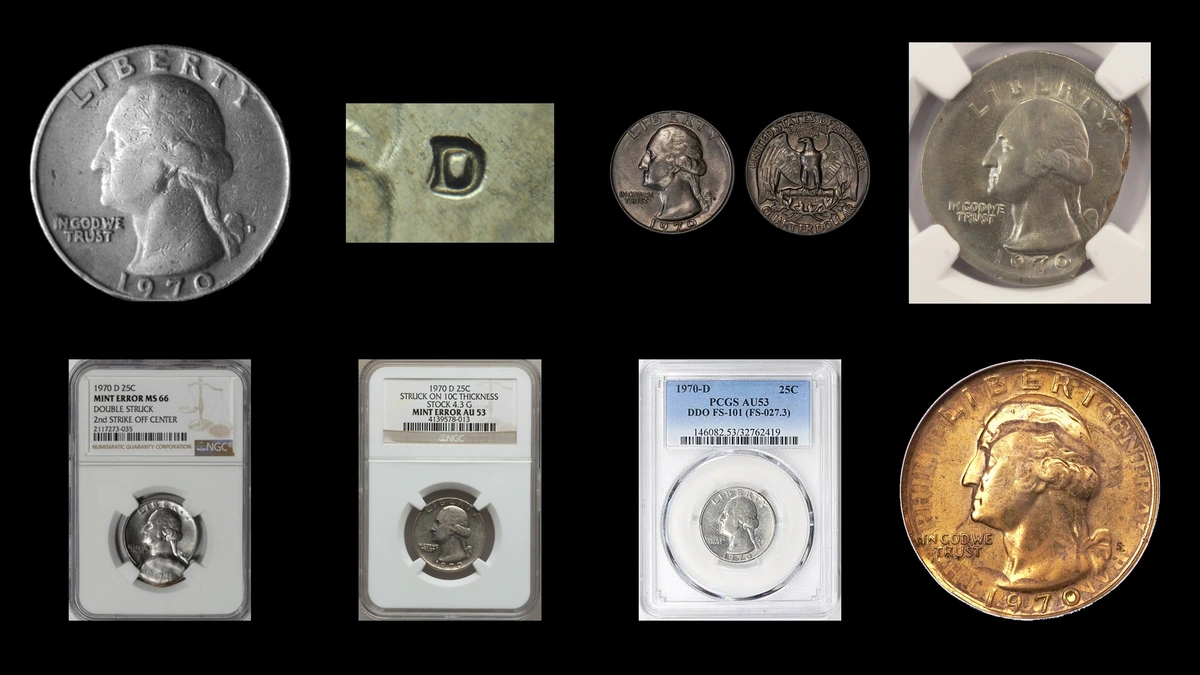
A 1970-S Proof quarter struck over an 1898 five-dollar gold coin sold for $93,000 in January 2023. Estimated values for 1970 quarter errors span $5–$125,000, although most finds involve much less dramatic changes.
This guide separates ordinary Denver and no-mintmark coins from S Proofs, the specially made collector issues involved in several unusual overstrikes.
| Category group | Estimated value | Key distinction |
|---|---|---|
| Cuds and mintmark varieties | $5–$250 | Actual raised shape or repeated letter |
| Proof-style reverse on Denver | $10–$300 | Complete Type H design match |
| Clip, broadstrike, or off-center strike | $25–$500 | Missing metal versus displaced design |
| Thin stock or missing layer | $20–$750 | Thickness and layered structure differ |
| Wrong blanks | $150–$3,000 | Nickel, cent, dime, or foreign blank |
| Doubled dies and repeated strikes | $10–$5,000 | Tool detail versus moved impressions |
| Proof over a finished coin | $3,000–$125,000 | Identify the individual host |
1. 1970 Quarter Denver Rim Cuds Error
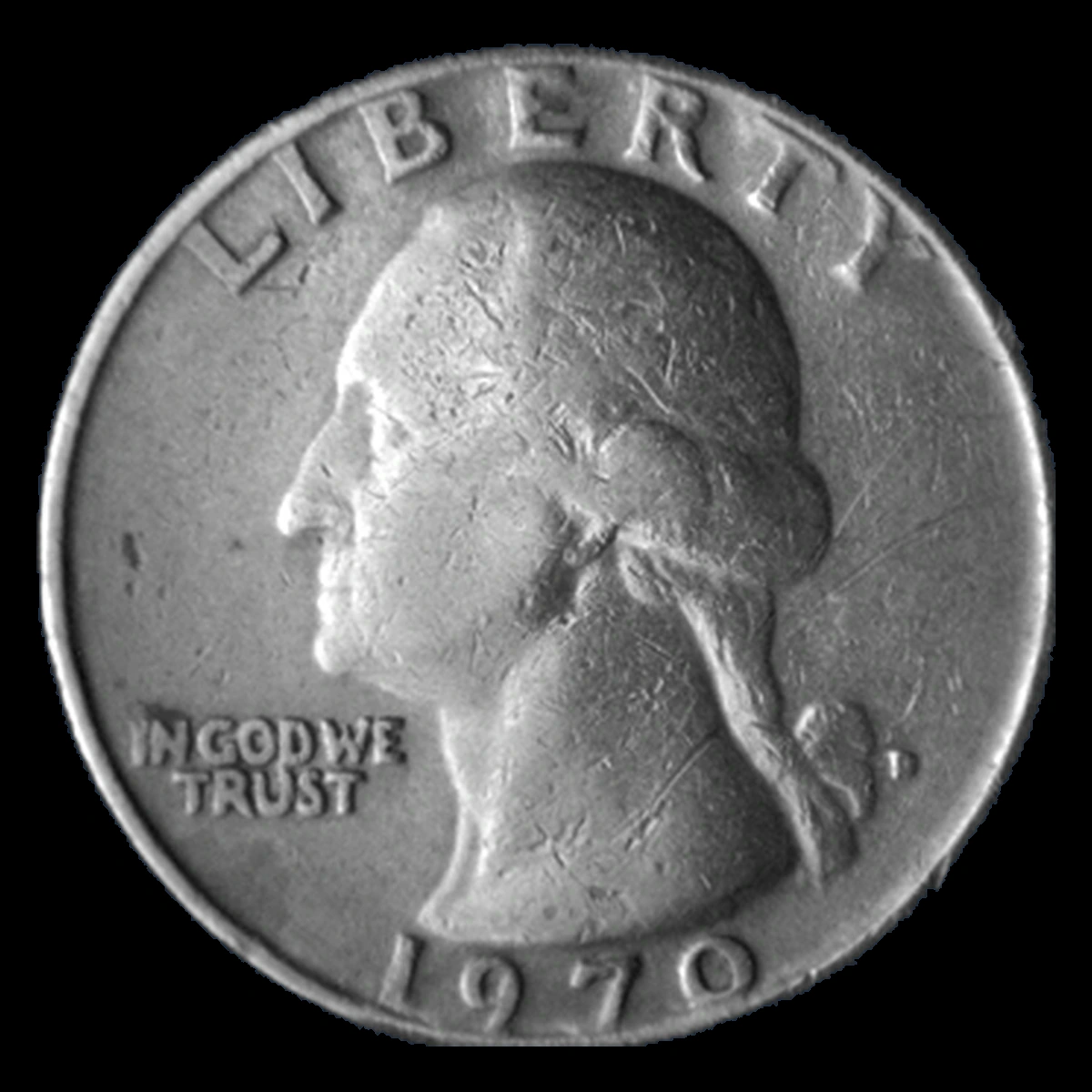
Two separate front-side cuds are cataloged for Denver quarters. Each is a raised rim-connected area left when metal filled a missing portion of the die’s edge.
Their outlines belong to different examples. The supplied descriptions do not provide one location or shape to assign to every 1970-D rim bump.
How to Identify
Follow the raised patch from the rim into the surrounding design. Inspect for a dent, folded edge, or added material that could imitate extra struck metal.
Use neighboring letters to match the entire boundary with a documented example. Size alone cannot identify which die break is present.
What It’s Worth
Comparable genuine cuds have estimated values of $5–$200. Clear boundaries and preserved surrounding detail make stronger comparisons than worn edge irregularities.
2. 1970 Quarter Repunched D and S Mintmarks Error
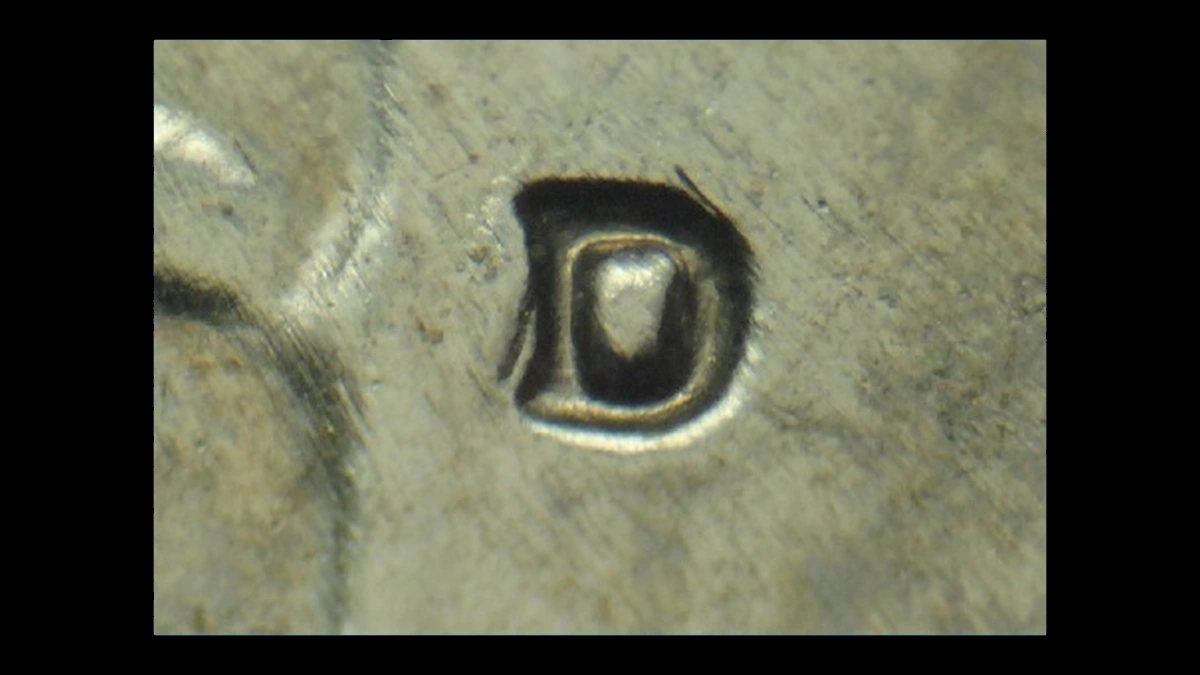
The documented Denver pattern has an earlier D outline toward the left. Separate San Francisco Proof reports include S remnants toward the lower right and slightly tilted punch entries.
These began with repeated impressions of a mintmark punch in the die. They are not several extra letters expected on the same coin.
How to Identify
Choose the mint and finish before comparing the letter. Trace the left-side remnant on D or the appropriate curves and ends on the specific S pattern.
Change the light to distinguish fixed raised details from reflections. A flat shelf or damaged corner cannot supply an otherwise absent second letter.
What It’s Worth
Collectible identified repunched mintmarks have estimated values of $10–$250. Wear on Denver coins and haze or scratches on Proofs can hide the details needed for a match.
3. 1970 Quarter Denver Quarter with a Proof-Style Reverse Error
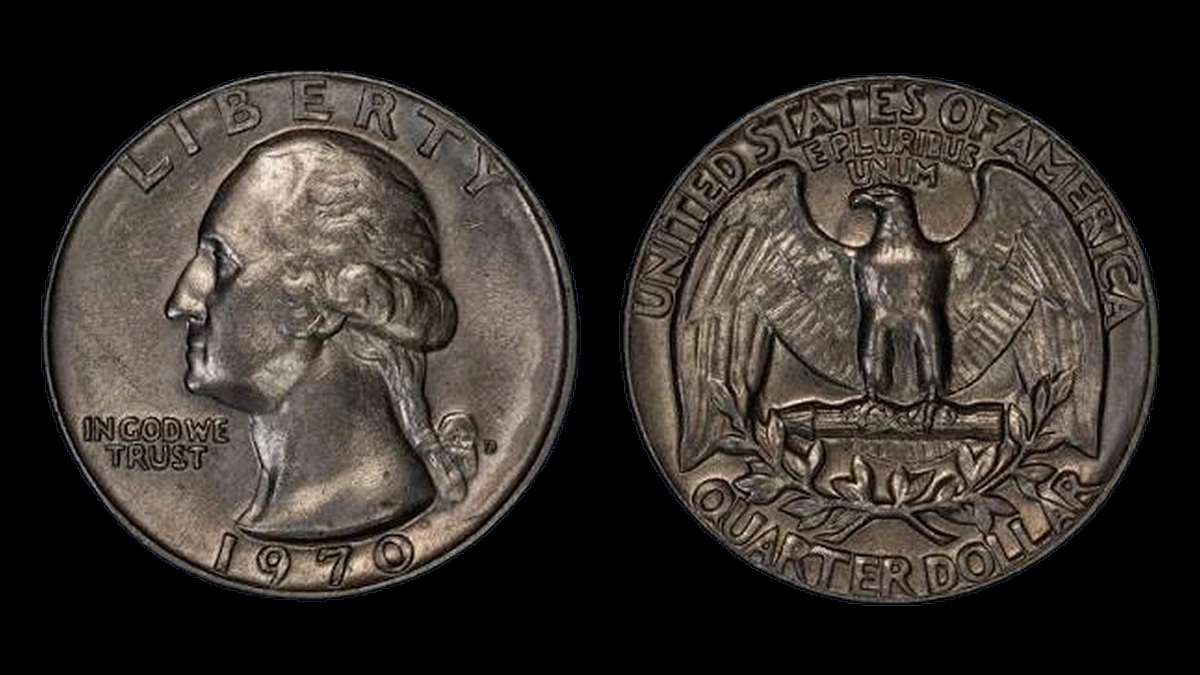
A pointed leaf rising above the arrow tips is one clue to the Type H reverse on certain ordinary Denver quarters. The design is associated with Proof production and is classified here as use of a different design tool.
The leaf is only part of the pattern. STATES spacing and tail feathers must agree with the same reverse design.
How to Identify
Confirm D on the front, then compare the pointed leaf left of the arrow tips, the wider E-to-S spacing in STATES, and the tail feathers with a Type H reference. Wear can soften any one feature.
A shiny surface does not identify either a Proof or this reverse. An ordinary S Proof also does not receive the Denver design-mismatch attribution merely for its normal reverse.
What It’s Worth
Correctly identified Denver Type H examples have estimated values of $10–$300. Clear design detail and attractive unworn surfaces support stronger comparisons.
4. 1970 Quarter Straight Clip with a Broadstrike Error
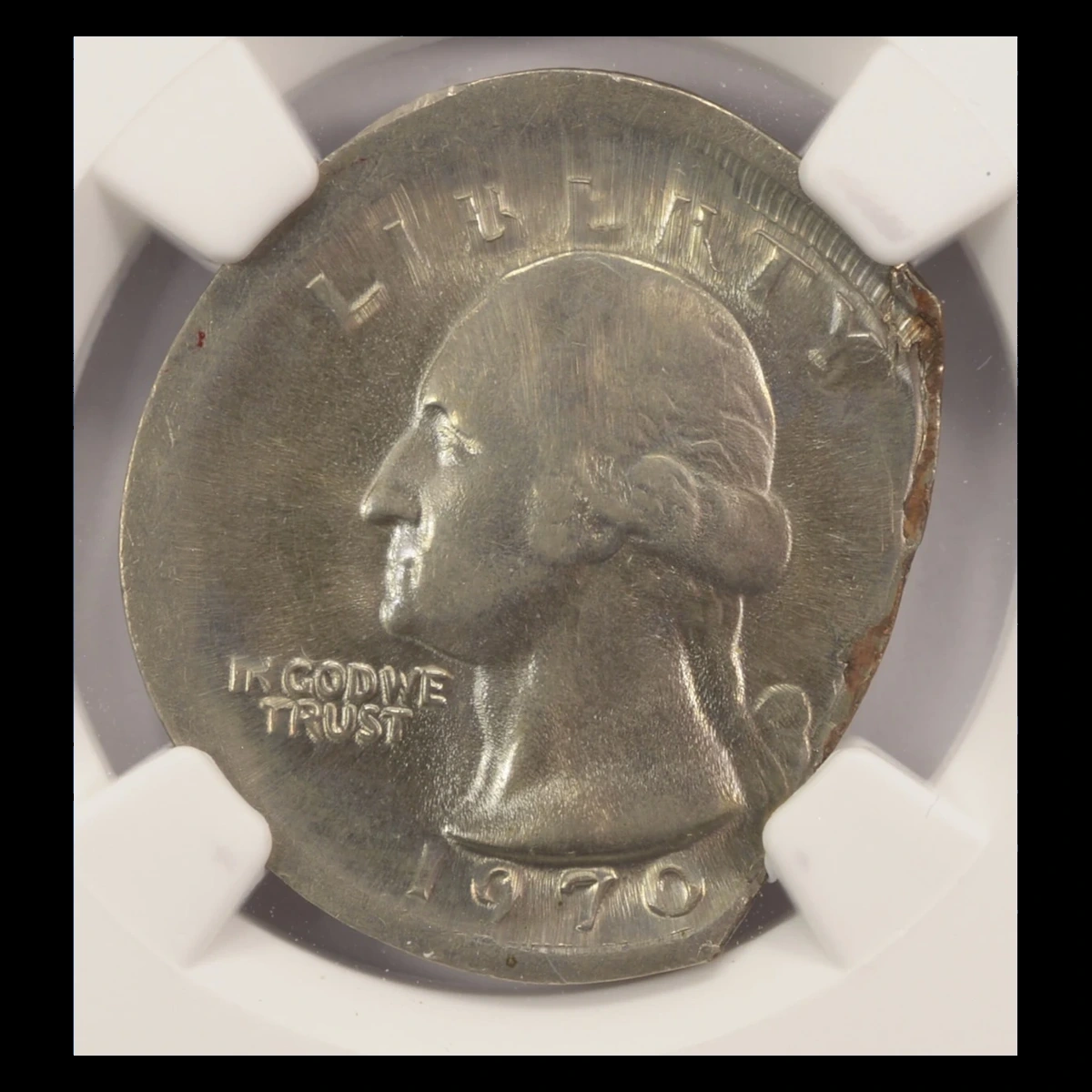
The NGC MS65 Denver example combines an incomplete blank with outward expansion during striking. The straight missing section formed during blank preparation, while the broadstrike reflects failed collar restraint.
A missing gap and a spread border are different observations on one coin. Their combined appearance should explain the surviving design.
How to Identify
Inspect both ends of the straight gap for evidence of cutting after minting, then examine the expanded metal elsewhere. Original detail should fit the shape without crushing from later hammering.
A normal clad quarter weighs 5.67 grams and measures about 24.3 millimeters across. Actual measurements can support the analysis, but the boundary and metal flow determine the useful comparison.
What It’s Worth
Genuine straight-clip broadstrikes have estimated values of $25–$500. Value the whole combination rather than adding full separate prices for the clip and expansion.
5. 1970 Quarter Reported Off-Center Strikes Error
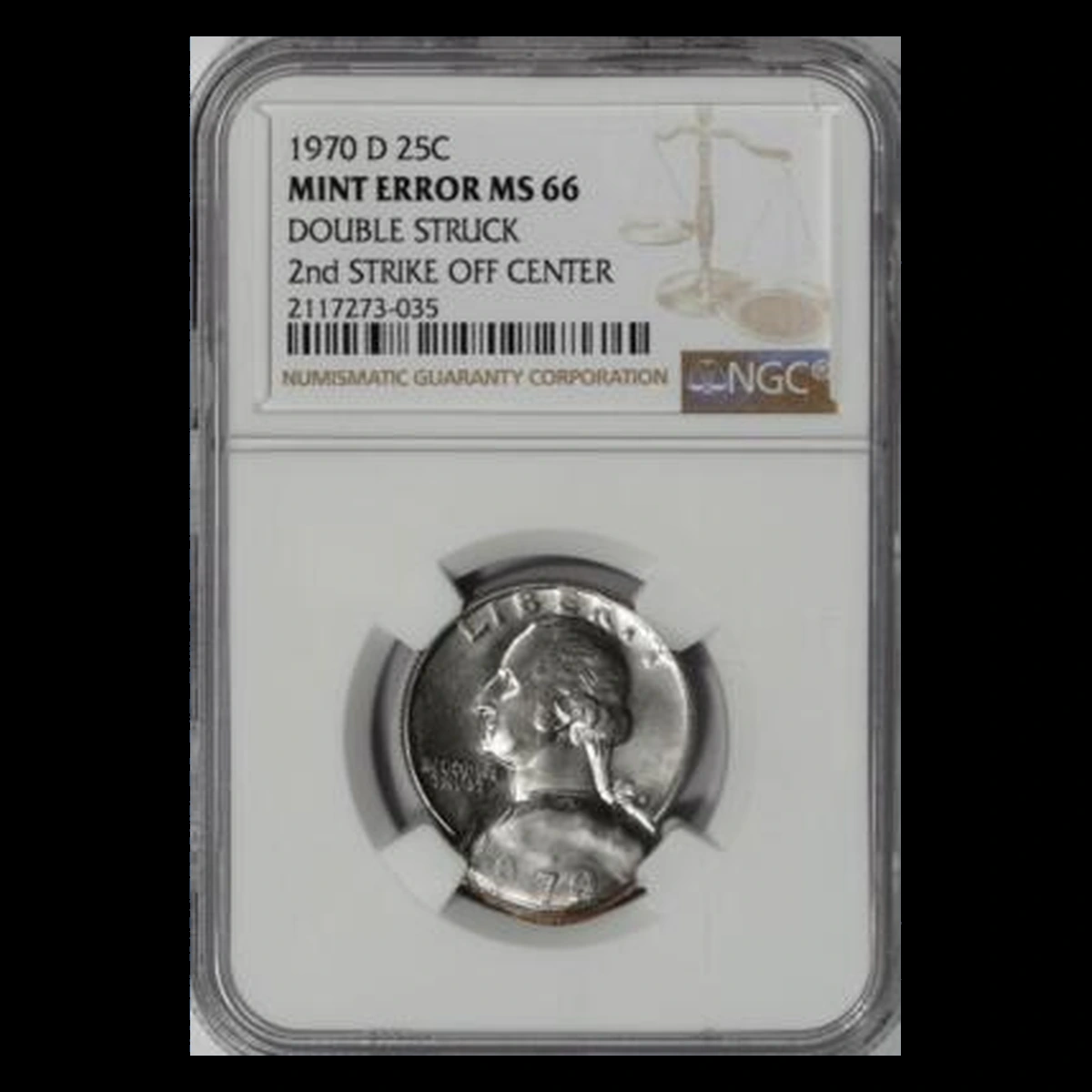
A single off-center strike leaves original blank metal beside a design that partly misses the disc. The 1970 reports do not establish a shared mint, direction, or percentage.
A second displaced impression belongs to the repeated-strike category. Its percentage must not be borrowed for a single-strike candidate.
How to Identify
Locate the date and compare both faces for designs displaced on the same blank. A centered reverse beside an uneven front may indicate a shifted die instead.
Inspect the unstruck area for grinding or scraped-away letters. Solid untouched metal differs from a clipped-out gap.
What It’s Worth
Genuine single off-center examples have estimated values of $40–$500. A different 1974 quarter struck forty-five percent off center sold for $94 in January 2022.
That is a nearby-year comparison, not a 1970 result. Readable identity and original surfaces still matter alongside displacement.
6. 1970 Quarter Dime-Thickness Stock and an Indented Example Error
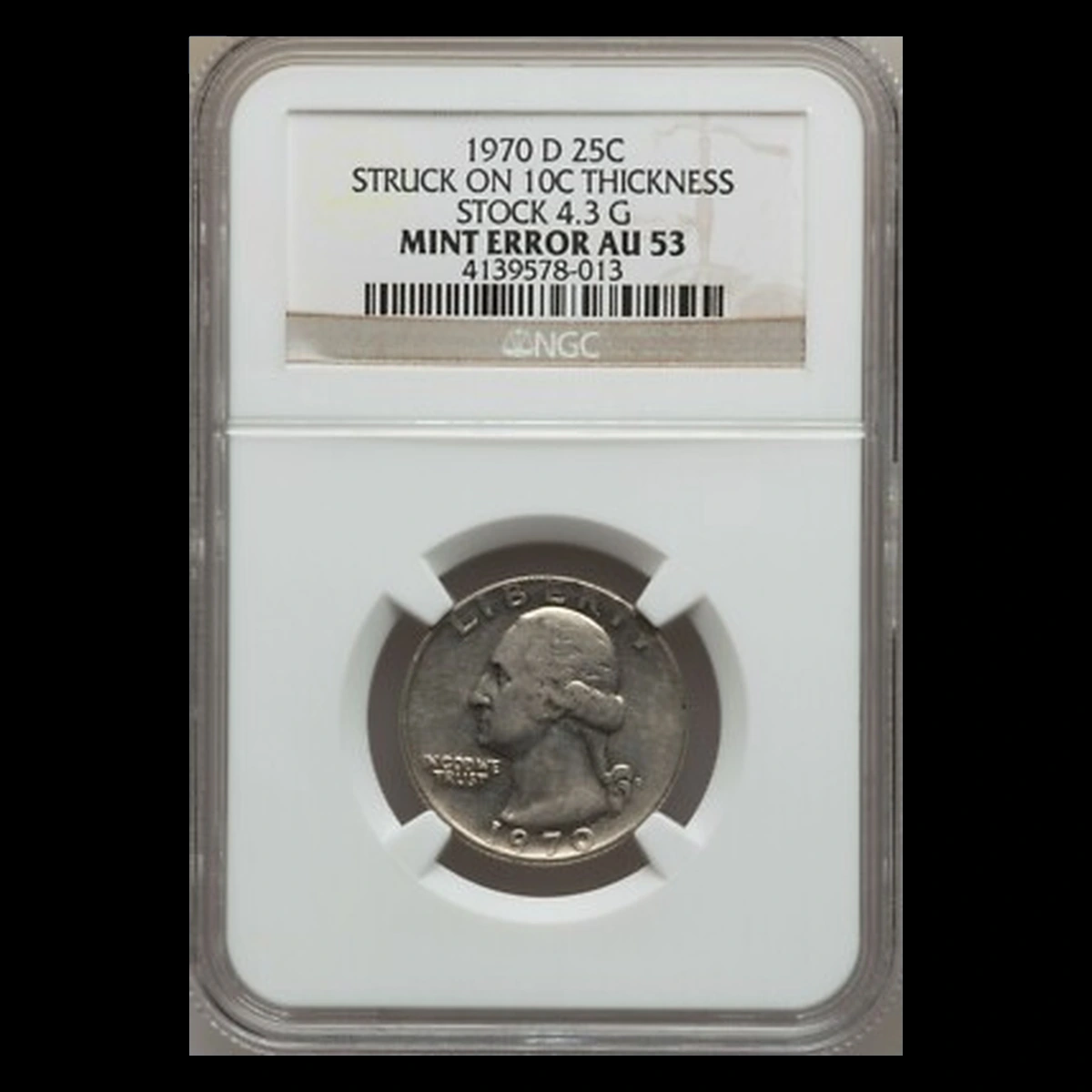
A quarter-sized disc cut from dime-thickness strip can retain roughly normal quarter diameter while weighing about 4.2 grams. It differs from a complete small dime blank.
A Denver NGC MS64 specimen combines thin stock with a front indent and weighs 4.21 grams. That depression belongs to this particular combination, not every thin-stock quarter.
How to Identify
Compare diameter and weight together, then inspect the thin edge for both outer layers and the copper center. Missing-layer coins have a different structure, while acid or grinding can reduce metal after minting.
For the recorded combination, inspect the bounded front hollow separately from the overall thinness. Preserve original surface texture when considering the manufacturing sequence.
What It’s Worth
Ordinary dime-stock examples have estimated values of $20–$350. Well-preserved examples combining thin stock and a clear indent have an estimated range of $150–$750.
Historical Numismatic News guidance placed circulated pieces around $7.50–$10 and unworn pieces around $20–$25. Those older guide figures show that thin stock alone need not imply extreme rarity.
7. 1970 Quarter Missing Outer Clad Layer Error
A Denver NGC MS66 quarter missing its reverse layer weighs 4.6 grams. Another Denver example graded ANACS AU58 has a missing layer without the affected face specified in its title.
The pale outer covering is absent, exposing the copper center. Neither face nor weight should be transferred from the MS66 specimen to the AU58 coin.
How to Identify
Compare the exposed face with the edge structure and remaining covering. Original struck detail on copper differs from abrasion or chemical etching caused by later removal.
The recorded 4.6 grams is a specimen measurement, not a universal cutoff. Keep a certified coin in its holder and use its recorded description.
What It’s Worth
Comparable authenticated missing-layer quarters have estimated values of $75–$750. The AU58 example brought $104 in December 2011, and the separate MS66 reverse-layer coin sold for $192 in June 2023.
Appearance and the remaining original design affect comparisons alongside grade. Brown color alone cannot establish the error.
8. 1970 Quarter Strike on a Nickel Blank Error
The recorded Denver PCGS AU58 example carries the quarter design on a nickel blank. A separate ANACS AU50 coin weighs 4.99 grams.
Nickel blanks are solid copper-nickel alloy, rather than the layered metal used for quarters. Their smaller starting outline can leave outer quarter details absent.
How to Identify
A normal nickel blank begins near 5 grams and 21.2 millimeters across, although striking can spread it. Inspect the uniform edge metal and surviving quarter design together.
Search for older Jefferson or nickel lettering beneath the new image. Such remnants would indicate a finished host coin rather than the unused blank discussed here.
What It’s Worth
Comparable genuine nickel-blank quarters have estimated values of $150–$1,200. The PCGS AU58 example sold for $172.50 in August 2009.
Its record does not supply the other AU50 coin’s price or measurement. Readable date and mintmark are particularly useful on the smaller disc.
9. 1970 Quarter Strike on a Cent Blank Error
A Denver example is cataloged as PCGS MS65 Brown on a cent blank. Its copper-based metal differs from both a normal quarter and today’s copper-plated zinc cent construction.
The small blank cannot necessarily hold the full quarter design. Brown color is consistent with the reported metal but does not prove its identity.
How to Identify
A period cent blank normally starts at 3.11 grams and about 19.05 millimeters across. Assess actual measurements with the natural fit of Washington’s design and the intact edge.
Copper plating can recolor a normal quarter without making it a genuine cent-blank strike. Trimming or scraping also leaves a different boundary from an originally small blank.
What It’s Worth
Authenticated cent-blank quarters have estimated values of $500–$2,500. Different-year comparisons include a 1974-D MS64 at $977.50 in January 2010 and a no-mintmark 1974 MS62 at $540 in December 2024.
Neither is a sale of the recorded 1970-D MS65 Brown example. Its own remaining identity and surfaces determine the appropriate comparison.
10. 1970 Quarter Reported Strike on a Small Dime Blank Error
Mint Error News reported a Denver quarter on a dime blank with its date and mintmark area intact. The listed piece was graded PCI AU58.
A full dime blank is much smaller than a quarter blank. That is distinct from a quarter-sized disc cut from thinner dime stock.
How to Identify
A standard clad dime blank begins near 17.91 millimeters and 2.268 grams. Compare the actual disc with the remaining quarter design while allowing for expansion during striking.
Confirm the date and D on the metal itself and inspect for filing, trimming, or joins. The approximately 4.2-gram thin-stock category does not describe this small blank.
What It’s Worth
A genuine dime-blank example has an estimated range of $500–$3,000. A different 1987 quarter on a dime blank with an incomplete date brought $253 in a September 2010 auction-results report.
The 1970 estimate is not its recorded selling price. Visible identity and authentication require their own assessment.
11. 1970 Quarter Strike on a Philippine Twenty-Five-Cent Blank Error
The Denver NGC MS65 specimen used an unused Philippine twenty-five-cent blank and has a recorded weight of 4.1 grams. It carried no earlier Philippine design before receiving the quarter strike.
A separate S Proof over a finished Philippine coin preserves older lettering. The two examples represent different host materials and sequences.
How to Identify
Assess the edge, diameter, composition, and Washington design together. A weight near 4.1 grams alone cannot distinguish this foreign blank from some thin-stock quarters.
Look for an older design before calling the host unused. Specialist identification must connect the material and dimensions to the actual Philippine blank.
What It’s Worth
Comparable authenticated foreign-blank quarters have an estimated range of $500–$3,000. The 4.1-gram MS65 example sold for $930 in June 2023.
That measurement and result belong to the Denver blank strike. They should not accompany photographs of the finished-coin Proof overstrike.
12. 1970 Quarter Doubled Dies and Shared Design Doubling Error
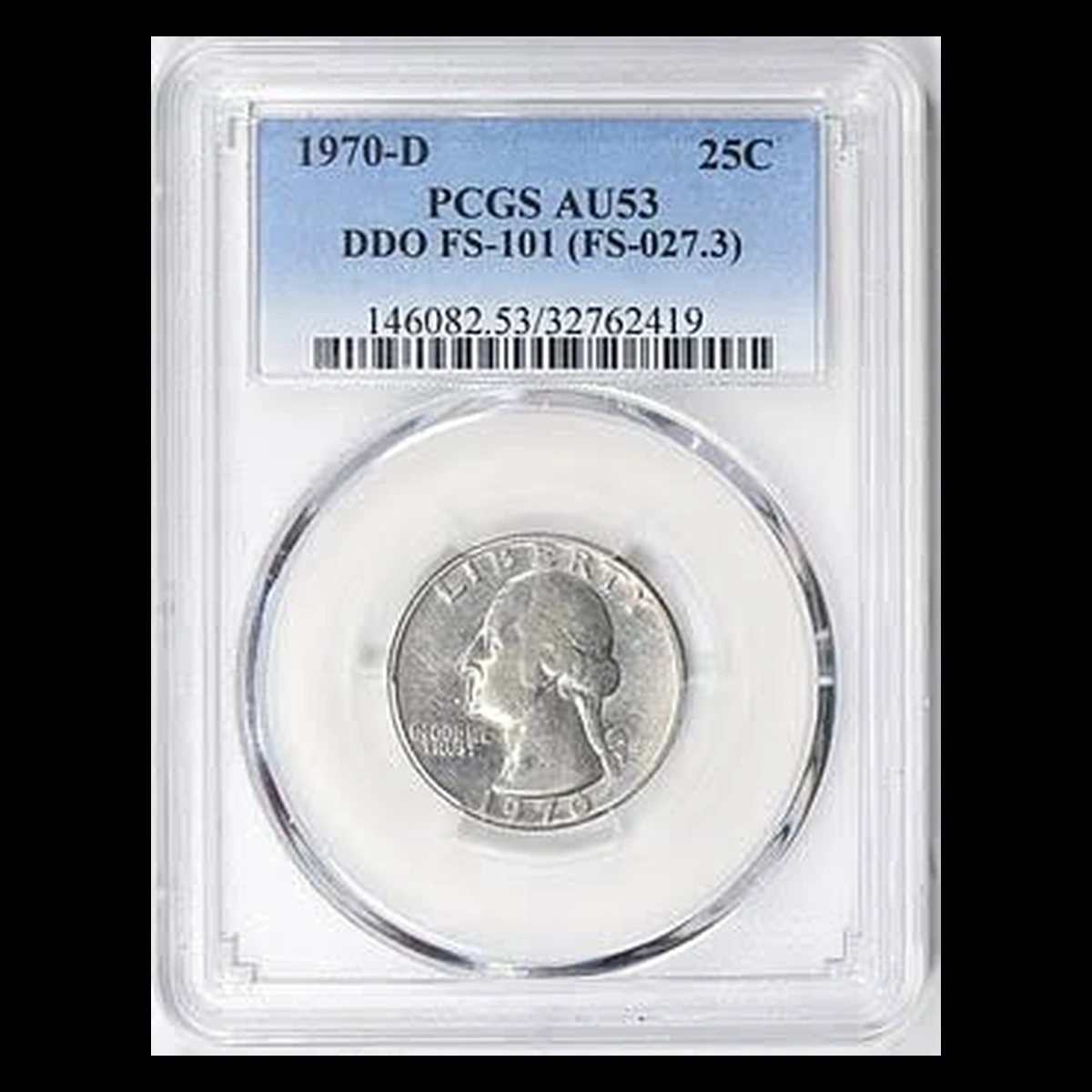
Recognized doubled designs occur on Denver, no-mintmark, and San Francisco Proof quarters. Their patterns involve different front or reverse details.
Some reverse doubling originated in an earlier master tool shared by many working dies. That widespread feature does not automatically indicate a scarce individual variety.
How to Identify
Match mint and finish before inspecting the pattern: Denver fronts can involve LIBERTY, motto, date, and ribbon, while no-mintmark examples include thick motto letters with upper-left notches. Reverse candidates need comparison of letters, wings, and leaves together.
Proof reports include front LIBERTY and reverse UNITED or denomination details. Common doubling below the eagle or a flat strike-related shelf cannot establish a stronger variety by itself.
What It’s Worth
Minor identified doubled dies have estimated values of $10–$300, strong Denver varieties $100–$3,500, and minor S Proof varieties $20–$500. Exact attribution determines which range is relevant.
A Denver FS-102 in MS65 sold for $2,875 in January 2012. A separate AU58 example brought $303.75 in August 2018.
Shared master-tool doubling alone does not receive those FS-102 prices.
13. 1970 Quarter Repeated Strikes with Shifted Designs Error
Normal Proof manufacture uses repeated aligned blows. One S PR67 Cameo example instead has counterclockwise front displacement and a normal reverse, while a separate PR66 Cameo coin has about twenty degrees of clockwise movement plus clash marks.
A Denver coin received a second strike seventy percent off center. Its displaced coin differs from the Proof examples struck within the collar as the tool changed position.
How to Identify
Trace distinct positions of the date and letters, then check the reverse alignment. Keep the movement direction with its own specimen.
The PR66 coin also shows E above 1 and 7 in the date and portrait traces within the viewer-left wing. Those are clash marks from die contact, not proof of a third strike.
What It’s Worth
Ordinary repeated strikes have estimated values of $150–$2,000. The unusual S Proof combinations have an estimated range of $750–$5,000.
The PR66 Cameo coin with rotated front impressions and clashes sold for $1,989.50 in August 2007. Cameo describes the frosted-design contrast, not another error.
14. 1970 Quarter Proof over a Finished Philippine Coin Error
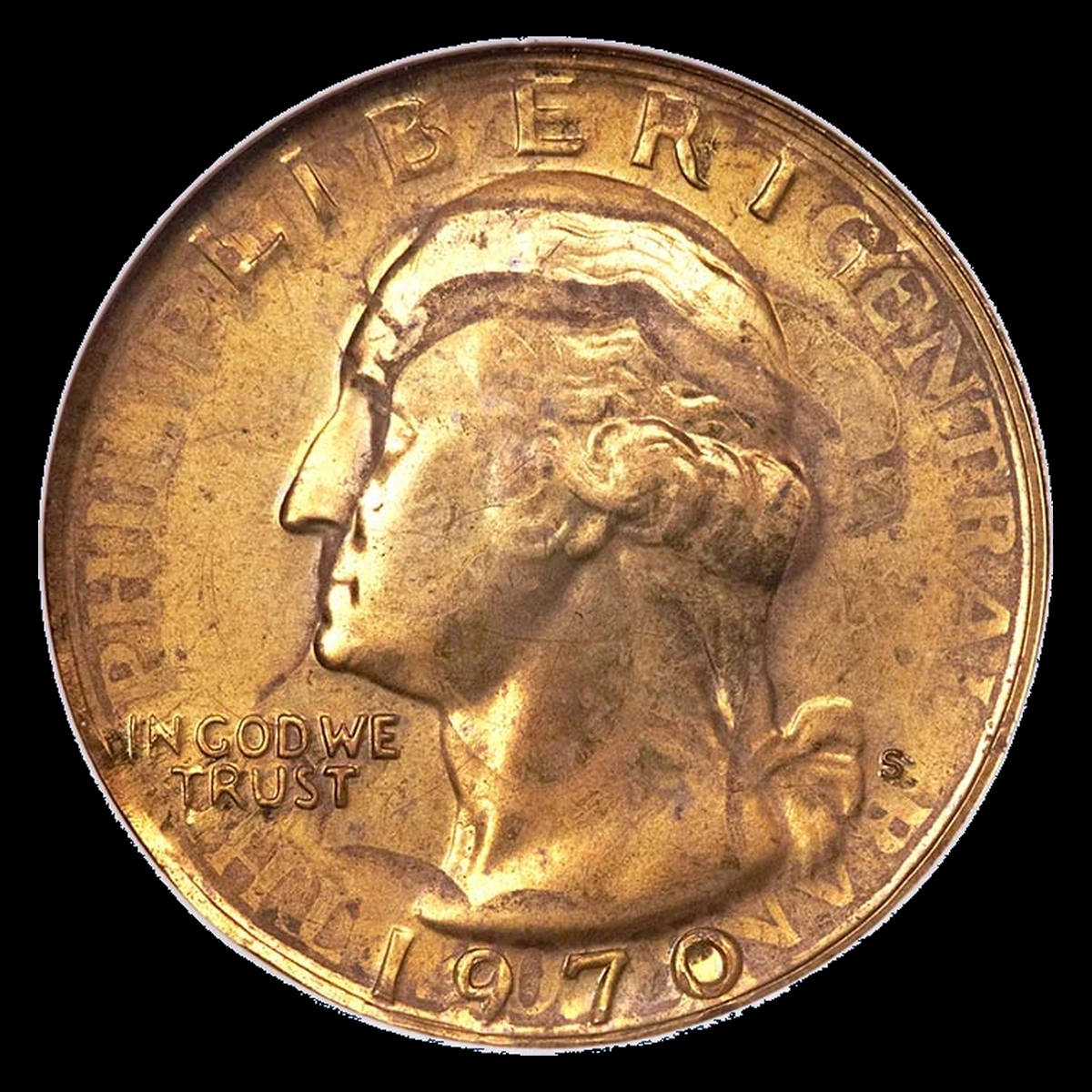
The S Proof graded NGC PR64 preserves Philippine design remnants on both faces. Upside-down older reverse lettering remains beneath Washington’s front image.
Dealer Mike Byers described the piece as intentionally made. That is his account; the surviving host design establishes overstriking independently of an explanation for how it entered the press.
How to Identify
Rotate a photograph to trace the older lettering and connect it with other Philippine features. Inspect the opposite face for a compatible earlier image beneath the new quarter design.
The finished host must not be confused with the Denver 4.1-gram unused-blank coin. Keep the certified Proof sealed while comparing its original overlapping details.
What It’s Worth
Authenticated Proof overstrikes of this kind have an estimated range of $3,000–$15,000. The dealer’s sold label does not disclose the Philippine example’s realized amount.
A related 1970-S Proof over a George V Canadian quarter sold for $7,800 in August 2020. Its different country and host design limit the comparison.
15. 1970 Quarter Proof over a Barber Quarter Error
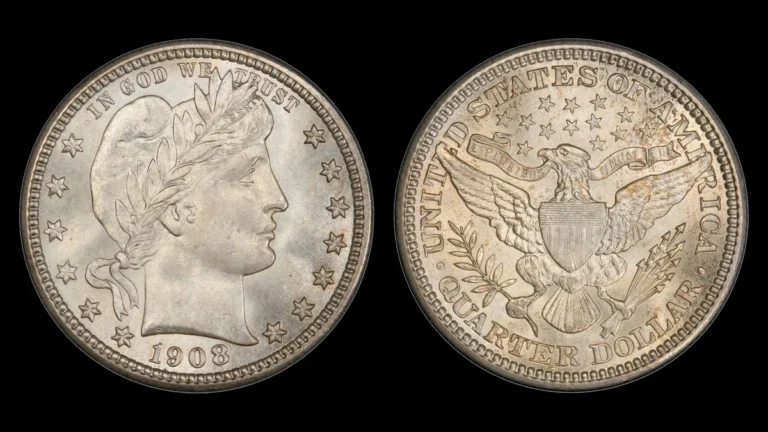
The older word DOLLAR survives near the S on the front of the NGC PR65 example. It belongs to the Barber quarter’s reverse beneath the newer Washington portrait.
The host’s precise year is not established. Recognizing the series does not permit an unreadable date to be supplied.
How to Identify
Trace DOLLAR into other compatible Barber reverse features under changing light. The auction description reports no visible host design on the Washington reverse, so both sides need not show equally strong remnants.
Compare the original overlapping designs and metal with the authenticated example. An added inscription or coating does not reproduce that construction.
What It’s Worth
An authenticated Barber-quarter Proof overstrike has an estimated range of $5,000–$20,000. This specimen did not sell in its August 2011 Heritage offering.
The $7,800 August 2020 result for a George V Canadian-host Proof is a related comparison. It is not a sale of the Barber piece.
16. 1970 Quarter Proofs over Canadian Quarters Error
One George VI host retains its 1941 date near DOLLAR on the quarter reverse. That example weighs 5.63 grams and is graded NGC PR65.
A separate George V host of unestablished year weighs 5.3 grams and is graded PR64. Its surviving maple leaves, lettering, and shoulder belong to a different coin.
How to Identify
For the George V piece, inspect the front perimeter for maple leaves and the reverse near nine o’clock for REX ET. Part of the king’s shoulder appears near AMER.
For the 1941 piece, follow the older date near DOLLAR into compatible host remnants. Keep the two weights, kings, and date information separate.
What It’s Worth
Comparable authenticated Canadian-quarter Proof overstrikes have an estimated range of $7,500–$40,000. The George V specimen sold for $7,800 in August 2020.
The 1941 specimen did not sell in its August 2011 Heritage offering. Its later widely reported $35,000 dealer asking price was not a confirmed auction result.
17. 1970 Quarter Proof over an 1898 Five-Dollar Gold Coin Error
The NGC PR66 overstrike contains a finished 1898 half eagle, the traditional name for a United States five-dollar gold coin. Its older date survives beneath the wreath on the quarter reverse.
The recorded weight is 8.3 grams, and the smaller gold host leaves incomplete outer quarter detail. This was not a regular gold quarter issue.
How to Identify
Use the authenticated photographs to locate 1898 and connected five-dollar design remnants beneath Washington’s impressions. Gold color alone cannot distinguish this piece from an ordinary plated quarter.
Preserve the holder and compare the original overlap, metal, and incomplete outer design. The recorded weight belongs to this specific example and need not be repeated by opening its case.
What It’s Worth
A working estimate for this exceptional authenticated piece is $75,000–$125,000. The 1898 gold-host Proof overstrike sold for $93,000 in January 2023.
Its documented host and original construction support that comparison. Gold plating, metal value, or a 1970 date by itself cannot place another quarter in the same market.
Conclusion
Begin with mint and finish, then decide whether the unusual feature concerns the tool, the blank, or an earlier host coin. A quarter-sized thin blank and a small complete dime blank need different identifications even when both appear light.
For the remarkable Proof overstrikes, follow recognizable older designs rather than relying on color. Keep individual weights, hidden prices, unsold offerings, and actual auction results separate when judging a possible comparison.