Rare 1979 Dime Errors (List & Pictures)
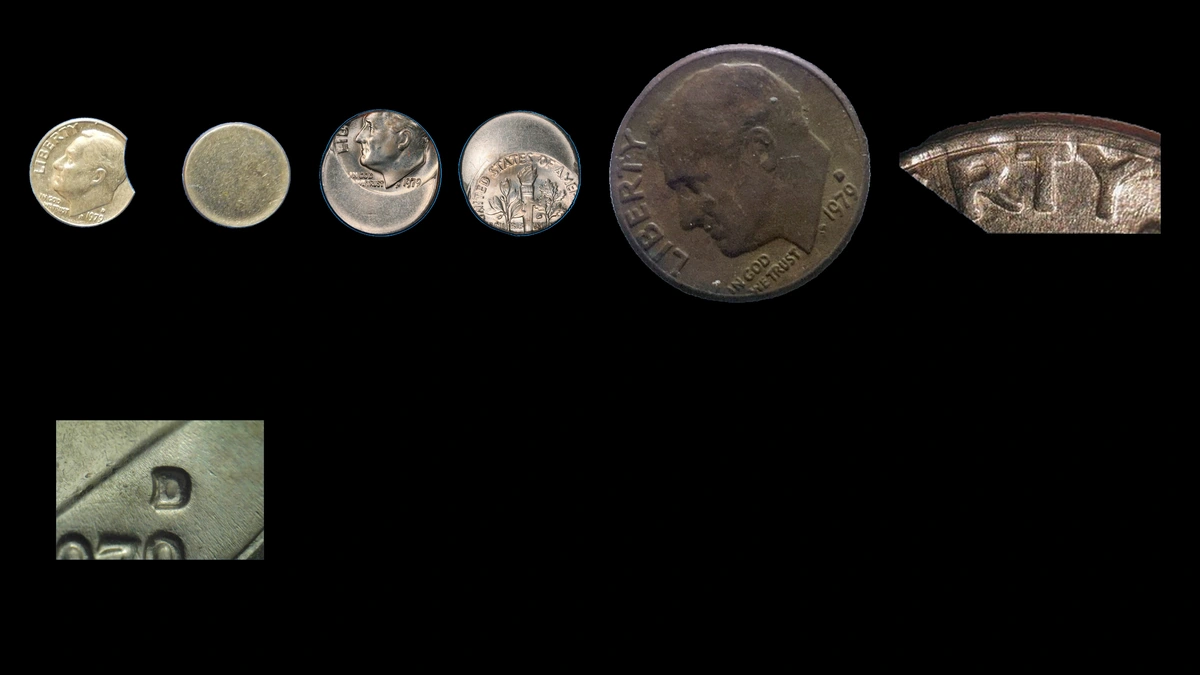
No mint letter is normal on a Philadelphia circulation dime dated 1979. More useful clues include a stepped edge, copper-colored face, or extra letter tips on the rim.
Estimated values for 1979 dime errors range from $5–$2,500. A Denver triple strike with a flip sold for $1,495 in September 2008; follow the edge, surface, and overlapping designs to choose the right comparison.
| Clue | Likely area of investigation | Estimated value |
|---|---|---|
| Stepped edge plus weak reverse patch | Partial collar and struck-through combination | $30–$250 |
| Copper-colored face, low weight | Missing clad layer | $50–$350 |
| Extra ERTY tips on rim | Rim-restricted design duplication | $30–$200 |
| Several overlapping impressions | Triple strike with flipover | $1,000–$2,500 for a comparable combination |
The normal clad dime weighs 2.268 grams, measures 17.91 millimeters, and has a grooved edge. Record actual measurements once when examining a loose coin with unusual metal or shape.
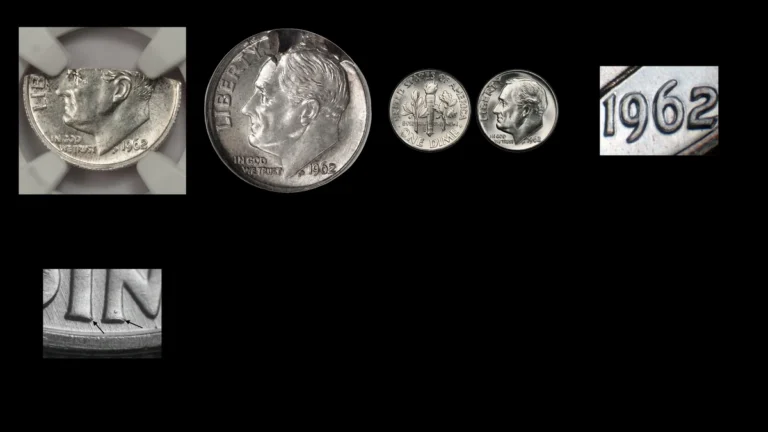
1. 1979 Dime Two Edge Levels and a Blocked Reverse: Partial Collar and Struck Through Error
A no-mintmark NGC MS64 example combines a stepped edge with a struck-through reverse. The collar ring contained only part of the blank’s thickness, allowing the rest to spread.
At the same time, an obstruction prevented some reverse design from forming. The supplied description names neither the material nor its precise position.
How to Identify
Inspect the transition between the grooved collar-held edge and the wider unsupported portion. Filing away grooves does not reproduce that original step.
Then examine the reverse interruption for struck texture rather than scraping. Treat the two features separately during identification without guessing that the unseen material was cloth or grease.
What It’s Worth
A comparable combination suggests an estimated $30–$250, depending on the step, affected area, and preservation.
The NGC MS64 coin sold for $32 in January 2015. That one result covers both features and demonstrates that two errors do not automatically mean a large price.
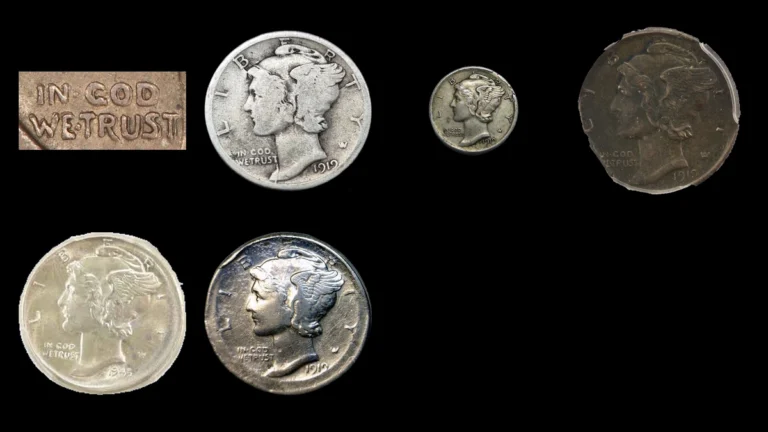
2. 1979 Dime The Entire Coin Spreads Wider: Broadstrike Error
A broadstrike forms when the collar fails to contain the blank during the blow. Metal spreads beyond the usual outline while the intended design stays on the coin.
Standalone 1979 examples are reported from Philadelphia and Denver. They are separate from the Denver broadstrike that also has several clips.
How to Identify
Follow all outer letters on both faces to verify that the design remains complete. Missing portions beside an unstruck crescent require an off-center comparison instead.
Inspect the expanded border and remaining edge grooves for original flow. Hammering can increase width too, but it also crushes detail rather than leaving a freshly struck design.
What It’s Worth
A standalone broadstrike is estimated at $30–$300. Slight spreading on an ordinary worn coin is a more modest find than a broad clean border.
This range excludes the value of additional clips. A combined example must be judged as its own complete coin.
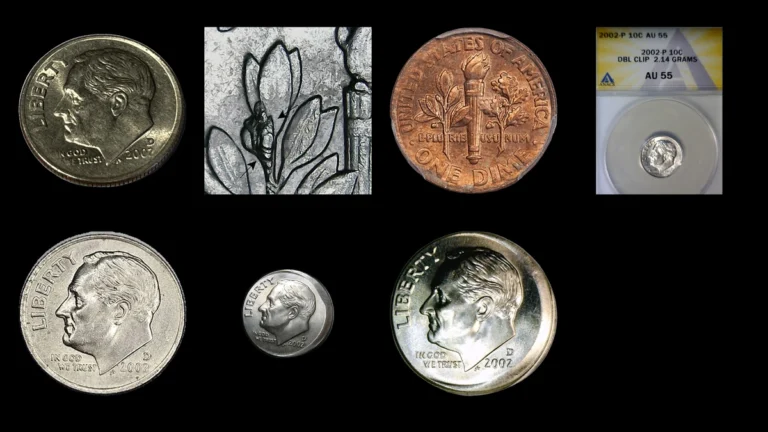
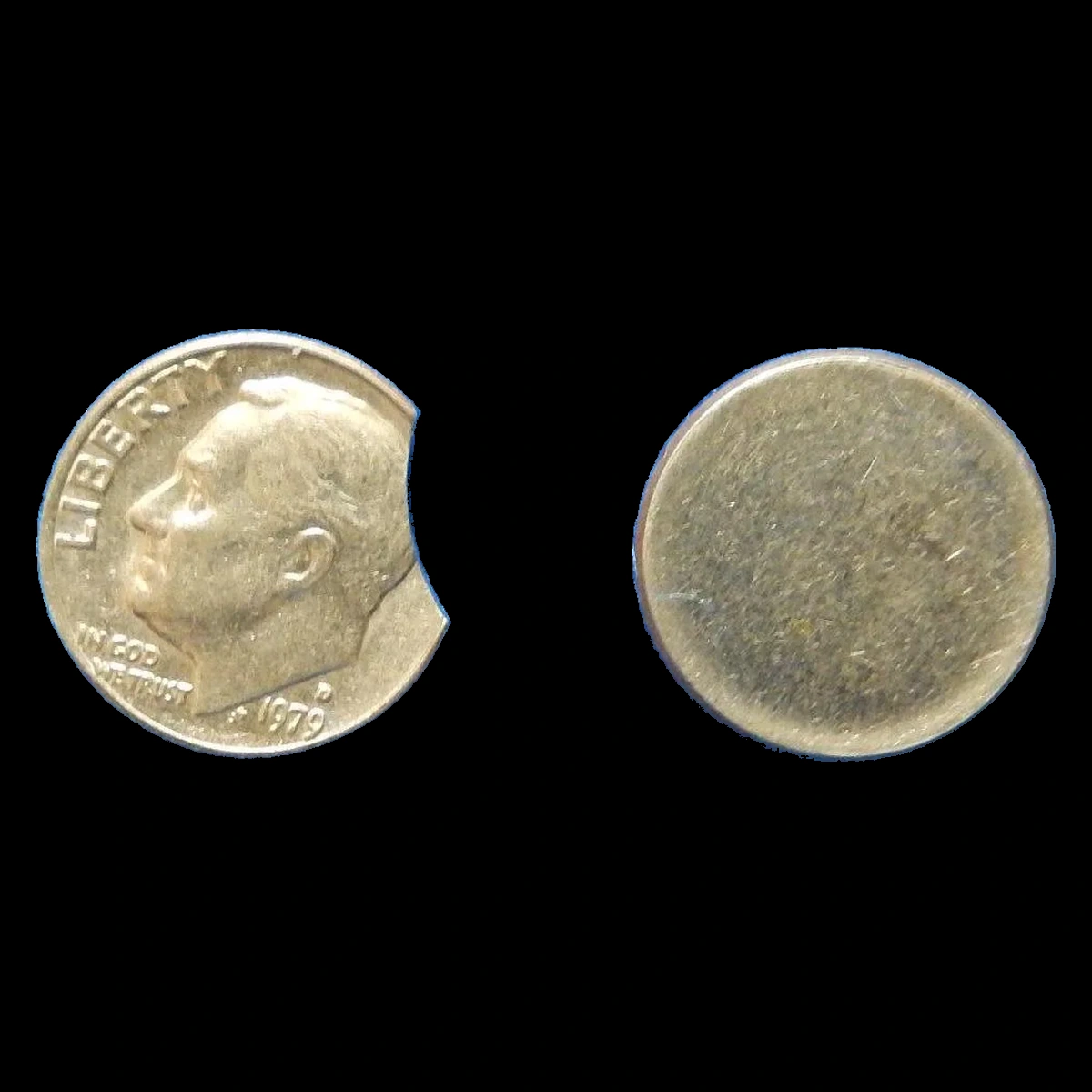
3. 1979 Dime Curves or Gaps Interrupt the Edge: Clipped Planchet Error
Several Denver examples have missing blank metal: a 30% clip, a separate 50% curve, and a small rim clip. Another combines a 5% curve at two o’clock with a tiny gap at 7:30.
The shortages existed before striking. Some clips also accompany a broadstrike or, on a no-mintmark example, a 25% off-center strike with two curved gaps.
How to Identify
Inspect every gap independently for original metal flow and design formed around the shortage. Saw marks, burrs, or grinding can reveal later removal.
On the off-center combination, distinguish physically missing metal from the blank crescent where metal remains unstruck. One genuine clip does not establish that every damaged area is another clip.
What It’s Worth
Small genuine clips suggest $15–$100; larger clips and striking-error combinations may fall around $100–$500.
The Denver broadstrike with several clips sold for $312 in August 2021. It also had corrosion and damage, which remain condition limitations rather than extra minting errors.
4. 1979 Dime An Untouched Crescent Beside the Strike: Off Center Error
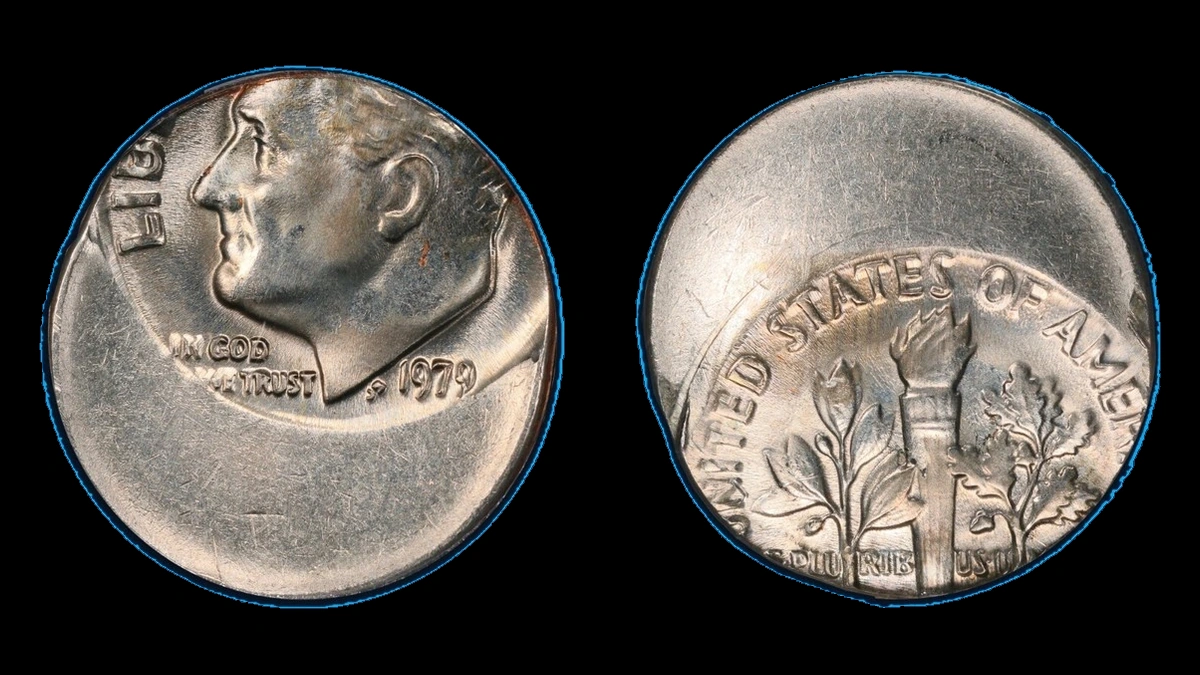
A blank entering away from the dies’ center receives only part of the design. One Denver specimen is 70% off center toward nine o’clock, with all four date digits present but stretched.
Separate no-mintmark examples include a 70% shift toward one o’clock and a 10% shift toward ten o’clock. Their absent mint letters are normal for the Philadelphia issue.
How to Identify
Read the actual date and mint evidence before choosing a comparison. Inspect the stretched numbers for later cuts or alteration.
Both faces should fit the same displaced blank and original untouched area. An intact off-center coin can retain nearly normal weight despite a distorted outline.
What It’s Worth
Estimated values span $30–$400 across modest and dramatic examples. Date visibility and clean original surfaces matter alongside percentage.
The Denver 70% example sold for $92 in May 2005. The separate no-mintmark 70% piece brought $312 in August 2021, so equal percentages do not establish equal prices.
5. 1979 Dime One Face Exposes Copper: Missing Clad Layer Error
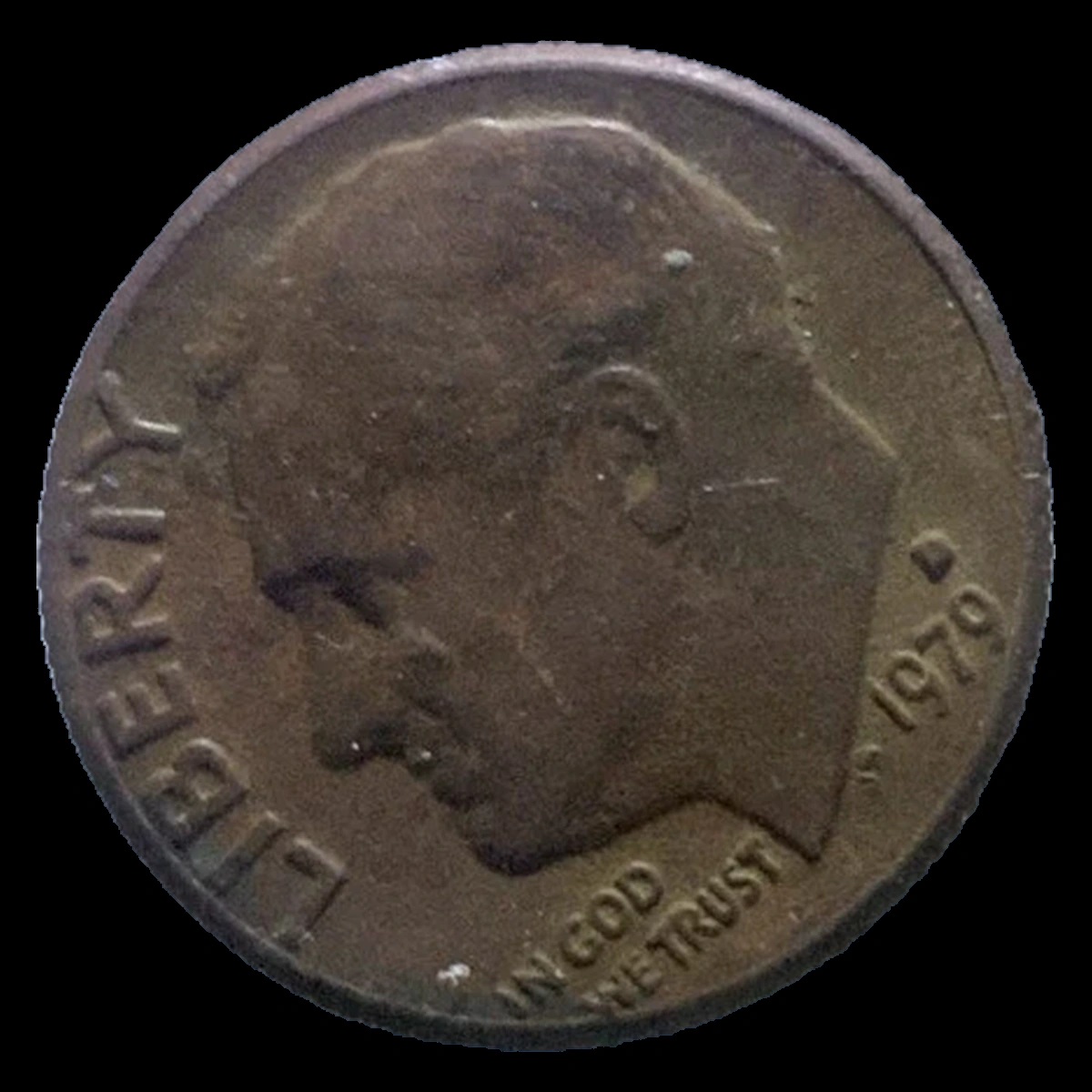
The silver-colored outer layer can be absent from one face while the other retains it. A Denver NGC MS65 example missing its front layer weighs 1.9 grams.
A separate no-mintmark coin missing its reverse layer weighs 1.88 grams and was graded ANACS MS63 Red and Brown. The color designation and weight belong to that specimen.
How to Identify
Compare the copper-colored face with the intact opposite layer, then check the edge transition and weight. The two recorded weights are examples, not exact requirements for every missing-layer coin.
Original design should remain on the exposed copper. Tool marks, chemical pitting, or a coating can instead explain altered color or metal removed after minting.
What It’s Worth
Genuine single-layer losses suggest approximately $50–$350. Attractive surfaces and convincing original detail support stronger comparisons.
The 1.9-gram Denver front-layer example sold for $79 in December 2012. That result does not establish a sale for the 1.88-gram reverse-layer coin.
6. 1979 Dime The Blank Does Not Match a Dime: Wrong Planchet Error
A prepared blank intended for another coin could give the Roosevelt design unusual dimensions or composition. This category is reported for 1979, but the American example’s precise blank type still needs identification.
A smaller blank might crop lettering, while different thickness could affect strike strength. Those appearances are clues, not a confirmed host denomination.
How to Identify
Document the readable date, Roosevelt portrait, torch, and where outer lettering meets the metal. Compare weight, thickness, and diameter with a plausible specific blank.
Examine the edge for normal clad layers or evidence of grinding and layer loss. Professional composition testing can distinguish actual wrong metal from a merely unusual surface.
What It’s Worth
An authenticated American example on an identified alternative blank has a conditional estimate of $300–$2,000.
The blank type and surviving design would strongly affect its value. An unexplained low weight cannot establish either the wrong blank or a price within that range.
7. 1979 Dime A Raised Line or Rim Patch: Die Cracks and Cuds Error
A crack in a die fills with coin metal and leaves a raised line. If a larger piece breaks away at the die’s edge, it can produce a broad rim-connected patch called a cud.
The supplied 1979 reports do not define one exact location for this group. A later rim blow can also make a lump, so the original surface needs examination.
How to Identify
Use side lighting to separate a raised ridge from a scratch cut into the surface. A cud should meet the rim and replace design the missing steel could no longer form.
Check the adjacent edge and opposite face for impact damage. Added material may show a seam or texture different from the surrounding struck metal.
What It’s Worth
Small cracks suggest $5–$30, while clearer rim breaks have an estimated range of $30–$150.
A sharp original boundary beside readable detail offers a better comparison than a vague lump on corroded metal. No specific auction record is supplied for this group.
8. 1979 Dime Duplicate Letter Tips on the Rim: Rim-Restricted Design Duplication Error
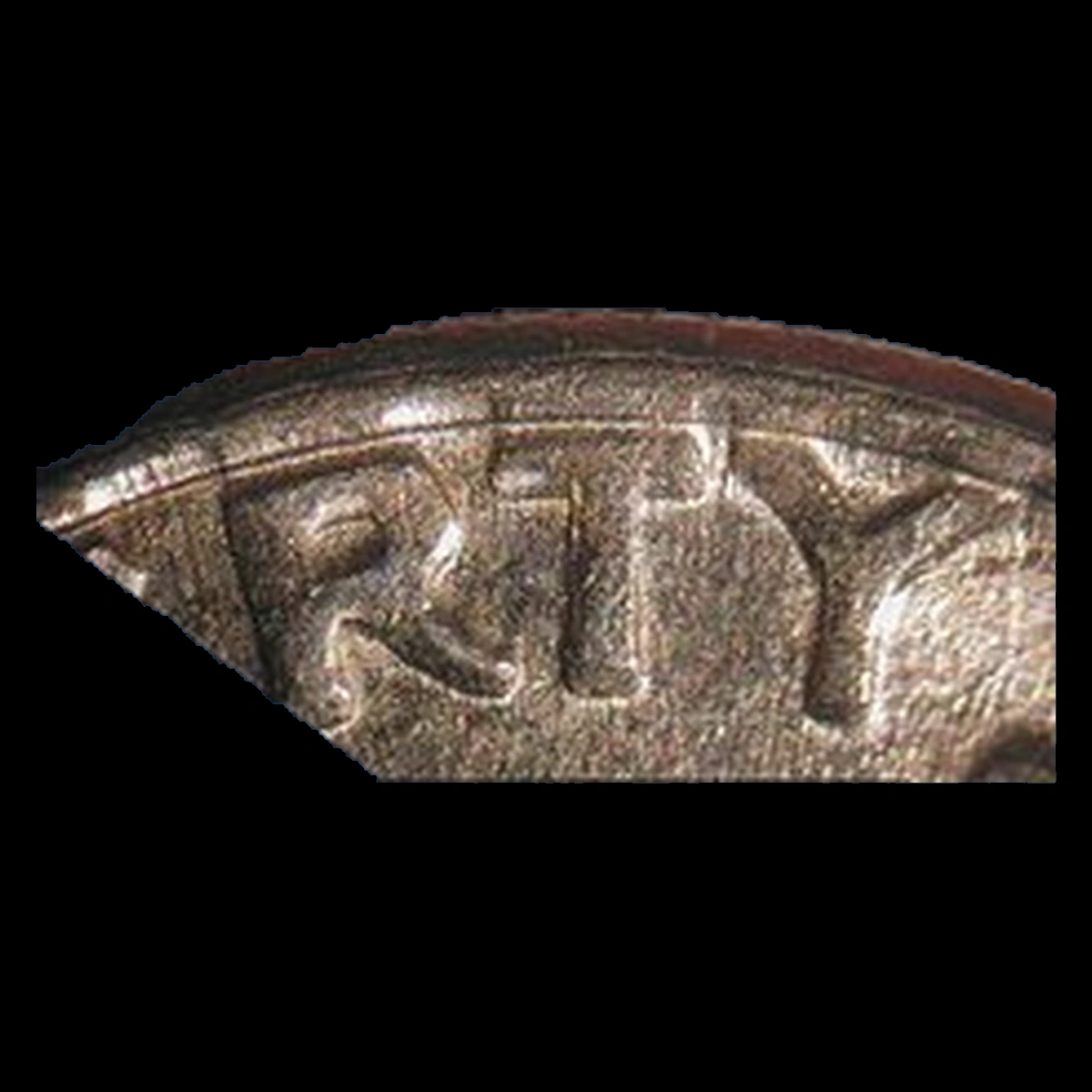
A documented Denver dime has extra tips from LIBERTY’s final four letters on the rim. Mike Diamond described a die that bounced, shifted, and contacted the border again during striking.
The effect is called rim-restricted design duplication, an unusual form of machine doubling. It is distinct from a die manufactured with a doubled design.
How to Identify
Diamond’s examination identifies the extra ERTY tips, flattened spaces between them, and tiny surface lines copied onto the rim. Examine that whole section rather than an isolated bump.
Keep lower shelves beside R and T separate from the upper letter tips. Both involve striking movement, but they are different visible effects.
What It’s Worth
A clear genuine example has an estimated range of $30–$200. Recognizable letters and transferred surface details create the interest.
This estimate is not a routine doubled-die premium. Ordinary mechanical doubling generally adds little, and rim damage can erase the particular evidence that matters here.
9. 1979 Dime Rounded Second Contours in the Design: Doubled Die Error
Reported front-side areas include LIBERTY, IN GOD WE TRUST, and the date. Separate reverse reports concern ONE DIME or torch details without establishing one exact shared pattern.
A true doubled die carried repeated design detail before it struck the coin. Each face therefore needs its own attribution.
How to Identify
Compare a selected area with an ordinary 1979 dime under similar lighting. Look at corners and curves for rounded duplicate outlines or clear splits.
A flat lower shelf can come from movement during striking instead. Do not use strong diagnostics from a different date to identify faint thickening here.
What It’s Worth
Minor genuine matched doubling is estimated at $10–$150. Clear separation and preserved surrounding detail support the better comparisons.
No single confirmed pattern is supplied for all front and back reports. General blurred lettering or mechanical shelves do not qualify simply because a seller calls them doubled.
10. 1979 Dime An Earlier D Extends Leftward: Repunched Mintmark Error
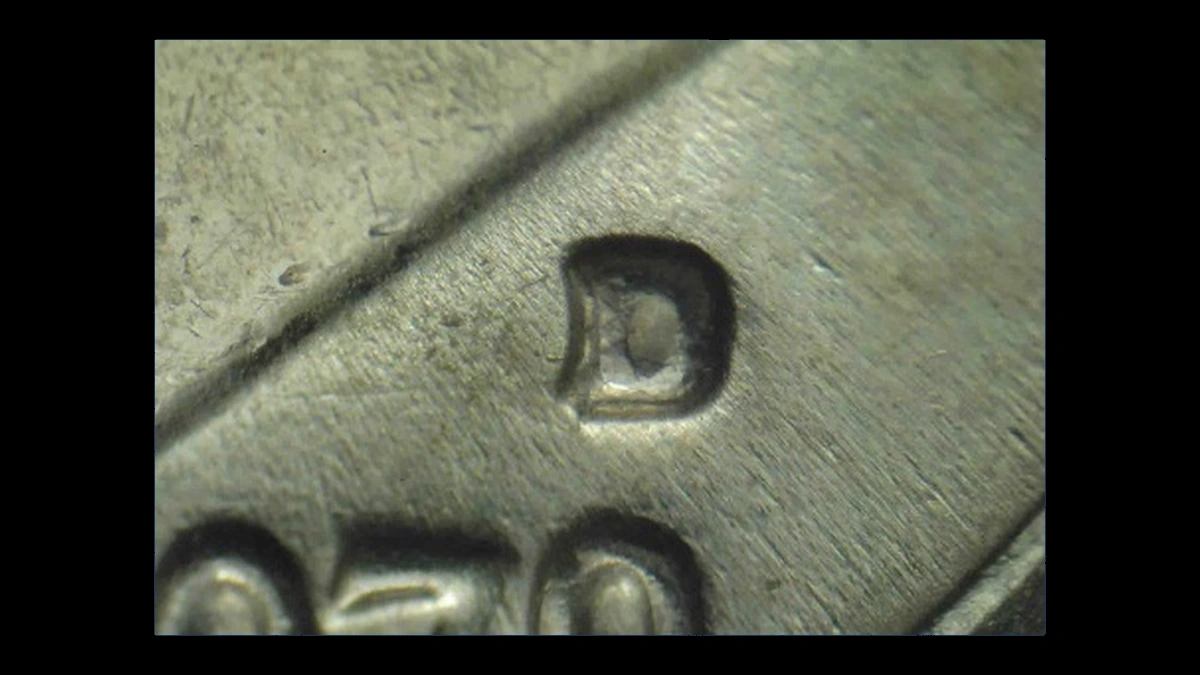
The Denver mintmark above the date can retain part of an earlier D to its left. The worker entered the mintmark punch more than once in a slightly shifted position on the die.
Wexler catalogs this as WRPM001. Fine raised lines left of Roosevelt’s forehead and a short reverse line near the first A in AMERICA help identify the same tool.
How to Identify
Start with the leftward D outline in the Wexler catalog. Only after that matches should the smaller supporting marks be checked.
The reverse line lies near the lower left of AMERICA’s first A. A matching line elsewhere cannot compensate for an earlier D extending in the wrong direction.
What It’s Worth
A convincing WRPM001 match suggests approximately $15–$175. Wear or scratches can obscure the small earlier-letter details.
The estimate concerns a repeated mintmark, not an absent letter or unrelated design doubling. Clear unworn examples make easier comparisons than isolated bumps on damaged coins.
11. 1979 Dime Three Impressions with a Flip Between Them: Triple Strike Error
The Denver PCGS MS64 example preserves three stages. Its first strike established the readable 1979 date and D, then a second strike landed 70% off center with one face blocked.
The coin flipped before a third strike 60% off center, again with one face blocked. Front and reverse designs consequently overlap on the same object.
How to Identify
Trace the first date and mintmark, then the surviving portion of the second date. Separate each impression’s border before interpreting the opposite-side design from the flip.
The blocked regions must fit their respective later strikes. Three doubled-looking letters alone cannot reconstruct this sequence.
What It’s Worth
A similarly clear genuine combination has an estimated range of $1,000–$2,500. The readable stages and preserved surfaces are central to its appeal.
The PCGS MS64 triple-struck dime brought $1,495 in September 2008. Its flip and two off-center later blows form one coin’s sale price.
Conclusion
A 1979 dime may reveal its most useful evidence at the edge rather than in a missing letter. Stepped metal, original clips, and repeated rim tips each point to a different process, while no mintmark is normal for Philadelphia circulation coins.
Match the physical feature before choosing a price. Keep different specimens’ weights and strike percentages separate, and value a combined-error coin as the single object it actually is.