Rare 1912 Half Dollar Errors (List & Pictures)
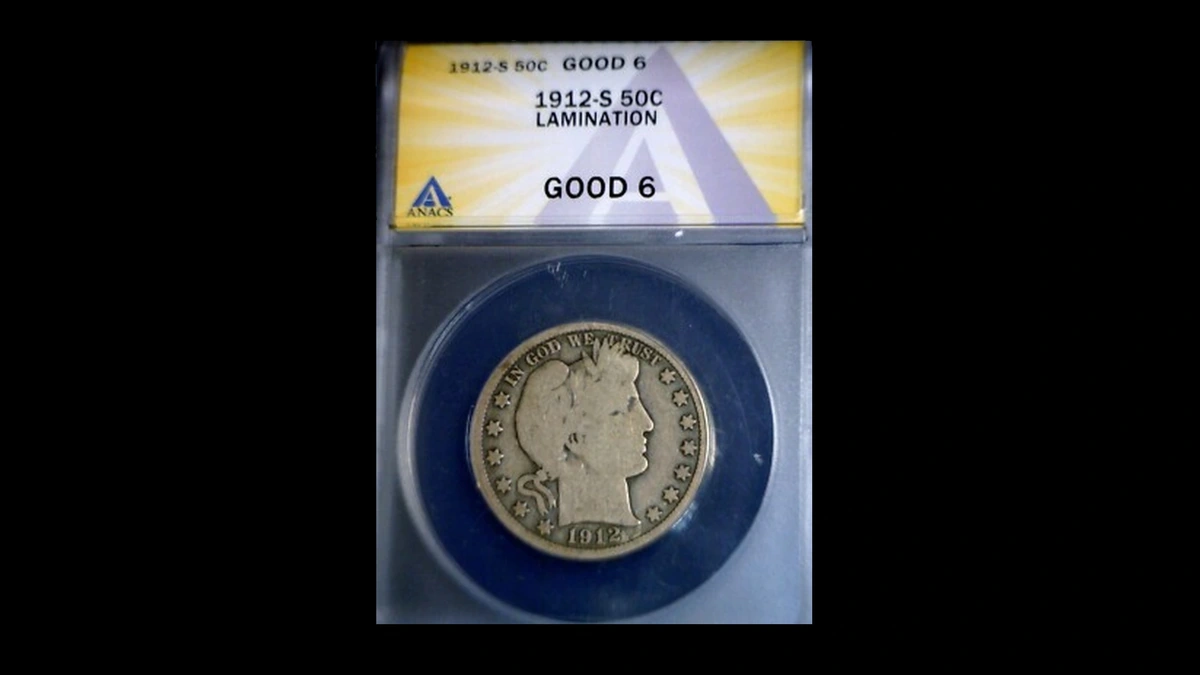
A peeling surface, two readable dates, and a sideways eagle lead to three very different checks. These 1912 half dollar errors have estimated values of $50–$5,175; the upper figure comes from a 2012 auction of a Denver coin stamped over a 1902 half.
Inspect the metal and numbers first, then compare the two faces with a controlled flip.
| Visible clue | Place to check | Error | Estimated value |
|---|---|---|---|
| A lifting layer or shallow rough patch | The coin’s surface | Lamination | $50–$150 |
| 1902 beneath 1912 | The date and nearby design | Overstrike | $4,000–$5,175 |
| An eagle that ends up sideways | Both faces during a flip | Rotated dies | $100–$250 |
A magnifier and movable lamp help with the surface checks. If the coin is loose, its normal unworn measurements are about 12.50 grams and 30.6 mm across, with a grooved edge; wear or lost metal can reduce the weight.
1. 1912 Half Dollar Silver Peeling Away: Lamination Error
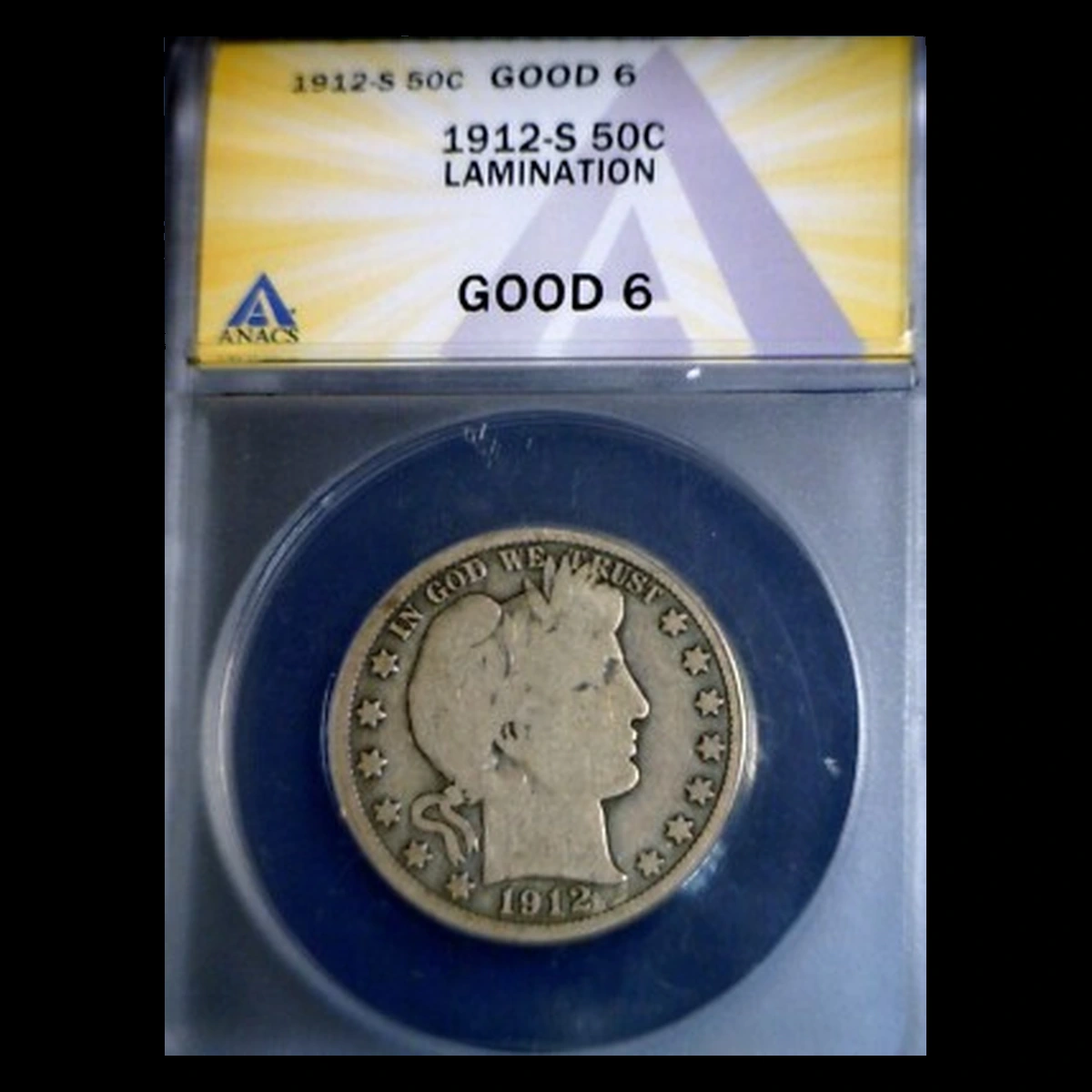
An attached flap and a shallow missing patch can be two stages of the same lamination. The recorded Philadelphia coin shows this surface separation on its front.
Barber halves contain a silver and copper mixture, with no plated outer coat to peel. A weakness inside that mixture lets a thin layer split away from the metal beneath it.
How to Identify
Bring the boundary between the damaged-looking patch and intact surface into focus. A thin edge lifting above the coin is more useful evidence than a dark stain.
Compare its structure with the lamination examples at Error-Ref. Do not pull at an attached layer to test it, because the remaining metal may break.
A tool scrape usually cuts or pushes the surface instead of exposing a separating layer. A thin raised ridge without peeling could be a die crack, made when silver enters a split in the stamping tool.
What It’s Worth
Estimated range: $50–$150 for worn examples with an identifiable lamination. A 1912 Philadelphia half with this flaw on the front sold for $69 at Heritage on March 23, 2026.
ANACS graded that coin Fine 15 Details and noted cleaning. Fine 15 describes substantial wear; the Details label flags a separate condition problem, so this sale is most useful for comparing worn, imperfect coins.
A larger visible separation may draw more attention than a tiny flake. Its appeal still depends on the rest of the coin, including surviving detail and surface damage.
2. 1912 Half Dollar Two Different Years in the Date: Overstrike Error
The unusual 1912-D example retains all four digits of 1902 slightly to the left of the newer date. Other traces of the earlier design also survived.
This happened when an already finished 1902 half dollar received the 1912-D design. An overstrike therefore leaves evidence of an older coin, not merely a second edge on the same date.
How to Identify
Read the two years separately under angled light. In particular, establish that the older digits say 1902 instead of assuming every overlapping stroke belongs to another date.
Move outward from the numbers and follow the remaining older design. Several connected features provide a much stronger match than four suspicious marks in isolation.
The D on the back belongs to the later Denver strike. Compare both sides with photographs of the certified example, since a scratched-in date cannot explain a genuine older design elsewhere on the coin.
Normal half-dollar size is expected because the original piece was itself a half dollar. Dimensions alone will not authenticate such an unusual find.
What It’s Worth
Estimated range: $4,000–$5,175 for a comparable genuine, worn overstrike. Heritage sold the NGC Fine 15 example for $5,175 on March 11, 2012.
That historical result reflects a coin whose two dates remained readable despite considerable wear. A doubled-looking 1912 date without a separate 1902 design does not support the same comparison.
3. 1912 Half Dollar The Eagle Turns Sideways: Rotated Dies Error
Both faces may look ordinary until you turn the coin over. The Barber Coin Collectors’ Society survey records a Philadelphia 1912 half whose back is rotated 90 degrees clockwise.
The dies are the steel tools that stamp the two faces. A rotation occurs when their positions are out of alignment, whether from installation or movement during use.
How to Identify
Set Liberty upright, then turn the coin top over bottom while keeping its left and right sides steady. The eagle on a normal coin will now be upright.
A quarter-turn error leaves the eagle sideways after that same movement. Repeat the test with a fixed reference line, because a small sideways twist of your fingers can create a false result.
Two separately posed photographs cannot establish the angle by themselves. A continuous view of the controlled flip, or both faces held against the same reference, shows the relationship more clearly.
Examine the edge for an unexpected join as well. An assembled or altered piece needs to be ruled out before assigning a mint-error value.
What It’s Worth
Estimated range: $100–$250 for a confirmed rotation near 90 degrees in worn Fine to Very Fine condition. The supplied survey establishes the reported feature but gives no sale for that 1912 coin.
For context, a 2000-P half with 75-degree rotation sold for $79 in March 2025. Its newer design and different angle make it a comparison, not a transaction for a 1912 Barber half.
Conclusion
Peeling metal, a surviving older date, and a sideways reverse require three different kinds of evidence. Check the layer itself for lamination, follow both designs for an overstrike, and hold the coin steady when testing rotation.
The estimated $50–$5,175 range covers complete coins in very different conditions. Match the visible error before comparing a worn find with any of the recorded sales.