Rare 1988 Half Dollar Errors (List & Pictures)
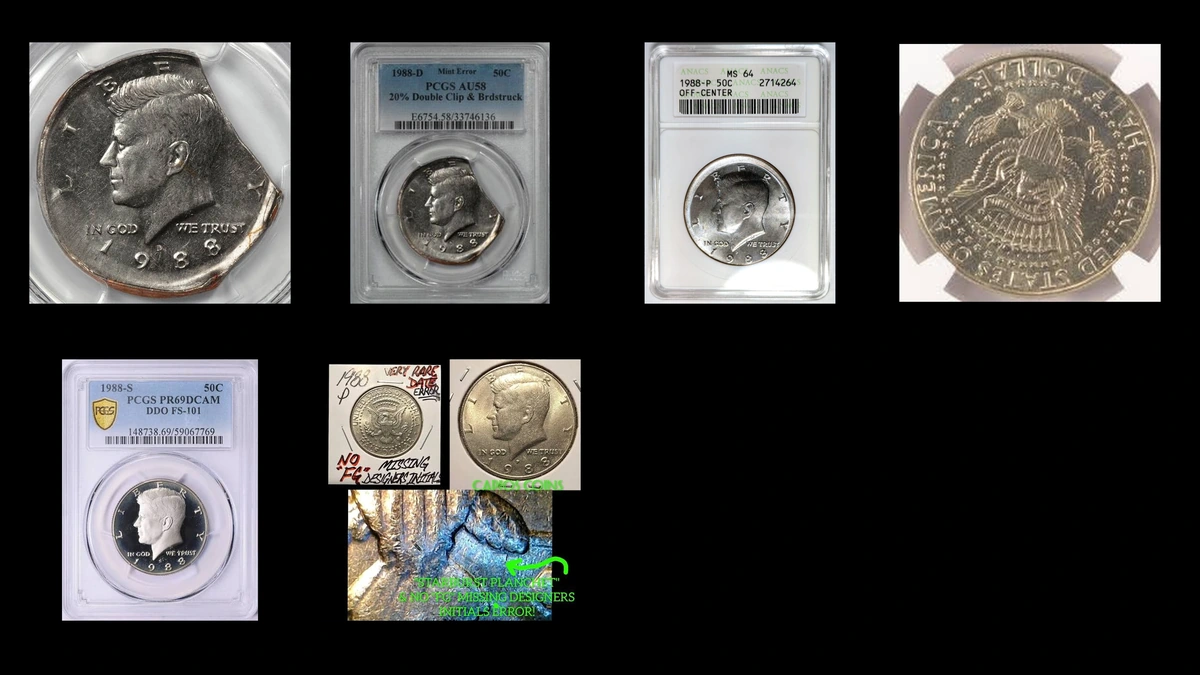
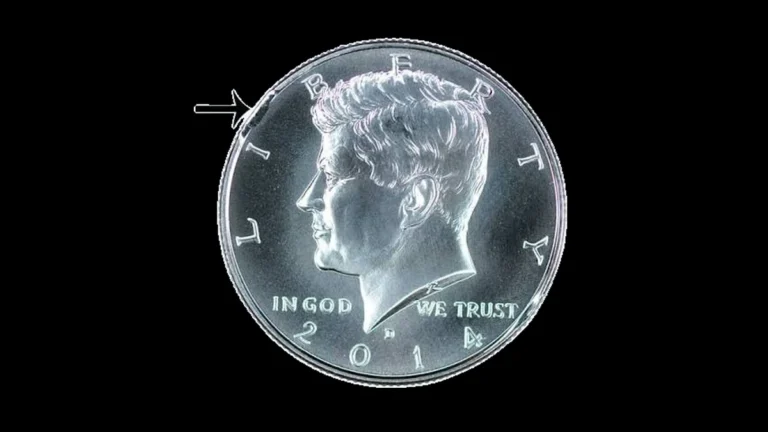
A 1988-S proof with repeated front lettering realized $902 in September 2014. That recognized variety is one of several 1988 half dollar errors and reports covered here, with supplied estimates from $5 to $1,500.
Start by checking the coin’s shape and front-to-back alignment, then inspect the portrait, lettering, and eagle’s tail area. The right comparison depends on the actual feature as well as the coin’s condition and finish.
| Visible clue | Category | Estimated range |
|---|---|---|
| Several curved gaps | Clipped planchet | $35–$600 |
| Wide uneven border, complete design | Uncentered broadstrike | $125–$750 |
| Large blank crescent | Off-center strike | $100–$1,500 |
| Upside-down eagle after a controlled flip | Rotated dies | $60–$300 per coin |
| Interrupted front design | Strike-through | $25–$450 |
| Raised date or feather marks | Die crack or chip | $5–$150 |
| Extra opposite-side contour | Die clash | $20–$200 |
| Split proof obverse letters | FS-101 doubled die | $100–$1,100 |
| Repeated reverse-letter outlines | Reported doubled reverse | $25–$350 |
| Absent FG | Reported missing initials | $30–$400 if identified |
Ordinary 1988 halves and San Francisco proofs are clad, normally weighing 11.34 grams and measuring 30.61 millimeters. The proofs are specially made collector coins but contain no silver; all normally have grooved edges.
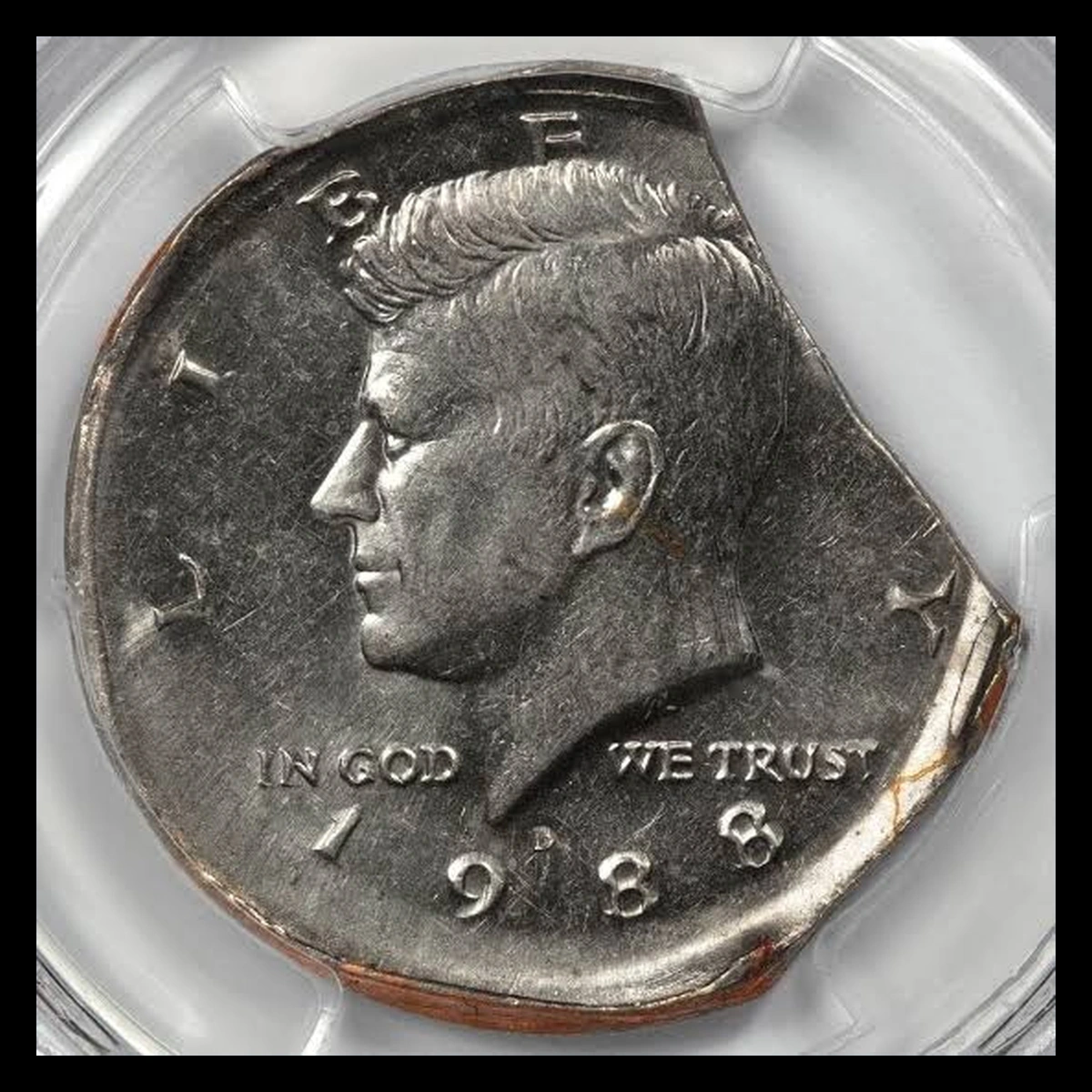
1. 1988 Half Dollar Four bites around an uneven outline: Clipped planchet Error
The documented 1988-D NGC MS65 has four curved clips. Its blank was missing all four sections before the dies formed the remaining design.
How to Identify
Photograph the whole perimeter before inspecting each gap’s two junctions with the rim. Original rim weakness or flow toward the shortages supports pre-strike clipping.
Search for file or saw marks and cuts through already completed lettering. Opposite-rim weakness may occur, but the four gaps need not all produce identical effects.
Low weight establishes missing metal, not its timing. The originality of each border matters more than simply counting notches.
What It’s Worth
Ordinary through attractive multiple clips are estimated at $35–$600. The 1988-D quadruple curved clip sold for $234 in July 2021.
A simpler 1993-D single curved clip graded ANACS MS64 sold for $34.74 including fees in August 2025. Four gaps remain features of one coin and do not create four separate valuations.
2. 1988 Half Dollar Complete lettering inside a very wide border: Uncentered broadstrike Error
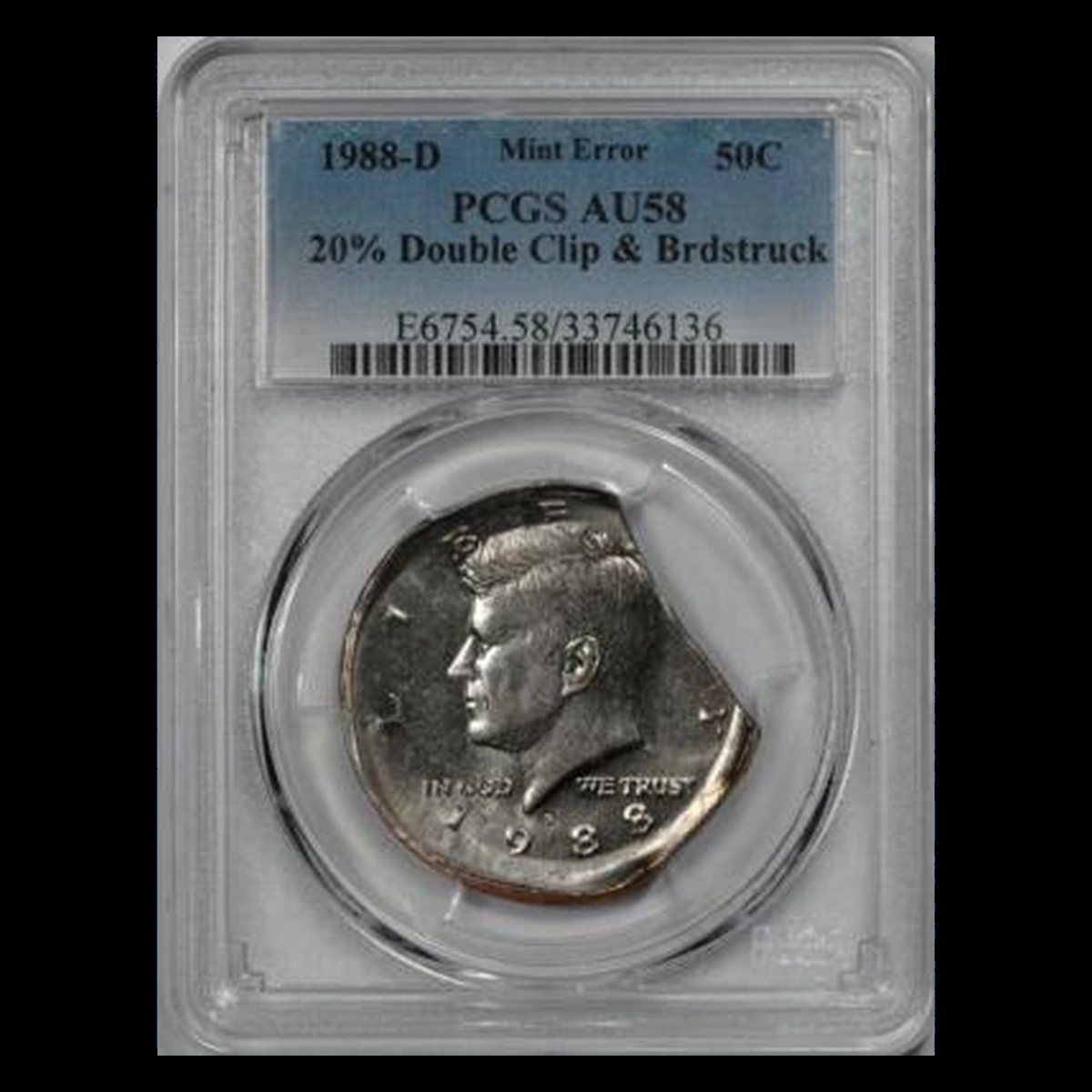
A specialist compared the size of a 1988-P NGC MS63 broadstrike with a silver dollar. The description conveys its unusually wide appearance, not an exact measurement or a change from clad metal to silver.
The blank spread unevenly when the collar ring failed to contain it. The entire design remains present despite the off-center-looking border.
How to Identify
Follow the inscriptions around both faces to verify that nothing fell beyond the blank. Complete designs distinguish this uncentered broadstrike from a true off-center strike.
Measure several directions and inspect the edge for natural spread and missing or incomplete grooves. Later pressure can widen a half but usually disturbs surfaces or crushes details.
What It’s Worth
The supplied estimate is $125–$750 for this 1988 type, depending on expansion and appearance. No sale result for the described MS63 is supplied.
A 1990-P ANACS MS61 broadstrike sold for $192 in March 2025, while a dealer offered a 1983-P NGC MS65 at $175. The latter is an asking price, and both concern different years.
3. 1988 Half Dollar Most of the blank remains unstruck: Off-center strike Error
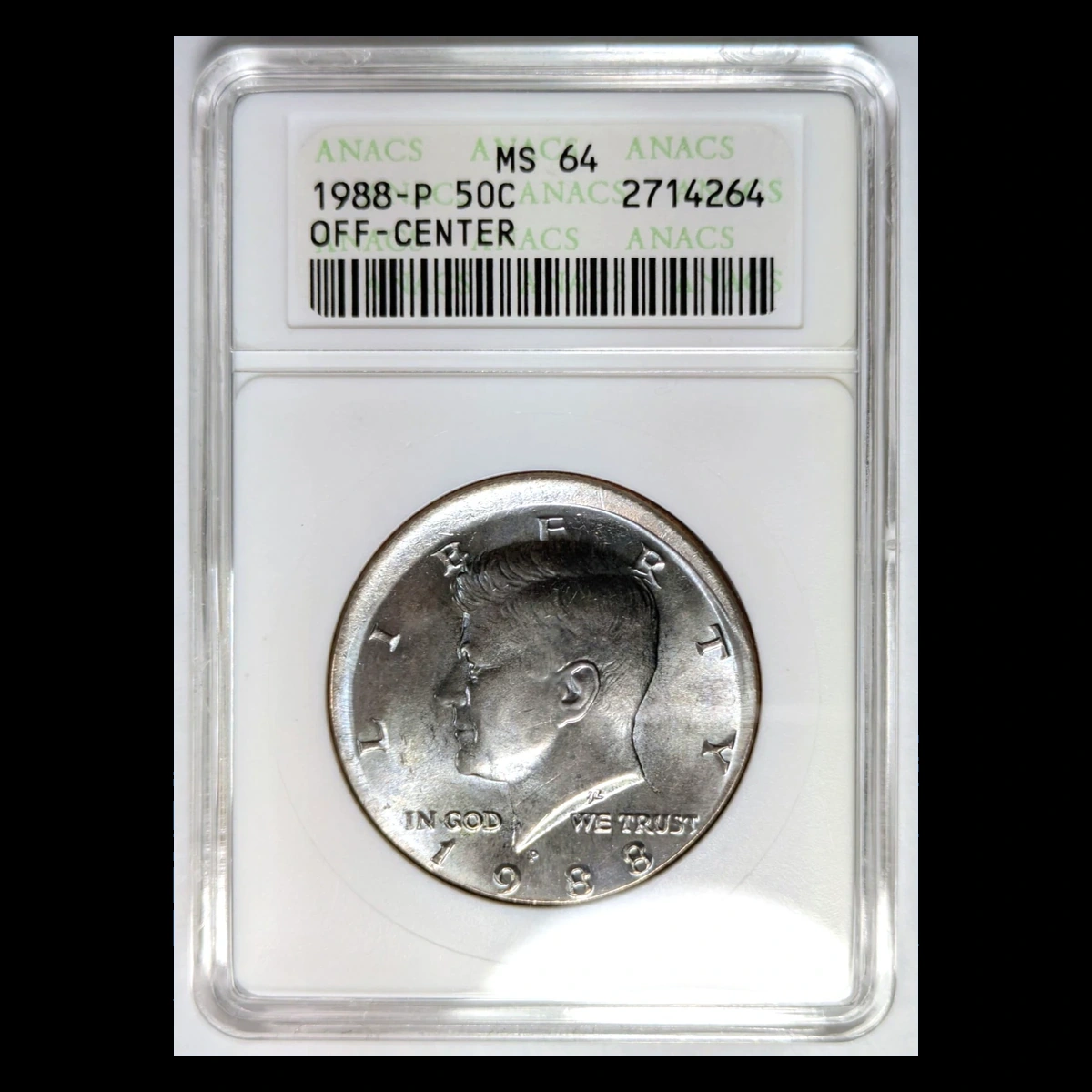
An NGC-illustrated 1988-D graded MS66 has a strike about 80% off center. The visible date is incomplete, so the identification does not promise that all four digits survive.
How to Identify
Compare both faces with NGC’s illustrated specimen, looking for corresponding design displacement and original bare metal. Grinding away a completed design produces altered texture instead.
Off-centering itself does not remove metal, so the remaining weight can be normal. Other reports mention Philadelphia coins, but the 80% figure and MS66 grade belong specifically to this Denver example.
What It’s Worth
Genuine 1988 off-center halves are estimated at $100–$1,500. Clear identity, surfaces, and the balance of remaining design and blank area affect demand.
A 1990-P NGC MS66 struck 10% off center sold for $198 in September 2025. It provides a different-year comparison for a smaller shift; the NGC illustration supplies no auction result for the dramatic 1988-D.
4. 1988 Half Dollar The eagle faces upside down after a straight flip: Rotated dies Error
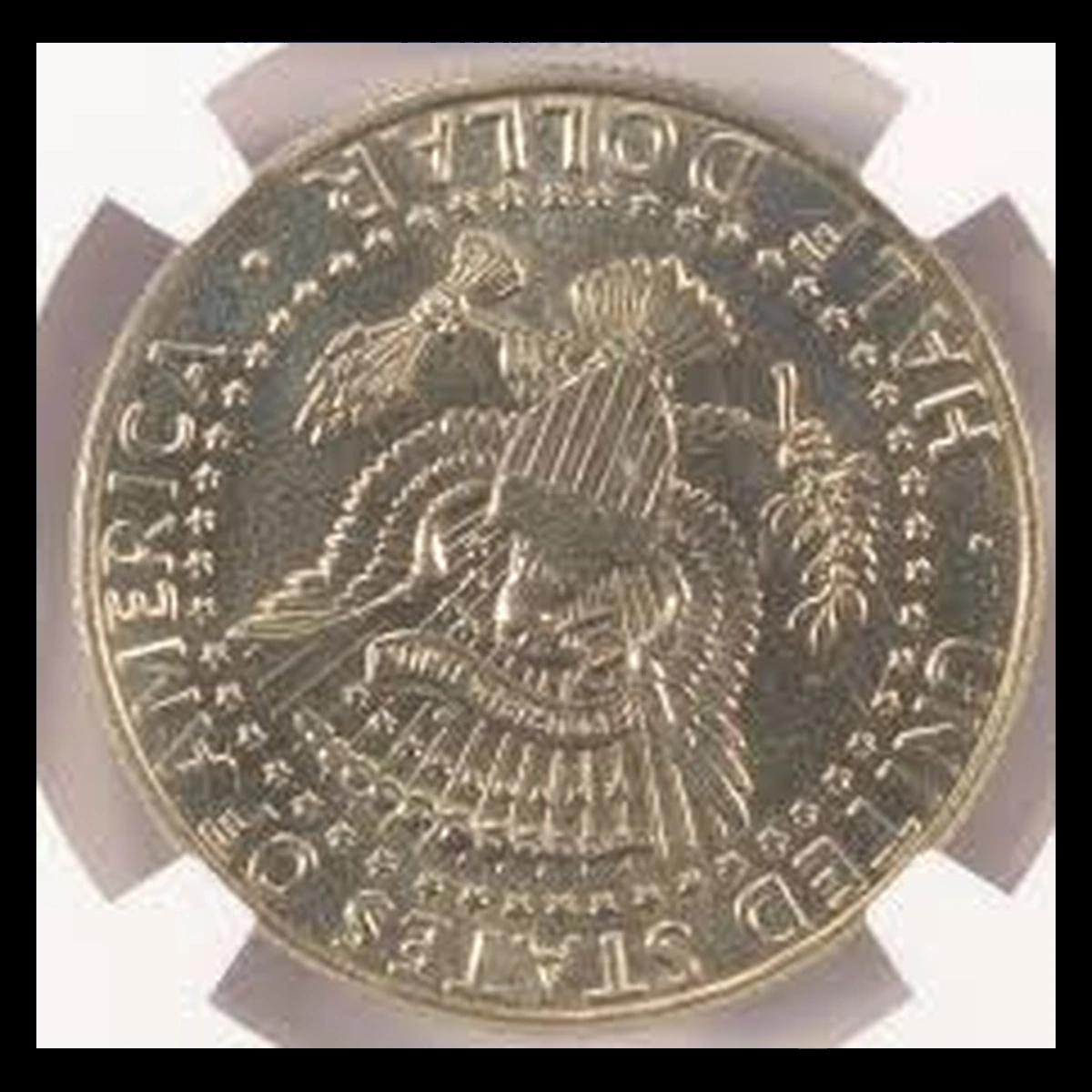
Two documented 1988-P NGC MS65 halves have 180-degree rotation, an arrangement known as medallic alignment. One die was turned half a revolution from the usual relationship between the designs.
How to Identify
Hold Kennedy upright and flip top to bottom without allowing the coin to swivel. The eagle should normally finish upright; on the recorded 180-degree examples it finishes upside down.
Repeat the movement and retain a fixed orientation in photographs or video. Inspect the edge for a joining seam, since normal weight and diameter alone do not rule out alteration.
What It’s Worth
The estimated range is $60–$300 per coin across smaller rotations through attractive 180-degree examples. The two NGC MS65 halves sold together for $288 in July 2021.
That was a pair price, not $288 for each half. A 2000-P with 75-degree rotation brought $79 in March 2025, offering a separate different-year comparison.
5. 1988 Half Dollar A localized interruption on Kennedy’s side: Strike-through Error
A 1988-D NGC MS67 has a cataloged obverse strike-through. Material between the die and blank prevented part of the design from forming normally.
How to Identify
Inspect where normal portrait or lettering meets the affected patch. An original interruption differs from a later impact cutting through finished details and pushing metal to the sides.
The record names the obverse but not the obstruction’s material or size. Do not call it cloth, grease, or a retained object without additional visible evidence.
What It’s Worth
Small interruptions through larger clear impressions are estimated at $25–$450. The NGC MS67 sold for $59 on July 15, 2021, showing that a high grade alone need not make an error expensive.
A 1976-D affected on both faces brought $114 in March 2025. Neither that comparison nor the MS67 grade identifies the unknown material involved in the 1988 strike-through.
6. 1988 Half Dollar Added metal inside an 8 or near feathers: Die cracks and chips Error
Reports mention small lumps within the date’s 8s and raised lines around eagle feathers, without a specific mint or certified specimen. Metal entering a crack or small missing piece in a die can produce these extra raised features.
How to Identify
Tilt the date under a light to see whether a dark spot is actually raised metal. Dirt, adhesive, and corrosion can have different textures or boundaries and should not be scraped away.
Compare feather areas with a normal reverse so existing design lines are not counted as cracks. A scratch cuts into the coin even if its edges contain small displaced ridges.
What It’s Worth
Visible genuine cracks and chips are estimated at $5–$150, with tiny ordinary lumps nearer the lower end. No identified 1988 auction is supplied for these reports.
A much stronger 1976-D reverse die break graded NGC MS65 sold for $256 in June 2026. Its greater scale and different date explain why it is not a direct price for a small filled area of an 8.
7. 1988 Half Dollar A faint fragment of the opposite design: Die clash Error
The general 1988 clash report gives no exact mint, finish, or diagnostic pattern. Contact between the dies without a blank can transfer design traces to the tools and then to later coins.
How to Identify
Test whether the suspected eagle or portrait fragment fits the actual opposite design in shape, size, and position. Random scratches and polishing lines do not become clashes because they suggest a feather.
Inspect both faces and the edge for seams or crushing from later alteration. A recognizable transferred contour with original surroundings is stronger evidence than one suggestive line.
What It’s Worth
A clear genuine clash is estimated at $20–$200. Faint but recognizable traces usually attract less attention than stronger outlines.
A 1973-S proof graded PCGS PR68 Deep Cameo sold for $720 in October 2022. Its strong clash, high preservation, and frosted-design contrast place it above the general 1988 report’s comparison level.
8. 1988 Half Dollar Split IBER and IN on a proof: Doubled die obverse FS-101 Error
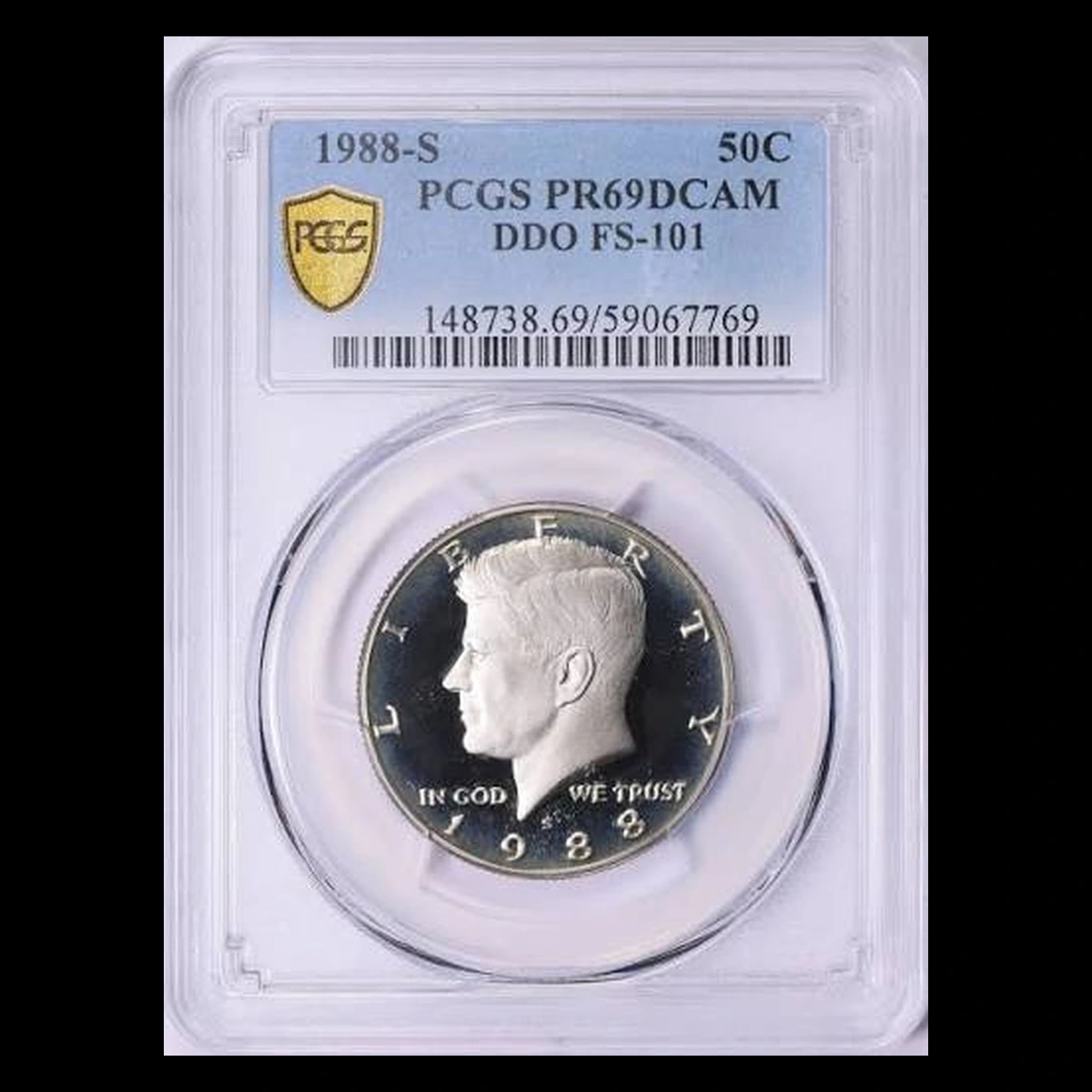
The recognized 1988-S FS-101 repeats outlines in IBER of LIBERTY, IN, and the upper corners of R and U in TRUST. The pattern was built into the die and appears consistently on coins struck from it.
How to Identify
Confirm the S and proof finish, then compare the linked letter features with a clear FS-101 reference. Soft light can reduce reflections that mimic extra edges on a proof.
Normal repeated proof blows should align, so their existence does not itself explain these split letters. Keep certified coins in their holders and judge grade and contrast separately from the doubling pattern.
What It’s Worth
Correctly matched examples are estimated at $100–$1,100. PCGS records a PR68 at $902 through GreatCollections on September 14, 2014.
Clear surfaces and strong contrast support appeal, while haze, scratches, or dull patches can reduce it. The historical record is a comparison rather than a guaranteed price for every FS-101.
9. 1988 Half Dollar Extra reverse-letter contours: Reported doubled die reverse Error
The reverse report points to UNITED STATES OF AMERICA without naming a specific mint or clearly matched die. A true doubled reverse would repeat the same added letter shapes from its tool.
How to Identify
Inspect several letter tips for rounded additional outlines or splits that stay visible as light changes. A flat shelf beside a narrowed main letter commonly has a different striking origin.
A recognizable pattern needs its own reverse reference. The FS-101 name belongs to the proof obverse above and cannot be transferred to this less-specific report.
What It’s Worth
A genuine matched 1988 reverse variety is estimated at $25–$350. Small extra edges belong nearer the lower end than conspicuous, well-established patterns.
A 1965 special-mint-set doubled reverse graded ANACS MS66 brought $408 in March 2024. Its 40% silver composition and different collector finish limit the comparison to general context.
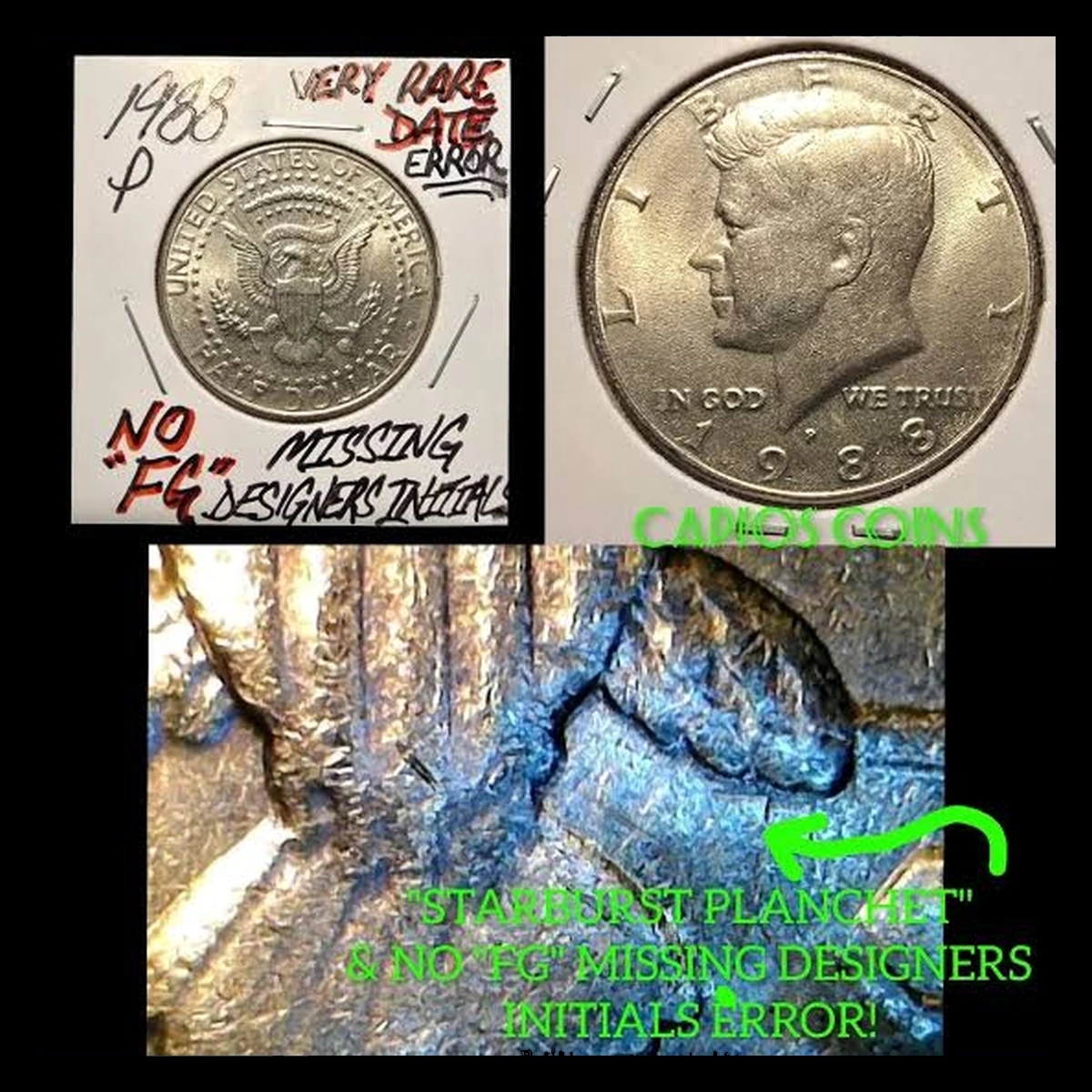
10. 1988 Half Dollar No visible FG beside the eagle’s tail: Reported missing initials Error
The 1988-P report attributes missing FG designer initials to die polishing but establishes no clearly matched graded example. Polishing can remove shallow die recesses, yet wear, blockage, and later smoothing can also make the initials disappear.
How to Identify
Use a normal reverse to locate FG between the eagle’s leg and tail area. Check under several light angles for surviving strokes before declaring both letters absent.
Sharp neighboring feathers make the empty spot easier to judge than broadly worn detail. Scratches or a smoothed local patch may indicate removal after striking instead.
What It’s Worth
A convincing correctly identified 1988 example is estimated at $30–$400. Weak or partly visible initials do not automatically earn the premium for complete mint-made absence.
The recognized 1982-P No FG graded PCGS MS66+ sold for $384 in May 2024. It is a different-year comparison and does not establish either the cause or value of the reported 1988-P omission.
Conclusion
An 1988 half’s outline, alignment, and small design details require different comparisons. The quadruple clip is one coin with four gaps, while the $288 rotation record covers two separate coins sold together.
For letter varieties, match the exact proof FS-101 pattern or the appropriate reverse evidence rather than borrowing a familiar name. Surface preservation and clearly documented identity remain essential even when the grade or error percentage sounds impressive.