Rare 1796 Half Dollar Errors (List & Pictures)
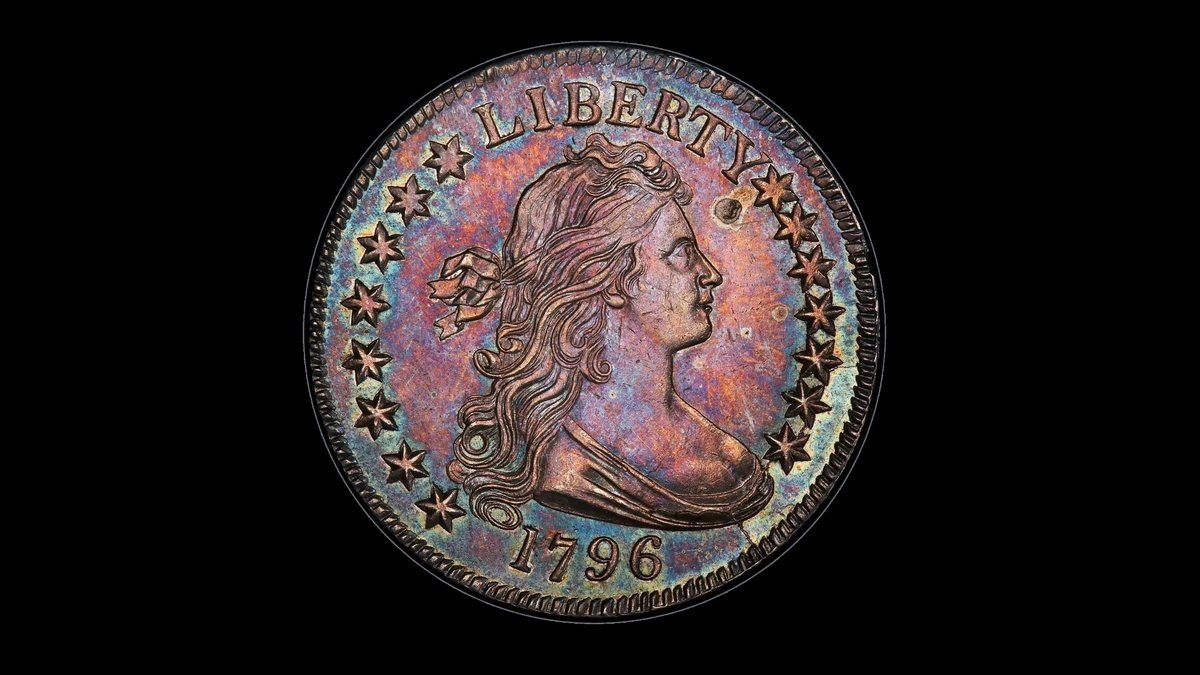
Star count is your first clue when examining 1796 half dollar errors: fifteen-star and sixteen-star coins do not share every diagnostic. The estimated $50,000–$90,000 range reflects the rarity of the complete coins, including a cracked-die example sold for $86,250 in 2008.
Count the stars, inspect the front border and raised lines, then turn to the eagle for a possible metal separation.
| What to find | Reference coin and location | Feature | Estimated whole-coin value |
|---|---|---|---|
| A raised area retaining star detail | Sixteen-star front, stars 1–4 | Retained cud | $50,000–$75,000 |
| Branching ridges across the design | Fifteen-star front, right stars and dress | Die cracks | $60,000–$90,000 |
| A vertical surface split | Sixteen-star back, beside the beak | Lamination | $50,000–$75,000 |
The sixteen-star auction example appears in both the retained-cud and lamination sections. It sold once for $66,000, so those features cannot be priced as two separate coins.
Use clear views of both faces and the lettered edge for comparison. An unworn example is about 13.48 grams and 32.5 mm across; measurements help check the basic coin but do not identify these surface features.
1. 1796 Half Dollar A Raised Border Still Shows Stars: Retained Cud Error
On the sixteen-star O-102 variety, a section beside the first four stars rises above the surrounding front surface. Some design detail remains within that area.
The die, or steel stamping tool, had a broken border section that stayed in place. This retained piece produced a raised patch on the coin, called a retained cud.
How to Identify
Use the John Reich Collectors Society’s late-die reference to compare the lower-left border of the sixteen-star coin. Keep the stars and rim together in view rather than enlarging one star point alone.
Follow the boundary around the whole affected area. Side lighting should help reveal a change in height while some of the star design remains visible inside it.
A narrow raised line between two stars is not sufficient evidence of a retained cud. The feature involves a section of the die, so the patch matters as much as its bordering fracture.
Later blows or flattening can disturb several nearby stars too. Compare the shape, extent, and surviving detail of the complete area with the documented example.
What It’s Worth
Estimated range: $50,000–$75,000 for similar worn coins. The PCGS VF25 sixteen-star example sold for $66,000 at Heritage in March 2019 and also had the lamination described below.
VF25 indicates a circulated coin with substantial detail still visible. Its rare date and design account for much of the total price, rather than the retained cud being a separate $66,000 addition.
2. 1796 Half Dollar Branching Lines Reach the Dress: Die Cracks Error
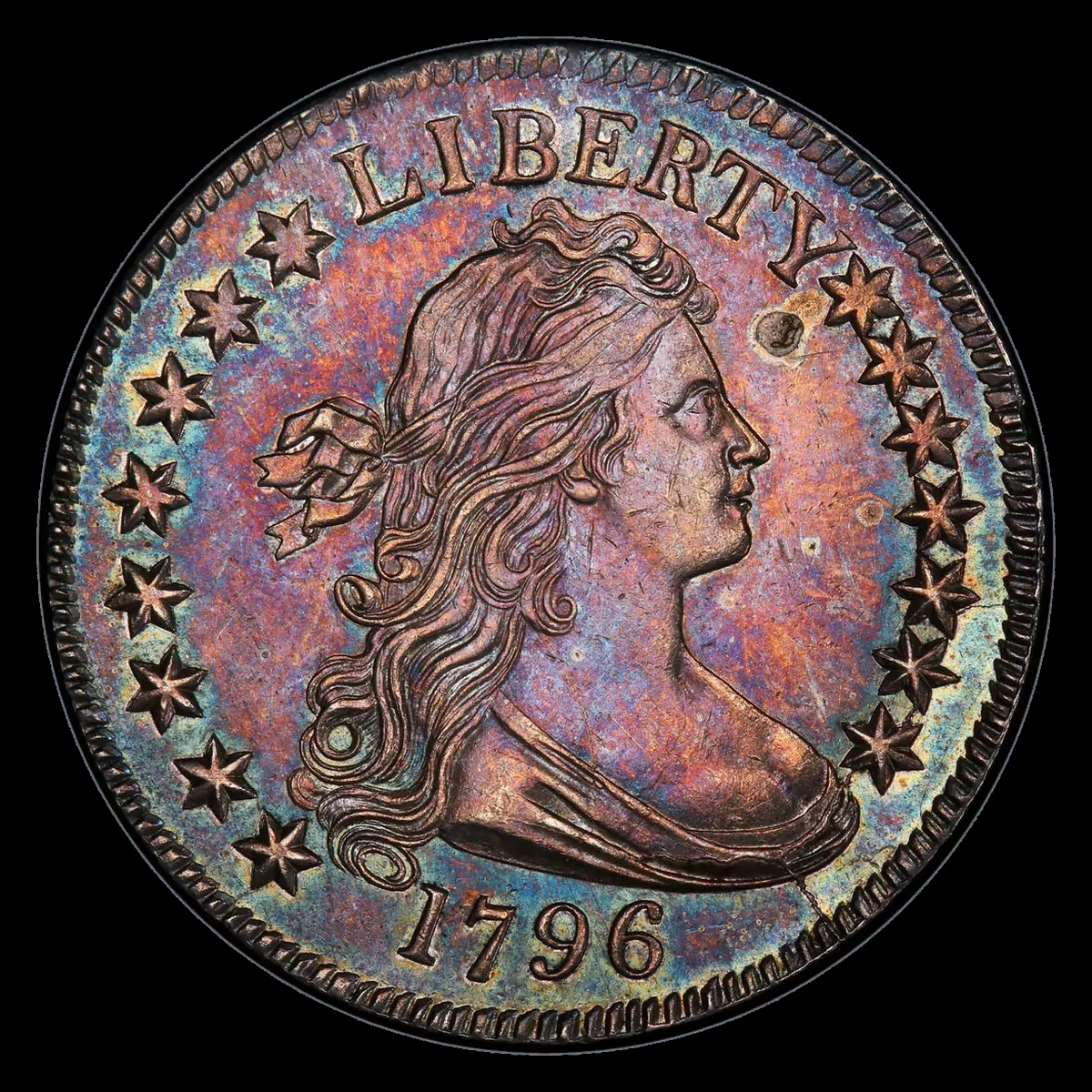
The fifteen-star reference can be followed like a short route across the front. A ridge enters from about three-thirty on the rim, passes through stars 13–15, and reaches a fold in Liberty’s dress.
Another branch heads toward the rim near five o’clock, with a separate curved line above her shoulder. These ridges formed as silver flowed into cracks in the die.
How to Identify
Begin with the star count before tracing any line. A sixteen-star coin has a separately reported crack pattern near the date and stars 1–4, so it needs its own comparison photograph.
For the fifteen-star example, check the right-hand stars, the connection into the dress, and the lower branch as one pattern. Unrelated marks should not be joined mentally to make a matching route.
Under a magnifier, determine whether each line rises above the surface. A scratch is cut into the metal, although pushed-up metal beside a scratch can also catch the light.
A crack copied from a die does not mean the half dollar itself split. A genuine separation within the coin’s metal belongs to a different category.
What It’s Worth
Estimated range: $60,000–$90,000 for comparable worn fifteen-star coins without major condition problems. Heritage sold a PCGS VF25 example for $86,250 in September 2008.
The branching pattern helps recognize the coin, while its scarce early Small Eagle design and remaining detail strongly influence the price. An extra crack branch does not automatically increase value.
Repair, heavy wear, or altered surfaces would call for different comparisons. The high historical result should not be applied solely because a coin carries a raised line.
3. 1796 Half Dollar A Split Beside the Eagle’s Beak: Lamination Error
Turn the sixteen-star reference over and examine the area immediately right of the eagle’s beak. A vertical separation there comes from a weak layer within the coin’s metal.
This lamination can be distinguished from the front-side weight-adjustment marks described for the same coin. Those marks came from removing metal to bring the blank to the required weight.
How to Identify
Look along the split for an uneven layer boundary, using low-angle light. The relevant evidence is separation in the surface, whether the thin layer remains attached or part of it has fallen away.
A clean tool cut is a different kind of disturbance. Likewise, the raised ridges in the previous section were copied from a damaged die rather than created by a peeling layer.
The Heritage listing for the sixteen-star VF25 coin supplies the matching example. Keep its front and back together when comparing the beak area and the retained cud.
A separate fifteen-star special-strike report places a small lamination at NI. That is another coin and another location; it should not be added to the sixteen-star checklist.
What It’s Worth
Estimated range: $50,000–$75,000 for worn examples comparable to the sixteen-star reference. Its March 2019 result was $66,000, the same transaction already discussed under retained cuds.
The visible separation establishes a feature of that rare half dollar, not an independent price for a peeling patch. Compare the overall preservation and surfaces before using the sale to judge another coin.
Conclusion
On a 1796 half dollar, first choose the correct star layout and then examine the shape of the mark. A raised border patch, a branching ridge, and a separated metal layer each record a different event.
The estimated $50,000–$90,000 range concerns rare complete coins. In particular, the retained cud and beak-side lamination belong to one $66,000 reference, with one set of wear and surface characteristics.