Rare 1949 Half Dollar Errors (List & Pictures)
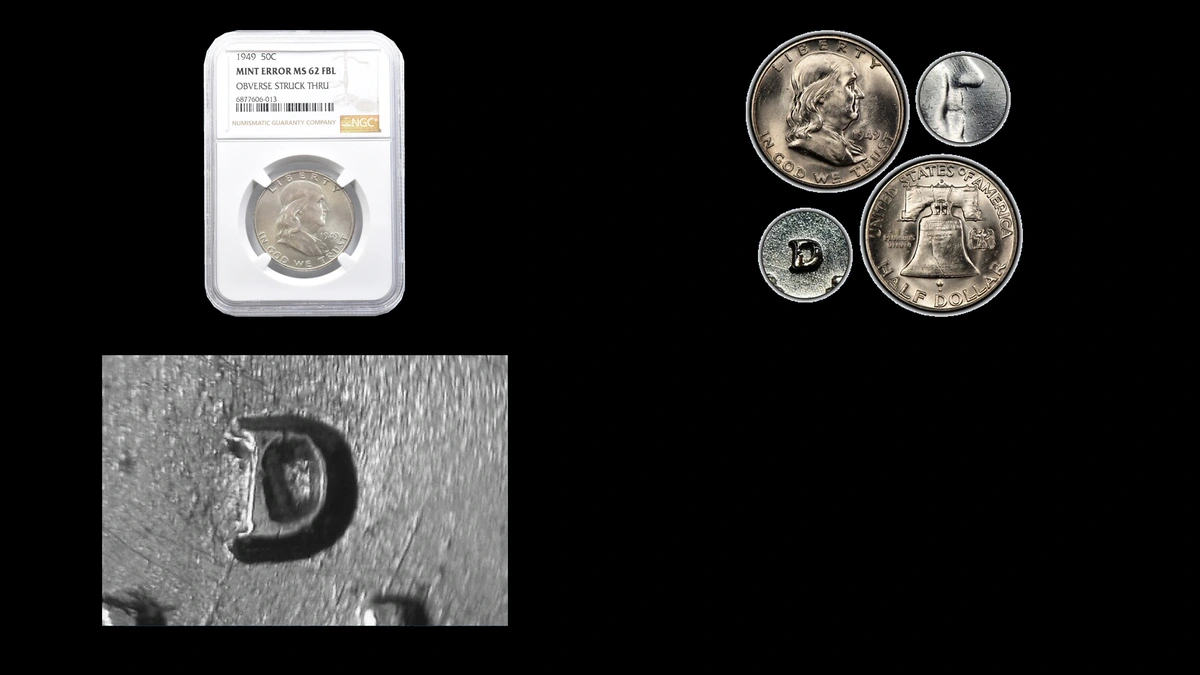
Some 1949 half dollar errors remove design detail, while others add small shapes to Franklin’s portrait or the mintmark. The estimates here cover $40–$950 across three broad categories.
The highest documented result supplied is $925 for a Philadelphia clash variety in November 2020. Scan the front for weak patches and extra portrait marks, then inspect the letter above the bell on the back.
| Visible difference | Where to inspect | Error | Estimated value |
|---|---|---|---|
| Unevenly weak design | LIBERTY, IN, and hair on a Denver coin | Struck through material | $40–$150 |
| Unusual added shapes | Mouth or other matched front detail | Die clash | $50–$950 |
| An extra part of D or S | Above the bell | Repunched mintmark | $100–$250 for comparable unworn examples |
Above the Liberty Bell, D identifies Denver and S identifies San Francisco; Philadelphia has no letter. A normal half dollar weighs 12.50 grams before wear, measures about 30.6 mm across, and has a grooved edge.
1. 1949 Half Dollar Weak Patches Beside Clear Detail: Struck-Through Error
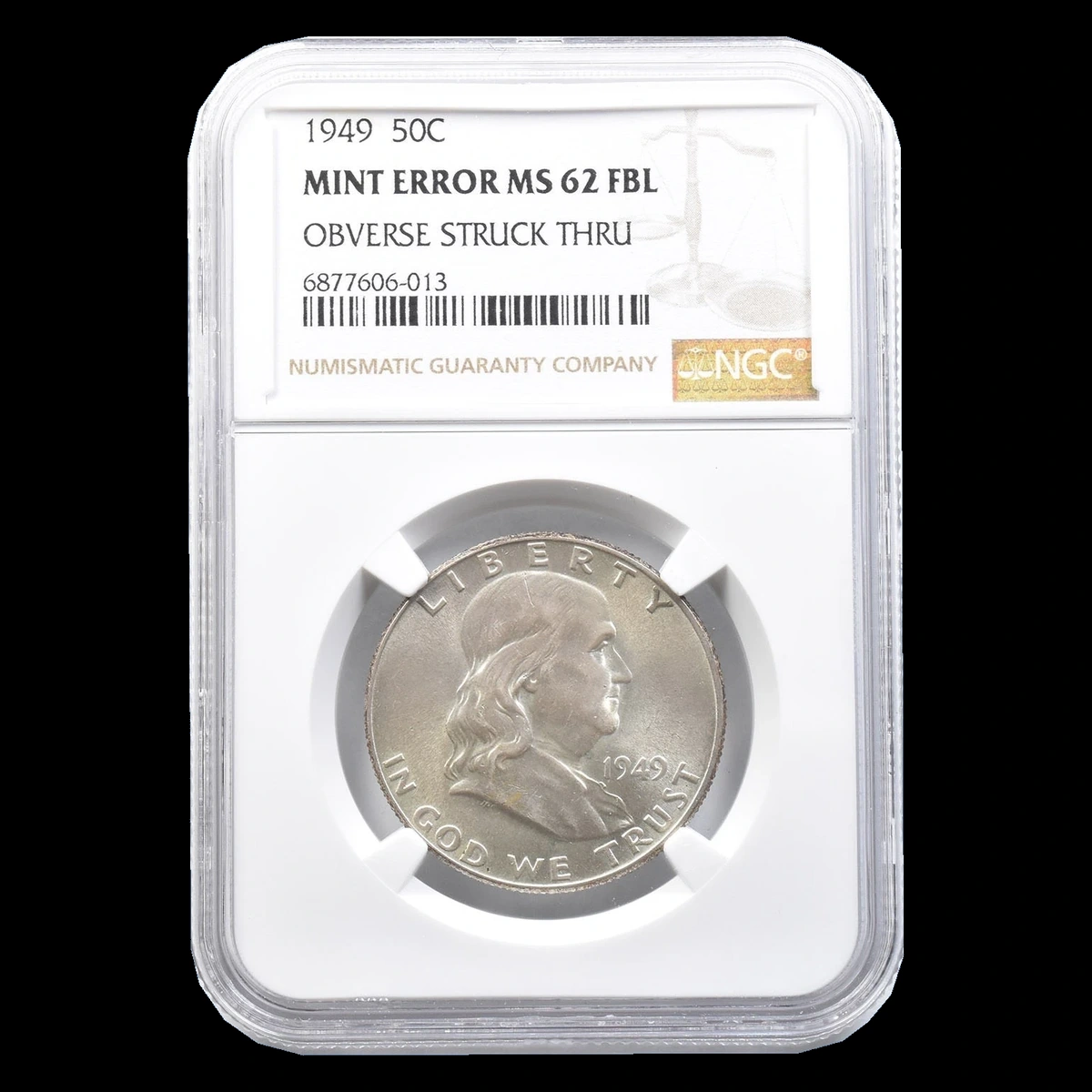
Survey the front before choosing one letter to enlarge. The reported Denver example has weak areas in LIBERTY, IN, and Franklin’s hair, with stronger details nearby.
CONECA’s March–April 2019 Errorscope attributes the interference to grease and scrap. It does not identify the scraps’ material, so the report cannot establish a more specific object.
Anything between the coin blank and a die can prevent the intended design from reaching the metal. The die is the steel stamping tool, and this interrupted contact produces a struck-through error.
How to Identify
Compare the weak patches with neighboring letters and hair detail. The uneven pattern matters more than a generally worn portrait.
Ordinary circulation tends to affect exposed high points. A blocked strike can instead leave an isolated area weak while adjacent design remains well formed.
Under magnification, inspect the boundaries and surface of the faded areas. Abrasion, polishing, or chemical damage after striking can remove detail and leave disturbed metal.
Confirm the D above the bell before matching the documented pattern. No collector Proof half dollars were issued for 1949, so a shiny example should not be assigned that production type.
What It’s Worth
Estimated range: $40–$150 for modest examples from circulated through lower unworn condition. The amount of affected design and overall preservation both contribute to the price.
A 1963-D Franklin with a reverse strike-through sold for $119 at Heritage in June 2026, graded NGC MS65. That provides a later-year, unworn-coin comparison.
The 1963-D had its error on the back, whereas this 1949-D report concerns the front. The $119 result therefore supplies context without establishing a sale for the reported coin.
2. 1949 Half Dollar A Toothlike Shape at the Mouth: Die Clash Error
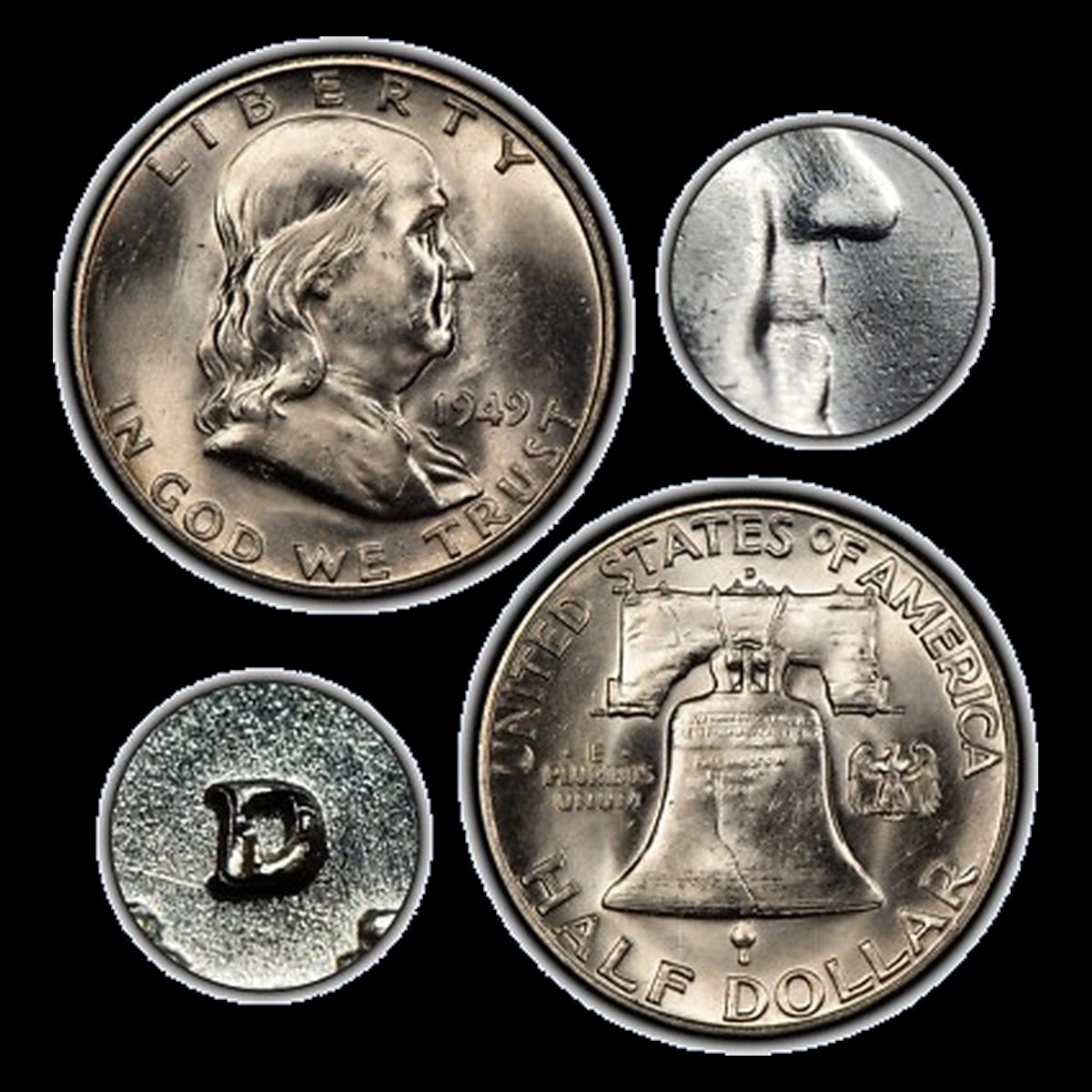
Franklin’s mouth is the starting point for the variety nicknamed Bugs Bunny. On the 1949 FS-401, a small projection gives the portrait that appearance.
Another Philadelphia variety, FS-402, carries a different pattern of clash marks on the front. The catalog numbers distinguish patterns within the same broad error category.
The extra shapes began when the dies met without a blank between them. Marks transferred between the tools could then appear on later coins, placing traces of the opposite design in unexpected locations.
How to Identify
For FS-401, light the lip from different directions and compare the projection with a labeled 1949 example. A dent or deliberately cut mark can alter the mouth too, so check the surrounding metal.
Use a separate reference for FS-402. A stray mark elsewhere on the portrait is not automatically that variety simply because it is away from the Bugs Bunny location.
Keep the date visible in reference photographs. The familiar 1955 Bugs Bunny belongs to another year and cannot establish the exact 1949 pattern.
Both reported 1949 clash varieties here are Philadelphia coins. A mintmarked piece needs evidence specific to its own die before a similar-looking mark can be attributed.
What It’s Worth
Estimated range: $50–$950 across worn coins and selected higher-grade unworn examples. The available results differ in both clash pattern and preservation.
PCGS records an MS66 FBL FS-402 at $925 in a November 2020 eBay sale. A PCGS MS63 FBL FS-401 brought $104 at Heritage in May 2023.
FBL means Full Bell Lines, describing clear lines near the bell’s bottom. It is a strike-quality designation, not an additional mint error.
A toothlike mark by itself cannot support the FS-402 price. The correct pattern, grade, surfaces, and bell-line quality must all be considered.
3. 1949 Half Dollar Another Letter Beside the Mintmark: Repunched Mintmark Error
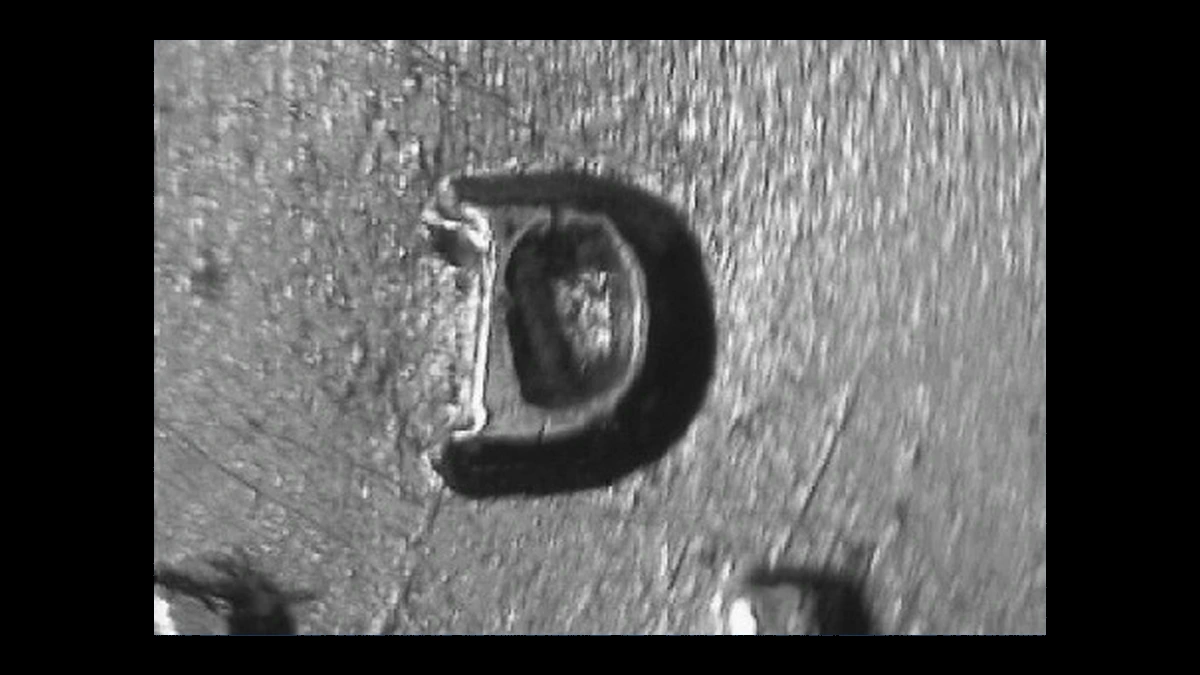
Turn the coin over and inspect the small letter above the bell. A second impression can survive beside a Denver D or San Francisco S.
Mintmarks were added to the die with a separate punch. Repeated applications at slightly different positions left overlapping letter shapes for the coin to reproduce.
The reports include a rotated D and several S/S forms. On San Francisco FS-501, the earlier S lies lower than the main impression.
How to Identify
Read the main letter before comparing the extra shape. D/D, S/S, and a D over an S describe different possibilities and cannot share one diagnostic reference.
For FS-501, search below the main S for the surviving lower outline. Use the documented rotated-D image when examining Denver, rather than expecting the same direction of displacement.
A flat ledge alongside a letter can arise during striking. A valid repunching match needs a raised fragment of the earlier letter in the correct position, not simply a thicker mintmark.
What It’s Worth
Estimated range: $100–$250 for unworn coins comparable to the San Francisco reference. The supplied sale does not establish a separate Denver price.
A PCGS MS64+ FBL 1949-S/S FS-501 brought $204 at Heritage in June 2018. It combines the repunched S with unworn preservation and strong bell-line detail.
The total price reflects all of those qualities. A worn example or a different mintmark variety needs a closer condition and subtype comparison.
Conclusion
Work across the front before enlarging the reverse mintmark. Weak patches, transferred design shapes, and repeated letters leave different clues even when each is small.
The $40–$950 estimates cover several grades and varieties. Match the mint and exact pattern before choosing a sale, and keep the 1963-D strike-through comparison separate from the reported 1949-D example.