Rare 1891 Half Dollar Errors (List & Pictures)
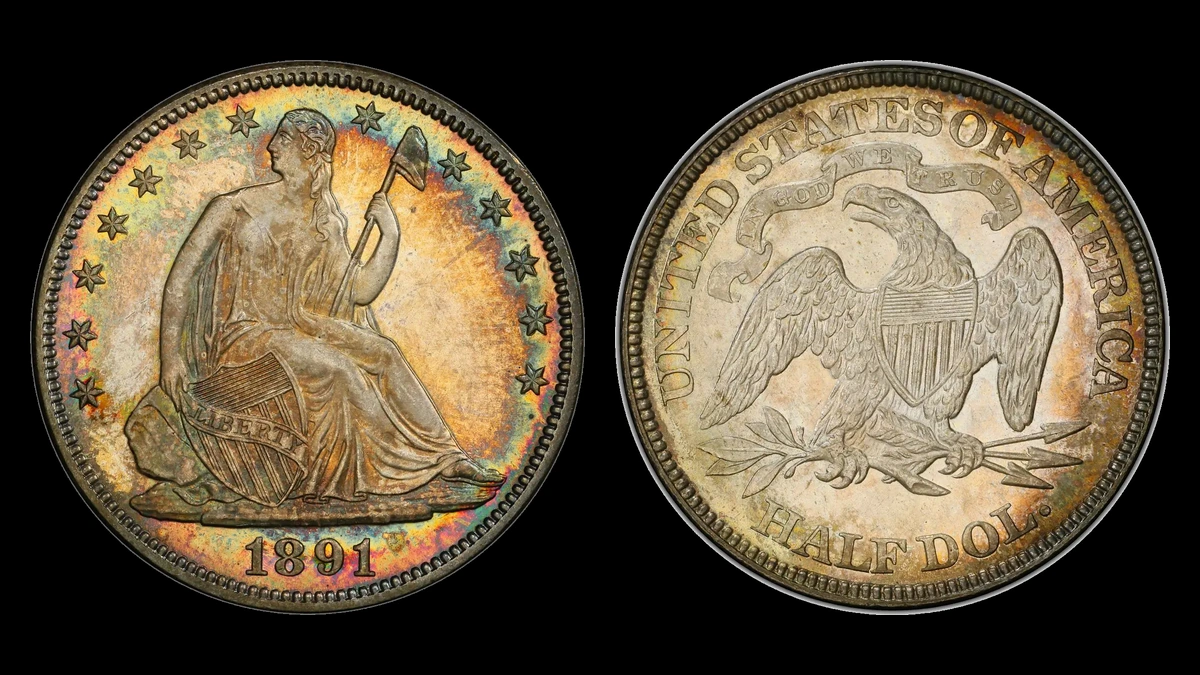
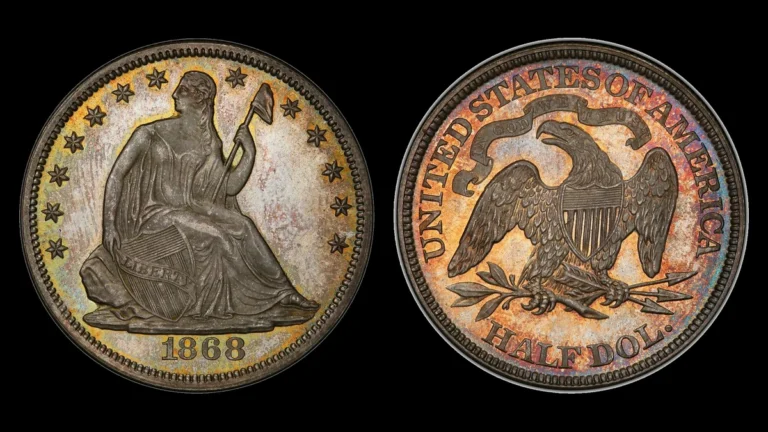
The empty-looking silver around the eagle deserves a second look when checking 1891 half dollar errors. A faint outline there can preserve evidence of contact between the Mint’s dies.
Well-preserved, mirrorlike regular coins provide an estimated $2,000–$3,000 comparison range; an exceptional MS67 reached $48,875 in November 2010. Use the steps below to identify transferred outlines before comparing surface quality and grade.
1891 Half Dollar Unfamiliar Outlines Around the Eagle: Die Clash Error
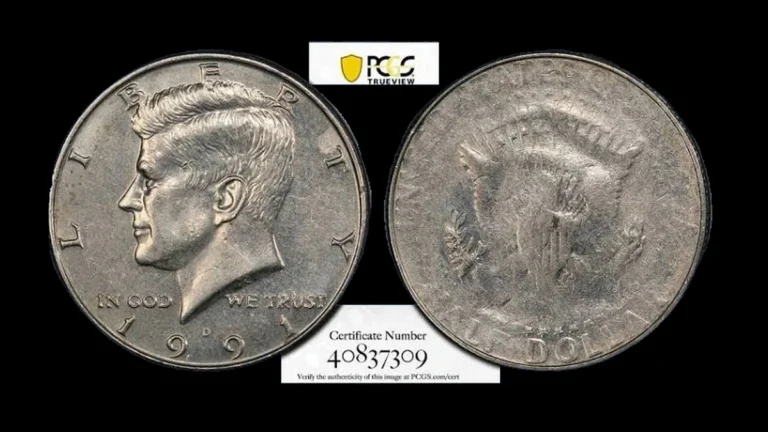
Reverse clash marks are described as frequent on regular 1891 halves in a Liberty Seated series reference. For the collector, the task is to connect an unfamiliar outline around the eagle with a recognizable part of Liberty’s side.
That connection comes from the way a clash damages the tools. Without a blank separating them, the two steel dies can strike one another and pick up opposing design details.
Later silver blanks receive the normal image and those extra details together. The unwanted outline was already in the die before the coin was struck, which explains why a clash does not require striking the same coin twice.
How to Identify
Hold the eagle upright and scan the surrounding open spaces with a 10× magnifier. Moving a lamp across the reflective background can make the shallow outlines easier to see.
Ask what part of the front design could account for each outline. A convincing identification needs a shape and placement that fit the opposing design, not merely a line that looks out of place.
There is no single location in the supplied report that identifies every clashed 1891 coin. A clear photograph of a matched example is more useful than guessing from an isolated squiggle.
Watch for groups of fine parallel polishing lines and for irregular scratches from later handling. Neither should be called a clash simply because it lies beside the eagle.
The reflective background also deserves its own judgment. A regular coin with mirrorlike fields is called prooflike; that appearance alone does not establish that it is a specially manufactured proof.
Confirm the Philadelphia issue by examining the mintmark area, which should have no mintmark. A loose unworn coin normally weighs about 12.50 grams and measures 30.6 mm, with grooves along the edge.
What It’s Worth
Estimated range: $2,000–$3,000 for the prooflike MS63–MS64 coins used as comparisons here. MS denotes no circulation wear, while PL denotes the reflective, prooflike surfaces.
The recorded prooflike sales include $2,400 for an NGC MS63 PL with CAC approval in March 2024. An MS64 PL brought $2,880 in December 2025.
Those amounts reflect complete coins with desirable surfaces and preservation. They do not isolate a market premium for any particular clash mark.
The $48,875 MS67 record represents a substantially higher grade. Applying it to an average coin because of a faint reverse outline would ignore the feature that chiefly distinguishes the expensive example: its condition.
Conclusion
For an 1891 half dollar, the strongest clash evidence is an outline that can be traced back to the opposite design. Reflection, scratches, and polishing lines can all mislead a quick inspection of the eagle’s surroundings.
The $2,000–$3,000 estimate describes the well-preserved prooflike comparison coins. Identify the clash first, but judge wear and surfaces separately before choosing an auction price to compare.